
Market Report · July 29, 2026

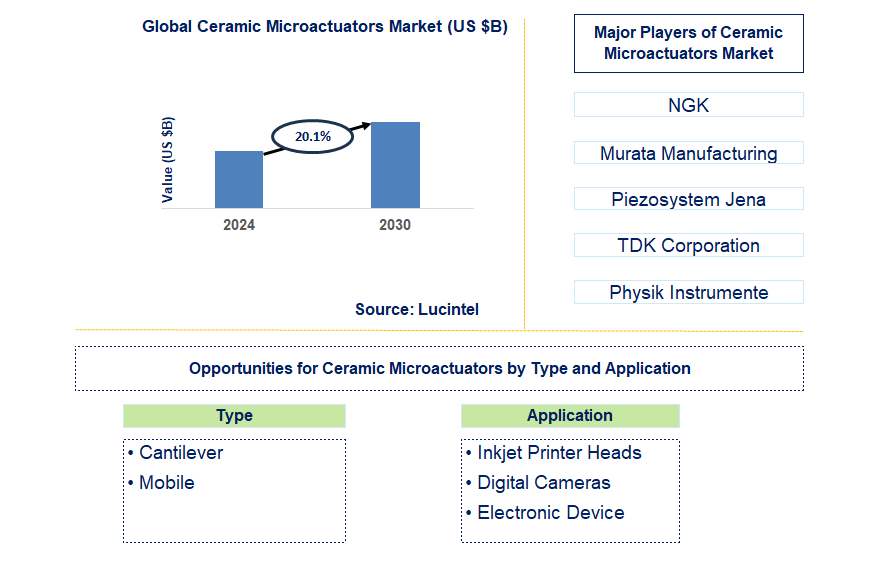
Key data points: The growth forecast = 20.1% annually for the next 6 years. Scroll below to get more insights. This market report covers trends, opportunities, and forecasts in the global ceramic microactuators market to 2030 by type (cantilever and mobile), application (inkjet printer heads, digital cameras, and electronic device), and region (North America, Europe, Asia Pacific, and the Rest of the World)
We'll send your sample report shortly.
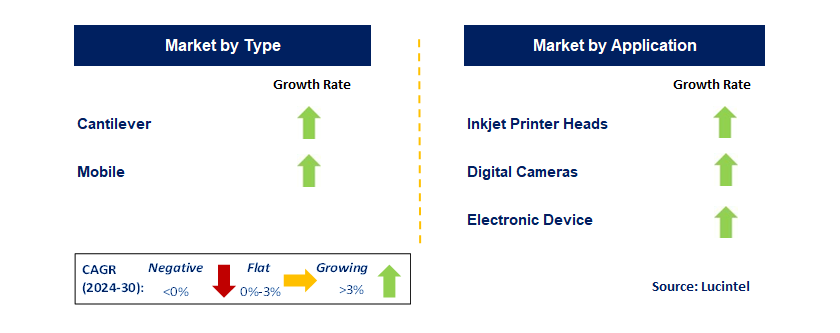
• Lucintel forecasts that, within the type category, cantilever is expected to witness higher growth over the forecast period.
• Within the application category, inkjet printer heads is expected to witness highest growth over the forecast period.
• In terms of region, APAC is expected to witness highest growth over the forecast period. A more than 150-page report is developed to help in your business decisions.
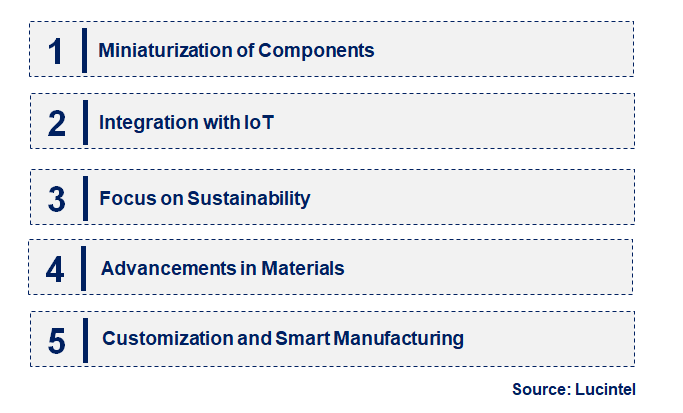
• Miniaturization of Components: Although the trend has shifted towards providing electrical ceramic microactuators for onsite use, it has still led to the development of smaller and lightweight ceramic microactuators with improved efficiency. This contributes to better use in space-constrained devices like medical and consumer electronics.
• Integration with IoT: Due to the widespread use of IoT technology, ceramic microactuators are being implemented in smart devices. This extends functionality and interconnectivity, proving to be a market driver in healthcare and automation.
• Focus on Sustainability: Companies are opting for green materials and processes. For instance, they are producing eco-friendly ceramics that help in pollution reduction and attract consumers sensitive to environmental issues.
• Advancements in Materials: The characterization of advanced piezoelectric materials is improving the attributes of microactuators. This is particularly important in areas where precision is critical, such as in robotics and technological applications in automobiles.
• Customization and Smart Manufacturing: The current upward trend towards customization is supported by improving smart manufacturing techniques. These allow for unique design solutions for different purposes, thereby increasing competitiveness in the market. These trends lead to the same direction: innovation, breadth of application areas, and greater efficiency in the ceramic microactuators market.
• Investment in R&D: Increased investment in R&D is leading to progress in microactuator technology. Organizations are concentrating on new materials and innovative techniques to improve performance.
• Automation and Industry 4.0: The application of automation in manufacturing processes, along with the use of Industry 4.0 concepts, has improved production efficiency. This change addresses the increased demand for high-quality microactuators.
• Emerging Applications: Sectors like robotics and healthcare are adopting new applications. The adaptability of ceramic microactuators is driving new uses in these fast-paced industries.
• Collaboration and Partnerships: The collaboration between manufacturing companies and technology organizations is enabling the development of innovations. These developments are aimed at producing advanced microactuators in demand in various industries.
• Regulatory Compliance and Standards: Increasing regulatory standards are forcing manufacturers to improve the quality and safety of ceramic microactuators. This is necessary to enter target markets and maintain consumer trust. These developments are contributing to the changing dynamics of the ceramic microactuator market, spurring growth and emergence in different sectors.
• Medical Devices: The healthcare industry offers great potential for microactuators, especially in drug delivery systems and minimally invasive surgical procedures. Increasing investment in healthcare technology is boosting demand.
• Automotive Industry: As vehicles become more automated, microactuators are needed for higher precision. These include applications such as adaptive lighting systems and active suspension systems to improve acceleration.
• Consumer Electronics: Ceramic microactuators are beneficial in consumer electronic products due to the market demand for smart devices. New trends in mobile technologies require small and efficient actuation systems for new products.
• Robotics: The robotics market is growing rapidly, with microactuators playing a significant role in motion and control improvement. As industrial uptake of robotics widens, demand for advanced actuation systems will grow.
• Telecommunications: Telecommunication networks see sourcing of reliable niches for ceramic microactuators. Their use in signal processing and data transmission systems is becoming increasingly important. These growth opportunities are altering the competitive landscape of the ceramic microactuator market, expanding its applicability across various industries.
• Technological Innovation: New microactuator technologies are based on continuous improvements in materials and manufacturing processes. These improvements increase efficacy and broaden the scope of usage.
• Increasing Automation: As technology and industrialization advance, the need for precise actuation systems is growing. Due to the increasing pressure for optimization in companies, the importance of microactuators is rising.
• Healthcare Demand: Increased demand in healthcare, particularly in medical devices, is driving the growth of the ceramic microactuator market. Opportunities abound as there is a rising need for new patient management strategies.
• Consumer Electronics Growth: The expansion of the consumer electronics market has increased the demand for high-performance and miniature micromotors. As devices become more sophisticated, so do the demands for novel actuation solutions.
• Sustainability Trends: Growing awareness of environmental issues is leading manufacturers to adopt sustainable practices. This not only helps meet regulatory compliance but also attracts environmentally conscious customers. Challenges in the ceramic microactuators market include:
• Production Costs: The high production costs associated with ceramic microactuators’ fabrication techniques could pose a barrier to market entry for new companies. This challenge compels companies to find cost-efficient production methods.
• Compliance: Achieving the required minimum production standards may be difficult for some companies. Compliance is crucial in a market-oriented environment, but it can affect production processes and costs.
• Market Competition: The ceramic microactuator market is highly competitive, with many participants broadening their market reach. This requires constant efforts to improve available ideas and reduce strategies. These drivers and challenges significantly impact the ceramic microactuator market, determining its growth and direction.
• NGK
• Murata Manufacturing
• Piezosystem Jena
• TDK Corporation
• Physik Instrumente
• Noliac
• Chengdu Huitong West-electronic
• Cantilever
• Mobile
• Inkjet Printer Heads
• Digital Cameras
• Electronic Device
• North America
• Europe
• Asia Pacific
• The Rest of the World
• United States: In the U.S., the ceramic microactuator market has grown due to increased investment in R&D, resulting in new material development and miniaturization. Companies are adding IoT functionalities to actuators, improving their adoption in smart devices, especially for healthcare and automation purposes.
• China: China continues to invest in the production capacity of ceramic microactuators, aiming at cost efficiency and affordability. Mass production of low-cost micromotors is driven by advances in the manufacturing process, meeting the needs of the consumer electronics and automobile industries.
• Germany: Precision engineering and sustainability characterize the ceramic microactuator design market in Germany. Advanced environmentally friendly materials are being developed and manufactured by German companies for applications in the aerospace and automobile industries, which require high reliability and performance.
• India: With rising domestic production capacities, India is gaining strength in the ceramic microactuator market. The strategy is to promote low-cost medical and telecommunication equipment, supported by Indian government policies favoring local technology development.
• Japan: Japan remains a leader in innovation, focusing primarily on piezoelectric ceramic research. Japanese companies are developing microactuator systems for robotics and precision machinery, improving the performance and utility of these systems.


• NGK
• Murata Manufacturing
• Piezosystem Jena
• TDK Corporation
• Physik Instrumente
• Noliac
• Chengdu Huitong West-electronic Q5. Which ceramic microactuators market segment will be the largest in future? Answer: Lucintel forecasts that cantilever is expected to witness higher growth over the forecast period. Q6. In ceramic microactuators market, which region is expected to be the largest in next 5 years? Answer: APAC is expected to witness highest growth over the forecast period. Q.7 Do we receive customization in this report? Answer: Yes, Lucintel provides 10% customization without any additional cost.


Choose a license that fits your team. Instant PDF delivery.
Prices exclude taxes. Instant delivery. Custom licensing available on request.
Market Report · July 29, 2026
Market Report · July 20, 2026
Market Report · July 20, 2026
Trusted partner for strategic intelligence and business growth


Receive a complimentary market analysis tailored to your industry. Our analysts will identify key growth opportunities and competitive dynamics specific to your business.

Market size, growth rate, and key trend analysis for your specific sector.

Top competitor positioning and market share analysis.

Strategic recommendations backed by data-driven insights.
Get curated market intelligence and competitive moves straight to your inbox.
By subscribing, you agree to receive our monthly insights. Unsubscribe anytime.
Receive a complimentary market analysis tailored to your industry. Our analysts will identify key growth opportunities and competitive dynamics specific to your business.
Market size, growth rate, and key trend analysis for your specific sector.
Top competitor positioning and market share analysis.
Strategic recommendations backed by data-driven insights.
Get curated market intelligence, emerging trends, and competitive moves straight to your inbox each month.
By subscribing, you agree to receive our monthly insights. Unsubscribe anytime.
We'll send your sample report shortly.