
Market Report · July 31, 2026

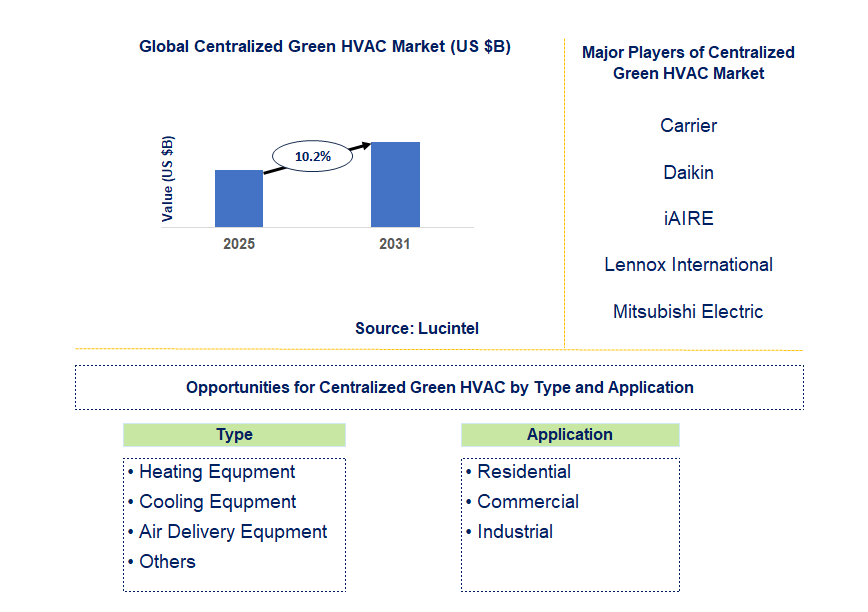
Key data points: The growth forecast = 10.2% annually for the next 7 years. Scroll below to get more insights. This market report covers Trends, opportunities and forecasts in centralized green HVAC market to 2031 by type (heating equipment, cooling equipment, air delivery equipment, and others), application (residential, commercial, and industrial), and region (North America, Europe, Asia Pacific, and the Rest of the World)
We'll send your sample report shortly.
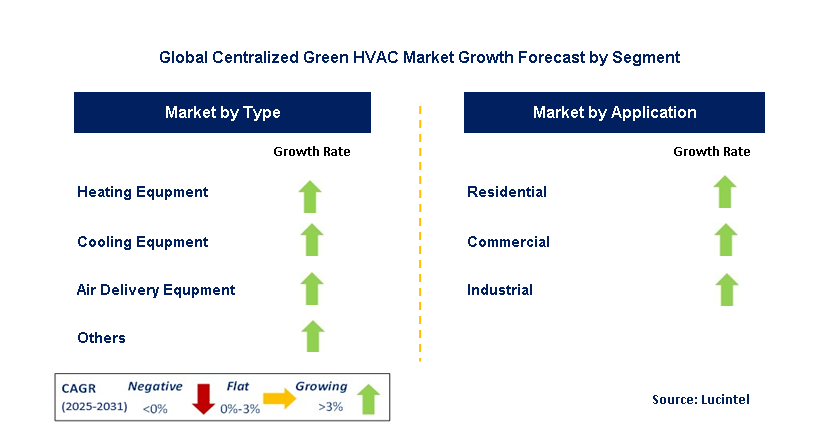
• Lucintel forecasts that, within the type category, cooling equipment is expected to witness the highest growth over the forecast period due to the increasing demand for energy-efficient cooling equipment solutions.
• Within the application category, commercial is expected to witness the highest growth due to the growing demand for energy-efficient systems in office buildings.
• In terms of region, APAC is expected to witness the highest growth over the forecast period due to the growing infrastructure development.
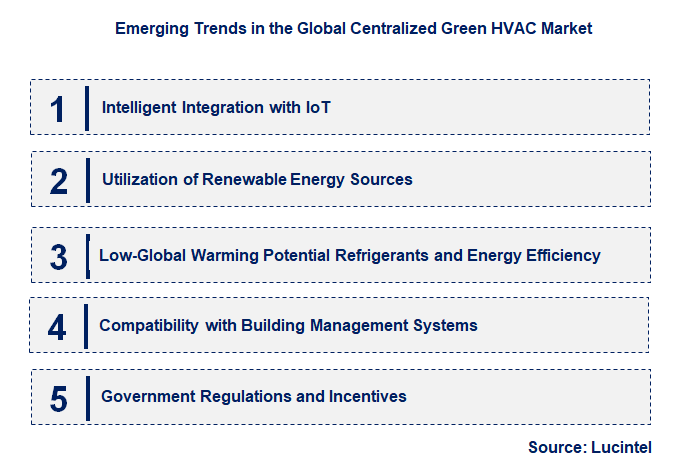
• Intelligent Integration with IoT: Integration of the Internet of Things (IoT) within centralized green HVAC systems is a prominent trend. The use of IoT-enabled HVAC systems enables real-time monitoring and management of energy use, which maximizes heating and cooling efficiency. The systems can adapt according to occupancy behavior and environmental conditions, enhancing energy efficiency and minimizing costs. With increasing construction of buildings using smart technologies, the use of IoT-based HVAC systems is likely to grow, ensuring sustainability goals are achieved and overall energy usage decreases.
• Utilization of Renewable Energy Sources: Green HVAC systems in the centralized form are progressively utilizing renewable energy sources such as solar power and geothermal energy. Such systems minimize the use of non-renewable sources of energy, resulting in high levels of energy savings and lowered carbon footprint. Merging renewable energy with HVAC systems is also in line with worldwide attempts to shift to cleaner sources of energy. With ongoing advancements and decreasing costs in renewable energy technologies, their application in centralized HVAC systems is also likely to increase, further accelerating the green HVAC market.
• Low-Global Warming Potential Refrigerants and Energy Efficiency: Energy-efficient equipment and low-GWP refrigerants are becoming a major trend in the centralized green HVAC market. Companies are concentrating on creating systems that use less energy while employing refrigerants that cause minimal harm to the environment. The use of natural refrigerants, including CO2 and ammonia, is also becoming popular in the market as they have lower environmental footprints than conventional refrigerants. This trend is influencing the market toward greener HVAC solutions that are helping to reduce greenhouse gas emissions.
• Compatibility with Building Management Systems: Green HVAC systems centralized are being increasingly integrated with Building Management Systems (BMS) to maximize the overall energy performance. BMS makes it possible for building owners to manage and regulate different systems such as HVAC, lighting, and security using a single integrated platform. By doing so, it facilitates instant control and real-time predictive maintenance, minimizing power usage and maintenance expenses. The future of greater demands for energy-efficient, smarter buildings will still rely on integration of HVAC and BMS systems in enhancing efficiency and sustainability alongside minimized energy utilization.
• Government Regulations and Incentives: Government incentives and regulations are strongly contributing to centralized green HVAC adoption. Governments across the globe are adopting tougher regulations aimed at limiting carbon emissions and encouraging energy efficiency. Governments are motivating businesses and residential customers to opt for green HVAC technology in the form of financial incentives, tax relief, and other government assistance programs. With increasing regulatory pressure, the need for energy-efficient and eco-friendly HVAC systems is likely to increase, driving market growth. These trends are influencing the centralized green HVAC market by making it more energy-efficient, incorporating renewable energy sources, and being environmentally sustainable. With increased demand for intelligent, energy-efficient systems and government incentives, these trends will continue to influence innovation and market growth.
• Advances in HVAC System Design: Advances in HVAC system design is aimed at energy efficiency with the development of more compact, modular, and scalable systems. These system designs are more appropriate for both commercial and residential use, allowing for more flexible and efficient installation. In addition to this, advances in airflow management, heat recovery, and thermal storage are improving HVAC performance while minimizing energy usage. These advancements are contributing significantly to the development of the centralized green HVAC market by providing affordable, energy-efficient solutions.
• Growing Application of Heat Pumps: Heat pump technology is gaining widespread acceptance in the centralized green HVAC market because of its efficiency and eco-friendliness. Heat pumps are capable of both heating and cooling, thus being versatile solutions for residential and commercial properties. They consume less energy compared to conventional heating and cooling systems and can be easily combined with renewable energy sources such as solar and geothermal energy. As the need for energy-efficient HVAC systems increases, heat pumps will dominate the market.
• Improved Energy Recovery Ventilation Systems: Energy Recovery Ventilation (ERV) systems are being upgraded to offer better heat and moisture recovery, enhancing indoor air quality while minimizing the total energy load. The systems recover energy from the exhausted air and utilize it to pre-condition the incoming air, minimizing the requirement for additional heating or cooling. The use of ERV systems is increasing as buildings aim to enhance energy efficiency and comply with sustainability requirements, and this is an important development in the industry.
• Adoption of Smart Thermostats and Controls: Adoption of smart thermostats and controls is revolutionizing the centralized green HVAC market. The technologies enable the remote monitoring and control of HVAC systems, with real-time feedback on energy usage. With learning algorithms and geofencing, smart thermostats optimize HVAC performance based on occupancy patterns and external conditions. The innovation is boosting user convenience while helping to save considerable energy and reduce environmental footprint.
• Sustainability Certifications and Green Building Codes: The increased uptake of green building codes and sustainability certifications is stimulating demand for centralized green HVAC systems. Those buildings that achieve certification through programs like LEED or BREEAM are subject to having their energy performance meet certain standards, including efficient use of HVAC systems. With an increasing number of buildings becoming certified, the need for higher-tech, more environmentally sound HVAC systems is set to grow, resulting in more market expansion. These critical advancements are making a profound difference in the centralized green HVAC market, enhancing system efficiency, and enhancing sustainability. Design innovations, energy recovery, and smart technology, coupled with the green certification push, are driving the implementation of green HVAC solutions in different industries.
• Residential Market: The market demand for centralized green HVAC systems in the residential market is increasing as a result of high energy prices and greater environmental concerns. Homeowners are becoming more interested in energy-saving measures that minimize their carbon footprint and save them money on utilities. With government rebates and incentives for green technologies, the potential to market energy-efficient, ecologically friendly HVAC systems to the residential market, particularly in new and retrofit development, increases daily.
• Commercial Buildings: Commercial buildings are among the biggest energy consumers, and the use of centralized green HVAC systems in commercial buildings is offering great growth prospects. With companies looking to minimize operational expenses and meet sustainability requirements, the demand for energy-saving HVAC systems is growing. Advances like smart controls, heat recovery ventilation, and compatibility with renewable energy sources are offering commercial premises solutions that lower energy usage and enhance comfort.
• Healthcare Buildings: Healthcare buildings, such as hospitals and clinics, need HVAC systems that offer accurate temperature and humidity control with energy efficiency. Centralized green HVAC systems in healthcare buildings are becoming more popular with the emphasis on sustainability and cost savings in the industry. Green HVAC technologies that enhance indoor air quality and lower energy usage are now a common requirement for new healthcare construction and retrofits.
• Industrial Applications: Industrial applications are an important growth sector for the centralized green HVAC market. Industry applications demand highly specialized HVAC solutions that provide the capability to treat large-scale cooling, heating, and ventilation applications with minimum energy usage. Increasing adoption of green HVAC technology within industrial environments due to energy efficiency requirements and sustainable objectives is paving the way forward. Industrial uses that target minimized environmental footprints offer high levels of opportunity for energy-efficient HVAC technologies.
• Government and Public Facilities: Government structures and public works projects are gradually using green HVAC technology to help them meet environmental codes and decrease the cost of operating their systems. Public policies mandating government buildings to follow strict energy efficiency performance levels in most countries are building a sizable demand for green HVAC systems. The more money that governments keep putting into infrastructure projects, the bigger the market is for central green HVAC systems for public structures will become. These applications are major growth prospects in the centralized green HVAC market, as the demand for sustainable, energy-efficient solutions increases across industries. From residential to commercial, healthcare, industrial, and public infrastructure, the scope for green HVAC systems is huge and growing.
• Carrier
• Daikin
• iAIRE
• Lennox International
• Mitsubishi Electric
• Ningbo Deye Technology
• Rheem Manufacturing Company
• Heating Equipment
• Cooling Equipment
• Air Delivery Equipment
• Others
• Residential
• Commercial
• Industrial
• North America
• Europe
• Asia Pacific
• The Rest of the World
• United States: The United States has taken huge leaps in implementing centralized green HVAC systems owing to the increased emphasis on energy efficiency and sustainability. Various government programs and green building incentives, including LEED certification, are promoting the adoption of energy-efficient HVAC systems. Moreover, improved smart thermostats and sensors are helping design more intelligent HVAC systems. The commercial and residential markets are increasingly spending on systems that save energy, enhance indoor air quality, and comply with environmental standards. With the U.S. government further encouraging carbon neutrality, demand for centralized green HVAC solutions will continue to grow.
• China: China is quickly emerging as a key player in the centralized green HVAC market, fueled primarily by the nation's efforts to curb carbon emissions. The Chinese government has implemented policies encouraging energy-efficient buildings, which has driven the adoption of green HVAC systems in the commercial and residential markets. Advancements in refrigerants, air purification technologies, and integration with smart buildings are major trends in the market. Rapid urbanization in China is also driving the need for energy-efficient cooling and heating solutions. Consequently, the centralized green HVAC systems market is growing as China attempts to achieve its sustainability goals and enhance the efficiency of its built environment.
• Germany: Germany has always been at the forefront when it comes to green building technologies and energy-efficient solutions. The nation's solid focus on sustainability has stimulated the demand for centralized green HVAC systems. Germany has enforced stringent regulations to minimize energy usage and carbon emissions, which has resulted in the widespread use of sophisticated HVAC systems. Advances in technology, including smart integration with renewable energy sources such as solar and wind, are driving market growth. The drive towards net-zero buildings and the enforcement of European Union energy directives have also spurred the development of this market in Germany at a fast pace, making it a dominant force in the international green HVAC industry.
• India: The centralized green HVAC market in India is growing rapidly due to urbanization, growing disposable incomes, and government incentives for sustainable development. The efforts of the Indian government, like the Smart Cities Mission, promote the application of green technologies, like energy-saving HVAC systems, in city planning. Moreover, India's expanding manufacturing sector has promoted the prevalent implementation of centralized HVAC systems reducing energy usage and environmental footprint. With a strong emphasis on cooling solutions because of the hot climate in the country, green HVAC systems are becoming critical for sustainable development in residential as well as commercial buildings.
• Japan: Japan is emphasizing greatly on energy-efficient solutions in accordance with its environmental aspirations. The nation has been investing in intelligent HVAC systems that work in harmony with renewable energy sources such as solar power to maximize energy utilization. Centralized green HVAC systems are becoming popular in commercial facilities, particularly large office buildings and public infrastructure. The aging population in Japan and the requirement of energy-efficient measures in elderly homes are also leading to demand for this. Furthermore, the country's policies in terms of decreasing greenhouse gas emissions are promoting green technology adoption, such as centralized HVAC systems, in order to achieve environmental objectives.


• Carrier
• Daikin
• iAIRE
• Lennox International
• Mitsubishi Electric
• Ningbo Deye Technology
• Rheem Manufacturing Company Q5. Which centralized green HVAC market segment will be the largest in future? Answer: Lucintel forecasts that, within the type category, cooling equipment is expected to witness the highest growth over the forecast period due to the increasing demand for energy-efficient cooling equipment solutions. Q6. In centralized green HVAC market, which region is expected to be the largest in next 5 years? Answer: In terms of region, APAC is expected to witness the highest growth over the forecast period due to the growing infrastructure development. Q7. Do we receive customization in this report? Answer: Yes, Lucintel provides 10% customization without any additional cost.


Choose a license that fits your team. Instant PDF delivery.
Prices exclude taxes. Instant delivery. Custom licensing available on request.
Market Report · July 31, 2026
Market Report · July 22, 2026
Market Report · July 20, 2026
Trusted partner for strategic intelligence and business growth


Receive a complimentary market analysis tailored to your industry. Our analysts will identify key growth opportunities and competitive dynamics specific to your business.

Market size, growth rate, and key trend analysis for your specific sector.

Top competitor positioning and market share analysis.

Strategic recommendations backed by data-driven insights.
Get curated market intelligence and competitive moves straight to your inbox.
By subscribing, you agree to receive our monthly insights. Unsubscribe anytime.
Receive a complimentary market analysis tailored to your industry. Our analysts will identify key growth opportunities and competitive dynamics specific to your business.
Market size, growth rate, and key trend analysis for your specific sector.
Top competitor positioning and market share analysis.
Strategic recommendations backed by data-driven insights.
Get curated market intelligence, emerging trends, and competitive moves straight to your inbox each month.
By subscribing, you agree to receive our monthly insights. Unsubscribe anytime.
We'll send your sample report shortly.