
Report Feature
CDDCI Digital Therapeutic Market Trends and Forecast
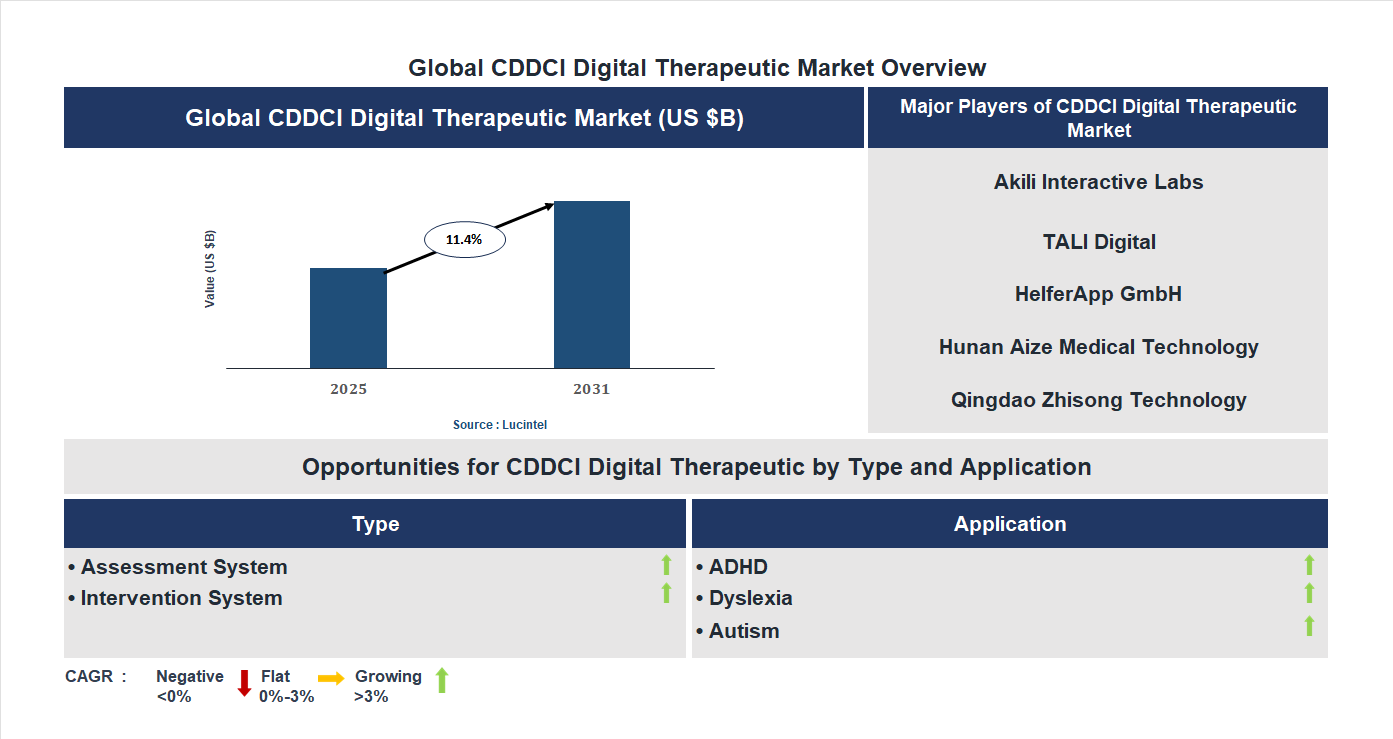
The future of the global CDDCI digital therapeutic market looks promising with opportunities in the ADHD, dyslexia, and autism markets. The global CDDCI digital therapeutic market is expected to grow with a CAGR of 11.4% from 2025 to 2031. The major drivers for this market are the increasing adoption of digital health solutions, the rising demand for remote patient monitoring, and the growing awareness of chronic disease management.• Lucintel forecasts that, within the type category, intervention system is expected to witness higher growth over the forecast period.
• Within the application category, ADHD is expected to witness the highest growth.
• In terms of region, APAC is expected to witness the highest growth over the forecast period. Gain valuable insights for your business decisions with our comprehensive 150+ page report. Sample figures with some insights are shown below.
Emerging Trends in the CDDCI Digital Therapeutic Market
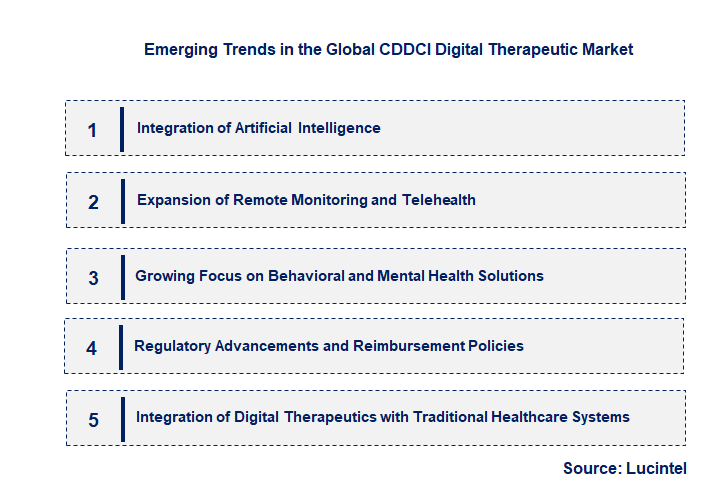
The CDDCI digital therapeutic market is experiencing rapid growth driven by technological advancements, increasing healthcare needs, and a shift towards personalized medicine. As digital health solutions become more integrated into mainstream healthcare, various innovative trends are emerging that are transforming how treatments are developed, delivered, and adopted. These trends are not only enhancing patient outcomes but also reshaping industry dynamics, regulatory frameworks, and investment strategies. Understanding these key developments is essential for stakeholders aiming to capitalize on the markets potential and navigate its evolving landscape effectively.• Integration of Artificial Intelligence (AI): AI is increasingly used to personalize treatment plans, improve diagnostic accuracy, and predict patient responses. Machine learning algorithms analyze vast datasets to identify patterns, enabling more targeted and effective therapies. This trend enhances clinical decision-making, reduces trial-and-error approaches, and accelerates product development. AI-driven solutions also facilitate real-time monitoring and adaptive interventions, improving patient engagement and adherence. As AI becomes more sophisticated, its integration into digital therapeutics is expected to revolutionize personalized medicine and optimize healthcare delivery.
• Expansion of Remote Monitoring and Telehealth: The adoption of remote patient monitoring devices and telehealth platforms is expanding access to digital therapeutics, especially in underserved areas. These tools enable continuous tracking of health metrics, early detection of issues, and timely interventions without in-person visits. The COVID-19 pandemic accelerated this trend, highlighting the importance of remote care. This development reduces healthcare costs, improves patient convenience, and supports chronic disease management. As regulatory barriers diminish and technology advances, remote monitoring will become a core component of digital therapeutic strategies, fostering more proactive and patient-centered care.
• Growing Focus on Behavioral and Mental Health Solutions: There is a rising demand for digital therapeutics targeting mental health and behavioral conditions, driven by increasing awareness and reduced stigma. These solutions offer scalable, accessible, and cost-effective options for managing depression, anxiety, and other mental health issues. They often incorporate cognitive-behavioral therapy (CBT), mindfulness, and other evidence-based techniques. The integration of gamification and personalized feedback enhances user engagement. This trend is expanding the market beyond traditional treatments, addressing unmet needs, and supporting holistic approaches to health that include mental well-being as a key component.
• Regulatory Advancements and Reimbursement Policies: Evolving regulatory frameworks are facilitating faster approval and commercialization of digital therapeutics. Agencies like the FDA are developing specific guidelines for digital health products, ensuring safety and efficacy while streamlining approval processes. Additionally, increasing reimbursement policies from insurers and government programs are making digital therapeutics more financially accessible to patients. These regulatory and reimbursement developments are critical for market growth, encouraging innovation, and fostering trust among healthcare providers and consumers. Clearer pathways for approval and reimbursement are expected to accelerate adoption and integration into standard care.
• Integration of Digital Therapeutics with Traditional Healthcare Systems: Digital therapeutics are increasingly being integrated into mainstream healthcare workflows, including electronic health records (EHRs) and clinical practice guidelines. This integration ensures seamless data sharing, better coordination of care, and more comprehensive treatment plans. Healthcare providers are adopting digital solutions as part of standard protocols, supported by evidence of clinical benefits. This trend enhances the credibility and utility of digital therapeutics, fostering collaboration among stakeholders. As integration deepens, digital therapeutics will become an essential component of holistic patient management, driving improved outcomes and more efficient healthcare delivery. In summary, these emerging trends are fundamentally reshaping the CDDCI digital therapeutic market by fostering innovation, improving accessibility, and enhancing treatment efficacy. The integration of AI, remote monitoring, mental health solutions, regulatory progress, and system integration is collectively driving growth and transforming how healthcare is delivered. These developments are positioning digital therapeutics as a vital element in future healthcare ecosystems, promising more personalized, efficient, and patient-centric care.
Recent Development in the CDDCI Digital Therapeutic Market
The CDDCI digital therapeutic market has experienced significant growth driven by technological advancements, increasing adoption of digital health solutions, and a rising prevalence of chronic diseases. As healthcare systems shift towards personalized and accessible care, digital therapeutics are becoming integral in treatment plans. Recent developments reflect innovations in product offerings, regulatory approvals, and strategic collaborations, which are shaping the market landscape. These changes are not only expanding market reach but also improving patient outcomes and reducing healthcare costs. Understanding these key developments provides insight into the evolving dynamics and future potential of the CDDCI digital therapeutic market.• Technological Innovations: Integration of AI and machine learning enhances personalized treatment plans, improving efficacy and patient engagement. These advancements enable real-time monitoring and adaptive therapies, making digital therapeutics more effective and user-friendly.
• Regulatory Approvals: Increased approvals from health authorities like the FDA and EMA validate the safety and efficacy of digital therapeutics. Such approvals boost market confidence, encourage investments, and facilitate wider adoption among healthcare providers.
• Strategic Collaborations: Partnerships between tech companies, healthcare providers, and pharmaceutical firms foster innovation and expand market reach. These collaborations accelerate product development and facilitate integration into existing healthcare systems.
• Growing Patient Adoption: Rising awareness and acceptance of digital health solutions among patients lead to increased usage. This trend is driven by the convenience, accessibility, and personalized nature of digital therapeutics, enhancing treatment adherence.
• Market Expansion in Emerging Regions: Entry into emerging markets through local partnerships and tailored solutions addresses unmet needs. This expansion broadens the market base and promotes global growth of digital therapeutics. In summary, these developments are significantly impacting the CDDCI digital therapeutic market by fostering innovation, ensuring regulatory compliance, expanding access, and increasing adoption. Consequently, the market is poised for sustained growth, with digital therapeutics becoming a cornerstone of modern healthcare delivery.
Strategic Growth Opportunities in the CDDCI Digital Therapeutic Market
The CDDCI digital therapeutic market is experiencing rapid expansion driven by technological advancements, increasing healthcare awareness, and a rising prevalence of chronic diseases. As digital health solutions become more integrated into mainstream healthcare, key applications are presenting significant growth opportunities. These developments are transforming patient care, improving treatment outcomes, and reducing healthcare costs. Stakeholders are increasingly investing in innovative digital therapeutics tailored to specific conditions, which further accelerates market growth. Understanding these opportunities across various applications is essential for industry players aiming to capitalize on emerging trends and enhance their market positioning.• Mental Health Management: Growing awareness and destigmatization are driving demand for digital therapeutics targeting mental health issues. These solutions offer accessible, scalable, and personalized care, reducing the burden on traditional mental health services and improving patient outcomes.
• Chronic Disease Management: Digital therapeutics are increasingly used to monitor and manage chronic conditions such as diabetes, hypertension, and cardiovascular diseases. They enable real-time data collection and personalized interventions, leading to better disease control and reduced hospitalizations.
• Neurological Disorders: The market for digital therapeutics in neurological conditions like Parkinson’s and Alzheimer’s is expanding. These tools assist in symptom management, cognitive training, and patient engagement, improving quality of life and delaying disease progression.
• Respiratory Diseases: Digital solutions for asthma and COPD management are gaining traction. They provide remote monitoring, medication adherence support, and early intervention, which help reduce exacerbations and hospital visits.
• Post-Acute Care & Rehabilitation: Digital therapeutics are increasingly used in post-surgical and rehabilitation settings. They facilitate remote monitoring, adherence to therapy protocols, and personalized recovery plans, enhancing patient recovery and reducing healthcare costs. In summary, these growth opportunities across key applications are significantly impacting the CDDCI digital therapeutic market by expanding its scope, improving patient outcomes, and driving innovation. As adoption accelerates, the market is poised for substantial growth, attracting investments and fostering technological advancements that will shape the future of digital healthcare.
CDDCI Digital Therapeutic Market Driver and Challenges
The CDDCI digital therapeutic market is influenced by a variety of technological, economic, and regulatory factors that shape its growth trajectory. Advances in digital health technologies, increasing healthcare costs, and evolving regulatory frameworks are key drivers. Additionally, rising awareness of mental health issues and the integration of artificial intelligence in therapeutics further propel market expansion. However, the market also faces challenges such as data privacy concerns, regulatory hurdles, and high development costs. These factors collectively impact the adoption, innovation, and scalability of digital therapeutics, making it essential to understand their implications for stakeholders aiming to capitalize on this emerging sector. The factors responsible for driving the CDDCI digital therapeutic market include:• Technological Advancements: The rapid development of digital health technologies, including mobile apps, wearable devices, and AI-driven platforms, enhances the effectiveness and accessibility of digital therapeutics. These innovations enable personalized treatment plans, real-time monitoring, and improved patient engagement, which are crucial for managing chronic conditions and mental health issues. As technology continues to evolve, the market benefits from increased adoption by healthcare providers and patients, fostering growth and expanding therapeutic options.
• Rising Healthcare Costs: The escalating costs associated with traditional healthcare delivery create a demand for cost-effective solutions like digital therapeutics. These solutions reduce hospital visits, medication expenses, and long-term care costs by providing remote monitoring and self-management tools. Governments and insurance companies are increasingly supporting digital therapeutics as a means to improve health outcomes while controlling expenditures, thereby driving market expansion and encouraging investment in innovative digital health solutions.
• Increasing Prevalence of Chronic Diseases and Mental Health Disorders: The growing incidence of chronic illnesses such as diabetes, cardiovascular diseases, and mental health conditions like depression and anxiety significantly fuels demand for effective management tools. Digital therapeutics offer scalable, accessible, and personalized interventions that can be deployed remotely, improving patient adherence and outcomes. This trend underscores the market’s potential to address unmet healthcare needs and expand its reach across diverse patient populations.
• Regulatory Support and Policy Frameworks: Evolving regulatory landscapes, including approvals from agencies like the FDA and EMA, are facilitating the integration of digital therapeutics into mainstream healthcare. Clear guidelines and pathways for approval increase confidence among developers and investors, accelerating product development and commercialization. Supportive policies also encourage reimbursement and insurance coverage, further incentivizing adoption and fostering market growth. The challenges facing this CDDCI digital therapeutic market include:
• Data Privacy and Security Concerns: The collection and management of sensitive health data pose significant risks related to privacy breaches and cyberattacks. Ensuring compliance with data protection regulations like GDPR and HIPAA is complex and costly. These concerns can hinder user trust and limit adoption, especially in regions with stringent privacy laws, thereby impeding market growth and innovation.
• Regulatory and Reimbursement Barriers: Despite progress, regulatory approval processes remain lengthy and complex, often delaying product launches. Additionally, inconsistent reimbursement policies across regions create uncertainty for developers and healthcare providers. These barriers increase costs and reduce incentives for innovation, ultimately slowing market expansion and limiting access to digital therapeutics.
• High Development and Implementation Costs: Developing effective digital therapeutics requires substantial investment in research, clinical validation, and technology infrastructure. Small and emerging companies may face financial constraints, restricting innovation and market entry. Moreover, integrating these solutions into existing healthcare systems involves additional costs, which can be a deterrent for widespread adoption and scalability. In summary, the CDDCI digital therapeutic market is driven by technological innovations, economic pressures, and supportive policies, which collectively foster growth and adoption. However, challenges such as data security, regulatory complexities, and high development costs pose significant hurdles. Addressing these issues through robust data protection measures, streamlined regulatory pathways, and cost-effective development strategies will be crucial for sustainable market expansion. Overall, the market holds substantial promise for transforming healthcare delivery, provided these drivers and challenges are effectively managed.
List of CDDCI Digital Therapeutic Companies
Companies in the market compete on the basis of product quality offered. Major players in this market focus on expanding their manufacturing facilities, R&D investments, infrastructural development, and leverage integration opportunities across the value chain. With these strategies CDDCI digital therapeutic companies cater increasing demand, ensure competitive effectiveness, develop innovative products & technologies, reduce production costs, and expand their customer base. Some of the CDDCI digital therapeutic companies profiled in this report include-• Akili Interactive Labs
• TALI Digital
• HelferApp GmbH
• Hunan Aize Medical Technology
• Qingdao Zhisong Technology
• Shenzhen Elite Medical Technology
• Nanjing Vishee Medical Technology
• Guilin ECan Electronic Equipment
• Jiangxi Huaheng Jingxing Medical Technology
• Shanghai Bosten Network Technology
CDDCI Digital Therapeutic Market by Segment
The study includes a forecast for the global CDDCI digital therapeutic market by type, application, and region.CDDCI Digital Therapeutic Market by Type [Value from 2019 to 2031]:
• Assessment System
• Intervention System
CDDCI Digital Therapeutic Market by Application [Value from 2019 to 2031]:
• ADHD
• Dyslexia
• Autism
CDDCI Digital Therapeutic Market by Region [Value from 2019 to 2031]:
• North America
• Europe
• Asia Pacific
• The Rest of the World
Country Wise Outlook for the CDDCI Digital Therapeutic Market
The CDDCI digital therapeutic market is experiencing rapid growth driven by technological advancements, increasing adoption of digital health solutions, and a rising focus on personalized medicine. Governments and the private sectors are investing heavily to develop innovative therapies that address chronic diseases, mental health issues, and other medical conditions. As digital health becomes more integrated into mainstream healthcare, countries are adopting policies to support research, development, and deployment of digital therapeutics. This global shift is particularly evident in major markets such as the United States, China, Germany, India, and Japan, each demonstrating unique trends and strategic initiatives to capitalize on this emerging industry.• United States: The US market is leading in digital therapeutics innovation, with significant investments from tech giants and healthcare providers. Recent developments include the approval of several FDA-cleared digital therapeutic apps targeting mental health, diabetes, and substance abuse. Telehealth integration and reimbursement policies are expanding access and fostering growth. The focus on data security and privacy remains paramount, alongside collaborations between tech firms and healthcare institutions to develop evidence-based solutions. The US also emphasizes personalized and adaptive therapies, leveraging AI and machine learning to enhance treatment efficacy.
• China: China is rapidly advancing in digital therapeutics, driven by government initiatives to promote digital health and a large, tech-savvy population. Recent developments include the approval of innovative digital therapies for mental health and chronic disease management. The integration of AI and big data analytics is improving diagnostic accuracy and personalized treatment plans. Local companies are forming strategic partnerships with international firms to accelerate product development. The government’s support through policies and funding is fostering a conducive environment for startups and established players to expand their offerings in the digital therapeutic space.
• Germany: Germany’s digital therapeutic market is characterized by a strong regulatory framework and a focus on integrating digital solutions into mainstream healthcare. Recent developments include the approval of several digital health applications (DiGA) under the Digital Healthcare Act, enabling reimbursement. The country emphasizes evidence-based approaches and clinical validation for digital therapeutics. Collaborations between healthcare providers, insurers, and tech companies are increasing to develop comprehensive digital health programs. Germany is also investing in research to evaluate long-term outcomes and improve the scalability of digital therapeutic solutions across Europe.
• India: India’s digital therapeutic market is emerging, supported by government initiatives like Digital India and increasing smartphone penetration. Recent developments include the launch of affordable digital health platforms targeting mental health, diabetes, and maternal health. Startups are leveraging AI and telemedicine to reach underserved populations in rural areas. The government’s focus on improving healthcare infrastructure and digital literacy is creating opportunities for digital therapeutics adoption. Partnerships between local firms and global players are fostering innovation, while regulatory frameworks are gradually evolving to ensure safety and efficacy.
• Japan: Japan is witnessing steady growth in digital therapeutics, driven by an aging population and a focus on chronic disease management. Recent developments include the approval of digital health products for mental health and rehabilitation. The government is promoting digital health through policies that encourage innovation and integration into healthcare systems. Japanese companies are investing in AI-driven solutions for personalized treatment and remote monitoring. The emphasis on data privacy and security aligns with cultural expectations, supporting the adoption of digital therapeutics. Ongoing research aims to demonstrate clinical benefits and expand the scope of digital health interventions in Japan.

Features of the Global CDDCI Digital Therapeutic Market
Market Size Estimates: CDDCI digital therapeutic market size estimation in terms of value ($B). Trend and Forecast Analysis: Market trends (2019 to 2024) and forecast (2025 to 2031) by various segments and regions. Segmentation Analysis: CDDCI digital therapeutic market size by type, application, and region in terms of value ($B). Regional Analysis: CDDCI digital therapeutic market breakdown by North America, Europe, Asia Pacific, and Rest of the World. Growth Opportunities: Analysis of growth opportunities in different types, applications, and regions for the CDDCI digital therapeutic market. Strategic Analysis: This includes M&A, new product development, and competitive landscape of the CDDCI digital therapeutic market. Analysis of competitive intensity of the industry based on Porter’s Five Forces model.
FAQ
Q1. What is the growth forecast for CDDCI digital therapeutic market? Answer: The global CDDCI digital therapeutic market is expected to grow with a CAGR of 11.4% from 2025 to 2031. Q2. What are the major drivers influencing the growth of the CDDCI digital therapeutic market? Answer: The major drivers for this market are the increasing adoption of digital health solutions, the rising demand for remote patient monitoring, and the growing awareness of chronic disease management. Q3. What are the major segments for CDDCI digital therapeutic market? Answer: The future of the CDDCI digital therapeutic market looks promising with opportunities in the ADHD, dyslexia, and autism markets. Q4. Who are the key CDDCI digital therapeutic market companies? Answer: Some of the key CDDCI digital therapeutic companies are as follows:• Akili Interactive Labs
• TALI Digital
• HelferApp GmbH
• Hunan Aize Medical Technology
• Qingdao Zhisong Technology
• Shenzhen Elite Medical Technology
• Nanjing Vishee Medical Technology
• Guilin ECan Electronic Equipment
• Jiangxi Huaheng Jingxing Medical Technology
• Shanghai Bosten Network Technology Q5. Which CDDCI digital therapeutic market segment will be the largest in future? Answer: Lucintel forecasts that, within the type category, intervention system is expected to witness higher growth over the forecast period. Q6. In CDDCI digital therapeutic market, which region is expected to be the largest in next 5 years? Answer: In terms of region, APAC is expected to witness the highest growth over the forecast period. Q7. Do we receive customization in this report? Answer: Yes, Lucintel provides 10% customization without any additional cost.
Table of Contents
List of Figures
List of Tables
Methodology
- In-depth interviews of the major players in this market
- Detailed secondary research from competitors’ financial statements and published data
- Extensive searches of published works, market, and database information pertaining to industry news, company press releases, and customer intentions
- A compilation of the experiences, judgments, and insights of Lucintel’s professionals, who have analyzed and tracked this market over the years.


Buy Now
Choose a license that fits your team. Instant PDF delivery.
Prices exclude taxes. Instant delivery. Custom licensing available on request.
Key Questions
- • What are some of the most promising, high-growth opportunities for the CDDCI digital therapeutic market by type (assessment system and intervention system), application (ADHD, dyslexia, and autism), and region (North America, Europe, Asia Pacific, and the Rest of the World)?
- • Which segments will grow at a faster pace and why?
- • Which region will grow at a faster pace and why?
- • What are the key factors affecting market dynamics? What are the key challenges and business risks in this market?
- • What are the business risks and competitive threats in this market?
- • What are the emerging trends in this market and the reasons behind them?
- • What are some of the changing demands of customers in the market?
- • What are the new developments in the market? Which companies are leading these developments?
- • Who are the major players in this market? What strategic initiatives are key players pursuing for business growth?
- • What are some of the competing products in this market and how big of a threat do they pose for loss of market share by material or product substitution?
- • What M&A activity has occurred in the last 5 years and what has its impact been on the industry? For any questions related to CDDCI Digital Therapeutic Market, CDDCI Digital Therapeutic Market Size, CDDCI Digital Therapeutic Market Growth, CDDCI Digital Therapeutic Market Analysis, CDDCI Digital Therapeutic Market Report, CDDCI Digital Therapeutic Market Share, CDDCI Digital Therapeutic Market Trends, CDDCI Digital Therapeutic Market Forecast, CDDCI Digital Therapeutic Companies, write Lucintel analyst at email: helpdesk@lucintel.com. We will be glad to get back to you soon.


