
Market Report · July 22, 2026

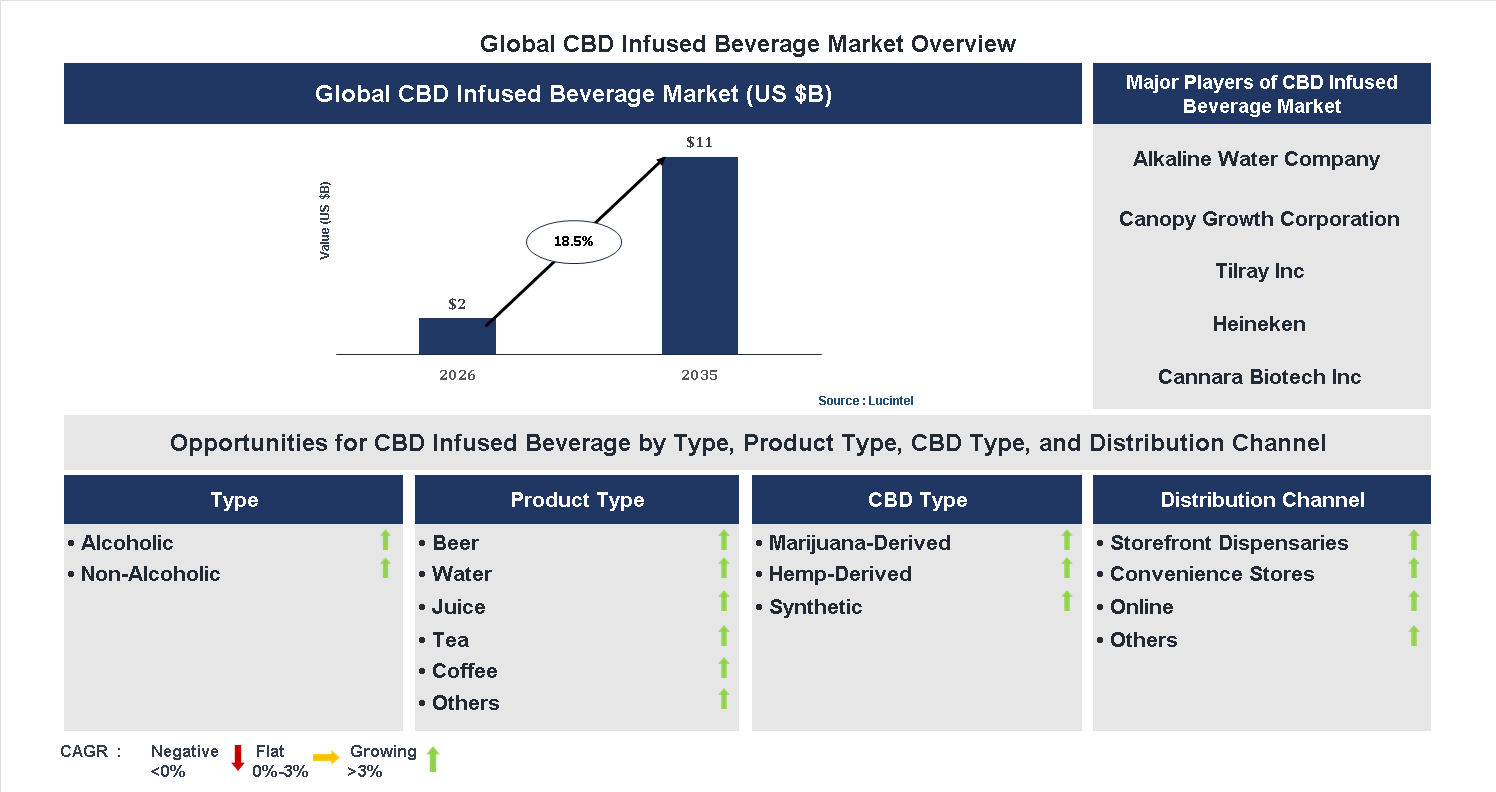
Key data points: The market size in 2035 = $11 billion, growth forecast = 18.5% annually for the next 8 years. Scroll below to get more insights. This market report covers trends, opportunities and forecasts in CBD infused beverage market to 2035 by type (alcoholic and non-alcoholic), product type (beer, water, juice, tea, coffee, and others), CBD type (marijuana-derived, hemp-derived, and synthetic), distribution channel (storefront dispensaries, convenience stores, online, and others), and region (North America, Europe, Asia Pacific, and the Rest of the World)
We'll send your sample report shortly.
• Lucintel forecasts that, within the type category, non-alcoholic is expected to witness higher growth over the forecast period.
• Within the product type category, water is expected to witness the highest growth.
• In terms of region, APAC is expected to witness the highest growth over the forecast period. Gain valuable insights for your business decisions with our comprehensive 150+ page report. Sample figures with some insights are shown below.
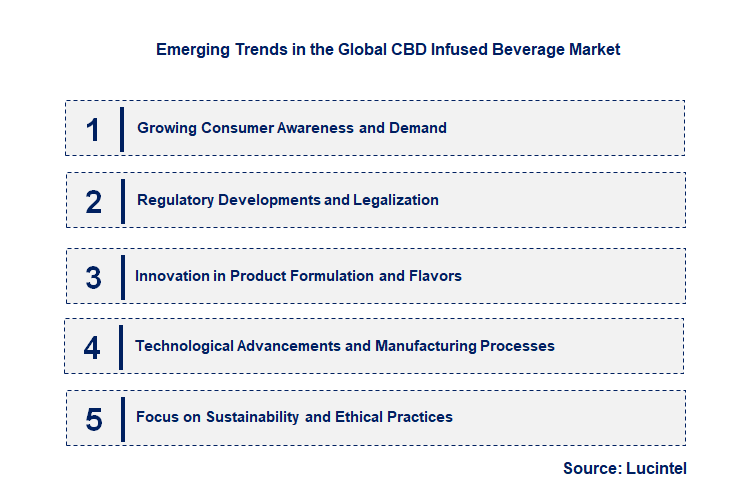
• Growing Consumer Awareness and Demand: Consumers are increasingly aware of CBDs potential health benefits, such as stress relief, pain management, and improved sleep. This awareness drives demand for CBD-infused beverages as a natural alternative to traditional wellness products. The trend is supported by rising health consciousness and a preference for plant-based, functional drinks. As consumers seek transparency and quality, brands are emphasizing ingredient sourcing and product efficacy. This shift is expanding the market beyond early adopters to mainstream audiences, fueling innovation and product diversification.
• Regulatory Developments and Legalization: Evolving legal frameworks around CBD are significantly impacting the market. In many regions, legalization of hemp-derived CBD has facilitated product launches and expanded distribution channels. However, inconsistent regulations and labeling requirements pose challenges for manufacturers and retailers. Companies must navigate complex legal landscapes to ensure compliance, which influences product formulation, marketing claims, and cross-border trade. Clearer regulations are expected to boost consumer confidence and market stability, encouraging investment and innovation in CBD beverage formulations.
• Innovation in Product Formulation and Flavors: Manufacturers are investing in R&D to develop innovative formulations that enhance bioavailability, taste, and shelf life. New delivery formats, such as sparkling waters, teas, and energy drinks, are emerging to cater to diverse consumer preferences. Flavor innovation is also a key focus, with natural, exotic, and functional ingredients being incorporated to differentiate products. These advancements improve consumer experience and acceptance, expanding the market reach. Additionally, formulations targeting specific health benefits are gaining popularity, further driving product differentiation and market growth.
• Technological Advancements and Manufacturing Processes: Cutting-edge extraction and formulation technologies are improving CBD purity, potency, and stability in beverages. Innovations such as nano emulsion and encapsulation techniques enhance bioavailability, making CBD more effective. Automation and scalable manufacturing processes enable cost-effective production, ensuring consistent quality. These technological improvements facilitate product innovation, reduce costs, and meet regulatory standards. As technology advances, companies can develop more sophisticated, high-quality products, boosting consumer trust and expanding market opportunities.
• Focus on Sustainability and Ethical Practices: Consumers are increasingly prioritizing brands that demonstrate environmental responsibility and ethical sourcing. Companies are adopting sustainable farming practices, eco-friendly packaging, and transparent supply chains to appeal to eco-conscious buyers. Certifications and traceability initiatives are becoming standard, enhancing brand credibility. This trend influences product development, marketing, and corporate social responsibility strategies. Emphasizing sustainability not only aligns with consumer values but also helps brands differentiate themselves in a competitive market, fostering long-term loyalty and supporting the growth of the CBD beverage industry. These trends are collectively reshaping the CBD infused beverage market by fostering innovation, ensuring regulatory compliance, and aligning with consumer values. They are driving product diversification, expanding market access, and enhancing consumer trust, ultimately positioning the industry for sustained growth and evolution.
• Market Expansion in Emerging Regions: The legalization of CBD in various countries has opened new markets, increasing demand for CBD-infused beverages. Companies are entering these regions to capitalize on the growing consumer base, which is seeking natural, health-oriented products. This expansion enhances market size and diversifies revenue streams, fostering global growth and encouraging innovation tailored to local preferences.
• Innovation in Product Formulations: Companies are developing unique formulations combining CBD with other functional ingredients like vitamins, adaptogens, and natural flavors. These innovations cater to consumer preferences for personalized wellness solutions and enhance product efficacy. Such developments boost brand differentiation, increase consumer engagement, and expand the range of available options, thereby driving overall market growth.
• Strategic Partnerships and Collaborations: Industry players are forming alliances with ingredient suppliers, distributors, and retail chains to strengthen market presence. These collaborations facilitate product development, improve distribution channels, and increase brand visibility. Strategic partnerships enable faster market penetration, foster innovation, and help companies adapt to evolving consumer demands, ultimately accelerating market expansion.
• Advances in Extraction and Manufacturing Technologies: New extraction methods improve CBD purity and reduce costs, making products more affordable and appealing. Enhanced manufacturing processes ensure consistent quality and safety standards, building consumer trust. These technological advancements support scalability, compliance, and innovation, which are crucial for meeting regulatory requirements and satisfying increasing demand in the competitive market.
• Growing Consumer Awareness and Acceptance: Increased education about CBD benefits and safety has led to higher consumer acceptance. Marketing campaigns and influencer endorsements further boost awareness, encouraging trial and repeat purchases. As acceptance grows, demand for CBD-infused beverages rises, prompting brands to innovate and expand their offerings, which sustains market growth and attracts new customer segments. The overall impact of these developments is a dynamic, expanding market characterized by innovation, increased consumer trust, and global reach. These opportunities are driving revenue growth, fostering product diversity, and establishing CBD-infused beverages as a mainstream wellness option. As the market matures, strategic focus on innovation and regulation will be key to sustaining long-term growth and competitiveness.
• Expansion into Mainstream Retail Channels: CBD infused beverages are increasingly gaining acceptance in mainstream retail outlets, including supermarkets and convenience stores. This expansion broadens consumer access beyond specialty stores, driving higher sales volume. Companies investing in retail partnerships and in-store marketing can capitalize on this trend, reaching a wider demographic. Additionally, mainstream availability enhances product legitimacy, encouraging more consumers to try CBD beverages as part of their daily wellness routines.
• Development of Functional and Health-Oriented Formulations: There is a growing consumer demand for beverages that offer specific health benefits, such as stress relief, improved sleep, or enhanced focus. Innovating with functional ingredients combined with CBD can create differentiated products that appeal to health-conscious buyers. Formulators are exploring natural adaptogens, vitamins, and botanicals to complement CBD’s effects. This opportunity allows brands to position themselves as holistic wellness providers, increasing customer loyalty and commanding premium pricing.
• Entry into Emerging Markets with Favorable Regulations: As regulatory frameworks around CBD continue to evolve globally, emerging markets present significant growth potential. Countries with supportive legislation and increasing consumer acceptance are prime targets for expansion. Establishing local manufacturing, distribution, and marketing strategies can help brands establish early market dominance. This approach minimizes import barriers and builds brand recognition, enabling companies to capitalize on untapped demand and establish a competitive advantage in these regions.
• Innovation in Packaging and Branding to Attract New Consumers: Eye-catching, sustainable, and user-friendly packaging can differentiate CBD beverages on crowded shelves. Creative branding that emphasizes transparency, quality, and wellness benefits appeals to a broader audience, including younger consumers and those new to CBD. Incorporating convenient formats like single-serve bottles or ready-to-drink cans enhances portability and ease of use. Strategic packaging and branding efforts can boost consumer engagement, foster brand loyalty, and expand market reach.
• Strategic Partnerships with Wellness and Lifestyle Brands: Collaborations with established wellness, fitness, and lifestyle brands can enhance credibility and visibility for CBD infused beverages. Co-branding initiatives, sponsorships, and cross-promotions can tap into existing loyal customer bases. These partnerships facilitate product education, increase trust, and position CBD beverages as integral to a healthy lifestyle. Leveraging the reputation of partner brands accelerates market penetration and supports premium positioning in a competitive landscape. The overall growth of the CBD infused beverage market hinges on these opportunities, which collectively enable brands to expand their reach, innovate product offerings, and adapt to evolving consumer preferences. Embracing these strategies will foster sustainable growth, enhance market share, and solidify the industry’s position as a key segment within the broader functional beverage market.
• Technological Innovation: The development of advanced extraction and formulation techniques has significantly enhanced product quality and variety. Innovations such as nano emulsion technology improve bioavailability, making CBD beverages more effective and appealing. These technological advancements enable manufacturers to create diverse, consistent, and safe products, fostering consumer trust and expanding market reach. As R&D continues, the market is expected to see more innovative offerings, further fueling growth and differentiation among competitors.
• Rising Consumer Awareness and Health Trends: Increasing awareness about the potential health benefits of CBD, such as stress relief, pain management, and anti-inflammatory properties, is boosting consumer interest. The shift towards natural, plant-based, and functional beverages aligns with the wellness trend, encouraging consumers to incorporate CBD-infused drinks into their daily routines. This growing demand is supported by social media and influencer marketing, which amplify awareness and acceptance, thereby expanding the customer base and driving sales.
• Regulatory Developments and Legalization: Evolving legal frameworks across different regions are pivotal in shaping the market landscape. Countries and states that have legalized or decriminalized CBD use provide a conducive environment for market growth. Clear regulations regarding product standards, labeling, and THC content help build consumer confidence and facilitate market entry for new players. Conversely, restrictive or ambiguous regulations can hinder product development, limit distribution channels, and create compliance challenges, impacting overall growth.
• Economic Growth and Disposable Income: Increasing disposable incomes, especially in emerging markets, enable consumers to spend more on premium wellness products, including CBD beverages. Economic stability and growth foster a favorable environment for market expansion, as consumers are more willing to try new and innovative products. Additionally, the rise of the middle class and urbanization contribute to higher demand for functional and lifestyle beverages, supporting sustained market growth.
• Strategic Partnerships and Market Expansion: Collaborations between CBD brands and established beverage companies facilitate product innovation, distribution, and marketing. Such partnerships help in leveraging existing supply chains, retail networks, and consumer bases, accelerating market penetration. Expansion into new geographic regions and retail channels, including online platforms, further broadens market reach. These strategic moves are crucial for overcoming barriers to entry and establishing a competitive edge in a rapidly evolving industry. The challenges facing the CBD infused beverage market include:
• Regulatory Uncertainty and Compliance: The CBD market faces complex and often inconsistent legal regulations across different jurisdictions. Uncertainty regarding legal status, permissible THC levels, and labeling requirements complicates product development and distribution. Companies must navigate a patchwork of laws, which can delay product launches and increase compliance costs. Failure to adhere to evolving standards risks legal penalties, product recalls, and damage to brand reputation, thereby hindering market growth.
• Quality Control and Standardization Issues: Variability in CBD sourcing, extraction methods, and formulation processes leads to inconsistencies in product quality. Lack of standardized testing and certification can result in products with variable potency, contaminants, or inaccurate labeling, undermining consumer trust. Ensuring quality control is essential for regulatory approval and consumer safety, but it remains a significant challenge, especially for small and new entrants, potentially limiting market expansion.
• Market Saturation and Competition: As the market attracts numerous new entrants, intense competition emerges, leading to price wars and reduced profit margins. Differentiating products becomes increasingly difficult amid a flood of similar offerings. Additionally, consumer skepticism about product efficacy and safety can impede adoption. Companies must invest heavily in branding, innovation, and marketing to maintain market share, which can be resource-intensive and challenging in a crowded landscape. The CBD infused beverage market is driven by technological advancements, health-conscious consumer trends, favorable regulatory changes, economic growth, and strategic collaborations. However, regulatory uncertainties, quality control issues, and market saturation pose significant challenges. These factors collectively influence the markets growth potential, requiring stakeholders to innovate, comply, and differentiate to succeed. The overall impact suggests a promising yet complex landscape that demands strategic agility and regulatory awareness for sustained expansion.
• Alkaline Water Company
• Canopy Growth Corporation
• Tilray Inc
• Heineken
• Cannara Biotech Inc
• Aurora Cannabis
• Aphria Inc.
• Daytrip Beverages
• Curaleaf
• Dixie Brands
• Alcoholic
• Non-Alcoholic
• Beer
• Water
• Juice
• Tea
• Coffee
• Others
• Marijuana-Derived
• Hemp-Derived
• Synthetic
• Storefront Dispensaries
• Convenience Stores
• Online
• Others
• North America
• Europe
• Asia Pacific
• The Rest of the World
• United States: The US market has seen significant growth with a wide variety of CBD-infused beverages, including sodas, teas, and energy drinks. Regulatory clarity has improved, encouraging more brands to enter the space. Major brands are investing in research to validate health claims, and consumer awareness continues to rise, boosting sales. The industry is also witnessing innovations in organic and functional beverages targeting wellness trends.
• China: China is gradually opening up to CBD products, with recent regulatory adjustments allowing limited use of hemp-derived ingredients. Domestic companies are exploring traditional herbal blends infused with CBD, aiming to combine cultural preferences with modern wellness trends. The market remains nascent but shows potential for growth as legal frameworks evolve and consumer acceptance increases.
• Germany: Germanys market is characterized by a focus on high-quality, organic CBD beverages, with a strong emphasis on transparency and safety standards. Premium brands are gaining popularity, and partnerships with health and wellness sectors are expanding. The country is also witnessing increased interest in functional drinks that combine CBD with other natural ingredients for targeted health benefits.
• India: India is in the early stages of exploring CBD-infused beverages, with regulatory hurdles still present. However, there is growing interest among consumers in herbal and traditional formulations combined with CBD. Startups are experimenting with innovative blends, and the market is expected to grow as legal and regulatory clarity improves, alongside increasing awareness of CBDs potential benefits.
• Japan: Japan is focusing on scientific research and establishing quality standards for CBD products. The market is driven by health-conscious consumers and a preference for premium, well-regulated products. Japanese companies are investing in clinical studies to validate health claims, and collaborations with research institutions are common. The industry is poised for growth as regulations become more defined and consumer trust increases.


• Alkaline Water Company
• Canopy Growth Corporation
• Tilray Inc
• Heineken
• Cannara Biotech Inc
• Aurora Cannabis
• Aphria Inc.
• Daytrip Beverages
• Curaleaf
• Dixie Brands Q6. Which CBD infused beverage market segment will be the largest in future? Answer: Lucintel forecasts that, within the type category, non-alcoholic is expected to witness higher growth over the forecast period. Q7. In CBD infused beverage market, which region is expected to be the largest in next 5 years? Answer: In terms of region, APAC is expected to witness the highest growth over the forecast period. Q8. Do we receive customization in this report? Answer: Yes, Lucintel provides 10% customization without any additional cost.


Choose a license that fits your team. Instant PDF delivery.
Prices exclude taxes. Instant delivery. Custom licensing available on request.
Market Report · July 22, 2026
Market Report · July 22, 2026
Market Report · July 22, 2026
Trusted partner for strategic intelligence and business growth


Receive a complimentary market analysis tailored to your industry. Our analysts will identify key growth opportunities and competitive dynamics specific to your business.

Market size, growth rate, and key trend analysis for your specific sector.

Top competitor positioning and market share analysis.

Strategic recommendations backed by data-driven insights.
Get curated market intelligence and competitive moves straight to your inbox.
By subscribing, you agree to receive our monthly insights. Unsubscribe anytime.
Receive a complimentary market analysis tailored to your industry. Our analysts will identify key growth opportunities and competitive dynamics specific to your business.
Market size, growth rate, and key trend analysis for your specific sector.
Top competitor positioning and market share analysis.
Strategic recommendations backed by data-driven insights.
Get curated market intelligence, emerging trends, and competitive moves straight to your inbox each month.
By subscribing, you agree to receive our monthly insights. Unsubscribe anytime.
We'll send your sample report shortly.