
Cashmere Clothing Market Report: Trends, Forecast and Competitive Analysis to 2035

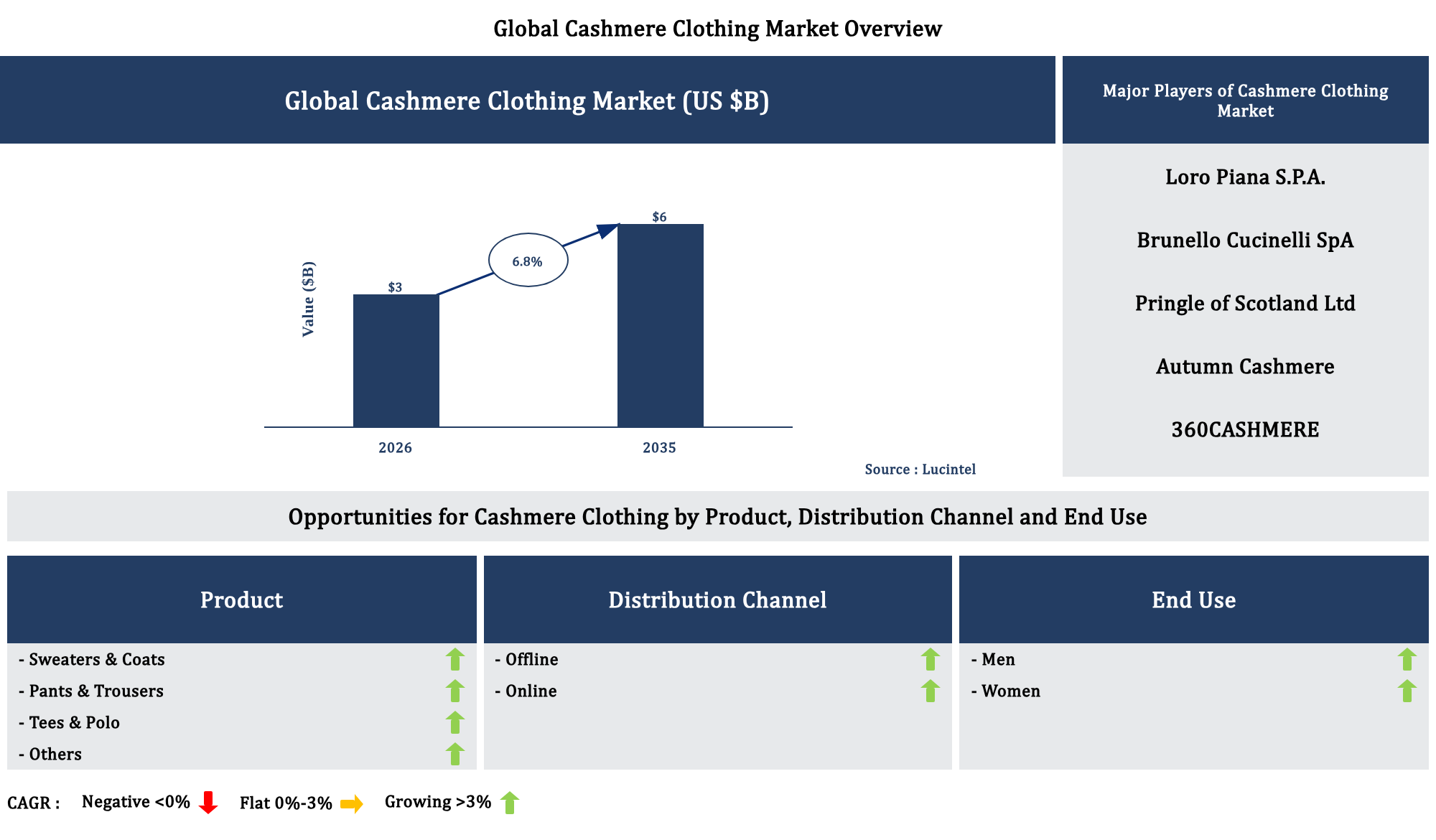
Key data points: The market size in 2035 = $6 billion, growth forecast = 6.8% annually for the next 8 years. Scroll below to get more insights. This market report covers trends, opportunities and forecasts in cashmere clothing market to 2035 by product (sweaters & coats, pants & trousers, tees & polo, and others), distribution channel (offline and online), end use (men and women), and region (North America, Europe, Asia Pacific, and the Rest of the World)

Publisher: Lucintel Last Updated: July 2026
See Pricing

Download Sample Report

| ✨ New Download Sample report — Get instant insights! | ✨ New Download Sample report — Get instant insights!

Cashmere Clothing Market Report: Trends, Forecast and Competitive Analysis to 2035

Cashmere Clothing Market

The future of the global cashmere clothing market looks promising with opportunities in the offline and online markets. The global cashmere clothing market is expected to reach an estimated $6 billion by 2035 with a CAGR of 6.8% from 2026 to 2035. The major drivers for this market are the rising demand for premium & comfortable winter wear, the increasing preference for sustainable & natural fabrics, and the growing fashion awareness among young consumers.

  • Lucintel forecasts that, within the product category, sweater & coat is expected to witness higher growth over the forecast period due to the increasing demand for premium winter apparel and luxury fashion.
  • Within the distribution channel category, online is expected to witness the highest growth due to the growing consumer preference for convenient online shopping platforms.
  • In terms of regions, Europe will remain the largest region over the forecast period due to the strong luxury fashion industry and high premium apparel demand.

Gain valuable insights for your business decisions with our comprehensive 150+ page report. Sample figures with some insights are shown below.
Cashmere Clothing Market

Emerging Trends in the Cashmere Clothing Market

The cashmere clothing market is experiencing significant transformation driven by evolving consumer preferences, technological advancements, and sustainability concerns. As consumers seek luxury with ethical considerations, brands are innovating to meet these demands. The market is also witnessing shifts in distribution channels and product offerings, reflecting broader fashion industry trends. These developments are not only enhancing customer experience but also redefining competitive dynamics within the industry. Understanding these emerging trends is crucial for stakeholders aiming to capitalize on growth opportunities and adapt to the changing landscape of luxury and sustainable fashion.

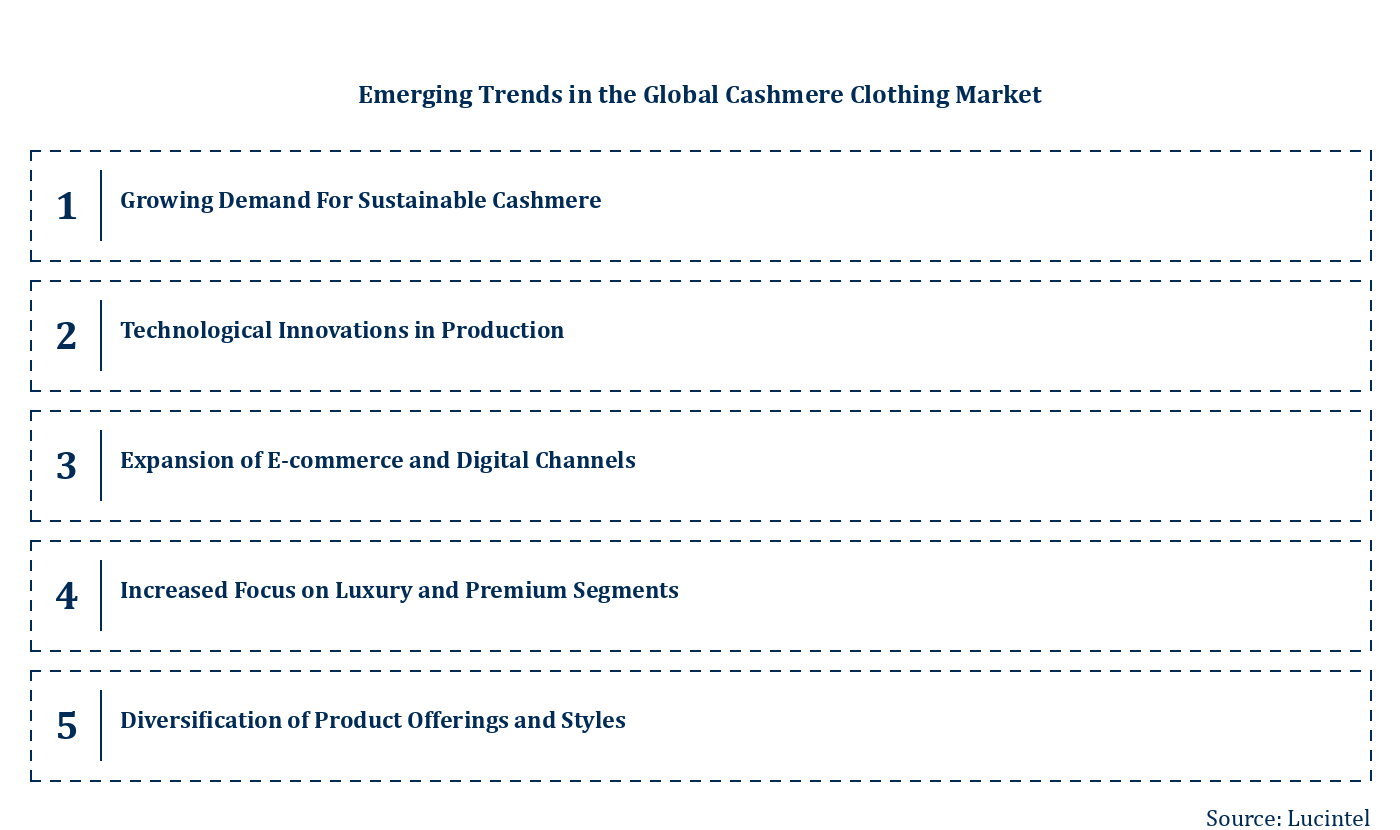
  • Growing Demand for Sustainable Cashmere: Increasing consumer awareness about environmental impact is driving demand for ethically sourced and eco-friendly cashmere. Brands are adopting sustainable practices such as responsible grazing, eco-friendly processing, and transparent supply chains. This trend enhances brand reputation and appeals to eco-conscious consumers, leading to higher sales and loyalty. The shift towards sustainability is also encouraging innovation in alternative fibers and recycling methods, which could reshape raw material sourcing and production processes in the market.
  • Technological Innovations in Production: Advanced manufacturing technologies like 3D knitting, automation, and quality control systems are revolutionizing cashmere production. These innovations improve efficiency, reduce waste, and ensure consistent quality, which is vital for luxury branding. Additionally, technology enables customization and faster turnaround times, meeting the demand for personalized products. As a result, brands can offer higher-quality garments at competitive prices, expanding market reach and enhancing customer satisfaction while maintaining sustainability standards.
  • Expansion of E-commerce and Digital Channels: The rise of online shopping platforms and digital marketing is transforming how consumers access cashmere clothing. E-commerce provides wider reach, convenience, and personalized shopping experiences through virtual try-ons and AI-driven recommendations. Brands are investing heavily in digital infrastructure to capture the growing online consumer base, especially among younger demographics. This shift is also enabling direct-to-consumer sales, reducing reliance on traditional retail channels, and fostering brand loyalty through digital engagement and exclusive online collections.
  • Increased Focus on Luxury and Premium Segments: Consumers are increasingly seeking high-end, exclusive cashmere products that emphasize craftsmanship and heritage. This trend is prompting brands to develop limited editions, bespoke services, and collaborations with designers. The premium segments growth is driven by rising disposable incomes and a desire for status symbols. As a result, the market is witnessing a surge in luxury cashmere offerings, which command higher margins and reinforce brand prestige. This focus on exclusivity is reshaping product development and marketing strategies within the industry.
  • Diversification of Product Offerings and Styles: The market is expanding beyond traditional sweaters and scarves to include a broader range of apparel such as coats, dresses, and accessories. Trends in fashion, such as athleisure and casual wear, are influencing product innovation, blending comfort with luxury. Brands are also experimenting with colors, patterns, and textures to appeal to diverse consumer preferences. This diversification allows brands to tap into new customer segments and adapt to changing fashion trends, ensuring sustained growth and relevance in a competitive landscape.

These emerging trends are collectively reshaping the cashmere clothing market by emphasizing sustainability, technological advancement, digital transformation, luxury focus, and product diversification. These developments are fostering innovation, enhancing consumer engagement, and positioning the market for sustainable growth in a rapidly evolving fashion industry.
Cashmere Clothing Market by country

Recent Developments in the Cashmere Clothing Market

The cashmere clothing market is experiencing rapid growth driven by increasing consumer demand for luxury, sustainability, and innovative designs. Advances in production techniques and expanding global markets are fueling this trend. Consumers are seeking high-quality, eco-friendly options, prompting brands to innovate. The markets evolution reflects broader shifts toward sustainable fashion and premium products, creating new opportunities for manufacturers and retailers. These developments are shaping a dynamic landscape that promises sustained growth and diversification in the coming years.

  • Growing Demand for Luxury and Premium Products: Consumers increasingly seek high-quality, luxurious cashmere clothing, boosting market sales and encouraging brands to enhance product offerings with finer, more exclusive materials, which elevates brand value and customer loyalty.
  • Sustainability and Eco-Friendly Initiatives: The shift toward sustainable sourcing and eco-conscious production methods is transforming the industry, attracting environmentally aware consumers and encouraging brands to adopt greener practices, thereby strengthening market reputation and expanding customer base.
  • Technological Innovations in Production: Advanced knitting and dyeing technologies improve efficiency and quality, reducing costs and waste. These innovations enable brands to offer more diverse designs and better durability, which enhances consumer satisfaction and broadens market appeal.
  • Expansion Into Emerging Markets: Increasing disposable incomes and fashion awareness in regions like Asia-Pacific and Africa are opening new avenues for growth. Local brands and international players are investing heavily, leading to increased market penetration and diversified consumer bases.
  • E-commerce and Digital Marketing Growth: Online platforms facilitate wider reach and direct consumer engagement, enabling brands to showcase their products globally. Digital marketing strategies boost brand visibility, drive sales, and foster customer loyalty in a competitive landscape.

The overall impact of these developments is a more vibrant, sustainable, and innovative cashmere clothing market. Enhanced consumer preferences, technological advancements, and expanding global reach are driving growth, increasing competition, and encouraging brands to prioritize quality and sustainability. This evolution promises sustained market expansion and diversification in the coming years.

Strategic Growth Opportunities in the Cashmere Clothing Market

The cashmere clothing market is experiencing significant growth driven by increasing consumer demand for luxury, comfort, and sustainable fashion. Rising disposable incomes and a shift towards premium apparel are fueling market expansion across regions. Innovations in fiber processing and a focus on eco-friendly sourcing are creating new opportunities for brands. As consumers become more conscious of quality and sustainability, the market is poised for strategic growth through product diversification and targeted marketing efforts.

  • Expansion Into Emerging Markets Offers New Growth Avenues: As disposable incomes rise in developing regions, demand for luxury and premium clothing, including cashmere, is increasing. Brands are expanding their retail presence and online platforms to tap into these markets, driven by a growing middle class seeking high-quality, fashionable apparel. This expansion not only broadens customer bases but also diversifies revenue streams, positioning the market for sustained growth.
  • Innovation in Sustainable and Eeco-Friendly Cashmere Production Drives Market Appeal: Consumers are increasingly prioritizing sustainability, prompting brands to adopt eco-friendly sourcing and processing methods. Innovations such as biodegradable fibers, ethical farming practices, and reduced water usage enhance brand reputation and meet consumer expectations. This focus on sustainability differentiates products in a competitive market, attracting environmentally conscious buyers and fostering long-term loyalty.
  • Product Diversification and Premium Offerings Expand Market Reach: Brands are diversifying their cashmere collections to include a wider range of products such as accessories, blends, and seasonal items. Introducing limited editions and collaborations with designers enhances exclusivity and appeal. Premium offerings with innovative designs and superior quality cater to affluent consumers, increasing average transaction values and expanding the market’s scope beyond traditional apparel.
  • E-commerce and Digital Marketing Accelerate Market Penetration: The rise of online shopping platforms and targeted digital marketing strategies enable brands to reach a global audience efficiently. Virtual try-ons, augmented reality, and personalized shopping experiences enhance customer engagement. E-commerce reduces geographical barriers, allowing brands to tap into new customer segments and increase sales, thereby fueling overall market growth.
  • Strategic Collaborations and Brand Positioning Strengthen Market Presence: Partnerships with designers, celebrities, and lifestyle brands elevate brand visibility and desirability. Limited editions and co-branded collections create buzz and attract diverse consumer groups. Effective brand positioning through storytelling and emphasizing craftsmanship appeals to luxury buyers, reinforcing market leadership and encouraging repeat purchases, ultimately driving sustained growth in the cashmere clothing sector.

The overall market outlook is positively influenced by these opportunities, fostering innovation, expanding consumer bases, and emphasizing sustainability. As brands leverage these growth avenues, the cashmere clothing market is set to experience robust expansion, driven by evolving consumer preferences and strategic industry initiatives. This dynamic environment promises continued innovation and increased competitiveness, ensuring long-term market vitality.

Cashmere Clothing Market Drivers and Challenges

The cashmere clothing market is influenced by a variety of technological, economic, and regulatory factors that shape its growth and sustainability. Advances in textile manufacturing technology have improved product quality and production efficiency, while economic trends such as rising disposable incomes and changing consumer preferences drive demand. Regulatory frameworks concerning sustainable sourcing and ethical practices also impact market operations. Additionally, global trade policies and environmental concerns influence supply chains and pricing strategies. Navigating these complex drivers and challenges is essential for market players aiming to capitalize on opportunities and mitigate risks in this competitive landscape.

The factors responsible for driving the cashmere clothing market include:-

  • Technological Innovations: The development of advanced spinning and weaving techniques has significantly enhanced the quality, durability, and softness of cashmere fibers. Innovations such as eco-friendly dyeing processes and sustainable production methods have also gained prominence, appealing to environmentally conscious consumers. These technological advancements reduce production costs and enable brands to offer high-quality products, thereby expanding market reach and consumer satisfaction. As technology continues to evolve, the market is expected to benefit from increased efficiency and product differentiation, fueling overall growth.
  • Rising Disposable Incomes: Increasing disposable incomes across emerging and developed economies have led to higher consumer spending on luxury and premium apparel, including cashmere clothing. Consumers are willing to invest in high-quality, comfortable, and fashionable garments, which boosts demand. The growing middle class in countries like China, India, and parts of Southeast Asia is a significant driver, as these consumers seek status and quality in their wardrobe choices. This economic trend supports premium pricing strategies and encourages brands to expand their product lines, thereby fostering market expansion.
  • Changing Consumer Preferences: Modern consumers are increasingly prioritizing sustainable, ethically sourced, and luxury products. There is a growing awareness of the environmental impact of textile production, prompting demand for eco-friendly cashmere. Additionally, fashion trends favoring comfort and versatility have increased interest in cashmere clothing, which is seen as a symbol of luxury and sophistication. Social media influence and celebrity endorsements further shape consumer preferences, encouraging brands to innovate and diversify their offerings. These shifts in consumer behavior are vital in driving market growth and product development.
  • Global Trade and Supply Chain Dynamics: The cashmere market benefits from a complex global supply chain involving regions like Mongolia, China, and Nepal. Trade agreements, tariffs, and geopolitical stability influence the availability and pricing of raw materials. Efficient logistics and supply chain management enable timely delivery and cost control, which are crucial for competitiveness. The ability to source high-quality cashmere sustainably and at scale directly impacts market growth. As international trade continues to evolve, companies that adapt to these dynamics can capitalize on new markets and mitigate risks associated with supply disruptions.

The Challenges in The cashmere clothing market Are: -

  • Environmental and Ethical Concerns: The production of cashmere has faced criticism due to its environmental impact, including overgrazing and land degradation caused by goat herding. Ethical issues related to animal welfare and sustainable sourcing practices also pose challenges, as consumers become more conscious of the origins of their clothing. Regulatory pressures and certifications demanding transparency and sustainability are increasing, which can raise production costs and complicate supply chains. Addressing these concerns is essential for maintaining brand reputation and market access, but it requires significant investment and innovation.
  • Fluctuations in Raw Material Prices: The price of cashmere fibers is highly volatile, influenced by factors such as weather conditions, goat population health, and geopolitical issues in key sourcing regions. Price fluctuations can impact profit margins and pricing strategies, making it difficult for manufacturers and retailers to plan long-term investments. Sudden increases in raw material costs may lead to higher retail prices, potentially reducing consumer demand. Managing these price risks requires strategic sourcing, inventory management, and diversification, which can be resource-intensive and complex.
  • Competition and Market Saturation: The luxury apparel market, including cashmere clothing, faces intense competition from both established brands and emerging players. Market saturation in key regions limits growth opportunities and puts pressure on pricing and margins. Additionally, counterfeit products and imitation cashmere threaten brand integrity and consumer trust. Companies must invest in branding, quality assurance, and innovation to differentiate themselves. Navigating this competitive landscape requires strategic marketing and product development, which can increase operational costs and challenge profitability.

The cashmere clothing market is driven by technological advancements, rising incomes, changing consumer preferences, and global trade dynamics. However, it faces significant challenges related to environmental sustainability, raw material price volatility, and intense competition. These factors collectively influence market growth, requiring stakeholders to adopt innovative, sustainable, and strategic approaches. Successfully managing these drivers and challenges will determine the markets future trajectory, with opportunities for growth balanced by the need for responsible practices and adaptability in a dynamic environment.

List of Cashmere Clothing Market Companies

Companies in the market compete on the basis of product quality offered. Major players in this market focus on expanding their manufacturing facilities, R&D investments, infrastructural development, and leverage integration opportunities across the value chain. Through these strategies cashmere clothing market companies cater increasing demand, ensure competitive effectiveness, develop innovative products & technologies, reduce production costs, and expand their customer base. Some of the cashmere clothing market companies profiled in this report include-

  • Loro Piana S.P.A.
  • Brunello Cucinelli SpA
  • Pringle of Scotland Ltd
  • Autumn Cashmere
  • 360CASHMERE
  • KINROSS CASHMERE
  • REPEAT cashmere
  • TSE Cashmere
  • WHITE + WARREN
  • Gobi Cashmere

Cashmere Clothing Market by Segment

The study includes a forecast for the global cashmere clothing market by product, distribution channel, end use, and region.

  • Cashmere Clothing Market by Product [Value from 2019 to 2035]:
    • Sweaters & Coats
    • Pants & Trousers
    • Tees & Polo
    • Others
  • Cashmere Clothing Market by Distribution Channel [Value from 2019 to 2035]:
    • Offline
    • Online
  • Cashmere Clothing Market by End Use [Value from 2019 to 2035]:
    • Men
    • Women
  • Cashmere Clothing Market by Region [Value ($B) from 2019 to 2035]:
    • North America
    • Europe
    • Asia Pacific
    • The Rest of the World

Country Wise Outlook for the Cashmere Clothing Market

The cashmere clothing market has experienced significant shifts driven by technological innovations, changing consumer preferences, and global economic factors. As luxury and sustainable fashion trends grow, countries are adopting new strategies to enhance production, improve quality, and expand market reach. The United States, China, Germany, India, and Japan are key players, each contributing uniquely to the market's evolution through advancements in manufacturing, sustainability initiatives, and retail expansion. These developments reflect broader industry trends toward eco-friendly practices, digital integration, and increased demand for high-quality, luxury apparel.

  • United States: The US market has seen a surge in demand for sustainable cashmere products, with brands investing in eco-friendly sourcing and ethical manufacturing practices. Retailers are expanding online platforms to reach a broader audience, and luxury brands are launching exclusive collections to cater to high-end consumers. Innovations in fiber processing have improved product durability and softness, boosting consumer confidence and sales.
  • China: China remains the largest producer and consumer of cashmere clothing, with recent investments in advanced fiber production technologies to enhance quality and reduce environmental impact. Domestic brands are gaining popularity through aggressive marketing and e-commerce expansion, capturing both local and international markets. The government’s support for sustainable practices is encouraging eco-friendly farming and processing methods.
  • Germany: Germany's market emphasizes high-quality craftsmanship and sustainable sourcing, with a focus on premium and luxury segments. Several brands are adopting circular economy principles, recycling cashmere fibers to reduce waste. Technological integration, such as digital design and online customization, is enhancing consumer engagement and product personalization.
  • India: India is emerging as a significant player in cashmere production, leveraging its traditional expertise in wool and fiber processing. Recent developments include investments in modern processing facilities and sustainable farming practices. The market is witnessing increased exports and collaborations with international brands, aiming to position India as a key supplier of high-quality cashmere.
  • Japan: Japan's market is characterized by innovation in fabric technology and a focus on minimalist, high-end fashion. Japanese brands are incorporating eco-conscious materials and promoting slow fashion principles. The adoption of smart retail solutions and online platforms has expanded access to international markets, while research into eco-friendly dyeing and processing methods continues to advance the industry.

Features of the Cashmere Clothing Market

  • Market Size Estimates: Cashmere clothing market size estimation in terms of value ($B).
  • Trend and Forecast Analysis: Market trends (2019 to 2025) and forecast (2026 to 2035) by various segments and regions.
  • Segmentation Analysis: Cashmere clothing market size by product, distribution channel, end use, and region in terms of value ($B).
  • Regional Analysis: Cashmere clothing market breakdown by North America, Europe, Asia Pacific, and Rest of the World.
  • Growth Opportunities: Analysis of growth opportunities in different products, distribution channels, end uses, and regions for the cashmere clothing market.
  • Strategic Analysis: This includes M&A, new product development, and competitive landscape of the cashmere clothing market.
  • Analysis of competitive intensity of the industry based on Porter’s Five Forces model.

Top 5 Companies

  • Loro Piana S.P.A.
  • Brunello Cucinelli SpA
  • Pringle of Scotland Ltd
  • Autumn Cashmere
  • 360CASHMERE

Table of Contents

1. Executive Summary
14.1 Competitive Analysis Overview

List of Figures

List of Tables

Methodology

Lucintel has been in the business of market research and management consulting since 2000 and has published over 1000 market intelligence reports in various markets / applications and served over 1,000 clients worldwide. This study is a culmination of four months of full-time effort performed by Lucintel's analyst team. The analysts used the following sources for the creation and completion of this valuable report:

  • In-depth interviews of the major players in this market
  • Detailed secondary research from competitors' financial statements and published data
  • Extensive searches of published works, market, and database information pertaining to industry news, company press releases, and customer intentions
  • A compilation of the experiences, judgments, and insights of Lucintel's professionals, who have analyzed and tracked this market over the years.

Extensive research and interviews are conducted across the supply chain of this market to estimate market share, market size, trends, drivers, challenges, and forecasts. Below is a brief summary of the primary interviews that were conducted by job function for this report.

Lucintel's methodology for market research

Thus, Lucintel compiles vast amounts of data from numerous sources, validates the integrity of that data, and performs a comprehensive analysis. Lucintel then organizes the data, its findings, and insights into a concise report designed to support the strategic decision-making process. The figure below is a graphical representation of Lucintel's research process.

Primary interviews by job function

Buy Now

Choose a license that fits your team. Instant PDF delivery.

Market Report

1 User PDF

$4,850
Buy Now

Market Report

2-5 Users PDF

$6,700
Buy Now

Market Report

Corporate PDF

$8,850
Buy Now

Market Report

Global PDF

$10,000
Buy Now

Prices exclude taxes. Instant delivery. Custom licensing available on request.

Frequently Asked Questions

What is the cashmere clothing market size?
The global cashmere clothing market is expected to reach an estimated $6 billion by 2035.
What is the growth forecast for cashmere clothing market?
The global cashmere clothing market is expected to grow with a CAGR of 6.8% from 2026 to 2035.
What are the major drivers influencing the growth of the cashmere clothing market?
The major drivers for this market are the rising demand for premium & comfortable winter wear, the increasing preference for sustainable & natural fabrics, and the growing fashion awareness among young consumers.
What are the major segments for cashmere clothing market?
The future of the cashmere clothing market looks promising with opportunities in the offline and online markets.
Who are the key cashmere clothing market companies?

Some of the key cashmere clothing companies are as follows:

  • Loro Piana S.P.A.
  • Brunello Cucinelli SpA
  • Pringle of Scotland Ltd
  • Autumn Cashmere
  • 360CASHMERE
  • KINROSS CASHMERE
  • REPEAT cashmere
  • TSE Cashmere
  • WHITE + WARREN
  • Gobi Cashmere
Which cashmere clothing market segment will be the largest in future?
Lucintel forecasts that, within the product category, sweater & coat is expected to witness higher growth over the forecast period.
In cashmere clothing market, which region is expected to be the largest in next 8 years?
In terms of region, Europe will remain the largest region over the forecast period.
Do we receive customization in this report?
Yes, Lucintel provides 10% customization without any additional cost.

Key Questions

  • What are some of the most promising, high-growth opportunities for the cashmere clothing market by product (sweaters & coats, pants & trousers, tees & polo, and others), distribution channel (offline and online), end use (men and women), and region (North America, Europe, Asia Pacific, and the Rest of the World)?
  • Which segments will grow at a faster pace and why?
  • Which region will grow at a faster pace and why?
  • What are the key factors affecting market dynamics? What are the key challenges and business risks in this market?
  • What are the business risks and competitive threats in this market?
  • What are the emerging trends in this market and the reasons behind them?
  • What are some of the changing demands of customers in the market?
  • What are the new developments in the market? Which companies are leading these developments?
  • Who are the major players in this market? What strategic initiatives are key players pursuing for business growth?
  • What are some of the competing products in this market and how big of a threat do they pose for loss of market share by material or product substitution?
  • What M&A activity has occurred in the last 5 years and what has its impact been on the industry?
Why Choose Us

The Lucintel Advantage

Trusted partner for strategic intelligence and business growth

25+ Years Excellence

25+ Years Excellence

Quarter century of proven expertise in management consulting and market research across global markets.
Game-Changer Ideas

Game-Changer Ideas

Innovative strategies and actionable insights that help clients become the smartest in their industry.
Global Reach

Global Reach

Extensive coverage across 50+ industries and markets worldwide with localized expertise.
Start Your Growth Journey

Get Your Free
Market Intelligence
Briefing

Receive a complimentary market analysis tailored to your industry. Our analysts will identify key growth opportunities and competitive dynamics specific to your business.

Custom Market Snapshot

Market size, growth rate, and key trend analysis for your specific sector.

Competitive Landscape Overview

Top competitor positioning and market share analysis.

Growth Opportunity Identification

Strategic recommendations backed by data-driven insights.

Subscribe

Subscribe to our Newsletter

Get curated market intelligence and competitive moves straight to your inbox.

By subscribing, you agree to receive our monthly insights. Unsubscribe anytime.

Industry Trends Market Signals Opportunities Competitor Moves