
Report Feature
Cardiopulmonary Bypass Equipment Market Trends and Forecast
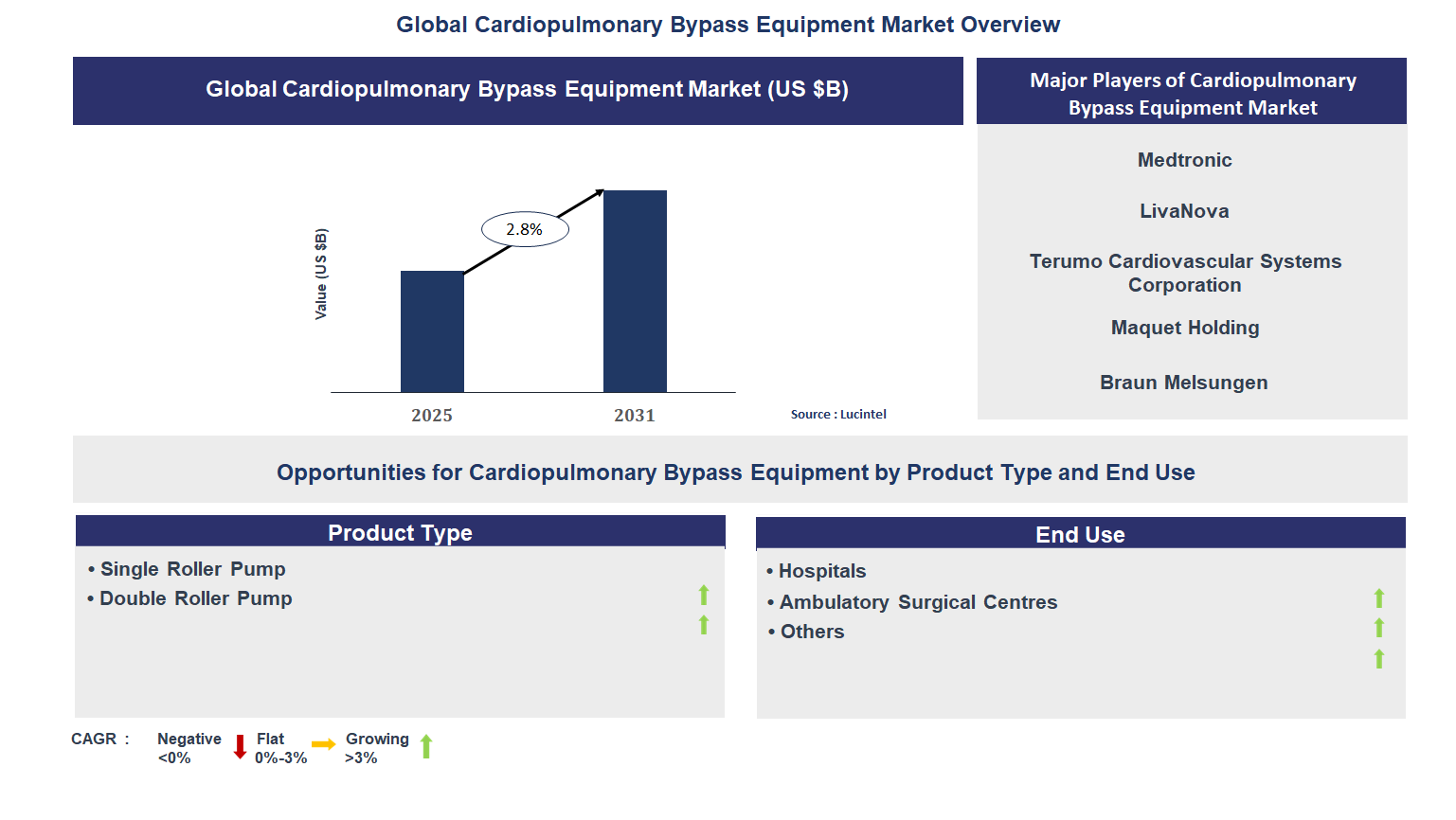
The future of the global cardiopulmonary bypass equipment market looks promising with opportunities in the hospital and ambulatory surgical centre markets. The global cardiopulmonary bypass equipment market is expected to grow with a CAGR of 2.8% from 2025 to 2031. The major drivers for this market are the rising burden of cardiovascular diseases & respiratory diseases and the increasing number of surgical procedures.• Lucintel forecasts that, within the product type category, single roller pump is expected to witness higher growth over the forecast period.
• Within the end use category, hospital is expected to witness higher growth.
• In terms of region, APAC is expected to witness the highest growth over the forecast period. Gain valuable insights for your business decisions with our comprehensive 150+ page report. Sample figures with some insights are shown below.
Emerging Trends in the Cardiopulmonary Bypass Equipment Market
The cardiopulmonary bypass equipment market is evolving through advancements in automation, biocompatible materials, and real-time data analytics. Hospitals are adopting smarter, safer, and more efficient devices for improved cardiac outcomes. These emerging trends are driven by innovation, sustainability, and the growing need to optimize performance and minimize surgical complications.• Integration of Automation and AI: Advanced bypass systems are incorporating automation and AI-driven control mechanisms for enhanced monitoring and precision. This minimizes human error, stabilizes perfusion parameters, and improves patient safety during complex surgeries, resulting in faster decision-making and better procedural consistency.
• Adoption of Biocompatible and Durable Materials: Manufacturers are developing equipment using advanced biocompatible polymers and coatings that minimize hemolysis and clot formation. This ensures safer blood handling, reduces infection risk, and improves device longevity, strengthening the overall reliability of bypass systems.
• Shift Toward Portable and Compact Devices: Compact and transportable bypass systems are gaining popularity for use in smaller operating rooms and emergency cardiac procedures. These portable devices offer flexibility, space efficiency, and faster setup, expanding accessibility in developing healthcare environments.
• Emphasis on Real-Time Monitoring and Data Analytics: Enhanced integration of sensors and digital monitoring systems allows continuous tracking of flow rates, oxygenation, and pressure. This data-driven approach supports precision surgery, timely intervention, and post-operative analysis for improved cardiac outcomes.
• Growing Focus on Sustainability and Reusability: The industry is moving toward eco-friendly and reusable components to minimize waste and reduce healthcare costs. Sterilizable systems with replaceable parts are emerging as sustainable solutions that meet global safety and environmental standards. Emerging trends reflect a shift toward smarter, safer, and more sustainable cardiopulmonary bypass technologies. These changes are advancing surgical precision, patient safety, and healthcare efficiency worldwide.
Recent Development in the Cardiopulmonary Bypass Equipment Market
The cardiopulmonary bypass equipment market is progressing through research-driven innovations and design improvements aimed at optimizing cardiac surgical outcomes. Collaborations among manufacturers, hospitals, and researchers are advancing product safety, efficiency, and accessibility across global markets.• Launch of Smart Perfusion Systems: The introduction of automated perfusion systems enhances monitoring accuracy and stability during complex cardiac surgeries.
• Development of Miniaturized Oxygenators: Compact oxygenators with improved gas exchange capabilities are reducing priming volumes and enhancing biocompatibility.
• Introduction of Advanced Coating Technologies: New surface coatings minimize clotting and inflammation, improving patient recovery and device performance.
• Collaborations Between Global Manufacturers and Hospitals: Partnerships are driving innovation and ensuring clinical validation for newly developed devices in surgical settings.
• Expansion of Training and Simulation Programs: Healthcare providers are implementing simulation-based training to improve perfusionist skillsets and ensure safe operation of complex bypass systems. These developments are redefining the cardiopulmonary bypass market, emphasizing automation, safety, and efficiency in cardiac surgical procedures globally.
Strategic Growth Opportunities in the Cardiopulmonary Bypass Equipment Market
The cardiopulmonary bypass equipment market presents diverse growth opportunities across cardiac surgery applications. Increasing adoption in hospitals, research institutions, and training environments is driving innovation and expanding the market’s clinical reach.• Coronary Artery Bypass Grafting: Growing use of advanced bypass systems in CABG procedures enhances patient safety and operational precision.
• Heart Valve Repair and Replacement: Innovative perfusion and oxygenation technologies are improving outcomes in complex valve surgeries.
• Congenital Heart Surgery: Miniaturized and biocompatible systems are enabling safe use in pediatric and neonatal cardiac operations.
• Cardiac Transplantation Procedures: Reliable bypass equipment ensures stable hemodynamics and improved organ preservation during transplantation.
• Cardiac Research and Simulation Training: Use of advanced bypass models in training programs and research laboratories is improving procedural skills and innovation development. Strategic growth opportunities across diverse cardiac applications are driving technological evolution, improving surgical precision, and expanding access to advanced care worldwide.
Cardiopulmonary Bypass Equipment Market Driver and Challenges
The cardiopulmonary bypass equipment market is influenced by technological innovation, rising cardiac procedure volumes, and healthcare modernization. However, regulatory constraints, operational complexity, and high equipment costs continue to present challenges to widespread adoption. The factors responsible for driving the cardiopulmonary bypass equipment market include: 1. Technological Innovation in Perfusion Systems: Advances in automation, sensors, and biocompatible materials are enhancing device safety and operational efficiency. 2. Increasing Cardiac Surgery Volume: The rising prevalence of cardiac disorders is driving demand for reliable and precise bypass equipment in healthcare facilities. 3. Growing Focus on Patient Safety: Improved design features, including advanced monitoring and clot-reduction mechanisms, are supporting safer surgical outcomes. 4. Expansion of Cardiac Care Infrastructure: Investments in specialized cardiac centers and hospital modernization are facilitating adoption of advanced bypass systems. 5. Collaborations and Clinical Research Expansion: Partnerships between manufacturers and research institutions are leading to continuous innovation and clinical validation of new devices. Challenges in the cardiopulmonary bypass equipment market are: 1. High Equipment and Maintenance Costs: The significant capital and maintenance expenses limit adoption in smaller healthcare facilities. 2. Regulatory and Compliance Barriers: Complex approval procedures delay product launches and restrict market entry for innovative technologies. 3. Shortage of Trained Perfusionists: Limited skilled professionals affect operational efficiency and adoption of advanced bypass technologies. The cardiopulmonary bypass market’s growth is fueled by innovation and rising cardiac surgery demand but constrained by regulatory and cost-related barriers. Addressing training and affordability challenges will be key to expanding global access and improving patient outcomes.List of Cardiopulmonary Bypass Equipment Companies
Companies in the market compete on the basis of product quality offered. Major players in this market focus on expanding their manufacturing facilities, R&D investments, infrastructural development, and leverage integration opportunities across the value chain. With these strategies cardiopulmonary bypass equipment companies cater increasing demand, ensure competitive effectiveness, develop innovative products & technologies, reduce production costs, and expand their customer base. Some of the cardiopulmonary bypass equipment companies profiled in this report include-• Medtronic
• LivaNova
• Terumo Cardiovascular Systems Corporation
• Maquet Holding
• Braun Melsungen
• Medica
• Eurosets
• Fresenius Medical Care
• Lepu Medical Technology
• Elite Life Care
Cardiopulmonary Bypass Equipment Market by Segment
The study includes a forecast for the global cardiopulmonary bypass equipment market by product type, end use, and region.Cardiopulmonary Bypass Equipment Market by Product Type [Value from 2019 to 2031]:
• Single Roller Pump
• Double Roller Pump
Cardiopulmonary Bypass Equipment Market by End Use [Value from 2019 to 2031]:
• Hospitals
• Ambulatory Surgical Centres
• Others
Cardiopulmonary Bypass Equipment Market by Region [Value from 2019 to 2031]:
• North America
• Europe
• Asia Pacific
• The Rest of the World
Country Wise Outlook for the Cardiopulmonary Bypass Equipment Market
The cardiopulmonary bypass equipment market is evolving through technological innovation, clinical improvements, and global healthcare infrastructure upgrades. Increasing cardiac surgical procedures, emphasis on patient safety, and the integration of advanced monitoring systems are driving significant developments across leading economies. Each country is focusing on innovation, training, and regulatory refinement to enhance cardiac care outcomes.• United States: The United States is witnessing rapid advancement in perfusion systems and oxygenators with improved biocompatibility and safety. Collaborations between hospitals and medical device companies are enhancing the design of compact, efficient bypass systems. The focus is on precision control, real-time monitoring, and reducing complications associated with extracorporeal circulation during cardiac surgeries.
• China: China’s cardiopulmonary bypass market is progressing through domestic production and innovation in oxygenators and pumps. Local manufacturers are emphasizing quality assurance and affordability while aligning with international standards. Government initiatives supporting advanced medical technology and the expansion of specialized cardiac centers are further accelerating market growth and technological self-reliance.
• Germany: Germany is emphasizing safety and automation in cardiopulmonary bypass procedures through advanced equipment integration. Local manufacturers and hospitals are investing in automated control systems and sterile designs that minimize infection risks. Enhanced training programs and adoption of minimally invasive surgical techniques are also contributing to improved outcomes and operational precision.
• India: India is improving access to advanced bypass equipment through collaborations with global device manufacturers and local suppliers. Training programs for perfusionists and surgeons are strengthening procedural efficiency. Increased investment in tertiary cardiac centers and awareness about advanced surgical technologies are supporting market expansion and improving patient survival rates.
• Japan: Japan is focusing on developing compact, efficient, and digitally integrated cardiopulmonary bypass systems. Technological advancements in monitoring sensors and automation are improving control during cardiac procedures. Research efforts are also directed toward miniaturized devices that reduce blood trauma and enhance postoperative recovery, aligning with Japan’s precision-driven healthcare philosophy.

Features of the Global Cardiopulmonary Bypass Equipment Market
Market Size Estimates: Cardiopulmonary bypass equipment market size estimation in terms of value ($B). Trend and Forecast Analysis: Market trends (2019 to 2024) and forecast (2025 to 2031) by various segments and regions. Segmentation Analysis: Cardiopulmonary bypass equipment market size by product type, end use, and region in terms of value ($B). Regional Analysis: Cardiopulmonary bypass equipment market breakdown by North America, Europe, Asia Pacific, and Rest of the World. Growth Opportunities: Analysis of growth opportunities in different product types, end uses, and regions for the cardiopulmonary bypass equipment market. Strategic Analysis: This includes M&A, new product development, and competitive landscape of the cardiopulmonary bypass equipment market. Analysis of competitive intensity of the industry based on Porter’s Five Forces model.
FAQ
Q1. What is the growth forecast for cardiopulmonary bypass equipment market? Answer: The global cardiopulmonary bypass equipment market is expected to grow with a CAGR of 2.8% from 2025 to 2031. Q2. What are the major drivers influencing the growth of the cardiopulmonary bypass equipment market? Answer: The major drivers for this market are the rising burden of cardiovascular diseases & respiratory diseases and the increasing number of surgical procedures. Q3. What are the major segments for cardiopulmonary bypass equipment market? Answer: The future of the cardiopulmonary bypass equipment market looks promising with opportunities in the hospital and ambulatory surgical centre markets. Q4. Who are the key cardiopulmonary bypass equipment market companies? Answer: Some of the key cardiopulmonary bypass equipment companies are as follows:• Medtronic
• LivaNova
• Terumo Cardiovascular Systems Corporation
• Maquet Holding
• Braun Melsungen
• Medica
• Eurosets
• Fresenius Medical Care
• Lepu Medical Technology
• Elite Life Care Q5. Which cardiopulmonary bypass equipment market segment will be the largest in future? Answer: Lucintel forecasts that, within the product type category, single roller pump is expected to witness higher growth over the forecast period. Q6. In cardiopulmonary bypass equipment market, which region is expected to be the largest in next 5 years? Answer: In terms of region, APAC is expected to witness the highest growth over the forecast period. Q7. Do we receive customization in this report? Answer: Yes, Lucintel provides 10% customization without any additional cost.
Table of Contents
List of Figures
List of Tables
Methodology
- In-depth interviews of the major players in this market
- Detailed secondary research from competitors’ financial statements and published data
- Extensive searches of published works, market, and database information pertaining to industry news, company press releases, and customer intentions
- A compilation of the experiences, judgments, and insights of Lucintel’s professionals, who have analyzed and tracked this market over the years.


Key Questions
- • What are some of the most promising, high-growth opportunities for the cardiopulmonary bypass equipment market by product type (single roller pump and double roller pump), end use (hospitals, ambulatory surgical centres, and others), and region (North America, Europe, Asia Pacific, and the Rest of the World)?
- • Which segments will grow at a faster pace and why?
- • Which region will grow at a faster pace and why?
- • What are the key factors affecting market dynamics? What are the key challenges and business risks in this market?
- • What are the business risks and competitive threats in this market?
- • What are the emerging trends in this market and the reasons behind them?
- • What are some of the changing demands of customers in the market?
- • What are the new developments in the market? Which companies are leading these developments?
- • Who are the major players in this market? What strategic initiatives are key players pursuing for business growth?
- • What are some of the competing products in this market and how big of a threat do they pose for loss of market share by material or product substitution?
- • What M&A activity has occurred in the last 5 years and what has its impact been on the industry? For any questions related to Cardiopulmonary Bypass Equipment Market, Cardiopulmonary Bypass Equipment Market Size, Cardiopulmonary Bypass Equipment Market Growth, Cardiopulmonary Bypass Equipment Market Analysis, Cardiopulmonary Bypass Equipment Market Report, Cardiopulmonary Bypass Equipment Market Share, Cardiopulmonary Bypass Equipment Market Trends, Cardiopulmonary Bypass Equipment Market Forecast, Cardiopulmonary Bypass Equipment Companies, write Lucintel analyst at email: helpdesk@lucintel.com. We will be glad to get back to you soon.


