
Market Report · May 18, 2026

This market report covers trends, opportunities, and forecasts in the global carbonmonoxide gas sensor market to 2031 by technology (semiconductor sensor, electrochemical sensor, solid state/mos sensor, pid, catalytic, and infrared), application (medical, petrochemical, building automation, industrial, environmental, automotive, and others), and region (North America, Europe, Asia Pacific, and the Rest of the World)
We'll send your sample report shortly.
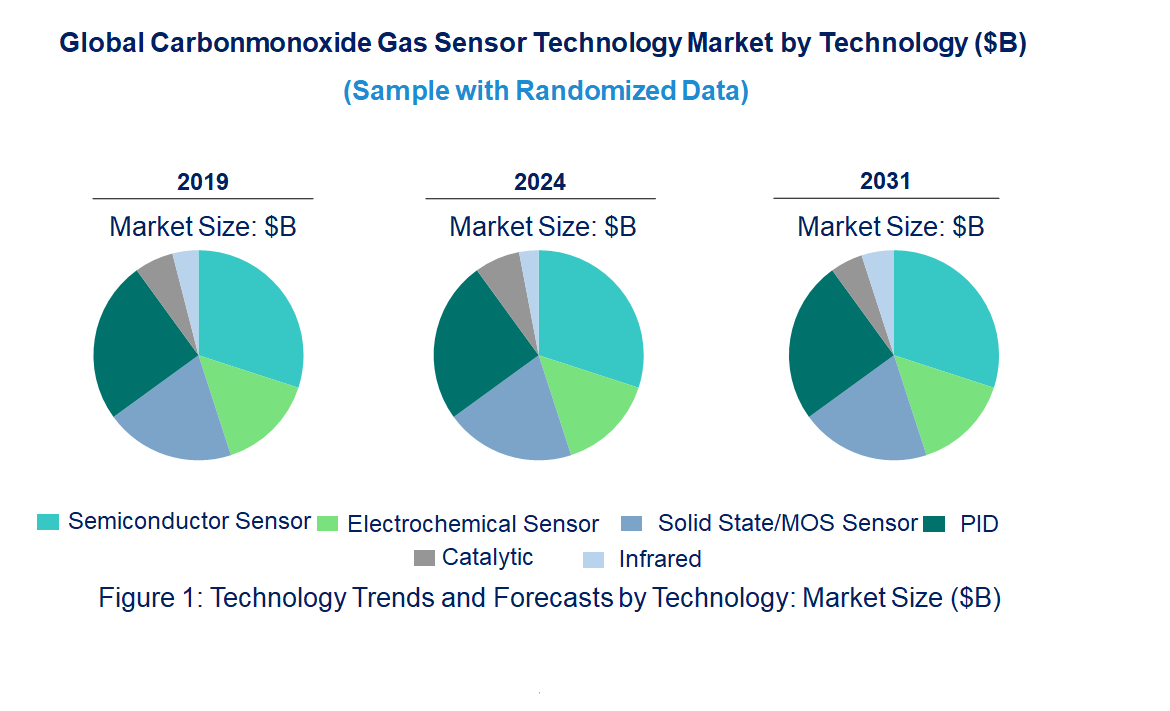
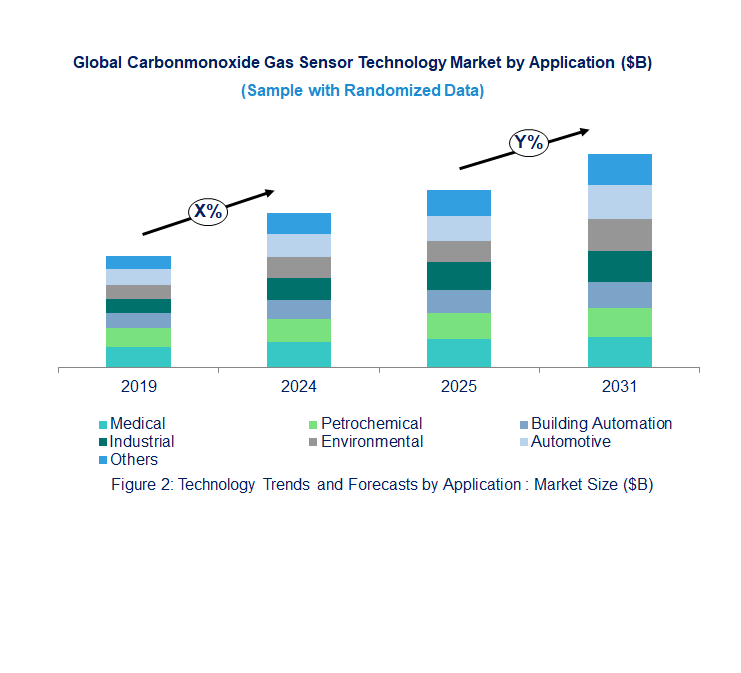
• Shift Toward Infrared (IR) Sensors: Infrared sensors are gaining ground because of their higher accuracy and longer lifespan compared to traditional technologies like semiconductor sensors. These sensors are becoming increasingly important in environmental and industrial applications where continuous monitoring of air quality and gas concentration is crucial.
• Miniaturization and Integration: With gas sensors being miniaturized, it is now possible to integrate them into smaller devices. This trend is pushing the development of wearable and portable carbon monoxide detectors that can monitor CO levels in real time in industrial and medical environments.
• Wireless and IoT-enabled Sensors: The use of wireless and IoT-enabled carbon monoxide sensors is growing quickly. These sensors can monitor and send information remotely, offering businesses and consumers real-time alerts, data, and potential performance, particularly in applications such as building automation and automotive safety
• Advanced Sensor Materials: Scientists are also exploring more advanced materials like nanomaterials and carbon nanotubes, where sensitivity and selectivity are enhanced through these carbon monoxide sensors. Such advanced sensor materials may make detection much faster and highly accurate in more hostile settings such as those in petrochemical facilities or industrial plants.
• Regulatory Pressure and Safety Standards: Increasing requirements concerning air quality and the level of safety for employees trigger the development of reliable, accurate CO sensors. As industries such as petrochemical, automotive, or even healthcare require compliance with respective standards of safety, their apparatus are being updated by integrating advanced sensor technologies with safety equipment. These technology trends are reshaping the carbon monoxide gas sensor market by driving innovations in accuracy, portability, and connectivity. As industries and consumers demand more advanced detection solutions, the market is evolving to meet these needs with greater sophistication and efficiency.
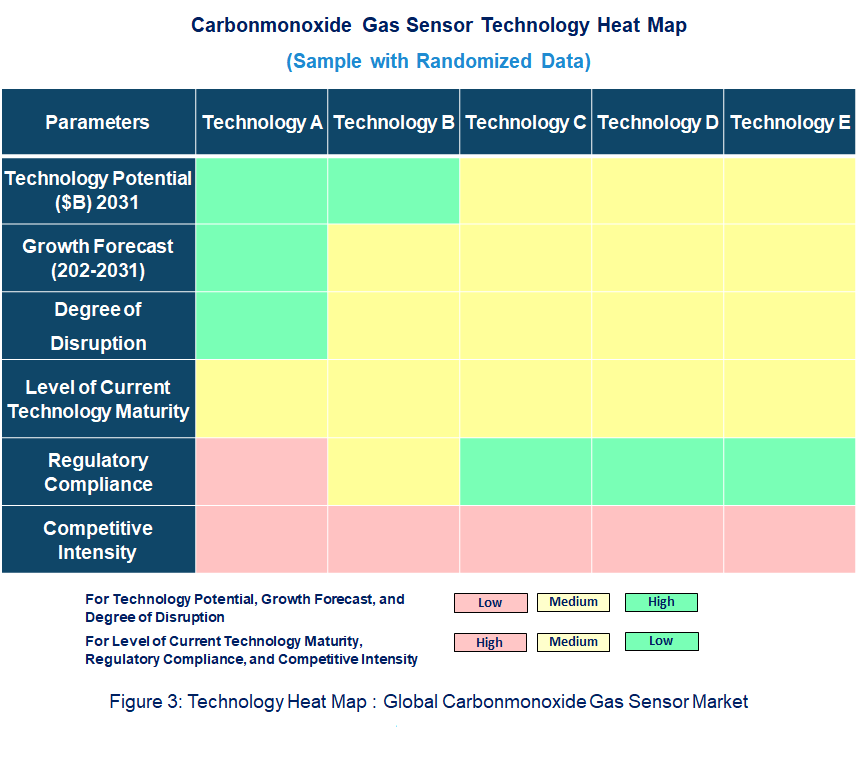
• Technology Potential: The potential for CO gas sensor technology is significant, with innovations aimed at improving sensitivity, selectivity, and response time. Advances in nanomaterials, MEMS (micro-electromechanical systems) technology, and solid-state sensors are driving the development of more accurate, compact, and cost-effective solutions. Integration with smart home and IoT systems is also enhancing their functionality, enabling real-time monitoring and remote alerts.
• Degree of Disruption: Electrochemical sensors are the most dominant in the market, but new technologies like metal oxide semiconductors and optical-based sensors may disrupt the sector by offering advantages such as lower power consumption, longer lifespan, and faster response times. These developments may lead to more efficient, versatile CO detection solutions for a wide range of applications.
• Level of Maturity in Current Technology: CO gas sensor technology is mature. Electrochemical sensors, widely used today, offer reliable and accurate detection in different industries. Nonetheless, the development of these sensors is still under improvement concerning their performance, durability, and integration with other technologies.
• Compliance to Regulations: CO gas sensors need to comply with safety standards and regulations such as UL, ISO, and CE certifications. Ensuring the sensor meets all the required standards for performance, safety, and environment, particularly in residential and industrial settings.
• Aeroqual: This company has unveiled new models of sensors, providing higher sensitivity in the quantification of CO concentrations in air. Its sensors have been increasingly used in environmental monitoring to get accurate data from indoor and outdoor air quality testing. This is key to answering the increasing needs for regulation on environmental monitoring.
• Robert Bosch: Bosch has advanced its sensor technology by introducing MEMS-based sensors in their CO sensors. These MEMS-based sensors have faster responses and greater integration with automobile systems, ensuring better safety in vehicles related to CO detection.
• Siemens: Siemens has improved gas sensors with the integration of digital connectivity features, enhancing real-time remote observation and autonomous control in industrial applications. Their sensors are now very crucial in factory automation systems and environmental monitoring networks.
• Yokogawa Electric: Yokogawa Electric recently introduced a range of strong CO sensors for use in harsh petrochemical environments. These sensors provide highly accurate detection of CO, helping industrial clients avoid safety hazards related to gas leaks and improve operational efficiency.
• ABB: ABB developed sensors with advanced calibration and diagnostics capabilities, which are being used in building automation and the industrial sector, as continuous monitoring is essential in such sectors for a safe and healthy environment.
• GfG Europe: GfG Europe has enhanced its gas detection systems with real-time communication features. Their sensors are applied in industrial and environmental applications, giving users instant alarms on hazardous CO levels.
• Alphasense: This company is advancing solid-state CO sensors, which are highly sensitive and have a long lifetime. Their products have gained considerable acceptance in the healthcare market, particularly in continuous exposure monitoring in clinical settings.
• Dynament: Its recent innovations include high-performance catalytic CO sensors that provide excellent detection accuracy and reliability. Its sensors are applied in numerous areas such as automotive and environmental monitoring, where detection is paramount.
• NGK Insulators: NGK has developed new ceramic-based CO sensors that offer good stability and long-term reliability, particularly in industries. These are increasingly used in critical safety systems where continuous monitoring is critical.
• Trolex: Trolex has developed a series of CO sensors for demanding mining and industrial applications. Their sensors come equipped with advanced monitoring capabilities to help workers and businesses avoid dangerous gas concentrations. These innovations by key players in the carbon monoxide gas sensor market focus on increasing accuracy, reliability, and integration with advanced technologies such as IoT and digital connectivity. As these companies innovate, their products are enhancing safety and monitoring capabilities across automotive, healthcare, and industrial sectors.
• Strict Environmental and Safety Regulations: High regulatory demands for air quality monitoring and worker safety are making CO sensors more accurate and reliable. Governments worldwide have enacted regulations that require the continuous monitoring of CO levels in industrial, automotive, and residential environments.
• Growing Awareness of CO Hazards: With the increasing number of carbon monoxide-related accidents, there is rising awareness about the importance of CO detection systems. This heightened awareness is encouraging consumers and industries to adopt advanced gas sensor technologies for safety and protection.
• Advancement in Sensor Material and Design Technologies: With nanomaterials and MEMS technology, advancements are being made to increase the sensitivity, accuracy, and lifespan of CO sensors. This makes it easier and less expensive, so their applications can increase within several industries.
• Increasing Adoption of IoT and Smart Sensors: Integrating IoT technology into CO sensors has enabled real-time monitoring and data sharing, making them more effective for various applications. Automotive, building automation, and healthcare sectors are among the industries that find convenience in wireless, connected CO sensors. Challenges in the carbon monoxide gas sensor market are:
• High Initial Costs of Advanced Sensors: Advanced CO sensors, particularly infrared and solid-state models, have high costs that prevent them from being adopted widely in price-sensitive markets. Such regions include developing markets, and the initial investment required may not be affordable for smaller businesses and households.
• Calibration and Maintenance Complexity: Calibration and maintenance of CO sensors are time-consuming and costly for accuracy. These complexities may discourage the uptake of such systems by organizations and their long-term maintenance.
• Competition from Alternative Gas Detection Technologies: The market for gas sensors is highly competitive, with alternative technologies like electrochemical and PID sensors also competing for market share. Consumers and businesses have a wide range of choices, which can make it challenging for CO sensor manufacturers to differentiate their products. The growth of the carbon monoxide gas sensor market will be largely driven by regulatory pressures, technological advancements, and the increasing need for safety. However, several challenges such as high cost and competition from alternative technologies should be addressed to make these sensors more acceptable in diverse industries.
• Aeroqual
• Robert Bosch
• Siemens
• Yokogawa Electric
• ABB
• GfG Europe
• Potential for Disruption of Different Technologies in the CarbonMonoxide Gas Sensor Market: Semiconductor, electrochemical, solid-state/MOS, PID, catalytic, and infrared sensors each bring disruption potential in the carbon monoxide sensor market. Semiconductor sensors are cost-effective and compact for consumer use, while electrochemical sensors provide high accuracy for industrial settings. Solid-state/MOS sensors offer durability and fast response for automotive and environmental monitoring. PID sensors are used for precise trace gas detection, and catalytic sensors are reliable for low-level detection in hazardous environments. Infrared sensors, though costly, are non-consumable and offer long-term reliability in industrial applications.
• Competitive Intensity and Regulatory Compliance of Different Technologies in the carbonmonoxide gas sensor market: The market is competitive, with electrochemical sensors leading in industrial applications due to their accuracy, while semiconductor sensors are leading in consumer applications. Solid-state/MOS sensors are growing in the automotive and environmental sectors. PID sensors are niche but are used in high-precision applications. Catalytic and infrared sensors are more specialized for hazardous environments. All technologies must comply with regulatory standards, such as IEC and RoHS, for safety, environmental responsibility, and performance.
• Technology Readiness by Technology Type in Carbon Monoxide Gas Sensor Market: Electrochemical and semiconductor sensors are well-established and largely used in consumer and industrial markets. Solid-state/MOS sensors are ready for automobile and environmental monitoring. PID sensors are specialized but highly accurate. Catalytic sensors can be relied upon for hazardous environments, though at a higher price. Infrared sensors are ready for long-term industrial monitoring, but their higher cost limits adoption. Competitive intensity is very high in electrochemical and semiconductor markets, where regulatory compliance provides safety as well as sustainability for all technologies.
• Semiconductor Sensor
• Electrochemical Sensor
• Solid State/MOS Sensor
• PID
• Catalytic
• Infrared
• Medical
• Petrochemical
• Building Automation
• Industrial
• Environmental
• Automotive
• Others
• North America
• Europe
• Asia Pacific
• The Rest of the World
• Latest Developments and Innovations in the Carbonmonoxide Gas Sensor Technologies
• Companies / Ecosystems
• Strategic Opportunities by Technology Type


Choose a license that fits your team. Instant PDF delivery.
Prices exclude taxes. Instant delivery. Custom licensing available on request.
Market Report · May 18, 2026
Market Report · May 18, 2026
Market Report · May 18, 2026
Trusted partner for strategic intelligence and business growth


Receive a complimentary market analysis tailored to your industry. Our analysts will identify key growth opportunities and competitive dynamics specific to your business.

Market size, growth rate, and key trend analysis for your specific sector.

Top competitor positioning and market share analysis.

Strategic recommendations backed by data-driven insights.
Get curated market intelligence and competitive moves straight to your inbox.
By subscribing, you agree to receive our monthly insights. Unsubscribe anytime.
Receive a complimentary market analysis tailored to your industry. Our analysts will identify key growth opportunities and competitive dynamics specific to your business.
Market size, growth rate, and key trend analysis for your specific sector.
Top competitor positioning and market share analysis.
Strategic recommendations backed by data-driven insights.
Get curated market intelligence, emerging trends, and competitive moves straight to your inbox each month.
By subscribing, you agree to receive our monthly insights. Unsubscribe anytime.
We'll send your sample report shortly.