
Market Report · May 18, 2026

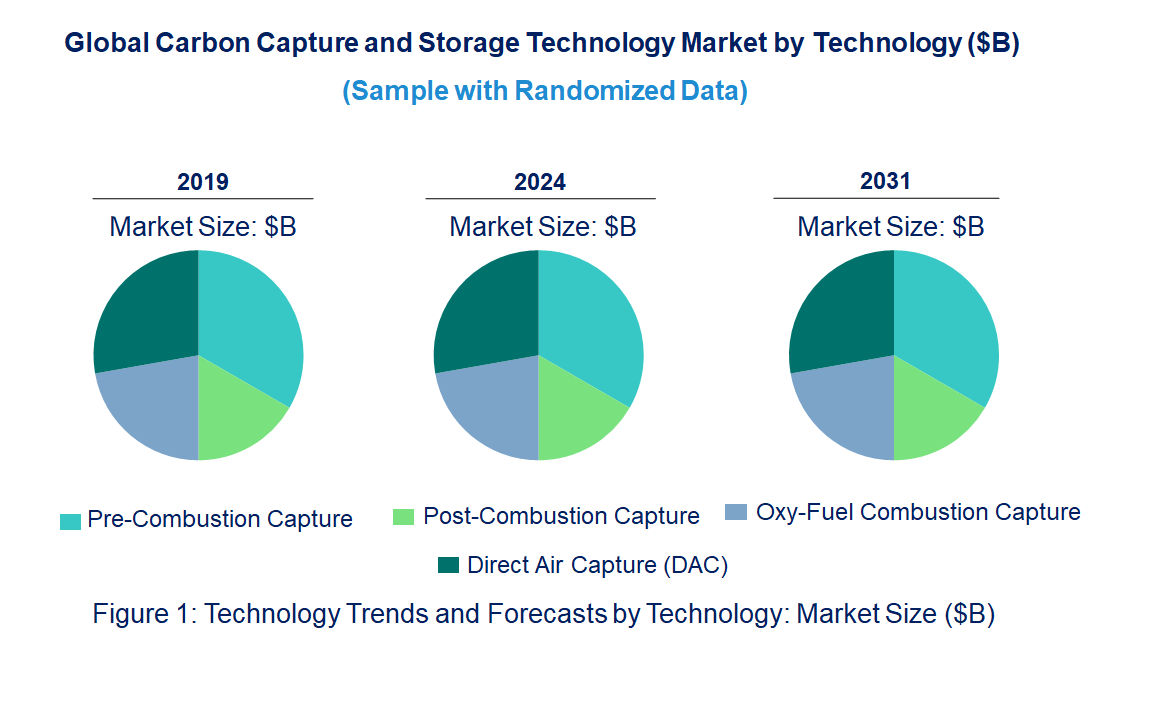
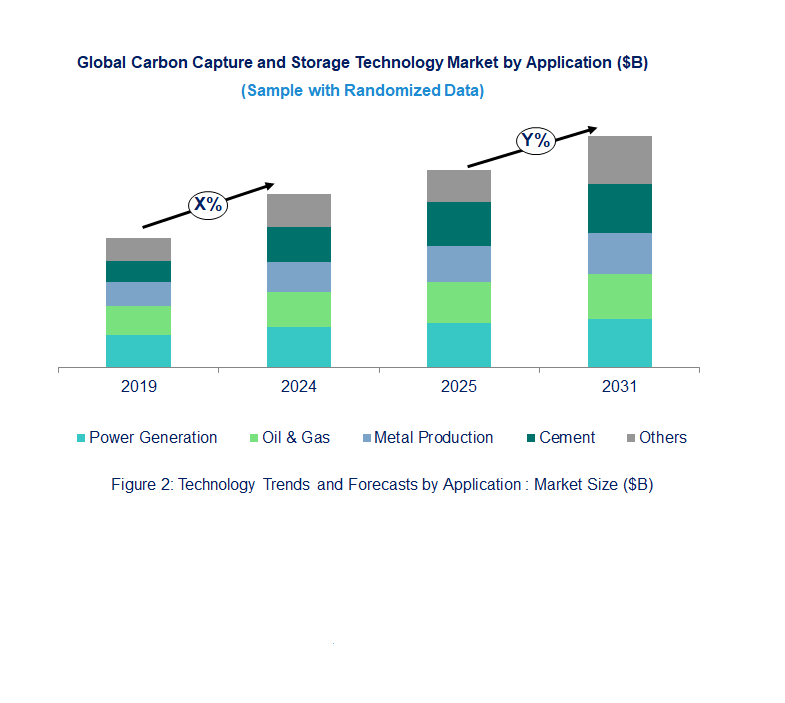
This market report covers trends, opportunities, and forecasts in the global carbon capture and storage market to 2031 by technology (pre-combustion capture, post-combustion capture, oxy-fuel combustion capture, and direct air capture (dac)), application (power generation, oil & gas, metal production, cement, and others), and region (North America, Europe, Asia Pacific, and the Rest of the World)
We'll send your sample report shortly.
• Advancements in Carbon Capture Materials: Innovative materials such as metal-organic frameworks (MOFs), solid sorbents, and advanced amines are enhancing the efficiency and selectivity of CO₂ capture. These materials require lower energy for regeneration and enable higher CO₂ adsorption rates. This trend is critical for reducing operational costs and scaling CCS solutions for industrial and power generation sectors.
• Integration with Hydrogen Production: CCS technologies are increasingly integrated with blue hydrogen production, where CO₂ is captured during hydrogen generation from natural gas. This trend is accelerating the deployment of low-carbon hydrogen as a clean energy source, particularly in energy-intensive industries like steel, cement, and chemicals, paving the way for decarbonizing hard-to-abate sectors.
• Development of Direct Air Capture (DAC) Systems: Direct Air Capture technologies are gaining traction as a means to address legacy emissions and achieve negative emissions. Companies are investing in scalable DAC systems that can be deployed in diverse environments. The trend underscores the growing emphasis on achieving carbon neutrality and offsets through advanced atmospheric CO₂ removal.
• Utilization of CO₂ in Circular Economy: Carbon utilization technologies are advancing, enabling the conversion of captured CO₂ into value-added products like synthetic fuels, construction materials, and polymers. This trend fosters a circular carbon economy, reducing the need for extensive storage infrastructure and creating economic incentives for CCS deployment.
• Digitalization and AI-Driven Optimization: Digital tools, including Artificial Intelligence (AI) and Machine Learning (ML), are being integrated into CCS operations to optimize capture processes, predict storage performance, and enhance monitoring systems. This trend improves reliability, reduces risks, and minimizes costs, making CCS projects more attractive to stakeholders. The emerging trends in CCS technology are reshaping the industry, driving innovation and expanding its applications. By improving material efficiency, integrating with hydrogen production, advancing DAC systems, promoting CO₂ utilization, and leveraging digital technologies, the sector is poised to play a vital role in global decarbonization efforts. These advancements not only address current challenges but also unlock new opportunities for sustainable growth and climate resilience.
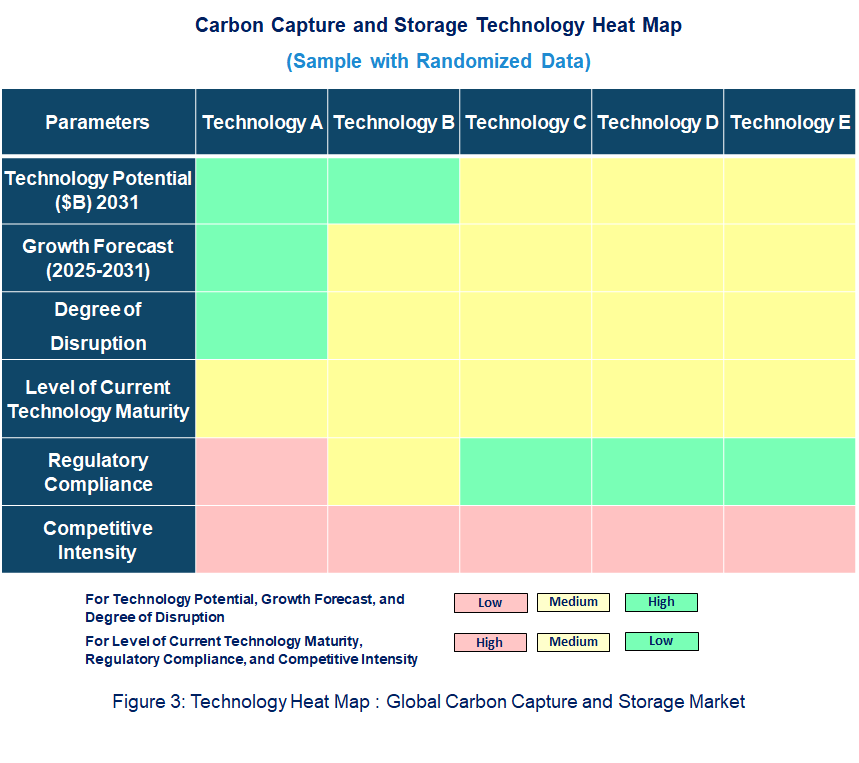
• Potential in Technology: The technology is particularly critical for hard-to-abate sectors like cement, steel, and petrochemicals. While the core concept of CCS has been around for decades, recent advancements have improved capture efficiency and cost-effectiveness, especially with emerging innovations such as solid sorbents, direct air capture (DAC), and membrane-based separation systems.
• Degree of Disruption: The degree of disruption is moderate to high, especially in energy-intensive industries, where CCS can significantly change operational models and emission profiles.
• Current Technology Maturity Level: The current technology maturity of CCS varies: post-combustion capture is relatively mature, while pre-combustion, oxy-fuel combustion, and direct air capture are still developing.
• Regulatory Compliance: Regulatory compliance is increasingly stringent, with governments and international bodies imposing carbon reduction mandates and offering incentives to adopt CCS technologies. Key compliance frameworks include the U.S. 45Q tax credit, EU ETS, and national net-zero goals. As climate regulations tighten, CCS is becoming a cornerstone of corporate and national decarbonization strategies, positioning it as a critical enabler of low-carbon economic growth.
• Shell PLC: Shell has been actively advancing its CCS capabilities, with its Quest CCS project in Canada as a prime example. This project, one of the world’s largest commercial CCS facilities, has captured over 5 million tons of CO₂ since its launch. Shell is also involved in several major CCS hubs, including the Northern Lights project in Norway, which will store CO₂ from various industrial sources in the North Sea. Shell’s continued investment in CCS not only strengthens its position in sustainable energy but also accelerates the global uptake of CCS as a climate solution.
• Aker Solutions: Aker Solutions is playing a leading role in advancing CCS through its innovative technologies, including its proprietary “Aker Carbon Capture” platform. Recently, the company secured multiple contracts to deploy CCS systems in Europe, focusing on capturing CO₂ from industrial operations. Aker Solutions’ partnership with companies like Equinor and other stakeholders in Norway’s Longship project further demonstrates its commitment to scaling CCS technologies, providing essential infrastructure for future emissions reductions.
• Equinor ASA: Equinor has been a pioneer in the CCS field, with its Sleipner CO₂ storage project in the North Sea being one of the first large-scale geological storage projects. Recently, Equinor has made significant advancements with its participation in the Northern Lights project, a major collaboration with Shell and TotalEnergies that aims to create a full-scale CO₂ transport and storage system. Equinor is also scaling its CCS projects in the U.K. and Europe, focusing on integrating CCS with hydrogen production to decarbonize energy-intensive sectors.
• Dakota Gasification Company: Dakota Gasification Company operates one of the largest CCS projects in the U.S. through its Great Plains Synfuels Plant. This facility captures and stores over 3 million tons of CO₂ annually, primarily for enhanced oil recovery (EOR). Recently, Dakota Gasification has expanded its CCS efforts to support further CO₂ storage and utilization. The company has been instrumental in demonstrating the economic feasibility of CCS while contributing to carbon reduction strategies in the energy sector, especially in the U.S. Midwest. These developments are paving the way for broader adoption of CCS technologies, improving efficiency, and reducing costs, while simultaneously helping to meet international carbon reduction targets.
• Government Support and Regulations: Governments are increasingly adopting stringent emission regulations, offering tax incentives and financial support to encourage CCS adoption. For instance, policies like the U.S. 45Q tax credit and European Union’s carbon pricing schemes are vital drivers for CCS deployment, ensuring its integration into decarbonization strategies.
• Technological Advancements in Capture Efficiency: Significant advancements in materials like solid sorbents and amines are improving CO₂ capture efficiency, reducing costs, and enhancing scalability. Breakthroughs in direct air capture (DAC) systems are particularly promising for large-scale atmospheric CO₂ removal, broadening the potential applications of CCS across industries and enhancing its cost-effectiveness.
• Integration with Hydrogen Production: The growing demand for hydrogen as a clean energy source presents an opportunity to integrate CCS technologies into hydrogen production processes. Blue hydrogen production, where CCS is used to capture emissions from natural gas reforming, is gaining momentum, providing a decarbonization pathway for heavy industries like steel and chemicals.
• Private Sector Investment and Partnerships: Investment from private companies and industry partnerships is accelerating CCS deployment. Leading firms like Shell, Equinor, and Aker Solutions are establishing collaborative projects to scale up CCS infrastructure and reduce operational costs. These partnerships also help with sharing technological advancements and financial risk, speeding up commercial deployment. Challenges:
• High Capital and Operational Costs: Despite advancements in CCS technology, the high capital investment required for building capture, transport, and storage infrastructure remains a significant barrier. Operational costs are also substantial, particularly for small and medium enterprises, limiting the technology’s affordability and widespread adoption.
• Regulatory and Policy Uncertainty: Inconsistent and evolving regulatory frameworks across regions can create uncertainty for investors and operators. While some countries have introduced incentives, others lack clear CCS regulations, making it difficult to secure funding and gain public acceptance. A unified global regulatory approach is crucial for accelerating CCS development.
• Storage Site Availability and Safety Concerns: Identifying and securing suitable geological storage sites is a major challenge. In addition, concerns over the long-term safety and monitoring of CO₂ storage can delay large-scale projects. Public opposition to local CO₂ storage projects, driven by safety concerns, adds another layer of complexity.
• Public Perception and Acceptance: Public perception of CCS is mixed, with concerns around safety, environmental risks, and the perceived ineffectiveness of relying on CCS instead of transitioning to renewable energy sources. Overcoming these challenges requires robust communication, transparency, and successful demonstration projects to gain public trust and ensure widespread acceptance. The carbon capture and storage market is propelled by strong regulatory support, technological advancements, and increasing private sector investment, which are fostering growth and creating new opportunities. However, challenges such as high costs, regulatory uncertainty, and public perception must be addressed to ensure successful large-scale deployment. Despite these hurdles, the continued development of CCS technologies remains critical for achieving climate goals and decarbonizing energy-intensive industries. These drivers and challenges are shaping the path toward a more sustainable future.
• Shell PLC
• Aker Solutions
• Equinor ASA
• Dakota Gasification Company
• Linde plc
• Siemens Energy
• Technology Readiness by Technology Type: Pre-Combustion Capture is moderately mature and applied in integrated gasification combined cycle (IGCC) plants, with steady adoption in hydrogen production. Post-Combustion Capture is the most commercially ready and widely deployed, especially in retrofitting existing power plants. Oxy-Fuel Combustion Capture is at a demonstration stage, requiring specialized infrastructure, but promising in high-purity CO₂ output. Direct Air Capture (DAC) is in early stages with limited commercial deployment, but growing interest due to its net-negative emission capability. Pre-Combustion faces moderate competition with emerging hydrogen tech and regulatory push in industrial sectors. Post-combustion is supported by government incentives like 45Q (U.S.) and ETS (EU), ensuring high regulatory compliance. Oxy-Fuel is limited by cost and infrastructure barriers, but aligns with future-ready climate policies. DAC is gaining momentum with funding from climate-tech investors and policy-driven pilot projects. Post-Combustion dominates the utility and cement sectors, while Pre-Combustion suits refineries and chemical plants. DAC is favored in offset markets and voluntary carbon credit schemes, particularly for tech-based net-zero strategies.
• Competitive Intensity and Regulatory Compliance: The competitive intensity across CCS technologies is driven by both market maturity and policy support. Post-combustion capture is the most commercially active with multiple players offering standardized solutions, benefiting from well-established regulatory frameworks like the U.S. 45Q tax credit and EU ETS. Pre-combustion is less competitive but growing in relevance as green hydrogen scales. Oxy-fuel combustion faces low competition due to high capital costs and infrastructure demands. Direct Air Capture (DAC) is attracting new entrants and venture funding, though its compliance path is more aligned with voluntary and emerging markets rather than mandatory regulatory schemes, making it promising yet uncertain.
• Disruption Potential by Technology Type: Direct Air Capture (DAC) holds the highest disruption potential by enabling carbon removal from ambient air, allowing companies and countries to achieve net-negative emissions. Post-combustion capture also has high impact potential by decarbonizing existing power plants and industrial infrastructure without complete system overhauls. Pre-combustion capture can disrupt sectors like hydrogen and ammonia by integrating carbon capture into their production processes. Oxy-fuel combustion has moderate disruption potential, particularly in niche high-emission industries like steelmaking, although adoption is limited by economic and operational feasibility. Together, these technologies form the foundation of carbon-neutral strategies across the energy and industrial sectors.
• Pre-Combustion Capture
• Post-Combustion Capture
• Oxy-Fuel Combustion Capture
• Direct Air Capture (DAC)
• Power Generation
• Oil & Gas
• Metal Production
• Cement
• Others
• North America
• Europe
• Asia Pacific
• The Rest of the World
• Latest Developments and Innovations in the Carbon Capture and Storage Technologies
• Companies / Ecosystems
• Strategic Opportunities by Technology Type


Choose a license that fits your team. Instant PDF delivery.
Prices exclude taxes. Instant delivery. Custom licensing available on request.
Market Report · May 18, 2026
Market Report · May 18, 2026
Market Report · May 18, 2026
Trusted partner for strategic intelligence and business growth


Receive a complimentary market analysis tailored to your industry. Our analysts will identify key growth opportunities and competitive dynamics specific to your business.

Market size, growth rate, and key trend analysis for your specific sector.

Top competitor positioning and market share analysis.

Strategic recommendations backed by data-driven insights.
Get curated market intelligence and competitive moves straight to your inbox.
By subscribing, you agree to receive our monthly insights. Unsubscribe anytime.
Receive a complimentary market analysis tailored to your industry. Our analysts will identify key growth opportunities and competitive dynamics specific to your business.
Market size, growth rate, and key trend analysis for your specific sector.
Top competitor positioning and market share analysis.
Strategic recommendations backed by data-driven insights.
Get curated market intelligence, emerging trends, and competitive moves straight to your inbox each month.
By subscribing, you agree to receive our monthly insights. Unsubscribe anytime.
We'll send your sample report shortly.