
Market Report · July 31, 2026

Key data points: The market size in 2035 = $3 billion, growth forecast = 5.5% annually for the next 8 years. Scroll below to get more insights. This market report covers trends, opportunities and forecasts in car air freshener market to 2035 by product type (hanging air fresheners, vent clip air fresheners, spray/aerosol air fresheners, gel-based air fresheners, plug-in/electric air fresheners, paper air fresheners, and others), category (mass and premium), distribution channel (offline retail stores and online retail stores), and region (North America, Europe, Asia Pacific, and the Rest of the World)
We'll send your sample report shortly.
• Lucintel forecasts that, within the product type category, hanging air freshener is expected to witness the highest growth over the forecast period.
• Within the distribution channel category, online retail store is expected to witness higher growth.
• In terms of region, APAC is expected to witness the highest growth over the forecast period. Gain valuable insights for your business decisions with our comprehensive 150+ page report. Sample figures with some insights are shown below.

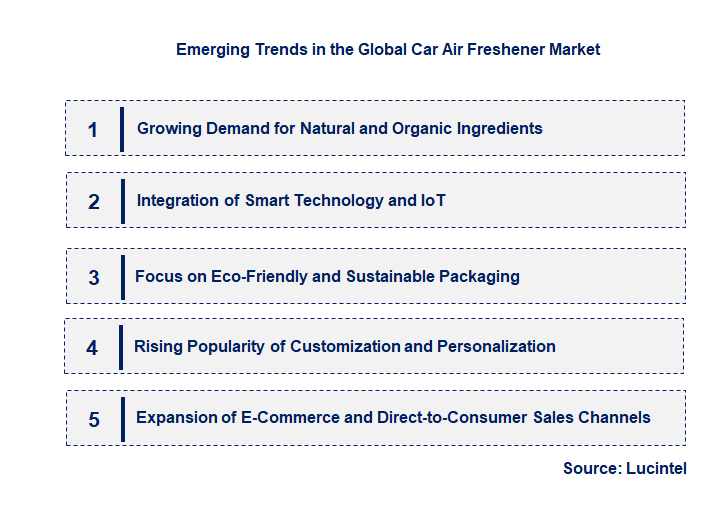
• Growing Demand for Natural and Organic Ingredients: Consumers are increasingly seeking air fresheners made from natural, organic, and non-toxic ingredients. This trend is driven by health consciousness and environmental concerns, prompting manufacturers to develop products free from synthetic chemicals and artificial fragrances. The shift towards natural ingredients enhances product safety and appeals to eco-conscious consumers, thereby expanding market share for organic options. This trend encourages innovation in formulation and packaging, fostering a more sustainable and health-oriented market landscape.
• Integration of Smart Technology and IoT: The adoption of smart technology in car air fresheners is gaining momentum. Connected devices that can be controlled via smartphone apps allow users to customize fragrance intensity, set schedules, and monitor usage remotely. IoT-enabled air fresheners can also detect air quality and automatically release fragrances to maintain a fresh environment. This technological integration enhances user convenience, personalization, and product efficiency, attracting tech-savvy consumers and opening new revenue streams for manufacturers. It signifies a move towards more intelligent, user-centric products in the market.
• Focus on Eco-Friendly and Sustainable Packaging: Environmental sustainability is a key concern influencing packaging choices. Manufacturers are shifting towards biodegradable, recyclable, and minimalistic packaging to reduce plastic waste and carbon footprint. Eco-friendly packaging not only appeals to environmentally conscious consumers but also aligns with global sustainability initiatives. This trend encourages innovation in sustainable materials and design, fostering brand loyalty and competitive advantage. As consumers increasingly prioritize sustainability, eco-friendly packaging is becoming a standard expectation in the market.
• Rising Popularity of Customization and Personalization: Consumers now prefer personalized products that reflect their individual preferences and lifestyles. Car air freshener brands are offering customizable scents, designs, and packaging options to cater to this demand. Personalization enhances customer engagement and satisfaction, leading to brand loyalty and repeat purchases. The ability to create unique, tailored experiences is transforming the market from generic offerings to highly individualized solutions, thereby expanding market opportunities and encouraging innovation in product development.
• Expansion of E-commerce and Direct-to-Consumer Sales Channels: The growth of online retail platforms is significantly impacting the market. Consumers prefer the convenience of purchasing car air fresheners online, facilitated by detailed product information, reviews, and easy comparison. Direct-to-consumer models enable brands to build stronger relationships with customers, offer exclusive products, and gather valuable feedback. E-commerce expansion broadens market reach, especially in emerging regions, and accelerates product innovation. This trend is reshaping distribution strategies and increasing competition among brands, making online presence crucial for market success. These emerging trends—natural ingredients, smart technology, sustainable packaging, customization, and e-commerce expansion—are collectively reshaping the car air freshener market. They are driving innovation, enhancing consumer engagement, and promoting sustainability, ultimately leading to a more dynamic, personalized, and environmentally responsible industry landscape.
• Growing Demand for Eco-Friendly Products: The shift towards sustainable living has increased demand for eco-friendly car air fresheners. Consumers prefer natural, biodegradable, and non-toxic options, prompting manufacturers to develop plant-based scents and recyclable packaging. This trend enhances brand loyalty and appeals to environmentally conscious buyers, expanding market share. The eco-friendly segment is expected to grow significantly, influencing product innovation and marketing strategies.
• Technological Innovations in Scent Delivery: Advances in scent diffusion technology, such as ultrasonic and controlled-release systems, are revolutionizing the market. These innovations provide longer-lasting fragrances and customizable scent intensity, improving user experience. Smart devices integrated with mobile apps allow consumers to control and personalize scents remotely. Such technological developments are attracting tech-savvy consumers and opening new revenue streams for companies investing in innovative delivery methods.
• Rising Vehicle Ownership and Urbanization: Increasing vehicle ownership, especially in developing regions, is boosting demand for car air fresheners. Urbanization leads to higher vehicle usage, creating a consistent need for interior freshness. This growth is supported by rising disposable incomes and a preference for personalized vehicle environments. Market players are expanding distribution channels and product varieties to cater to diverse consumer preferences, further fueling market expansion.
• Expansion of Premium and Luxury Segments: The premium segment is witnessing rapid growth due to rising consumer willingness to spend on luxury and designer car accessories. High-end fragrances, sophisticated packaging, and exclusive scent blends are attracting affluent customers. This segment offers higher profit margins and encourages brands to innovate with unique scents and branding strategies. The expansion of luxury offerings is elevating the overall market perception and attracting a broader consumer base.
• Customization and Personalization Trends: Consumers increasingly seek personalized car air fresheners that reflect their individual style and preferences. Brands are offering customizable scents, designs, and branding options, enhancing customer engagement. This trend allows companies to differentiate their products and build brand loyalty. The rise of online platforms facilitates easy customization, expanding market reach and encouraging repeat purchases, thereby driving overall market growth. The overall impact of these developments is a more diverse, innovative, and sustainable market landscape. Increased consumer preferences for eco-friendly, technologically advanced, and personalized products are driving market expansion. As vehicle ownership continues to rise globally, these opportunities are fostering competitive innovation and market resilience, ensuring sustained growth and profitability for industry players.
• Passenger Vehicles: The passenger vehicle segment dominates the car air freshener market, driven by rising global vehicle ownership and consumer preference for interior comfort. Consumers seek long-lasting, natural, and customizable scents to enhance driving experiences. Innovations like eco-friendly, biodegradable, and organic air fresheners are gaining popularity. Market players are focusing on developing scent refill systems and stylish designs to attract a broader customer base. The segments growth is also supported by increasing awareness of air quality and health benefits associated with natural fragrances.
• Commercial Fleets: The commercial fleet segment offers substantial growth opportunities due to the need for maintaining a fresh environment in taxis, buses, and delivery vehicles. Fleet operators prioritize cost-effective, durable, and easy-to-maintain air freshening solutions. The demand for odor-neutralizing products and long-lasting scents is rising, especially in urban areas with high pollution levels. Companies are innovating with scent diffusers that can be integrated into vehicle HVAC systems, providing continuous freshness. This segments expansion is driven by logistics, ride-sharing, and transportation industries seeking to improve customer satisfaction.
• Luxury And Premium Vehicles: The luxury vehicle segment presents lucrative opportunities for high-end, designer, and bespoke air fresheners. Consumers in this segment seek premium scents, elegant packaging, and personalized options that complement their vehicle interiors. Innovations include aromatherapy-based products and smart diffusers that can be controlled via mobile apps. The focus is on creating a luxurious ambiance and enhancing brand image. As luxury car sales grow globally, manufacturers are investing in sophisticated scent delivery systems and eco-friendly ingredients to meet discerning customer preferences.
• Eco-Friendly And Natural Products: The rising consumer awareness of environmental issues is propelling demand for eco-friendly, biodegradable, and natural air fresheners. These products use plant-based ingredients, essential oils, and sustainable packaging to appeal to environmentally conscious consumers. Market players are developing organic formulations that are safe for both users and the environment. The segment is expanding across all vehicle types, with a focus on health benefits and sustainability. Regulatory pressures and consumer preferences are expected to further accelerate growth in eco-friendly product offerings.
• Innovative Scent Delivery Systems: The development of advanced scent delivery systems, such as smart diffusers, ultrasonic devices, and app-controlled dispensers, is transforming the market. These systems offer customizable scent intensity, remote operation, and integration with vehicle infotainment systems. They provide a seamless and personalized experience for consumers seeking control over their vehicle ambiance. The adoption of IoT-enabled devices and refillable cartridges reduces waste and enhances convenience. This technological innovation is expected to significantly boost market growth by offering enhanced user experience and product differentiation. These growth opportunities collectively shape a dynamic and expanding car air freshener market. Innovations in product formulations, delivery systems, and customization are driving consumer engagement across various vehicle segments. The focus on eco-friendly solutions and luxury experiences aligns with evolving consumer preferences and regulatory standards. As manufacturers capitalize on these opportunities, the market is poised for sustained growth, offering diverse options for consumers and businesses alike, ultimately enhancing vehicle interior environments worldwide.
• Technological Advancements: The integration of smart technology, such as app-controlled diffusers and long-lasting scent formulations, enhances user experience and product efficiency. Innovations in scent delivery mechanisms, like gel-based, spray, and vent clip designs, cater to diverse consumer preferences. These advancements enable manufacturers to differentiate their products, improve durability, and introduce new features, thereby fueling market growth. As technology continues to evolve, consumers expect more personalized and convenient solutions, prompting companies to invest in R&D. This ongoing innovation sustains competitive advantage and expands market reach, especially among tech-savvy and premium segment consumers.
• Rising Vehicle Ownership and Urbanization: Increasing vehicle ownership across emerging and developed economies directly boosts demand for car air fresheners. Urbanization leads to higher vehicle usage, creating a need for interior freshness and odor control. As more people own cars for daily commuting and leisure, the demand for convenient, portable, and effective air freshening solutions rises. This trend is particularly prominent in developing countries where vehicle penetration is accelerating. The expanding automotive industry, coupled with rising disposable incomes, supports sustained growth in the market. Additionally, the growing preference for maintaining a clean and pleasant vehicle environment influences consumer purchasing behavior.
• Consumer Preference for Natural and Eco-Friendly Products: There is a significant shift towards natural, organic, and eco-friendly car air fresheners driven by increasing environmental awareness. Consumers are seeking products free from synthetic chemicals and VOCs, which are perceived as safer and healthier. This demand encourages manufacturers to develop sustainable formulations using natural ingredients and biodegradable packaging. Regulatory pressures to reduce harmful emissions further incentivize eco-friendly innovations. As consumers become more conscious of their environmental impact, brands that offer natural and sustainable options are gaining a competitive edge, thereby expanding the market and encouraging product diversification.
• Expansion of E-commerce and Retail Channels: The proliferation of online shopping platforms and retail outlets has made car air fresheners more accessible to consumers worldwide. E-commerce provides a wide product variety, competitive pricing, and convenient purchasing options, especially during the COVID-19 pandemic. Retail channels such as supermarkets, convenience stores, and specialty outlets enhance brand visibility and allow consumers to experience products firsthand. The integration of digital marketing strategies and direct-to-consumer models further accelerates sales growth. This omnichannel approach broadens market reach, attracts new customer segments, and facilitates rapid adoption of innovative products, thereby fueling overall market expansion.
• Increasing Focus on Personalization and Premium Products: Consumers are increasingly seeking personalized and premium car air fresheners that reflect their individual tastes and lifestyles. Customizable scents, designer packaging, and luxury branding are driving demand for high-end products. This trend is supported by a growing middle class and an aspirational consumer base willing to invest in enhancing their vehicle environment. Premium offerings often incorporate unique fragrances, longer-lasting formulas, and aesthetic appeal, commanding higher price points. The focus on personalization also encourages brands to develop bespoke solutions, fostering brand loyalty and expanding market share within niche segments. The challenges facing the car air freshener market include:
• Stringent Regulatory Standards: Governments worldwide are implementing strict regulations concerning VOC emissions, chemical safety, and environmental impact. Compliance with these standards requires significant R&D investment and reformulation of products, which can increase costs and limit innovation. Non-compliance risks legal penalties and damage to brand reputation. Navigating diverse regulatory landscapes across regions adds complexity for manufacturers aiming for global expansion. The evolving regulatory environment necessitates continuous monitoring and adaptation, potentially slowing product development cycles and impacting profit margins.
• Market Saturation and Intense Competition: The car air freshener market is highly competitive, with numerous established brands and new entrants vying for consumer attention. Market saturation in developed regions limits growth opportunities and pressures companies to differentiate through innovation, branding, and pricing strategies. Price wars and promotional activities can erode profit margins. Additionally, counterfeit and low-quality products flood the market, undermining brand integrity and consumer trust. Maintaining market share requires ongoing investment in marketing, product development, and quality assurance, which can strain resources, especially for smaller players.
• Fluctuating Raw Material Prices and Supply Chain Disruptions: The market relies heavily on raw materials such as fragrances, solvents, and packaging components, which are subject to price volatility due to geopolitical tensions, environmental factors, and supply chain disruptions. These fluctuations can increase production costs and impact profit margins. Supply chain disruptions, as experienced during global crises like the COVID-19 pandemic, can lead to delays, shortages, and increased logistics costs. Managing procurement and inventory becomes more complex, requiring strategic planning and diversification of suppliers to mitigate risks and ensure consistent product availability. The car air freshener market is driven by technological innovations, rising vehicle ownership, consumer demand for natural products, expanding distribution channels, and a focus on personalization. However, it faces challenges from regulatory compliance, intense competition, and supply chain vulnerabilities. These factors collectively influence market dynamics, requiring stakeholders to innovate continuously, adapt to regulatory changes, and optimize supply chains. Successfully navigating these drivers and challenges will determine the markets future growth trajectory, with opportunities for differentiation and sustainable development amid evolving consumer preferences and environmental considerations.
• Procter & Gamble
• Reckitt Benckiser
• SC Johnson
• Car-Freshner Corp.
• California Scents
• Yankee Candle
• Church & Dwight
• Henkel
• Godrej Consumer Products
• Dabur
• Hanging Air Fresheners
• Vent Clip Air Fresheners
• Spray/Aerosol Air Fresheners
• Gel-Based Air Fresheners
• Plug-in/Electric Air Fresheners
• Paper Air Fresheners
• Others
• Mass
• Premium
• Offline Retail Stores
• Online Retail Stores
• North America
• Europe
• Asia Pacific
• The Rest of the World
• United States: The US market has seen a surge in eco-friendly and natural car air fresheners, driven by consumer awareness of health and environmental impacts. Major brands are investing in organic formulations and sustainable packaging. Technological advancements include smart air fresheners with app connectivity, allowing users to control scent intensity remotely. The demand for long-lasting fragrances and customizable options continues to grow, with a focus on luxury and premium segments. Retail channels such as online platforms and specialty stores are expanding their offerings, contributing to market growth.
• China: Chinas car air freshener market is rapidly expanding due to increasing vehicle ownership and urbanization. Local brands are gaining popularity by offering affordable, innovative, and culturally tailored scents. The integration of aromatherapy and wellness trends is influencing product development, with a focus on natural ingredients. E-commerce platforms are playing a crucial role in distribution, enabling quick access to new products. Additionally, government regulations on air quality are encouraging the adoption of air purifiers combined with fresheners, creating new opportunities for hybrid products.
• Germany: In Germany, the market emphasizes sustainability and high-quality ingredients, aligning with European environmental standards. Premium and designer brands are prominent, offering sophisticated fragrances and stylish packaging. Innovations include biodegradable and refillable containers, reducing plastic waste. The focus on health-conscious consumers has led to the development of hypoallergenic and allergen-free products. The market also benefits from strong automotive manufacturing sectors, with collaborations between fragrance companies and car manufacturers to develop integrated scent systems.
• India: The Indian car air freshener market is characterized by affordability and a wide variety of local scents that cater to regional preferences. Growing middle-class income and increasing vehicle ownership are fueling demand. Manufacturers are introducing herbal and traditional fragrances inspired by local culture. The market is witnessing a shift towards natural and organic products, driven by consumer health concerns. E-commerce and regional retail outlets are expanding distribution channels. Additionally, innovative formats like hanging and vent clips are gaining popularity among consumers seeking convenience and affordability.
• Japan: Japans market is marked by technological innovation and a focus on subtle, sophisticated fragrances. Consumers prefer discreet and long-lasting scents, often integrated into vehicle air conditioning systems. The adoption of smart and automated air fresheners is increasing, with features like scent intensity control and automatic activation. Eco-friendly and biodegradable products are gaining traction, aligning with Japans environmental consciousness. Japanese brands are also exploring unique scent combinations inspired by nature and traditional aesthetics, catering to a niche but loyal customer base. The market continues to evolve with a focus on quality and innovation.


• Procter & Gamble
• Reckitt Benckiser
• SC Johnson
• Car-Freshner Corp.
• California Scents
• Yankee Candle
• Church & Dwight
• Henkel
• Godrej Consumer Products
• Dabur Q6. Which car air freshener market segment will be the largest in future? Answer: Lucintel forecasts that, within the product type category, hanging air freshener is expected to witness the highest growth over the forecast period. Q7. In car air freshener market, which region is expected to be the largest in next 5 years? Answer: In terms of region, APAC is expected to witness the highest growth over the forecast period. Q8. Do we receive customization in this report? Answer: Yes, Lucintel provides 10% customization without any additional cost.


Choose a license that fits your team. Instant PDF delivery.
Prices exclude taxes. Instant delivery. Custom licensing available on request.
Market Report · July 31, 2026
Market Report · July 31, 2026
Market Report · July 31, 2026
Trusted partner for strategic intelligence and business growth


Receive a complimentary market analysis tailored to your industry. Our analysts will identify key growth opportunities and competitive dynamics specific to your business.

Market size, growth rate, and key trend analysis for your specific sector.

Top competitor positioning and market share analysis.

Strategic recommendations backed by data-driven insights.
Get curated market intelligence and competitive moves straight to your inbox.
By subscribing, you agree to receive our monthly insights. Unsubscribe anytime.
Receive a complimentary market analysis tailored to your industry. Our analysts will identify key growth opportunities and competitive dynamics specific to your business.
Market size, growth rate, and key trend analysis for your specific sector.
Top competitor positioning and market share analysis.
Strategic recommendations backed by data-driven insights.
Get curated market intelligence, emerging trends, and competitive moves straight to your inbox each month.
By subscribing, you agree to receive our monthly insights. Unsubscribe anytime.
We'll send your sample report shortly.