
Market Report · July 22, 2026

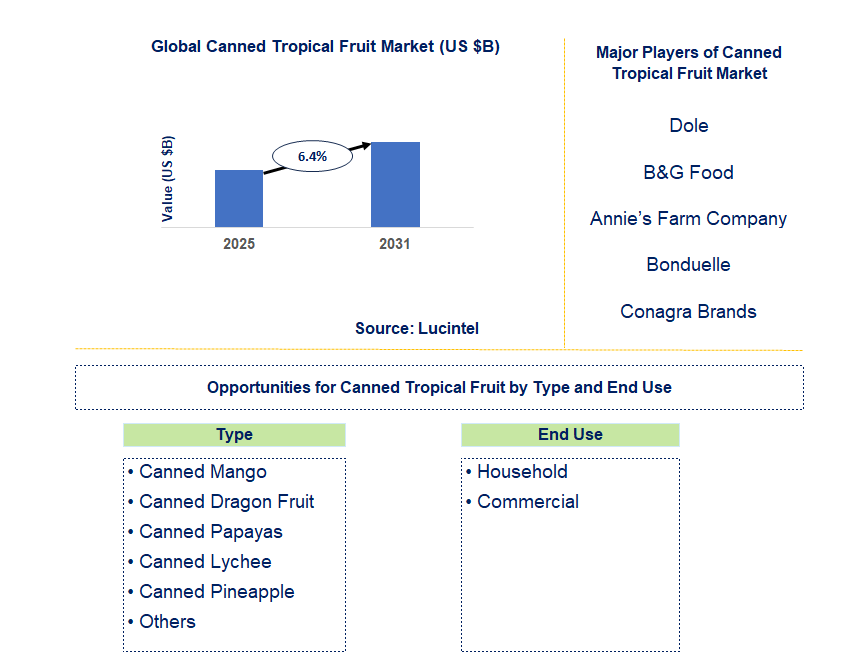
Key data points: The growth forecast = 6.4% annually for the next 7 years. Scroll below to get more insights. This market report covers trends, opportunities and forecasts in canned tropical fruit market to 2031 by type (canned mango, canned dragon fruit, canned papayas, canned lychee, canned pineapple, and others), end use (household and commercial), and region (North America, Europe, Asia Pacific, and the Rest of the World)
We'll send your sample report shortly.
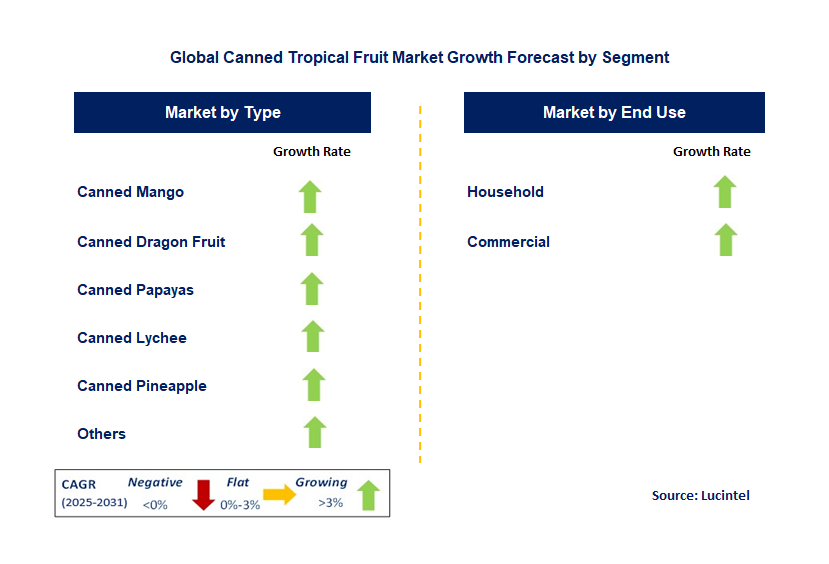
• Lucintel forecasts that, within the type category, canned pineapple is expected to witness the highest growth over the forecast period.
• Within the end use category, commercial is expected to witness higher growth.
• In terms of region, APAC is expected to witness the highest growth over the forecast period. Gain valuable insights for your business decisions with our comprehensive 150+ page report. Sample figures with some insights are shown below.
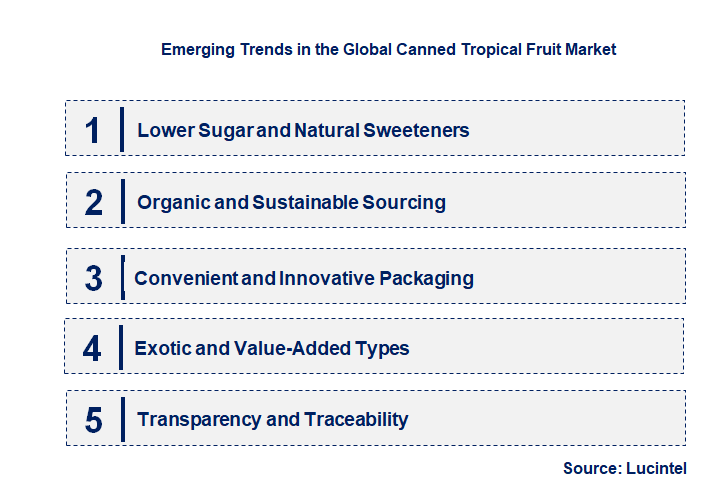
• Lower Sugar and Natural Sweeteners: Consumers are becoming more health-conscious and looking for canned fruits with reduced sugar levels. Demand is being driven for fruits packed in natural juices, light syrup, or with other natural sweeteners such as stevia or erythritol, and shaping product formulation and labeling.
• Organic and Sustainable Sourcing: Increasing demand for canned tropical fruits that are produced organically and sustainably, with consideration of fair labor and low environmental impact. This trend supports producers in adopting environmentally friendly farming and processing practices and pursuing applicable certifications.
• Convenient and Innovative Packaging: Busy lifestyles are fueling demand for convenient packaging formats like single-serve cups, resealable pouches, and easy-open cans. Innovative packaging that increases portability and lessens waste is also gaining ground.
• Exotic and Value-Added Types: Consumers are increasingly adventurous in their food, and this has created a growing demand for canned exotic tropical fruits other than the usual pineapple and mango. Value-added items such as fruit medleys and fruits in flavored syrups are also becoming popular.
• Transparency and Traceability: Consumers are interested in knowing the source and processing of their food. This trend is fueling demand for increased transparency in the canned tropical fruit supply chain, with transparent labeling about sourcing, processing, and ingredients. These trends are transforming the market for canned tropical fruit by nudging producers toward emphasizing health, sustainability, convenience, variety, and transparency in order to capture changing consumer behavior and remain competitive with fresh and frozen products.
• Advances in Processing Technology: Technological improvements in canning and preservation processes are resulting in improved retention of the natural flavor, color, and nutrient content of tropical fruits, which fill the quality gap compared to fresh produce.
• Improved Development of Healthier Syrup Alternatives: R&D is aimed at developing healthier options for traditional heavy sugar syrups, including fruit juice concentrates and natural sweeteners, to attract health-oriented consumers.
• Emphasis on Eco-Friendly Packaging Materials: With the increasing pressure to become environmentally friendly, the use of sustainable packaging materials such as recyclable aluminum cans and eco-friendly materials replacing conventional packaging is gaining traction for canned fruits.
• Incorporation of Digital Traceability Systems: Integration of digital traceability systems helps consumers and businesses trace the supply chain of canned fruits from the farm to the shelf, boosting transparency and responsibility in the supply chain.
• Expansion of Online Retail Channels: Online e-commerce platforms are offering increased access to a broader range of canned tropical fruits, including specialty and imported offerings, to consumers outside of the conventional brick-and-mortar outlets. These trends are affecting the market for canned tropical fruit by enhancing product quality and health, encouraging environmental sustainability, improving supply chain transparency, and broadening market coverage through online platforms.
• Meal Kits and Convenience Meals: The use of pre-packaged canned tropical fruits in meal kits and convenience meals provides convenience and the ability to impart sweetness and an exotic taste to numerous cuisines.
• Bakery and Dessert Sector: Canned tropical fruits are a convenient ingredient for the bakery and dessert sector, ensuring consistent quality and ease of preparation in cakes, pies, fruit salads, and toppings.
• Smoothies and Beverage Industry: Use of canned tropical fruits in smoothies and other beverage sectors is a cost-efficient and convenient means of introducing natural sweetness and tropical flavor.
• Fruit Cups and Snack Foods: Creating new-generation snack foods utilizing canned tropical fruit, like individual-serving fruit cups and fruit combinations, meets increasing demand for healthful and easy-to-eat snacks.
• Foodservice and Institutional Sales: The distribution of canned tropical fruits to the foodservice sector (restaurateurs, hotels, caterers) and institutions (hospitals, schools) presents a secure, economical way for large-volume preparation of fruit. These strategic expansion opportunities are affecting the market for canned tropical fruit by broadening its uses beyond conventional consumption, taking advantage of the need for convenience and healthful ingredients across different food markets.
• Dole
• B&G Food
• Annie’s Farm Company
• Bonduelle
• Conagra Brands
• Bolton Group
• Ayam Brand
• Del Monte Foods
• Dongwon Industries
• AhiGuven
• Canned Mango
• Canned Dragon Fruit
• Canned Papayas
• Canned Lychee
• Canned Pineapple
• Others
• Household
• Commercial
• North America
• Europe
• Asia Pacific
• The Rest of the World
• United States: The US canned tropical fruit market is experiencing a steady transition towards healthier alternatives, with more demand for fruits packaged in natural juice or light syrup instead of heavy syrup. Organic canned tropical fruits are also picking up among health-oriented consumers. Convenient packaging formats, such as resealable containers and single-serve cups, are an area of focus. Imports are a major source, especially for fruits not produced locally.
• China: China is a leading producer and consumer of canned tropical fruits. Recent trends involve developments in processing technologies for enhancing quality and shelf life. There is increasing domestic demand for varied canned tropical fruits, prompted by rising disposable incomes and urbanization. The export market continues to be sizeable, with emphasis on ensuring competitive pricing and international quality standards. E-commerce platforms are increasingly being used for distribution.
• Germany: Demand for canned tropical fruit in Germany is marked by high-quality items, with consumers increasingly looking at organic and sustainable sourcing. Consumption is becoming ever more aware of sugar levels, which is contributing to demand for fruit canned with natural juice or lower sugar content. Retailers are emphasizing explicit labeling and how canned fruits were sourced and produced. Imports come primarily from Southeast Asia and Latin America.
• India: India's market for canned tropical fruit remains in the developing stage, with fresh fruit holding the largest share. New trends have seen a gradual increase in the availability of a greater range of canned tropical fruits in urban centers, due to convenience and extended shelf life. Pineapple and mango are among the favorite options. Domestic production is on the rise, but quality and standardization are still areas where improvement is most needed. Foodservice is a major user.
• Japan: Japan possesses an established market for canned tropical fruit that goes into desserts and is also utilized as a handy snack. The trends that have emerged include the emphasis on high quality and fruit in light syrup or natural juice packing. There is also a demand for unusual tropical fruit types in canned form. Small, easy-to-open packs appeal to single households. Southeast Asian imports are common.


• Dole
• B&G Food
• Annie’s Farm Company
• Bonduelle
• Conagra Brands
• Bolton Group
• Ayam Brand
• Del Monte Foods
• Dongwon Industries
• AhiGuven Q5. Which canned tropical fruit market segment will be the largest in future? Answer: Lucintel forecasts that, within the type category, canned pineapple is expected to witness the highest growth over the forecast period. Q6. In canned tropical fruit market, which region is expected to be the largest in next 5 years? Answer: In terms of region, APAC is expected to witness the highest growth over the forecast period. Q7. Do we receive customization in this report? Answer: Yes, Lucintel provides 10% customization without any additional cost.


Choose a license that fits your team. Instant PDF delivery.
Prices exclude taxes. Instant delivery. Custom licensing available on request.
Market Report · July 22, 2026
Market Report · July 22, 2026
Market Report · July 22, 2026
Trusted partner for strategic intelligence and business growth


Receive a complimentary market analysis tailored to your industry. Our analysts will identify key growth opportunities and competitive dynamics specific to your business.

Market size, growth rate, and key trend analysis for your specific sector.

Top competitor positioning and market share analysis.

Strategic recommendations backed by data-driven insights.
Get curated market intelligence and competitive moves straight to your inbox.
By subscribing, you agree to receive our monthly insights. Unsubscribe anytime.
Receive a complimentary market analysis tailored to your industry. Our analysts will identify key growth opportunities and competitive dynamics specific to your business.
Market size, growth rate, and key trend analysis for your specific sector.
Top competitor positioning and market share analysis.
Strategic recommendations backed by data-driven insights.
Get curated market intelligence, emerging trends, and competitive moves straight to your inbox each month.
By subscribing, you agree to receive our monthly insights. Unsubscribe anytime.
We'll send your sample report shortly.