
Market Report · July 22, 2026

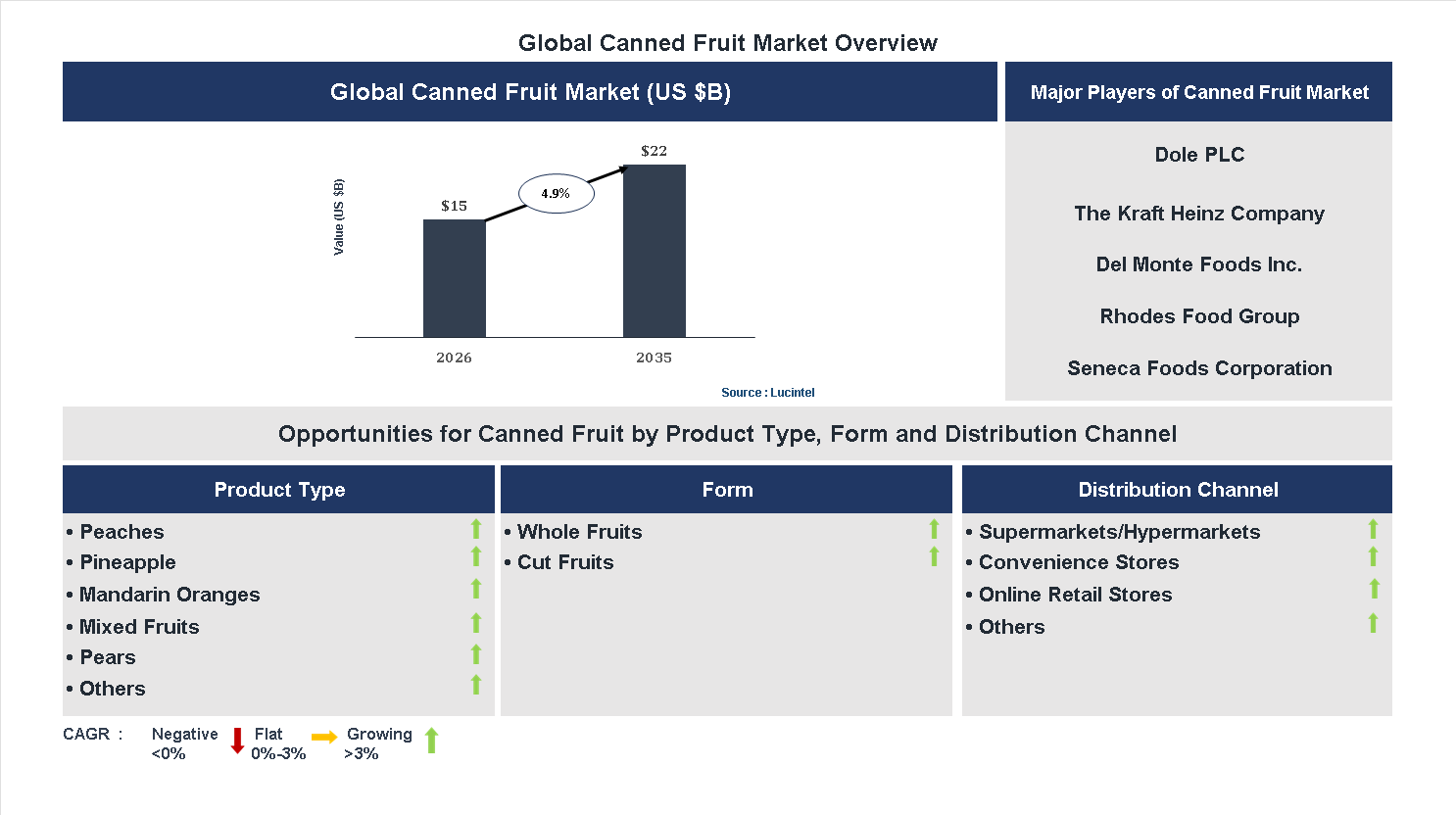
Key data points: The market size in 2035 = $22 billion, growth forecast = 4.9% annually for the next 8 years. Scroll below to get more insights. This market report covers trends, opportunities and forecasts in canned fruit market to 2035 by product type (peaches, pineapple, mandarin oranges, mixed fruits, pears, and others), form (whole fruits and cut fruits), distribution channel (supermarkets/hypermarkets, convenience stores, online retail stores, and others), and region (North America, Europe, Asia Pacific, and the Rest of the World)
We'll send your sample report shortly.
• Lucintel forecasts that, within the distribution channel category, online retail store is expected to witness the highest growth over the forecast period.
• Within the product type category, mandarin orange is expected to witness the highest growth.
• In terms of region, North America is expected to witness the highest growth over the forecast period. Gain valuable insights for your business decisions with our comprehensive 150+ page report. Sample figures with some insights are shown below.
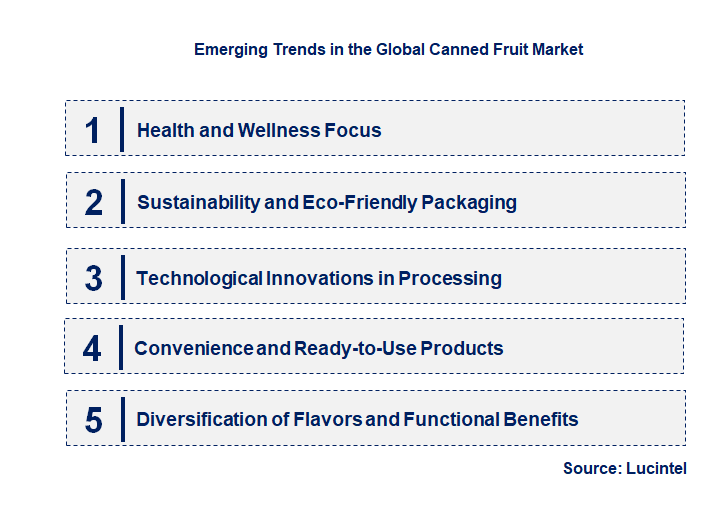
• Health and Wellness Focus: Consumers are increasingly prioritizing health, leading to a demand for natural, low-sugar, and preservative-free canned fruits. This trend encourages brands to innovate with organic and minimally processed options, boosting sales of health-oriented products. It also influences marketing strategies emphasizing nutritional benefits, catering to health-conscious demographics and expanding sub-segments like organic canned fruits and superfood blends.
• Sustainability and Eco-Friendly Packaging: Environmental concerns are prompting companies to adopt sustainable practices, such as biodegradable cans and recyclable packaging. This shift reduces carbon footprints and appeals to eco-conscious consumers. The trend also involves responsible sourcing and reducing food waste, which enhances brand reputation and aligns with global sustainability goals. Sub-segments benefiting include eco-friendly packaging solutions and sustainably sourced fruit varieties.
• Technological Innovations in Processing: Advances in canning technology improve product quality, shelf life, and safety. Innovations like high-pressure processing and smart packaging extend freshness and nutritional value. These developments enable manufacturers to offer a wider range of products, including ready-to-eat and fortified options, thus expanding sub-segments like functional canned fruits and premium offerings. The impact is increased consumer trust and reduced waste.
• Convenience and Ready-to-Use Products: The demand for quick, easy-to-prepare foods drives growth in pre-cut, flavored, and ready-to-eat canned fruits. Packaging innovations such as resealable cans and single-serve portions enhance convenience. This trend caters to busy lifestyles and urban consumers, expanding sub-segments like snack packs and meal accompaniments. It results in higher sales volumes and broader market reach.
• Diversification of Flavors and Functional Benefits: Consumers seek variety and added health benefits, prompting brands to introduce exotic flavors, superfoods, and fortified options like vitamin-enriched canned fruits. This diversification attracts a broader customer base and opens new market segments. The impact includes increased product differentiation and the creation of niche markets such as gourmet and health-specific canned fruit products. These emerging trends are reshaping the canned fruit market by emphasizing health, sustainability, innovation, convenience, and diversification. They are driving product development, influencing consumer choices, and fostering competitive differentiation, ultimately leading to a more dynamic and responsive industry landscape.
• Growing Demand for Healthy Snacks: The increasing focus on health and wellness has boosted demand for nutritious, ready-to-eat canned fruits. Consumers prefer products with minimal additives and natural ingredients, prompting manufacturers to innovate with organic and preservative-free options. This trend enhances market growth by attracting health-conscious buyers and expanding product lines, especially in North America and Europe. The shift towards healthier lifestyles is expected to sustain long-term demand, encouraging brands to develop diverse, functional fruit products.
• Technological Innovations in Preservation: Advances in canning and preservation technologies, such as high-pressure processing and vacuum sealing, have improved product quality and shelf life. These innovations reduce spoilage and maintain nutritional value, enabling longer distribution channels and reducing waste. As a result, manufacturers can reach wider markets, including remote areas. Enhanced preservation methods also allow for a broader variety of fruits to be canned, increasing consumer choices and supporting market expansion globally.
• Expansion in Emerging Markets: Rapid urbanization and rising disposable incomes in countries like India, China, and Brazil are driving canned fruit consumption. Local manufacturers are entering the market, offering affordable options and catering to changing lifestyles. The expansion is supported by improved cold chain infrastructure and increasing retail penetration. This growth in emerging markets presents significant opportunities for global brands to establish a foothold, diversify product offerings, and capitalize on the rising demand for convenient, healthy food options.
• E-commerce and Online Retail Growth: The rise of e-commerce platforms has transformed distribution channels, making canned fruits more accessible to consumers worldwide. Online retail offers convenience, detailed product information, and competitive pricing, attracting a broader customer base. Brands are leveraging digital marketing and direct-to-consumer models to increase sales. The growth of online grocery shopping, especially post-pandemic, is expected to further boost market penetration, enabling companies to reach niche markets and expand their global footprint efficiently.
• Product Innovation and Diversification: Companies are introducing new flavors, organic options, and value-added products like fruit in syrup or juice to meet diverse consumer preferences. Packaging innovations, such as resealable cans and eco-friendly materials, enhance user experience and sustainability. These innovations help brands differentiate themselves and tap into niche markets, including health-conscious and environmentally aware consumers. Diversification strategies are crucial for maintaining competitive advantage and driving growth in a saturated market. The overall impact of these developments is a dynamic, expanding market characterized by increased consumer choice, improved product quality, and broader geographic reach. Innovation and technological advancements are enabling companies to meet evolving demands, fostering sustainable growth and competitive differentiation across the canned fruit industry.
• Retail Sector Expansion: The retail segment is a primary driver of canned fruit sales, with supermarkets, hypermarkets, and online platforms offering a wide range of products. Growing health awareness encourages consumers to choose canned fruits as a convenient, nutritious snack or ingredient. Product innovations like organic, low-sugar, and exotic fruit options attract diverse customer segments. Strategic partnerships and marketing campaigns further boost retail penetration, expanding consumer access and increasing overall market revenue.
• Foodservice Industry Adoption: The foodservice sector, including restaurants, cafes, and catering services, increasingly incorporates canned fruits into menus for desserts, salads, and beverages. The convenience and consistent quality of canned fruits make them ideal for large-scale food preparation. Rising demand for quick-service meals and health-conscious menu options drives suppliers to offer a variety of canned fruit products. This segments growth is supported by innovations in packaging and product presentation, enhancing appeal to foodservice providers.
• Industrial Applications in Food Manufacturing: Canned fruits are extensively used in the food processing industry for products like jams, juices, baked goods, and snack bars. The industrial segment benefits from the long shelf life and ease of storage of canned fruits, reducing supply chain complexities. As demand for processed foods increases globally, manufacturers seek high-quality, cost-effective canned fruit supplies. This segment also explores new formulations, such as organic and non-GMO options, to meet consumer preferences and expand product portfolios.
• Growing Demand for Organic and Natural Canned Fruits: Consumers are increasingly seeking organic, non-GMO, and natural canned fruit options due to health and environmental concerns. This trend encourages producers to develop organic-certified products with minimal additives. Organic canned fruits appeal to premium markets and health-conscious demographics, driving innovation and product diversification. Certification processes and sustainable sourcing practices are vital for market players aiming to capitalize on this opportunity, leading to higher margins and brand loyalty.
• Regional Market Expansion in Emerging Economies: Emerging economies in Asia, Africa, and Latin America present substantial growth opportunities due to rising disposable incomes and changing dietary habits. Urbanization and modernization of retail infrastructure facilitate product availability. Local manufacturers are expanding their product lines to include regional fruit varieties, catering to local tastes. Investment in supply chain infrastructure and marketing strategies tailored to regional preferences are crucial for capturing market share and establishing a strong presence in these developing markets. These growth opportunities collectively enhance the markets potential by diversifying product offerings, expanding regional reach, and catering to evolving consumer preferences. Innovation in packaging, product differentiation, and strategic market penetration will drive sustained growth. As consumer demand for healthy, convenient, and regionally tailored canned fruit options increases, market players are positioned to capitalize on these trends, ensuring long-term expansion and competitive advantage across all key applications.
• Technological Innovations: The development of advanced preservation techniques, such as high-pressure processing and improved sterilization methods, enhances product quality, extends shelf life, and reduces spoilage. Packaging innovations like eco-friendly cans and easy-open lids improve consumer convenience and sustainability. These technological advancements enable manufacturers to meet increasing demand for fresh-tasting, nutritious, and long-lasting canned fruits, thereby expanding market reach and consumer satisfaction.
• Rising Consumer Demand for Convenience and Nutrition: Busy lifestyles and urbanization have increased the preference for ready-to-eat, healthy food options. Canned fruits offer a convenient, nutritious alternative to fresh produce, with longer shelf life and easy storage. Growing awareness of health benefits associated with fruits, coupled with the convenience factor, drives higher consumption, especially among working professionals and health-conscious consumers, fueling market growth.
• Economic Growth and Urbanization: Increasing disposable incomes and urbanization in emerging economies boost demand for processed foods, including canned fruits. As consumers seek affordable, accessible, and diverse food options, manufacturers expand their product portfolios to cater to these markets. Economic development also facilitates better distribution infrastructure, enabling wider availability of canned fruits across rural and urban areas.
• Expansion of Retail and E-commerce Channels: The proliferation of supermarkets, hypermarkets, and online retail platforms has improved product accessibility and visibility. E-commerce allows consumers to access a broader range of canned fruit products, often with detailed nutritional information and reviews. This expansion enhances market penetration, especially in remote regions, and supports brand growth through targeted marketing and direct consumer engagement.
• Sustainability and Environmental Concerns: Growing awareness of environmental issues prompts manufacturers to adopt eco-friendly packaging and sustainable sourcing practices. Use of recyclable cans and reduction of carbon footprint in production processes appeal to environmentally conscious consumers. These initiatives not only improve brand image but also align with regulatory trends promoting sustainability, thereby influencing market dynamics positively. The challenges facing the canned fruit market include:-
• Stringent Regulatory Standards: Governments and international bodies impose strict regulations concerning food safety, labeling, and packaging standards. Compliance requires significant investment in quality control, testing, and certification processes, which can increase operational costs. Non-compliance risks product recalls, legal penalties, and damage to brand reputation, posing a challenge for manufacturers to maintain cost-effective operations while adhering to evolving standards.
• Supply Chain Disruptions: The market heavily relies on global sourcing of raw materials like fresh fruits, which are susceptible to weather conditions, pests, and seasonal variations. Disruptions in transportation, logistics, or trade policies can lead to shortages, increased costs, and delays in product availability. Such uncertainties impact production planning and profitability, especially for small and medium-sized enterprises with limited supply chain resilience.
• Competition and Market Saturation: The increasing number of players and product variants intensifies competition, leading to price wars and reduced profit margins. Market saturation in developed regions limits growth opportunities, compelling companies to innovate and diversify their offerings. Maintaining differentiation and consumer loyalty becomes challenging amid a crowded marketplace, requiring strategic marketing and product innovation to sustain market share. The canned fruit market is shaped by technological advancements, consumer preferences, economic growth, and distribution expansion, which collectively drive its growth. However, regulatory compliance, supply chain vulnerabilities, and intense competition pose significant challenges. Navigating these factors requires strategic agility and innovation. The markets future depends on balancing technological progress and sustainability initiatives with effective risk management. Overall, these drivers and challenges will determine the pace of growth, market competitiveness, and the ability of stakeholders to meet evolving consumer demands in a dynamic environment.
• Dole PLC
• The Kraft Heinz Company
• Del Monte Foods Inc.
• Rhodes Food Group
• Seneca Foods Corporation
• Roland Foods LLC
• Xiamen Gulong Group Co., Ltd.
• Kangfa Foods Co., Ltd.
• CHB Group
• Delicia Foods India Pvt. Ltd.
• Peaches
• Pineapple
• Mandarin Oranges
• Mixed Fruits
• Pears
• Others
• Whole Fruits
• Cut Fruits
• Supermarkets/Hypermarkets
• Convenience Stores
• Online Retail Stores
• Others
• North America
• Europe
• Asia Pacific
• The Rest of the World
• United States: The U.S. canned fruit market has seen a surge in organic and non-GMO products, driven by health-conscious consumers. Innovations in packaging, such as eco-friendly cans, are gaining popularity. Retailers are expanding private label offerings, and e-commerce sales are growing rapidly, especially during the pandemic. There is also increased focus on sustainable sourcing and reducing food waste through better supply chain management.
• China: China’s canned fruit industry is expanding due to rising disposable incomes and urbanization. Local brands are improving quality standards to compete with imported products. The government promotes agricultural modernization, leading to better fruit cultivation and processing techniques. Export opportunities are growing, especially to Southeast Asia and Africa, supported by trade agreements and infrastructure development.
• Germany: The German market emphasizes organic and premium canned fruits, aligning with European health and sustainability trends. Innovations include functional products with added vitamins and minerals. The country is also focusing on reducing packaging waste and increasing recyclability. Import reliance remains high, with a focus on sourcing from South America and Southern Europe to meet consumer demand for diverse varieties.
• India: The Indian canned fruit market is witnessing rapid growth due to increasing urbanization and changing lifestyles. Local manufacturers are investing in quality improvements and expanding product ranges, including tropical fruits like mango and pineapple. The government’s support for agricultural exports and modernization of processing facilities are boosting industry competitiveness. Export markets in the Middle East and Africa are expanding.
• Japan: Japan’s canned fruit market is characterized by a focus on health benefits and convenience. There is a rising demand for low-sugar and preservative-free options. Technological advancements in sterilization and packaging extend shelf life and preserve nutrients. The market also sees a trend toward premium and exotic fruit varieties, catering to a niche but loyal consumer base. Import dependence remains high, with a focus on maintaining high quality standards.


• Dole PLC
• The Kraft Heinz Company
• Del Monte Foods Inc.
• Rhodes Food Group
• Seneca Foods Corporation
• Roland Foods LLC
• Xiamen Gulong Group Co., Ltd.
• Kangfa Foods Co., Ltd.
• CHB Group
• Delicia Foods India Pvt. Ltd. Q6. Which canned fruit market segment will be the largest in future? Answer: Lucintel forecasts that, within the distribution channel category, online retail store is expected to witness the highest growth over the forecast period. Q7. In canned fruit market, which region is expected to be the largest in next 5 years? Answer: In terms of region, North America is expected to witness the highest growth over the forecast period. Q8. Do we receive customization in this report? Answer: Yes, Lucintel provides 10% customization without any additional cost.


Choose a license that fits your team. Instant PDF delivery.
Prices exclude taxes. Instant delivery. Custom licensing available on request.
Market Report · July 22, 2026
Market Report · July 22, 2026
Market Report · July 22, 2026
Trusted partner for strategic intelligence and business growth


Receive a complimentary market analysis tailored to your industry. Our analysts will identify key growth opportunities and competitive dynamics specific to your business.

Market size, growth rate, and key trend analysis for your specific sector.

Top competitor positioning and market share analysis.

Strategic recommendations backed by data-driven insights.
Get curated market intelligence and competitive moves straight to your inbox.
By subscribing, you agree to receive our monthly insights. Unsubscribe anytime.
Receive a complimentary market analysis tailored to your industry. Our analysts will identify key growth opportunities and competitive dynamics specific to your business.
Market size, growth rate, and key trend analysis for your specific sector.
Top competitor positioning and market share analysis.
Strategic recommendations backed by data-driven insights.
Get curated market intelligence, emerging trends, and competitive moves straight to your inbox each month.
By subscribing, you agree to receive our monthly insights. Unsubscribe anytime.
We'll send your sample report shortly.