
Market Report · July 22, 2026

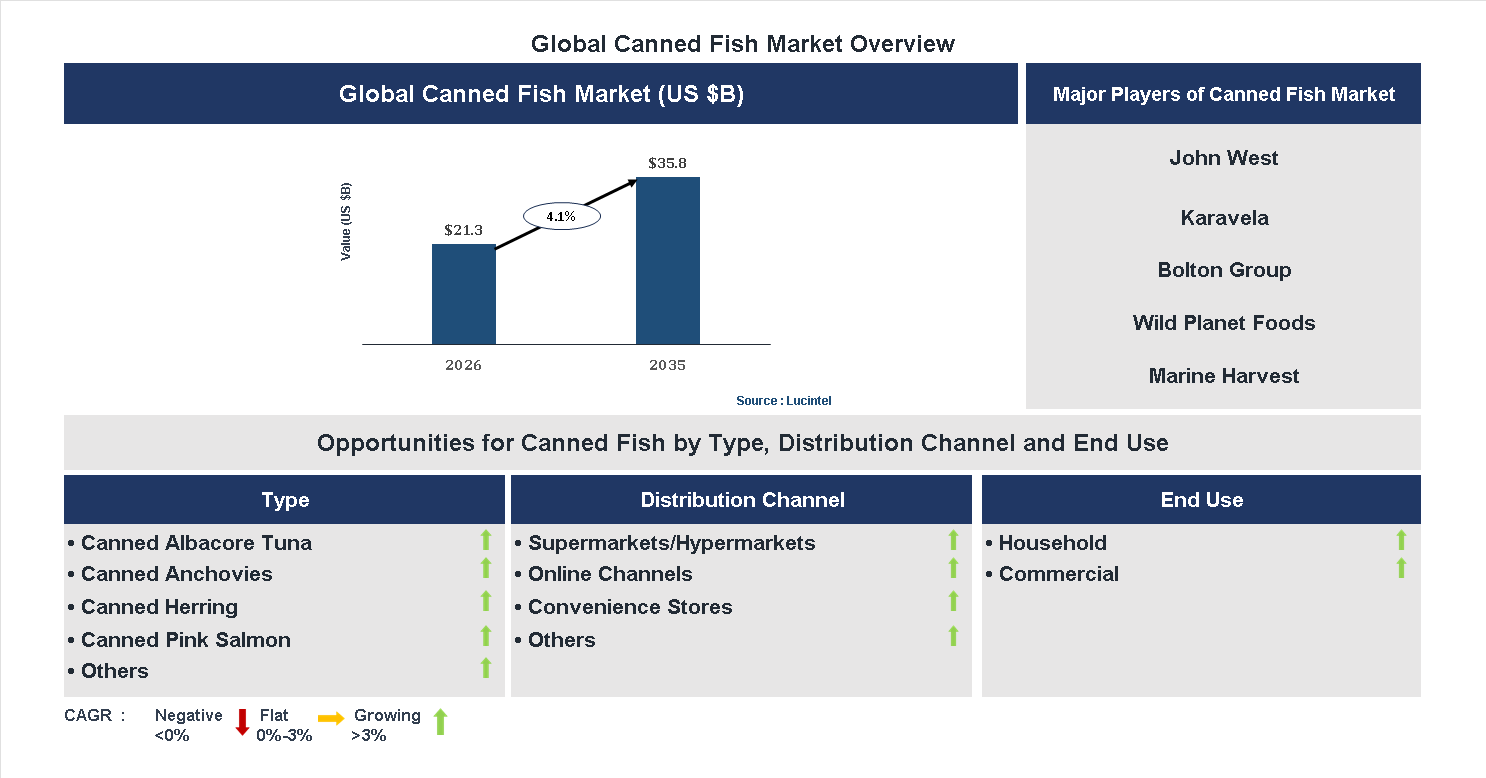
Key data points: The market size in 2035 = $35.8 billion, growth forecast = 4.1% annually for the next 8 years. Scroll below to get more insights. This market report covers trends, opportunities and forecasts in canned fish market to 2035 by type (canned albacore tuna, canned anchovies, canned herring, canned pink salmon, and others), distribution channel (supermarkets/hypermarkets, online channels, convenience stores, and others), end use (household and commercial), and region (North America, Europe, Asia Pacific, and the Rest of the World)
We'll send your sample report shortly.
• Lucintel forecasts that, within the type category, canned albacore tuna is expected to witness the highest growth over the forecast period.
• Within the end use category, commercial is expected to witness higher growth.
• In terms of region, APAC is expected to witness the highest growth over the forecast period. Gain valuable insights for your business decisions with our comprehensive 150+ page report. Sample figures with some insights are shown below.
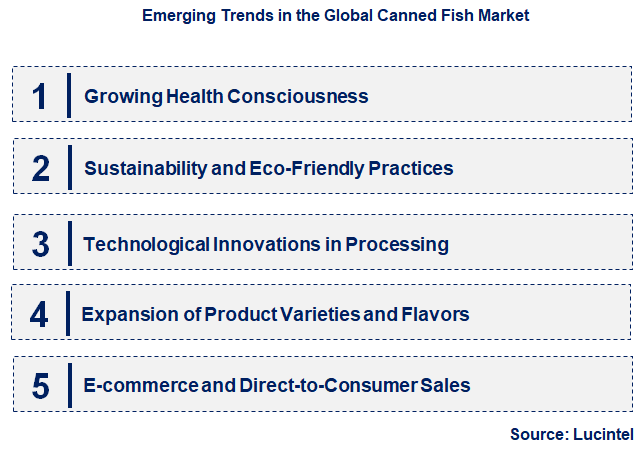
• Growing Health Consciousness: Consumers are increasingly prioritizing health and wellness, leading to higher demand for nutritious, protein-rich canned fish options. This trend encourages companies to focus on product transparency, omega-3 content, and low-sodium varieties, which appeal to health-conscious buyers. The shift supports premiumization and innovation in product formulations, fostering market growth and diversification.
• Sustainability and Eco-Friendly Practices: Environmental concerns are prompting brands to adopt sustainable fishing methods, eco-friendly packaging, and transparent supply chains. Certifications like MSC (Marine Stewardship Council) are gaining importance, influencing consumer choices. This trend enhances brand reputation and appeals to environmentally conscious consumers, driving market differentiation and responsible sourcing.
• Technological Innovations in Processing: Advances in canning technology, preservation techniques, and supply chain logistics are improving product quality, shelf life, and cost efficiency. Automation and smart manufacturing reduce waste and enhance traceability, meeting consumer demands for freshness and safety. These innovations enable companies to expand product varieties and improve operational efficiency.
• Expansion of Product Varieties and Flavors: To cater to diverse consumer preferences, manufacturers are introducing new flavors, regional recipes, and value-added products such as ready-to-eat or meal kits. This diversification attracts a broader customer base and encourages repeat purchases. It also allows brands to differentiate themselves in a competitive market.
• E-commerce and Direct-to-Consumer Sales: The rise of online retail platforms and direct-to-consumer channels is transforming distribution strategies. Consumers prefer the convenience of online shopping, prompting brands to develop digital marketing and e-commerce capabilities. This trend enhances market reach, provides valuable consumer data, and fosters brand loyalty through personalized experiences. In summary, these trends are collectively reshaping the canned fish market by emphasizing health, sustainability, technological advancement, product innovation, and digital engagement. They are driving growth, fostering competitive differentiation, and aligning the industry with evolving consumer values and technological progress.
• Growing Demand for Convenience and Nutrition: The increasing consumer preference for ready-to-eat, nutritious foods is boosting canned fish sales. Busy lifestyles and health consciousness drive demand for protein-rich, long shelf-life products. Manufacturers are innovating with packaging and product varieties to meet these needs, expanding market reach. This trend enhances accessibility and affordability, making canned fish a staple in households worldwide. As a result, market growth accelerates, attracting new entrants and expanding existing brands’ market share.
• Technological Innovations in Processing and Packaging: Advances in processing techniques and packaging materials have improved product quality, shelf life, and safety. Innovations such as vacuum sealing and BPA-free cans enhance consumer trust and product appeal. These developments reduce spoilage and waste, enabling wider distribution, including in remote areas. Enhanced packaging also supports branding and marketing efforts. Overall, technological progress boosts efficiency, reduces costs, and fosters consumer confidence, significantly impacting market expansion and competitiveness.
• Expansion into Emerging Markets: Developing regions present substantial growth opportunities due to rising disposable incomes and urbanization. Companies are tailoring products to local tastes and preferences, establishing distribution networks, and investing in marketing campaigns. This expansion helps diversify revenue streams and reduces dependence on mature markets. As awareness of canned fish’s health benefits grows, demand surges, fueling industry growth. Market players’ strategic focus on emerging markets is crucial for long-term sustainability and global market dominance.
• Sustainability and Eco-Friendly Practices: Increasing environmental awareness influences consumer choices and regulatory policies. Companies adopting sustainable fishing practices, eco-friendly packaging, and transparent supply chains are gaining a competitive advantage. Certification programs like MSC and ASC bolster credibility and appeal to eco-conscious consumers. These initiatives help mitigate environmental impact, ensure resource renewal, and meet regulatory standards. Sustainability efforts are becoming integral to brand reputation and market positioning, driving industry-wide shifts toward responsible practices and expanding consumer trust.
• Strategic Mergers, Acquisitions, and Partnerships: Industry consolidation through mergers and acquisitions enhances market power, resource sharing, and innovation capacity. Strategic alliances with logistics providers and retailers improve distribution efficiency and market penetration. These collaborations enable access to new markets, streamline supply chains, and foster product innovation. Such activities strengthen competitive positioning, reduce operational costs, and accelerate growth. As the market becomes more competitive, these strategic moves are vital for companies aiming to sustain growth and adapt to evolving consumer demands. The overall impact of these developments is a dynamic, expanding market characterized by innovation, sustainability, and global reach. Increased consumer demand, technological progress, and strategic market expansion are driving growth, while sustainability initiatives and industry consolidation are shaping a resilient, competitive landscape. These factors collectively enhance market stability, create new opportunities, and position the canned fish industry for sustained future growth.
• Growing Demand for Healthy and Convenient Seafood Options: Consumers are increasingly seeking nutritious, easy-to-prepare food choices, boosting canned fish sales. The convenience factor, combined with health benefits like omega-3 fatty acids, makes canned fish a preferred protein source. Urban lifestyles and busy schedules further drive demand for ready-to-eat seafood, encouraging manufacturers to innovate with new flavors and packaging formats to attract health-conscious consumers.
• Expansion of Distribution Channels and E-commerce Platforms: The rise of online retail and e-commerce platforms has broadened access to canned fish products globally. Supermarkets, convenience stores, and online marketplaces are making canned fish more accessible, especially in emerging markets. Strategic partnerships with online retailers and direct-to-consumer sales enable brands to reach wider audiences, enhance brand visibility, and capitalize on the growing trend of online shopping for food products.
• Innovation in Packaging and Product Formats: Advances in packaging technology, such as resealable cans and eco-friendly materials, are enhancing product appeal and shelf life. Manufacturers are introducing new formats like snack packs and flavored variants to cater to diverse consumer preferences. These innovations improve convenience, reduce waste, and support sustainability goals, thereby attracting environmentally conscious consumers and expanding the market reach.
• Rising Demand in Emerging Markets: Rapid urbanization, increasing disposable incomes, and changing dietary habits are fueling canned fish consumption in developing regions. Local manufacturers are expanding their product portfolios and distribution networks to tap into these markets. Government initiatives promoting seafood consumption and improved supply chains further support market growth, offering significant opportunities for companies to establish a strong presence and capture new customer segments.
• Focus on Sustainability and Ethical Sourcing: Consumers are increasingly concerned about environmental impact and sustainable fishing practices. Companies adopting responsible sourcing, eco-friendly packaging, and transparent supply chains are gaining a competitive advantage. Certification programs and sustainability initiatives are influencing purchasing decisions, encouraging brands to align with environmental standards. This focus on sustainability not only enhances brand reputation but also ensures long-term market viability amid evolving consumer expectations. The overall impact of these opportunities is a robust, expanding canned fish market characterized by innovation, increased accessibility, and sustainability. Companies that strategically leverage these growth avenues can strengthen their market position, meet evolving consumer demands, and achieve sustained profitability in a competitive landscape.
• Technological Innovations: The development of advanced preservation and packaging technologies has significantly extended shelf life, maintained nutritional value, and improved product safety. Innovations such as vacuum sealing and BPA-free cans have enhanced consumer appeal and trust. These technological advancements enable producers to meet international quality standards, expand distribution channels, and reduce waste, thereby increasing market reach and profitability. As consumers become more health-conscious, the demand for minimally processed, high-quality canned fish continues to grow, driven by technological progress.
• Rising Health Awareness and Changing Consumer Preferences: Increasing awareness about the health benefits of omega-3 fatty acids and lean protein sources has shifted consumer preferences toward canned fish. Busy lifestyles and the need for convenient, nutritious food options have further fueled demand. Consumers are seeking affordable, long shelf-life products that fit into a healthy diet, which benefits the canned fish market. This trend is reinforced by the growing popularity of seafood in various cuisines, encouraging manufacturers to innovate and diversify product offerings to meet evolving tastes.
• Economic Growth and Urbanization: Rapid economic development and urbanization in emerging markets have led to increased disposable incomes and changing dietary habits. Urban consumers prefer ready-to-eat, convenient food options, boosting demand for canned fish. Additionally, economic growth facilitates better infrastructure and distribution networks, enabling wider market penetration. As middle-class populations expand, their purchasing power supports premium and value-added canned fish products, driving overall market growth and encouraging investment in production capacity and marketing.
• Export Opportunities and Global Trade Dynamics: The canned fish market benefits from expanding international trade, especially in regions with high seafood consumption like North America, Europe, and the Asia-Pacific. Trade agreements, tariffs, and import-export regulations influence market access and competitiveness. Countries with abundant fish resources, such as Norway, Thailand, and Chile, leverage export opportunities to meet global demand. Enhanced logistics and compliance with international standards facilitate market expansion, while geopolitical factors and trade tensions can pose challenges, requiring strategic adaptation by industry players.
• Sustainability and Certification Standards: Growing consumer awareness about environmental impact and sustainable fishing practices influences market dynamics. Certification schemes like MSC (Marine Stewardship Council) and ASC (Aquaculture Stewardship Council) are increasingly adopted to demonstrate responsible sourcing. Compliance with these standards can open access to premium markets and enhance brand reputation. However, implementing sustainable practices involves higher costs and operational adjustments, which can challenge producers, especially smaller firms, in maintaining profitability while meeting regulatory and consumer expectations. The challenges facing the canned fish market include:-
• Regulatory and Compliance Complexities: The canned fish industry faces stringent regulations related to food safety, quality standards, and environmental practices across different regions. Navigating diverse regulatory frameworks can be complex and costly, requiring continuous monitoring and adaptation. Non-compliance risks product recalls, legal penalties, and damage to brand reputation. Additionally, evolving regulations around sustainable fishing and traceability demand significant operational changes, which can hinder market agility and increase compliance costs, especially for small and medium-sized enterprises.
• Supply Chain Disruptions and Raw Material Scarcity: The industry heavily depends on a consistent supply of raw fish, which is vulnerable to overfishing, climate change, and geopolitical tensions. Disruptions in fishing zones, transportation delays, and fluctuating fish stocks can lead to supply shortages and increased costs. These factors threaten production stability and profitability. Moreover, reliance on specific regions for raw materials exposes companies to regional risks, necessitating diversification strategies that may involve higher costs and logistical complexities.
• Environmental and Sustainability Challenges: Overfishing, habitat destruction, and pollution pose significant threats to fish populations and marine ecosystems. Meeting sustainability standards requires substantial investment in responsible sourcing and eco-labeling, which can increase operational costs. Failure to address environmental concerns can lead to consumer backlash, loss of certifications, and restricted market access. Balancing economic growth with ecological preservation remains a critical challenge, demanding innovative solutions and stakeholder collaboration to ensure long-term viability. In summary, the canned fish market is shaped by technological advancements, changing consumer preferences, economic growth, and global trade opportunities, which collectively drive expansion. However, regulatory complexities, supply chain vulnerabilities, and environmental concerns present significant hurdles. These drivers and challenges influence market dynamics, requiring industry players to innovate, adapt, and prioritize sustainability. Successful navigation of these factors will determine the market’s future trajectory, with opportunities for growth balanced against the need for responsible practices and resilient supply chains. Overall, a strategic approach that leverages technological progress while addressing environmental and regulatory challenges will be essential for sustained success in the canned fish market.
• John West
• Karavela
• Bolton Group
• Wild Planet Foods
• Marine Harvest
• Thai Union Group
• Icicle Seafoods Inc
• Maruha Nichiro Corporation
• Monster Group
• Connors Bros Ltd
• Canned Albacore Tuna
• Canned Anchovies
• Canned Herring
• Canned Pink Salmon
• Others
• Supermarkets/Hypermarkets
• Online Channels
• Convenience Stores
• Others
• Household
• Commercial
• North America
• Europe
• Asia Pacific
• The Rest of the World
• United States: The US market has seen increased demand for sustainable and organic canned fish products, driven by health-conscious consumers. Major brands are investing in eco-friendly packaging and transparent sourcing practices. E-commerce sales have surged, expanding access to diverse product options. Regulatory standards are tightening around labeling and sustainability claims, encouraging industry compliance. Additionally, premium and specialty canned fish segments are gaining popularity among urban consumers seeking convenience and quality.
• China: China’s canned fish market is rapidly expanding due to rising disposable incomes and urbanization. Local brands are improving product quality and diversifying offerings to compete with international players. The government’s support for aquaculture and fisheries has boosted raw material availability. E-commerce platforms are playing a crucial role in distribution, making canned fish more accessible nationwide. Consumer preferences are shifting towards healthier options, prompting manufacturers to innovate with low-sodium and preservative-free products.
• Germany: Germany’s market emphasizes sustainability and quality, with consumers favoring responsibly sourced canned fish. The country has seen growth in organic and MSC-certified products. Retailers are increasing shelf space for premium and artisanal canned fish varieties. Innovations in packaging, such as recyclable materials, align with environmental concerns. The market also benefits from strong export links within the European Union, facilitating access to diverse international products. Consumer education campaigns about sustainable fishing practices are influencing purchasing decisions.
• India: The Indian canned fish market is emerging, driven by increasing urbanization and changing dietary habits. Local brands are expanding their product ranges to include affordable options suitable for mass markets. The growth of modern retail outlets and online platforms is improving product availability. Consumers are becoming more aware of canned fish as a convenient protein source, especially in urban areas with busy lifestyles. Regulatory frameworks are evolving to ensure quality standards, encouraging local manufacturers to adopt better processing practices.
• Japan: Japan’s canned fish market remains highly developed, with a strong cultural preference for seafood. The market is characterized by high-quality products, including traditional favorites like sardines and mackerel. Innovations in flavor profiles and packaging cater to domestic tastes and convenience. Sustainability certifications are increasingly influencing consumer choices. The country’s focus on food safety and traceability ensures high standards. Export markets are also vital, with Japanese canned fish highly regarded for quality and freshness, supporting a robust international presence.


• John West
• Karavela
• Bolton Group
• Wild Planet Foods
• Marine Harvest
• Thai Union Group
• Icicle Seafoods Inc
• Maruha Nichiro Corporation
• Monster Group
• Connors Bros Ltd Q6. Which canned fish market segment will be the largest in future? Answer: Lucintel forecasts that, within the type category, canned albacore tuna is expected to witness the highest growth over the forecast period. Q7. In canned fish market, which region is expected to be the largest in next 5 years? Answer: In terms of region, APAC is expected to witness the highest growth over the forecast period. Q8. Do we receive customization in this report? Answer: Yes, Lucintel provides 10% customization without any additional cost.


Choose a license that fits your team. Instant PDF delivery.
Prices exclude taxes. Instant delivery. Custom licensing available on request.
Market Report · July 22, 2026
Market Report · July 22, 2026
Market Report · July 22, 2026
Trusted partner for strategic intelligence and business growth


Receive a complimentary market analysis tailored to your industry. Our analysts will identify key growth opportunities and competitive dynamics specific to your business.

Market size, growth rate, and key trend analysis for your specific sector.

Top competitor positioning and market share analysis.

Strategic recommendations backed by data-driven insights.
Get curated market intelligence and competitive moves straight to your inbox.
By subscribing, you agree to receive our monthly insights. Unsubscribe anytime.
Receive a complimentary market analysis tailored to your industry. Our analysts will identify key growth opportunities and competitive dynamics specific to your business.
Market size, growth rate, and key trend analysis for your specific sector.
Top competitor positioning and market share analysis.
Strategic recommendations backed by data-driven insights.
Get curated market intelligence, emerging trends, and competitive moves straight to your inbox each month.
By subscribing, you agree to receive our monthly insights. Unsubscribe anytime.
We'll send your sample report shortly.