
Report Feature
Canine Stem Cell Therapy Market Trends and Forecast
The future of the global canine stem cell therapy market looks promising with opportunities in the veterinary hospitals, veterinary clinics and veterinary research institutes markets. The global canine stem cell therapy market is expected to grow with a CAGR of 4.3% from 2025 to 2031. The major drivers for this market are increased success rates of stem cell therapy and rising veterinary advancements. Lucintel forecasts that, within the type category, autologous stem cells is expected to witness higher growth over the forecast period. Within the category, veterinary hospitals is expected to witness the highest growth. In terms of region, APAC is expected to witness the highest growth over the forecast period. Gain valuable insights for your business decisions with our comprehensive 150+ page report. Sample figures with some insights are shown below.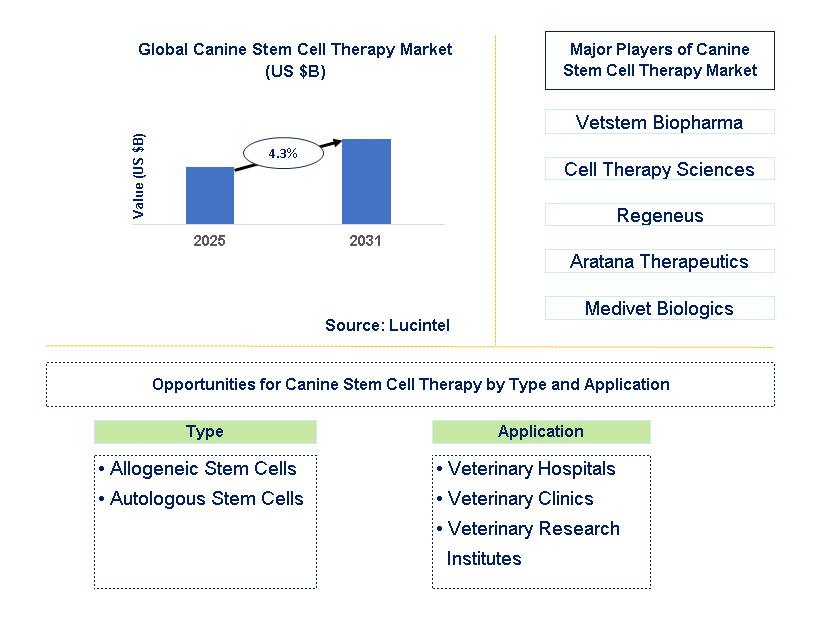
Canine Stem Cell Therapy Market by Segment
• Personalized Stem Cell Therapy: Personalized stem cell treatments tailored to the specific needs of individual dogs are becoming more popular in the market. The approach involves using stem cells derived from the dog’s own body, such as adipose (fat) or bone marrow-derived stem cells, which reduces the risk of rejection. This trend is improving the effectiveness of treatment by using cells that are genetically compatible with the patient. With the rise in personalized medicine, canine stem cell therapy is becoming increasingly effective in addressing specific conditions, such as joint degeneration and spinal injuries, leading to better outcomes for pets.
• Increased Research and Clinical Trials: Research and clinical trials are playing a crucial role in advancing the canine stem cell therapy market. Ongoing studies are investigating new therapeutic areas, including the use of stem cells for neurological disorders, autoimmune diseases, and chronic pain management. The increase in clinical trials is not only providing valuable data on the safety and efficacy of stem cell treatments but also pushing regulatory bodies to establish clearer guidelines for their use. The results of these trials are helping to build a stronger evidence base, which is expected to expand the adoption of stem cell therapies in veterinary medicine.
• Integration of Stem Cell Therapy: There is a growing trend of combining stem cell therapy with other regenerative treatments, such as platelet-rich plasma (PRP) therapy, to enhance therapeutic outcomes. For example, combining stem cells with PRP, which is rich in growth factors, can promote faster healing and tissue regeneration. This trend is particularly popular in the treatment of orthopedic conditions such as arthritis and ligament injuries. By offering a comprehensive approach to regenerative medicine, clinics can provide better results for patients and attract more pet owners seeking effective and holistic solutions.
• Expansion of Stem Cell Therapy Clinics: The number of veterinary clinics offering stem cell therapy is increasing, driven by rising demand from pet owners who seek non-invasive, effective treatment options for their pets. Many veterinary practices are expanding their services to include stem cell therapy, particularly in regions where awareness of regenerative medicine is growing. The availability of stem cell therapy is also spreading to rural areas, where access to advanced treatments was previously limited. This trend is helping to democratize access to cutting-edge veterinary care, making stem cell therapy more widely accessible to a larger pet population. These emerging trends minimally invasive techniques, personalized treatments, increased research, combined therapies, and clinic expansion are reshaping the canine stem cell therapy market. Together, they are enhancing the effectiveness, accessibility, and popularity of stem cell-based treatments, making them a more integral part of veterinary care for pets." src="Emerging Trends in the Canine Stem Cell Therapy Market" style="height: auto;width: auto;" title="The canine stem cell therapy market is evolving rapidly, with various trends emerging as the demand for alternative treatments grows. These trends are largely driven by technological advancements, a greater focus on pet health, and a growing acceptance of regenerative medicine. Below are five key trends shaping the future of the canine stem cell therapy market.
• Adoption of Minimally Invasive Techniques: As veterinary clinics embrace canine stem cell therapy, there is a growing trend toward minimally invasive procedures for stem cell collection and injection. Techniques such as bone marrow aspiration, which are less invasive and more comfortable for dogs, are becoming more common. This trend enhances patient recovery times and reduces risks associated with invasive surgeries, encouraging more pet owners to choose stem cell therapy as a treatment option. Furthermore, the trend towards minimally invasive techniques is helping reduce overall treatment costs, making stem cell therapy more accessible.
• Personalized Stem Cell Therapy: Personalized stem cell treatments tailored to the specific needs of individual dogs are becoming more popular in the market. The approach involves using stem cells derived from the dog’s own body, such as adipose (fat) or bone marrow-derived stem cells, which reduces the risk of rejection. This trend is improving the effectiveness of treatment by using cells that are genetically compatible with the patient. With the rise in personalized medicine, canine stem cell therapy is becoming increasingly effective in addressing specific conditions, such as joint degeneration and spinal injuries, leading to better outcomes for pets.
• Increased Research and Clinical Trials: Research and clinical trials are playing a crucial role in advancing the canine stem cell therapy market. Ongoing studies are investigating new therapeutic areas, including the use of stem cells for neurological disorders, autoimmune diseases, and chronic pain management. The increase in clinical trials is not only providing valuable data on the safety and efficacy of stem cell treatments but also pushing regulatory bodies to establish clearer guidelines for their use. The results of these trials are helping to build a stronger evidence base, which is expected to expand the adoption of stem cell therapies in veterinary medicine.
• Integration of Stem Cell Therapy: There is a growing trend of combining stem cell therapy with other regenerative treatments, such as platelet-rich plasma (PRP) therapy, to enhance therapeutic outcomes. For example, combining stem cells with PRP, which is rich in growth factors, can promote faster healing and tissue regeneration. This trend is particularly popular in the treatment of orthopedic conditions such as arthritis and ligament injuries. By offering a comprehensive approach to regenerative medicine, clinics can provide better results for patients and attract more pet owners seeking effective and holistic solutions.
• Expansion of Stem Cell Therapy Clinics: The number of veterinary clinics offering stem cell therapy is increasing, driven by rising demand from pet owners who seek non-invasive, effective treatment options for their pets. Many veterinary practices are expanding their services to include stem cell therapy, particularly in regions where awareness of regenerative medicine is growing. The availability of stem cell therapy is also spreading to rural areas, where access to advanced treatments was previously limited. This trend is helping to democratize access to cutting-edge veterinary care, making stem cell therapy more widely accessible to a larger pet population. These emerging trends minimally invasive techniques, personalized treatments, increased research, combined therapies, and clinic expansion are reshaping the canine stem cell therapy market. Together, they are enhancing the effectiveness, accessibility, and popularity of stem cell-based treatments, making them a more integral part of veterinary care for pets." />
Emerging Trends in the Canine Stem Cell Therapy Market
Recent Development in the Canine Stem Cell Therapy Market
The canine stem cell therapy market has undergone several developments, with advancements in research, treatment methods, and market accessibility. These developments are shaping the landscape of veterinary care, providing more treatment options for pet owners and better recovery outcomes for dogs. Below are five key developments influencing the market.• FDA-Approved Canine Stem Cell Therapies: In the United States, the approval of FDA-regulated stem cell therapies for veterinary use has been a significant development. Companies like Vet Stem Biopharma have led the way in providing FDA-approved stem cell therapies for dogs, offering treatments for conditions such as osteoarthritis and hip dysplasia. This regulatory milestone has increased consumer trust in stem cell therapies, driving wider adoption. The market is expected to grow as more products gain approval, increasing the availability of safe, regulated stem cell treatments for pets.
• Stem Cell Clinics Expanding Globally: The expansion of stem cell therapy clinics in regions such as Europe, Asia, and North America is helping to meet the growing demand for these treatments. Veterinary clinics are now offering stem cell therapy as a mainstream treatment option, and many are investing in equipment and training to administer these therapies. Clinics are increasingly offering specialized services for pet owners seeking alternatives to traditional treatments for conditions like arthritis and joint degeneration. This global expansion is improving access to cutting-edge treatments and supporting market growth.
• Improved Stem Cell Harvesting Techniques: Advances in stem cell harvesting techniques have made it easier and less invasive to obtain stem cells for therapy. Methods such as adipose tissue extraction have become more refined, providing higher yields of viable stem cells for treatment. These improvements in harvesting efficiency not only enhance treatment success rates but also reduce the discomfort and recovery time for the dog. As these techniques improve, the overall cost of treatment is expected to decrease, making stem cell therapy more accessible to a wider range of pet owners.
• Collaboration with Research Institutions: Collaboration between veterinary clinics, research institutions, and pharmaceutical companies is playing a crucial role in advancing the field of canine stem cell therapy. Research collaborations are enabling the development of new therapies for a broader range of canine diseases, including neurological disorders and autoimmune conditions. These collaborations are also helping to establish standardized treatment protocols, which improve the consistency and efficacy of stem cell treatments. As more data becomes available through these partnerships, the market for canine stem cell therapy is expected to see continued growth.
• Technological Advancements in Regenerative Medicine: Technological advancements in regenerative medicine are enhancing the capabilities of canine stem cell therapy. Innovations such as 3D cell culture systems, gene editing, and tissue engineering are opening up new avenues for stem cell applications in veterinary care. These technologies are expected to improve the precision of treatments, allowing for more targeted therapies for conditions such as spinal injuries and neurological disorders. As these technologies become more widely available, they are likely to further accelerate the growth and development of the canine stem cell therapy market. Recent developments such as FDA approval, improved harvesting techniques, and increased clinic expansion are driving the growth of the canine stem cell therapy market. These advancements are making stem cell treatments more accessible, effective, and trustworthy, contributing to a promising future for regenerative medicine in veterinary care.
Strategic Growth Opportunities in the Canine Stem Cell Therapy Market
The canine stem cell therapy market presents significant growth opportunities, particularly in areas like research and development, clinical adoption, and accessibility. With increasing demand for non-invasive and effective treatments, companies and clinics are expanding their services and research to meet the needs of pet owners. Below are five key growth opportunities by application in the canine stem cell therapy market.• Treatment for Orthopedic Conditions: Orthopedic conditions such as arthritis and hip dysplasia are the leading applications of canine stem cell therapy. Stem cell therapy has shown considerable promise in reducing inflammation, repairing cartilage, and improving joint mobility. As the number of pet owners with older dogs rises, the demand for non-invasive treatments like stem cell therapy is expected to increase. Companies offering targeted treatments for orthopedic conditions are well-positioned for continued market growth.
• Neurological Disorders: There is growing interest in the use of stem cell therapy for treating neurological disorders in dogs, such as spinal cord injuries and degenerative diseases. While research is still in its early stages, initial studies have shown positive outcomes for dogs with spinal injuries or diseases like canine degenerative myelopathy. Expanding research and clinical trials in this area present a promising opportunity for growth, as successful therapies could address unmet needs for pet owners seeking treatment for neurological issues.
• Chronic Pain Management: Chronic pain management is another growing application for canine stem cell therapy. Stem cell injections can help alleviate long-term pain caused by conditions like osteoarthritis and musculoskeletal injuries. As more pet owners seek alternatives to medication and surgery, the demand for stem cell therapy as a pain management solution is expected to grow. Clinics specializing in pain relief therapies for pets could experience increased demand for these treatments.
• Regenerative Skin and Wound Healing: Stem cell therapy’s potential for regenerative skin and wound healing offers another growth opportunity, particularly for dogs with severe injuries, burns, or ulcers. Stem cells have been used to promote the healing of wounds by stimulating tissue regeneration and reducing scarring. The development of specialized therapies for wound care could appeal to pet owners dealing with chronic injuries or post-surgical recovery, presenting new growth avenues in the market.
• Veterinary Clinic Expansion: The expansion of veterinary clinics offering stem cell therapy is a significant growth opportunity in regions where awareness of stem cell treatment is growing. As more clinics incorporate stem cell treatments into their offerings, the availability of these therapies will increase, driving market growth. This trend will likely be especially strong in countries with a high density of pet ownership and strong demand for innovative veterinary services. Strategic growth opportunities in the canine stem cell therapy market include treatment for orthopedic conditions, neurological disorders, chronic pain management, regenerative skin healing, and veterinary clinic expansion. These applications are driving the growth and adoption of stem cell therapies, which are becoming a mainstay in veterinary medicine.
Canine Stem Cell Therapy Market Driver and Challenges
The canine stem cell therapy market is influenced by various drivers and challenges. Key drivers include technological advancements, growing pet healthcare awareness, and increasing demand for non-invasive treatments. Conversely, challenges such as high costs, regulatory barriers, and the need for further clinical evidence pose obstacles to market growth. Below are the main drivers and challenges impacting the market. Technological Advancements in Stem Cell Therapy: Technological improvements in stem cell harvesting, processing, and administration are driving the growth of the canine stem cell therapy market. Innovations such as improved collection techniques, enhanced processing technologies, and non-invasive delivery methods are making stem cell therapy more accessible and effective for pet owners. These advancements are also contributing to a decrease in treatment costs, which could further expand market penetration. 1. Increasing Pet Healthcare Awareness: As pet owners become more conscious of the healthcare needs of their pets, there is a growing demand for advanced treatments like stem cell therapy. Pet owners are increasingly seeking non-invasive and holistic alternatives to traditional treatments, such as surgery and medication, leading to a surge in the popularity of stem cell therapies. Increased awareness and education around the benefits of stem cell therapy are driving market growth. 2. Growing Aging Pet Population: The aging pet population is a significant driver for the canine stem cell therapy market, as older pets are more likely to suffer from joint diseases, arthritis, and other age-related conditions. Stem cell therapy has proven effective in treating many of these conditions, leading to growing demand among pet owners with senior dogs. This trend is expected to continue as the overall pet population ages and as owners seek ways to improve their pets’ quality of life. 3. Demand for Non-Invasive Treatment Options: Non-invasive treatments such as stem cell therapy are becoming more popular as pet owners seek alternatives to surgery and medication. Stem cell therapy provides an option that promotes healing without the need for incisions or lengthy recovery periods. The demand for less invasive treatment options, combined with the increasing success rates of stem cell therapies, is fueling market expansion. 4. Support from Veterinary Associations: Veterinary associations and regulatory bodies are increasingly supporting the use of stem cell therapies in clinical settings. As these organizations work to establish clear guidelines and standards for stem cell therapy in pets, the market is gaining legitimacy, making it more attractive to pet owners and veterinarians alike. This support is helping to build trust in stem cell treatments and is likely to lead to broader adoption. Challenges in the Canine Stem Cell Therapy market are: 1. High Treatment Costs: The high cost of stem cell therapy remains a major challenge for market growth. The process of harvesting, processing, and administering stem cells is expensive, which can make treatments unaffordable for many pet owners. Although costs are expected to decrease over time as technologies improve, the initial investment required can be a barrier to entry for some markets. 2. Lack of Clinical Evidence: Despite the growing popularity of stem cell therapy, there is still limited clinical evidence supporting the long-term effectiveness of these treatments. More research and clinical trials are needed to validate the benefits of stem cell therapy for a broader range of conditions. The absence of sufficient data can slow down the adoption of these therapies, particularly in more conservative veterinary practices. 3. Regulatory Uncertainty: The regulatory landscape for canine stem cell therapy varies by region, and in some areas, it remains unclear. Regulatory hurdles, including the lack of standardized protocols and lengthy approval processes, can impede the adoption of stem cell therapies. As regulations continue to evolve, companies and veterinary clinics must navigate these complexities, which can delay product availability and market expansion. Technological advancements, increased pet healthcare awareness, and the growing aging pet population are key drivers of the canine stem cell therapy market. However, challenges such as high costs, regulatory uncertainty, and limited clinical evidence must be addressed for the market to reach its full potential. Overcoming these challenges will enable further growth and broader acceptance of stem cell therapies in veterinary care.List of Canine Stem Cell Therapy Companies
Companies in the market compete on the basis of product quality offered. Major players in this market focus on expanding their manufacturing facilities, R&D investments, infrastructural development, and leverage integration opportunities across the value chain. With these strategies canine stem cell therapy companies cater increasing demand, ensure competitive effectiveness, develop innovative products & technologies, reduce production costs, and expand their customer base. Some of the canine stem cell therapy companies profiled in this report include-• Vetstem Biopharma
• Cell Therapy Sciences
• Regeneus
• Aratana Therapeutics
• Medivet Biologics
• Okyanos
• Vetbiologics
• Vetmatrix
• Magellan Stem Cells
• Animal Cell Therapies
Canine Stem Cell Therapy Market by Segment
The study includes a forecast for the global canine stem cell therapy market by type, application, and region.Canine Stem Cell Therapy Market by Type [Value from 2019 to 2031]:
• Allogeneic Stem Cells
• Autologous Stem Cells
Canine Stem Cell Therapy Market by Application [Value from 2019 to 2031]:
• Veterinary Hospitals
• Veterinary Clinics
• Veterinary Research Institutes
Canine Stem Cell Therapy Market by Region [Value from 2019 to 2031]:
• North America
• Europe
• Asia Pacific
• The Rest of the World
Country Wise Outlook for the Canine Stem Cell Therapy Market
The canine stem cell therapy market has been experiencing rapid growth due to the increasing awareness of regenerative medicine’s potential in treating various canine ailments. Stem cell therapy offers hope for conditions such as arthritis, hip dysplasia, spinal injuries, and other degenerative diseases, providing a non-invasive alternative to traditional treatments. Countries like the United States, China, Germany, India, and Japan are at the forefront of these advancements, with varying levels of market development and regulatory landscapes. Below are recent developments in the canine stem cell therapy market across these key regions.• United States: In the United States, the canine stem cell therapy market is one of the most developed, driven by a high demand for innovative treatments and a growing interest in pet healthcare. Stem cell therapy is gaining traction in treating joint diseases, degenerative conditions, and injuries in dogs, with several veterinary clinics offering these treatments. The FDA’s stance on regenerative medicine has raised some regulatory challenges; however, many veterinary practices are operating under the FDA’s framework for animal therapies. Companies like Vet Stem Biopharma and others are leading the market with FDA-approved stem cell therapies for canines.
• China: China’s canine stem cell therapy market is still in its nascent stages but has seen significant growth due to the increasing pet population and rising demand for advanced veterinary treatments. Stem cell therapy is gaining popularity for treating diseases like arthritis and hip dysplasia in pets. Chinese veterinary hospitals are slowly adopting stem cell-based treatments as the country witnesses a growing acceptance of pet healthcare services. However, the regulatory environment in China remains a challenge, with unclear guidelines for the use of stem cell therapy in animals, which could hinder the broader adoption of these therapies in the future.
• Germany: Germany is one of the leaders in Europe for the adoption of canine stem cell therapy, supported by the country’s strong veterinary healthcare system and a high level of pet ownership. Veterinary clinics in Germany are increasingly offering stem cell therapy to treat orthopedic conditions such as osteoarthritis and intervertebral disc disease. Several German companies are pioneering research into the use of stem cells for regenerative medicine in pets. The country’s well-established regulatory framework for veterinary treatments, including stem cell therapy, is helping build consumer confidence, leading to steady market growth.
• India: In India, the canine stem cell therapy market is emerging but has significant growth potential. Veterinary clinics in major cities are starting to offer stem cell therapy for pets suffering from joint diseases and injuries, with an increasing number of dog owners seeking non-invasive treatment options. Despite this, the market faces challenges such as a lack of awareness about stem cell therapy and limited access to advanced treatments in rural areas. The regulatory environment in India is also still developing, which means that more research and clarification on regulatory standards are needed to fully harness the potential of stem cell therapies in veterinary medicine.
• Japan: Japan is witnessing steady growth in the canine stem cell therapy market, particularly due to the country’s aging pet population and high levels of disposable income. Veterinary hospitals in Japan are adopting stem cell therapies to treat degenerative conditions such as arthritis and hip dysplasia in aging dogs. Companies like the Japan Stem Cell Center are playing a vital role in providing stem cell therapy services. The regulatory environment in Japan is more defined compared to other countries in the region, which is fostering confidence in stem cell-based treatments. Japan is also focusing on advancing research to further establish the efficacy and safety of these therapies.

Features of the Global Canine Stem Cell Therapy Market
Market Size Estimates: Canine stem cell therapy market size estimation in terms of value ($B). Trend and Forecast Analysis: Market trends (2019 to 2024) and forecast (2025 to 2031) by various segments and regions. Segmentation Analysis: Canine stem cell therapy market size by type, application, and region in terms of value ($B). Regional Analysis: Canine stem cell therapy market breakdown by North America, Europe, Asia Pacific, and Rest of the World. Growth Opportunities: Analysis of growth opportunities in different type, application, and regions for the canine stem cell therapy market. Strategic Analysis: This includes M&A, new product development, and competitive landscape of the canine stem cell therapy market. Analysis of competitive intensity of the industry based on Porter’s Five Forces model.
FAQ
Q1. What is the growth forecast for canine stem cell therapy market? Answer: The global canine stem cell therapy market is expected to grow with a CAGR of 4.3% from 2025 to 2031. Q2. What are the major drivers influencing the growth of the canine stem cell therapy market? Answer: The major drivers for this market are increased success rates of stem cell therapy and rising veterinary advancements. Q3. What are the major segments for canine stem cell therapy market? Answer: The future of the canine stem cell therapy market looks promising with opportunities in the veterinary hospitals, veterinary clinics and veterinary research institutes markets. Q4. Who are the key canine stem cell therapy market companies? Answer: Some of the key canine stem cell therapy companies are as follows:• Vetstem Biopharma
• Cell Therapy Sciences
• Regeneus
• Aratana Therapeutics
• Medivet Biologics
• Okyanos
• Vetbiologics
• Vetmatrix
• Magellan Stem Cells
• Animal Cell Therapies Q5. Which canine stem cell therapy market segment will be the largest in future? Answer: Lucintel forecasts that autologous stem cells is expected to witness higher growth over the forecast period. Q6. In canine stem cell therapy market, which region is expected to be the largest in next 5 years? Answer: APAC is expected to witness the highest growth over the forecast period. Q7. Do we receive customization in this report? Answer: Yes, Lucintel provides 10% customization without any additional cost.
Table of Contents
Methodology
- In-depth interviews of the major players in this market
- Detailed secondary research from competitors’ financial statements and published data
- Extensive searches of published works, market, and database information pertaining to industry news, company press releases, and customer intentions
- A compilation of the experiences, judgments, and insights of Lucintel’s professionals, who have analyzed and tracked this market over the years.


Buy Now
Choose a license that fits your team. Instant PDF delivery.
Prices exclude taxes. Instant delivery. Custom licensing available on request.
Key Questions
- • What are some of the most promising, high-growth opportunities for the canine stem cell therapy market by type (allogeneic stem cells and autologous stem cells), application (veterinary hospitals, veterinary clinics, and veterinary research institutes), and region (North America, Europe, Asia Pacific, and the Rest of the World)?
- • Which segments will grow at a faster pace and why?
- • Which region will grow at a faster pace and why?
- • What are the key factors affecting market dynamics? What are the key challenges and business risks in this market?
- • What are the business risks and competitive threats in this market?
- • What are the emerging trends in this market and the reasons behind them?
- • What are some of the changing demands of customers in the market?
- • What are the new developments in the market? Which companies are leading these developments?
- • Who are the major players in this market? What strategic initiatives are key players pursuing for business growth?
- • What are some of the competing products in this market and how big of a threat do they pose for loss of market share by material or product substitution?
- • What M&A activity has occurred in the last 5 years and what has its impact been on the industry? For any questions related to Canine Stem Cell Therapy Market, Canine Stem Cell Therapy Market Size, Canine Stem Cell Therapy Market Growth, Canine Stem Cell Therapy Market Analysis, Canine Stem Cell Therapy Market Report, Canine Stem Cell Therapy Market Share, Canine Stem Cell Therapy Market Trends, Canine Stem Cell Therapy Market Forecast, Canine Stem Cell Therapy Companies, write Lucintel analyst at email: helpdesk@lucintel.com. We will be glad to get back to you soon.


