
Market Report · July 22, 2026

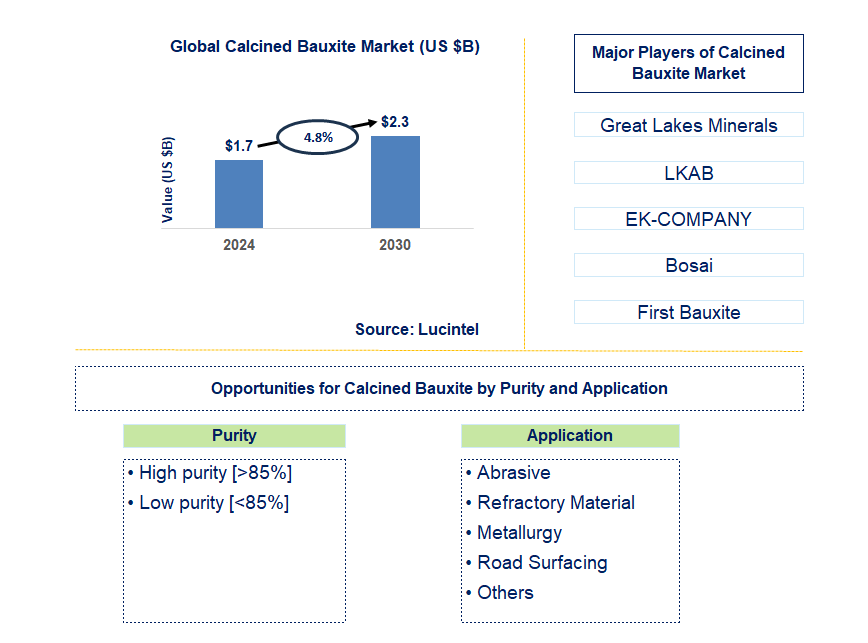
Key data points: The market size in 2030 = $2.3 billion, growth forecasts = 4.8% annually for the next 6 years. Scroll below to get more insights. This market report covers trends, opportunities, and forecasts in the global calcined bauxite market to 2030 by purity (high purity [>85%] and low purity [<85%]), application (abrasive, refractory material, metallurgy, road surfacing, and others), and region (North America, Europe, Asia Pacific, and the Rest of the World)
We'll send your sample report shortly.
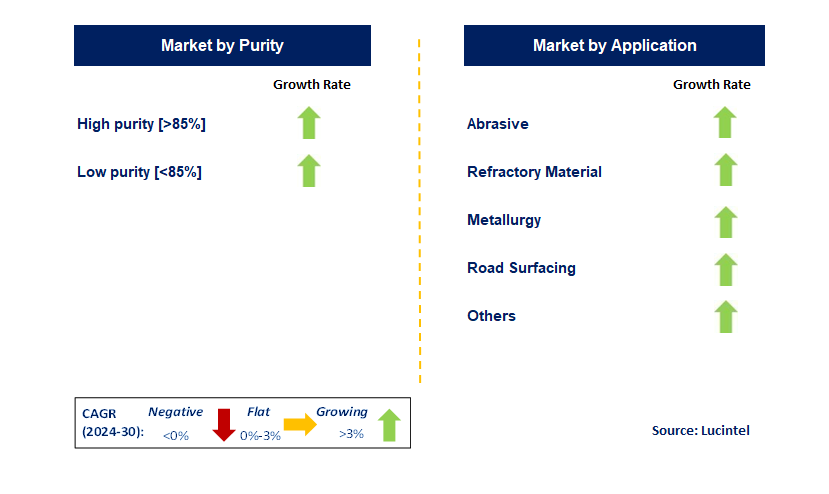
• Lucintel forecasts that, within the purity category, high purity [>85%] is expected to witness a higher growth over the forecast period because it is made by heating premium bauxite to high temperatures (between 85 and 1600 degrees celsius), and then drying it out to increase the amount of alumina.
• In terms of regions, APAC is expected to witness highest growth over the forecast period due to rapid industrialization and rising foreign investment in development nation like China and India. A more than 150-page report is developed to help in your business decisions.
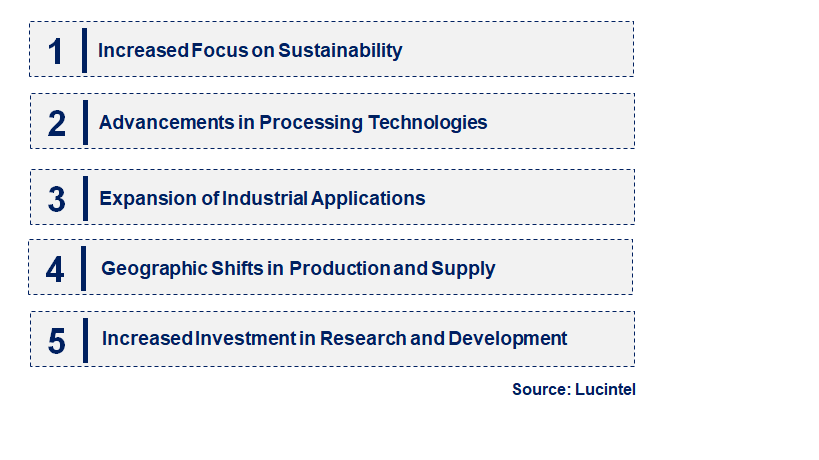
• Increased Focus on Sustainability: There is a growing emphasis on sustainability within the calcined bauxite market. Companies are adopting cleaner production technologies and improving energy efficiency to minimize environmental impact. This shift is driven by stricter regulations and corporate social responsibility goals. Sustainable practices, such as using renewable energy and reducing emissions, are becoming integral to production processes, influencing market dynamics and consumer preferences.
• Advancements in Processing Technologies: Innovations in processing technologies are enhancing the quality and efficiency of calcined bauxite production. New techniques, including advanced calcination methods and improved purification processes, are being implemented to produce higher-grade bauxite. These advancements lead to better performance in refractory applications and contribute to the development of specialized bauxite products. Enhanced processing technologies also support increased production capacity and reduced operational costs.
• Expansion of Industrial Applications: The range of industrial applications for calcined bauxite is expanding. Beyond traditional uses in refractories and aluminum production, calcined bauxite is increasingly being utilized in advanced ceramics, construction materials, and environmental applications. This diversification is driven by innovations in material science and growing demand from various industries, contributing to the market’s overall growth and development.
• Geographic Shifts in Production and Supply: The geographic landscape of calcined bauxite production and supply is shifting. Countries with significant bauxite reserves, such as China and India, are expanding their production capacities and export activities. Conversely, regions with high demand but limited local production, such as the United States and Europe, are focusing on securing stable supply chains. These geographic shifts are influencing global trade patterns and market dynamics.
• Increased Investment in Research and Development: There is a rising trend in investment towards research and development in the calcined bauxite market. Companies and research institutions are dedicating resources to developing advanced bauxite products and improving production technologies. This trend is driven by the need for higher performance materials and innovative solutions for industrial applications. R&D investments are crucial for maintaining competitive advantage and addressing emerging market needs. Recent developments in the calcined bauxite market highlight significant advancements and shifts across key regions. Technological innovations, sustainability initiatives, and expanding applications are driving the market forward. Emerging trends, such as increased focus on sustainability, advancements in processing technologies, and geographic shifts in production, are reshaping the landscape. Understanding these dynamics is essential for stakeholders to navigate the evolving market and leverage new opportunities.
• Technological Advancements in Production: Recent innovations in calcined bauxite production technology are enhancing efficiency and product quality. Modern calcination methods, including advanced rotary kilns and fluidized bed reactors, are improving the consistency and performance of calcined bauxite. These advancements lead to better material properties and reduced energy consumption, making production more sustainable and cost-effective, which drives market growth and competitiveness.
• Increased Demand from Emerging Markets: Emerging economies, particularly in Asia-Pacific, are experiencing rapid industrial growth, driving increased demand for calcined bauxite. Countries like India and China are expanding their infrastructure and manufacturing sectors, which fuels the need for high-quality bauxite for refractory materials and aluminum production. This surge in demand is prompting producers to scale up their operations and explore new market opportunities in these regions.
• Environmental Regulations and Sustainability: Stricter environmental regulations are pushing the calcined bauxite industry towards more sustainable practices. Companies are investing in cleaner technologies and processes to reduce emissions and energy consumption. This shift includes the adoption of alternative fuels and recycling initiatives. Compliance with environmental standards is becoming crucial for market players to maintain their licenses and meet the growing demand for eco-friendly products.
• Market Consolidation and Strategic Partnerships: The calcined bauxite market is seeing increased consolidation and strategic partnerships as companies aim to strengthen their market positions. Mergers, acquisitions, and joint ventures are becoming common as firms seek to enhance their production capabilities, access new markets, and share technological expertise. These strategic moves are reshaping the competitive landscape and influencing market dynamics.
• Innovation in Applications and Product Development: There is a growing focus on innovation in the applications and development of calcined bauxite products. New formulations and high-performance grades of bauxite are being developed for specialized applications, such as advanced ceramics and high-temperature refractories. This innovation expands the potential uses of calcined bauxite and opens up new market segments, driving overall market growth. Recent trends in the calcined bauxite market up-level where the calcined bauxite market has been increasingly becoming a core industry due to the changes in technology and the increased market demand from developing countries and rigorous compliance to environmental laws. Advancements in production technologies, merger and acquisition activities in the market, and better applications will construct the future of the market. These developments are constructing growth, enhancing sustainability, and opening up new avenues in the calcined bauxite sector.
• Expansion in Refractory Applications: Calcined bauxite is a critical component in the production of refractory materials used in high-temperature processes. The expansion of industries such as steel, cement, and non-ferrous metals presents significant growth opportunities. With increasing demand for durable and high-performance refractory products, companies can focus on developing specialized bauxite grades to meet the needs of these high-growth sectors.
• Growth in Aluminum Production: The demand for calcined bauxite in aluminum production is growing due to the expanding global automotive and aerospace industries. As these sectors require lightweight and high-strength materials, the need for high-quality alumina, derived from bauxite, is increasing. Companies can capitalize on this trend by enhancing their bauxite quality and production efficiency to support the aluminum industry's needs.
• Advances in High-Performance Ceramics: There is a growing market for calcined bauxite in high-performance ceramics, which are used in applications like electronics, healthcare, and industrial machinery. Innovations in ceramic materials are driving demand for specialized bauxite with tailored properties. Companies can explore opportunities to develop advanced bauxite products that meet the requirements of these emerging applications, thereby expanding their market reach.
• Sustainable and Eco-Friendly Products: The increasing emphasis on sustainability presents an opportunity for developing eco-friendly calcined bauxite products. By investing in green technologies and sustainable practices, companies can meet the growing demand for environmentally responsible products. This includes adopting alternative energy sources, recycling waste materials, and reducing carbon footprints, which align with global sustainability goals and regulatory standards.
• Technological Advancements in Processing: Investing in advanced processing technologies can offer significant growth opportunities. Innovations such as energy-efficient calcination processes and improved material handling systems can enhance product quality and reduce operational costs. Companies that leverage these technological advancements can gain a competitive edge, improve profitability, and meet the evolving demands of various industrial applications. Strategic growth opportunities in the calcined bauxite market are emerging across several applications, including refractory materials, aluminum production, high-performance ceramics, and sustainable products. Technological advancements and a focus on eco-friendly practices are driving these opportunities. By aligning with these trends and investing in innovation, companies can enhance their market position and capitalize on the evolving demands within the industry.
• Technological Advancements in Production: Innovations in calcination technologies, such as improved rotary kilns and fluidized bed reactors, are enhancing production efficiency and product quality. These advancements lead to better performance of calcined bauxite in industrial applications and reduce energy consumption. Enhanced processing techniques contribute to cost savings and enable the production of higher-grade bauxite, which is crucial for meeting the specific needs of high-demand sectors like refractories and aluminum production.
• Increasing Industrial Demand: Growing industrial sectors, particularly in emerging markets, are driving demand for calcined bauxite. The expansion of industries such as steel, cement, and aluminum requires high-quality bauxite for use in refractory materials and alumina production. This rising demand is spurring investments in production capacity and technology upgrades to meet the needs of these key industries, thereby supporting market growth.
• Economic Growth and Infrastructure Development: Economic growth and infrastructure development in emerging economies, such as India and China, are significant drivers for the calcined bauxite market. Increased construction activities, industrialization, and infrastructure projects create a higher demand for refractory materials and aluminum, which in turn boosts the need for calcined bauxite. This economic expansion leads to greater investment in production facilities and supply chain enhancements.
• Rising Focus on Quality and Performance: There is a growing emphasis on the quality and performance of calcined bauxite products. Industries requiring high-performance materials are pushing for advancements in bauxite quality, leading to innovations in product formulations and processing techniques. Higher-grade calcined bauxite, with improved properties, meets the stringent requirements of specialized applications, such as advanced ceramics and high-temperature refractories.
• Strategic Investments and Market Expansion: Companies are making strategic investments to expand their production capacities and enter new markets. Mergers, acquisitions, and partnerships are becoming common as firms seek to enhance their market presence and leverage technological expertise. These strategic moves enable companies to access new geographies, optimize their supply chains, and improve their competitive positioning in the global market. Challenges in the calcined bauxite market are:
• Regulatory and Environmental Compliance: Stricter environmental regulations and compliance requirements are posing challenges for the calcined bauxite industry. Regulations aimed at reducing emissions and minimizing environmental impact necessitate investments in cleaner technologies and processes. Compliance with these regulations can increase operational costs and affect the competitiveness of companies, particularly those in regions with stringent environmental standards.
• Fluctuating Raw Material Costs: The cost of raw materials used in calcined bauxite production, such as bauxite ore, can be volatile due to market fluctuations and supply chain disruptions. Variability in raw material costs affects production expenses and profit margins. Companies need to manage these fluctuations through efficient supply chain management and cost-control measures to maintain profitability and price competitiveness.
• Competition and Market Saturation: Intense competition and market saturation are challenges faced by the calcined bauxite industry. With numerous players vying for market share, companies must differentiate themselves through product quality, technological innovation, and customer service. Market saturation, particularly in mature regions, can lead to price pressure and reduced profit margins, requiring companies to find new growth opportunities and optimize their operational efficiency. The calcined bauxite market is shaped by technological advancements, increasing industrial demand, and economic growth, which drive its expansion. However, challenges such as regulatory compliance, fluctuating raw material costs, and intense competition pose significant hurdles. Addressing these drivers and challenges effectively is crucial for companies to navigate the market landscape, capitalize on opportunities, and sustain growth in a competitive environment.
• Great Lakes Minerals
• LKAB
• EK-COMPANY
• Bosai
• First Bauxite
• Boud Minerals
• Sinocean Industrial
• High purity [>85%]
• Low purity [<85%]
• Abrasive
• Refractory Material
• Metallurgy
• Road Surfacing
• Others
• North America
• Europe
• Asia Pacific
• The Rest of the World
• United States: In the United States, the calcined bauxite market is witnessing increased demand due to the growth in the aerospace and automotive industries. Recent developments include technological advancements in processing techniques that enhance the quality and consistency of calcined bauxite. Additionally, there is a focus on improving supply chain efficiency to meet the needs of high-tech industries. The U.S. also sees rising investments in research to develop higher-grade bauxite products for specialized applications.
• China: China, as a major global producer, is seeing significant investments in expanding calcined bauxite production capacity. The country is focusing on upgrading production technologies to reduce environmental impact and improve efficiency. Recent developments include the adoption of cleaner technologies and increased export activities. China’s dominance in the global market is bolstered by its substantial reserves and capacity to meet both domestic and international demand, which is crucial for various industrial applications.
• Germany: In Germany, the calcined bauxite market is shaped by the country’s strong emphasis on sustainability and technological innovation. Recent developments include investments in eco-friendly production processes and advanced processing technologies. Germany focus on reducing carbon emissions is driving the adoption of more sustainable methods in calcined bauxite production. Additionally, the country is seeing increased demand from the refractory and cement industries, which are key consumers of calcined bauxite.
• India: India is experiencing a growth phase in the calcined bauxite market due to expanding industrial activities and infrastructure projects. Recent developments include the scaling up of production facilities and advancements in processing technologies to improve product quality. India strategic initiatives to enhance the local supply chain and reduce dependence on imports are also notable. The country is leveraging its bauxite reserves to support growth in sectors such as aluminum and refractory materials.
• Japan: Japan is focusing on high-value applications of calcined bauxite, such as in advanced ceramics and refractory materials. Recent developments in the country include innovations in high-performance bauxite products and increased R&D efforts to enhance material properties. Japan emphasis on precision and quality in industrial applications is driving the market towards specialized, high-grade calcined bauxite products. Additionally, there is a push towards sustainability in production practices.


• Great Lakes Minerals
• LKAB
• EK-COMPANY
• Bosai
• First Bauxite
• Boud Minerals
• Sinocean Industrial Q6. Which calcined bauxite market segment will be the largest in future? Answer: Lucintel forecasts that high purity [>85%] is expected to witness the higher growth over the forecast period because it is made by heating premium bauxite to high temperatures (between 85 and 1600 degrees celsius), and then drying it out to increase the amount of alumina. Q7. In calcined bauxite market, which region is expected to be the largest in next 5 years? Answer: APAC is expected to witness highest growth over the forecast period due to rapid industrialization and rising foreign investment in development nation like China and India. Q.8 Do we receive customization in this report? Answer: Yes, Lucintel provides 10% customization without any additional cost.


Choose a license that fits your team. Instant PDF delivery.
Prices exclude taxes. Instant delivery. Custom licensing available on request.
Market Report · July 22, 2026
Trusted partner for strategic intelligence and business growth


Receive a complimentary market analysis tailored to your industry. Our analysts will identify key growth opportunities and competitive dynamics specific to your business.

Market size, growth rate, and key trend analysis for your specific sector.

Top competitor positioning and market share analysis.

Strategic recommendations backed by data-driven insights.
Get curated market intelligence and competitive moves straight to your inbox.
By subscribing, you agree to receive our monthly insights. Unsubscribe anytime.
Receive a complimentary market analysis tailored to your industry. Our analysts will identify key growth opportunities and competitive dynamics specific to your business.
Market size, growth rate, and key trend analysis for your specific sector.
Top competitor positioning and market share analysis.
Strategic recommendations backed by data-driven insights.
Get curated market intelligence, emerging trends, and competitive moves straight to your inbox each month.
By subscribing, you agree to receive our monthly insights. Unsubscribe anytime.
We'll send your sample report shortly.