
Market Report · July 22, 2026

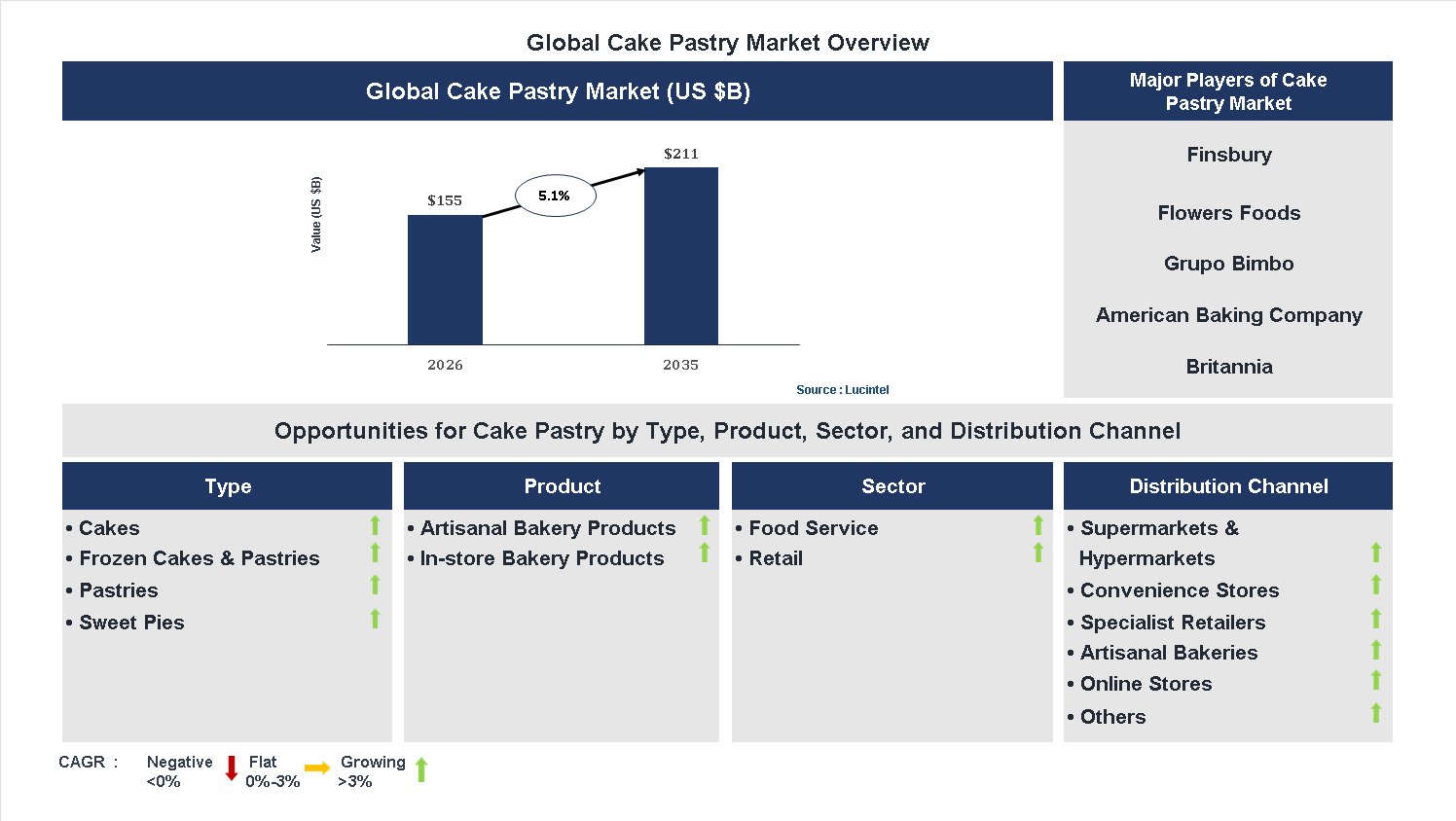
Key data points: The market size in 2035 = $211 billion, growth forecast = 5.1% annually for the next 8 years. Scroll below to get more insights. This market report covers trends, opportunities and forecasts in cake pastry market to 2035 by type (cakes, frozen cakes & pastries, pastries, and sweet pies), product (artisanal bakery products and in-store bakery products), sector (food service and retail), distribution channel (supermarkets & hypermarkets, convenience stores, specialist retailers, artisanal bakeries, online stores, and others), and region (North America, Europe, Asia Pacific, and the Rest of the World)
We'll send your sample report shortly.
• Lucintel forecasts that, within the type category, pastry is expected to witness the highest growth over the forecast period.
• Within the product category, in-store bakery product is expected to witness higher growth.
• In terms of region, APAC is expected to witness the highest growth over the forecast period. Gain valuable insights for your business decisions with our comprehensive 150+ page report. Sample figures with some insights are shown below.
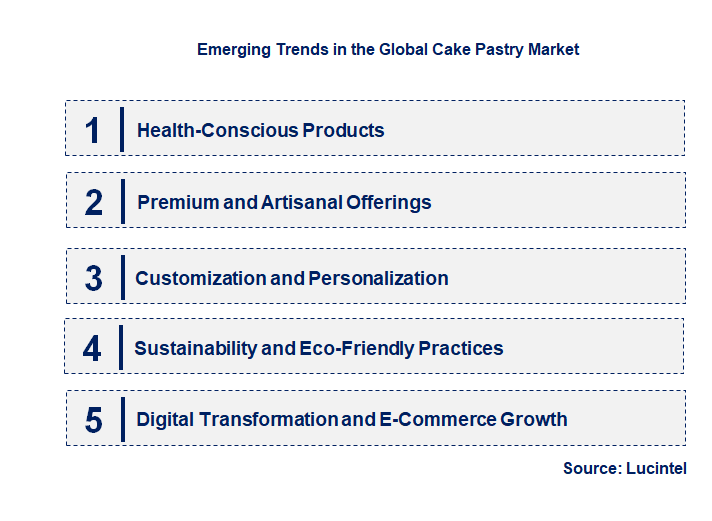
• Health-Conscious Products: Increasing demand for healthier cake pastries with reduced sugar, gluten-free, and organic ingredients. Consumers are prioritizing wellness, prompting manufacturers to innovate with nutritious options that do not compromise on taste or appearance. This trend encourages the development of functional pastries with added vitamins, minerals, or superfoods, expanding market reach to health-focused demographics.
• Premium and Artisanal Offerings: Growing preference for premium, handcrafted, and artisanal cake pastries. Consumers seek unique flavors, high-quality ingredients, and aesthetically appealing designs. This trend elevates product differentiation, allowing brands to command higher prices and build brand loyalty through storytelling and craftsmanship, thus enhancing market segmentation.
• Customization and Personalization: Rising demand for personalized cake pastries for special occasions and individual preferences. Consumers want bespoke designs, flavors, and dietary options, driving companies to offer customizable products through digital platforms and in-store services. This trend enhances customer engagement and satisfaction, fostering brand loyalty and increasing sales.
• Sustainability and Eco-Friendly Practices: Emphasis on sustainable sourcing, eco-friendly packaging, and environmentally responsible production processes. Consumers are increasingly conscious of the environmental impact of their purchases, prompting brands to adopt greener practices. This shift not only improves brand image but also aligns with regulatory requirements, contributing to long-term market sustainability.
• Digital Transformation and E-Commerce Growth: Expansion of online sales channels and digital marketing strategies. E-commerce platforms enable wider reach, convenience, and personalized shopping experiences. Digital innovations like virtual design tools and social media marketing are boosting consumer engagement, facilitating rapid product launches, and providing valuable data insights for targeted marketing. These trends are collectively transforming the cake pastry market by fostering innovation, enhancing consumer engagement, and emphasizing sustainability. They are driving product diversification, elevating customer experience, and enabling brands to adapt swiftly to evolving preferences, ultimately leading to a more competitive and resilient industry landscape.
• Technological Innovations in Production: Automation and advanced baking techniques are improving efficiency and product quality. These innovations reduce costs, increase production speed, and enable the creation of more complex, customized pastries. As a result, manufacturers can meet rising consumer demand for variety and premium options, boosting overall market growth. Enhanced shelf life and packaging technologies also contribute to better product preservation and consumer satisfaction, further expanding market opportunities.
• Rising Consumer Preference for Premium and Artisanal Pastries: Consumers are increasingly seeking high-quality, handcrafted, and unique cake pastries. This trend is driven by a desire for indulgence and authenticity, encouraging brands to focus on artisanal and gourmet offerings. The demand for natural ingredients and innovative flavors is also rising, prompting manufacturers to develop premium products that command higher prices. This shift is expanding market segments and encouraging product differentiation, leading to increased sales and market expansion.
• Expansion of Online Retail and E-commerce Platforms: The growth of online shopping has made cake pastries more accessible to a wider audience. E-commerce platforms enable brands to reach consumers beyond traditional retail outlets, offering convenience and a broader product range. This digital shift is especially significant in urban areas and among younger consumers, driving sales growth. Enhanced logistics and delivery services are further supporting this trend, making premium and specialty pastries more readily available, thus fueling market expansion.
• Increasing Demand for Health-Conscious and Dietary-Specific Pastries: Consumers are seeking healthier options, including gluten-free, low-sugar, and allergen-free pastries. This demand is prompting manufacturers to innovate with alternative ingredients and develop products that cater to specific dietary needs. The focus on health and wellness is expanding the market to new customer segments and encouraging product diversification. As awareness of dietary restrictions grows, this trend is expected to significantly influence product development and market growth.
• Global Market Expansion and Emerging Economies: The cake pastry market is expanding into emerging economies with rising disposable incomes and changing lifestyles. Urbanization and Western influence are increasing demand for Western-style pastries and desserts. Local manufacturers are also innovating to cater to regional tastes, creating new product lines. This global expansion is opening up new revenue streams, increasing competition, and encouraging innovation, which collectively contribute to the overall growth and diversification of the market. These developments are significantly transforming the cake pastry market by enhancing product quality, expanding consumer choices, and broadening market reach. Technological advancements, evolving consumer preferences, and global expansion are driving innovation and competition. The rise of e-commerce and health-conscious products are further shaping the industry landscape. Collectively, these opportunities are fostering sustained growth, encouraging diversification, and positioning the market for continued expansion in the coming years.
• Expanding Premium and Artisanal Cake Pastry Offerings: The rising consumer preference for high-quality, handcrafted, and artisanal cake pastries creates opportunities for brands to develop premium product lines. Incorporating unique ingredients, traditional recipes, and innovative presentation techniques can attract discerning customers seeking indulgence and exclusivity. This trend encourages differentiation and allows companies to command higher price points, boosting profitability and market share in the premium segment.
• Growing Demand for Gluten-Free and Dietary-Specific Pastries: Increasing awareness of dietary restrictions and health concerns has driven demand for gluten-free, vegan, and allergen-free cake pastries. Developing products that cater to these needs opens new customer segments and enhances brand inclusivity. Investment in research and development to create tasty, safe, and appealing options can position companies as leaders in health-conscious markets, expanding their consumer base and driving sales growth.
• Innovation in Flavors and Packaging to Enhance Consumer Experience: Introducing novel flavors, such as exotic fruits, spices, and fusion combinations, can attract adventurous consumers and differentiate products on shelves. Additionally, innovative packaging solutions that improve freshness, convenience, and visual appeal can enhance the overall consumer experience. These strategies can increase product visibility, encourage repeat purchases, and foster brand loyalty in a competitive market.
• Strategic Partnerships and Distribution Expansion: Collaborations with retail chains, online platforms, and foodservice providers can significantly increase product accessibility and visibility. Expanding distribution channels into emerging markets and developing direct-to-consumer sales through e-commerce can boost sales volume. Strategic partnerships also facilitate co-branding and innovation, enabling companies to reach wider audiences and adapt quickly to changing market demands.
• Adoption of Sustainable and Eco-Friendly Practices: Consumers are increasingly prioritizing sustainability, prompting companies to adopt eco-friendly sourcing, packaging, and production methods. Incorporating organic ingredients, biodegradable packaging, and ethical sourcing can enhance brand reputation and appeal to environmentally conscious buyers. Emphasizing sustainability initiatives can differentiate products, meet regulatory requirements, and foster long-term customer loyalty, ultimately supporting market growth. These growth opportunities are poised to significantly influence the cake pastry market by fostering innovation, expanding consumer bases, and enhancing brand value. Embracing premiumization, dietary inclusivity, flavor innovation, strategic collaborations, and sustainability will enable industry players to capitalize on emerging trends and secure a competitive edge in a dynamic marketplace.
• Technological Advancements: The integration of innovative baking equipment and automation has significantly improved production efficiency and product consistency. Advanced mixing, baking, and packaging technologies enable manufacturers to develop a wider variety of cake pastries with enhanced quality and shelf life. These innovations also facilitate customization to meet diverse consumer preferences, boosting market competitiveness. As technology continues to evolve, companies can reduce costs and increase output, making premium and artisanal products more accessible. This ongoing technological progress is vital for market growth, enabling brands to innovate rapidly and respond to changing demands effectively.
• Rising Consumer Demand for Premium and Artisanal Products: Consumers are increasingly seeking high-quality, handcrafted, and unique cake pastries that offer a premium experience. This shift is driven by a desire for indulgence, personalization, and authenticity, encouraging manufacturers to develop artisanal and gourmet options. The trend towards premium products also aligns with rising disposable incomes and a willingness to spend on indulgent treats. As a result, brands are investing in specialty ingredients, innovative flavors, and attractive packaging to attract discerning customers. This demand fuels market expansion by creating opportunities for niche and luxury segments within the cake pastry industry.
• Growing Urbanization and Changing Lifestyles: Urban lifestyles characterized by busy schedules and a preference for convenience have increased demand for ready-to-eat and portable cake pastries. Urban consumers often seek quick, satisfying snacks that fit into their fast-paced routines, prompting manufacturers to develop convenient packaging and product formats. Additionally, urbanization fosters greater exposure to diverse culinary influences, encouraging innovation in flavors and presentation. The expansion of retail outlets, cafes, and online platforms in urban areas further enhances accessibility and visibility of cake pastries. This demographic shift significantly contributes to market growth by expanding consumer bases and encouraging product diversification.
• Expansion of E-commerce and Retail Channels: The rise of online shopping platforms and modern retail outlets has revolutionized distribution channels for cake pastries. E-commerce offers consumers easy access to a wide variety of products, including specialty and artisanal options, often with home delivery services. Retail chains and supermarkets provide extensive shelf space and promotional opportunities, increasing product visibility and availability. The integration of digital marketing strategies also helps brands reach targeted audiences effectively. This channel expansion not only broadens market reach but also enables manufacturers to gather consumer insights for product development. Overall, enhanced distribution networks are pivotal in driving sales and market penetration.
• Increasing Focus on Health and Wellness: Growing awareness about health, nutrition, and dietary restrictions is influencing product development in the cake pastry market. Consumers are demanding healthier options with reduced sugar, fat, and artificial ingredients, as well as gluten-free, vegan, and allergen-free varieties. Manufacturers are responding by reformulating recipes and introducing functional ingredients like superfoods and probiotics. This trend opens new market segments and appeals to health-conscious consumers, expanding the customer base. However, balancing health attributes with taste and texture remains a challenge. The focus on wellness is shaping product innovation and marketing strategies, impacting overall market dynamics. The challenges facing the cake pastry market include:
• Stringent Regulatory Standards: The cake pastry industry faces complex food safety, labeling, and ingredient regulations across different regions. Compliance with these standards requires significant investment in quality control, documentation, and testing, which can increase operational costs. Variations in regulations may also hinder international trade and market entry for smaller players. Additionally, evolving standards related to health claims and sustainability demand continuous adaptation. Non-compliance risks legal penalties, product recalls, and damage to brand reputation. Navigating regulatory landscapes is essential but challenging, especially for companies operating across multiple jurisdictions.
• Volatility in Raw Material Prices: Fluctuations in the cost of key ingredients such as flour, sugar, dairy, and fats directly impact profit margins. Supply chain disruptions, weather conditions, and geopolitical issues can cause price volatility, forcing manufacturers to adjust pricing strategies or absorb increased costs. This unpredictability complicates budgeting and long-term planning, potentially leading to reduced investment in innovation or marketing. Additionally, sourcing sustainable and high-quality ingredients may further elevate costs. Managing raw material price volatility is critical for maintaining competitiveness and profitability in a highly price-sensitive market.
• Intense Market Competition: The cake pastry market is highly competitive, with numerous local and international brands vying for consumer attention. Differentiation through flavor, quality, branding, and pricing becomes increasingly challenging as product offerings become more similar. Price wars and promotional activities can erode profit margins, while innovation demands significant investment. Smaller players may struggle to compete with established brands that benefit from economies of scale and extensive distribution networks. Maintaining market share requires continuous innovation, effective marketing, and strategic partnerships, making competitive pressure a persistent challenge for industry stakeholders. The cake pastry market is driven by technological innovations, evolving consumer preferences, urbanization, expanding distribution channels, and health trends. However, regulatory complexities, raw material price fluctuations, and intense competition pose significant hurdles. These drivers and challenges collectively shape the market landscape, influencing growth trajectories and strategic decision-making. Companies that effectively leverage technological advancements, adapt to consumer demands, and navigate regulatory and competitive pressures are positioned to capitalize on emerging opportunities, ensuring sustainable growth in this dynamic industry.
• Finsbury
• Flowers Foods
• Grupo Bimbo
• American Baking Company
• Britannia
• Euro Cakes
• Hostess Brands
• McKee Foods
• Yamazaki Baking
• Aryzta
• Cakes
• Frozen Cakes & Pastries
• Pastries
• Sweet Pies
• Artisanal Bakery Products
• In-store Bakery Products
• Food Service
• Retail
• Supermarkets & Hypermarkets
• Convenience Stores
• Specialist Retailers
• Artisanal Bakeries
• Online Stores
• Others
• North America
• Europe
• Asia Pacific
• The Rest of the World
• United States: The US market has seen a surge in artisanal and gluten-free cake pastries, driven by health-conscious consumers. Major brands are investing in innovative flavors and sustainable packaging. E-commerce sales have increased significantly, expanding access to premium products. Additionally, plant-based and allergen-free options are gaining popularity, reflecting broader dietary trends. The market is also witnessing a rise in convenience-focused offerings, such as ready-to-eat pastries, catering to busy lifestyles.
• China: China’s cake pastry market is rapidly expanding, fueled by urbanization and rising disposable incomes. Traditional flavors are blending with Western influences, creating a diverse product range. E-commerce platforms and social media marketing are crucial for reaching younger consumers. Local brands are innovating with new ingredients and packaging to appeal to health-conscious and premium-seeking customers. The market also benefits from increased retail penetration and the growth of modern supermarkets, boosting accessibility and variety.
• Germany: Germany’s market emphasizes quality, sustainability, and organic ingredients. Consumers prefer locally sourced and environmentally friendly products. There is a notable trend toward artisanal and handcrafted pastries, often with regional flavors. Retailers are expanding their organic and gluten-free offerings to meet demand. Innovation in packaging and preservation techniques is also prominent, ensuring freshness and reducing waste. The market remains competitive, with a focus on premiumization and ethical production practices.
• India: The Indian cake pastry market is experiencing rapid growth due to urbanization, changing lifestyles, and increased exposure to global cuisines. Traditional flavors are being combined with Western styles, creating fusion products. The rise of modern retail outlets and online platforms has improved product availability. Consumers are increasingly seeking premium, innovative, and health-oriented options, including low-sugar and fortified pastries. Local ingredients and regional flavors are often incorporated to cater to diverse tastes, supporting the market’s dynamic expansion.
• Japan: Japan’s market is characterized by a preference for delicate, aesthetically appealing pastries with a focus on quality and innovation. Traditional flavors coexist with Western influences, leading to unique fusion products. The demand for health-conscious options, such as low-sugar and gluten-free pastries, is rising. Convenience is also a key factor, with an increase in portable and ready-to-eat items. Japanese companies are investing in advanced packaging and preservation technologies to extend shelf life and maintain freshness, catering to both domestic and export markets.


• Finsbury
• Flowers Foods
• Grupo Bimbo
• American Baking Company
• Britannia
• Euro Cakes
• Hostess Brands
• McKee Foods
• Yamazaki Baking
• Aryzta Q6. Which cake pastry market segment will be the largest in future? Answer: Lucintel forecasts that, within the type category, pastry is expected to witness the highest growth over the forecast period. Q7. In cake pastry market, which region is expected to be the largest in next 5 years? Answer: In terms of region, APAC is expected to witness the highest growth over the forecast period. Q8. Do we receive customization in this report? Answer: Yes, Lucintel provides 10% customization without any additional cost.


Choose a license that fits your team. Instant PDF delivery.
Prices exclude taxes. Instant delivery. Custom licensing available on request.
Market Report · July 22, 2026
Market Report · July 22, 2026
Market Report · July 22, 2026
Trusted partner for strategic intelligence and business growth


Receive a complimentary market analysis tailored to your industry. Our analysts will identify key growth opportunities and competitive dynamics specific to your business.

Market size, growth rate, and key trend analysis for your specific sector.

Top competitor positioning and market share analysis.

Strategic recommendations backed by data-driven insights.
Get curated market intelligence and competitive moves straight to your inbox.
By subscribing, you agree to receive our monthly insights. Unsubscribe anytime.
Receive a complimentary market analysis tailored to your industry. Our analysts will identify key growth opportunities and competitive dynamics specific to your business.
Market size, growth rate, and key trend analysis for your specific sector.
Top competitor positioning and market share analysis.
Strategic recommendations backed by data-driven insights.
Get curated market intelligence, emerging trends, and competitive moves straight to your inbox each month.
By subscribing, you agree to receive our monthly insights. Unsubscribe anytime.
We'll send your sample report shortly.