
Report Feature
Cabin Management System Market Trends and Forecast
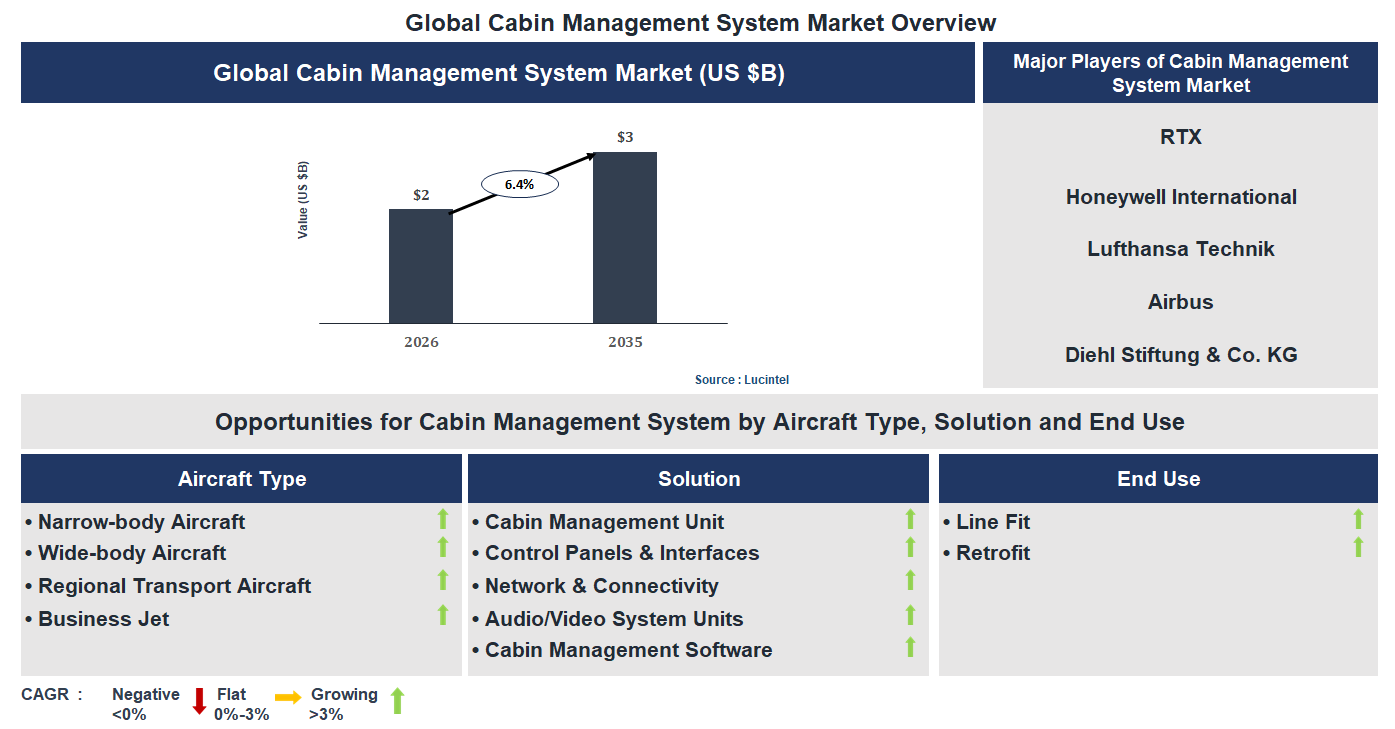
The future of the global cabin management system market looks promising with opportunities in the line fit and retrofit markets. The global cabin management system market is expected to reach an estimated $3 billion by 2035 with a CAGR of 6.4% from 2026 to 2035. The major drivers for this market are the increasing demand for enhanced passenger experience, the rising adoption of connected cabin technologies, and the growing integration of in flight entertainment systems.• Lucintel forecasts that, within the aircraft type category, business jet is expected to witness the highest growth over the forecast period.
• Within the end use category, retrofit is expected to witness higher growth.
• In terms of region, North America is expected to witness the highest growth over the forecast period. Gain valuable insights for your business decisions with our comprehensive 150+ page report. Sample figures with some insights are shown below.
Emerging Trends in the Cabin Management System Market
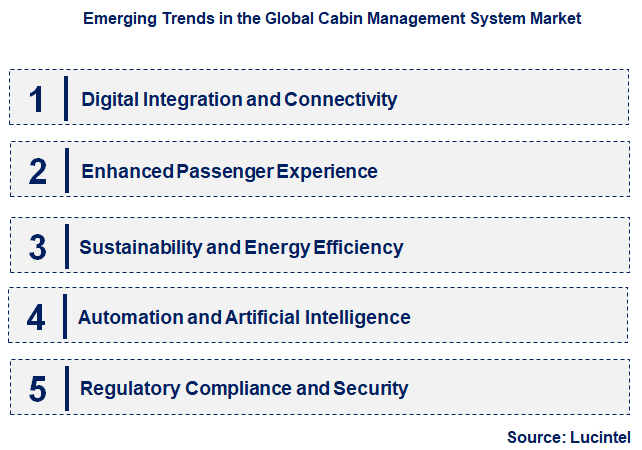
The cabin management system market is experiencing rapid evolution driven by technological advancements, increasing demand for enhanced passenger experience, and the need for operational efficiency in the aviation industry. As airlines and private jet operators seek to differentiate their services, innovative solutions are emerging to meet these demands. The integration of smart technologies, increased focus on passenger comfort, and the push for digital transformation are shaping the future of cabin management. These developments are not only improving in-flight entertainment and connectivity but also optimizing maintenance and operational workflows, ultimately transforming the overall market landscape and setting new standards for luxury and efficiency in air travel.• Digital Integration and Connectivity: The rise of IoT and cloud-based solutions is enabling seamless integration of cabin systems, providing real-time data and remote management capabilities. This trend enhances passenger experience through personalized services and improves operational efficiency by enabling predictive maintenance. Airlines are increasingly adopting connected systems to streamline in-flight entertainment, lighting, climate control, and communication, creating a more cohesive and responsive cabin environment. The shift towards digital integration is also facilitating data-driven decision-making, reducing downtime, and lowering maintenance costs, thus offering a competitive edge in the market.
• Enhanced Passenger Experience: Airlines are focusing on delivering a more personalized and comfortable journey by incorporating advanced entertainment options, customizable lighting, and smart seat controls. The use of high-speed Wi-Fi, streaming services, and interactive displays is becoming standard, catering to passenger preferences for connectivity and entertainment. Additionally, cabin management systems now support contactless interfaces, voice control, and biometric authentication, which improve convenience and safety. This trend is crucial for attracting and retaining customers in a competitive market, ultimately driving demand for sophisticated CMS solutions that prioritize passenger satisfaction.
• Sustainability and Energy Efficiency: Growing environmental concerns are prompting the adoption of eco-friendly cabin management solutions. Manufacturers are developing energy-efficient lighting, climate control, and power management systems that reduce the carbon footprint of aircraft. The integration of sustainable materials and technologies, such as LED lighting and smart energy management, is also gaining traction. These innovations not only align with regulatory requirements but also appeal to environmentally conscious consumers. The focus on sustainability is reshaping the market by encouraging the development of greener, more efficient cabin management systems that support airlines sustainability goals.
• Automation and Artificial Intelligence: The incorporation of AI and automation technologies is transforming cabin management by enabling predictive maintenance, automated troubleshooting, and personalized passenger services. AI-driven analytics help optimize system performance and preempt failures, reducing downtime and operational costs. Automated systems can adjust cabin conditions based on passenger preferences and environmental data, enhancing comfort and safety. This trend is making cabin management more intelligent, responsive, and efficient, leading to improved operational workflows and a superior passenger experience. The adoption of AI is expected to accelerate as technology matures and costs decrease.
• Regulatory Compliance and Security: Increasing safety standards and regulatory requirements are influencing the development of cabin management systems. Manufacturers are integrating advanced security features such as biometric access, encrypted communications, and real-time monitoring to ensure compliance and passenger safety. These systems also support data privacy regulations and facilitate audits and reporting. As security concerns grow, the market is witnessing a shift towards more secure, compliant solutions that can adapt to evolving standards. This trend underscores the importance of robust security features in maintaining trust and meeting legal obligations within the cabin management ecosystem. These emerging trends are collectively reshaping the cabin management system market by fostering innovation, enhancing passenger comfort, promoting sustainability, and ensuring safety and compliance. The integration of digital technologies, AI, and eco-friendly solutions is driving a more efficient, personalized, and secure in-flight experience, positioning the market for continued growth and transformation.
Recent Development in the Cabin Management System Market
The cabin management system market is experiencing rapid growth driven by technological advancements, increasing demand for enhanced passenger experience, and the integration of smart solutions in aircraft. Airlines are investing heavily in innovative systems to improve operational efficiency and passenger satisfaction. The markets evolution is influenced by rising passenger expectations, regulatory support, and the adoption of IoT and AI technologies. These developments are shaping a more connected, efficient, and personalized in-flight environment, creating significant opportunities for industry stakeholders.• Growing Adoption of IoT and AI Technologies: The integration of Internet of Things (IoT) and Artificial Intelligence (AI) in cabin management systems is revolutionizing the industry. These technologies enable real-time data collection, predictive maintenance, and personalized passenger experiences. Airlines benefit from improved operational efficiency, reduced downtime, and enhanced safety. AI-driven systems facilitate smarter resource management and tailored entertainment options, increasing passenger satisfaction. As IoT and AI become more affordable and sophisticated, their adoption is expected to accelerate, transforming cabin management into a more intelligent, responsive ecosystem.
• Increasing Demand for Enhanced Passenger Experience: Passengers now expect seamless, personalized, and entertainment-rich journeys. Cabin management systems are evolving to meet these demands by offering advanced in-flight entertainment, connectivity, and comfort features. Airlines are investing in high-speed Wi-Fi, touchless interfaces, and customizable services to differentiate themselves. This focus on passenger experience boosts loyalty and brand reputation. The market growth is driven by rising passenger expectations, technological innovations, and competitive pressures, prompting airlines to upgrade their cabin systems continuously.
• Rising Focus on Sustainability and Energy Efficiency: Environmental concerns are prompting airlines to adopt more sustainable cabin management solutions. New systems are designed to optimize energy consumption, reduce waste, and incorporate eco-friendly materials. These initiatives help airlines meet regulatory standards and corporate social responsibility goals. Energy-efficient cabin systems also lower operational costs, providing economic benefits alongside environmental ones. As sustainability becomes a key industry priority, the market is witnessing increased innovation in eco-friendly cabin management technologies, influencing product development and investment strategies.
• Technological Advancements in Connectivity and Automation: The evolution of connectivity and automation technologies is transforming cabin management systems. High-speed satellite internet, 5G, and automation tools enable real-time communication, remote diagnostics, and automated service delivery. These advancements improve operational efficiency, reduce crew workload, and enhance passenger convenience. Automated systems facilitate quicker troubleshooting and maintenance, minimizing delays. The integration of these technologies is expected to continue, making cabins smarter, more responsive, and better aligned with the digital lifestyles of modern travelers.
• Growing Market for Customizable and Modular Solutions: The demand for flexible, customizable cabin management systems is rising as airlines seek tailored solutions to meet diverse passenger needs and branding requirements. Modular systems allow easy upgrades and integration of new features without extensive overhauls. This flexibility supports rapid deployment of new services and technology updates, reducing costs and downtime. The trend toward personalization and branding differentiation is driving manufacturers to develop adaptable, scalable solutions that cater to various aircraft types and airline preferences, fostering market expansion. The recent developments in IoT, AI, passenger experience, sustainability, connectivity, and modular solutions are significantly transforming the cabin management system market. These innovations enhance operational efficiency, passenger satisfaction, and environmental sustainability, creating new growth opportunities. As airlines adopt smarter, more personalized, and eco-friendly systems, the market is poised for continued expansion. These advancements are fostering a more connected, efficient, and passenger-centric in-flight environment, shaping the future landscape of cabin management technology.
Strategic Growth Opportunities in the Cabin Management System Market
The cabin management system market is experiencing rapid growth driven by increasing demand for enhanced passenger experience, technological advancements, and the need for operational efficiency in the aviation industry. Airlines are investing in integrated systems to provide personalized services, entertainment, and connectivity. The markets expansion is also fueled by the rise in aircraft deliveries and the adoption of smart cabin solutions. This presents significant opportunities for vendors to innovate and capture market share across various applications and aircraft types.• Enhanced Passenger Experience Through Advanced In-Flight Entertainment and Connectivity: The growing demand for personalized entertainment and seamless connectivity is driving the adoption of advanced CMS solutions. Airlines aim to improve passenger satisfaction by offering high-speed internet, on-demand content, and interactive services. These enhancements require sophisticated systems capable of integrating multiple services, creating opportunities for vendors to develop innovative, user-friendly platforms that cater to diverse passenger preferences and improve overall flight experience.
• Increasing Adoption of IoT and Smart Cabin Technologies: The integration of Internet of Things (IoT) devices and smart cabin technologies is transforming cabin management. These innovations enable real-time monitoring of systems, predictive maintenance, and improved safety protocols. Vendors investing in IoT-enabled CMS solutions can offer airlines enhanced operational efficiency, reduced downtime, and cost savings. The trend toward smart cabins also opens avenues for developing interconnected systems that enhance passenger comfort and streamline airline operations.
• Rising Aircraft Fleet Expansion and New Aircraft Deliveries: The global increase in aircraft orders and deliveries, especially in the commercial sector, presents a substantial growth opportunity for CMS providers. New aircraft are often equipped with state-of-the-art cabin management systems, allowing vendors to secure long-term contracts. This expansion supports the development of scalable, lightweight, and energy-efficient systems tailored to different aircraft sizes and types, fostering innovation and market penetration across regional and wide-body aircraft segments.
• Growing Focus on Sustainability and Energy-Efficient Cabin Solutions: Environmental concerns and regulatory pressures are prompting airlines to adopt sustainable cabin management solutions. Energy-efficient systems that reduce power consumption and weight contribute to lower operational costs and carbon footprint. Vendors developing eco-friendly CMS technologies can capitalize on this trend by offering innovative, sustainable solutions that meet airline sustainability goals, thereby gaining a competitive edge and expanding their market presence in environmentally conscious aviation markets.
• Increasing Demand for Customizable and Modular Cabin Management Systems: Airlines seek flexible, customizable CMS solutions to differentiate their brand and adapt to evolving passenger needs. Modular systems allow easy upgrades and integration of new features without extensive overhauls. This flexibility supports rapid deployment and cost-effective upgrades, appealing to airlines operating diverse fleets. Vendors offering scalable, customizable CMS platforms can capture a broader customer base by providing tailored solutions that enhance passenger experience and operational efficiency. These growth opportunities collectively are set to significantly influence the Cabin Management System market by fostering innovation, improving operational efficiencies, and enhancing passenger satisfaction. As airlines prioritize connectivity, sustainability, and customization, vendors that capitalize on these trends will strengthen their market positions. The evolving landscape promises continued expansion, driven by technological advancements and increasing aircraft deliveries, ultimately shaping a more connected, efficient, and passenger-centric aviation industry.
Cabin Management System Market Driver and Challenges
The cabin management system market is influenced by a variety of technological, economic, and regulatory factors that shape its growth trajectory. Advances in digital technology and increasing demand for enhanced passenger experience are primary drivers. Economic factors such as rising airline investments in passenger comfort and operational efficiency further propel the market. Regulatory standards for safety and environmental compliance also impact system development and deployment. Additionally, the integration of IoT and AI technologies presents new opportunities, while challenges related to cybersecurity and high implementation costs pose significant hurdles. Understanding these drivers and challenges is essential for stakeholders aiming to capitalize on market potential and navigate potential risks effectively. The factors responsible for driving the cabin management system market include:• Technological Innovation: The rapid evolution of digital and connectivity technologies enables the development of more sophisticated, user-friendly cabin management systems. Integration of IoT, AI, and cloud computing allows airlines to offer personalized passenger experiences, improve operational efficiency, and streamline maintenance processes. These innovations also facilitate real-time data collection and analytics, leading to better decision-making. As technology continues to advance, cabin management systems become more adaptable and scalable, encouraging airlines to upgrade existing systems and invest in new solutions, thereby fueling market growth.
• Increasing Passenger Expectations: Modern travelers demand higher levels of comfort, entertainment, and connectivity during flights. Airlines are responding by upgrading cabin management systems to provide seamless in-flight entertainment, Wi-Fi connectivity, and personalized services. This shift enhances passenger satisfaction and loyalty, prompting airlines to invest heavily in advanced cabin systems. The growing emphasis on passenger experience directly correlates with increased market demand, as airlines seek to differentiate themselves in a competitive industry through innovative cabin solutions.
• Airline Industry Growth: The expanding global airline industry, especially in emerging markets, drives demand for advanced cabin management systems. As airlines expand their fleets and modernize existing aircraft, they require sophisticated systems to manage cabin services efficiently. The rise in low-cost carriers and premium airlines investing in luxury amenities further boosts market opportunities. Additionally, the increasing number of aircraft deliveries globally ensures a steady demand for cabin management solutions, supporting sustained market growth over the forecast period.
• Regulatory and Safety Standards: Stringent safety and environmental regulations compel airlines to adopt advanced cabin management systems that meet compliance standards. These systems often incorporate features for emergency management, passenger safety, and environmental monitoring. Regulatory bodies also promote the adoption of systems that reduce energy consumption and emissions, aligning with sustainability goals. Compliance with these standards not only ensures passenger safety but also enhances airline reputation, encouraging investments in compliant cabin management solutions and fostering market expansion. The challenges facing the cabin management system market include:
• High Implementation Costs: Deploying advanced cabin management systems involves significant capital expenditure, including hardware, software, and integration costs. For many airlines, especially those operating on tight budgets, these expenses can be prohibitive. The high costs also extend to maintenance and upgrades, which can deter airlines from adopting the latest technologies. This financial barrier limits market penetration, particularly among smaller carriers, and may slow down the overall growth of the cabin management system market.
• Cybersecurity Risks: As cabin management systems become more connected and reliant on digital technologies, they become vulnerable to cyber threats. Data breaches, hacking, and system disruptions pose serious safety and privacy concerns. Ensuring robust cybersecurity measures requires ongoing investment and expertise, which can be challenging for airlines. A cybersecurity breach could lead to operational disruptions, legal liabilities, and damage to brand reputation, making cybersecurity a critical challenge that could hinder market development if not adequately addressed.
• Integration and Compatibility Issues: Incorporating new cabin management systems into existing aircraft infrastructure can be complex. Compatibility issues with legacy systems, varying standards across manufacturers, and the need for extensive customization can delay deployment and increase costs. These integration challenges can hinder the seamless adoption of new technologies, reduce system reliability, and impact passenger experience negatively. Overcoming these technical hurdles is essential for market growth but remains a significant obstacle for many airlines and system providers. The cabin management system market is driven by technological advancements, rising passenger expectations, industry growth, and regulatory compliance. However, high costs, cybersecurity concerns, and integration challenges pose notable hurdles. These factors collectively influence the pace and direction of market development. While innovation and industry expansion offer substantial opportunities, addressing financial and technical challenges is crucial for sustainable growth. Stakeholders must balance investment in cutting-edge solutions with risk mitigation strategies to capitalize on emerging trends and ensure long-term success in this evolving market landscape.
List of Cabin Management System Companies
Companies in the market compete on the basis of product quality offered. Major players in this market focus on expanding their manufacturing facilities, R&D investments, infrastructural development, and leverage integration opportunities across the value chain. With these strategies cabin management system companies cater increasing demand, ensure competitive effectiveness, develop innovative products & technologies, reduce production costs, and expand their customer base. Some of the cabin management system companies profiled in this report include-• RTX
• Honeywell International
• Lufthansa Technik
• Airbus
• Diehl Stiftung & Co. KG
• Custom Control Concepts
• Diehl Aerosystems
• Donica Aviation Engineering
• Flight Display Systems
• Heads Up Technologies
Cabin Management System Market by Segment
The study includes a forecast for the global cabin management system market by aircraft type, solution, end use, and region.Cabin Management System Market by Aircraft Type [Value from 2019 to 2035]:
• Narrow-body Aircraft
• Wide-body Aircraft
• Regional Transport Aircraft
• Business Jet
Cabin Management System Market by Solution [Value from 2019 to 2035]:
• Cabin Management Unit
• Control Panels & Interfaces
• Network & Connectivity
• Audio/Video System Units
• Cabin Management Software
Cabin Management System Market by End Use [Value from 2019 to 2035]:
• Line Fit
• Retrofit
Cabin Management System Market by Region [Value from 2019 to 2035]:
• North America
• Europe
• Asia Pacific
• The Rest of the World
Country Wise Outlook for the Cabin Management System Market
The cabin management system market has experienced significant growth driven by technological advancements, increasing demand for enhanced passenger experience, and the rise of private and commercial aviation. As airlines and private jet operators seek to improve operational efficiency and passenger comfort, innovations in connectivity, automation, and user interfaces are shaping the market landscape. Regulatory changes and the integration of IoT and AI technologies are also influencing development trajectories across key regions. These trends reflect a global shift towards smarter, more connected cabin environments, with each country adapting based on its technological infrastructure, regulatory environment, and market needs.• United States: The US market for Cabin Management Systems has seen rapid adoption, driven by the growth of private jet ownership and commercial airline upgrades. Major players are focusing on integrating IoT and AI to enhance passenger experience and operational efficiency. Innovations include touchless controls and personalized entertainment systems. Regulatory support for connectivity and safety standards has facilitated market expansion. Additionally, US companies are investing heavily in R&D to develop more sophisticated, user-friendly systems, positioning the country as a leader in CMS technology development and deployment.
• China: China’s CMS market is expanding swiftly, fueled by increasing domestic air travel and a rising number of private jet owners. The government’s focus on aviation infrastructure development and technological innovation has accelerated market growth. Chinese companies are adopting advanced connectivity solutions and integrating AI to improve cabin automation and passenger comfort. The market also benefits from strategic partnerships with international firms, enabling technology transfer and local customization. As the country continues to modernize its aviation sector, the demand for innovative, cost-effective CMS solutions is expected to grow significantly.
• Germany: Germany’s market is characterized by a focus on high-quality, reliable cabin management solutions, driven by the strong presence of premium airlines and private jet operators. The emphasis is on integrating sustainable and energy-efficient technologies into CMS offerings. German firms are pioneering in the development of secure, encrypted communication systems to meet stringent European data privacy standards. The market also benefits from the country’s robust aerospace industry, which fosters innovation in automation and connectivity. As environmental regulations tighten, there is a growing trend toward eco-friendly CMS solutions that enhance both passenger experience and operational sustainability.
• India: The Indian CMS market is witnessing rapid growth due to rising disposable incomes, increased private jet ownership, and expanding commercial aviation. The focus is on affordable, scalable solutions that can be customized for diverse aircraft types. Local companies are partnering with international vendors to incorporate advanced features like in-flight connectivity and entertainment. The government’s push for modernization of airports and aviation infrastructure further supports market expansion. As the middle class grows and demand for luxury travel increases, the Indian market is poised for significant development in cabin management technologies, emphasizing cost-effectiveness and ease of use.
• Japan: Japan’s CMS market is driven by technological innovation and a strong emphasis on passenger safety and comfort. The country’s aerospace industry is integrating advanced automation, AI, and IoT to create smarter cabin environments. Japanese companies are focusing on developing systems that enhance in-flight connectivity and entertainment, with an emphasis on user privacy and data security. The market is also influenced by the aging population, prompting innovations aimed at improving accessibility and ease of use. As Japan continues to modernize its fleet and adopt sustainable practices, the demand for advanced, reliable CMS solutions is expected to grow steadily.

Features of the Global Cabin Management System Market
Market Size Estimates: Cabin management system market size estimation in terms of value ($B). Trend and Forecast Analysis: Market trends (2019 to 2025) and forecast (2026 to 2035) by various segments and regions. Segmentation Analysis: Cabin management system market size by aircraft type, solution, end use, and region in terms of value ($B). Regional Analysis: Cabin management system market breakdown by North America, Europe, Asia Pacific, and Rest of the World. Growth Opportunities: Analysis of growth opportunities in different aircraft types, solutions, end uses, and regions for the cabin management system market. Strategic Analysis: This includes M&A, new product development, and competitive landscape of the cabin management system market. Analysis of competitive intensity of the industry based on Porter’s Five Forces model.
FAQ
Q1. What is the cabin management system market size? Answer: The global cabin management system market is expected to reach an estimated $3 billion by 2035. Q2. What is the growth forecast for cabin management system market? Answer: The global cabin management system market is expected to grow with a CAGR of 6.4% from 2026 to 2035. Q3. What are the major drivers influencing the growth of the cabin management system market? Answer: The major drivers for this market are the increasing demand for enhanced passenger experience, the rising adoption of connected cabin technologies, and the growing integration of in flight entertainment systems. Q4. What are the major segments for cabin management system market? Answer: The future of the cabin management system market looks promising with opportunities in the line fit and retrofit markets. Q5. Who are the key cabin management system market companies? Answer: Some of the key cabin management system companies are as follows:• RTX
• Honeywell International
• Lufthansa Technik
• Airbus
• Diehl Stiftung & Co. KG
• Custom Control Concepts
• Diehl Aerosystems
• Donica Aviation Engineering
• Flight Display Systems
• Heads Up Technologies Q6. Which cabin management system market segment will be the largest in future? Answer: Lucintel forecasts that, within the aircraft type category, business jet is expected to witness the highest growth over the forecast period. Q7. In cabin management system market, which region is expected to be the largest in next 8 years? Answer: In terms of region, North America is expected to witness the highest growth over the forecast period. Q8. Do we receive customization in this report? Answer: Yes, Lucintel provides 10% customization without any additional cost.
Table of Contents
List of Figures
List of Tables
Methodology
- In-depth interviews of the major players in this market
- Detailed secondary research from competitors’ financial statements and published data
- Extensive searches of published works, market, and database information pertaining to industry news, company press releases, and customer intentions
- A compilation of the experiences, judgments, and insights of Lucintel’s professionals, who have analyzed and tracked this market over the years.


Buy Now
Choose a license that fits your team. Instant PDF delivery.
Prices exclude taxes. Instant delivery. Custom licensing available on request.
Key Questions
- • What are some of the most promising, high-growth opportunities for the cabin management system market by aircraft type (narrow-body aircraft, wide-body aircraft, regional transport aircraft, and business jet), solution (cabin management unit, control panels & interfaces, network & connectivity, audio/video system units, and cabin management software), end use (line fit and retrofit), and region (North America, Europe, Asia Pacific, and the Rest of the World)?
- • Which segments will grow at a faster pace and why?
- • Which region will grow at a faster pace and why?
- • What are the key factors affecting market dynamics? What are the key challenges and business risks in this market?
- • What are the business risks and competitive threats in this market?
- • What are the emerging trends in this market and the reasons behind them?
- • What are some of the changing demands of customers in the market?
- • What are the new developments in the market? Which companies are leading these developments?
- • Who are the major players in this market? What strategic initiatives are key players pursuing for business growth?
- • What are some of the competing products in this market and how big of a threat do they pose for loss of market share by material or product substitution?
- • What M&A activity has occurred in the last 5 years and what has its impact been on the industry? For any questions related to Cabin Management System Market, Cabin Management System Market Size, Cabin Management System Market Growth, Cabin Management System Market Analysis, Cabin Management System Market Report, Cabin Management System Market Share, Cabin Management System Market Trends, Cabin Management System Market Forecast, Cabin Management System Companies, write Lucintel analyst at email: helpdesk@lucintel.com. We will be glad to get back to you soon.


