
Market Report · May 18, 2026

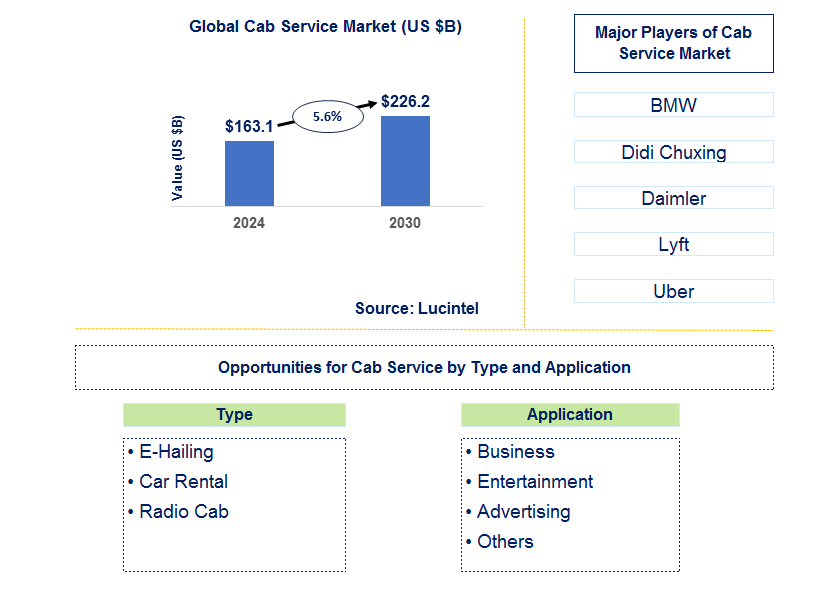
Key data points: The market size in 2030 = $226.2 billion, growth forecast = 5.6% annually for the next 6 years. Scroll below to get more insights. This market report covers trends, opportunities, and forecasts in the global cab service market to 2030 by type (E-hailing, car rental, and radio cab), application (business, entertainment, advertising, and others), and region (North America, Europe, Asia Pacific, and the Rest of the World)
We'll send your sample report shortly.
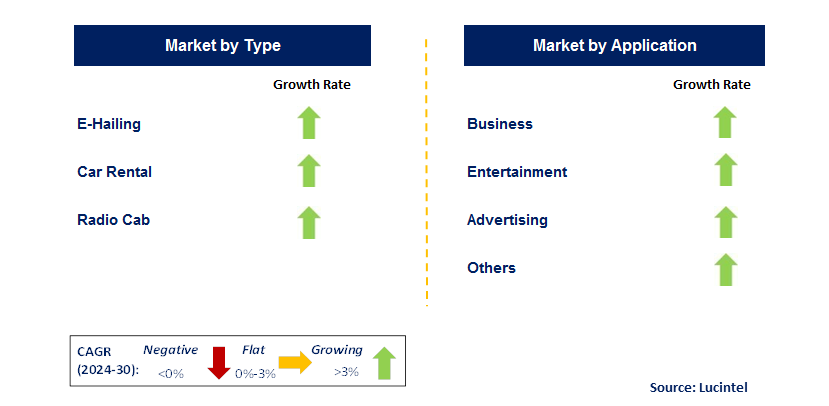
• Lucintel forecasts that, within the type category, E-Hailing will remain the largest segment over the forecast period due to passengers can track their rides in real-time, providing peace of mind and confidence in arrival times.
• In terms of regions, APAC is expected to witness the highest growth over the forecast period due to the region several megacities with booming populations, creating a massive demand for convenient and affordable transportation solutions. Gain valuable insights for your business decisions with our comprehensive 150+ page report.
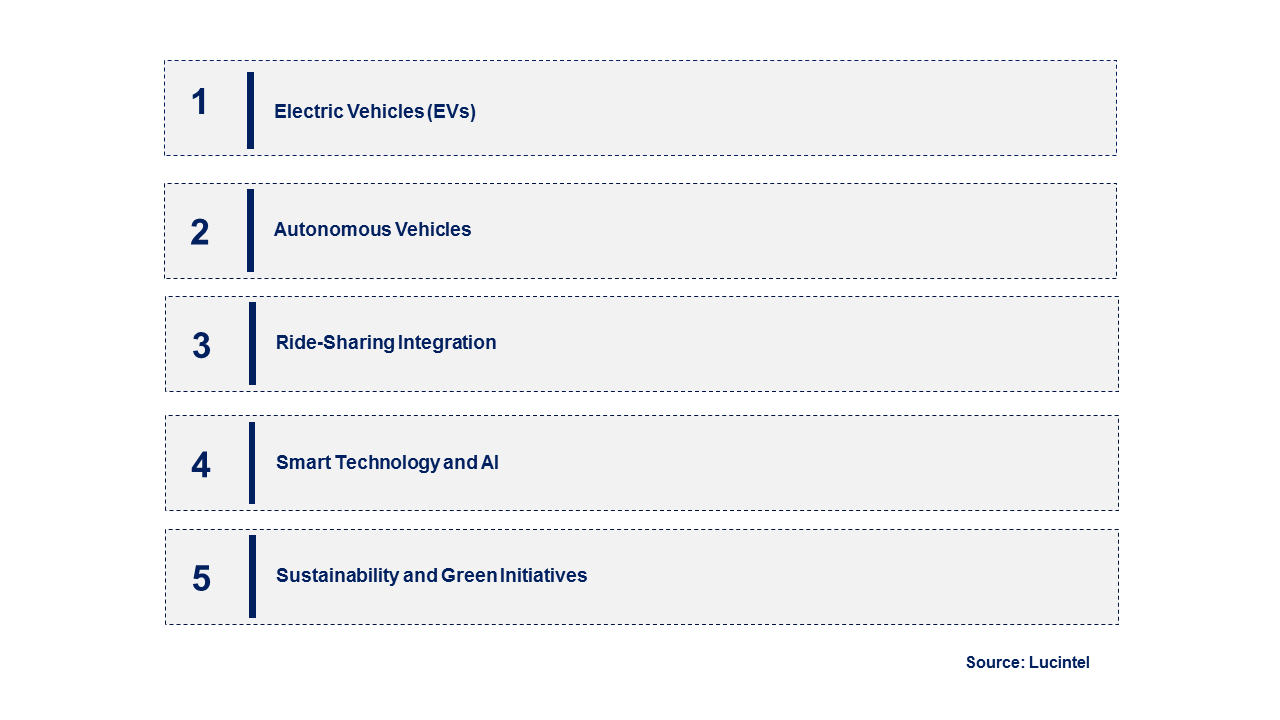
• Electric Vehicles (EVs): The uptake of electric vehicles is rising due to carbon footprint reduction efforts among corporations aiming to comply with environmental regulations. EVs offer cost savings on fuel and maintenance while appealing to environmentally conscious consumers. This trend is driven by investments in EV infrastructure and technology.
• Autonomous Vehicles: Self-driving cabs are being tested by several companies that are building momentum around emerging autonomous driving technology. This move is expected to improve safety standards, reduce operational expenditures, and make public transport more convenient. Meanwhile, there are regulatory and safety issues that need to be addressed.
• Ride-Sharing Integration: An increasing number of companies with traditional cab models are integrating ride-sharing models into their services. The need for flexible transportation solutions on demand by customers and operators’ desire to diversify their offerings have encouraged this approach. This development pivots around improved app functionalities and user experiences.
• Smart Technology and AI: The cab industry is being transformed by the application of smart technology and AI. Predictive maintenance, flexible pricing methods, and personalized customer engagements are gradually becoming the norm. With AI-driven solutions, service management improves, ensuring greater operational effectiveness and promoting higher client satisfaction.
• Sustainability and Green Initiatives: Businesses have started to embrace sustainability through green initiatives. These include using renewable energy sources, reducing waste production, and integrating environmentally friendly fleets. Such measures help meet regulatory requirements and respond to rising consumer demand for sustainable options. Electric and autonomous vehicles, smart technologies, and sustainability define the future of the urban transportation market in the taxi services sector.
• Expansion of Electric Vehicle Fleets: Many cab service providers are expanding their fleets to include electric vehicles (EVs). This transition is motivated by environmental concerns, government support, and increased operational costs. Therefore, the switch to utilizing EVs enables firms to meet legal obligations while appealing to customers who are conscious of the environment. Consequently, investments in EV charging infrastructure and technology are also on the rise to support this movement.
• Advancements in Autonomous Driving: The development and deployment of autonomous vehicles are advancing in the cab service market. Firms conduct tests extensively beyond pilot programs to fine-tune self-driving technology that must meet safety standards. Labor expenses will decrease significantly while safety improves with self-driving cabs, along with other operationally efficient benefits such as saving time spent in traffic jams or idle cabs due to drops in demand. However, before embracing this technology on a large scale, some regulatory issues and technological challenges need to be addressed.
• Enhanced Digital Platforms: There has been a significant improvement in digital platforms within different cab service markets, including apps running on mobile devices and backend systems used therein. Innovations such as real-time tracking, flexible pricing systems, and advanced booking platforms make it easier for users to interact with services while simultaneously driving operational efficiency. Companies have invested in technology to provide customers with seamless, customized services that meet demands for convenience and connection.
• Integration of Smart Technologies: To run cabs more efficiently, smart technologies and AI are being introduced into taxi services. These may include predictive maintenance, AI-backed customer support, and advanced analytics tools. Through these technologies, more responsive service alternatives can be provided, allowing for improved reliability and reduced client dissatisfaction. The cab service market is advancing through the adoption of electric and autonomous vehicles, enhanced digital platforms, and smart technologies. Such transformations improve the quality of service provision while maximizing operational efficiency within the industry, thereby enhancing environmental friendliness.
• Expansion into Emerging Markets: Entering emerging markets with growing urban populations and increasing demand for cab services presents significant opportunities. Companies can capitalize on the rising need for efficient transport solutions by adapting their services to local preferences and regulations.
• Development of Autonomous Cab Technologies: Investing in autonomous vehicle technology offers long-term growth potential. Self-driving cabs will reduce costs by eliminating driver salaries per mile, while also enhancing passenger safety and satisfaction. Therefore, early entrants will control large sections of future markets if they fully embrace this technology and become industry leaders.
• Integration of Green Technologies: Sustainable and eco-friendly practices have the potential to capture environmentally conscious consumers and adhere to regulatory requirements. Electric vehicles, green technologies, and renewable energy could enable companies to stand out from other cab firms and tap into the growing market for sustainable transportation.
• Enhancing Digital and AI Capabilities: Improving operational effectiveness and customer experience can be achieved through advanced digital platforms and the integration of AI-driven solutions. Having real-time tracking capabilities, personalized recommendations, and dynamic pricing among other features will enhance the quality of service provided by various transport service providers while also improving operational performance. Strategic growth opportunities in the cab service market include expansion into emerging markets, investment in autonomous technology, green integration, and enhancing digital and AI capabilities. Innovation can drive growth and capture new market segments for organizations taking advantage of these opportunities.
• Increased Urbanization: Growing urban populations lead to a demand for efficient, flexible transport systems. The increase in city dwellers creates a need for reliable cab services, making it a viable growth market.
• Technological Advancements: Technological innovations such as smart apps and self-driving cars contribute to improved efficiency and attractiveness of cab services. These interventions are geared towards enhancing operational performance and customer experience.
• Environmental Regulations: Stringent environmental regulations encourage sustainability through the adoption of eco-friendly vehicles and practices. Companies can meet regulatory requirements by investing in electric or hybrid vehicles, thereby attracting eco-conscious consumers.
• Consumer Preferences: Demand increases when customers are given options such as on-demand or customized transportation. People want their convenience served reliably, thus creating space for innovation within companies operating in this sector. Challenges in the cab service market are:
• Regulatory Compliance: Navigating through complex regulatory environments can be challenging. Meeting all safety, environmental, and operational guidelines requires substantial investment in resources, which can be a potential barrier to operational efficiency.
• High Operating Costs: The cost of keeping vehicles on the road, including fuel and insurance, can be very expensive. Finding a balance between providing affordable services and maintaining quality standards creates significant challenges for cab service providers.
• Market Competition: Fierce competition among cab service providers can lead to price wars and reduced profit margins. To remain relevant, companies must continuously innovate to differentiate themselves from competitors.
• Technological Integration: Integrating new technologies and updating digital platforms can be costly and complex processes. Regular investments in capital and expertise are necessary to ensure seamless functionality and user experience. While growth drivers such as urbanization and technological advancements propel businesses forward, challenges including regulatory compliance, high operating costs, and intense competition must be overcome to achieve success within the cab service market.
• BMW
• Didi Chuxing
• Daimler
• Lyft
• Uber
• BiTaksi
• Cabify
• Grab
• Gett
• GoCatch
• E-Hailing
• Car Rental
• Radio Cab
• Business
• Entertainment
• Advertising
• Others
• North America
• Europe
• Asia Pacific
• The Rest of the World
• United States: In the United States, there has been a movement towards electric vehicle adoption within the cab service market. As part of sustainability initiatives, Uber and Lyft have included more EVs in their fleets. Furthermore, there is rising interest in autonomous driving technology investments, along with improvements in app-based ride booking systems that increase user convenience and operational efficiency.
• China: The Chinese cab service sector is quickly being transformed by the introduction of electric and self-driving cars. Major players are investing heavily in EV infrastructure and autonomous driving technology to meet government regulations and consumer requirements. There is also an increased focus on incorporating advanced digital payment systems and AI-driven customer support services to enhance business operations.
• Germany: Germany’s cab service industry is progressing with the addition of environmentally friendly fleets and digitalization measures. The adoption of hybrid and electric vehicles, supported by government incentives aimed at reducing emissions, is growing. Additionally, the utilization of digital payment methods and improvements in mobile applications enhance customer experience and operational efficacy.
• India: India’s cab service market has witnessed remarkable growth driven by rapid urbanization rates and increasing demand for ride-sharing services. Companies are diversifying their services to include both traditional and electric vehicles. Moreover, there is a push towards improving safety features and app functionality to better serve the varied needs of an increasing urban population.
• Japan: The cab service market in Japan is focused on incorporating advanced technologies such as autonomous driving and smart navigation systems. Firms are partnering with technology companies to enhance app-based services and customer interactions. Additionally, there is a growing preference for eco-friendly vehicles as part of national sustainability goals.


• BMW
• Didi Chuxing
• Daimler
• Lyft
• Uber
• BiTaksi
• Cabify
• Grab
• Gett
• GoCatch Q6. Which cab service market segment will be the largest in future? Answer: Lucintel forecasts that E-Hailing will remain the largest segment over the forecast period due to passengers can track their rides in real-time, providing peace of mind and confidence in arrival times. Q7. In cab service market, which region is expected to be the largest in next 5 years? Answer: APAC is expected to witness highest growth over the forecast period due to the region several megacities with booming populations, creating a massive demand for convenient and affordable transportation solutions. Q.8 Do we receive customization in this report? Answer: Yes, Lucintel provides 10% customization without any additional cost.


Choose a license that fits your team. Instant PDF delivery.
Prices exclude taxes. Instant delivery. Custom licensing available on request.
Market Report · May 18, 2026
Market Report · May 18, 2026
Market Report · May 18, 2026
Trusted partner for strategic intelligence and business growth


Receive a complimentary market analysis tailored to your industry. Our analysts will identify key growth opportunities and competitive dynamics specific to your business.

Market size, growth rate, and key trend analysis for your specific sector.

Top competitor positioning and market share analysis.

Strategic recommendations backed by data-driven insights.
Get curated market intelligence and competitive moves straight to your inbox.
By subscribing, you agree to receive our monthly insights. Unsubscribe anytime.
Receive a complimentary market analysis tailored to your industry. Our analysts will identify key growth opportunities and competitive dynamics specific to your business.
Market size, growth rate, and key trend analysis for your specific sector.
Top competitor positioning and market share analysis.
Strategic recommendations backed by data-driven insights.
Get curated market intelligence, emerging trends, and competitive moves straight to your inbox each month.
By subscribing, you agree to receive our monthly insights. Unsubscribe anytime.
We'll send your sample report shortly.