
Market Report · July 31, 2026

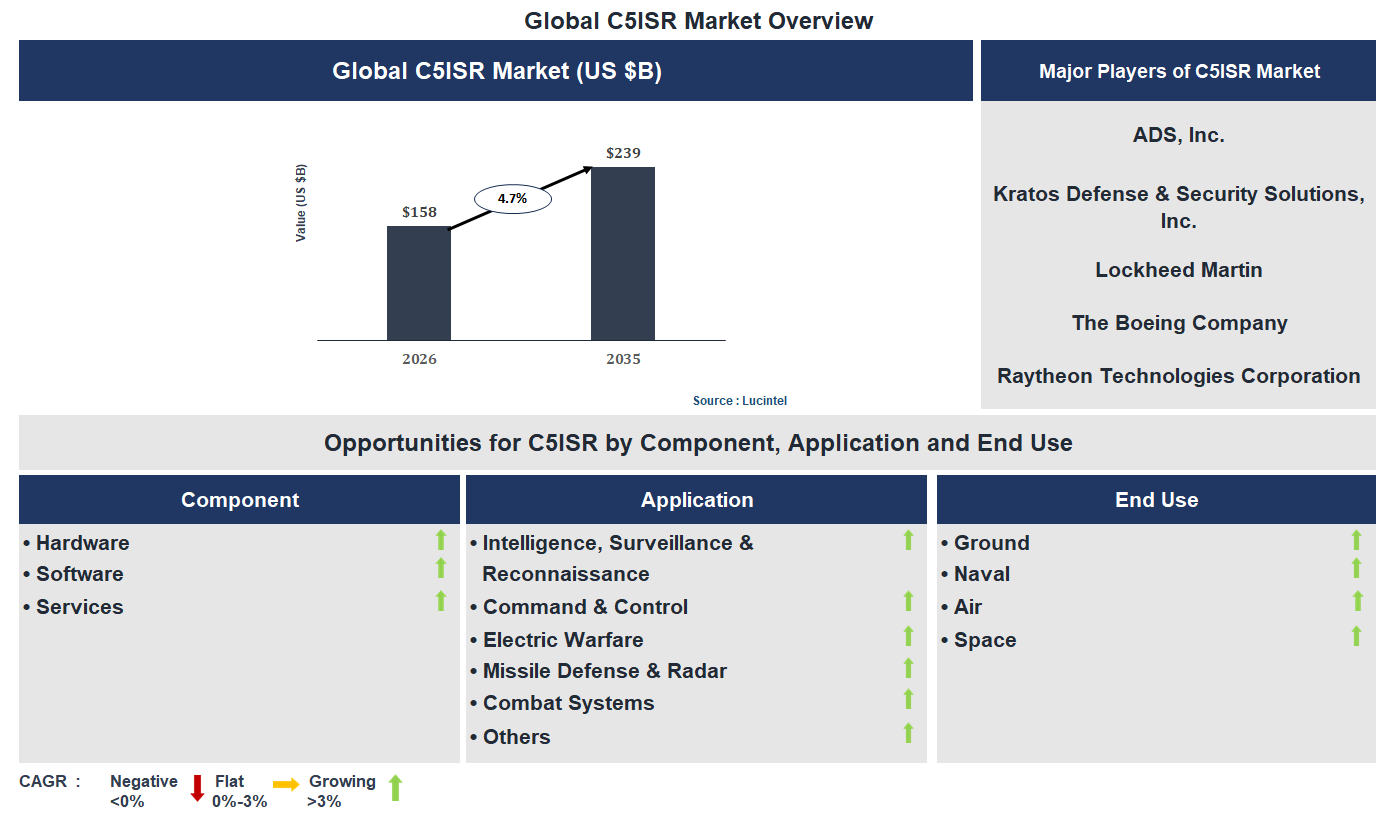
Key data points: The market size in 2035 = $239 billion, growth forecast = 4.7% annually for the next 8 years. Scroll below to get more insights. This market report covers trends, opportunities and forecasts in C5ISR market to 2035 by component (hardware, software, and services), application (intelligence, surveillance & reconnaissance, command & control, electric warfare, missile defense & radar, combat systems, and others), end use (ground, naval, air, and space), and region (North America, Europe, Asia Pacific, and the Rest of the World)
We'll send your sample report shortly.
• Lucintel forecasts that, within the component category, hardware is expected to witness the highest growth over the forecast period.
• Within the application category, intelligence, surveillance & reconnaissance is expected to witness the highest growth.
• In terms of region, North America is expected to witness the highest growth over the forecast period. Gain valuable insights for your business decisions with our comprehensive 150+ page report. Sample figures with some insights are shown below.
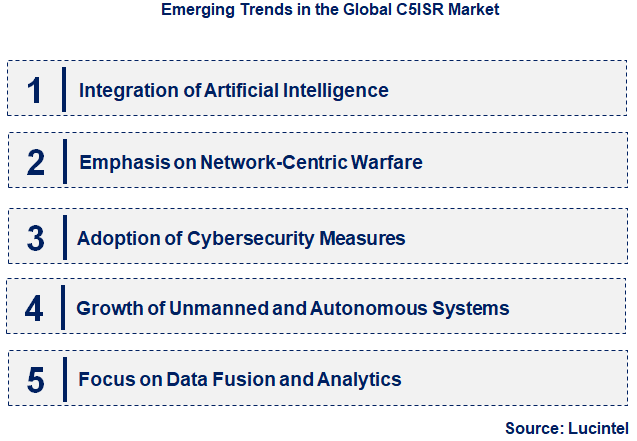
• Integration of Artificial Intelligence: AI is increasingly embedded in C5ISR systems to enhance data processing and decision-making. AI algorithms enable real-time analysis of vast data streams, improving threat detection and response times. This integration allows for autonomous operations, reducing human workload and increasing operational efficiency. AI-driven analytics also facilitate predictive maintenance and threat forecasting, which are vital for proactive defense strategies. As AI technology advances, its role in C5ISR is expected to expand, making systems smarter, faster, and more adaptive to complex battlefield scenarios.
• Emphasis on Network-Centric Warfare: The shift towards network-centric warfare emphasizes interconnected systems that share information seamlessly across platforms. This trend enhances situational awareness and coordination among different military units, enabling faster and more accurate responses. Advanced communication networks, including 5G and satellite links, are being integrated to support real-time data sharing. The impact is a more agile and responsive military force capable of operating in complex, contested environments. This interconnected approach is also fostering interoperability among allied forces, strengthening collective defense capabilities.
• Adoption of Cybersecurity Measures: As C5ISR systems become more digitized and networked, cybersecurity has become a critical focus. Protecting sensitive data and communication channels from cyber threats is essential to maintain operational integrity. Advanced encryption, intrusion detection systems, and secure communication protocols are being implemented to safeguard against cyberattacks. The increasing sophistication of cyber threats necessitates continuous innovation in defense cybersecurity measures. This trend underscores the importance of resilient systems that can withstand and recover from cyber incidents, ensuring uninterrupted military operations.
• Growth of Unmanned and Autonomous Systems: The deployment of unmanned aerial vehicles (UAVs), drones, and autonomous underwater vehicles is transforming surveillance and reconnaissance capabilities. These systems provide persistent monitoring, reduce human risk, and offer rapid deployment options. Advances in sensor technology and AI enable autonomous systems to operate with minimal human intervention, increasing operational flexibility. Their integration into C5ISR networks enhances intelligence gathering and situational awareness, especially in hostile or inaccessible environments. This trend is expected to continue, driving innovation in autonomous systems and expanding their role in modern military operations.
• Focus on Data Fusion and Analytics: The explosion of data generated by modern sensors and platforms necessitates advanced data fusion and analytics. Combining information from multiple sources creates a comprehensive operational picture, improving decision-making accuracy. Sophisticated analytics tools enable pattern recognition, anomaly detection, and predictive insights. This trend enhances the ability to anticipate threats and optimize resource allocation. As data volumes grow, investments in high-performance computing and machine learning are increasing to handle complex analysis tasks. Effective data fusion and analytics are central to achieving a competitive edge in modern warfare. These emerging trends are fundamentally reshaping the C5ISR market by fostering smarter, more connected, and resilient defense systems. The integration of AI, emphasis on network-centric operations, cybersecurity enhancements, autonomous systems, and advanced data analytics are collectively driving innovation. These developments are enabling militaries worldwide to operate more effectively in complex, dynamic environments, ensuring strategic superiority and operational readiness in the evolving landscape of modern warfare.
• Growing Demand for Integrated C5ISR Solutions: The increasing need for seamless communication and data sharing among military units is driving the development of integrated C5ISR systems. These solutions enhance situational awareness, decision-making, and operational coordination, leading to improved mission success rates. Governments and defense agencies are investing heavily in these technologies to modernize their forces, which significantly boosts market growth and fosters innovation in system integration and interoperability.
• Advancements in Artificial Intelligence and Data Analytics: The incorporation of AI and data analytics into C5ISR systems is transforming military intelligence capabilities. These technologies enable real-time data processing, predictive analytics, and autonomous decision-making, which improve threat detection and response times. The market benefits from increased efficiency, reduced human error, and enhanced strategic planning, making AI-driven solutions a key growth driver in the evolving defense landscape.
• Expansion of Network-Centric Warfare Capabilities: The shift towards network-centric warfare emphasizes interconnected systems for faster, more coordinated operations. This development promotes the deployment of advanced communication networks, sensor integration, and secure data links. The market experiences growth as defense organizations seek to upgrade their infrastructure to support real-time information sharing, leading to more agile and effective military responses in complex operational environments.
• Rising Adoption of Unmanned Systems and Robotics: Unmanned aerial vehicles (UAVs), underwater drones, and ground robots are increasingly integrated into C5ISR frameworks. These systems provide persistent surveillance, reconnaissance, and targeted strike capabilities without risking human lives. Their adoption enhances operational flexibility and intelligence gathering, fueling market expansion. The development of autonomous systems also opens new avenues for technological innovation and strategic advantage in modern warfare.
• Increasing Focus on Cybersecurity and Electronic Warfare: As digital and networked systems become more prevalent, protecting sensitive data and communication channels is critical. The market is witnessing significant investments in cybersecurity and electronic warfare solutions to counter cyber threats and electronic attacks. These developments ensure operational integrity and resilience, fostering trust in C5ISR systems. The emphasis on cybersecurity is a vital growth area, supporting the overall security posture of defense operations worldwide. The overall impact of these developments is a more advanced, integrated, and resilient C5ISR market. Enhanced technological capabilities are enabling militaries to operate more efficiently and securely, fostering innovation and international collaboration. As these opportunities continue to evolve, the market is poised for sustained growth, driven by the increasing demand for sophisticated defense solutions and strategic dominance.
• Increasing Adoption of Network-Centric Warfare Technologies: The shift towards network-centric warfare emphasizes interconnected systems for real-time data sharing, improving decision-making and operational efficiency. Governments are investing heavily in modernizing their C5ISR infrastructure to support seamless communication among various military units. This trend drives demand for advanced communication networks, secure data transmission, and integrated command systems, creating substantial growth opportunities for technology providers and defense contractors.
• Rising Demand for Unmanned Systems and Autonomous Platforms: The integration of unmanned aerial vehicles (UAVs), unmanned ground vehicles (UGVs), and autonomous systems into military operations is expanding rapidly. These platforms enhance surveillance, reconnaissance, and combat capabilities while reducing risk to personnel. The need for sophisticated control systems, sensors, and data processing solutions fuels innovation in C5ISR technologies. This opportunity is particularly significant in border security, maritime surveillance, and battlefield management.
• Growing Focus on Cybersecurity and Electronic Warfare Capabilities: As C5ISR systems become more interconnected, their vulnerability to cyber threats increases. Defense agencies prioritize strengthening cybersecurity measures and electronic warfare (EW) capabilities to protect critical data and disrupt adversary communications. This focus creates opportunities for cybersecurity firms and EW solution providers to develop advanced, resilient systems that ensure operational integrity and strategic advantage in complex threat environments.
• Expansion of Cloud Computing and Data Analytics in Defense Operations: The adoption of cloud-based platforms enables scalable, flexible, and secure data storage and sharing across military units. Advanced data analytics and AI-driven insights improve situational awareness, predictive maintenance, and mission planning. This technological shift supports faster decision-making and operational agility, opening avenues for cloud service providers and analytics firms to collaborate with defense agencies and develop tailored solutions for military needs.
• Increasing Integration of Artificial Intelligence and Machine Learning: AI and ML are transforming C5ISR systems by enabling autonomous decision-making, pattern recognition, and predictive analytics. These technologies enhance threat detection, target identification, and operational efficiency. The integration of AI/ML into existing systems offers a competitive edge, prompting investments from defense organizations. This opportunity fosters innovation in intelligent sensors, automated command systems, and adaptive communication networks, shaping the future landscape of military intelligence and surveillance. These strategic growth opportunities are poised to significantly influence the C5ISR market by fostering innovation, enhancing operational capabilities, and addressing emerging security challenges. As defense organizations prioritize modernization and technological integration, market players that capitalize on these trends will strengthen their competitive position. Overall, these opportunities will drive market expansion, technological advancement, and increased global defense spending, shaping the future of military intelligence, surveillance, and communication systems.
• Technological Innovation: The rapid development of advanced communication systems, AI, and data analytics enhances situational awareness and operational efficiency. Governments and defense agencies invest heavily in R&D to incorporate cutting-edge technologies, which improve decision-making, threat detection, and mission success rates. The integration of IoT and 5G further accelerates real-time data sharing and system interoperability, making C5ISR solutions more effective and adaptable to modern warfare requirements. This continuous technological evolution is a primary driver, fostering market growth and opening new avenues for defense modernization.
• Increasing Defense Budgets: Geopolitical tensions and regional conflicts have led to a surge in defense spending worldwide. Countries prioritize upgrading their military capabilities, including C5ISR systems, to ensure strategic superiority. Governments allocate substantial budgets for procurement, modernization, and maintenance of these systems, which directly fuels market expansion. The emphasis on homeland security and counter-terrorism operations also contributes to sustained demand. As defense budgets grow, manufacturers and service providers are incentivized to innovate and expand their offerings, further propelling the market forward.
• Rising Threats and Security Concerns: The evolving nature of global threats, including cyber-attacks, terrorism, and asymmetric warfare, necessitates sophisticated C5ISR solutions. Enhanced surveillance, real-time intelligence, and secure communication channels are critical for national security. The increasing frequency and complexity of threats compel defense agencies to adopt more advanced, integrated systems to maintain operational superiority. This heightened security concern acts as a significant driver, encouraging continuous system upgrades and technological integration to counter emerging risks effectively.
• Technological Convergence and System Integration: The convergence of various technological domains such as AI, big data, and cybersecurity is enabling more comprehensive and integrated C5ISR solutions. This integration improves system efficiency, reduces operational costs, and enhances decision-making capabilities. The trend toward modular and scalable systems allows customization based on specific mission requirements, fostering a competitive market environment. As interoperability becomes a key focus, the demand for integrated solutions accelerates, driving innovation and market growth.
• Growing Adoption of Autonomous Systems: The deployment of autonomous vehicles, drones, and robotic systems in surveillance and reconnaissance missions is transforming the C5ISR landscape. These systems offer enhanced operational capabilities, reduced risk to personnel, and increased mission endurance. The integration of autonomous platforms with existing C5ISR infrastructure creates more dynamic and flexible operational environments. The push toward automation and unmanned systems is a major driver, opening new markets and encouraging technological advancements in sensors, AI, and control systems. The challenges facing the C5ISR market include:
• Regulatory and Compliance Issues: Stringent regulations related to data security, export controls, and international collaborations pose significant hurdles. Compliance with diverse regulatory frameworks across different countries can delay product development, deployment, and cross-border cooperation. Additionally, evolving cybersecurity standards require continuous updates and investments, increasing operational complexity and costs. Navigating these regulatory landscapes is crucial for market players to avoid legal penalties and maintain market access, but it often hampers rapid innovation and deployment.
• High Development and Maintenance Costs: Developing advanced C5ISR systems involves substantial R&D investments, sophisticated manufacturing processes, and ongoing maintenance expenses. These high costs can limit market entry for smaller players and slow down modernization efforts for existing systems. Additionally, the need for continuous upgrades to counter emerging threats further escalates operational costs. Budget constraints within defense agencies may restrict procurement and modernization initiatives, impacting overall market growth and technological progress.
• Rapid Technological Obsolescence: The fast-paced evolution of technology in the defense sector leads to frequent system obsolescence. Systems quickly become outdated as new threats emerge and innovations develop, necessitating continuous upgrades or replacements. This rapid obsolescence challenges manufacturers to keep pace with technological advancements and increases lifecycle costs for defense agencies. It also creates a pressure to balance innovation with cost-effectiveness, complicating long-term planning and investment strategies. The C5ISR market is driven by technological innovation, increased defense spending, security concerns, system integration, and autonomous systems. However, regulatory complexities, high costs, and rapid technological obsolescence pose significant challenges. These factors collectively influence the market’s growth trajectory, requiring stakeholders to innovate strategically while navigating regulatory and financial hurdles. The overall impact is a dynamic, competitive landscape that demands agility, technological excellence, and strategic foresight to capitalize on emerging opportunities and mitigate risks.
• ADS, Inc.
• Kratos Defense & Security Solutions, Inc.
• Lockheed Martin
• The Boeing Company
• Raytheon Technologies Corporation
• General Dynamics
• Northrop Grumman
• Thales Group
• Leonardo S.p.A.
• BAE Systems
• Hardware
• Software
• Services
• Intelligence, Surveillance & Reconnaissance
• Command & Control
• Electric Warfare
• Missile Defense & Radar
• Combat Systems
• Others
• Ground
• Naval
• Air
• Space
• North America
• Europe
• Asia Pacific
• The Rest of the World
• United States: The U.S. continues to lead in C5ISR development, focusing on integrating AI and machine learning for real-time data analysis. Recent investments aim to modernize existing systems, enhance cybersecurity measures, and develop autonomous surveillance platforms. The Department of Defense has increased funding for next-generation communication networks and sensor technologies, emphasizing interoperability across military branches. Additionally, collaborations with private tech firms are accelerating innovation, ensuring the U.S. maintains its technological edge in defense capabilities.
• China: China is rapidly advancing its C5ISR capabilities, emphasizing indigenous development to reduce reliance on foreign technology. The country has made significant progress in satellite surveillance, cyber warfare, and electronic warfare systems. Recent initiatives include deploying advanced radar and sensor networks along its borders and in the South China Sea. China’s focus on integrating AI into its military systems aims to improve decision-making speed and operational efficiency. The government’s substantial defense budget supports these technological upgrades, positioning China as a formidable player in the global C5ISR market.
• Germany: Germany is prioritizing the modernization of its military communication and surveillance systems, with a focus on cybersecurity and data protection. Recent developments include upgrading NATO-compatible communication networks and deploying advanced drone surveillance systems. Germany is also investing in research collaborations within the European Union to develop joint C5ISR solutions, emphasizing interoperability and shared security objectives. The country’s efforts aim to enhance its defense readiness while aligning with NATO standards and ensuring technological sovereignty.
• India: India is rapidly expanding its C5ISR capabilities to address regional security challenges and border threats. Recent developments include deploying advanced radar and satellite systems for border surveillance and enhancing cyber defense infrastructure. The government has increased defense spending to develop indigenous systems, including electronic warfare and surveillance drones. India is also focusing on integrating AI and data analytics into its existing systems to improve threat detection and response times. These efforts aim to bolster national security and establish India as a key player in the regional defense landscape.
• Japan: Japan is investing heavily in upgrading its C5ISR systems to counter regional threats, particularly from North Korea and China. Recent initiatives include deploying advanced missile defense systems, enhancing satellite surveillance, and strengthening cyber defense capabilities. Japan is also collaborating with the United States and other allies to develop joint C5ISR projects, emphasizing interoperability and technological innovation. The country’s focus on autonomous systems and AI integration aims to improve early warning and response capabilities, ensuring robust defense mechanisms in a geopolitically sensitive region.


• ADS, Inc.
• Kratos Defense & Security Solutions, Inc.
• Lockheed Martin
• The Boeing Company
• Raytheon Technologies Corporation
• General Dynamics
• Northrop Grumman
• Thales Group
• Leonardo S.p.A.
• BAE Systems Q6. Which C5ISR market segment will be the largest in future? Answer: Lucintel forecasts that, within the component category, hardware is expected to witness the highest growth over the forecast period. Q7. In C5ISR market, which region is expected to be the largest in next 8 years? Answer: In terms of region, North America is expected to witness the highest growth over the forecast period. Q8. Do we receive customization in this report? Answer: Yes, Lucintel provides 10% customization without any additional cost.


Choose a license that fits your team. Instant PDF delivery.
Prices exclude taxes. Instant delivery. Custom licensing available on request.
Market Report · July 31, 2026
Market Report · July 31, 2026
Market Report · July 31, 2026
Trusted partner for strategic intelligence and business growth


Receive a complimentary market analysis tailored to your industry. Our analysts will identify key growth opportunities and competitive dynamics specific to your business.

Market size, growth rate, and key trend analysis for your specific sector.

Top competitor positioning and market share analysis.

Strategic recommendations backed by data-driven insights.
Get curated market intelligence and competitive moves straight to your inbox.
By subscribing, you agree to receive our monthly insights. Unsubscribe anytime.
Receive a complimentary market analysis tailored to your industry. Our analysts will identify key growth opportunities and competitive dynamics specific to your business.
Market size, growth rate, and key trend analysis for your specific sector.
Top competitor positioning and market share analysis.
Strategic recommendations backed by data-driven insights.
Get curated market intelligence, emerging trends, and competitive moves straight to your inbox each month.
By subscribing, you agree to receive our monthly insights. Unsubscribe anytime.
We'll send your sample report shortly.