
Report Feature
Burn Kit Market Trends and Forecast
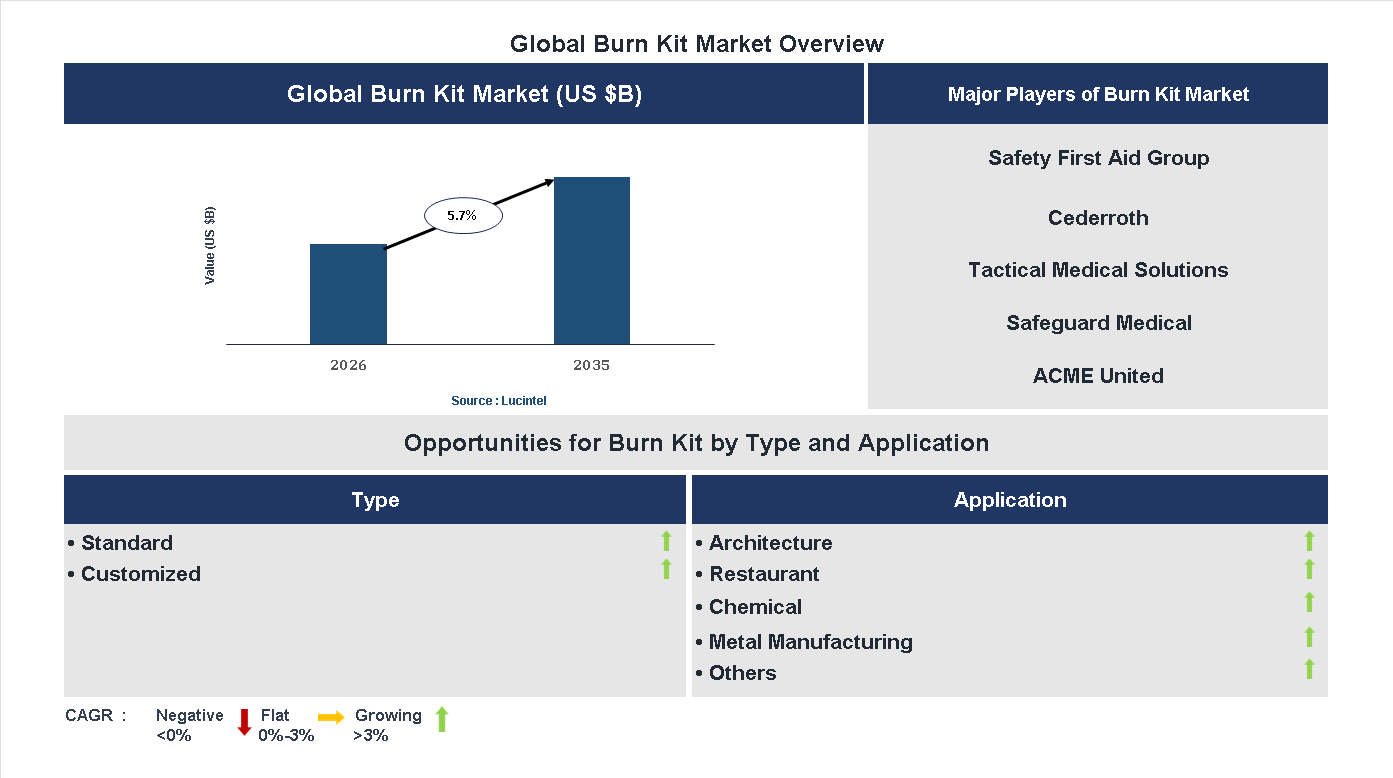
The future of the global burn kit market looks promising with opportunities in the architecture, restaurant, chemical, and metal manufacturing markets. The global burn kit market is expected to reach an estimated $2 billion by 2035 with a CAGR of 5.2% from 2026 to 2035. The major drivers for this market are the increasing number of burn injury cases, the rising awareness of first aid preparedness, and the growing adoption in healthcare industry.• Lucintel forecasts that, within the type category, customized is expected to witness higher growth over the forecast period.
• Within the application category, chemical is expected to witness the highest growth.
• In terms of region, APAC is expected to witness the highest growth over the forecast period. Gain valuable insights for your business decisions with our comprehensive 150+ page report. Sample figures with some insights are shown below.
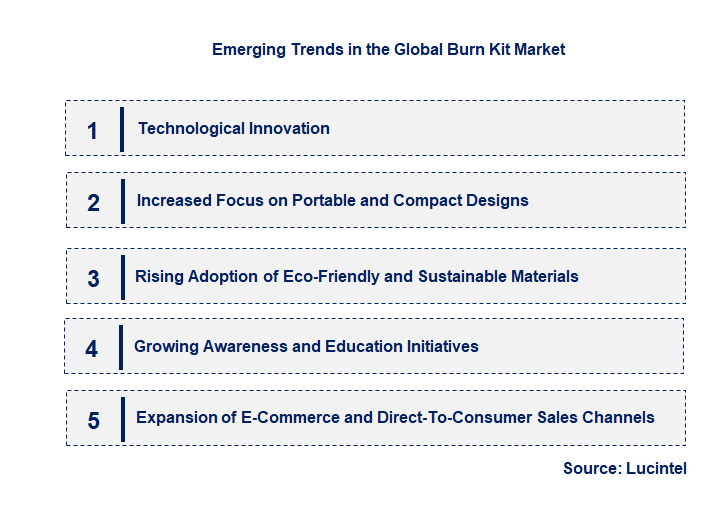
Emerging Trends in the Burn Kit Market
The burn kit market is experiencing rapid evolution driven by technological advancements, changing consumer needs, and increased awareness of safety and efficiency. As healthcare providers and consumers seek more effective, portable, and user-friendly solutions, several emerging trends are shaping the future of this market. These developments are not only enhancing product performance but also expanding market reach and improving patient outcomes. Understanding these key trends is essential for stakeholders aiming to stay competitive and innovative in this dynamic landscape.• Technological Innovation: The market is witnessing the incorporation of innovative materials such as antimicrobial fabrics and lightweight, durable plastics to improve safety and comfort. Smart features like temperature sensors and digital monitoring are being embedded into burn kits, enabling real-time assessment and better management of burn injuries. These technological advancements enhance user experience, reduce complications, and facilitate quicker response times, ultimately improving patient care and safety.
• Increased Focus on Portable and Compact Designs: Consumers and healthcare providers demand portable, lightweight burn kits that are easy to carry and store, especially for emergency and outdoor use. Compact designs with organized compartments allow for quick access to essential items, making them ideal for first responders and travelers. This trend is driven by the need for rapid response in emergencies and the growing popularity of outdoor activities, expanding the market for portable burn kits and increasing accessibility.
• Rising Adoption of Eco-Friendly and Sustainable Materials: Environmental concerns are prompting manufacturers to develop burn kits using biodegradable, recyclable, and eco-friendly materials. These sustainable options reduce environmental impact and appeal to environmentally conscious consumers and organizations. The shift towards sustainability is also driven by regulatory pressures and corporate social responsibility initiatives, fostering innovation in packaging and product components, and broadening market appeal.
• Growing Awareness and Education Initiatives: Increased awareness about burn injury management and first aid training is fueling demand for comprehensive burn kits. Educational campaigns and training programs are encouraging consumers and healthcare providers to invest in high-quality, complete kits. This trend enhances market growth by emphasizing the importance of preparedness, safety, and proper injury management, leading to higher adoption rates across various sectors, including healthcare, travel, and outdoor activities.
• Expansion of E-commerce and Direct-to-Consumer Sales Channels: The rise of online retail platforms is transforming how burn kits are marketed and sold. E-commerce offers a wider reach, convenience, and access to a variety of products, including customized and premium options. Direct-to-consumer sales enable manufacturers to build brand loyalty and gather customer feedback for continuous improvement. This trend is expanding market penetration, especially in regions with limited physical retail infrastructure, and is making burn kits more accessible to a broader audience. These emerging trends are fundamentally reshaping the burn kit market by fostering innovation, enhancing accessibility, and emphasizing sustainability. They are driving increased adoption, improving product efficacy, and expanding market reach, ultimately leading to better safety standards and improved outcomes for burn injury management worldwide.
Recent Development in the Burn Kit Market
The burn kit market is experiencing rapid growth driven by increasing demand for emergency medical supplies, technological advancements, and expanding healthcare infrastructure worldwide. As burn injuries remain a significant health concern, the need for effective treatment solutions and portable burn kits has surged. Innovations in materials and design are enhancing usability and safety, while rising awareness and government initiatives are promoting market expansion. These developments are shaping a dynamic landscape, offering new opportunities for manufacturers and healthcare providers to improve patient outcomes and market reach.• Technological Innovations in Burn Kit Design: Advancements in materials and portable devices are improving treatment efficiency and safety. New designs incorporate lightweight, durable components and user-friendly features, enabling quicker response times in emergencies. These innovations reduce treatment time, improve patient comfort, and enhance overall care quality. As a result, healthcare providers are more equipped to manage burn injuries effectively, expanding market adoption and encouraging further R&D investments.
• Increasing Adoption of Portable Burn Kits: The demand for portable, easy-to-use burn kits is rising, especially in remote and emergency settings. These kits facilitate immediate treatment, reducing complications and improving recovery outcomes. Governments and NGOs are promoting their use through training programs and policies. The portability factor also appeals to first responders and military personnel, broadening market scope. This trend is expected to drive sales and encourage manufacturers to develop more compact, efficient solutions.
• Growing Awareness and Training Programs: Enhanced awareness about burn injury management and training initiatives is boosting market growth. Educational campaigns and certification programs are equipping healthcare workers and first responders with the necessary skills. This increased knowledge encourages the adoption of advanced burn kits and improves treatment standards. As awareness spreads, demand for comprehensive burn management solutions is expected to rise, further expanding the market and fostering innovation.
• Expansion of Healthcare Infrastructure: Investments in healthcare infrastructure, especially in developing regions, are creating new opportunities for burn kit deployment. Modern hospitals and clinics require advanced emergency supplies, including burn kits, to meet rising patient needs. Government initiatives to improve healthcare access are also contributing to market growth. This infrastructure expansion supports increased sales, encourages local manufacturing, and promotes the development of region-specific solutions, strengthening the overall market position.
• Regulatory Approvals and Standardization: The introduction of new regulations and standards for burn treatment devices is ensuring product safety and efficacy. Regulatory approvals facilitate market entry and build consumer trust. Standardization efforts are streamlining product development and distribution, encouraging innovation. These developments attract investments and foster competitive growth, ultimately leading to higher-quality burn kits that meet global healthcare requirements, thus positively impacting market stability and expansion. These developments are collectively transforming the burn kit market by enhancing product quality, expanding accessibility, and fostering innovation. The market is becoming more responsive to urgent healthcare needs, leading to improved patient outcomes and increased adoption across various regions. Overall, these trends are driving sustained growth, attracting investments, and shaping a more efficient, accessible, and innovative market landscape.
Strategic Growth Opportunities in the Burn Kit Market
The burn kit market is experiencing significant growth driven by increasing burn incidents, advancements in medical technology, and rising awareness of emergency care. The demand for specialized burn treatment kits is expanding across hospitals, clinics, and emergency services worldwide. Innovations in wound management and skin regeneration are further fueling market expansion. Strategic collaborations and product development are key to capturing new opportunities. This evolving landscape offers substantial potential for manufacturers and healthcare providers to improve patient outcomes and address unmet needs in burn care.• Increasing Incidence of Burn Injuries Creates Demand for Advanced Burn Kits: The rising number of burn cases globally, due to accidents, industrial hazards, and domestic incidents, is driving the need for effective treatment solutions. Hospitals and emergency responders require comprehensive burn kits that facilitate quick, efficient care. The growing awareness of burn management and the importance of early intervention are prompting healthcare providers to invest in specialized kits, thereby expanding market opportunities.
• Technological Innovations Enhance Burn Treatment Effectiveness: Advances in medical technology, such as improved wound dressings, skin substitutes, and infection control products, are transforming burn care. These innovations enable faster healing, reduce complications, and improve patient comfort. Manufacturers are focusing on developing multifunctional burn kits that incorporate these cutting-edge solutions, which attract healthcare providers seeking better outcomes. The integration of telemedicine and digital monitoring tools further broadens the scope of burn treatment options.
• Rising Adoption of Portable and Emergency Burn Kits in Pre-Hospital Settings: The need for immediate burn care in emergencies has increased demand for portable, easy-to-use burn kits. Ambulances, first responders, and disaster relief agencies prioritize quick access to essential supplies. Compact, lightweight kits with comprehensive contents are gaining popularity, especially in remote or resource-limited areas. This trend supports faster intervention, reduces complications, and enhances survival rates, thereby expanding the market for portable burn treatment solutions.
• Growing Focus on Customized and Wound-Specific Burn Kits: Customized burn kits tailored to specific wound types and severity levels are gaining traction. Healthcare providers prefer kits that address unique patient needs, including different skin types and injury depths. The development of wound-specific kits with targeted dressings, antimicrobial agents, and healing accelerators improves treatment efficacy. This personalized approach enhances patient outcomes and reduces hospital stays, creating new opportunities for manufacturers to innovate and differentiate their product offerings.
• Strategic Collaborations and Regulatory Approvals Drive Market Expansion: Partnerships between medical device companies, research institutions, and healthcare providers facilitate innovation and product development. Securing regulatory approvals ensures market credibility and wider adoption. Companies investing in clinical trials and compliance with safety standards can expand their market share. These collaborations accelerate the introduction of novel burn kits, improve product quality, and meet evolving healthcare standards, ultimately fueling overall market growth. The overall impact of these opportunities is a robust expansion of the burn kit market, driven by technological advancements, increasing demand for emergency care, and personalized treatment solutions. Strategic investments and innovations will enable healthcare providers to improve burn management outcomes, reduce complications, and address unmet needs. As the market evolves, it offers significant growth potential for industry stakeholders committed to enhancing burn care worldwide.
Burn Kit Market Driver and Challenges
The burn kit market is influenced by a variety of technological, economic, and regulatory factors that shape its growth and development. Advances in medical technology and increased awareness about burn treatment options drive demand for innovative burn kits. Economic factors such as healthcare spending and insurance coverage impact accessibility and affordability. Regulatory standards ensure safety and efficacy, influencing product development and market entry. Additionally, demographic shifts, including rising burn incidences and aging populations, further propel market expansion. However, challenges such as stringent regulatory requirements, high manufacturing costs, and competition from alternative treatments pose obstacles. Understanding these drivers and challenges is essential for stakeholders aiming to capitalize on market opportunities and address potential risks effectively. The factors responsible for driving the burn kit market include:• Technological Advancements: The continuous development of innovative burn treatment products, such as advanced dressings and portable burn kits, enhances patient outcomes and broadens market scope. These innovations improve wound healing, reduce infection risks, and enable quicker response times, making burn kits more effective and appealing to healthcare providers. As technology evolves, manufacturers can introduce more sophisticated, user-friendly, and cost-effective solutions, fueling market growth. The integration of digital tools and telemedicine also supports remote burn management, expanding access in underserved areas.
• Rising Incidence of Burns: An increase in burn injuries due to industrial accidents, fires, and domestic mishaps significantly drives demand for burn kits. Developing regions with expanding industrial activities and urbanization experience higher burn cases, creating a substantial market opportunity. Moreover, the growing awareness about immediate burn care and first aid measures encourages the adoption of burn kits, especially in emergency settings. This trend underscores the need for accessible, effective burn treatment solutions across diverse healthcare environments.
• Increasing Healthcare Expenditure: Growing investments in healthcare infrastructure and services globally contribute to higher adoption of burn kits. Governments and the private sectors are allocating more funds toward emergency care and burn treatment facilities, facilitating market expansion. Enhanced healthcare spending also supports research and development activities, leading to improved product offerings. As healthcare budgets increase, hospitals and clinics are better equipped to procure advanced burn kits, ensuring timely and effective treatment for burn victims.
• Regulatory Support and Standards: Stringent regulatory frameworks and safety standards ensure the quality and efficacy of burn kits, fostering consumer confidence and market stability. Regulatory bodies such as the FDA and EMA set guidelines that manufacturers must adhere to, encouraging innovation while maintaining safety. Compliance with these standards often acts as a barrier to entry for new players but ultimately elevates product quality. Regulatory support also facilitates international trade and market expansion, enabling companies to reach broader audiences with certified, reliable products.
• Growing Awareness and Education: Increased awareness about burn prevention and first aid measures among the general public and healthcare professionals boosts demand for burn kits. Educational campaigns and training programs emphasize the importance of immediate care, encouraging households, workplaces, and emergency responders to stock burn kits. This heightened awareness leads to proactive purchasing behavior, expanding the market. Additionally, training healthcare providers on the latest burn management techniques ensures proper utilization of burn kits, improving patient outcomes, and reinforcing market growth. The challenges facing the burn kit market include:
• Stringent Regulatory Requirements: Navigating complex regulatory landscapes can delay product launches and increase costs for manufacturers. Compliance with safety, efficacy, and quality standards requires extensive testing and documentation, which can be time-consuming and expensive. Smaller companies may struggle to meet these standards, limiting market entry and innovation. Additionally, evolving regulations necessitate continuous updates to products and processes, adding to operational burdens and potentially hindering rapid market responsiveness.
• High Manufacturing Costs: Producing advanced burn kits involves significant expenses related to raw materials, research and development, and quality control. These costs can translate into higher retail prices, limiting accessibility, especially in low-income regions. Manufacturers face pressure to balance cost-efficiency with product quality, which can impact profit margins. High production costs also restrict the ability to offer affordable solutions in emerging markets, potentially slowing overall market growth and adoption.
• Competition from Alternative Treatments: The presence of alternative burn management options, such as traditional dressings, herbal remedies, and emerging regenerative therapies, poses a challenge to burn kit market growth. These alternatives may be more affordable or culturally preferred in certain regions, reducing demand for standardized burn kits. Additionally, technological innovations in regenerative medicine could offer more effective solutions, further challenging the market. Competition necessitates continuous innovation and marketing efforts to maintain market share and demonstrate the superiority of burn kits. The burn kit market is shaped by technological progress, rising burn incidences, increased healthcare investments, regulatory frameworks, and heightened awareness. While these drivers foster growth and innovation, challenges such as regulatory hurdles, high manufacturing costs, and competition from alternative treatments present obstacles. Addressing these issues through strategic innovation, regulatory compliance, and market education will be crucial for sustained growth. Overall, the markets future depends on balancing these factors to improve burn care accessibility, quality, and effectiveness worldwide.
List of Burn Kit Companies
Companies in the market compete on the basis of product quality offered. Major players in this market focus on expanding their manufacturing facilities, R&D investments, infrastructural development, and leverage integration opportunities across the value chain. With these strategies burn kit companies cater increasing demand, ensure competitive effectiveness, develop innovative products & technologies, reduce production costs, and expand their customer base. Some of the burn kit companies profiled in this report include-• Safety First Aid Group
• Cederroth
• Tactical Medical Solutions
• Safeguard Medical
• ACME United
• Cool Blaze Products
• Curaplex
• Go2Kits
• Fieldtex
• Ferno
Burn Kit Market by Segment
The study includes a forecast for the global burn kit market by type, application, and region.Burn Kit Market by Type [Value from 2019 to 2035]:
• Standard
• Customized
Burn Kit Market by Application [Value from 2019 to 2035]:
• Architecture
• Restaurant
• Chemical
• Metal Manufacturing
• Others
Burn Kit Market by Region [Value from 2019 to 2035]:
• North America
• Europe
• Asia Pacific
• The Rest of the World
Country Wise Outlook for the Burn Kit Market
The burn kit market has experienced significant shifts driven by technological advancements, increasing healthcare investments, and evolving patient needs across the globe. Countries are focusing on developing innovative, efficient, and accessible burn treatment solutions to improve patient outcomes and reduce recovery times. Regulatory changes and rising awareness about burn care are also influencing market dynamics. The following summaries highlight recent developments in the United States, China, Germany, India, and Japan, reflecting their unique contributions and challenges within this sector.• United States: The US market has seen a surge in the adoption of advanced burn treatment kits incorporating regenerative medicine and skin substitutes. Major players are investing in R&D to develop more effective, minimally invasive solutions. Telemedicine is increasingly used for burn assessment and follow-up care, improving patient access and outcomes. Regulatory approvals for new products have accelerated, and collaborations between hospitals and biotech firms are common to enhance innovation. The focus remains on personalized treatment options and reducing hospitalization durations.
• China: China’s burn kit market is rapidly expanding due to rising industrial accidents and a growing healthcare infrastructure. Local manufacturers are developing cost-effective, easy-to-use burn kits tailored for mass deployment in hospitals and clinics. Government initiatives aim to improve burn care standards, leading to increased adoption of advanced wound dressings and skin graft substitutes. The market also benefits from technological collaborations with international firms, fostering innovation. Efforts are underway to improve training and awareness among healthcare providers regarding burn management.
• Germany: Germany’s market emphasizes high-quality, technologically advanced burn kits with a focus on safety and efficacy. The country is investing in research on bioengineered skin substitutes and innovative wound healing products. Regulatory frameworks are strict, ensuring only the best products reach the market, which boosts consumer confidence. Hospitals are adopting integrated burn care solutions that combine diagnostics, treatment, and monitoring. Germany also leads in clinical research, contributing valuable data to improve burn treatment protocols and kit development.
• India: India’s burn kit market is characterized by affordability and accessibility, driven by a high incidence of burns from domestic accidents and industrial hazards. Local companies are manufacturing low-cost, easy-to-use burn kits suitable for rural and semi-urban healthcare settings. Government programs aim to improve burn care infrastructure and training. The market is witnessing increased adoption of traditional and modern wound management products, with a focus on reducing treatment costs. Innovations include portable burn kits for emergency use and community-based care initiatives to address the large patient population.
• Japan: Japan’s market is marked by advanced research in regenerative medicine and bioengineered skin products. The country emphasizes minimally invasive burn treatments and personalized medicine approaches. Technological integration, such as smart dressings with sensors for real-time monitoring, is gaining traction. Japan’s strict regulatory environment ensures high standards for burn kits, fostering trust among healthcare providers. The focus is on improving recovery times and reducing scarring through innovative materials and techniques. Collaboration between academia and industry continues to drive cutting-edge solutions in burn care.

Features of the Global Burn Kit Market
Market Size Estimates: Burn kit market size estimation in terms of value ($B). Trend and Forecast Analysis: Market trends (2019 to 2025) and forecast (2026 to 2035) by various segments and regions. Segmentation Analysis: Burn kit market size by type, application, and region in terms of value ($B). Regional Analysis: Burn kit market breakdown by North America, Europe, Asia Pacific, and Rest of the World. Growth Opportunities: Analysis of growth opportunities in different types, applications, and regions for the burn kit market. Strategic Analysis: This includes M&A, new product development, and competitive landscape of the burn kit market. Analysis of competitive intensity of the industry based on Porter’s Five Forces model.
FAQ
Q1. What is the market size and growth forecast for burn kit market? Answer: The global burn kit market is expected to reach an estimated $2 billion by 2035 and grow with a CAGR of 5.2% from 2026 to 2035. Q2. What are the major drivers influencing the growth of the burn kit market? Answer: The major drivers for this market are the increasing number of burn injury cases, the rising awareness of first aid preparedness, and the growing adoption in healthcare industry. Q3. What are the major segments for burn kit market? Answer: The future of the burn kit market looks promising with opportunities in the architecture, restaurant, chemical, and metal manufacturing markets. Q4. Who are the key burn kit market companies? Answer: Some of the key burn kit companies are as follows:• Safety First Aid Group
• Cederroth
• Tactical Medical Solutions
• Safeguard Medical
• ACME United
• Cool Blaze Products
• Curaplex
• Go2Kits
• Fieldtex
• Ferno Q5. Which burn kit market segment will be the largest in future? Answer: Lucintel forecasts that, within the type category, customized is expected to witness higher growth over the forecast period. Q6. In burn kit market, which region is expected to be the largest in next 5 years? Answer: In terms of region, APAC is expected to witness the highest growth over the forecast period. Q7. Do we receive customization in this report? Answer: Yes, Lucintel provides 10% customization without any additional cost.
Table of Contents
List of Figures
List of Tables
Methodology
- In-depth interviews of the major players in this market
- Detailed secondary research from competitors’ financial statements and published data
- Extensive searches of published works, market, and database information pertaining to industry news, company press releases, and customer intentions
- A compilation of the experiences, judgments, and insights of Lucintel’s professionals, who have analyzed and tracked this market over the years.


Buy Now
Choose a license that fits your team. Instant PDF delivery.
Prices exclude taxes. Instant delivery. Custom licensing available on request.
Key Questions
- • What are some of the most promising, high-growth opportunities for the burn kit market by type (standard and customized), application (architecture, restaurant, chemical, metal manufacturing, and others), and region (North America, Europe, Asia Pacific, and the Rest of the World)?
- • Which segments will grow at a faster pace and why?
- • Which region will grow at a faster pace and why?
- • What are the key factors affecting market dynamics? What are the key challenges and business risks in this market?
- • What are the business risks and competitive threats in this market?
- • What are the emerging trends in this market and the reasons behind them?
- • What are some of the changing demands of customers in the market?
- • What are the new developments in the market? Which companies are leading these developments?
- • Who are the major players in this market? What strategic initiatives are key players pursuing for business growth?
- • What are some of the competing products in this market and how big of a threat do they pose for loss of market share by material or product substitution?
- • What M&A activity has occurred in the last 7 years and what has its impact been on the industry? For any questions related to Burn Kit Market, Burn Kit Market Size, Burn Kit Market Growth, Burn Kit Market Analysis, Burn Kit Market Report, Burn Kit Market Share, Burn Kit Market Trends, Burn Kit Market Forecast, Burn Kit Companies, write Lucintel analyst at email: helpdesk@lucintel.com. We will be glad to get back to you soon.


