
Market Report · July 29, 2026

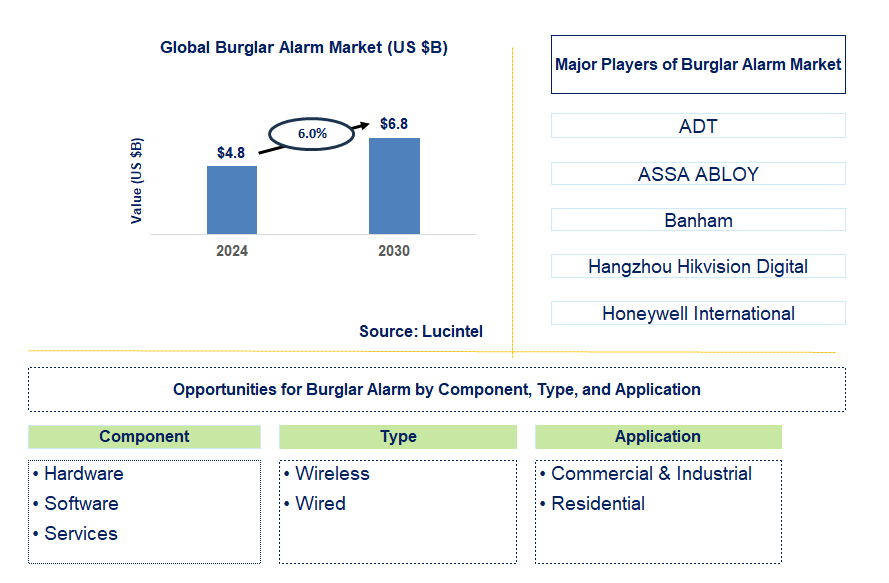
Key data points: The market size in 2030 = $6.8 billion, growth forecast = 6.0% annually for the next 6 years. Scroll below to get more insights. This market report covers trends, opportunities, and forecasts in the global burglar alarm market to 2030 by component (hardware, software, and services), type (wireless and wired), application (commercial & industrial and residential), and region (North America, Europe, Asia Pacific, and the Rest of the World)
We'll send your sample report shortly.
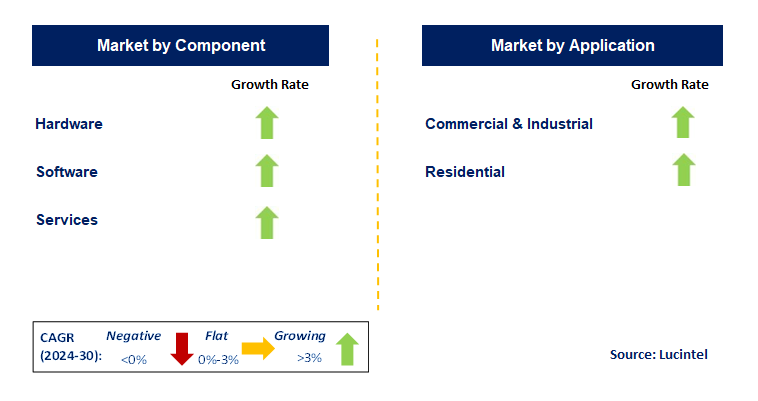
• Lucintel forecasts that, within the component category, hardware will remain largest segment over the forecast period due to high growth of sensors.
• Within the application category, commercial & industrial is expected to witness higher growth due to rising crime rates and growing cases of burglary in the commercial properties.
• In terms of regions, North America will remain the largest over the forecast period due to presence of key players and their expansion through merger and acquisition in the US and Canada. A more than 150-page report is developed to help in your business decisions.
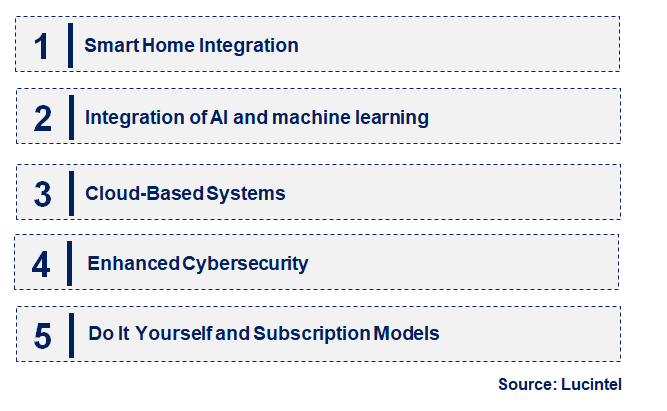
• Smart Home Integration: There is an increasing trend of burglar alarms being integrated with smart home systems. This trend allows for the control and monitoring of security systems remotely through smartphones and other smart devices, providing convenience and flexibility in managing security in homes.
• Integration of AI and Machine Learning: The use of AI and machine learning in burglar alarms is becoming more popular. These technologies help better prevent and respond to threats by identifying and analyzing patterns of behavior, thus minimizing false alarms and enhancing system intelligence.
• Cloud-Based Systems: Cloud-based burglar alarm systems are gaining popularity due to their advantages, such as remote control of protected areas via the internet. This trend provides more options for users, as it offers greater mobility and more data storage space, ensuring effective supervision and control of security systems.
• Enhanced Cybersecurity: As burglar alarms become more integrated into daily life, there is an increased focus on cybersecurity. Modern encryption and security measures are being incorporated into systems to protect them from cyberattacks and other activities that could compromise user data and the security functions of the systems.
• Do-It-Yourself and Subscription Models: There is growing adoption of do-it-yourself burglar alarms, and subscription-based services are emerging. These models are cost-efficient and flexible, allowing clients to install and manage the systems themselves, with regular support and upgrades available through subscription plans. These trends are reshaping the burglar alarm market by increasing features, enhancing security, and broadening coverage.
• Smart Alarm Systems: Growing concerns over property safety have led to the adoption of smart burglar alarm systems that connect to home automation systems. They provide users with remote control, instant alerts, and communication with other smart devices to improve home security.
• Advanced Detection Technologies: New detection technologies, such as artificial intelligence-based (AI-based) motion prediction sensors and facial recognition, are being incorporated into burglar alarm systems to boost their reliability and effectiveness. These improvements help reduce false alarms and enhance overall security performance.
• Mobile Integration: Mobile application development integrated with burglar alarms allows users to control and monitor their systems while on the go. This integration enhances safety and increases user satisfaction, as users are informed of security situations and alerts as they occur.
• Subscription-Based Services: More businesses are focusing on subscription-based strategies. This model ensures that users always have access to the latest security system updates and upgrades.
• Increased Measures on Data Privacy: With the increased use of burglar alarm systems, there has been a stronger focus on protecting data privacy. These advancements are aimed at safeguarding consumer and organizational data from external threats, in compliance with data protection laws. These advancements are transforming the burglar alarm landscape, driving it toward greater sophistication, user engagement, and enhanced security.
• Smart Home Integration: The further development of burglar alarm systems integrated into smart home systems represents a significant opportunity for market growth. Companies can enhance the convenience of the market for consumers who want full automation of their homes.
• AI and Machine Learning Applications: The use of AI and machine learning in threat detection and response capabilities can help create smarter security systems. This technology has the potential to enhance user experience and increase the precision of alarm systems, thus supporting market expansion.
• Cloud-Based Solutions: The trend towards cloud-hosted burglar alarm systems creates the potential to improve remote monitoring and data management. Companies can exploit this trend by offering flexible and scalable solutions that provide users with better productivity and control.
• DIY and Flexible Solutions: The increasing demand for self-installed burglar alarm systems creates opportunities for the market to deliver easy-to-use installation devices to consumers. Offering a variety of solutions will help attract a wider clientele by giving them versatile and affordable options.
• Enhanced Cybersecurity Measures: The growing concern over cybersecurity threats can be addressed by funding advanced technology in burglar alarm systems. The ability to offer well-developed safety features will continually motivate users to purchase devices useful for any security-related system. These growth opportunities are driving the burglar alarm market by improving product and service offerings, increasing market presence, and fulfilling changing security requirements.
• Technological Advancements: Technological advancements in alarm systems, such as smarter systems and artificial intelligence, stimulate the market by providing additional functionalities and enhanced security. These advancements help attract a customer base that values these enhanced security features.
• Increased Awareness of Home Security: Demand for burglar alarms is influenced by the increasing safety and security concerns among people. There is a growing awareness of crimes and the importance of protecting against them, which drives the market.
• Integration with Smart Home Systems: There are added benefits from the increased integration of burglar alarms with smart home systems. By offering better products, this trend increases consumers' interest in the market and encourages growth.
• Growth of Subscription-Based Models: Subscription-based services offered by subscription businesses make it easier for consumers to enjoy constant improvements in support. This model promotes market growth by providing affordable options for consumers.
• Regulatory Compliance: Regulations requiring data protection and security have led to the incorporation of better technologies and various cybersecurity measures. To gain and maintain consumer confidence, regulatory requirements must be adhered to. Challenges in the burglar alarm market are:
• High Initial Costs: Some consumers are discouraged by the expenses associated with purchasing and installing advanced burglar alarm systems. High upfront investments could hinder market penetration and adoption.
• Technical Complexity: Integrating and operating advanced systems can be complicated for certain users. Developing intuitive interfaces and providing adequate support are necessary to resolve this issue.
• Cybersecurity Risks: Although burglar alarms are growing in connectivity, their susceptibility to cyber-attacks also increases. Companies must implement reliable security solutions to mitigate the risks associated with these threats and systems. As a whole, these drivers and challenges impact how the market for burglar alarms develops, including technology development, consumer adoption, and market dynamics.
• ADT
• ASSA ABLOY
• Banham
• Hangzhou Hikvision Digital Technology
• Honeywell International
• Inovonics Wireless
• Johnson Controls
• Hardware
• Software
• Services
• Wireless
• Wired
• Commercial & Industrial
• Residential
• North America
• Europe
• Asia Pacific
• The Rest of the World
• United States: Remarkable changes are occurring in the U.S. market with the introduction of smart burglar alarms that integrate with home automation systems and can be monitored from mobile phones. Innovations include AI-based systems that detect intrusions and enhanced network protection features. The market has moved from printed brochures to subscription-based models, where clients pay a fee to receive regular updates and maintenance.
• China: A key reason for the growth in the burglar alarm market in China is the high rate of urbanization and the changing perception of home security among the population. The country is seeing the development of IoT-based alarm systems that connect to other smart devices and systems. Additionally, domestic firms are offering low-cost options with real-time warning systems and video or still image capturing capabilities.
• Germany: Germany has been focusing on new developments, such as computerized alarm systems with intrusion prevention and advanced encryption. Recent innovations include systems that integrate with smart home devices and improved apps. Furthermore, there is a strong demand for compliance with the strict data protection laws enforced in the EU.
• India: The burglar alarm market in India is expanding as safety concerns for residential and commercial establishments continue to grow. Developments include the installation of affordable and user-friendly monitoring systems, as well as the extension of services like mobile notifications and video surveillance. Government programs are also supporting the proliferation of the security industry, further driving market growth.
• Japan: According to reports, the Japanese market places emphasis on developing small but efficient burglar monitoring systems. Modern trends include the integration of robotics and AI to enhance security. There is also a notable trend toward the development of seismic-resistant alarm systems, owing to the frequent natural disasters in the country.


• ADT
• ASSA ABLOY
• Banham
• Hangzhou Hikvision Digital Technology
• Honeywell International
• Inovonics Wireless
• Johnson Controls Q6. Which burglar alarm market segment will be the largest in future? Answer: Lucintel forecasts that hardware will remain largest segment over the forecast period due to high growth of sensors. Q7. In burglar alarm market, which region is expected to be the largest in next 6 years? Answer: North America will remain the largest over the forecast period due to presence of key players and their expansion through merger and acquisition in the US and Canada. Q.8 Do we receive customization in this report? Answer: Yes, Lucintel provides 10% customization without any additional cost.


Choose a license that fits your team. Instant PDF delivery.
Prices exclude taxes. Instant delivery. Custom licensing available on request.
Market Report · July 29, 2026
Market Report · July 20, 2026
Market Report · July 20, 2026
Trusted partner for strategic intelligence and business growth


Receive a complimentary market analysis tailored to your industry. Our analysts will identify key growth opportunities and competitive dynamics specific to your business.

Market size, growth rate, and key trend analysis for your specific sector.

Top competitor positioning and market share analysis.

Strategic recommendations backed by data-driven insights.
Get curated market intelligence and competitive moves straight to your inbox.
By subscribing, you agree to receive our monthly insights. Unsubscribe anytime.
Receive a complimentary market analysis tailored to your industry. Our analysts will identify key growth opportunities and competitive dynamics specific to your business.
Market size, growth rate, and key trend analysis for your specific sector.
Top competitor positioning and market share analysis.
Strategic recommendations backed by data-driven insights.
Get curated market intelligence, emerging trends, and competitive moves straight to your inbox each month.
By subscribing, you agree to receive our monthly insights. Unsubscribe anytime.
We'll send your sample report shortly.