
Market Report · May 18, 2026

This market report covers trends, opportunities, and forecasts in the global bulk acoustic wave devices market to 2031 by technology (filters, oscillators, resonators, transducers, and others), application (communication, instrumentation, radar, smart city, and others), and region (North America, Europe, Asia Pacific, and the Rest of the World)
We'll send your sample report shortly.
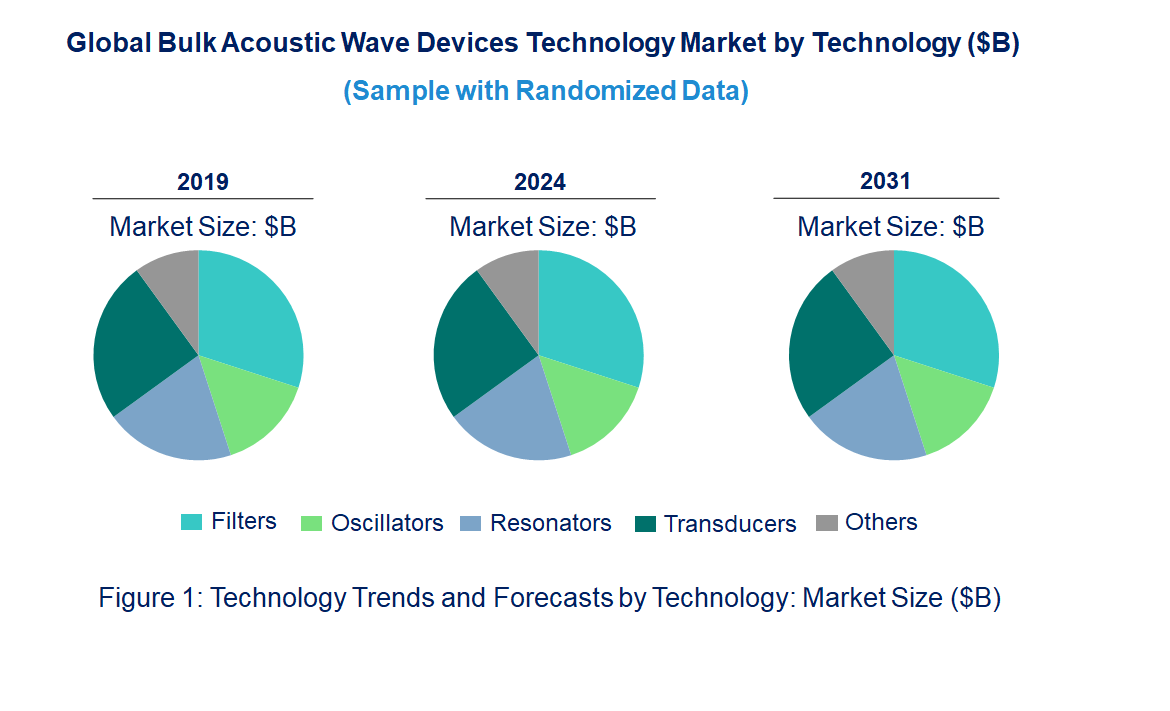
![Bulk Acoustic Wave Devices Market Trend and Forecast by Application [Value from 2019 to 2031]:](https://lucintel.com/images/Bulk-Acoustic-Wave-Devices-Technology-Market-Segment.png "Bulk Acoustic Wave Devices Market Trend and Forecast by Application [Value from 2019 to 2031]:")
• Miniaturization and Integration with AI Systems: There is a developing trend toward miniaturizing BAW devices, which can be integrated into the smaller, more compact structures of AI systems. In this way, highly efficient sensors and communication devices find their application in IoT, autonomous systems, and edge computing. The miniaturized devices have better performance within a smaller footprint, becoming critical for mobile and portable applications of AI.
• Multi-Mode BAW Devices advancements: Multi-mode BAW devices that integrate different frequency modes to increase performance are now gaining ground. These devices can help AI systems perform more complex tasks as they can handle a wider range of applications-from high-frequency communication to very sensitive environmental sensing. This advancement boosts the versatility of BAW devices in AI domains, including smart cities and industrial IoT.
• Integration with 5G and Wireless Communication: BAW devices are becoming part of the 5G infrastructure and wireless communication technologies. High-frequency signals can be managed by BAW devices with minimal power consumption, which makes them a good fit for the next generation of networks. The increasing demand for AI-driven technologies that require faster data processing and more efficient communication has given a crucial role to BAW devices in enhancing the performance of 5G, particularly in AI-based applications like real-time data analysis and autonomous vehicles.
• Enhanced Sensitivity for AI-Driven Sensors: BAW devices are being developed to provide higher sensitivity and precision, making them useful for AI-driven sensor applications. Such advanced sensors are crucial for real-time data collection, enhancing AI models based on accurate and instantaneous information, such as health diagnostics, autonomous driving, and environmental monitoring. This sensitivity extends the application of BAW devices in AI-based systems that demand high-precision data acquisition.
• Environmental Sustainability and Energy Efficiency Enhancements: As energy consumption becomes a pressing issue in applications of AI, BAW devices are being developed toward much more energy-efficient designs. These devices are nowadays being developed for lower power consumption, which is critical in mobile AI systems and IoT devices with long-life batteries. With the idea of sustainability and energy efficiency, BAW technology finds its way into AI systems to be adopted to balance performance and power. These new trends are revolutionizing the Bulk Acoustic Wave Devices technology in the AI market by making the devices more versatile, energy-efficient, and precise. Integration of BAW devices into AI systems, especially in wireless communication, 5G, and sensor technologies, is making it possible for more advanced and responsive AI applications. The role of BAW devices in improving connectivity, sensing, and processing will be crucial in further developing the industry as AI evolves.
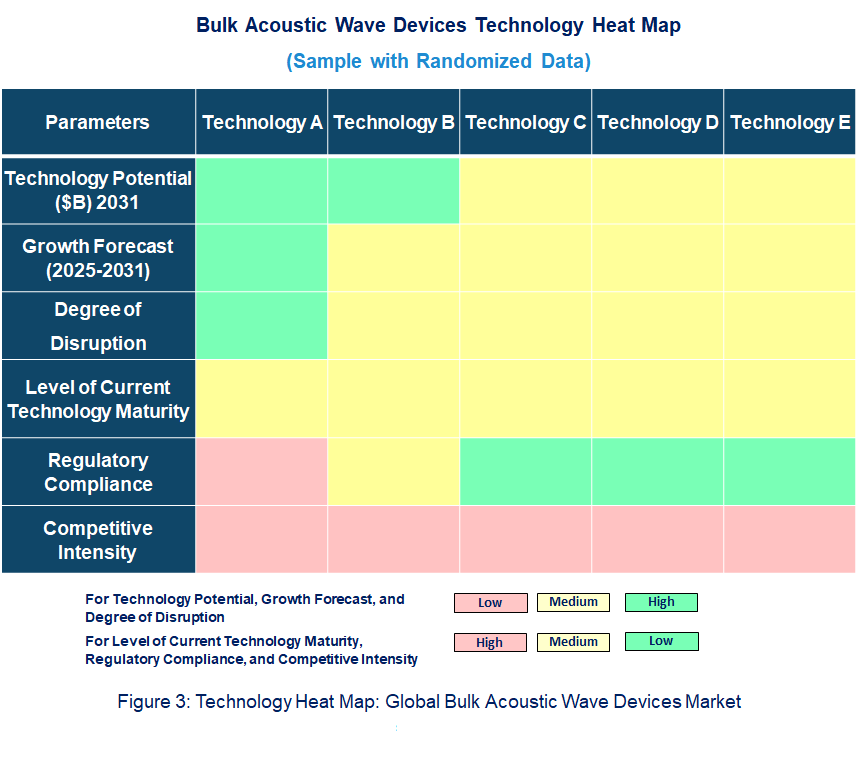
• Technology Potential: The potential of BAW devices in AI is immense. Their ability to handle high-frequency signals with low power consumption positions them as ideal components for advanced AI systems. BAW devices enable high-speed data transmission, precise sensing, and complex signal processing, which are necessary for AI-driven applications such as autonomous vehicles, real-time analytics, and edge computing. Their miniaturization further supports the growing demand for compact and efficient AI hardware.
• Degree of Disruption: BAW devices carry a high degree of disruption. They allow for higher performance within the communication systems, sensors, and data processing components. Critical to AI applications, this will be the backbone to which AI will continue to require faster, more efficient, and more accurate systems. BAW devices will revolutionize industries ranging from healthcare to smart cities as they improve the speed, reliability, and accuracy of AI systems.
• Technology Maturity: The technology maturity of BAW devices is advancing rapidly. Though the technology is still developing, the current developments have brought it to a point of reliability in wireless communication and sensing applications. Further advancement is expected to improve their integration into AI hardware.
• Regulatory Compliance terms of regulatory compliance, BAW device manufacturing will be subject to applicable electromagnetic interference requirements, environmental safety, and material usage. The manufacturing processes have to comply with global standards to ensure safe and sustainable production processes, which is critical because the technology is increasingly being applied in critical AI applications.
• Taiyo Yuden: Taiyo Yuden has innovatively developed BAW device technology by focusing on increasing the miniaturization of the parts, which allows more components to be integrated into the miniaturized and compact products. Their new BAW filters are crucial for the use of 5G communication systems, providing efficiency with AI-driven communication technologies with overall system performance and reducing the amount of power consumption.
• Tai Saw Technology: It has developed high-frequency BAW devices that show potential for higher-performance operation in next-generation wireless communications, including 5G and IoT. Their innovation of reducing the size while maintaining high performance is particularly impactful for AI-powered mobile devices as it enables more efficient processing of real-time data.
• Skyworks Solution: Skyworks Solutions has launched advanced BAW filters that are essential for AI-driven networks in terms of fast data transmission. These latest designs emphasize better power handling, allowing communication faster, more reliably, with their applications in AI: primarily within autonomous systems and real-time analytics.
• Infineon Technologies: Infineon Technologies makes advances on BAW device performance through its integration with other semiconductor technologies. As their improvements are towards minimum energy consumption and increasing thermal management, these improvements are essential in applications within AI or IoT, which necessitate constantly working devices at the top of their capabilities.
• TDK: TDK has been focused on improving the miniaturization and sensitivity of its BAW devices. Their innovations target the improvement of BAW filters and sensors, which are critical for AI applications like speech recognition, environmental sensing, and data transmission in mobile devices.
• Murata Manufacturing: Murata Manufacturing Co. released high-frequency BAW filters for wireless communication applications, offering superior performance, especially in AI-driven systems like 5G smartphones and connected devices. Ongoing improvement in filter efficiency and reduction in noise enhance the processing of real-time data in AI applications.
• API Technologies: API Technologies has been focusing on the integration of BAW technology into precision applications such as medical devices and defense systems, where real-time data acquisition and processing are critical. Their innovations in high-performance BAW devices are enabling AI applications in fields that require ultra-high accuracy and reliability.
• Honeywell International: Honeywell has created BAW-based sensors, which are being used for industrial AI-based systems. Their works lie in increasing the sensitivity of the sensor and, of course, accuracy so it may be used within applications involving predictive maintenance, environment monitoring, or automation and, as a result, with AI-based control.
• Kyocera: Kyocera has improved BAW filter technology significantly by focusing on high-frequency operation and miniaturization for AI applications. These innovations are really useful for making more compact and efficient communication systems within AI-based IoT devices, with enhanced system performance.
• Teledyne Microwave Solutions: Teledyne Microwave Solutions has introduced new BAW devices aimed at improving signal processing in high-frequency communications, including AI-driven wireless technologies. Their advancements focus on improving the performance of BAW filters and resonators, contributing to the development of faster, more efficient AI systems in telecommunications and aerospace. These recent developments in BAW device technology from key players are enabling next-generation AI-driven communication, sensing, and signal processing systems. By improving performance, miniaturization, and energy efficiency, they’re helping shape the future of AI applications in telecommunications, IoT, healthcare, and more.
• Greater Demand for 5G and Next-Generation Wireless Networks: Because of the rapid deployment of 5G networks, growth in high-performance BAW devices is driven. These allow for speedier as well as more reliable data transmission that future AI applications like autonomous vehicles and smart cities require.
• Miniaturization of AI Devices: As AI applications demand smaller, more compact devices, BAW devices are evolving to meet these demands. Their ability to support high-frequency functions in a small form factor makes them ideal for AI-powered mobile devices, wearables, and IoT systems, enabling more efficient and responsive AI applications.
• Growth of IoT and Edge Computing: The Internet of Things and edge computing are further required to increase the number of BAW devices. The advancement of these devices can be used in sensors and communication systems to enable data analysis edge of the network and thus reduce latency and improve AI system efficiency, relying on real-time analytics.
• Technological Advancements in BAW Filters and Sensors: Recent developments in BAW filters and sensors have greatly improved their efficiency, sensitivity, and power consumption. This progress supports AI applications across industries like healthcare, automotive, and environmental monitoring, where accurate, real-time data collection and processing are critical. Challenges
• Focus on Energy Efficiency and Sustainability: With the increasing proliferation of AI systems, energy consumption and environmental impact are emerging as significant concerns. BAW devices, with their low power consumption and efficient design, are well-positioned to meet the growing demand for sustainable, energy-efficient components, especially in AI-driven IoT and edge applications. The growing demand for faster communication networks, the need for smaller and more efficient devices, and the expansion of IoT and edge computing are significantly driving the market for Bulk Acoustic Wave devices in AI. These opportunities are enabling BAW devices to play a key role in the development of high-performance AI systems, contributing to faster, more efficient, and sustainable AI technologies across various industries. However, companies must navigate challenges related to technology integration and regulatory compliance to fully leverage these growth opportunities.
• Taiyo Yuden
• Tai Saw Technology
• Skyworks Solutions
• Infineon Technologies
• TDK
• Murata Manufacturing
• Technology Readiness and Key Applications: Filters, oscillators, resonators, and transducers are very mature technologies and are widely used in communication systems, sensors, and AI devices. Filters, especially BAW and SAW filters, are extensively used in 5G networks for signal processing and communication clarity. Oscillators are at the heart of providing stable frequencies in wireless communications and AI-driven hardware. Resonators enable accurate timing functions, which are critical for autonomous systems and IoT. Transducers are critical for converting energy or signals in sensors, which are a must for AI applications in robotics and healthcare monitoring. These technologies are foundational to high-performance, low-latency AI applications, where real-time processing is critical.
• Competitive Intensity and Regulatory Compliance: The competitive intensity in bulik acoustic wave devices the development of filters, oscillators, resonators, transducers, and other technologies is very high, with a large number of players vying to innovate and capture market share. Companies must constantly improve performance, reduce power consumption, and integrate these technologies into next-generation systems. Regulatory compliance is critical in ensuring that these technologies meet safety standards, environmental regulations, and telecommunications requirements. For instance, the technologies involved in wireless communication have to align with the spectrum regulations. Transducers and resonators shall also comply with environmental standards. Moreover, data privacy and cybersecurity standards should also be followed in AI-based applications.
• Disruption Potential of Filters, Oscillators, Resonators, Transducers, and Others: Filters, oscillators, resonators, and transducers are all disruptive technologies with wide-ranging applications in the areas of communications, sensors, and AI systems. Filters, for instance, have allowed for precision signal processing, which is crucial in wireless communications. Oscillators and resonators have also been important in high-frequency applications that allow for faster, more reliable AI processing and sensor networks. Transducers play an important role in converting signals to data input and output, which improves AI sensor functionality. Technologies like MEMS devices are further miniaturizing the world, leading to more compact and energy-efficient AI applications. Such innovations are opening up new opportunities in autonomous vehicles, healthcare diagnostics, and 5G, thus transforming industries by enhancing speed, reliability, and integration.
• Filters
• Oscillators
• Resonators
• Transducers
• Others
• Communication
• Instrumentation
• Radar
• Smart City
• Others
• North America
• Europe
• Asia Pacific
• The Rest of the World
• Latest Developments and Innovations in the Bulk Acoustic Wave Devices Technologies
• Companies / Ecosystems
• Strategic Opportunities by Technology Type


Choose a license that fits your team. Instant PDF delivery.
Prices exclude taxes. Instant delivery. Custom licensing available on request.
Market Report · May 18, 2026
Market Report · May 18, 2026
Market Report · May 18, 2026
Trusted partner for strategic intelligence and business growth


Receive a complimentary market analysis tailored to your industry. Our analysts will identify key growth opportunities and competitive dynamics specific to your business.

Market size, growth rate, and key trend analysis for your specific sector.

Top competitor positioning and market share analysis.

Strategic recommendations backed by data-driven insights.
Get curated market intelligence and competitive moves straight to your inbox.
By subscribing, you agree to receive our monthly insights. Unsubscribe anytime.
Receive a complimentary market analysis tailored to your industry. Our analysts will identify key growth opportunities and competitive dynamics specific to your business.
Market size, growth rate, and key trend analysis for your specific sector.
Top competitor positioning and market share analysis.
Strategic recommendations backed by data-driven insights.
Get curated market intelligence, emerging trends, and competitive moves straight to your inbox each month.
By subscribing, you agree to receive our monthly insights. Unsubscribe anytime.
We'll send your sample report shortly.