
Report Feature
Breath Analyzer Market Trends and Forecast
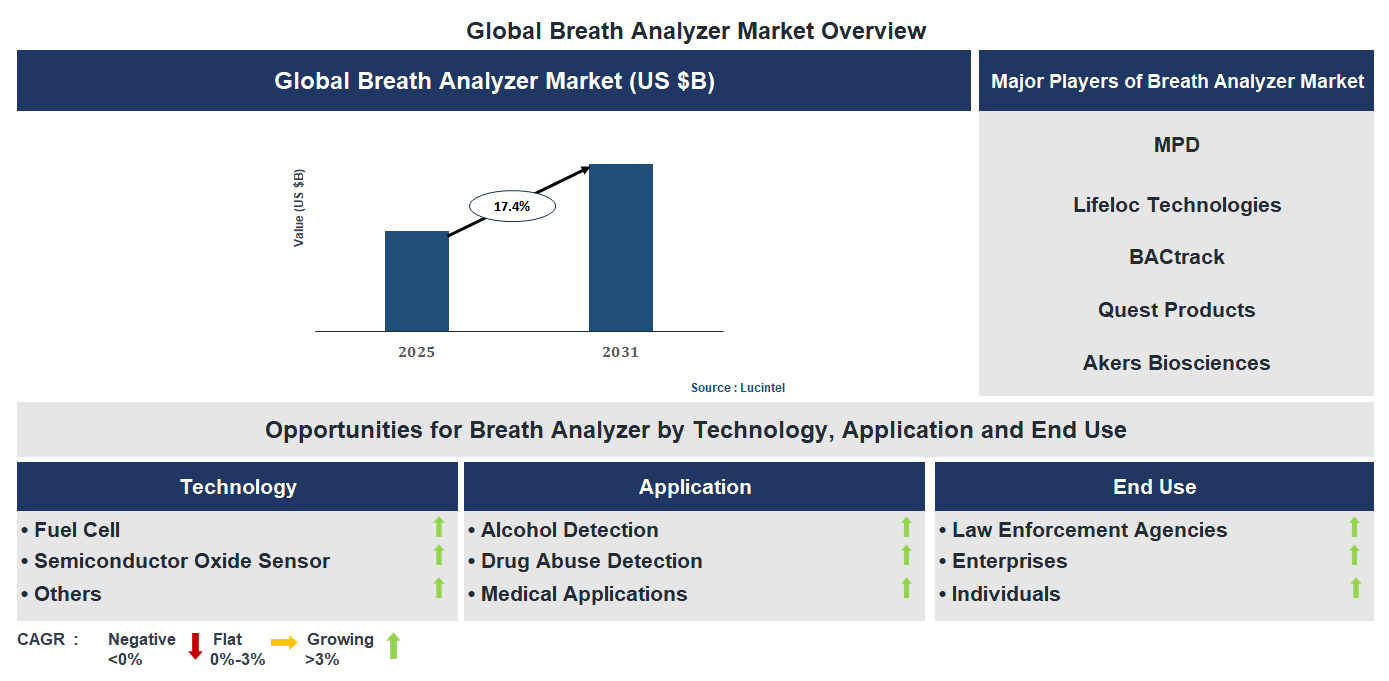
The future of the global breath analyzer market looks promising with opportunities in the law enforcement agency, enterprise, and individual markets. The global breath analyzer market is expected to grow with a CAGR of 17.4% from 2025 to 2031. The major drivers for this market are the increasing focus on alcohol testing, the rising demand for non-invasive diagnostic tools, and the growing adoption of breath-based disease detection.• Lucintel forecasts that, within the technology category, semiconductor oxide sensor is expected to witness higher growth over the forecast period.
• Within the end use category, law enforcement agency is expected to witness the highest growth.
• In terms of region, APAC is expected to witness the highest growth over the forecast period. Gain valuable insights for your business decisions with our comprehensive 150+ page report. Sample figures with some insights are shown below.
Emerging Trends in the Breath Analyzer Market
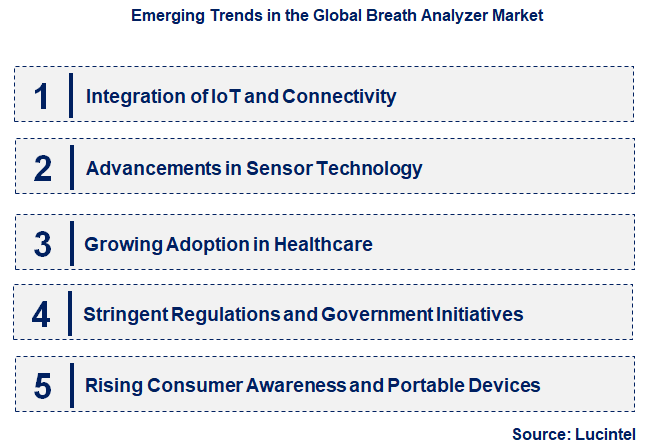
The breath analyzer market is experiencing rapid growth driven by technological advancements, increasing health awareness, and regulatory changes. As industries and consumers prioritize health monitoring and safety, innovative solutions are emerging to meet these demands. The market is also influenced by the rising prevalence of alcohol-related incidents and stricter government regulations. These factors are fostering the development of more accurate, portable, and user-friendly breath analyzers. The following key trends highlight the evolving landscape of this market, illustrating how technological, regulatory, and consumer preferences are shaping its future trajectory.• Integration of IoT and Connectivity: Breath analyzers are increasingly incorporating Internet of Things (IoT) technology, enabling real-time data transmission and remote monitoring. This connectivity enhances user convenience and allows for better data management, especially in healthcare and law enforcement sectors. IoT-enabled devices can sync with smartphones and cloud platforms, providing instant results and historical data analysis. This trend improves accuracy, facilitates early detection of health issues, and supports personalized health management, thereby expanding the market’s scope and usability.
• Advancements in Sensor Technology: The development of more sensitive and selective sensors is a significant trend. Innovations such as nanomaterial-based sensors and advanced spectroscopy techniques improve detection accuracy for alcohol and other substances. These technological improvements reduce false positives and negatives, making breath analyzers more reliable for law enforcement, medical diagnostics, and workplace safety. Enhanced sensor technology also allows for miniaturization, leading to portable devices that are easy to use in various settings, thus broadening market applications.
• Growing Adoption in Healthcare: The healthcare sector is increasingly adopting breath analyzers for non-invasive diagnostics, including monitoring respiratory conditions and detecting biomarkers for diseases like diabetes and lung infections. These devices offer quick, painless, and cost-effective alternatives to traditional testing methods. The trend is driven by rising healthcare awareness, technological feasibility, and the need for early diagnosis. As research progresses, breath analyzers are expected to become integral tools in personalized medicine, significantly expanding their market share within healthcare.
• Stringent Regulations and Government Initiatives: Governments worldwide are implementing stricter regulations concerning alcohol consumption and driving safety, which boost demand for breath analyzers. Mandatory breath testing in workplaces and law enforcement agencies is becoming more prevalent. Additionally, regulatory bodies are setting standards for device accuracy and reliability, encouraging innovation and quality improvements. These policies create a stable demand environment and foster market growth, especially in regions with high incidences of alcohol-related accidents, while also promoting technological advancements.
• Rising Consumer Awareness and Portable Devices: Increasing awareness about health and safety is driving demand for personal breath analyzers. Consumers seek portable, easy-to-use devices for self-monitoring alcohol levels and health parameters. The proliferation of smartphones and wearable technology complements this trend, enabling integration with personal health management systems. The market is witnessing a surge in compact, user-friendly devices that cater to individual needs, expanding the consumer base beyond institutional users. This trend is making breath analyzers more accessible, fostering widespread adoption and market expansion. In summary, these emerging trends—ranging from technological innovations to regulatory support and changing consumer preferences—are fundamentally reshaping the breath analyzer market. They are driving increased adoption, improving device accuracy, and expanding applications across healthcare, law enforcement, and personal health management. As these trends continue to evolve, the market is poised for significant growth, innovation, and broader societal impact.
Recent Development in the Breath Analyzer Market
The breath analyzer market has experienced significant growth driven by increasing health awareness, technological advancements, and stringent regulations on alcohol consumption. As governments and health organizations emphasize safety and health monitoring, the demand for accurate and portable breath analyzers has surged. Innovations in sensor technology and integration with digital health platforms are further propelling market expansion. Additionally, rising adoption in law enforcement, healthcare, and personal wellness sectors underscores the markets dynamic nature. These developments reflect a shift towards more accessible, reliable, and multifunctional breath analysis solutions, shaping the future landscape of the industry.• Technological Advancements: Enhanced sensor accuracy and miniaturization have improved device reliability and portability, expanding use cases in personal and professional settings. This has increased consumer confidence and broadened market reach, leading to higher sales and adoption rates.
• Regulatory Enforcement: Stricter laws against drunk driving and alcohol consumption in workplaces have mandated the use of breath analyzers, especially in law enforcement and corporate sectors. This has resulted in increased demand for compliant, high-precision devices, boosting market growth.
• Integration with Digital Platforms: The incorporation of breath analyzers with mobile apps and cloud-based systems has enabled real-time data tracking and remote monitoring. This innovation has improved user engagement, data management, and compliance, opening new revenue streams.
• Healthcare Sector Adoption: Growing use of breath analyzers for early detection of respiratory diseases and alcohol monitoring in clinical settings has expanded the market. This diversification enhances market stability and opens avenues for new product development.
• Market Expansion in Emerging Economies: Rising awareness and government initiatives in developing countries have led to increased adoption of breath analyzers. This expansion has diversified the market, increased competition, and driven overall industry growth. In summary, these developments are significantly impacting the breath analyzer market by increasing product accuracy, expanding application areas, and fostering technological innovation. The market is becoming more competitive and accessible, with growth driven by regulatory, technological, and regional factors. This evolution promises a robust future with diverse opportunities across health, safety, and wellness sectors.
Strategic Growth Opportunities in the Breath Analyzer Market
The breath analyzer market is experiencing rapid growth driven by increasing health awareness, technological advancements, and stringent regulatory standards across various sectors. As applications expand from law enforcement to healthcare and personal wellness, key growth opportunities are emerging. These opportunities are shaping the market landscape by fostering innovation, expanding user base, and enhancing product capabilities. Companies are focusing on developing more accurate, portable, and user-friendly devices to meet diverse needs. The evolving regulatory environment and rising demand for early health diagnostics further propel market expansion. Understanding these growth opportunities is essential for stakeholders aiming to capitalize on emerging trends and secure competitive advantages.• Expansion in Healthcare Diagnostics: The increasing prevalence of respiratory and metabolic diseases drives demand for advanced breath analyzers. These devices enable early detection and monitoring, improving patient outcomes. The integration of AI and IoT enhances diagnostic accuracy and data management, making breath analyzers vital in personalized medicine. This growth opportunity significantly impacts the healthcare sector by facilitating non-invasive, rapid diagnostics, reducing costs, and improving treatment efficiency.
• Adoption in Law Enforcement and Security: Stringent regulations against impaired driving and drug abuse boost demand for portable breath analyzers. These devices offer quick, reliable results for roadside testing, ensuring compliance and safety. Technological improvements, such as wireless connectivity and digital reporting, increase their effectiveness and ease of use. This opportunity enhances law enforcement capabilities, reduces false positives, and promotes public safety, thereby expanding the market’s reach and application scope.
• Growth in Personal Wellness and Fitness: Rising health consciousness fuels demand for personal breath analyzers for alcohol and wellness monitoring. Compact, easy-to-use devices enable consumers to track their health metrics at home, supporting lifestyle choices and preventive care. The integration with smartphones and health apps enhances user engagement. This trend broadens the market by tapping into the consumer wellness segment, encouraging proactive health management and fostering market diversification.
• Technological Innovation and Miniaturization: Advances in sensor technology and miniaturization are creating more portable, accurate, and affordable breath analyzers. These innovations improve device sensitivity, reduce costs, and enable integration into wearable technology. The impact is a broader application spectrum, including remote patient monitoring and telehealth services. This opportunity accelerates market growth by making breath analyzers more accessible and versatile across sectors.
• Regulatory and Policy Developments: Governments and regulatory bodies are implementing stricter standards for alcohol and drug testing, promoting the adoption of breath analyzers. Supportive policies and funding for healthcare diagnostics encourage innovation and deployment. These developments create a favorable environment for market expansion, ensuring compliance and safety. They also stimulate research and development, leading to improved device performance and new application areas. In summary, these growth opportunities are significantly impacting the breath analyzer market by driving innovation, expanding application areas, and increasing adoption across healthcare, law enforcement, personal wellness, and regulatory sectors. This dynamic landscape promises sustained growth and evolving market dynamics, offering substantial benefits for stakeholders and end-users alike.
Breath Analyzer Market Driver and Challenges
The breath analyzer market is influenced by a variety of technological, economic, and regulatory factors that shape its growth trajectory. Advances in sensor technology and data analytics are enhancing device accuracy and usability, encouraging wider adoption. Economic factors such as increasing healthcare costs and the rising prevalence of alcohol-related incidents are driving demand for rapid, reliable testing solutions. Regulatory frameworks and government initiatives aimed at reducing drunk driving and promoting public safety further propel market expansion. However, the market also faces challenges including technological limitations, regulatory hurdles, and market saturation in certain regions. Understanding these drivers and challenges is essential for stakeholders to navigate the evolving landscape effectively. The factors responsible for driving the breath analyzer market include:• Technological Advancements: The development of more sensitive, portable, and user-friendly breath analyzers has significantly boosted market growth. Innovations such as fuel cell sensors and semiconductor sensors improve accuracy and response times, making devices more reliable for law enforcement, healthcare, and personal use. Integration with mobile apps and cloud-based data management enhances user experience and data security. These technological improvements reduce costs and increase accessibility, encouraging widespread adoption across various sectors. As technology continues to evolve, the market is expected to see sustained growth driven by demand for precise, easy-to-use devices.
• Increasing Alcohol Consumption and Drunk Driving Incidents: Rising alcohol consumption globally, coupled with increasing awareness of the dangers of drunk driving, has led governments and organizations to implement stricter laws and campaigns. Breath analyzers are essential tools for law enforcement to enforce legal limits and reduce accidents caused by intoxication. The growing need for quick, non-invasive testing methods in roadside checks and rehabilitation centers is fueling demand. This trend is particularly prominent in developing countries where alcohol-related accidents are on the rise, creating a substantial market opportunity for manufacturers of breath analysis devices.
• Stringent Regulatory Policies and Government Initiatives: Governments worldwide are enacting strict regulations to curb drunk driving and promote public safety. Mandatory breath testing laws, random sobriety checkpoints, and zero-tolerance policies are common in many regions. These regulatory measures necessitate the widespread deployment of breath analyzers in law enforcement and workplace settings. Additionally, healthcare regulations requiring alcohol monitoring for certain patient groups are expanding the market. Such policies not only increase demand but also encourage technological innovation to meet compliance standards, thereby supporting market growth.
• Growing Healthcare and Wellness Awareness: Increasing awareness about health and wellness, along with the rising prevalence of alcohol-related health issues, is driving demand for breath analyzers in healthcare settings. These devices are used for monitoring alcohol levels in patients undergoing treatment for alcohol dependence or in clinical research. The convenience and non-invasive nature of breath analysis make it an attractive option for regular health assessments. As healthcare providers focus more on preventive care and personalized treatment, the market for breath analyzers is expected to expand, especially in regions with growing healthcare infrastructure.
• Expansion of the Personal Use Segment: The rising popularity of personal health monitoring devices has extended into alcohol testing, with consumers seeking portable breath analyzers for self-assessment. This trend is driven by increased health consciousness and legal requirements for individuals in certain professions. The affordability and ease of use of portable devices make them attractive for personal use, fueling market growth. Manufacturers are developing compact, smartphone-compatible analyzers to meet this demand. The expansion of this segment broadens the market beyond institutional applications, offering significant growth opportunities. The challenges facing this breath analyzer market include:
• Technological Limitations and Accuracy Concerns: Despite advancements, breath analyzers still face issues related to sensor sensitivity, calibration, and environmental factors affecting accuracy. Variability in device performance can lead to false positives or negatives, undermining trust among users and law enforcement agencies. Ensuring consistent, reliable results across different conditions remains a challenge, requiring ongoing research and development. Overcoming these technological limitations is crucial for market expansion, especially in critical applications like legal enforcement and healthcare, where accuracy is paramount.
• Regulatory and Legal Barriers: The breath analyzer market is subject to complex regulatory frameworks that vary across regions. Obtaining approvals and certifications can be time-consuming and costly, delaying product launches. Additionally, legal restrictions on device use and data privacy concerns pose hurdles for manufacturers. Changes in regulations or standards can also impact existing products, necessitating costly modifications. Navigating these regulatory landscapes requires significant resources and expertise, which can hinder market growth, especially for smaller players.
• Market Saturation and Competition: In mature markets, high competition among established players leads to market saturation, making it difficult for new entrants to gain market share. Price wars and commoditization of basic devices can reduce profit margins. Additionally, rapid technological obsolescence forces companies to continuously innovate, increasing R&D costs. Differentiating products in a crowded marketplace is challenging, and the presence of counterfeit or substandard devices can undermine market integrity. These factors collectively pose significant barriers to sustained growth and innovation. In summary, the breath analyzer market is driven by technological innovations, increasing alcohol-related safety concerns, supportive regulations, healthcare awareness, and expanding personal use. However, technological challenges, regulatory complexities, and market saturation present notable hurdles. The overall impact of these drivers and challenges creates a dynamic environment where continuous innovation and strategic compliance are essential for market players to capitalize on growth opportunities. The markets future will depend on how effectively companies address these issues while leveraging emerging trends.
List of Breath Analyzer Companies
Companies in the market compete on the basis of product quality offered. Major players in this market focus on expanding their manufacturing facilities, R&D investments, infrastructural development, and leverage integration opportunities across the value chain. With these strategies breath analyzer companies cater increasing demand, ensure competitive effectiveness, develop innovative products & technologies, reduce production costs, and expand their customer base. Some of the breath analyzer companies profiled in this report include-• MPD
• Lifeloc Technologies
• BACtrack
• Quest Products
• Akers Biosciences
• Intoximeter
• AK GlobalTech Corporation
• Alcohol Countermeasure Systems Corporation
• EnviteC-Wismar
• Lion Laboratories
Breath Analyzer Market by Segment
The study includes a forecast for the global breath analyzer market by technology, application, end use, and region.Breath Analyzer Market by Technology [Value from 2019 to 2031]:
• Fuel Cell
• Semiconductor Oxide Sensor
• Others
Breath Analyzer Market by Application [Value from 2019 to 2031]:
• Alcohol Detection
• Drug Abuse Detection
• Medical Applications
Breath Analyzer Market by End Use [Value from 2019 to 2031]:
• Law Enforcement Agencies
• Enterprises
• Individuals
Breath Analyzer Market by Region [Value from 2019 to 2031]:
• North America
• Europe
• Asia Pacific
• The Rest of the World
Country Wise Outlook for the Breath Analyzer Market
The breath analyzer market has experienced significant growth driven by increasing health awareness, technological advancements, and stricter regulations on alcohol consumption. Countries are adopting innovative solutions to improve accuracy, ease of use, and integration with health monitoring systems. The markets expansion is also fueled by rising concerns over alcohol-related accidents and the need for reliable, portable devices. As governments and consumers prioritize safety and health, the development of advanced breath analyzers is accelerating globally, with notable progress in key markets such as the United States, China, Germany, India, and Japan.• United States: The US market has seen rapid adoption of advanced breath analyzers, driven by stringent DUI laws and increasing health consciousness. Major players are focusing on integrating IoT technology for real-time monitoring and data sharing. Regulatory agencies are promoting the use of breath analyzers in workplaces and law enforcement, boosting demand. Innovations include miniaturized devices with enhanced accuracy and user-friendly interfaces, expanding their application scope beyond law enforcement to personal health management.
• China: China is experiencing robust growth in the breath analyzer market due to rising awareness of alcohol-related health issues and government initiatives to curb drunk driving. Local companies are investing heavily in R&D to develop affordable, portable devices suitable for mass consumption. The market is also benefiting from increasing urbanization and a growing middle class seeking health monitoring solutions. Collaborations with international firms are facilitating technology transfer and product innovation, further expanding market reach.
• Germany: Germanys market is characterized by high-quality, precision devices driven by strict regulatory standards and a focus on safety. The country is a leader in integrating breath analyzers into vehicle safety systems and workplace safety protocols. German companies are emphasizing the development of eco-friendly and energy-efficient devices. The adoption of breath analyzers in healthcare settings for early detection of alcohol-related health issues is also on the rise, supported by strong healthcare infrastructure and regulatory support.
• India: The Indian market is rapidly expanding due to increasing awareness of alcohol abuse and its health impacts. Cost-effective, portable breath analyzers are in high demand among law enforcement and healthcare providers. Government campaigns against drunk driving and alcohol misuse are boosting market growth. Local manufacturers are focusing on affordable devices with basic features, while startups are exploring innovative solutions like smartphone-compatible breath analyzers to reach a broader consumer base.
• Japan: Japans market is driven by technological innovation and a focus on health and safety. The country is developing sophisticated breath analyzers with high accuracy for use in clinical diagnostics and personal health monitoring. Regulatory frameworks support the integration of these devices into healthcare systems. Japan is also exploring the use of breath analyzers in workplace safety and elder care, emphasizing non-invasive, user-friendly designs. The market benefits from Japans strong R&D capabilities and a culture of technological excellence.

Features of the Global Breath Analyzer Market
Market Size Estimates: Breath analyzer market size estimation in terms of value ($B). Trend and Forecast Analysis: Market trends (2019 to 2024) and forecast (2025 to 2031) by various segments and regions. Segmentation Analysis: Breath analyzer market size by technology, application, end use, and region in terms of value ($B). Regional Analysis: Breath analyzer market breakdown by North America, Europe, Asia Pacific, and Rest of the World. Growth Opportunities: Analysis of growth opportunities in different technologies, applications, end uses, and regions for the breath analyzer market. Strategic Analysis: This includes M&A, new product development, and competitive landscape of the breath analyzer market. Analysis of competitive intensity of the industry based on Porter’s Five Forces model.
FAQ
Q1. What is the growth forecast for breath analyzer market? Answer: The global breath analyzer market is expected to grow with a CAGR of 17.4% from 2025 to 2031. Q2. What are the major drivers influencing the growth of the breath analyzer market? Answer: The major drivers for this market are the increasing focus on alcohol testing, the rising demand for non-invasive diagnostic tools, and the growing adoption of breath-based disease detection. Q3. What are the major segments for breath analyzer market? Answer: The future of the breath analyzer market looks promising with opportunities in the law enforcement agency, enterprise, and individual markets. Q4. Who are the key breath analyzer market companies? Answer: Some of the key breath analyzer companies are as follows:• MPD
• Lifeloc Technologies
• BACtrack
• Quest Products
• Akers Biosciences
• Intoximeter
• AK GlobalTech Corporation
• Alcohol Countermeasure Systems Corporation
• EnviteC-Wismar
• Lion Laboratories Q5. Which breath analyzer market segment will be the largest in future? Answer: Lucintel forecasts that, within the technology category, semiconductor oxide sensor is expected to witness higher growth over the forecast period. Q6. In breath analyzer market, which region is expected to be the largest in next 5 years? Answer: In terms of region, APAC is expected to witness the highest growth over the forecast period. Q7. Do we receive customization in this report? Answer: Yes, Lucintel provides 10% customization without any additional cost.
Table of Contents
List of Figures
List of Tables
Methodology
- In-depth interviews of the major players in this market
- Detailed secondary research from competitors’ financial statements and published data
- Extensive searches of published works, market, and database information pertaining to industry news, company press releases, and customer intentions
- A compilation of the experiences, judgments, and insights of Lucintel’s professionals, who have analyzed and tracked this market over the years.


Buy Now
Choose a license that fits your team. Instant PDF delivery.
Prices exclude taxes. Instant delivery. Custom licensing available on request.
Key Questions
- • What are some of the most promising, high-growth opportunities for the breath analyzer market by technology (fuel cell, semiconductor oxide sensor, and others), application (alcohol detection, drug abuse detection, and medical applications), end use (law enforcement agencies, enterprises, and individuals), and region (North America, Europe, Asia Pacific, and the Rest of the World)?
- • Which segments will grow at a faster pace and why?
- • Which region will grow at a faster pace and why?
- • What are the key factors affecting market dynamics? What are the key challenges and business risks in this market?
- • What are the business risks and competitive threats in this market?
- • What are the emerging trends in this market and the reasons behind them?
- • What are some of the changing demands of customers in the market?
- • What are the new developments in the market? Which companies are leading these developments?
- • Who are the major players in this market? What strategic initiatives are key players pursuing for business growth?
- • What are some of the competing products in this market and how big of a threat do they pose for loss of market share by material or product substitution?
- • What M&A activity has occurred in the last 5 years and what has its impact been on the industry? For any questions related to Breath Analyzer Market, Breath Analyzer Market Size, Breath Analyzer Market Growth, Breath Analyzer Market Analysis, Breath Analyzer Market Report, Breath Analyzer Market Share, Breath Analyzer Market Trends, Breath Analyzer Market Forecast, Breath Analyzer Companies, write Lucintel analyst at email: helpdesk@lucintel.com. We will be glad to get back to you soon.


