
Market Report · May 18, 2026

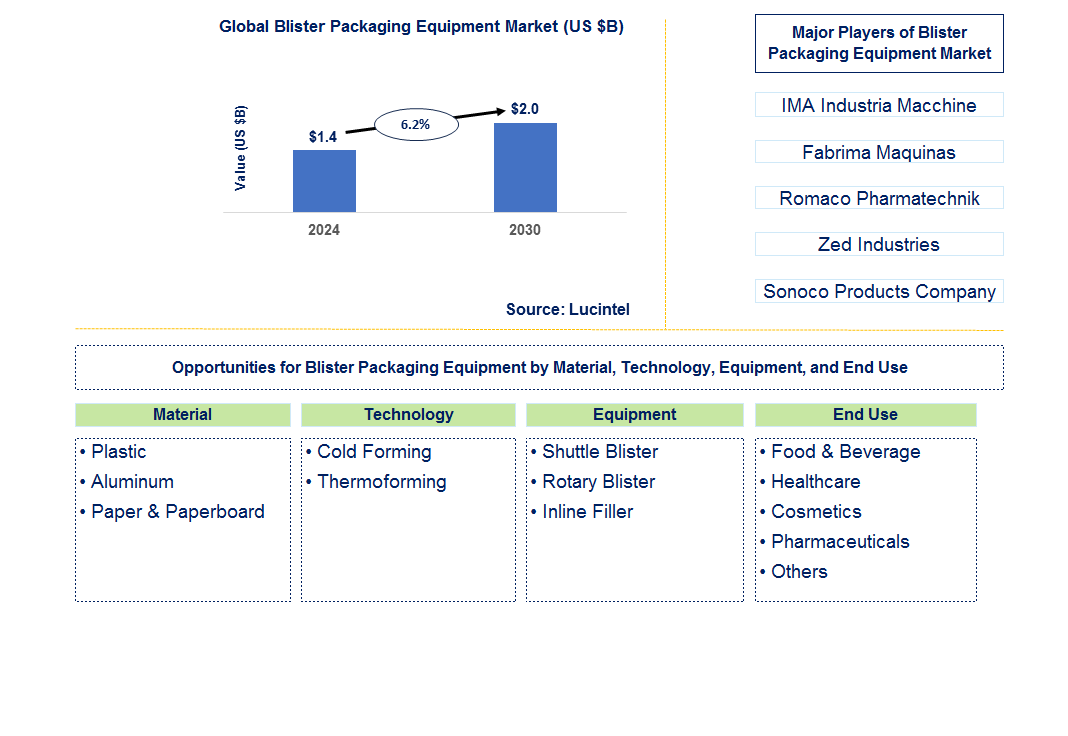
Key data points: The market size in 2030 = $2.0 billion, growth forecast = 6.2% annually for the next 6 years. Scroll below to get more insights. This market report covers trends, opportunities, and forecasts in the global blister packaging equipment market to 2030 by material (plastic, aluminum, and paper & paperboard), technology (cold forming and thermoforming), equipment (shuttle blister, rotary blister, and inline filler), end use (food & beverage, healthcare, cosmetics, pharmaceuticals, and others), and region (North America, Europe, Asia Pacific, and the Rest of the World)
We'll send your sample report shortly.
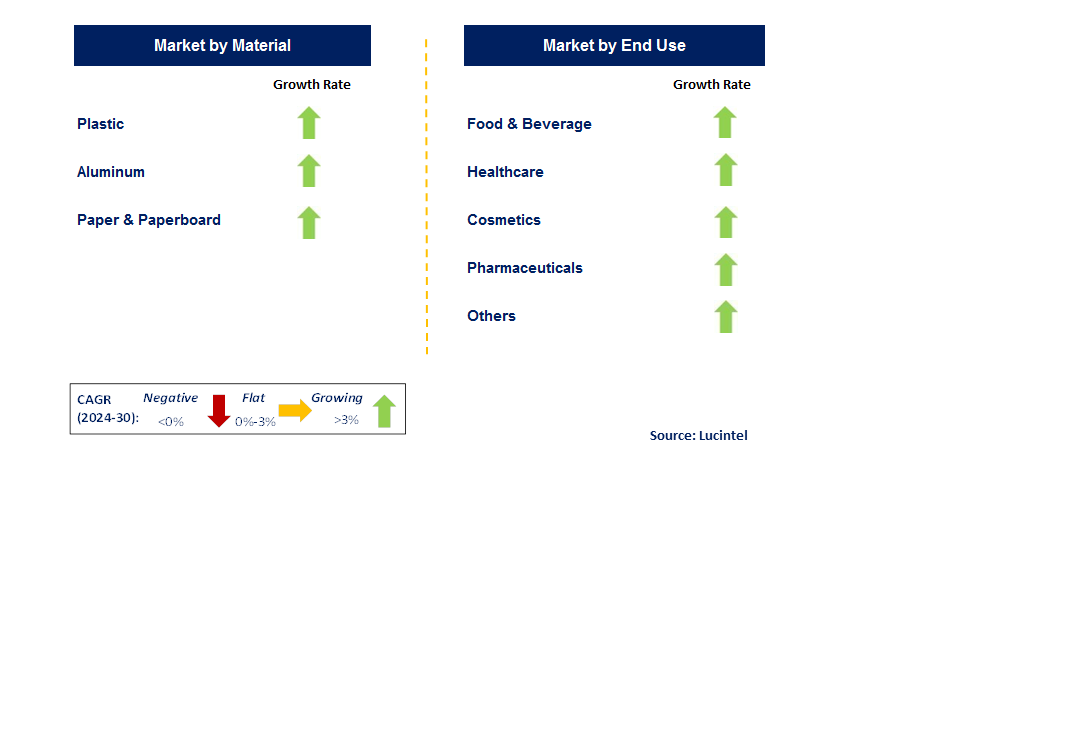
• Lucintel forecasts that, within the material category, plastic will remain the largest segment over the forecast period because it is significantly cheaper compared to alternative materials like aluminum or paperboard, and this translates to lower production costs for manufacturers and competitive pricing for end consumers.
• In terms of regions, North America will remain the largest region over the forecast period due to growing demand for packaged and ready-to-eat meals, as well as increased use of blister packing in plastic bottles. Gain valuable insights for your business decisions with our 150+ page report.
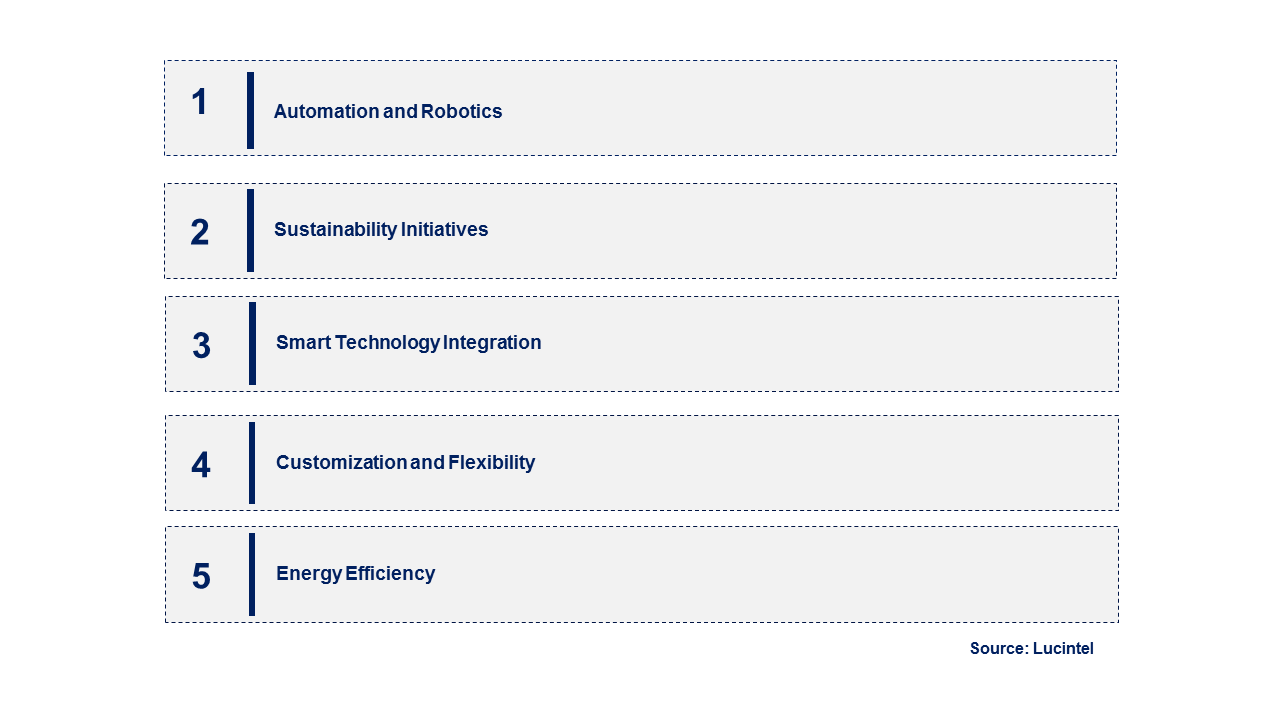
• Automation and Robotics: The integration of automation and robotics in blister packaging equipment enhances efficiency, precision, and consistency. Automated systems reduce manual labor, minimize errors, and speed up production processes, leading to cost savings and improved product quality. This trend reflects a broader move toward Industry 4.0 practices.
• Sustainability Initiatives: There is a growing emphasis on sustainability in blister packaging, with equipment designed to handle recyclable and eco-friendly materials. Manufacturers are investing in technologies that reduce waste and energy consumption, aligning with global environmental goals and meeting consumer demand for greener packaging options.
• Smart Technology Integration: The incorporation of smart technology, such as IoT and AI, into blister packaging equipment improves process monitoring, control, and maintenance. Smart systems offer real-time data and analytics, enabling predictive maintenance and operational efficiency, which enhances overall performance and reliability.
• Customization and Flexibility: There is an increasing demand for customizable and flexible blister packaging solutions. Equipment that can easily adapt to various product sizes and packaging designs caters to diverse consumer needs and market requirements. This trend supports versatility and responsiveness in manufacturing processes.
• Energy Efficiency: Energy-efficient blister packaging equipment is becoming more prevalent, driven by the need to reduce operational costs and environmental impact. Innovations focus on optimizing energy use and incorporating energy-saving technologies, aligning with sustainability goals and improving overall cost-effectiveness. These emerging trends are reshaping the blister packaging equipment market by enhancing automation, sustainability, technology integration, customization, and energy efficiency. They reflect broader industry shifts toward innovation and environmental responsibility, influencing market dynamics and consumer expectations.
• Advanced Automation Systems: The integration of advanced automation systems into blister packaging equipment has significantly improved production efficiency and precision. Automated features reduce labor costs and minimize human error, streamlining operations and increasing output rates. This development enhances overall productivity and competitiveness in the market.
• Smart Packaging Solutions: The adoption of smart packaging solutions, including IoT and AI technologies, has revolutionized blister packaging. These systems offer real-time monitoring, predictive maintenance, and enhanced control over packaging processes. Smart solutions improve operational efficiency and provide valuable data insights for process optimization.
• Sustainable Packaging Technologies: The shift toward sustainable packaging technologies is a major development in the blister packaging market. Innovations include equipment designed to handle recyclable and biodegradable materials, reducing environmental impact and aligning with global sustainability goals. This trend meets consumer demand for eco-friendly packaging solutions.
• High-Speed Production Capabilities: New blister packaging equipment featuring high-speed production capabilities addresses the increasing demand for faster and more efficient manufacturing. Enhanced speed and throughput reduce production times and costs, supporting higher-volume output and meeting the needs of large-scale operations.
• Modular and Flexible Designs: Modular and flexible blister packaging equipment allows for easy adaptation to different product types and packaging requirements. This development offers versatility in manufacturing processes, catering to a wide range of applications and improving overall operational flexibility. These developments are driving innovation and efficiency in the blister packaging equipment market. By focusing on automation, smart technology, sustainability, speed, and flexibility, the industry is responding to evolving market demands and regulatory pressures, shaping the future of packaging solutions.
• Pharmaceutical Applications: The pharmaceutical sector presents significant growth opportunities for blister packaging equipment due to the need for secure, tamper-evident, and compliant packaging. Advanced equipment that supports high precision and high-speed production caters to the stringent requirements of pharmaceutical packaging, driving market growth.
• Healthcare and Medical Devices: The healthcare industry demands blister packaging solutions for medical devices and products that ensure protection and hygiene. Equipment designed for cleanroom environments and compliant with medical standards addresses these needs, presenting growth opportunities in this sector.
• Consumer Goods and Cosmetics: The consumer goods and cosmetics sectors are expanding their use of blister packaging for product differentiation and branding. Equipment that supports customization and complex packaging designs caters to these industries' needs, offering growth potential in consumer-oriented applications.
• Food and Beverage Industry: The food and beverage industry is increasingly adopting blister packaging for portion control and product freshness. Equipment that can handle various food types and comply with safety regulations presents growth opportunities in this segment, driven by consumer demand for convenience and quality.
• E-commerce and Retail: The rise of e-commerce and retail sectors creates demand for blister packaging that ensures product protection during shipping and handling. Equipment designed for efficient packaging and easy integration into logistics processes supports growth in this application, aligning with the expanding online retail market. These strategic growth opportunities highlight the diverse applications of blister packaging equipment across pharmaceuticals, healthcare, consumer goods, food and beverage, and e-commerce. By addressing specific industry needs and leveraging technological advancements, the market is positioned for continued expansion and innovation.
• Technological Advancements: Innovations in technology, such as automation and smart systems, drive market growth by enhancing efficiency, precision, and functionality. Advanced equipment improves production processes and meets modern consumer demands for high-quality packaging solutions.
• Increased Demand for Sustainable Packaging: Growing environmental awareness and regulatory pressures for sustainability drive the adoption of eco-friendly packaging solutions. Equipment that handles recyclable and biodegradable materials supports market growth by aligning with global sustainability goals.
• Rising Consumer Preference for Convenience: The demand for convenient, user-friendly packaging drives the development of blister packaging solutions that offer ease of use and product protection. This trend supports market growth by catering to consumer preferences for practical and accessible packaging.
• Expansion of End-User Industries: Growth in end-user industries such as pharmaceuticals, healthcare, and food and beverage creates increased demand for blister packaging equipment. Expanding sectors drive market growth by requiring efficient and compliant packaging solutions for diverse applications.
• Focus on Operational Efficiency: Companies are investing in equipment that enhances operational efficiency through automation and advanced features. Improved productivity and reduced costs drive market growth by offering competitive advantages and meeting high-volume production needs. Challenges in the blister packaging equipment market are:
• High Equipment Costs: The initial cost of advanced blister packaging equipment can be high, posing a barrier to investment for some companies. Balancing cost with technological benefits is a challenge that affects market accessibility and competitiveness.
• Regulatory Compliance: Adhering to stringent regulatory standards for packaging materials and processes can be challenging. Compliance requires ongoing adjustments and investments, impacting operational costs and market entry, particularly in highly regulated industries.
• Market Saturation and Competition: The blister packaging equipment market is becoming saturated with numerous players and options. Intense competition requires companies to continuously innovate and differentiate their products to maintain market share and meet evolving consumer demands. The major drivers and challenges in the blister packaging equipment market illustrate a complex landscape influenced by technological, economic, and regulatory factors. Addressing these drivers and overcoming challenges is essential for sustained growth and competitiveness in the evolving packaging industry.
• IMA Industria Macchine Automatiche
• Fabrima Maquinas Automatics
• Romaco Pharmatechnik
• Zed Industries
• Sonoco Products Company
• Marchesini Group
• ULMA Packaging
• Gebo Cermex
• Jorgen Machinery
• S. Coop
• Plastic
• Aluminum
• Paper & Paperboard
• Cold Forming
• Thermoforming
• Shuttle Blister
• Rotary Blister
• Inline Filler
• Food & Beverage
• Healthcare
• Cosmetics
• Pharmaceuticals
• Others
• North America
• Europe
• Asia Pacific
• The Rest of the World
• United States: In the U.S., there is a growing focus on automation and efficiency in blister packaging equipment. Recent advancements include the integration of AI and robotics for streamlined operations and enhanced precision. There is also an increasing emphasis on sustainable packaging solutions, with equipment designed to reduce waste and support recyclable materials.
• China: China is witnessing rapid growth in blister packaging technology, driven by its booming manufacturing sector. Recent developments include the adoption of high-speed, high-efficiency machines that cater to the increasing production demands. Additionally, there is a notable shift toward integrating smart technology and IoT capabilities to improve process monitoring and control.
• Germany: Germany's blister packaging equipment market is advancing with a strong emphasis on precision and quality. Innovations include the use of advanced materials and technologies that improve product integrity and extend shelf life. The focus is also on energy-efficient machinery that aligns with Germany’s environmental regulations and sustainability goals.
• India: In India, the blister packaging sector is evolving with a focus on cost-effective and adaptable solutions. Developments include the introduction of modular equipment that can be easily scaled and customized for various applications. Additionally, there is an increasing trend toward local manufacturing and supply chain optimization to reduce costs and improve availability.
• Japan: Japan is seeing innovations in compact and high-performance blister packaging equipment. Developments include advanced automation features and precision engineering that cater to the country’s high standards for quality and efficiency. There is also a growing interest in equipment that supports customization and complex packaging designs, reflecting Japan’s emphasis on technology and aesthetics.


• IMA Industria Macchine Automatiche
• Fabrima Maquinas Automatics
• Romaco Pharmatechnik
• Zed Industries
• Sonoco Products Company
• Marchesini Group
• ULMA Packaging
• Gebo Cermex
• Jorgen Machinery
• S. Coop Q6. Which blister packaging equipment market segment will be the largest in future? Answer: Lucintel forecasts that plastic will remain the largest segment over the forecast period because it is significantly cheaper compared to alternative materials like aluminum or paperboard, and this translates to lower production costs for manufacturers and competitive pricing for end consumers. Q7. In blister packaging equipment market, which region is expected to be the largest in next 5 years? Answer: North America will remain the largest region over the forecast period due to growing demand for packaged and ready-to-eat meals, as well as increased use of blister packing in plastic bottles. Q.8 Do we receive customization in this report? Answer: Yes, Lucintel provides 10% customization without any additional cost.


Choose a license that fits your team. Instant PDF delivery.
Prices exclude taxes. Instant delivery. Custom licensing available on request.
Market Report · May 18, 2026
Market Report · May 18, 2026
Market Report · May 18, 2026
Trusted partner for strategic intelligence and business growth


Receive a complimentary market analysis tailored to your industry. Our analysts will identify key growth opportunities and competitive dynamics specific to your business.

Market size, growth rate, and key trend analysis for your specific sector.

Top competitor positioning and market share analysis.

Strategic recommendations backed by data-driven insights.
Get curated market intelligence and competitive moves straight to your inbox.
By subscribing, you agree to receive our monthly insights. Unsubscribe anytime.
Receive a complimentary market analysis tailored to your industry. Our analysts will identify key growth opportunities and competitive dynamics specific to your business.
Market size, growth rate, and key trend analysis for your specific sector.
Top competitor positioning and market share analysis.
Strategic recommendations backed by data-driven insights.
Get curated market intelligence, emerging trends, and competitive moves straight to your inbox each month.
By subscribing, you agree to receive our monthly insights. Unsubscribe anytime.
We'll send your sample report shortly.