
Report Feature
Bismuth Trends and Forecast
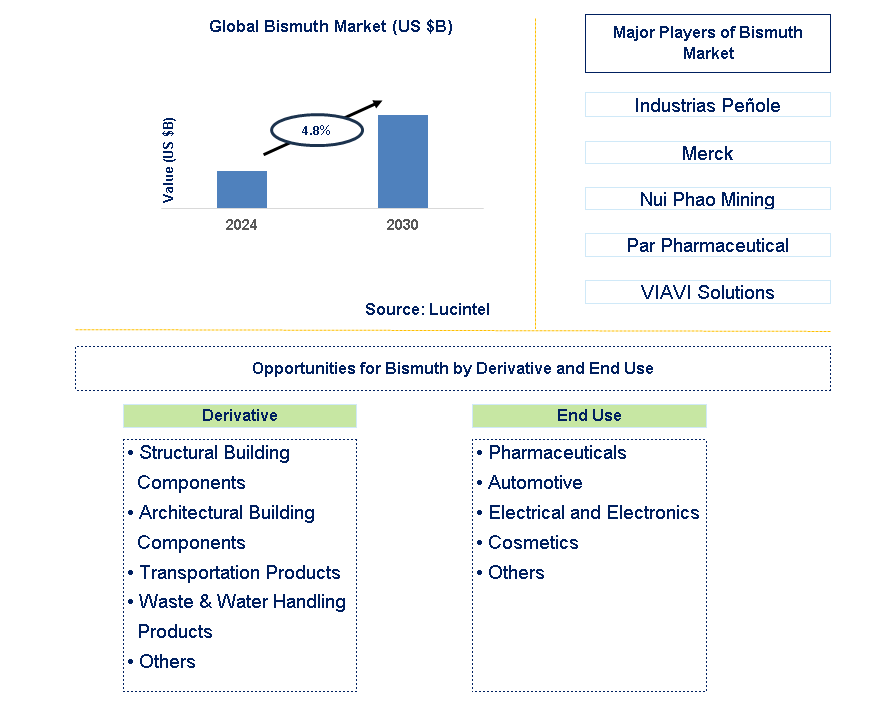
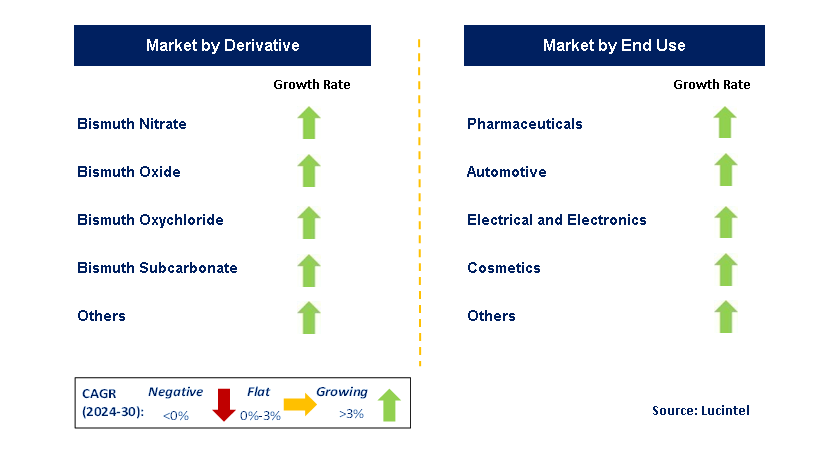
The future of the global bismuth market looks promising, with opportunities in the pharmaceutical, automotive, electrical and electronic, and cosmetic markets. The global bismuth market is expected to grow with a CAGR of 4.8% from 2024 to 2030. The major drivers for this market are the rising demand for non-toxic substances, expanding preference for bismuth-based cosmetics and skincare products, and growing application of this substrate in nanotechnology and renewable energy sectors.• Lucintel forecasts that, within the derivative category, bismuth oxychloride is expected to witness the highest growth over the forecast period due to its diverse applications, such as cosmetics, pharmaceuticals, and catalysts.
• Within the end use category, pharmaceutical is expected to witness the highest growth over the forecast period due to substantial usage of bismuth in this sector given to its well-known gastroprotective qualities in addition to its antimicrobial and anti-cancer qualities.
• In terms of regions, APAC will remain the largest region over the forecast period due to growth in the number of pharmaceutical and cosmetic procedures in the region. Gain valuable insight for your business decisions with our comprehensive 150+ page report.
Emerging Trends in the Bismuth Market
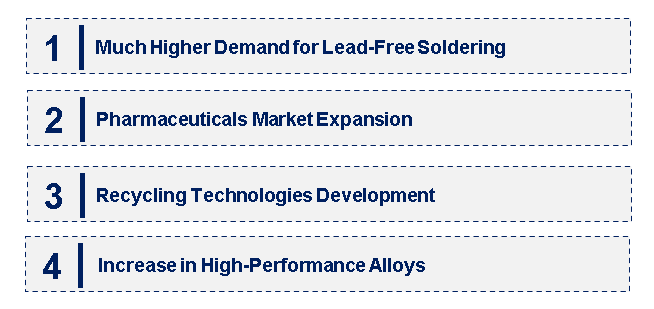
The bismuth market is undergoing change due to evolving technological needs and growing environmental awareness. Traditionally used in medicine and pigments, bismuth is increasingly being utilized in high-tech materials and green technologies. This shift is driven by various factors such as stricter environmental regulations, demand for lead substitutes, and advancements in materials science. The dynamics of the market also depend on geopolitics and the supply-demand balance of base metals, as bismuth is primarily a byproduct. These emerging trends are making the market more innovative and expanding bismuth applications across various sectors.• Growing Need for Lead-Free Substitutes: Bismuth is widely used as a non-toxic substitute for lead in solders, alloys, and pigments. This trend is driven by stricter environmental regulations and growing awareness of the harmful effects of lead. The electronics, automotive, and construction sectors are increasingly adopting bismuth-based alternatives. This shift is essential for producing safer and more environmentally friendly products while reducing pollution and health risks. Demand for bismuth is expected to rise as industries transition to lead-free technology.
• Exponential Growth in Bismuth-Based Medicines and Medical Uses: Bismuth is incorporated into various medicines, including antacids and ulcer treatment drugs. New research is exploring its potential applications in medical imaging and cancer treatment. Due to its low toxicity and biocompatibility, bismuth is considered a promising material for healthcare innovations. Enhanced bismuth-based drugs and imaging reagents will likely see increased use in the healthcare industry, driven by the need for safer and more effective medical treatments.
• Growth in Advanced Materials and Alloys: Bismuth is being utilized in advanced materials such as high-temperature superconductors and thermoelectric materials. Its low thermal conductivity and high electrical resistance make it valuable for specialized alloys. The energy and electronics industries are driving this growth. New bismuth-based materials and alloys will enhance performance across various technologies, highlighting bismuth's importance in cutting-edge industries.
• Emphasis on Sustainable and Responsible Sourcing: With growing environmental awareness, there is a stronger focus on sustainable and responsible bismuth sourcing. This includes minimizing the environmental impact of mining and refining processes. Companies are adopting greener practices and diversifying their supply chains. Consumer demand and regulatory requirements are pushing for sustainably sourced bismuth. This trend is crucial for ensuring the long-term sustainability of the bismuth market.
• Technological Improvements in Bismuth Processing: Advances in bismuth processing and refining technology are improving efficiency and reducing costs. These advancements include new methods for extracting and refining bismuth from ores and recycled materials. More efficient processing techniques will enhance bismuth's competitiveness and availability. This development is essential to meet the rising demand for bismuth across various applications. These trends are reshaping the bismuth market by driving innovation, expanding applications, and promoting sustainability. The shift towards lead-free alternatives, growth in medical applications, increased use in advanced materials, focus on sustainable sourcing, and technological advancements in processing are collectively transforming the market. As industries continue to prioritize safety and sustainability, demand for bismuth will rise, further driving growth and development in this evolving market.
Recent Developments in the Bismuth Market
The bismuth market, though small, is undergoing significant changes with technological innovation and changing environmental regulations. As a byproduct of base metal refining, its supply is closely linked to these industries. Demand is growing due to its non-toxic nature, making it a potential substitute for lead in many applications. Recent trends show an increasing emphasis on sustainable sourcing, innovative uses in pharmaceuticals and high-performance materials, and variable supply dynamics driven by geopolitics and environmental policies. All these factors are transforming the bismuth market, presenting new opportunities and challenges for producers and users.• Growing Application in Lead-Free Solder: One key trend is the increasing use of bismuth in lead-free soldering alloys. This shift is driven by global efforts to reduce lead exposure in electronics and other industries. The demand for bismuth-based solder is rising as companies comply with stricter environmental regulations and seek safer alternatives. This trend is expanding bismuth's share in the electronics market while enhancing environmental safety and human well-being. It is particularly important for industries aiming to reduce hazardous waste.
• Advances in Bismuth-Containing Drugs: Recent research is expanding the use of bismuth in medicine, particularly in cancer treatment and medical imaging. Bismuth compounds exhibit promising properties for targeted drug delivery and enhanced imaging functionality. These advancements are opening new possibilities for bismuth in the medical field, enabling more effective treatments and diagnostic technologies. This trend highlights the growing focus on bismuth's biocompatibility and low toxicity in medical applications.
• Fluctuations in Chinese Production and Exports: China, the leading producer of bismuth, has experienced fluctuations in production and exports due to environmental regulations and mine closures. Government policies promoting sustainable mining practices have affected supply dynamics, leading to price volatility. These changes are influencing the global bismuth market, creating both supply constraints and opportunities for other producers. This situation underscores the market's sensitivity to policy changes in major producing regions.
• Emerging Uses in Thermoelectric Materials: Bismuth thermoelectric materials are gaining attention for their ability to convert heat into electricity and vice versa. These materials are being explored for thermal management and energy harvesting applications. Efficient bismuth-based thermoelectric devices have the potential to revolutionize energy conversion technology. This emerging application highlights bismuth’s role in advancing sustainable energy and material science technologies.
• Increased Focus on Sustainable Sourcing: Growing environmental awareness is driving a stronger focus on sustainable and responsible sourcing of bismuth. Companies are adopting environmentally friendly mining and refining processes to minimize their ecological impact. This trend is essential for the long-term sustainability of the bismuth market and meeting consumer demand for responsibly sourced materials. It reflects the industry's response to increasing environmental concerns. These advancements are significantly shaping the bismuth market by fostering innovation, promoting sustainability, and influencing supply patterns. The shift toward lead-free alternatives, pharmaceutical developments, fluctuations in Chinese production, new applications in thermoelectric materials, and the focus on sustainable sourcing are redefining market dynamics. These trends are creating new opportunities for bismuth across various sectors while posing challenges for supply chain management and environmental sustainability.
Strategic Growth Opportunities for Bismuth Market
The bismuth market may be considered niche; however, it has distinctive opportunities for growth because of its properties and the rising focus on the environment. With increasing applications in various sectors, bismuth is emerging as a non-toxic alternative to lead. Addressing this shift requires strategically directing the market towards high-value pharmaceuticals, advanced materials, and eco-friendly technology developments. The bismuth industry has significant potential to expand its market scope while advancing technology and contributing to a safer world.• Expanding Bismuth-Based Pharmaceuticals and Medical Imaging: Advanced bismuth-based drugs and medical imaging agents can be developed to strengthen market presence. The pharmaceutical sector holds great untapped potential. Research into bismuth’s compatibility is driving innovations in targeted drug delivery, non-invasive imaging, and low-toxicity medicines. Bismuth-based innovations can enhance cancer and ulcer treatments along with diagnostic capabilities. Additional opportunities in the medical field offer high profit margins and an expanded market presence.
• Boosting the Use of Bismuth in Solders and Alloys: Global concerns about lead in electronics and industrial products create significant opportunities for bismuth in solders and alloys. With stringent environmental regulations, the demand for bismuth as a safe and efficient lead substitute will continue to rise. As a result, the bismuth industry is poised to strengthen its position as a key component in the electronics and manufacturing sectors, ensuring sustained supply and demand growth.
• Sustainable Energy Generation from Bismuth-Based Thermoelectric Materials: The unique thermoelectric properties of bismuth increase its potential in energy harvesting applications. The development of efficient bismuth-based thermoelectric materials will support sustainable energy efforts by converting waste heat into electricity. This integration into the green energy sector presents new market opportunities and boosts overall demand for bismuth.
• Using Bismuth as an Eco-Friendly Pigment and Catalyst: The growing demand for non-toxic pigments and catalysts presents a strategic advantage for bismuth. Its use in eco-friendly paints, coatings, and industrial processes helps replace harmful substances. This positions the bismuth industry as a key player in the chemical sector while promoting environmentally friendly practices.
• Advancing Bismuth-Based Materials for Specialized Applications: There is considerable potential for bismuth-based advanced materials, including high-temperature superconductors and specialized ceramics. By targeting high-value niche markets, the bismuth industry can leverage its unique properties and penetrate specialized technical sectors. This creates greater profit opportunities and reinforces bismuth’s role in future technologies. Promising growth opportunities are driving the bismuth market toward innovations that promote sustainability, expand applications, and enhance safety. The increasing focus on pharmaceuticals, lead-free alternatives, thermoelectric materials, green pigments, and advanced materials is creating strong demand and new avenues for expansion. With the right strategies, the bismuth industry can achieve long-term growth while contributing to technological advancements and environmental safety.
Bismuth Market Driver and Challenges
The bismuth market, while niche, is subject to a complex interaction of drivers and inhibitors. These include technological advancements, evolving economic conditions, and dynamic regulatory environments. Demand is driven by its non-toxicity and wide range of applications, whereas supply is limited due to its byproduct nature and geopolitical risks. Environmental legislation, particularly regarding lead, directly impacts the use of bismuth. Understanding these forces is important for tracking the market's trajectory. This report analyzes the major drivers and challenges influencing the bismuth market and their implications for stakeholders. The factors responsible for driving the bismuth market include:• Growing Demand for Lead-Free Substitutes: Global efforts to reduce or eliminate lead in various products are a key driver. Environmental regulations and increasing consumer awareness of lead toxicity are compelling industries to switch to bismuth-based substitutes in solders, alloys, and pigments. This rising demand is expanding bismuth's market share and driving innovation in its applications. This trend is creating a stable and growing market for bismuth across industries.
• Expansion of Bismuth in Pharmaceuticals and Medical Applications: Research into bismuth's medicinal properties is fueling its use in pharmaceuticals and medical imaging. Its low toxicity and biocompatibility make it suitable for advanced drug delivery systems and diagnostic imaging. This expansion is opening new opportunities for bismuth in healthcare, contributing to improved patient outcomes. The pharmaceutical and medical sectors represent a high-value market with significant growth potential.
• Advancements in Advanced Materials and Thermoelectric Applications: Bismuth's unique properties are driving its use in advanced materials, including thermoelectric devices and high-temperature superconductors. Its ability to convert heat into electricity makes it highly valuable for energy harvesting. This trend is creating new markets for bismuth in sustainable energy and advanced technologies, establishing it as an essential material in emerging industries.
• Rising Environmental Awareness and Sustainable Sourcing: Growing emphasis on environmental sustainability is increasing demand for responsibly sourced bismuth. Companies are adopting sustainable mining and refining practices to reduce their environmental impact. This shift is enhancing the market's long-term viability and attracting environmentally conscious buyers. The push for sustainability is transforming the sector.
• Technological Advancements in Bismuth Processing: Innovations in bismuth extraction and refining are improving efficiency and reducing costs. These advancements are making bismuth more competitive and accessible for a variety of applications, strengthening the supply side of the market. Challenges in the bismuth market include:
• Supply Chain Vulnerability: As a byproduct of lead and copper refining, bismuth supply is closely linked to these base metal markets. Fluctuations in their production and geopolitical risks can lead to supply constraints and price volatility, making the bismuth market susceptible to external disruptions.
• Price Volatility: The bismuth market experiences price fluctuations due to supply-demand imbalances and geopolitical factors. This volatility creates uncertainty for producers and consumers, making long-term investment and market stability challenging. This issue poses a significant risk for businesses operating in the bismuth market.
• Competition from Alternative Materials: While bismuth is a leading alternative to lead, it faces competition from other materials in some applications. This competition can limit its market share and exert pricing pressures. To overcome this challenge, continuous innovation and competitive pricing strategies are essential. The bismuth market is shaped by a complex interplay of drivers and challenges. Increasing demand for lead-free substitutes, advancements in pharmaceuticals and advanced materials, and rising environmental awareness are propelling market growth. However, supply chain vulnerabilities, price fluctuations, and competition from substitute materials present significant obstacles. The ability to navigate these dynamics, embrace sustainable practices, and invest in technological advancements will determine the market's long-term success.
List of Bismuth Companies
Companies in the market compete on the basis of product quality offered. Major players in this market focus on expanding their manufacturing facilities, R&D investments, infrastructural development, and leverage integration opportunities across the value chain. With these strategies bismuth companies cater increasing demand, ensure competitive effectiveness, develop innovative products & technologies, reduce production costs, and expand their customer base. Some of the bismuth companies profiled in this report include-• 5N Plus
• BASF
• Fortune Mineral
• Hunan Shizhuyuan Nonferrous Metals
• Industrias Peñole
• Merck
• Nui Phao Mining
• Par Pharmaceutical
• VIAVI Solutions
• Xianyang Yuehua Bismuth
Bismuth by Segment
The study includes a forecast for the global bismuth market by derivative, end use, and region.Bismuth Market by Derivative [Analysis by Value from 2018 to 2030]:
• Bismuth Nitrate
• Bismuth Oxide
• Bismuth Oxychloride
• Bismuth Subcarbonate
• Others
Bismuth Market by End Use [Analysis by Value from 2018 to 2030]:
• Pharmaceuticals
• Automotive
• Electrical and Electronics
• Cosmetics
• Others
Bismuth Market by Region [Analysis by Value from 2018 to 2030]:
• North America
• Europe
• Asia Pacific
• The Rest of the World
Country Wise Outlook for the Bismuth Market
The bismuth market might be small, but it is important to many industries, such as medicine, metallurgy, and pigments. These markets, alongside environmental policies, modernization, and global geopolitical shifts, are currently undergoing changes. Given that bismuth is a byproduct of lead and copper refining, base metal markets also impact its supply. This demand, however, relies on its non-toxic properties, which make bismuth an attractive substitute for lead in some applications. This brief analyzes the bismuth market in the United States, China, Germany, India, and Japan, with an emphasis on the underlying reasons for each country’s unique market dynamics.• United States: The United States bismuth market is marked by import dependence due to insufficient domestic supplies. Current market trends are adapting to the increased use of bismuth in green, lead-free solders and commercial ceramic glazes. There is also a focus on diversifying supply chains to mitigate the risks associated with reliance on single-source imports. Interest in bismuth-based pharmaceuticals and medical imaging agents is also increasing. Stricter regulations on heavy metals are further driving the use of bismuth in industrial applications as a safer alternative.
• China: China is the largest producer and consumer of bismuth globally. Changes in production due to environmental regulations and the closure of some mines are recent developments in the industry. Chinese authorities are prioritizing sustainable mining practices while also promoting bismuth applications in high-tech industries, such as semiconductors and advanced materials manufacturing. The expansion of domestic electronics and chemical industries continues to fuel demand. Supply and pricing policies enacted by China directly affect the global bismuth market.
• Germany: The bismuth market in Germany is significantly influenced by the chemical and manufacturing sectors, which are among the strongest in the world. Advancements are being made in bismuth use for high-purity pharmaceuticals and specialized alloys. The increasing emphasis on environmentally friendly practices is driving demand for bismuth as a substitute for more hazardous materials. To secure stable and dependable supply chains, Germany relies heavily on imports to meet its bismuth needs. Research and development initiatives focus on creating advanced materials that incorporate bismuth.
• India: India’s pharmaceutical and chemical industries are expanding rapidly, contributing to the growth of the bismuth market. Developments include rising domestic consumption of bismuth compounds and their use in pigments and medicine. The reliance on imports remains a key characteristic of the market, with efforts underway to diversify supply sources. Environmental conservation measures are increasing the use of non-toxic bismuth as a replacement for lead. There is also an effort to boost domestic bismuth production through the refining of base metals.
• Japan: Japan’s bismuth market is characterized by specialized high-purity applications and advanced technologies. The incorporation of bismuth into specific alloys used in electronics and semiconductor components is a recent development. Japan places strong emphasis on bismuth imports and quality control. There is an ongoing effort to explore new applications for bismuth in advanced materials and medical technologies. The demand for bismuth in eco-friendly applications, such as lead-free soldering, remains significant.

Features of the Global Bismuth Market
Market Size Estimates: Bismuth market size estimation in terms of value ($B). Trend and Forecast Analysis: Market trends (2018 to 2023) and forecast (2024 to 2030) by various segments and regions. Segmentation Analysis: Bismuth market size by derivative, end use, and region in terms of value ($B). Regional Analysis: Bismuth market breakdown by North America, Europe, Asia Pacific, and Rest of the World. Growth Opportunities: Analysis of growth opportunities in different derivatives, end uses, and regions for the bismuth market. Strategic Analysis: This includes M&A, new product development, and competitive landscape of the bismuth market. Analysis of competitive intensity of the industry based on Porter’s Five Forces model.If you are looking to expand your business in this or adjacent markets, then contact us. We have done hundreds of strategic consulting projects in market entry, opportunity screening, due diligence, supply chain analysis, M & A, and more.

FAQ
Q1. What is the growth forecast for bismuth market? Answer: The global bismuth market is expected to grow with a CAGR of 4.8% from 2024 to 2030. Q2. What are the major drivers influencing the growth of the bismuth market? Answer: The major drivers for this market are rising demand for non-toxic substances, expanding preference for bismuth based cosmetics and skincare products and growing Q3. What are the major segments for bismuth market? Answer: The future of the bismuth market looks promising with opportunities in the pharmaceutical, automotive, electrical and electronic, and cosmetic markets. Q4. Who are the key bismuth market companies? Answer: Some of the key bismuth companies are as follows:• 5N Plus
• BASF
• Fortune Mineral
• Hunan Shizhuyuan Nonferrous Metals
• Industrias Peñole
• Merck
• Nui Phao Mining
• Par Pharmaceutical
• VIAVI Solutions
• Xianyang Yuehua Bismuth Q5. Which bismuth market segment will be the largest in future? Answer: Lucintel forecasts that, within the category bismuth oxychloride is expected to witness highest growth over the forecast period due to its diverse applications, such as cosmetics, pharmaceuticals and catalysts. Q6. In bismuth market, which region is expected to be the largest in next 5 years? Answer: APAC will remain the largest region over the forecast period due to growth in the number of pharmaceutical and cosmetic procedures in the region. Q7. Do we receive customization in this report? Answer: Yes, Lucintel provides 10% customization without any additional cost.
Table of Contents
Methodology
- In-depth interviews of the major players in this market
- Detailed secondary research from competitors’ financial statements and published data
- Extensive searches of published works, market, and database information pertaining to industry news, company press releases, and customer intentions
- A compilation of the experiences, judgments, and insights of Lucintel’s professionals, who have analyzed and tracked this market over the years.


Buy Now
Choose a license that fits your team. Instant PDF delivery.
Prices exclude taxes. Instant delivery. Custom licensing available on request.
Key Questions
- • What are some of the most promising, high-growth opportunities for the bismuth market by derivative (bismuth nitrate, bismuth oxide, bismuth oxychloride, bismuth subcarbonate, and others), end use (pharmaceuticals, automotive, electrical and electronics, cosmetics, and others), and region (North America, Europe, Asia Pacific, and the Rest of the World)?
- • Which segments will grow at a faster pace and why?
- • Which region will grow at a faster pace and why?
- • What are the key factors affecting market dynamics? What are the key challenges and business risks in this market?
- • What are the business risks and competitive threats in this market?
- • What are the emerging trends in this market and the reasons behind them?
- • What are some of the changing demands of customers in the market?
- • What are the new developments in the market? Which companies are leading these developments?
- • Who are the major players in this market? What strategic initiatives are key players pursuing for business growth?
- • What are some of the competing products in this market and how big of a threat do they pose for loss of market share by material or product substitution?
- • What M&A activity has occurred in the last 5 years and what has its impact been on the industry?


