
Market Report · July 22, 2026

Key data points: The growth forecast = 10.1% annually for the next 7 years. Scroll below to get more insights. This market report covers trends, opportunities and forecasts in biopharmaceutical processing equipment & consumable market to 2031 by product type (bioprocessing containers, bioreactors, biosafety cabinets, cell culture products, centrifuges, chromatography equipment & consumables, filtration systems, incubators, and others), material type (glassware, plastic & disposable materials, and stainless steel), application (blood derivative processing, cell & gene therapy, enzyme production, monoclonal antibody production, recombinant protein production, vaccine production, and others), end use (academic & research institutes, contract development & manufacturing organizations, pharmaceutical & biopharmaceutical companies, and others), and region (North America, Europe, Asia Pacific, and the Rest of the World)
We'll send your sample report shortly.
• Lucintel forecasts that, within the product type category, bioreactor is expected to witness the highest growth over the forecast period.
• Within the end use category, pharmaceutical & biopharmaceutical company is expected to witness the highest growth.
• In terms of region, APAC is expected to witness the highest growth over the forecast period.
Gain valuable insights for your business decisions with our comprehensive 150+ page report. Sample figures with some insights are shown below.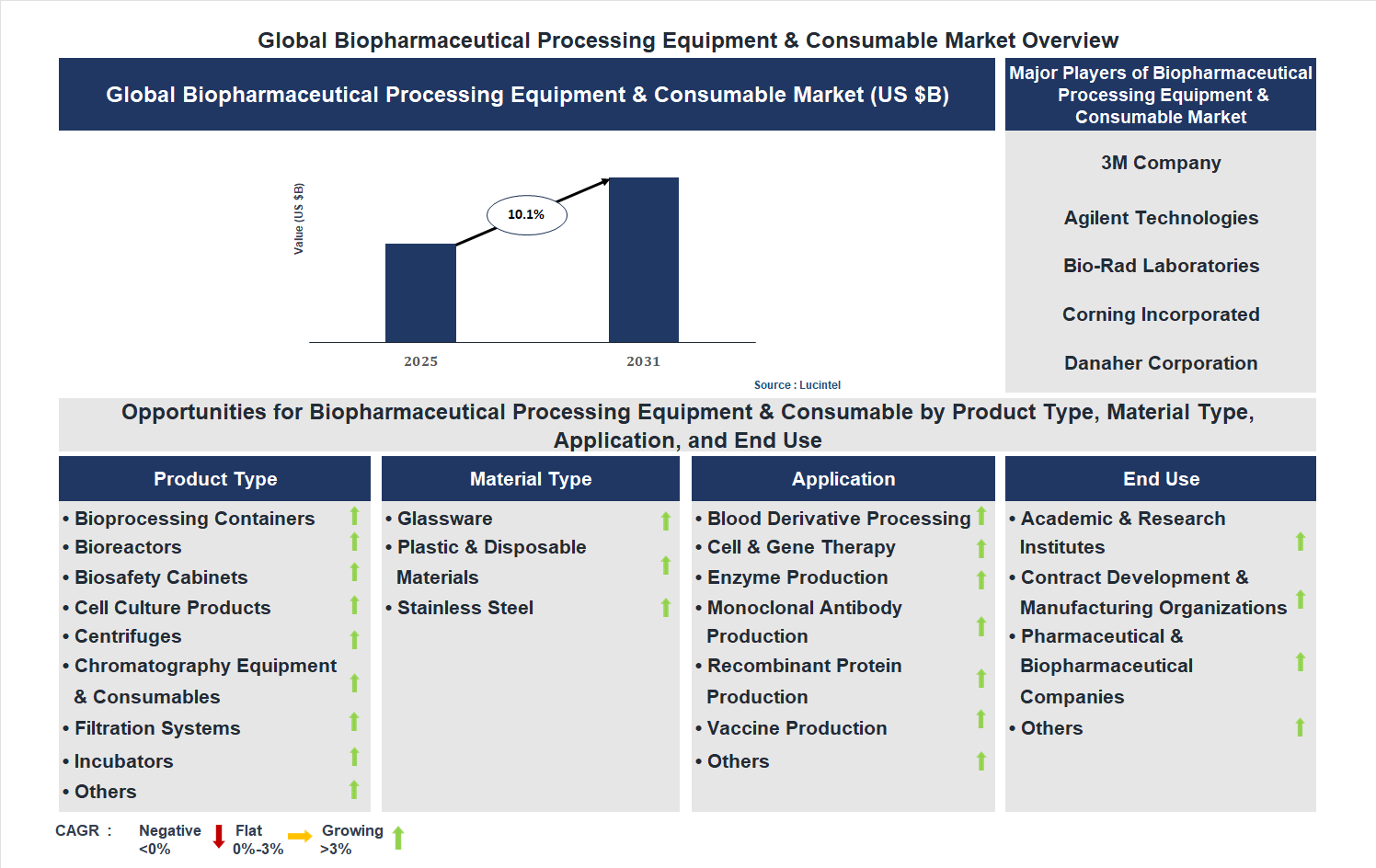
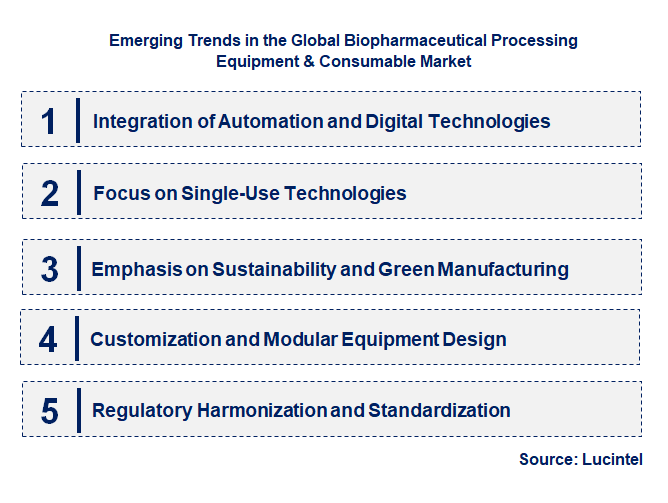
• Integration of Automation and Digital Technologies: The adoption of automation, AI, and IoT is transforming biopharmaceutical manufacturing by improving precision, reducing human error, and increasing throughput. Automated systems enable real-time monitoring and control, leading to enhanced process consistency and compliance with regulatory standards. Digital technologies facilitate data-driven decision-making, predictive maintenance, and streamlined workflows, ultimately reducing costs and accelerating product development cycles. This trend is fostering smarter, more efficient manufacturing environments that can quickly adapt to changing market demands.
• Focus on Single-Use Technologies: Single-use bioprocessing equipment is gaining popularity due to its flexibility, reduced cleaning requirements, and lower contamination risk. These systems enable faster setup and changeover times, which is crucial for small-batch and personalized medicines. The trend supports cost-effective manufacturing and scalability, especially for biopharmaceuticals with shorter product life cycles. As regulatory agencies endorse single-use systems, their adoption is expected to grow, driving innovation in disposable bioprocessing components and consumables.
• Emphasis on Sustainability and Green Manufacturing: Environmental concerns are prompting the industry to adopt sustainable practices, including energy-efficient equipment, waste reduction, and eco-friendly materials. Companies are investing in green technologies to minimize carbon footprints and comply with stricter environmental regulations. Sustainable processing solutions not only reduce operational costs but also enhance corporate social responsibility profiles. This trend is encouraging the development of biodegradable consumables and energy-efficient machinery, aligning industry growth with global sustainability goals.
• Customization and Modular Equipment Design: The demand for personalized medicines and flexible manufacturing processes is fueling the development of modular, customizable equipment. These adaptable systems allow manufacturers to quickly reconfigure production lines for different products, reducing downtime and capital expenditure. Modular designs support small-batch production and rapid scale-up, essential for emerging biopharmaceutical therapies. This trend enhances operational agility, enabling companies to respond swiftly to market changes and technological innovations, thereby maintaining competitive advantage.
• Regulatory Harmonization and Standardization: Increasing global collaboration and harmonization of regulatory standards are simplifying compliance processes for biopharmaceutical equipment and consumables. Standardized equipment and protocols facilitate smoother international operations and reduce time-to-market for new therapies. This trend encourages manufacturers to develop universally compliant products, fostering innovation and reducing costs associated with regulatory divergence. As regulatory frameworks become more aligned, market entry barriers decrease, promoting broader adoption of advanced processing technologies worldwide.
• Technological Innovation: Integration of automation and digitalization has revolutionized bioprocessing, leading to increased efficiency and reduced human error. Automated systems enable real-time monitoring and control, improving process consistency and scalability. This development enhances productivity, reduces costs, and accelerates time-to-market for biopharmaceutical products, making treatments more accessible.
• Expansion of Single-Use Technologies: The adoption of single-use bioreactors and consumables has surged due to their flexibility, lower contamination risk, and reduced cleaning requirements. This shift minimizes downtime and capital expenditure, allowing faster setup and changeover between production runs. It significantly impacts manufacturing agility and cost-effectiveness, especially for small to medium-sized biopharmaceutical firms.
• Focus on Sustainability: Companies are increasingly adopting eco-friendly materials and energy-efficient equipment to reduce environmental impact. Innovations include biodegradable consumables and energy-saving sterilization methods. This focus on sustainability aligns with regulatory pressures and corporate social responsibility, fostering a greener industry and appealing to environmentally conscious stakeholders.
• Regulatory and Quality Standards: Evolving global regulations demand higher standards for equipment validation and consumable quality. Manufacturers are investing in advanced validation tools and compliant products to meet these standards. This development ensures product safety, enhances market trust, and facilitates international market access, though it also increases compliance costs.
• Personalized Medicine and Cell Therapy: The rise of personalized treatments and cell therapies requires specialized processing equipment and consumables. Customizable and scalable solutions are being developed to cater to small-batient batches, impacting equipment design and supply chain logistics. This trend is expanding market opportunities and driving innovation in bioprocessing technologies.
• Cell Culture & Fermentation Equipment: This segment is witnessing increased adoption due to the rising production of biologics. Advanced bioreactors and fermentation systems improve yield and scalability, enabling faster development of therapies. The impact includes reduced production costs and enhanced process control, which accelerates time-to-market for new biologics.
• Filtration & Purification Systems: Growing demand for high-purity products drives innovation in filtration technologies. Improved membrane filters and chromatography systems enhance product quality and safety. This opportunity results in more efficient purification processes, reducing contamination risks and ensuring compliance with stringent regulatory standards.
• Fill & Finish Equipment: The need for flexible, automated filling and packaging solutions is expanding, especially with personalized medicine. These systems increase production speed and reduce contamination risks. Their impact is a significant boost in manufacturing efficiency, supporting rapid product launches and meeting market demands.
• Single-Use Technologies: The shift towards single-use systems offers benefits like reduced cleaning time and lower contamination risk. These technologies are increasingly adopted in bioprocessing for their cost-effectiveness and flexibility. This growth opportunity enhances operational efficiency and minimizes downtime, facilitating faster scale-up.
• Bioprocess Analytics & Monitoring: Real-time monitoring and advanced analytics improve process control and product consistency. The integration of IoT and AI enhances predictive capabilities. This opportunity leads to improved process optimization, reduced waste, and higher product quality, ultimately supporting regulatory compliance and operational excellence.
• Technological Innovation: The rapid development of advanced bioprocessing technologies, such as automation, single-use systems, and continuous processing, enhances efficiency, reduces contamination risks, and lowers costs. These innovations enable faster production cycles and improved product quality, attracting investments and expanding market applications. As biopharmaceutical companies seek to meet increasing global demand, the adoption of cutting-edge equipment becomes crucial, fueling market growth and encouraging ongoing R&D efforts.
• Rising Prevalence of Chronic Diseases: The global increase in chronic conditions like cancer, autoimmune diseases, and infectious diseases has significantly boosted demand for biopharmaceuticals. This surge necessitates advanced manufacturing equipment and consumables to produce complex biologics efficiently. Governments and healthcare providers are prioritizing biopharmaceutical therapies, which further accelerates market expansion. The growing pipeline of biologics and biosimilars also contributes to sustained demand for specialized processing equipment.
• Regulatory Environment and Quality Standards: Stringent regulatory frameworks established by agencies such as the FDA and EMA ensure the safety, efficacy, and quality of biopharmaceutical products. These regulations compel manufacturers to adopt high-quality, validated equipment and consumables, often leading to increased costs but ensuring market credibility. Compliance requirements also drive innovation in equipment design and process validation, shaping market dynamics and fostering trust among stakeholders.
• Increasing Investment in Biopharmaceutical R&D: The escalating investment by pharmaceutical companies, venture capitalists, and governments in biopharmaceutical research fuels demand for advanced processing equipment. This funding supports the development of novel biologics and biosimilars, necessitating specialized manufacturing solutions. The focus on personalized medicine and regenerative therapies further amplifies the need for innovative equipment, creating a positive feedback loop that sustains market growth.
• Growing Adoption of Single-Use Technologies: Single-use systems offer advantages such as reduced cleaning requirements, lower contamination risk, and faster setup times. Their flexibility and cost-effectiveness make them increasingly popular, especially in small to medium-scale production facilities. The shift towards single-use technologies is driven by the need for rapid scalability and operational efficiency, significantly impacting equipment sales and consumable demand across the biopharmaceutical manufacturing landscape.
• High Capital and Operational Costs: The initial investment in advanced bioprocessing equipment is substantial, often limiting adoption among smaller firms. Operational costs, including maintenance and consumables, also contribute to financial burdens. These high costs can hinder market penetration, especially in emerging regions, and may slow down technological upgrades, impacting overall industry growth.
• Stringent Regulatory and Quality Compliance: Navigating complex regulatory landscapes requires extensive validation, documentation, and adherence to quality standards. This process can be time-consuming and costly, delaying product launches and increasing development expenses. Small and mid-sized companies may find compliance particularly challenging, potentially restricting innovation and market entry.
• Supply Chain Disruptions and Raw Material Shortages: The biopharmaceutical industry relies heavily on specialized raw materials and components, which are susceptible to global supply chain disruptions. Factors such as geopolitical tensions, pandemics, and logistical issues can lead to shortages and delays in equipment manufacturing and consumable supplies. These disruptions threaten production continuity, increase costs, and pose significant risks to market stability.
• 3M Company
• Agilent Technologies
• Bio-Rad Laboratories
• Corning Incorporated
• Danaher Corporation
• Eppendorf
• Fujifilm Holdings Corporation
• General Electric Company
• Liquidyne Process Technologies
• Lonza Group
• Bioprocessing Containers
• Bioreactors
• Biosafety Cabinets
• Cell Culture Products
• Centrifuges
• Chromatography Equipment & Consumables
• Filtration Systems
• Incubators
• Others
• Glassware
• Plastic & Disposable Materials
• Stainless Steel
• Blood Derivative Processing
• Cell & Gene Therapy
• Enzyme Production
• Monoclonal Antibody Production
• Recombinant Protein Production
• Vaccine Production
• Others
• Academic & Research Institutes
• Contract Development & Manufacturing Organizations
• Pharmaceutical & Biopharmaceutical Companies
• Others
• North America
• Europe
• Asia Pacific
• The Rest of the World
• United States: The US market is leading with significant investments in bioprocessing innovation, expanding manufacturing facilities, and adopting advanced automation and digital solutions. Regulatory agencies like the FDA are streamlining approval processes, fostering faster product development. The focus on personalized medicine and biologics is driving demand for specialized equipment and consumables. Collaborations between biotech firms and equipment manufacturers are increasing, supporting a robust ecosystem for biopharmaceutical production.
• China: China is rapidly expanding its biopharmaceutical manufacturing capacity, supported by government initiatives such as the "Made in China 2025" plan. The country is investing heavily in local R&D and adopting advanced bioprocessing technologies to reduce reliance on imports. Domestic companies are increasingly involved in producing high-quality equipment and consumables, and there is a growing emphasis on regulatory harmonization with international standards to facilitate exports.
• Germany: Germany remains a key player in the biopharmaceutical processing market, leveraging its strong engineering and manufacturing expertise. The country is focusing on integrating Industry 4.0 technologies, such as IoT and automation, into bioprocessing equipment. German firms are also emphasizing sustainable manufacturing practices and compliance with stringent EU regulations. Innovation in single-use technologies and continuous processing is gaining momentum, enhancing efficiency and flexibility.
• India: India is witnessing rapid growth driven by a burgeoning biotech sector and government support through initiatives like "Make in India." The country is investing in upgrading existing manufacturing infrastructure and adopting cost-effective, scalable bioprocessing solutions. Local manufacturers are expanding their product portfolios to include advanced consumables and equipment, aiming to serve both domestic and export markets. The focus on skill development and regulatory improvements is further boosting industry growth.
• Japan: Japan is emphasizing technological innovation and quality standards in biopharmaceutical processing. The market is characterized by the adoption of automation, robotics, and digital solutions to improve process efficiency. Japanese companies are investing in research collaborations and startups to develop next-generation bioprocessing technologies. Regulatory frameworks are evolving to support advanced therapies, and there is a strong focus on sustainable practices and environmental impact reduction in manufacturing processes.


• 3M Company
• Agilent Technologies
• Bio-Rad Laboratories
• Corning Incorporated
• Danaher Corporation
• Eppendorf
• Fujifilm Holdings Corporation
• General Electric Company
• Liquidyne Process Technologies
• Lonza Group
Q5. Which biopharmaceutical processing equipment & consumable market segment will be the largest in future?

Choose a license that fits your team. Instant PDF delivery.
Prices exclude taxes. Instant delivery. Custom licensing available on request.
Market Report · July 22, 2026
Market Report · July 22, 2026
Market Report · July 22, 2026
Trusted partner for strategic intelligence and business growth


Receive a complimentary market analysis tailored to your industry. Our analysts will identify key growth opportunities and competitive dynamics specific to your business.

Market size, growth rate, and key trend analysis for your specific sector.

Top competitor positioning and market share analysis.

Strategic recommendations backed by data-driven insights.
Get curated market intelligence and competitive moves straight to your inbox.
By subscribing, you agree to receive our monthly insights. Unsubscribe anytime.
Receive a complimentary market analysis tailored to your industry. Our analysts will identify key growth opportunities and competitive dynamics specific to your business.
Market size, growth rate, and key trend analysis for your specific sector.
Top competitor positioning and market share analysis.
Strategic recommendations backed by data-driven insights.
Get curated market intelligence, emerging trends, and competitive moves straight to your inbox each month.
By subscribing, you agree to receive our monthly insights. Unsubscribe anytime.
We'll send your sample report shortly.