
Market Report · July 15, 2026

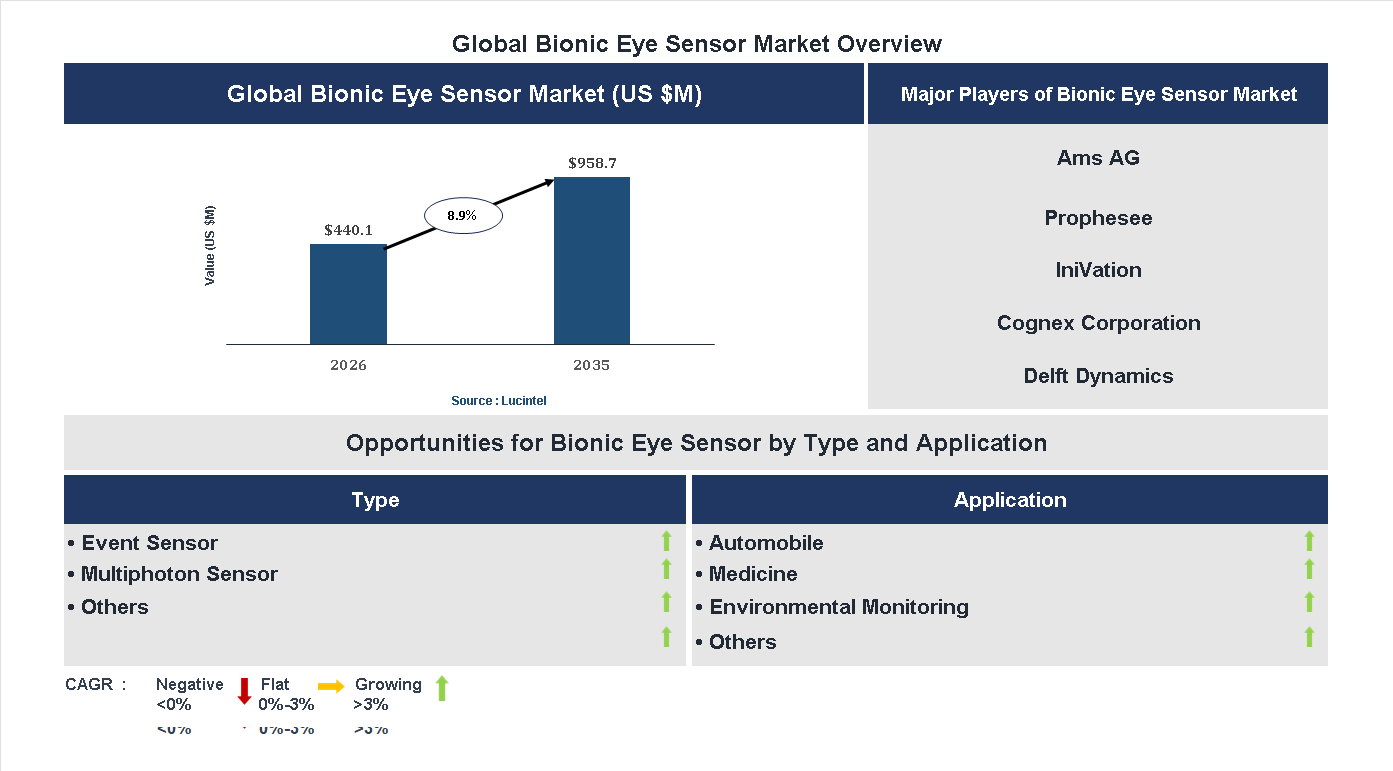
Key data points: The market size in 2035 = $958.7 million, growth forecast = 8.9% annually for the next 8 years. Scroll below to get more insights. This market report covers trends, opportunities and forecasts in bionic eye sensor market to 2035 by type (event sensor, multiphoton sensor, and others), application (automobile, medicine, environmental monitoring, and others), and region (North America, Europe, Asia Pacific, and the Rest of the World)
We'll send your sample report shortly.
• Lucintel forecasts that, within the type category, event sensor is expected to witness higher growth over the forecast period.
• Within the application category, medicine is expected to witness the highest growth.
• In terms of region, APAC is expected to witness the highest growth over the forecast period. Gain valuable insights for your business decisions with our comprehensive 150+ page report. Sample figures with some insights are shown below.
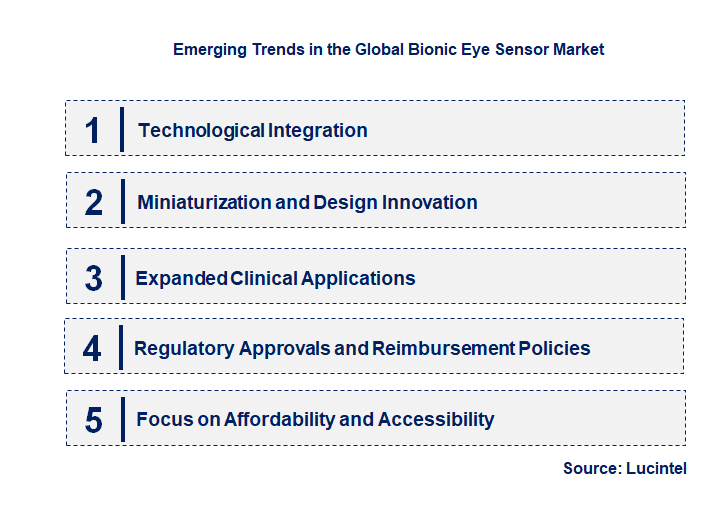
• Technological Integration: The integration of advanced sensors with artificial intelligence and machine learning is revolutionizing bionic eye devices. These systems now offer real-time image processing, improved resolution, and adaptive functionalities that mimic natural vision more closely. Enhanced connectivity with smartphones and other devices allows users to customize and control their visual experience. This trend is leading to smarter, more intuitive prosthetics that significantly improve user outcomes and satisfaction, thereby expanding market adoption.
• Miniaturization and Design Innovation: Manufacturers are focusing on reducing the size and weight of bionic eye sensors to enhance comfort and usability. Innovations in materials and microfabrication techniques enable the development of more discreet, lightweight devices that are easier to wear for extended periods. Improved ergonomic designs also facilitate better integration with existing eyewear or contact lenses. This trend is crucial for increasing user acceptance and broadening the demographic reach, including younger and more active users.
• Expanded Clinical Applications: Beyond restoring basic vision, bionic eye sensors are increasingly being adapted for specialized applications such as augmented reality (AR), virtual reality (VR), and advanced diagnostic tools. These sensors are now used in fields like medical imaging, security, and even entertainment. The diversification of applications is driving market growth by opening new revenue streams and attracting investments from various sectors. It also accelerates research into multifunctional devices that combine vision restoration with other technological capabilities.
• Regulatory Approvals and Reimbursement Policies: The market is witnessing a surge in regulatory approvals for new bionic eye devices, which is critical for commercialization. Governments and health authorities are developing reimbursement frameworks to make these devices more accessible to patients. Clear regulatory pathways and insurance coverage are reducing financial barriers, encouraging adoption among healthcare providers and patients. This trend is vital for scaling production, increasing market penetration, and establishing industry standards.
• Focus on Affordability and Accessibility: As the market matures, companies are prioritizing cost-effective manufacturing processes to lower device prices. Initiatives include leveraging economies of scale, innovative supply chain management, and open-source technologies. The goal is to make bionic eye sensors more affordable for a broader population, including those in developing regions. This focus on affordability is essential for democratizing access to visual prosthetics, thereby expanding the market base and fostering global growth. These emerging trends are collectively reshaping the bionic eye sensor market by enhancing device capabilities, improving user experience, broadening application scope, and making solutions more accessible. As technological, regulatory, and economic factors evolve, the industry is poised for significant growth, ultimately transforming the landscape of visual prosthetics and the quality of life for visually impaired individuals worldwide.
• Growing Adoption of Bionic Eye Technologies: The increasing prevalence of visual impairments and blindness has accelerated the adoption of bionic eye solutions. Advances in sensor technology and miniaturization have made devices more effective and accessible. This growth is supported by government initiatives and funding for research. As a result, more patients are gaining access to life-changing visual prosthetics, expanding the market and encouraging further innovation.
• Integration of Artificial Intelligence in Bionic Eyes: AI integration enhances the functionality of bionic eye sensors by improving image processing and environmental awareness. AI-driven systems enable real-time adaptation to different lighting conditions and complex environments. This development significantly improves user experience and visual clarity. The impact is a more intuitive and responsive device, which broadens the scope of applications, from medical rehabilitation to augmented reality, thus driving market growth and technological progress.
• Miniaturization and Enhanced Sensor Performance: Advances in nanotechnology and materials science have led to smaller, more efficient sensors. These miniaturized sensors offer higher resolution and better energy efficiency, making devices more comfortable and longer-lasting. This progress allows for more discreet and user-friendly designs, increasing patient acceptance. The improved performance directly correlates with better visual outcomes, expanding the potential user base and stimulating market expansion.
• Increased Collaborations Between Tech Firms and Healthcare Providers: Strategic partnerships are fostering innovation and accelerating product development. Tech companies bring expertise in sensor technology, while healthcare providers ensure clinical relevance and patient needs are met. These collaborations facilitate faster regulatory approvals and market entry. The synergy enhances product quality and affordability, making bionic eye solutions more accessible. This trend is crucial for scaling production and expanding global reach, ultimately boosting market competitiveness and growth.
• Regulatory Approvals and Funding Boosts: Recent approvals by health authorities and increased funding for research have propelled market development. Regulatory clearances ensure safety and efficacy, encouraging adoption. Government and private sector investments support R&D, leading to innovative solutions and improved device performance. These developments reduce barriers to market entry and foster consumer confidence. The resulting environment accelerates commercialization, broadens access, and sustains long-term growth in the bionic eye sensor market. The overall impact of these developments is a rapidly evolving market characterized by innovative, effective, and accessible solutions. Enhanced technology, strategic collaborations, and supportive regulatory environments are driving growth, expanding applications, and improving patient outcomes. This momentum is positioning the bionic eye sensor market as a key player in the future of visual prosthetics and healthcare innovation.
• Advancements in Sensor Technology Enhance Device Performance: Innovations in sensor design and materials are improving image resolution, responsiveness, and durability of bionic eye systems. These technological improvements enable more natural vision experiences, increasing user acceptance and satisfaction. Enhanced sensors also allow for better adaptation to various lighting conditions and environments, broadening the application scope. Continuous R&D efforts are expected to further refine sensor capabilities, making devices more effective and accessible for a wider patient demographic.
• Increasing Adoption of AI and Machine Learning for Visual Processing: Integration of AI algorithms with bionic eye sensors is revolutionizing visual processing. These intelligent systems can interpret complex visual data, improve object recognition, and adapt to dynamic environments. AI-driven enhancements enable real-time image enhancement and noise reduction, providing clearer vision for users. As AI technology matures, it will facilitate personalized visual experiences, reduce cognitive load, and improve overall device functionality, thereby expanding market adoption among healthcare providers and end-users.
• Rising Demand for Visual Prosthetics in Ageing Populations: The global increase in aging populations with age-related visual impairments is fueling demand for bionic eye sensors. These devices offer potential solutions for conditions like macular degeneration and retinitis pigmentosa. The growing need for effective, minimally invasive treatments is encouraging healthcare providers to adopt advanced prosthetic options. Market growth is further supported by government initiatives and funding aimed at improving elderly care, making bionic eye sensors a critical component in future ophthalmic treatment strategies.
• Expansion of Market Through Strategic Collaborations and Partnerships: Collaborations between technology firms, healthcare providers, and research institutions are accelerating product development and commercialization. Strategic partnerships facilitate access to cutting-edge research, funding, and distribution channels. These alliances also enable the sharing of expertise, reducing time-to-market for innovative solutions. As companies work together to address technical challenges and regulatory hurdles, the market is expected to see a surge in new, improved bionic eye sensor products, broadening their reach and application.
• Growing Focus on Miniaturization and Wearability of Devices: The trend toward smaller, lightweight, and more comfortable bionic eye sensors is driving product innovation. Miniaturization enhances user comfort and aesthetic appeal, encouraging wider adoption. Wearable designs that seamlessly integrate with daily life are becoming a priority for manufacturers. Advances in flexible electronics and battery technology support this shift, enabling discreet and long-lasting devices. This focus on portability and comfort is crucial for increasing user compliance and expanding the market to diverse patient groups. These growth opportunities collectively are transforming the bionic eye sensor market by enhancing device performance, expanding applications, and improving user experience. Technological innovations, strategic collaborations, and demographic shifts are creating a dynamic environment that promises substantial market expansion. As these opportunities are realized, they will significantly improve the quality of life for visually impaired individuals and establish the market as a vital segment within ophthalmic healthcare.
• Technological Advancements: The continuous development of miniaturized, high-precision sensors enhances the functionality and effectiveness of bionic eye devices. Innovations such as improved image processing and wireless connectivity enable more natural vision restoration, attracting both investors and consumers. These technological improvements reduce device size, increase durability, and improve user experience, thereby expanding market potential across medical and consumer segments.
• Rising Prevalence of Visual Impairments: The increasing incidence of blindness and severe visual impairments due to age-related macular degeneration, diabetic retinopathy, and other eye conditions significantly boosts demand for bionic eye solutions. As global populations age, the need for advanced visual prosthetics grows, encouraging manufacturers to innovate and expand their product offerings to meet this rising demand.
• Healthcare Infrastructure Expansion: Growing healthcare infrastructure, especially in emerging economies, facilitates better access to advanced medical devices like bionic eye sensors. Investments in healthcare facilities, increased awareness, and government initiatives promote the adoption of innovative treatments, thereby expanding the market geographically and demographically.
• Regulatory Approvals and Funding: Supportive regulatory frameworks and increased funding for biomedical research accelerate product development and commercialization. Approvals from agencies such as the FDA or EMA validate device safety and efficacy, boosting market confidence and encouraging investment from both public and private sectors. The challenges facing the bionic eye sensor market include:-
• High Development and Manufacturing Costs: Developing sophisticated bionic eye sensors involves significant R&D investment, complex manufacturing processes, and stringent quality controls. These high costs can limit market entry for smaller players and result in higher prices for consumers, potentially restricting widespread adoption.
• Technological Limitations: Despite advancements, current bionic eye sensors face challenges such as limited resolution, low field of view, and issues with long-term biocompatibility. These technological constraints hinder the ability to fully restore natural vision, impacting user satisfaction and market growth.
• Ethical and Regulatory Barriers: Ethical concerns regarding neural interfacing and privacy issues pose hurdles for market acceptance. Additionally, navigating complex regulatory pathways can delay product launches, increase costs, and create uncertainty, thereby impeding rapid market expansion. In summary, the bionic eye sensor market is driven by rapid technological innovations, increasing demand due to visual impairments, expanding healthcare infrastructure, and supportive regulatory environments. However, high costs, technological limitations, and ethical/regulatory challenges present significant hurdles. These factors collectively influence the pace and scope of market growth, requiring stakeholders to balance innovation with strategic navigation of obstacles. Overall, the market holds promising potential for improving the quality of life, but it must address these challenges to achieve widespread adoption and sustainable growth.
• Ams AG
• Prophesee
• IniVation
• Cognex Corporation
• Delft Dynamics
• Event Sensor
• Multiphoton Sensor
• Others
• Automobile
• Medicine
• Environmental Monitoring
• Others
• North America
• Europe
• Asia Pacific
• The Rest of the World
• United States: The US leads in Bionic Eye Sensor innovation, with major investments from tech giants and healthcare providers. Recent advancements include improved sensor resolution, real-time processing capabilities, and integration with AI for better visual perception. Regulatory approvals have facilitated market expansion, and collaborations between research institutions and industry are driving product development. The US also sees increased adoption in clinical settings, supported by government funding and private sector initiatives aimed at restoring vision.
• China: China is rapidly advancing in Bionic Eye Sensor technology, focusing on cost-effective solutions and mass production. Government policies promote innovation and commercialization, leading to significant R&D investments. Recent developments include enhanced sensor durability, miniaturization, and integration with mobile devices for remote monitoring. The country’s expanding healthcare infrastructure and large patient base are fueling market growth, with startups and established firms competing to develop affordable, high-performance sensors for domestic and export markets.
• Germany: Germany emphasizes high-quality, precision-engineered Bionic Eye Sensors, leveraging its strong medical device manufacturing sector. Recent innovations involve improved sensor sensitivity, energy efficiency, and seamless integration with existing assistive technologies. The country’s focus on regulatory compliance and clinical validation ensures market credibility. German companies are also exploring applications in augmented reality and robotics, expanding the scope of sensor use beyond traditional medical applications.
• India: India’s Bionic Eye Sensor market is characterized by affordability and accessibility, driven by government initiatives to improve healthcare infrastructure. Recent developments include low-cost sensor designs, increased local manufacturing, and partnerships with global firms to adapt technology for Indian needs. The market is witnessing a rise in startups offering innovative solutions tailored to rural and underserved populations. Efforts to enhance sensor performance and reduce costs are making advanced visual aid technologies more widely available across the country.
• Japan: Japan is known for its advanced technological research and development in Bionic Eye Sensors. Recent progress includes highly miniaturized sensors with superior image processing capabilities and integration with robotics and AI systems. The focus is on creating highly reliable, durable sensors suitable for long-term use. Japanese firms are also exploring applications in augmented reality and assistive robotics, aiming to improve user experience and expand market reach. Government support and collaborations with academic institutions continue to drive innovation in this sector.


• Ams AG
• Prophesee
• IniVation
• Cognex Corporation
• Delft Dynamics Q6. Which bionic eye sensor market segment will be the largest in future? Answer: Lucintel forecasts that, within the type category, event sensor is expected to witness higher growth over the forecast period. Q7. In bionic eye sensor market, which region is expected to be the largest in next 5 years? Answer: In terms of region, APAC is expected to witness the highest growth over the forecast period. Q8. Do we receive customization in this report? Answer: Yes, Lucintel provides 10% customization without any additional cost.


Choose a license that fits your team. Instant PDF delivery.
Prices exclude taxes. Instant delivery. Custom licensing available on request.
Market Report · July 15, 2026
Market Report · July 13, 2026
Market Report · July 13, 2026
Trusted partner for strategic intelligence and business growth


Receive a complimentary market analysis tailored to your industry. Our analysts will identify key growth opportunities and competitive dynamics specific to your business.

Market size, growth rate, and key trend analysis for your specific sector.

Top competitor positioning and market share analysis.

Strategic recommendations backed by data-driven insights.
Get curated market intelligence and competitive moves straight to your inbox.
By subscribing, you agree to receive our monthly insights. Unsubscribe anytime.
Receive a complimentary market analysis tailored to your industry. Our analysts will identify key growth opportunities and competitive dynamics specific to your business.
Market size, growth rate, and key trend analysis for your specific sector.
Top competitor positioning and market share analysis.
Strategic recommendations backed by data-driven insights.
Get curated market intelligence, emerging trends, and competitive moves straight to your inbox each month.
By subscribing, you agree to receive our monthly insights. Unsubscribe anytime.
We'll send your sample report shortly.