
Market Report · July 22, 2026

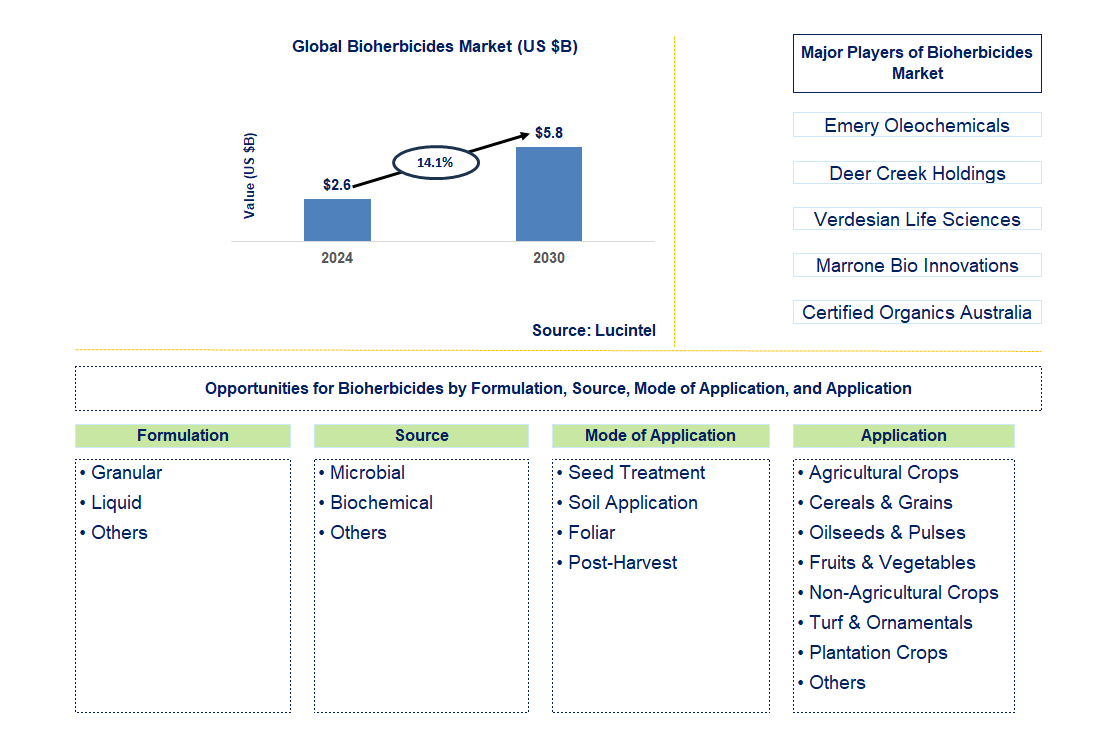
Key data points: The market size in 2030 = $5.8 billion, growth forecasts = 14.1% annually for the next 6 years. Scroll below to get more insights. This market report covers trends, opportunities, and forecasts in the global bioherbicides market to 2030 by formulation (granular, liquid, and others), source (microbial, biochemical, and others), mode of application (seed treatment, soil application, foliar, and post-harvest), application (agricultural crops, cereals & grains, oilseeds & pulses, fruits & vegetables, non-agricultural crops, turf & ornamentals, plantation crops, and others), and region (North America, Europe, Asia Pacific, and the Rest of the World)
We'll send your sample report shortly.
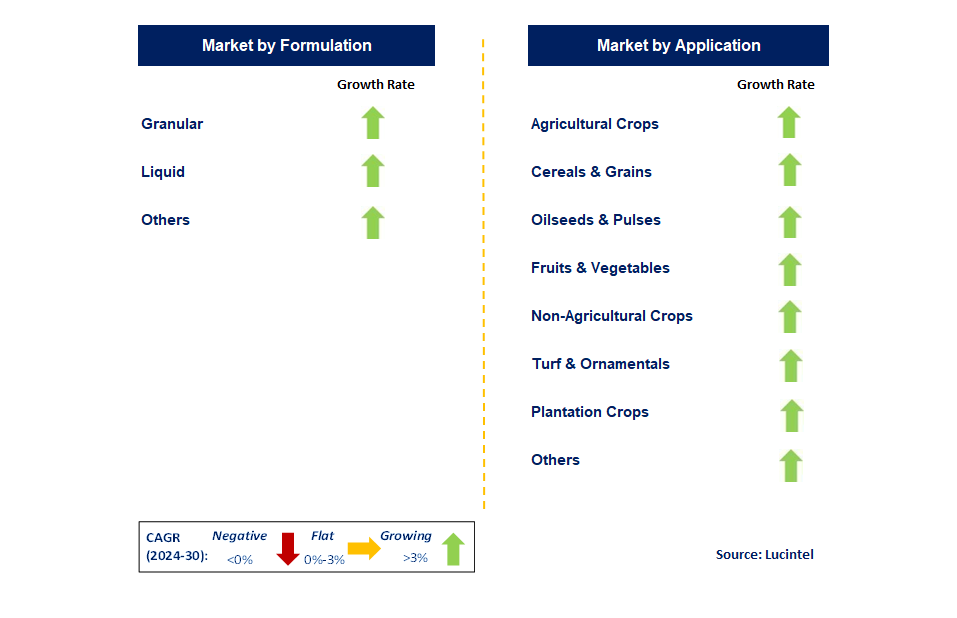
• Lucintel forecasts that, within the formulation category, liquid is expected to witness higher growth over the forecasts period.
• Within the application category, agricultural crop is expected to witness the highest growth over the forecasts period.
• In terms of regions, APAC is expected to witness the highest growth over the forecasts period. Gain valuable insights for your business decisions with our comprehensive 150+ page report.
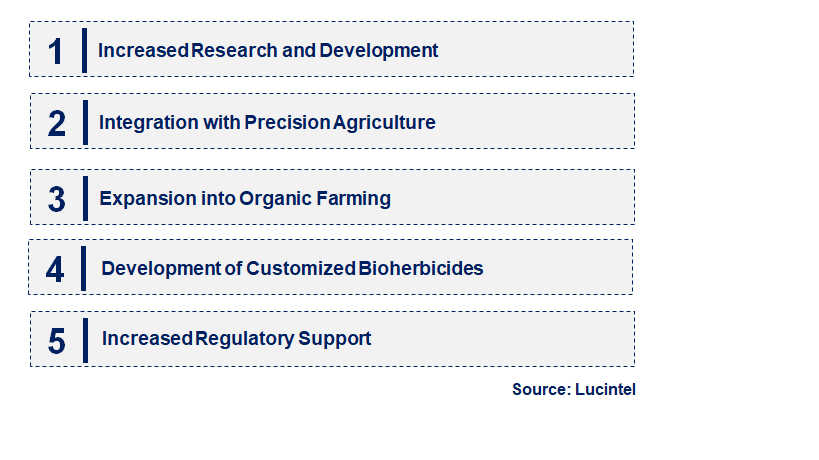
• Increased Research and Development: There is a growing focus on R&D to develop new and improved bioherbicide products. This trend involves exploring novel biological agents, such as specific microorganisms and plant extracts, that can effectively target a wide range of weed species. Enhanced R&D efforts are driven by the need to address challenges associated with chemical herbicides, such as resistance and environmental impact. Innovations in formulation and delivery methods are also part of this trend, aiming to improve the efficacy and user experience of bioherbicides.
• Integration with Precision Agriculture: The integration of bioherbicides with precision agriculture technologies is becoming increasingly prominent. Precision agriculture tools, such as GPS and remote sensing, allow for more targeted and efficient application of bioherbicides. This approach helps optimize the use of biological agents, reduce waste, and improve weed control outcomes. By combining bioherbicides with precision techniques, farmers can achieve better management of weed populations while minimizing environmental impact and resource use.
• Expansion into Organic Farming: The use of bioherbicides is expanding in the organic farming sector, driven by the need for compliant weed management solutions. Bioherbicides are well-suited for organic agriculture because they offer a natural alternative to synthetic chemicals. This trend is supported by increasing consumer demand for organic products and regulatory incentives that promote the use of environmentally friendly pest control methods. The adoption of bioherbicides in organic farming is contributing to the growth of the market and the development of new formulations tailored to organic standards.
• Development of Customized Bioherbicides: The trend towards developing customized bioherbicides tailored to specific crops and local weed species is gaining momentum. Researchers and companies are focusing on creating bioherbicides that address regional weed problems and crop-specific needs. This customization enhances the effectiveness of bioherbicides by ensuring they target the most problematic weeds in particular environments. As a result, farmers can achieve better weed control and improved crop yields with bioherbicides designed to meet their unique agricultural challenges.
• Increased Regulatory Support: Growing regulatory support for bioherbicides is facilitating their development and market entry. Governments and regulatory agencies are providing incentives, subsidies, and streamlined approval processes for bioherbicide products. This trend reflects a broader commitment to sustainable agriculture and the reduction of chemical pesticide use. Increased regulatory support helps overcome barriers to market adoption and encourages investment in bioherbicide research and development, accelerating the availability of new products for farmers. The emerging trends in the bioherbicides market reflect a shift towards more sustainable and innovative weed management solutions. Advances in R&D, integration with precision agriculture, expansion into organic farming, development of customized products, and increased regulatory support are driving the growth of the bioherbicides market. These trends are shaping the future of weed management by enhancing the effectiveness, adoption, and environmental benefits of bioherbicides.
• Development of New Bioherbicide Formulations: Recent advancements in bioherbicide formulations have led to the creation of more effective and stable products. New formulations utilize advanced delivery systems, such as encapsulation and controlled-release technologies, to enhance the efficacy and longevity of bioherbicides. These improvements address previous limitations, such as short-lived activity and reduced effectiveness in diverse environmental conditions, thus broadening the application scope and improving overall weed management.
• Expansion of Research and Development: The bioherbicides market is seeing increased investment in research and development. This expansion includes exploring novel biological agents like microorganisms, plant extracts, and natural toxins that target specific weed species. Enhanced research and development efforts are yielding more effective bioherbicides and accelerating their commercial availability. This focus on innovation is crucial for overcoming challenges associated with chemical herbicides and meeting the growing demand for sustainable agricultural solutions
• Increased Adoption in Organic Farming: Bioherbicides are increasingly being adopted in organic farming due to their alignment with organic agriculture principles. Recent developments have led to the approval and commercialization of bioherbicides that comply with organic standards. This shift supports organic farmers in managing weeds without synthetic chemicals, contributing to the growth of the organic farming sector and meeting consumer demand for chemical-free produce.
• Integration with Precision Agriculture: The integration of bioherbicides with precision agriculture technologies is transforming weed management practices. Precision tools such as GPS and remote sensing are being used to optimize the application of bioherbicides, allowing for targeted and efficient weed control. This integration improves the effectiveness of bioherbicides, reduces waste, and enhances resource use efficiency, making it a key development in modern agricultural practices.
• Enhanced Regulatory Support: Regulatory support for bioherbicides has strengthened, facilitating their development and market entry. Governments and regulatory bodies are streamlining approval processes and providing incentives for bioherbicide research and commercialization. This supportive regulatory environment accelerates the adoption of bioherbicides, helps overcome market entry barriers, and encourages continued innovation in the field. These recent developments in the bioherbicides market are significantly impacting the industry by enhancing product efficacy, expanding research, and increasing adoption across various agricultural sectors. The focus on new formulations, integration with precision agriculture, and regulatory support is driving growth and adoption of bioherbicides, contributing to more sustainable and effective weed management solutions.
• Organic Farming: The organic farming sector represents a significant growth opportunity for bioherbicides. As organic agriculture continues to expand, there is increasing demand for natural weed management solutions that comply with organic standards. Bioherbicides offer a viable alternative to synthetic chemicals, supporting organic farmers in controlling weeds while adhering to regulatory requirements. This growth opportunity is driven by rising consumer preferences for organic products and the need for sustainable farming practices.
• Integrated Weed Management Systems: The integration of bioherbicides into comprehensive weed management systems presents a key growth opportunity. Combining bioherbicides with other weed control methods, such as mechanical weeding and crop rotation, enhances overall weed management effectiveness. This integrated approach helps optimize the use of bioherbicides, improves control of resistant weed species, and reduces reliance on chemical herbicides, aligning with sustainable agricultural practices.
• Precision Agriculture: The application of bioherbicides within precision agriculture frameworks offers substantial growth potential. Precision agriculture technologies, such as GPS and remote sensing, allow for targeted and efficient application of bioherbicides. This approach enhances the precision and efficacy of weed control, reduces resource use, and minimizes environmental impact. Leveraging bioherbicides in precision agriculture systems can drive market growth and improve weed management outcomes.
• Development of Customized Bioherbicides: Developing customized bioherbicides tailored to specific crops and regional weed species represents a strategic growth opportunity. By creating bioherbicides that address local weed problems and crop-specific needs, companies can enhance product effectiveness and meet the unique challenges faced by farmers in different regions. This customization improves the precision of weed control and supports broader adoption of bioherbicides across diverse agricultural environments.
• Expansion into New Geographic Markets: Expanding bioherbicide products into emerging and underserved geographic markets offers significant growth opportunities. Regions with growing agricultural sectors and increasing demand for sustainable farming practices present new markets for bioherbicides. Targeting these areas with tailored solutions and strategic marketing efforts can drive market penetration and growth, capitalizing on the global shift towards eco-friendly weed management practices. Strategic growth opportunities in the bioherbicides market, including organic farming, integrated weed management systems, precision agriculture, customized products, and geographic expansion, offer pathways for market development and innovation. By leveraging these opportunities, stakeholders can drive the adoption of bioherbicides, enhance their competitive position, and contribute to sustainable agricultural practices.
• Advancements in Biological Control Technologies: Recent innovations in biological control technologies significantly drive the growth of the bioherbicides market. Advances in microbial and plant-based agents enhance the effectiveness and stability of bioherbicides, making them more viable alternatives to traditional chemical herbicides. These advancements include improved formulation techniques and a better understanding of the mechanisms by which bioherbicides control weeds. Such technological progress expands the scope of bioherbicides, making them more attractive to farmers seeking sustainable and effective weed management solutions.
• Growing Demand for Sustainable Agriculture: The increasing demand for sustainable agricultural practices is a key driver for the bioherbicides market. Consumers and regulatory bodies are pushing for reduced reliance on chemical pesticides and herbicides due to their environmental and health impacts. Bioherbicides, being natural and biodegradable, align with these sustainability goals. This demand fosters the development and adoption of bioherbicides, offering an eco-friendly alternative that supports the broader objective of reducing agricultural pollution and promoting environmentally responsible farming.
• Supportive Regulatory Environment: A supportive regulatory environment is fostering the growth of the bioherbicides market. Governments and regulatory bodies are increasingly recognizing the benefits of bioherbicides and providing favorable policies, subsidies, and streamlined approval processes. This regulatory support reduces barriers to market entry and accelerates the development and commercialization of bioherbicides. As regulations evolve to accommodate biological solutions, the bioherbicide market benefits from enhanced credibility and increased investment in research and development.
• Increased Investment in Research and Development: There is a significant increase in investment in research and development for bioherbicides, driving market growth. Both public and private sectors are funding research to develop new bioherbicide formulations and improve existing ones. This investment supports innovations in biological agents, formulation techniques, and application methods, leading to more effective and commercially viable products. Enhanced research and development efforts help address the challenges associated with bioherbicides and accelerate their adoption in various agricultural sectors.
• Rising Awareness and Adoption: The rising awareness of the benefits of bioherbicides among farmers and agricultural stakeholders is driving market growth. Education and outreach programs inform farmers about the advantages of bioherbicides, such as reduced environmental impact and improved crop safety. As awareness increases, adoption rates rise, leading to greater market penetration and expansion. This trend is further supported by successful case studies and demonstrations of bioherbicide effectiveness, encouraging broader use across different crops and regions. Challenges in the bioherbicides market are:
• High Development and Production Costs: High development and production costs are a significant challenge for the bioherbicides market. Developing and commercializing bioherbicides requires substantial investment in research, formulation, and testing. These costs can be prohibitive, especially for smaller companies and startups. The financial burden associated with bringing bioherbicides to market can limit innovation and slow the rate at which new products are introduced, impacting the overall growth of the market.
• Regulatory Hurdles: Regulatory hurdles pose a major challenge for the bioherbicides market. The approval process for bioherbicides can be lengthy and complex, involving extensive testing and documentation to demonstrate safety and efficacy. Variations in regulatory requirements across different regions further complicate the process. These challenges can delay market entry and increase costs for developers, potentially hindering the growth and adoption of bioherbicide products.
• Market Acceptance and Education: Market acceptance and education are critical challenges for the bioherbicides market. Despite the benefits, some farmers and agricultural stakeholders remain skeptical about the efficacy and reliability of bioherbicides compared to traditional chemical herbicides. Educating users about the advantages of bioherbicides and demonstrating their effectiveness through successful case studies is essential for overcoming resistance and promoting widespread adoption. Addressing these acceptance issues is crucial for achieving market growth and expanding the use of bioherbicides. The bioherbicides market is shaped by significant drivers, including technological advancements, demand for sustainable agriculture, supportive regulations, increased R&D investment, and rising awareness. However, challenges such as high development costs, regulatory hurdles, and market acceptance issues impact market dynamics. Addressing these challenges while leveraging the drivers will be essential for the continued growth and success of the bioherbicides market.
• Emery Oleochemicals
• Deer Creek Holdings
• Verdesian Life Sciences
• Marrone Bio Innovations
• Certified Organics Australia
• EcoPesticides International
• Bioherbicides Australia Pty
• Granular
• Liquid
• Others
• Microbial
• Biochemical
• Others
• Seed Treatment
• Soil Application
• Foliar
• Post-Harvest
• Agricultural Crops
• Cereals & Grains
• Oilseeds & Pulses
• Fruits & Vegetables
• Non-Agricultural Crops
• Turf & Ornamentals
• Plantation Crops
• Others
• North America
• Europe
• Asia Pacific
• The Rest of the World
• United States: In the United States, recent developments in the bioherbicides market include significant investment in research and commercialization. Companies and research institutions are advancing the use of microbial and plant-based bioherbicides for controlling resistant weed species. Increased regulatory support and funding have facilitated the development of new formulations and application methods. The focus is on integrating bioherbicides with precision agriculture technologies to enhance efficacy and manage application rates more effectively, driving growth in the U.S. market.
• China: China is seeing substantial progress in bioherbicides with a focus on developing and commercializing biological weed control agents. The Chinese government is supporting research into bioherbicides as part of its broader strategy to reduce chemical pesticide use and promote sustainable agriculture. Recent advancements include the development of bioherbicides based on indigenous microorganisms and plant extracts tailored to local weed species. This effort aims to improve crop yields and reduce environmental pollution in China's large agricultural sector.
• Germany: Germany is at the forefront of bioherbicide innovation, with advancements centered on integrating bioherbicides into integrated weed management systems. Research in Germany focuses on improving the efficacy and stability of bioherbicides, including fungal and bacterial agents. German companies are also exploring the use of bioherbicides in organic farming and precision agriculture. These developments align with Germany's commitment to sustainable agriculture and environmental protection, driving the adoption of bioherbicides across various crop sectors.
• India: In India, the bioherbicides market is evolving with an emphasis on addressing weed management challenges in diverse cropping systems. Recent developments include the application of bioherbicides derived from local microbial strains and plant extracts to target specific weeds prevalent in Indian agriculture. The Indian government is promoting the use of bioherbicides through subsidies and support programs, aiming to reduce reliance on chemical herbicides and improve crop productivity while maintaining environmental sustainability.
• Japan: Japan is making strides in bioherbicides by focusing on innovative formulations and application techniques. Recent advancements include the development of bioherbicides utilizing natural compounds and microorganisms effective against specific weed species in Japanese crops. Japan's emphasis on integrating bioherbicides with advanced agricultural technologies, such as automated application systems, reflects its commitment to enhancing agricultural sustainability and reducing the environmental impact of traditional herbicides.


• Emery Oleochemicals
• Deer Creek Holdings
• Verdesian Life Sciences
• Marrone Bio Innovations
• Certified Organics Australia
• EcoPesticides International
• Bioherbicides Australia Pty Q6. Which bioherbicides market segment will be the largest in future? Answer: Lucintel forecasts that liquid is expected to witness higher growth over the forecasts period. Q7. In bioherbicides market, which region is expected to be the largest in next 5 years? Answer: APAC is expected to witness the highest growth over the forecasts period. Q.8 Do we receive customization in this report? Answer: Yes, Lucintel provides 10% customization without any additional cost.


Choose a license that fits your team. Instant PDF delivery.
Prices exclude taxes. Instant delivery. Custom licensing available on request.
Market Report · July 22, 2026
Market Report · July 20, 2026
Market Report · July 20, 2026
Trusted partner for strategic intelligence and business growth


Receive a complimentary market analysis tailored to your industry. Our analysts will identify key growth opportunities and competitive dynamics specific to your business.

Market size, growth rate, and key trend analysis for your specific sector.

Top competitor positioning and market share analysis.

Strategic recommendations backed by data-driven insights.
Get curated market intelligence and competitive moves straight to your inbox.
By subscribing, you agree to receive our monthly insights. Unsubscribe anytime.
Receive a complimentary market analysis tailored to your industry. Our analysts will identify key growth opportunities and competitive dynamics specific to your business.
Market size, growth rate, and key trend analysis for your specific sector.
Top competitor positioning and market share analysis.
Strategic recommendations backed by data-driven insights.
Get curated market intelligence, emerging trends, and competitive moves straight to your inbox each month.
By subscribing, you agree to receive our monthly insights. Unsubscribe anytime.
We'll send your sample report shortly.