
Market Report · July 31, 2026

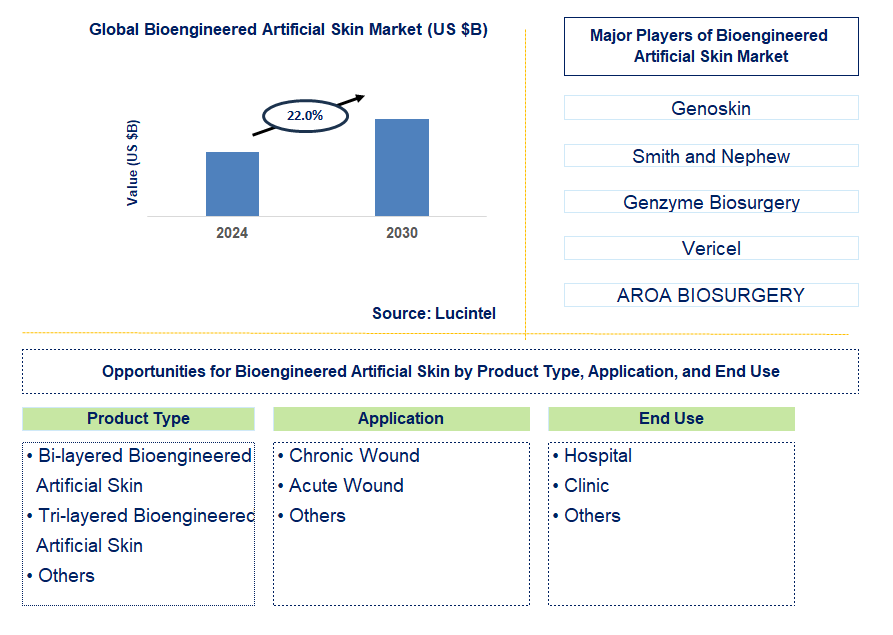
Key data points: The growth forecast = 22.0% annually for the next 6 years. Scroll below to get more insights. This market report covers trends, opportunities, and forecasts in the global bioengineered artificial skin market to 2030 by product type (bi-layered bioengineered artificial skin, tri-layered bioengineered artificial skin, and others), application (chronic wound, acute wound, and others), end use (hospital, clinic, and others), and region (North America, Europe, Asia Pacific, and the Rest of the World)
We'll send your sample report shortly.
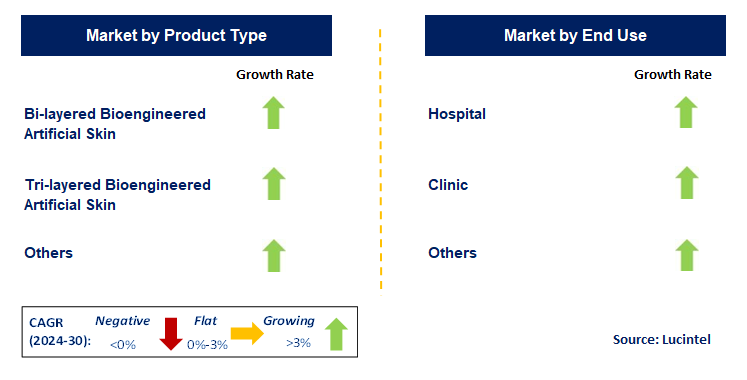
• Lucintel forecasts that, within the product type category, bi-layered bioengineered artificial skin will remain the larger segment over the forecast period.
• In terms of regions, North America will remain the largest region over the forecast period due to strong healthcare infrastructure, widespread use of cutting-edge medical technology, and an increase in government funding for regenerative medicine research. A more than 150-page report is developed to help in your business decisions.
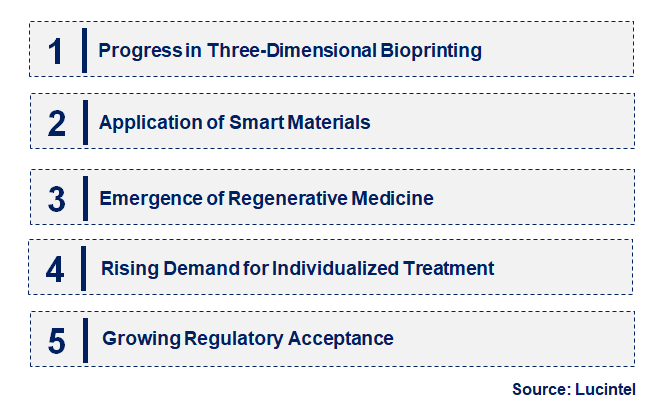
• Progress in Three-Dimensional Bioprinting: Using a 3D bioprinter, patients with burns or chronic wounds are able to have bioengineered skin grown on or grafted onto their own skin, as each layer of cells and biomaterials is deposited precisely and accurately. This allows skin grafts to be created that are very similar to the patient’s own skin. Customizing skin grafts for individual patients is likely to improve healing and clinical outcomes in wound and burn care.
• Application of Smart Materials: There is a growing move towards incorporating smart materials into bioengineered skin design, improving functionality. These materials are crafted to change in response to environmental factors such as heat or humidity, enhancing host tissue acceptance. Smart dressings capable of assessing healing states and releasing drugs when needed are becoming more common, boasting advancements in wound care management.
• Emergence of Regenerative Medicine: Regenerative medicine is becoming more prominent in the biopolymer artificial skin market. The development of stem cells and growth factors will stimulate skin regeneration. This trend favors the creation of effective treatments for chronic wounds and burns, aligning with regeneration therapy goals.
• Rising Demand for Individualized Treatment: The shift towards personalized treatment is impacting the bioengineered skin market, as patients seek more individualized options. Advances in tissue engineering are making it possible to create tissue-engineered skin with grafts most suitable for the patient. This trend encourages patient-oriented therapeutics in clinical practice.
• Growing Regulatory Acceptance: Regulatory authorities are becoming more approving of bioengineered skin products and are working to simplify processes to encourage creativity. This trend is key in expediting the uptake of new technologies, ensuring safe and effective products reach the market quickly. Improved regulatory processes have also enhanced trust among manufacturers and investors. These emerging trends are changing the bioengineered artificial skin market by encouraging creativity, improving remedies, and increasing patient focus. As the sector evolves, stakeholders are expected to benefit from growth and enhanced patient well-being, particularly in wound care and regenerative medicine.
• FDA Approvals for New Products: Recently, the U.S. FDA has moved quickly to approve several bioengineered skin products, making these therapeutic tools more widely available. These approvals are critical for companies aiming to introduce new products with significant potential in the treatment of burns and chronic wounds. Faster approvals also address patients' urgent needs and encourage competition in the industry.
• Innovations in Tissue Engineering: Modern tissue engineering methods, including the use of dissolvable scaffolds and other biomaterials, are improving bioengineered skin products. These advancements enhance the efficacy of transplanted synthetic skin by allowing quicker assimilation with the body and minimizing adverse effects. This area of research is making significant progress and promises better solutions.
• Collaboration between Industry and Academia: Research on bioengineered skin is being enhanced through collaborations between biotech companies and academic institutions. These partnerships improve clinical processes and innovation, enabling the development of new products that work better. Sharing knowledge and resources speeds up progress and helps solve medical challenges that have not been extensively researched.
• Expansion into Emerging Markets: Companies are looking to expand into emerging economies to reach more customers for their bioengineered skin products. This is due to the rising healthcare needs and demand for cost-effective wound care solutions. Enhancing local manufacturers' capabilities has made bioengineered skin products more accessible, offering critical interventions.
• Focus on Aesthetic Applications: There is increasing demand for bioengineered skin in aesthetic applications such as scar management and skin rejuvenation. This shift is influencing product formulations, which now focus on enhancing cosmetic outcomes while remaining therapeutic. With growing consumer awareness, the use of bioengineered skin for aesthetic purposes is expected to rise. These developments are shaping the bioengineered artificial skin market by increasing product availability, improving treatment outcomes, and expanding applications. As the market evolves, these changes will be crucial for meeting innovations and fulfilling patient needs.
• Management of Acute and Chronic Wounds: The rising incidence of chronic wounds and ulcers presents a great opportunity for bioengineered skin products. These products have been designed to heal wounds faster, reduce infection rates, and are vital for wound care management. Companies focusing on developing innovative wound dressings and bioengineered skin will capture significant market share.
• Treatment of Burns: The bioengineered artificial skin market offers untapped opportunities in burn treatment. Skin substitutes are preferred for healing severe burns, as burn cases are increasing globally. Companies investing in this field and developing better products for burn patients will thrive as demand for effective treatments grows.
• Applications in Cosmetics and Aesthetics: With rising consumer demand for aesthetic medicine, bioengineered skin products for cosmetic use are gaining ground. Opportunities exist in creating products for skin rejuvenation, scar treatment, and other beauty concerns. Companies that leverage this trend can expand their portfolios and enter the lucrative cosmetics market.
• Joint R&D Projects: Cooperative research and development between industrial and scientific institutions is beneficial for advancing the bioengineered skin market. Collaboration can accelerate the introduction of new products and widen market scope.
• Geographical Growth in New Markets: New markets present significant growth opportunities for bioengineered artificial skin products. Companies that enter these markets, capitalizing on increasing healthcare expenditures and awareness of advanced wound care, will thrive. Joint ventures with local manufacturers can enhance product availability and cost-effectiveness. This value proposition encourages innovations, expands product usage, and increases the availability of bioengineered artificial skin, transforming the field. The market is expected to experience sustained growth and expansion as stakeholders address rising healthcare demands.
• Technological Advancements: Recent market trends show that improvements in biomaterial fabrication methods and 3D printing in tissue engineering are advancing bioengineered skin grafts. These developments lead to less morbidity and faster recovery by facilitating efficient integration into human tissues.
• Rising Incidence of Skin Injuries: The increasing number of skin injuries, such as burns, chronic wounds, and diabetic ulcers, drives the need for effective treatments. Promising bioengineered artificial skin solutions are cost-effective and beneficial for patient care.
• Growing Interest in Regenerative Medicine: Healthcare is shifting towards regenerative medicine, encouraging therapies that help the body heal itself. Bioengineered skin products are expected to enhance tissue regeneration and improve wound healing.
• Regulatory Support: Regulatory bodies are increasingly supporting new and existing bioengineered skin innovations, lowering entry barriers for new products. This regulatory support allows companies to allocate more resources to research, making the market more flexible.
• Increasing Aesthetic Applications: The growing number of people undergoing cosmetic surgery is benefiting the market for bioengineered skin products. Patients seek products that heal scars and rejuvenate skin, further driving product development. Challenges in the bioengineered artificial skin market are:
• High Development Costs: The research and development costs for bioengineered skin can be high. Smaller firms often struggle with limited funding, hindering their ability to innovate and bring new products to market.
• Complex Regulatory Environment: The regulatory framework for bioengineered products can be complicated and varies across countries. Such complexity can delay product market entry due to high capital-intensive processes.
• Fierce Competition: The bioengineered artificial skin market is becoming increasingly competitive, with companies fighting to expand their market footprint. This has led to price pressures and the need for continuous technological advancements to remain competitive. These drivers and challenges shape the bioengineered artificial skin market, from exploitation to product development. Stakeholders must address these factors to harness growth potential and effectively navigate challenges in this evolving field.
• Genoskin
• Smith and Nephew
• Genzyme Biosurgery
• Vericel
• AROA BIOSURGERY
• Integra LifeSciences
• COOK BIOTECH
• Mölnlycke Health Care
• Avita Medical
• MiMedx Group
• Bi-layered Bioengineered Artificial Skin
• Tri-layered Bioengineered Artificial Skin
• Others
• Chronic Wound
• Acute Wound
• Others
• Hospital
• Clinic
• Others
• North America
• Europe
• Asia Pacific
• The Rest of the World
• United States: The Enhanced Biphasic and Tannic Acid Electrospun Non-Woven Fibrous Polyamide has received approval from the Federal Biomedical Engineering Agency. Such products are capable of treating severe skin injuries, particularly burn wounds. Companies like Organogenesis and Avita are offering bioengineered solutions using allogenic skin cells. Over the years, there has been increasing use of three-dimensional cultures in advanced cellular processes.
• China: China has seen significant advances in the bioengineered artificial skin market, with increased investment in research and development. Many universities and biotech companies are focused on improving skin graft effectiveness for treating burns and chronic wounds. There is growing interest in applying new technologies such as 3D printing to bioengineered skin grafts.
• Germany: In Germany, regenerative medicine research is advancing, focusing on bioengineered skin. New policies are encouraging collaboration between private companies and universities to improve the quality of bioengineered skin solutions. German manufacturers lead in creating high-quality, functional skin grafts for wound healing and aesthetics.
• India: India’s healthcare sector has been growing steadily, leading to greater adoption of advanced skin treatments, including bioengineered skin. Companies are investing in the commercialization of advanced wound-care solutions for diabetic ulcers, burns, and other chronic wounds. There is a push to lower production costs while improving quality.
• Japan: Japan has made strides in regenerative medicine, particularly in skin tissue engineering. The country leads in developing biomaterials for bioengineered skin. Companies are focusing on tissue scaffolds, and the market for burn treatment is expected to expand further as new products come to market. With strong market demand and a focus on innovation, bioengineered artificial skin is set to reshape wound care in these countries.


• Genoskin
• Smith and Nephew
• Genzyme Biosurgery
• Vericel
• AROA BIOSURGERY
• Integra LifeSciences
• COOK BIOTECH
• Mölnlycke Health Care
• Avita Medical
• MiMedx Group Q5. Which bioengineered artificial skin market segment will be the largest in future? Answer: Lucintel forecasts that bi-layered bioengineered artificial skin will remain the larger segment over the forecast period. Q6. In bioengineered artificial skin market, which region is expected to be the largest in next 6 years? Answer: North America will remain the largest region over the forecast period due to strong healthcare infrastructure, widespread use of cutting-edge medical technology, and an increase in government funding for regenerative medicine research. Q.7 Do we receive customization in this report? Answer: Yes, Lucintel provides 10% customization without any additional cost.


Choose a license that fits your team. Instant PDF delivery.
Prices exclude taxes. Instant delivery. Custom licensing available on request.
Market Report · July 31, 2026
Market Report · July 31, 2026
Market Report · July 31, 2026
Trusted partner for strategic intelligence and business growth


Receive a complimentary market analysis tailored to your industry. Our analysts will identify key growth opportunities and competitive dynamics specific to your business.

Market size, growth rate, and key trend analysis for your specific sector.

Top competitor positioning and market share analysis.

Strategic recommendations backed by data-driven insights.
Get curated market intelligence and competitive moves straight to your inbox.
By subscribing, you agree to receive our monthly insights. Unsubscribe anytime.
Receive a complimentary market analysis tailored to your industry. Our analysts will identify key growth opportunities and competitive dynamics specific to your business.
Market size, growth rate, and key trend analysis for your specific sector.
Top competitor positioning and market share analysis.
Strategic recommendations backed by data-driven insights.
Get curated market intelligence, emerging trends, and competitive moves straight to your inbox each month.
By subscribing, you agree to receive our monthly insights. Unsubscribe anytime.
We'll send your sample report shortly.