
Market Report · May 18, 2026

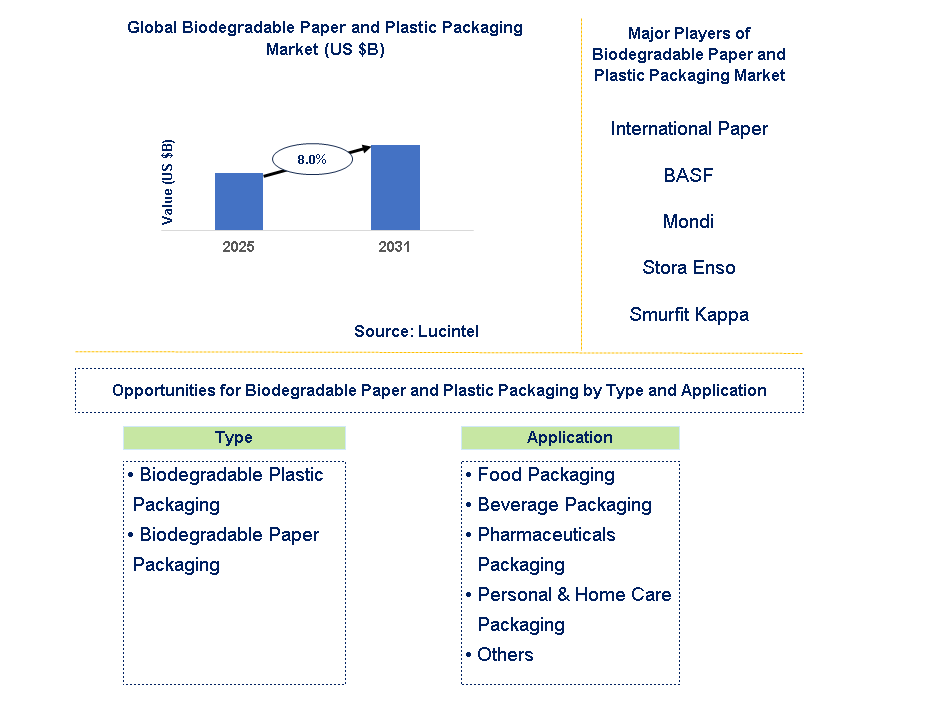
Key data points: The growth forecast = 8% annually for the next 7 years. Scroll below to get more insights. This market report covers trends, opportunities and forecasts in biodegradable paper and plastic packaging market to 2031 by type (biodegradable plastic packaging and biodegradable paper packaging), application (food packaging, beverage packaging, pharmaceuticals packaging, personal & home care packaging, and others), and region (North America, Europe, Asia Pacific, and the Rest of the World)
We'll send your sample report shortly.
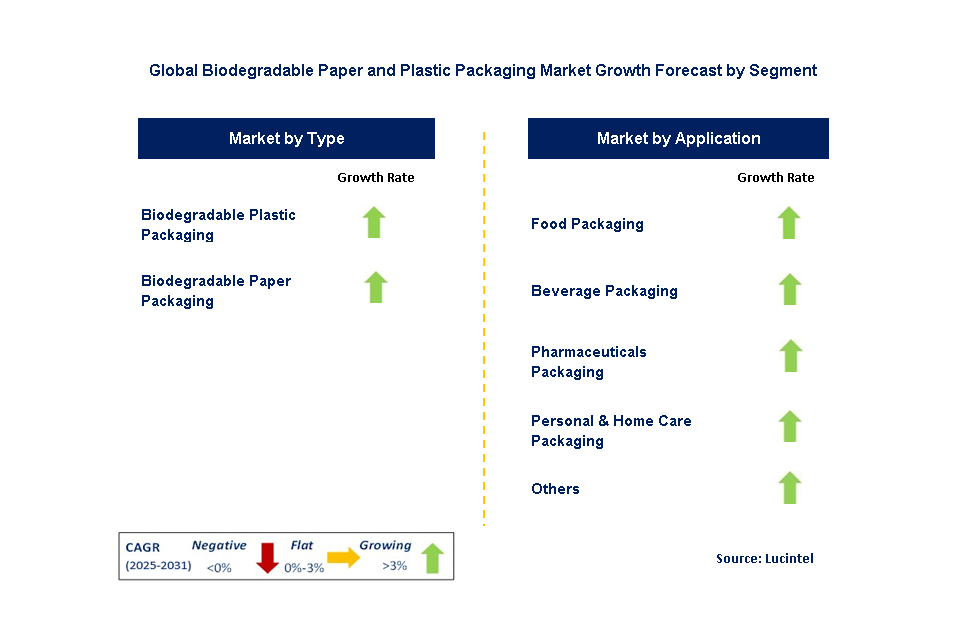
• Lucintel forecasts that, within the type category, biodegradable plastic packaging is expected to witness higher growth over the forecast period.
• Within the application category, food packaging is expected to witness the highest growth.
• In terms of region, North America is expected to witness the highest growth over the forecast period. Gain valuable insights for your business decisions with our comprehensive 150+ page report. Sample figures with some insights are shown below.
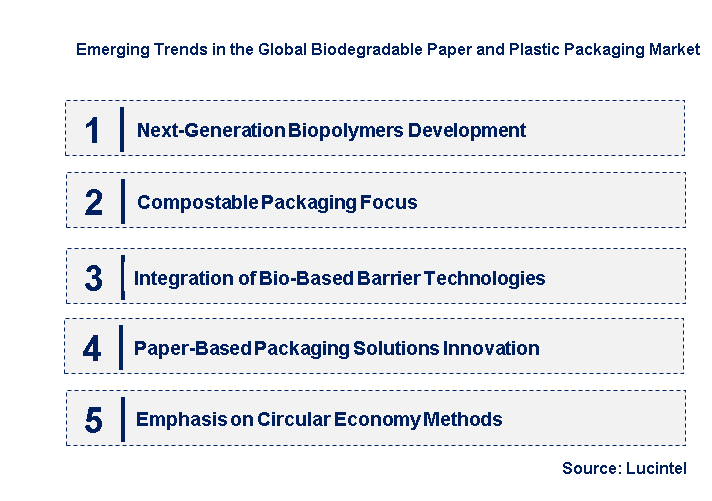
• Next-Generation Biopolymers Development: One of the strong trends is the R&D of advanced bioplastics with better performance properties, including better barrier functions, higher heat stability, and greater flexibility. These products include those from more varied renewable biomass sources than traditional starch and cellulose. The effect is the production of biodegradable plastics that can replace standard plastics in more aggressive applications, such as food packaging and industrial applications.
• Compostable Packaging Focus: Increased attention is being put on creating and marketing certified compostable packaging that degrades completely in industrial or domestic composting facilities, thereby keeping waste out of landfills. This encompasses not only bioplastics but also new paper-based products with compostable finishes. The effect is a decrease in plastic waste and the production of valuable compost for use in farming and horticulture.
• Integration of Bio-Based Barrier Technologies: One of the most significant challenges faced by biodegradable packaging has been the ability to provide sufficient barrier properties against water, oxygen, and grease. Trends of interest involve the creation of bio-based coatings and laminations for paper and bioplastic packaging that greatly improve their barrier capabilities without sacrificing biodegradability or composability. The result is the entry of biodegradable packaging into food and beverage applications that involve high barrier protection.
• Paper-Based Packaging Solutions Innovation: Technological advancements in paper are creating more robust, adaptable paper-based packaging with improved barrier functionality and performance. This comprises new paperboard structures, functional coatings, and molding processes enabling paper to replace plastics in a range of rigid and flexible pack types. The effect is the reduction of plastic consumption and the use of an easily recyclable and renewable resource.
• Emphasis on Circular Economy Methods: With growing emphasis on the development of biodegradable packaging through a circular economy model, the entire value chain from sourcing renewable raw materials through to end-of-life via composting or industrial biodegradation is considered. This involves optimizing material usage, ensuring recycling of bio-based material wherever possible, and establishing efficient waste management systems. The effect is a resource-efficient and more sustainable packaging system. These trends are collectively transforming the biodegradable paper and plastic packaging market by propelling innovation in materials and technologies, broadening application potential, and fostering more sustainable end-of-life solutions for packaging waste.
• Commercialization of PHA and Other New Biopolymers: Polyhydroxyalkanoates (PHAs) and other new-generation biopolymers from microbial fermentation or genetically engineered plants are heading towards increased commercial availability. These products tend to have better biodegradability and can be designed for a broader range of applications than first-generation bioplastics such as PLA. The effect is the presence of more versatile and high-performance biodegradable plastic substitutes.
• Advanced Cellulose-Based Materials Development: Advances in cellulose processing and modification, a biopolymer that is naturally found in abundance, are enabling the development of novel packaging materials with improved strength, barrier properties, and transparency. These include nanocellulose films and composites that can be used to replace traditional plastics in some flexible packaging applications. The effect is the use of a renewable resource for high-performance biodegradable packaging.
• Bio-Based Barrier Coating Breakthroughs: There has been substantial progress towards creating successful bio-based coatings for paper and bioplastic food packaging that form very effective barriers to moisture, oxygen, and grease. Typically derived from wax, protein, or polysaccharide crops, these coatings allow the employment of biodegradable packaging materials in food that once used conventional plastics or lamination. The effect is increased penetration into food and beverage packaging markets for biodegradable packaging.
• Composability Standard and Certification Improvements: There is an increasing focus on defining clear and strict standards and certifications for compostable packaging in various regions. This guarantees that biodegradable products actually degrade in composting facilities and do not produce toxic residues. The effect is greater consumer confidence and the creation of proper waste management infrastructure for compostable packaging.
• Integration with Smart Features and Digital Printing: Improvements in digital printing technologies are enabling biodegradable packaging to have high-quality, individualized printing. In addition, there is growing interest in using smart features such as NFC tags or QR codes within biodegradable packaging for better traceability, customer interaction, and product information. The effect is more functional and consumer-oriented biodegradable packaging solutions. These five major innovations are all pulling the biodegradable paper and plastic packaging market toward higher performance, sustainability, and functionality and thus making them ever more effective alternatives to traditional packaging materials.
• Food Packaging: The need for biodegradable packaging in food is huge, including rigid containers, films, bags, and wraps for fresh produce, processed foods, and foodservice disposables. Opportunities for growth are in creating materials that have sufficient barrier properties and shelf life to displace traditional plastics and minimize food waste. The effect is considerable plastic waste reduction from the food industry and increased food safety through sustainable packaging.
• E-commerce Packaging: With the growing e-commerce industry comes the need for sustainable and damage-free packaging products. Bioplastics or paper-based mailers, void filling, and protection wraps provide the eco-friendly equivalent of plastic packages used in web-based retail. The effect is a more eco-friendly e-commerce supply chain as well as increased brand reputation among environmentally aware web-based retailers.
• Cosmetics and Personal Care Packaging: Consumers in the cosmetics and personal care industry are increasingly demanding sustainable packaging. Biodegradable jars, bottles, tubes, and flexible pouches provide a chance to minimize plastic waste in this segment and meet the increasing desire for green beauty products. The effect is more eco-friendly packaging for the beauty segment and appeal to environmentally conscious consumers.
• Horticulture and Agriculture: Biodegradable mulch films, seed packaging, and plant pots have advantages like lower plastic waste in farms and disposal ease as they can break down directly into the soil. This saves labor and the environment. The effect is more sustainable agriculture and less plastic pollution in farming.
• Food Service and Catering Disposables: There is growing demand for biodegradable cutlery, plates, cups, and containers in the food service and catering markets because of regulations and consumer desire for more sustainable options compared to single-use plastics. This market offers huge growth potential for compostable and biodegradable product manufacturers. The effect is less plastic waste from the food service sector and more environmentally friendly eating habits. Leaning on these strategic growth opportunities in various applications will be essential to the ongoing growth and success of the biodegradable paper and plastic packaging market, providing environmental advantages and responding to changing consumer needs.
• International Paper
• BASF
• Mondi
• Stora Enso
• Smurfit Kappa
• Biodegradable Plastic Packaging
• Biodegradable Paper Packaging
• Food Packaging
• Beverage Packaging
• Pharmaceuticals Packaging
• Personal & Home Care Packaging
• Others
• North America
• Europe
• Asia Pacific
• The Rest of the World
• United States: The United States market for biodegradable paper and plastic packaging is marked by a strong emphasis on innovation in bioplastics and compostable packaging. Recent trends have seen more investment in research and development for next-generation biopolymers with enhanced durability and shelf life. There is also an increasing use of biodegradable packaging in consumer goods and food service, stimulated by state regulations and consumer preference for sustainable alternatives. In addition, partnerships between packaging firms and material producers are promoting the creation of customized biodegradable solutions.
• China: China is a large and fast-growing market for biodegradable packaging, fueled by strong national policies to reduce plastic pollution. Recent trends include huge government incentives for the manufacture and use of biodegradable plastics, especially in packaging and agriculture. In addition, there is increased emphasis on the development of starch-based and cellulose-based biodegradable products. Additionally, the fast-growing e-commerce industry is fueling demand for green packaging solutions for online shopping.
• Germany: Germany's market for biodegradable paper and plastic packaging is dominated by high-quality, certified compostable packaging and well-established infrastructure for waste management. New trends include the development of improved bio-based polymer technology, with better performance and broader application areas. Closed-loop systems and industrial composting projects are also prioritized to efficiently deal with biodegradable packaging waste. Consumer awareness and demand for sustainable packaging are also extremely high.
• India: India's biodegradable paper and plastic packaging sector is in an expansion stage, fueled by rising urbanization, expanding middle class, and growing environmental concerns. New trends include the creation of biodegradable packaging based on agricultural waste and other renewable resources that are locally available. Government support is also growing, and regulations are being put in place to encourage the use of biodegradable packaging, especially for single-use items. However, challenges related to cost and infrastructure remain.
• Japan: Japan's market for biodegradable paper and plastic packaging is dominated by a theme of high-performance biodegradable polymers and innovative paper-based solutions with high barrier properties. Recent trends include the creation of plant-based plastics with improved heat resistance and durability. Efficient waste management systems, such as composting, are also given a high priority to manage biodegradable packaging. In addition, consumer demand for eco-friendly products is a major growth driver for the market.


• International Paper
• BASF
• Mondi
• Stora Enso
• Smurfit Kappa Q5. Which biodegradable paper and plastic packaging market segment will be the largest in future? Answer: Lucintel forecasts that, within the type category, biodegradable plastic packaging is expected to witness higher growth over the forecast period. Q6. In biodegradable paper and plastic packaging market, which region is expected to be the largest in next 5 years? Answer: In terms of region, North America is expected to witness the highest growth over the forecast period. Q7. Do we receive customization in this report? Answer: Yes, Lucintel provides 10% customization without any additional cost.


Choose a license that fits your team. Instant PDF delivery.
Prices exclude taxes. Instant delivery. Custom licensing available on request.
Market Report · May 18, 2026
Market Report · May 18, 2026
Market Report · May 18, 2026
Trusted partner for strategic intelligence and business growth


Receive a complimentary market analysis tailored to your industry. Our analysts will identify key growth opportunities and competitive dynamics specific to your business.

Market size, growth rate, and key trend analysis for your specific sector.

Top competitor positioning and market share analysis.

Strategic recommendations backed by data-driven insights.
Get curated market intelligence and competitive moves straight to your inbox.
By subscribing, you agree to receive our monthly insights. Unsubscribe anytime.
Receive a complimentary market analysis tailored to your industry. Our analysts will identify key growth opportunities and competitive dynamics specific to your business.
Market size, growth rate, and key trend analysis for your specific sector.
Top competitor positioning and market share analysis.
Strategic recommendations backed by data-driven insights.
Get curated market intelligence, emerging trends, and competitive moves straight to your inbox each month.
By subscribing, you agree to receive our monthly insights. Unsubscribe anytime.
We'll send your sample report shortly.