
Market Report · July 16, 2026

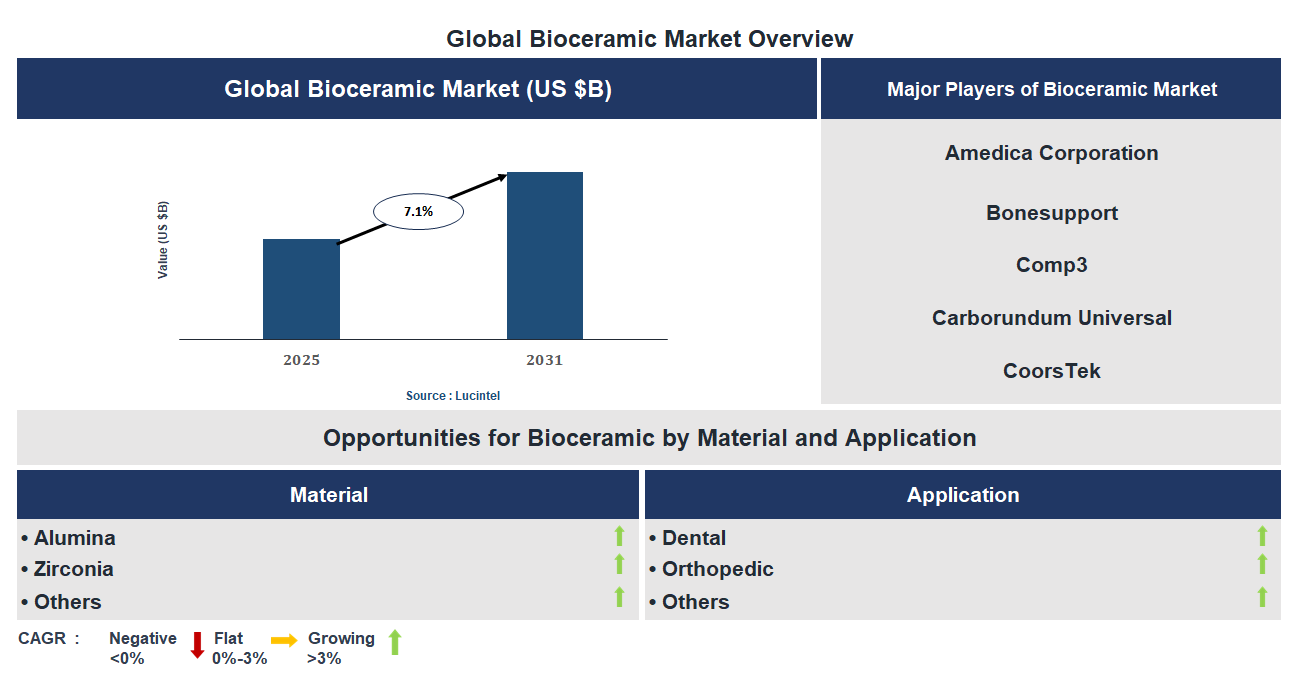
Key data points: The growth forecast = 7.1% annually for the next 7 years. Scroll below to get more insights. This market report covers trends, opportunities and forecasts in bioceramic market to 2031 by material (alumina, zirconia, and others), application (dental, orthopedic, and others), and region (North America, Europe, Asia Pacific, and the Rest of the World)
We'll send your sample report shortly.
• Lucintel forecasts that, within the material category, alumina is expected to witness higher growth over the forecast period.
• Within the application category, dental is expected to witness higher growth.
• In terms of region, North America is expected to witness the highest growth over the forecast period. Gain valuable insights for your business decisions with our comprehensive 150+ page report. Sample figures with some insights are shown below.
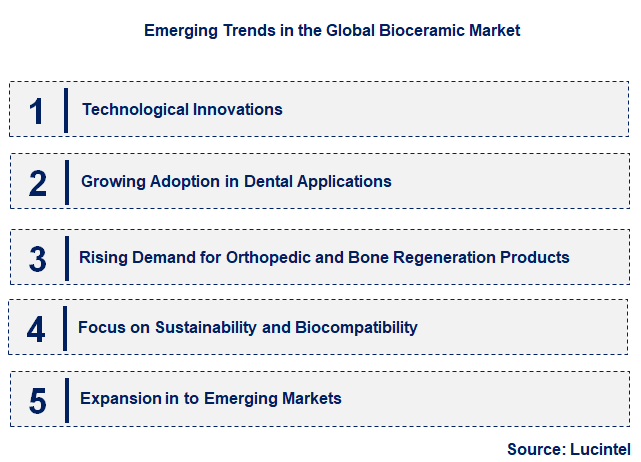
• Technological Innovations: The market is witnessing significant advancements in bioceramic formulations and manufacturing processes. Researchers are developing new composites with enhanced bioactivity, mechanical strength, and longevity. Innovations such as 3D printing and nanotechnology enable precise customization of bioceramic implants and devices, improving patient outcomes. These technological strides are reducing costs, increasing accessibility, and expanding the scope of bioceramic applications in orthopedics, dentistry, and tissue engineering. As a result, the market is becoming more versatile and capable of addressing complex medical needs with tailored solutions.
• Growing Adoption in Dental Applications: The dental sector is a major driver of bioceramic market growth, with products like root canal sealers, endodontic repair materials, and crowns gaining popularity. Bioceramics offer superior biocompatibility, sealing ability, and durability compared to traditional materials. The increasing prevalence of dental diseases and the rising demand for minimally invasive procedures are fueling this trend. Additionally, the development of bioactive and aesthetic bioceramic materials is attracting more dental practitioners. This expansion is significantly boosting market revenues and encouraging further research into innovative dental bioceramic solutions.
• Rising Demand for Orthopedic and Bone Regeneration Products: Bioceramics are increasingly used in orthopedic surgeries for bone repair, joint replacements, and tissue regeneration. Their osteoconductive and osteoinductive properties facilitate faster healing and integration with natural bone. The aging population and rising incidence of osteoporosis and fractures are driving demand for bioceramic-based implants and scaffolds. Companies are investing in developing stronger, more adaptable bioceramic materials that can mimic natural bone properties. This trend is expanding the market’s scope, improving patient recovery times, and reducing the need for revision surgeries.
• Focus on Sustainability and Biocompatibility: Environmental concerns and regulatory pressures are prompting manufacturers to develop eco-friendly, sustainable bioceramic products. These materials are derived from natural sources and require less energy-intensive manufacturing processes. Additionally, biocompatibility and safety are becoming critical factors, with emphasis on non-toxic, biodegradable, and bioactive materials that promote tissue regeneration. This focus is not only enhancing product acceptance but also aligning the market with global sustainability goals. As a result, the industry is moving towards greener, safer, and more ethically produced bioceramic solutions.
• Expansion into Emerging Markets: Developing regions are increasingly adopting bioceramic technologies due to rising healthcare infrastructure, increasing awareness, and improving economic conditions. Countries in Asia-Pacific, Latin America, and Africa are witnessing rapid growth in medical tourism and healthcare investments, creating new opportunities for bioceramic products. Local manufacturers are entering the market, often supported by government initiatives and international collaborations. This expansion is diversifying the market landscape, reducing dependency on traditional markets, and fostering innovation tailored to regional needs. It is also helping to bridge healthcare disparities by providing advanced bioceramic solutions to underserved populations. In summary, these emerging trends are reshaping the bioceramic market by fostering innovation, expanding application areas, emphasizing sustainability, and penetrating new geographic regions. This evolution is making bioceramics more integral to modern healthcare, enhancing patient outcomes, and creating a more competitive and sustainable industry landscape.
• Technological Innovations in Material Formulations: New bioceramic compositions with enhanced bioactivity and mechanical properties are improving implant longevity and performance, leading to increased adoption in dental and orthopedic applications.
• Expansion of Dental Applications: The use of bioceramics in endodontics, implants, and restorative procedures is growing rapidly, driven by their biocompatibility and aesthetic benefits, thus expanding the market reach.
• Regulatory Approvals and Certifications: Increased approvals from health authorities for bioceramic products are boosting market confidence, facilitating wider clinical adoption and commercialization.
• Integration with Other Biomaterials: Combining bioceramics with polymers and metals is creating composite materials that offer improved functionality, opening new avenues for complex medical procedures.
• Customization and 3D Printing Technologies: The adoption of 3D printing for personalized bioceramic implants is revolutionizing treatment options, providing tailored solutions that enhance patient outcomes. The recent developments in the bioceramic market are significantly impacting the industry by enhancing product efficacy, broadening application scopes, and fostering innovation. These advancements are driving market growth, attracting investments, and improving patient care standards. As a result, the industry is poised for sustained expansion, with ongoing research and technological integration playing crucial roles in shaping its future trajectory.
• Enhanced Dental Implants and Restorations : The demand for durable, biocompatible materials in dental implants and restorations is rising, driven by increasing dental issues and cosmetic concerns. Bioceramics like zirconia offer improved aesthetics and longevity, leading to better patient satisfaction and reduced failure rates. This growth enhances the market by expanding the scope of dental solutions and attracting new investments in dental bioceramics.
• Advanced Bone Graft Substitutes : Bioceramics such as hydroxyapatite and tricalcium phosphate are increasingly used in bone grafts and implants due to their osteoconductive properties. These materials promote faster healing and integration with natural bone, reducing recovery times. The impact is a broader adoption of bioceramics in orthopedic surgeries, improving patient outcomes and reducing healthcare costs.
• Scaffold Development for Regenerative Medicine : Bioceramics are vital in creating scaffolds that support cell growth and tissue regeneration. Innovations in porous bioceramics facilitate better nutrient flow and cell attachment, advancing regenerative therapies. This opportunity accelerates the development of personalized treatments and expands the application of bioceramics in complex tissue repair.
• Bioceramic Coatings for Enhanced Performance : The use of bioceramic coatings on surgical tools and implants improves wear resistance, biocompatibility, and antimicrobial properties. This enhances device longevity and reduces infection risks, leading to safer surgical procedures. The growth in this segment supports the development of smarter, more durable surgical solutions.
• Skin Rejuvenation and Scar Treatment : Bioceramics are increasingly used in cosmetic procedures for skin rejuvenation and scar treatment due to their biocompatibility and healing properties. These applications offer minimally invasive options with faster recovery times, expanding the market for aesthetic medicine and improving patient satisfaction. In summary, these key growth opportunities across applications are significantly impacting the bioceramic market by driving innovation, expanding application scope, and improving patient outcomes. The increasing adoption of bioceramics in diverse medical fields is fostering market growth, attracting investments, and encouraging technological advancements, ultimately shaping a robust future for the industry.
• Technological Innovation: The continuous development of advanced bioceramic materials, such as bioactive and bioresorbable ceramics, enhances their performance in medical applications like implants and dental restorations. Innovations in manufacturing techniques, including 3D printing, allow for customized solutions, improving patient outcomes and expanding market opportunities. These technological advancements reduce costs and improve product efficacy, making bioceramics more accessible and appealing to healthcare providers and patients alike.
• Growing Healthcare Expenditure: Increasing global healthcare spending, especially in emerging economies, boosts demand for bioceramic-based medical devices and implants. As populations age and chronic diseases rise, the need for durable, biocompatible materials grows. Governments and private sectors investing in healthcare infrastructure further stimulate market growth, encouraging manufacturers to develop and supply innovative bioceramic solutions that meet rising clinical demands.
• Rising Prevalence of Dental and Orthopedic Disorders: The increasing incidence of dental issues, osteoporosis, and joint disorders drives demand for bioceramic implants and restorative materials. Patients seek minimally invasive and long-lasting solutions, which bioceramics can provide due to their biocompatibility and durability. This trend encourages research and development, expanding the application scope of bioceramics in various medical fields and fueling market growth.
• Regulatory Approvals and Standards: Stringent regulatory frameworks, such as FDA approvals and CE markings, ensure the safety and efficacy of bioceramic products. These standards build trust among healthcare providers and patients, facilitating market acceptance and adoption. Regulatory support also encourages innovation by setting clear guidelines for product development, although navigating these processes can be time-consuming and costly for manufacturers. The challenges in the bioceramic market are:
• High Production Costs: Manufacturing bioceramics involves complex processes, high-quality raw materials, and advanced equipment, leading to elevated production costs. These expenses can limit the affordability of bioceramic products, restricting their adoption, especially in cost-sensitive markets. Additionally, scaling up production while maintaining quality standards remains a significant challenge, impacting overall market competitiveness.
• Stringent Regulatory Processes: The approval process for bioceramic medical devices is rigorous and time-consuming, often requiring extensive clinical trials and documentation. This regulatory landscape can delay product launches, increase development costs, and create barriers for new entrants. Navigating diverse international regulations adds complexity, potentially hindering market expansion and innovation.
• Competition from Alternative Materials: Bioceramics face competition from other biomaterials such as metals, polymers, and composites, which may offer lower costs or different functional advantages. The availability of alternative materials can limit market share growth for bioceramics, especially if they are perceived as less versatile or more expensive. Continuous innovation and differentiation are necessary to maintain a competitive edge in this evolving landscape. In summary, the bioceramic market is shaped by significant technological advancements, increasing healthcare investments, and rising demand for durable medical solutions. However, high production costs, regulatory hurdles, and competition from alternative materials pose substantial challenges. These factors collectively influence market dynamics, requiring stakeholders to innovate, adapt, and navigate complex regulatory environments. Overall, the market‘s growth potential remains promising, provided these drivers are leveraged effectively and challenges are addressed strategically.
• Amedica Corporation
• Bonesupport
• Comp3
• Carborundum Universal
• CoorsTek
• Jyoti Ceramic Industries
• Kyocera Corporation
• Morgan Advanced Types
• Nobel Biocare Holding
• Sagemax Bioceramics
• Alumina
• Zirconia
• Others
• Dental
• Orthopedic
• Others
• North America
• Europe
• Asia Pacific
• The Rest of the World
• United States: The US market has seen rapid innovation with new bioceramic formulations for dental and orthopedic applications. Leading companies are investing heavily in R&D to develop bioactive and resorbable ceramics. Regulatory agencies like the FDA are streamlining approval processes, encouraging market growth. The adoption of 3D printing technology for custom implants is increasing, alongside collaborations between academia and industry to develop advanced bioceramics. The US also focuses on sustainable production methods, reducing environmental impact while improving material performance.
• China: China is experiencing robust growth in the bioceramic market, driven by a large patient population and government initiatives supporting healthcare innovation. Local manufacturers are expanding their product portfolios with cost-effective, high-quality bioceramics for dental and bone repair. The country is investing in research to improve biocompatibility and mechanical properties. Increasing adoption of minimally invasive procedures and growing healthcare infrastructure are fueling demand. Additionally, China is becoming a hub for bioceramic manufacturing, exporting products globally and fostering international collaborations.
• Germany: Germany remains a leader in bioceramic research and manufacturing, emphasizing high-quality, precision-engineered materials. The country’s focus on sustainable and eco-friendly production processes aligns with European regulations. German companies are innovating in dental and orthopedic bioceramics, integrating nanotechnology to enhance bioactivity. The strong presence of research institutions and collaborations with healthcare providers support continuous advancements. Germany also benefits from a well-established regulatory framework, facilitating the approval and commercialization of new bioceramic products across Europe.
• India: The Indian bioceramic market is rapidly expanding, driven by increasing healthcare awareness and rising incidences of dental and orthopedic conditions. Local manufacturers are focusing on affordable, high-performance bioceramics to meet domestic demand. Government initiatives to promote medical tourism and healthcare infrastructure development are boosting market growth. R&D efforts are underway to develop bioceramics suitable for local needs, including bioresorbable and composite materials. The growing presence of startups and collaborations with international firms are further accelerating innovation and adoption in India.
• Japan: Japan’s bioceramic market is characterized by advanced research and high-quality manufacturing standards. The country emphasizes the development of bioceramics with enhanced durability and bioactivity for dental and joint replacements. Japan’s aging population drives demand for innovative orthopedic solutions, including bioceramic implants. The integration of nanotechnology and surface modification techniques is improving material performance. Japan also invests in sustainable production practices and regulatory compliance, ensuring the global competitiveness of its bioceramic products. Collaborations between academia and industry continue to foster cutting-edge developments in this sector.


• Amedica Corporation
• Bonesupport
• Comp3
• Carborundum Universal
• CoorsTek
• Jyoti Ceramic Industries
• Kyocera Corporation
• Morgan Advanced Types
• Nobel Biocare Holding
• Sagemax Bioceramics Q5. Which bioceramic market segment will be the largest in future? Answer: Lucintel forecasts that, within the material category, alumina is expected to witness higher growth over the forecast period. Q6. In bioceramic market, which region is expected to be the largest in next 5 years? Answer: In terms of region, North America is expected to witness the highest growth over the forecast period. Q7. Do we receive customization in this report? Answer: Yes, Lucintel provides 10% customization without any additional cost.


Choose a license that fits your team. Instant PDF delivery.
Prices exclude taxes. Instant delivery. Custom licensing available on request.
Market Report · July 16, 2026
Market Report · July 15, 2026
Market Report · July 15, 2026
Trusted partner for strategic intelligence and business growth


Receive a complimentary market analysis tailored to your industry. Our analysts will identify key growth opportunities and competitive dynamics specific to your business.

Market size, growth rate, and key trend analysis for your specific sector.

Top competitor positioning and market share analysis.

Strategic recommendations backed by data-driven insights.
Get curated market intelligence and competitive moves straight to your inbox.
By subscribing, you agree to receive our monthly insights. Unsubscribe anytime.
Receive a complimentary market analysis tailored to your industry. Our analysts will identify key growth opportunities and competitive dynamics specific to your business.
Market size, growth rate, and key trend analysis for your specific sector.
Top competitor positioning and market share analysis.
Strategic recommendations backed by data-driven insights.
Get curated market intelligence, emerging trends, and competitive moves straight to your inbox each month.
By subscribing, you agree to receive our monthly insights. Unsubscribe anytime.
We'll send your sample report shortly.