
Market Report · May 18, 2026

This market report covers trends, opportunities, and forecasts in the global big data analytics tool market to 2031 by technology (data visualization tools, predictive analytics platforms, data mining and etl tools, real-time analytics solutions, and machine learning & ai integration), end use industry (bfsi, healthcare, retail, manufacturing, it and telecommunications, government, and others), and region (North America, Europe, Asia Pacific, and the Rest of the World)
We'll send your sample report shortly.
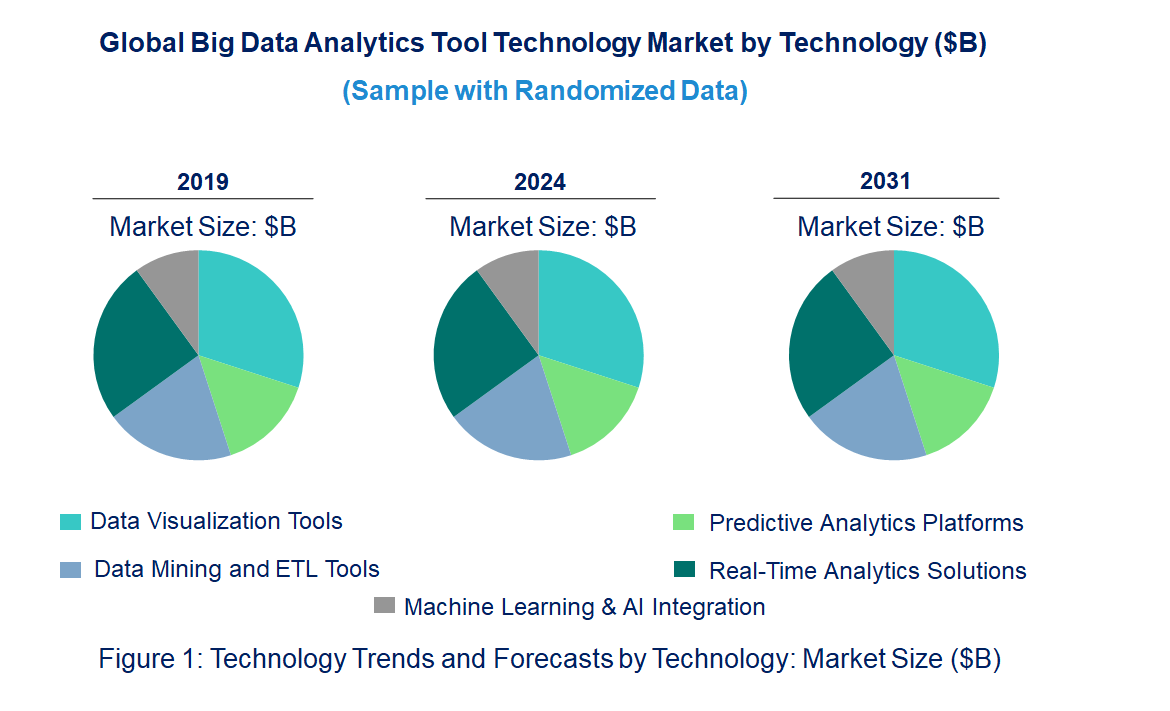
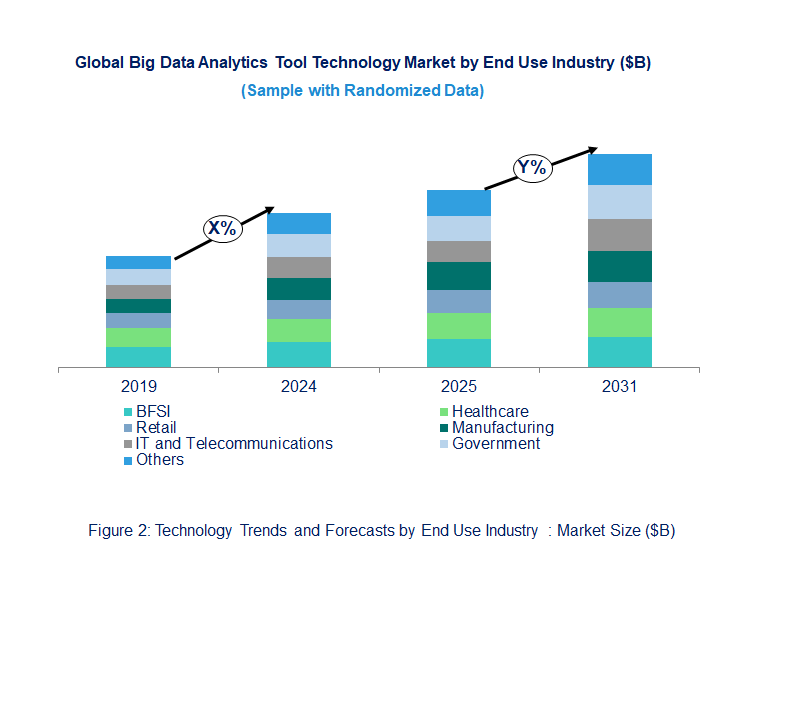
• Integration of AI and Machine Learning with Analytics Tools: AI and machine learning technologies enhance the predictive capabilities of analytics tools by automating data processing and decision-making. This shift allows businesses to move beyond descriptive analytics toward prescriptive insights that drive proactive strategies.
• Rise of Real-Time Analytics Solutions: Real-time analytics enable instant data processing and immediate insights, which are crucial for industries such as BFSI and healthcare. This capability allows organizations to respond swiftly to emerging trends and operational challenges.
• Enhanced Data Visualization Capabilities: Advanced visualization tools offer interactive dashboards and augmented analytics that simplify complex data. This improves user accessibility and supports more informed decision-making across all organizational levels.
• Growth in Predictive Analytics Platforms: Predictive analytics platforms empower businesses to forecast market trends, customer behavior, and potential operational risks. This foresight helps companies anticipate changes and tailor their strategies accordingly.
• Advancements in Data Mining and ETL Tools: Improved data mining and ETL processes streamline data extraction, transformation, and loading, ensuring higher data quality. Reliable and clean data underpins more accurate and actionable analytics outcomes. These technological advancements collectively drive the big data analytics tool market toward smarter, faster, and more user-friendly solutions. By enabling more precise predictions, real-time insights, and better data accessibility, these trends are helping organizations unlock the full potential of their data, ultimately transforming business performance and competitiveness.
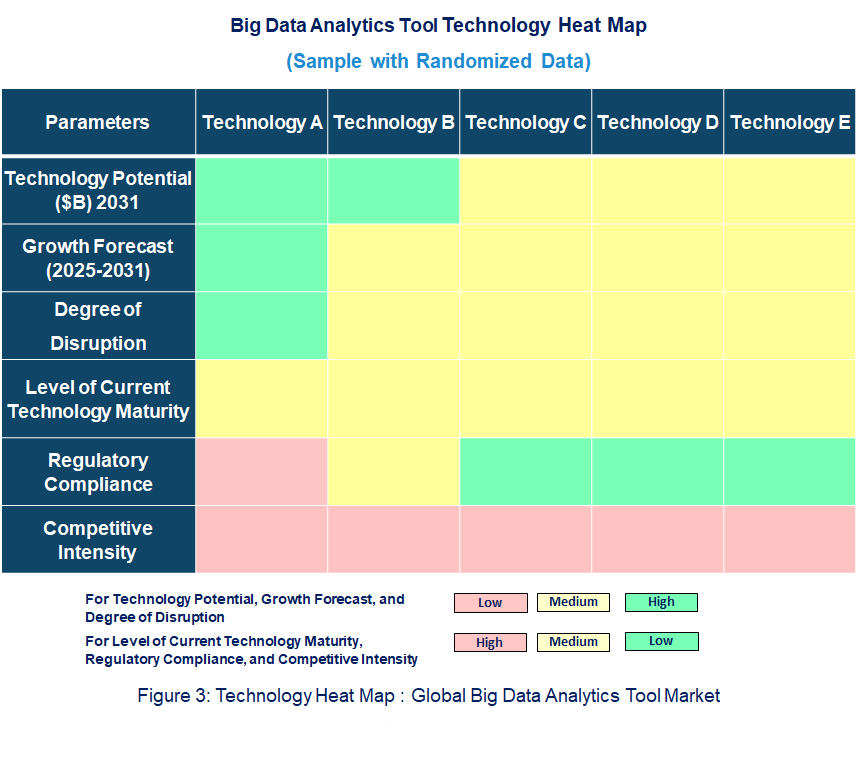
• Technology Potential: The big data analytics tool market holds significant potential to revolutionize how organizations derive value from data. Data visualization tools have matured considerably, providing intuitive interfaces that democratize access to insights.
• Degree of Disruption: Predictive analytics platforms and machine learning integration offer high disruption potential by moving beyond retrospective analysis to forecasting and automated recommendations. Real-time analytics solutions disrupt traditional batch processing by delivering immediate, actionable data.
• Level of Current Technology Maturity: Data mining and ETL tools are foundational technologies that continue evolving to handle larger, more complex datasets efficiently. Across these technologies, maturity levels vary: visualization and ETL tools are well-established, whereas AI-driven analytics and real-time processing are rapidly advancing but still evolving. Regulatory compliance is a critical consideration, particularly in industries like BFSI and healthcare, where data privacy, security, and governance frameworks dictate tool adoption and design.
• Regulatory Compliance: Compliance requirements drive innovation in secure data handling, audit trails, and transparent algorithmic processes. The interplay between technological advancement and regulatory landscapes creates a dynamic environment where vendors must balance innovation with compliance. Overall, the market’s growth is propelled by the increasing need for timely, accurate, and compliant data insights to support strategic decision-making.
• IBM Corporation: IBM is integrating advanced AI capabilities into its analytics platforms, enhancing predictive accuracy and enabling prescriptive analytics. This empowers organizations to not only understand past trends but also to automate decision-making for future scenarios.
• Microsoft Corporation: Microsoft is expanding Azure Synapse Analytics and Power BI to strengthen cloud-based analytics and data visualization. These tools provide scalable, user-friendly environments that support complex data analysis and facilitate better business intelligence.
• Oracle Corporation: Oracle advances its autonomous database features combined with real-time analytics integration, offering enterprises enhanced efficiency and rapid insights. These innovations reduce manual intervention and improve data reliability.
• SAP SE: SAP is enhancing its Analytics Cloud by incorporating AI-driven augmented analytics and predictive tools, helping businesses uncover deeper insights and make more informed, data-driven decisions.
• SAS Institute: SAS continues to refine its advanced analytics suite with a strong focus on machine learning, enabling organizations to build sophisticated models for risk management, forecasting, and operational optimization.
• Teradata Corporation: Teradata emphasizes scalable real-time analytics and hybrid cloud capabilities, allowing businesses to process large data volumes quickly while maintaining flexibility between on-premises and cloud environments.
• Amazon Web Services (AWS): AWS improves its analytics ecosystem through services like Amazon QuickSight and SageMaker, which facilitate seamless AI and machine learning integration, making predictive analytics more accessible and scalable. Through continuous innovation in AI, cloud, and real-time processing, these leading firms are shaping the future of big data analytics tools. Their scalable, intelligent, and user-friendly solutions are empowering organizations worldwide to harness data more effectively, driving improved decision-making and competitive advantage in the digital age.
• Growing Demand for Real-Time Decision Making: Organizations require real-time insights to stay competitive in fast-moving environments. Big data tools that offer real-time analytics enable immediate responses to trends and anomalies, especially in sectors like finance, healthcare, and e-commerce, driving operational agility and customer satisfaction.
• Adoption of AI and Machine Learning: Integration of AI and ML into analytics tools enhances predictive capabilities and automates complex decision-making processes. This shift from descriptive to prescriptive analytics allows businesses to anticipate outcomes and act proactively, thus improving efficiency and innovation.
• Cloud-Based Analytics Solutions: Cloud platforms provide scalable, cost-effective environments for big data processing and storage. This democratizes access to advanced analytics, enabling organizations of all sizes to analyze large datasets without investing heavily in infrastructure.
• Expansion of Data Visualization Capabilities: Interactive and intuitive visualization tools make complex data more accessible to non-technical users. Enhanced dashboards and storytelling features support better decision-making by simplifying data interpretation across all organizational levels.
• Growth in Predictive and Prescriptive Analytics: The increasing need to forecast customer behavior, market trends, and operational risks fuels the demand for predictive and prescriptive analytics. These capabilities help businesses to optimize strategies and mitigate risks proactively. Key Challenges in the Market:
• Data Security and Privacy Concerns: Handling sensitive data in analytics platforms raises concerns about compliance and cybersecurity. Ensuring data protection while maintaining analytical efficiency is a persistent challenge for solution providers.
• Integration with Legacy Systems: Many businesses still operate on outdated systems, making it difficult to integrate modern big data tools. This limits adoption and delays digital transformation efforts.
• Shortage of Skilled Professionals: The lack of data scientists and skilled analysts hampers effective tool utilization. This talent gap slows down implementation and reduces the return on investment in analytics technologies. The big data analytics tool market is being reshaped by powerful drivers such as AI integration, cloud adoption, and real-time analytics needs. While challenges like security, integration, and talent shortages remain, the growth opportunities are significantly enhancing the market’s scope. These advancements are enabling smarter, faster, and more inclusive decision-making across industries, solidifying big data analytics as a cornerstone of digital transformation.
• IBM Corporation
• Microsoft Corporation
• Oracle Corporation
• SAP SE
• SAS Institute
• Teradata Corporation
• Technology Readiness by Technology Type: Data visualization tools are highly mature and widely adopted, offering advanced interactivity, dashboarding, and reporting features with strong market competition. Predictive analytics platforms are moderately mature, with readiness depending on data quality and model explainability; they’re widely used in marketing, finance, and healthcare. Data mining and ETL tools are stable and essential, with mature platforms like Apache NiFi and Talend supporting large-scale, complex data pipelines. Real-time analytics solutions are technically advanced but require significant infrastructure and are gaining momentum in time-sensitive industries. Machine learning and AI integration is evolving rapidly, offering scalable, automated insights, but faces readiness hurdles in ethical AI and regulatory alignment. Competitive pressure is intense in ML/AI and visualization segments due to innovation speed and ease of adoption. Regulatory compliance is critical in predictive and AI tools due to decisions’ impact on individuals and business outcomes. Key applications span operational dashboards (visualization), churn prediction (predictive), data wrangling (ETL), fraud detection (real-time), and recommendation engines (AI).
• Competitive Intensity and Regulatory Compliance: The big data analytics tool market is characterized by fierce competition and increasing regulatory oversight. Data visualization tools face high competition with low switching costs, requiring vendors to innovate on user experience and integration. Predictive analytics platforms compete on algorithm sophistication and domain customization, often targeting niche industries. Data mining and ETL tools must balance performance with interoperability across diverse data environments. Real-time analytics providers are in a race to deliver ultra-low-latency insights, crucial for sectors like finance and e-commerce. Machine learning and AI integration faces the highest competitive intensity, as tech giants and startups alike invest heavily in scalable, intelligent solutions. Regulatory compliance is growing in importance, especially for AI/ML, where explainability, fairness, and data privacy laws such as GDPR and CCPA apply. Vendors must embed compliance features without hindering performance. As data becomes a regulated asset, tool providers must demonstrate both technical and ethical accountability. This dynamic creates pressure for transparency, security, and responsible innovation.
• Disruption Potential by Technology Type: The big data analytics tool market is experiencing significant disruption due to rapid advancements in core technologies. Data visualization tools like Tableau and Power BI revolutionize how stakeholders interpret complex datasets, enabling intuitive decision-making. Predictive analytics platforms enhance foresight by leveraging historical data to forecast trends and outcomes, reshaping business strategy. Data mining and ETL tools streamline the extraction, transformation, and loading of large datasets, increasing data availability and integration speed. Real-time analytics solutions allow businesses to respond instantly to changes, unlocking new levels of operational agility. Machine learning and AI integration automate pattern recognition and predictive modeling, pushing analytics from descriptive to prescriptive. Together, these tools dismantle traditional data silos and promote data-driven cultures. Their disruptive potential lies in increasing accessibility to advanced analytics for non-technical users. These innovations drive faster, smarter business decisions and open new avenues for monetizing data. Overall, they redefine the capabilities and reach of analytics across industries.
• Data Visualization Tools
• Predictive Analytics Platforms
• Data Mining and ETL Tools
• Real-Time Analytics Solutions
• Machine Learning & AI Integration
• BFSI
• Healthcare
• Retail
• Manufacturing
• IT and Telecommunications
• Government
• Others
• North America
• Europe
• Asia Pacific
• The Rest of the World
• Latest Developments and Innovations in the Big Data Analytics Tool Technologies
• Companies / Ecosystems
• Strategic Opportunities by Technology Type


Choose a license that fits your team. Instant PDF delivery.
Prices exclude taxes. Instant delivery. Custom licensing available on request.
Market Report · May 18, 2026
Market Report · May 18, 2026
Market Report · May 18, 2026
Trusted partner for strategic intelligence and business growth


Receive a complimentary market analysis tailored to your industry. Our analysts will identify key growth opportunities and competitive dynamics specific to your business.

Market size, growth rate, and key trend analysis for your specific sector.

Top competitor positioning and market share analysis.

Strategic recommendations backed by data-driven insights.
Get curated market intelligence and competitive moves straight to your inbox.
By subscribing, you agree to receive our monthly insights. Unsubscribe anytime.
Receive a complimentary market analysis tailored to your industry. Our analysts will identify key growth opportunities and competitive dynamics specific to your business.
Market size, growth rate, and key trend analysis for your specific sector.
Top competitor positioning and market share analysis.
Strategic recommendations backed by data-driven insights.
Get curated market intelligence, emerging trends, and competitive moves straight to your inbox each month.
By subscribing, you agree to receive our monthly insights. Unsubscribe anytime.
We'll send your sample report shortly.