
Market Report · July 31, 2026

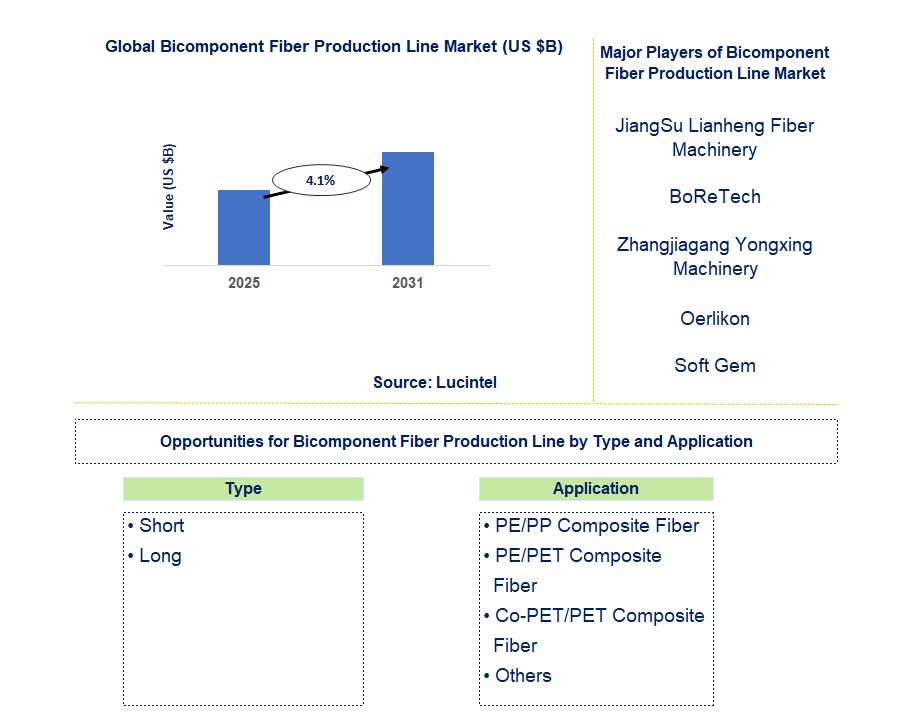
Key data points: The growth forecast = 4.1% annually for the next 7 years. Scroll below to get more insights. This market report covers Trends, opportunities and forecasts in bicomponent fiber production line market to 2031 by type (Short and Long), application (PE/PP Composite Fiber, PE/PET Composite Fiber, Co-PET/PET Composite Fiber, and Others), and region (North America, Europe, Asia Pacific, and the Rest of the World)
We'll send your sample report shortly.
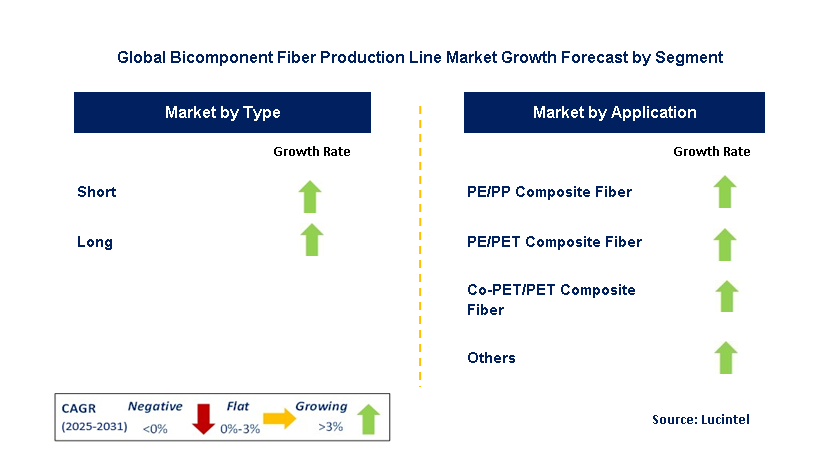
• Lucintel forecasts that, within the type category, long is expected to witness higher growth over the forecast period.
• Within the application category, PE/PET Composite Fiber is expected to witness the highest growth.
• In terms of region, APAC is expected to witness the highest growth over the forecast period.
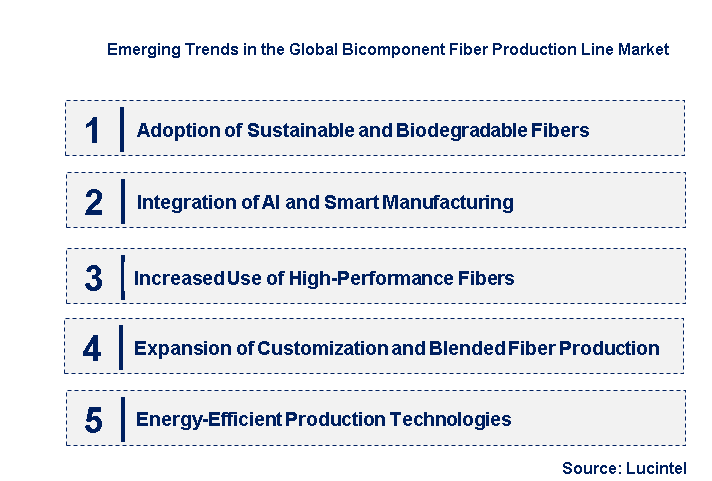
• Adoption of Sustainable and Biodegradable Fibers: Manufacturers are shifting towards biodegradable fibers made from natural or recycled materials. This trend is driven by environmental regulations and consumer preference for eco-friendly products.
• Integration of AI and Smart Manufacturing: AI-driven production lines are improving fiber quality, reducing waste, and optimizing operational efficiency. Smart monitoring systems allow real-time adjustments to enhance precision.
• Increased Use of High-Performance Fibers: The demand for advanced fibers with enhanced durability, flexibility, and thermal resistance is growing in technical textiles, hygiene products, and filtration applications.
• Expansion of Customization and Blended Fiber Production: Companies are focusing on multi-layered fiber compositions to meet industry-specific requirements, allowing improved strength, softness, and absorption in various applications.
• Energy-Efficient Production Technologies: New machinery is designed to consume less energy while maintaining high production speeds. This helps manufacturers lower operational costs and reduce their environmental footprint. The bicomponent fiber production line market is shifting towards sustainable materials, smart manufacturing, and high-performance fibers. These trends are enhancing efficiency, product quality, and market competitiveness.
• Introduction of Smart Monitoring Systems: AI-powered sensors are being integrated into production lines to improve quality control and reduce defects in fiber manufacturing.
• Investment in Biodegradable Fiber Technology: Companies are developing biodegradable fibers to meet regulatory and environmental demands, promoting a shift towards sustainable textile production.
• Automation and Robotics in Production Lines: Manufacturers are implementing robotic systems to enhance precision, reduce labor costs, and improve production speed.
• Development of High-Tensile Strength Fibers: Research in fiber engineering is leading to stronger, more durable materials suitable for industrial and technical applications.
• Implementation of Energy-Saving Production Methods: Energy-efficient spinning and extrusion technologies are reducing production costs and environmental impact while maintaining high output quality. The bicomponent fiber production line market is advancing with smart automation, sustainability, and high-performance material innovations, leading to improved efficiency and competitive market positioning.
• Growth in Hygiene and Medical Applications: The demand for soft, absorbent, and antibacterial fibers in hygiene products is driving investment in advanced bicomponent fiber production lines.
• Expansion in Nonwoven Textiles: Increasing use of nonwoven fabrics in filtration, automotive, and home furnishings is creating opportunities for manufacturers to develop specialized bicomponent fibers.
• Rise in Eco-Friendly and Biodegradable Fibers: Companies investing in sustainable fiber production for packaging and textiles are gaining a competitive advantage in environmentally conscious markets.
• Advancements in High-Performance Industrial Applications: The use of bicomponent fibers in construction, automotive, and aerospace industries is growing, leading to higher demand for durable and thermal-resistant fibers.
• Integration of AI and Automation for Precision Manufacturing: The adoption of smart production technologies is enhancing fiber quality, reducing waste, and increasing production efficiency. The bicomponent fiber production line market is expanding across hygiene, nonwovens, sustainable materials, and industrial applications. Companies that capitalize on these opportunities will strengthen their market presence.
• JiangSu Lianheng Fiber Machinery
• BoReTech
• Zhangjiagang Yongxing Machinery
• Oerlikon
• Soft Gem
• Jwell Machinery
• Gangying Industry
• Short
• Long
• PE/PP Composite Fiber
• PE/PET Composite Fiber
• Co-PET/PET Composite Fiber
• Others
• North America
• Europe
• Asia Pacific
• The Rest of the World
• United States: The U.S. market is experiencing growth due to rising demand for high-performance fibers in hygiene, filtration, and textile applications. Companies are investing in automated production lines and eco-friendly fiber technologies to enhance efficiency and meet regulatory requirements.
• China: China is expanding its bicomponent fiber production capabilities with large-scale investments in advanced manufacturing technologies. The focus is on biodegradable fibers and energy-efficient production processes to meet domestic and global sustainability standards.
• Germany: Germany remains a leader in precision manufacturing, with companies integrating AI and IoT solutions into production lines. The emphasis is on recyclable fibers and automation-driven quality control to improve productivity and reduce operational costs.
• India: India is witnessing increased investments in bicomponent fiber production, particularly for the hygiene and nonwoven textile sectors. The government’s push for domestic manufacturing and sustainable materials is accelerating market growth.
• Japan: Japan is focusing on innovation in fiber blending techniques to enhance durability and softness. The market is adopting nanotechnology-based fiber production for high-value applications in medical and technical textiles.


• JiangSu Lianheng Fiber Machinery
• BoReTech
• Zhangjiagang Yongxing Machinery
• Oerlikon
• Soft Gem
• Jwell Machinery
• Gangying Industry Q5. Which bicomponent fiber production line market segment will be the largest in future? Answer: Lucintel forecasts that, within the type category, long is expected to witness higher growth over the forecast period. Q6. In bicomponent fiber production line market, which region is expected to be the largest in next 5 years? Answer: In terms of region, APAC is expected to witness the highest growth over the forecast period. Q7. Do we receive customization in this report? Answer: Yes, Lucintel provides 10% customization without any additional cost.


Choose a license that fits your team. Instant PDF delivery.
Prices exclude taxes. Instant delivery. Custom licensing available on request.
Market Report · July 31, 2026
Market Report · July 22, 2026
Market Report · July 20, 2026
Trusted partner for strategic intelligence and business growth


Receive a complimentary market analysis tailored to your industry. Our analysts will identify key growth opportunities and competitive dynamics specific to your business.

Market size, growth rate, and key trend analysis for your specific sector.

Top competitor positioning and market share analysis.

Strategic recommendations backed by data-driven insights.
Get curated market intelligence and competitive moves straight to your inbox.
By subscribing, you agree to receive our monthly insights. Unsubscribe anytime.
Receive a complimentary market analysis tailored to your industry. Our analysts will identify key growth opportunities and competitive dynamics specific to your business.
Market size, growth rate, and key trend analysis for your specific sector.
Top competitor positioning and market share analysis.
Strategic recommendations backed by data-driven insights.
Get curated market intelligence, emerging trends, and competitive moves straight to your inbox each month.
By subscribing, you agree to receive our monthly insights. Unsubscribe anytime.
We'll send your sample report shortly.