
Market Report · July 22, 2026

Key data points: The market size in 2035 = $7,386 million, growth forecast = 5.8% annually for the next 8 years. Scroll below to get more insights. This market report covers trends, opportunities and forecasts in BOPA film market to 2035 by function (barrier, safety, microporous, and others), process (sequential, simultaneous, and blown), end use (food packaging, processed meat, red meat, cheese, dry food, pharmaceutical packaging, balloon, and others), and region (North America, Europe, Asia Pacific, and the Rest of the World)
We'll send your sample report shortly.
• Lucintel forecasts that, within the function category, barrier is expected to witness the highest growth over the forecast period.
• Within the end use category, food packaging is expected to witness the highest growth.
• In terms of region, APAC is expected to witness the highest growth over the forecast period.
Gain valuable insights for your business decisions with our comprehensive 150+ page report. Sample figures with some insights are shown below.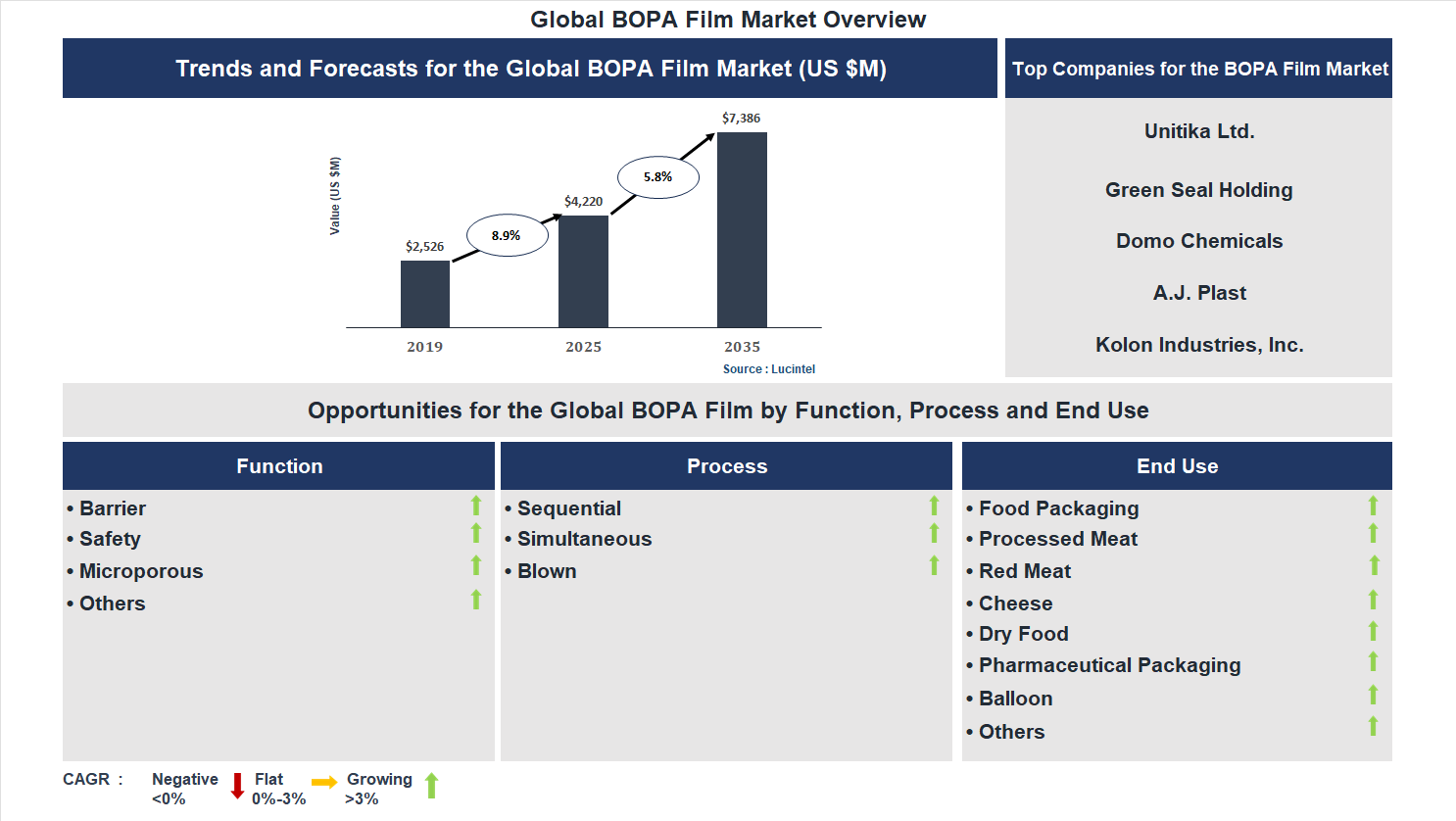
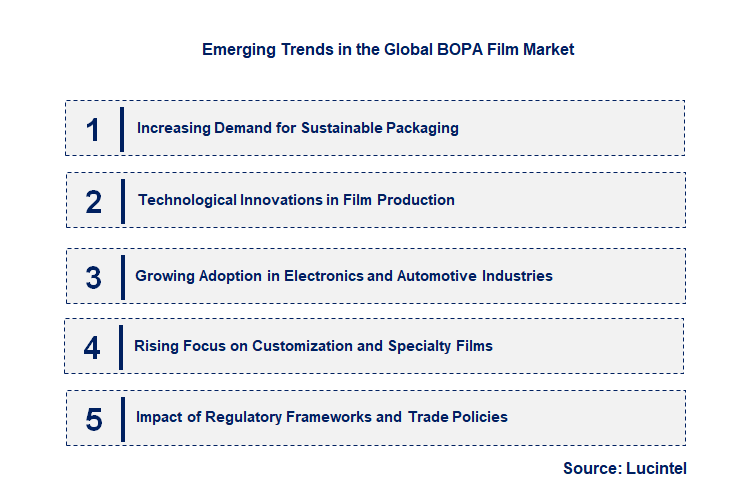
• Increasing Demand for Sustainable Packaging: The market is witnessing a surge in eco-friendly packaging solutions, driven by consumer awareness and regulatory pressures. BOPA films are being developed with recyclable and biodegradable materials to reduce environmental impact. Companies are adopting sustainable practices to meet the rising demand for greener products, which is influencing product design and manufacturing processes. This trend is expanding market opportunities for eco-conscious brands and encouraging innovation in biodegradable coatings and recycled materials, ultimately promoting a circular economy within the packaging industry.
• Technological Innovations in Film Production: Advances in manufacturing technology are enhancing the quality, strength, and clarity of BOPA films. Innovations such as improved biaxial orientation techniques and coating technologies are enabling the production of films with superior barrier properties, durability, and flexibility. These improvements are expanding applications in high-performance packaging, electronics, and industrial sectors. Enhanced production methods also reduce waste and energy consumption, making the process more sustainable. As a result, manufacturers can offer more specialized products, boosting competitiveness and opening new market segments.
• Growing Adoption in Electronics and Automotive Industries: BOPA films are increasingly used in electronics for insulation and packaging, as well as in automotive applications for lightweight, durable components. The trend is driven by the need for materials that offer high strength-to-weight ratios, chemical resistance, and thermal stability. This diversification is expanding the market beyond traditional packaging, creating new revenue streams. The automotive sector, in particular, is seeking BOPA films for interior and exterior components, contributing to weight reduction and fuel efficiency. This cross-industry adoption is expected to accelerate market growth and innovation.
• Rising Focus on Customization and Specialty Films: Customization is becoming a key differentiator in the BOPA film market. Manufacturers are offering tailored solutions with specific properties such as enhanced barrier performance, printability, and surface treatments to meet diverse customer needs. Specialty films for niche applications like medical packaging, food preservation, and industrial uses are gaining traction. This trend allows companies to command premium pricing and develop long-term client relationships. The ability to customize films according to end-use requirements is driving innovation and expanding the scope of BOPA applications.
• Impact of Regulatory Frameworks and Trade Policies: Stringent regulations related to environmental safety, recycling, and chemical usage are influencing the BOPA film market. Governments are imposing stricter standards, encouraging the adoption of eco-friendly materials and sustainable manufacturing practices. Trade policies and tariffs also affect supply chains and market access, prompting companies to optimize sourcing and production strategies. Compliance with these regulations is essential for market players to avoid penalties and maintain competitiveness. Overall, regulatory developments are fostering innovation in sustainable BOPA solutions and shaping the global market landscape.
• Growing Demand in Flexible Packaging: The increasing need for lightweight, durable, and high-barrier packaging solutions is boosting BOPA film adoption. Its excellent strength, clarity, and barrier properties make it ideal for food, pharmaceuticals, and industrial packaging. As consumers and brands prioritize safety and shelf life, manufacturers are expanding production capacities. This trend is expected to continue, driving market growth and encouraging innovation in film formulations to meet specific industry needs.
• Technological Advancements in Film Manufacturing: Innovations such as improved biaxial orientation techniques and coating technologies are enhancing BOPA film performance. These advancements result in films with better heat resistance, mechanical strength, and barrier properties. Enhanced manufacturing processes also reduce waste and energy consumption, making production more sustainable. As a result, companies can offer higher-quality products at competitive prices, strengthening their market position and expanding application scopes across various industries.
• Focus on Sustainable and Eco-Friendly Solutions: The industry is shifting towards biodegradable and recyclable BOPA films to meet environmental regulations and consumer preferences. Development of bio-based polyamide materials and recycling technologies is gaining momentum. These eco-friendly options help reduce plastic waste and carbon footprint, aligning with global sustainability goals. Market players investing in green innovations are gaining competitive advantages, attracting environmentally conscious customers, and opening new markets for sustainable packaging solutions.
• Expansion into Electronics and Industrial Applications: BOPA films are increasingly used in electronics for insulation and protective layers due to their excellent dielectric properties. In industrial sectors, they serve as functional films in various machinery and equipment. The expanding application base is driven by the film’s durability, chemical resistance, and thermal stability. This diversification is creating new revenue streams for manufacturers and reducing dependency on traditional packaging markets, thereby broadening the overall market scope.
• Rising Investments and Strategic Collaborations: Major companies are investing in R&D to develop advanced BOPA films with enhanced functionalities. Strategic alliances and joint ventures are facilitating technology transfer and market expansion. These collaborations enable access to new markets and customer segments, fostering innovation and competitiveness. Increased investments are also supporting capacity expansion and modernization of manufacturing facilities, ensuring supply chain resilience and meeting growing global demand.
• Growing Demand for High-Barrier Packaging Solutions: The increasing need for durable, lightweight, and high-barrier packaging materials in food, pharmaceuticals, and consumer goods is driving the adoption of BOPA films. Their excellent mechanical strength, chemical resistance, and clarity make them ideal for protecting products from moisture, oxygen, and contaminants. This trend is further supported by stringent safety standards and shelf-life requirements, prompting manufacturers to innovate and expand BOPA film applications in various packaging formats.
• Expansion of Electronics and Electrical Applications: BOPA films are increasingly used in electronics for insulation, flexible circuits, and display components due to their excellent dielectric properties and thermal stability. The rising demand for lightweight, flexible, and durable electronic devices fuels this growth. Additionally, BOPA’s resistance to heat and chemicals makes it suitable for various electronic packaging and insulation needs, opening new avenues for market expansion in consumer electronics, automotive, and industrial sectors.
• Adoption of Sustainable and Eco-Friendly Materials: Environmental concerns and regulatory pressures are prompting manufacturers to develop biodegradable and recyclable BOPA films. Innovations in bio-based polyamide and recycling technologies are enabling the production of sustainable films with comparable performance to traditional options. This shift towards eco-friendly solutions is attracting environmentally conscious consumers and companies, thereby expanding market opportunities and encouraging industry-wide adoption of sustainable practices.
• Technological Advancements in Film Manufacturing: Continuous improvements in BOPA film production, such as enhanced biaxial orientation techniques and coating technologies, are resulting in films with superior clarity, strength, and barrier properties. These innovations enable the creation of customized solutions for specific applications, increasing versatility and performance. Advanced manufacturing processes also reduce costs and waste, making BOPA films more competitive and accessible across diverse industries, thus fostering market growth.
• Rising Demand in Industrial and Automotive Sectors: BOPA films are increasingly utilized in industrial applications like protective films, laminates, and insulation materials, owing to their durability and chemical resistance. The automotive industry’s shift towards lightweight, high-performance materials further boosts demand for BOPA films in interior and exterior components. As industries seek reliable, high-quality materials for safety and efficiency, the market for BOPA films is expected to expand significantly, driven by these industrial and automotive applications.
• Technological Innovation: The continuous development of advanced manufacturing processes enhances film quality, reduces costs, and enables the production of thinner, stronger, and more versatile BOPA films. Innovations such as improved coating techniques and eco-friendly production methods are attracting new customers and expanding application areas, especially in packaging, electronics, and industrial sectors. These technological advancements also facilitate customization, meeting specific client needs and regulatory standards, thereby boosting market growth.
• Growing Packaging Industry: The rising demand for flexible and durable packaging solutions across food, beverages, pharmaceuticals, and consumer goods sectors significantly propels the BOPA film market. The increasing preference for lightweight, high-barrier films that extend shelf life and improve product safety is driving manufacturers to invest in BOPA films. This trend is further supported by the surge in e-commerce and retail sectors, which require innovative packaging materials to ensure product integrity during transit.
• Environmental Regulations and Sustainability Trends: Stricter environmental regulations worldwide are pushing manufacturers to develop recyclable and eco-friendly BOPA films. The demand for sustainable packaging options is encouraging innovation in biodegradable coatings and the use of renewable raw materials. Companies adopting environmentally responsible practices are gaining competitive advantages, which in turn accelerates market growth while aligning with global sustainability goals.
• Expansion in Electronics and Industrial Applications: The increasing use of BOPA films in electronics, such as flexible printed circuits and insulation materials, is a key growth driver. The film’s excellent barrier properties, chemical resistance, and durability make it suitable for high-tech applications. Additionally, industrial uses like insulation, laminates, and protective films are expanding, driven by technological advancements and the need for high-performance materials in various manufacturing processes.
• Fluctuating Raw Material Prices: The market heavily depends on raw materials like nylon resins, which are subject to volatile prices due to fluctuations in crude oil and natural gas markets. These price swings can increase production costs, reduce profit margins, and create pricing uncertainties for manufacturers. Managing supply chain risks and maintaining cost competitiveness becomes increasingly difficult, impacting overall market stability.
• Environmental and Recycling Challenges: Despite the push for sustainability, recycling BOPA films remains complex due to their multilayer structure and chemical composition. Limited recycling infrastructure and high processing costs hinder widespread adoption of recycled BOPA materials. This challenge restricts manufacturers from fully meeting environmental regulations and consumer demand for eco-friendly products, potentially slowing market growth.
• Regulatory Compliance and Standards: Navigating diverse and evolving regulatory frameworks across different regions poses a significant challenge. Compliance with safety, health, and environmental standards requires continuous product innovation and testing, which can be costly and time-consuming. Non-compliance risks include legal penalties, product recalls, and damage to brand reputation, all of which can hinder market expansion.
• Unitika Ltd.
• Green Seal Holding
• Domo Chemicals
• A.J. Plast
• Kolon Industries, Inc.
• Toyobo
• DSM
• Barrier
• Safety
• Microporous
• Others
• Sequential
• Simultaneous
• Blown
• Food Packaging
• Processed Meat
• Red Meat
• Cheese
• Dry Food
• Pharmaceutical Packaging
• Balloon
• Others
• North America
• Europe
• Asia Pacific
• The Rest of the World
• United States: The US market has seen increased adoption of eco-friendly BOPA films, driven by stringent environmental regulations and consumer preferences. Major players are investing in sustainable production methods, including recycling initiatives and biodegradable alternatives. Technological advancements have improved film strength and clarity, expanding applications in food packaging and electronics. The US government’s focus on reducing plastic waste has further propelled innovation and market growth, with several startups entering the space to develop biodegradable BOPA options.
• China: China remains the largest producer and consumer of BOPA films, with rapid industrialization fueling demand. Recent developments include the expansion of manufacturing capacities and the adoption of advanced extrusion and stretching technologies to enhance film quality. The Chinese government’s emphasis on sustainable packaging has led to increased investments in recyclable and biodegradable BOPA films. Domestic companies are also focusing on innovation to meet international standards, boosting exports and global competitiveness.
• Germany: Germany’s BOPA film market is characterized by a strong emphasis on sustainability and high-quality standards. Innovations in eco-friendly materials and energy-efficient production processes are prominent. The country’s focus on circular economy principles has led to increased recycling and reuse initiatives. German companies are also investing in research to develop thinner, lighter films that maintain strength and barrier properties, catering to the automotive and food packaging sectors.
• India: The Indian BOPA film market is witnessing rapid growth due to expanding packaging industries and increasing demand for durable, lightweight materials. Recent developments include the adoption of advanced manufacturing technologies and the entry of international players. The government’s push for sustainable packaging solutions and plastic waste management has encouraged the development of recyclable BOPA films. Additionally, rising disposable incomes and urbanization are driving demand across various sectors, including food, pharmaceuticals, and consumer goods.
• Japan: Japan’s market is characterized by technological innovation and a focus on high-performance films. Recent advancements include the development of ultra-thin, high-strength BOPA films suitable for electronics and packaging applications. The country’s emphasis on environmental sustainability has led to increased research into biodegradable and recyclable options. Japanese companies are also exploring nanotechnology to enhance film properties, maintaining their competitive edge in the global market while adhering to strict environmental standards.


• Unitika Ltd.
• Green Seal Holding
• Domo Chemicals
• A.J. Plast
• Kolon Industries, Inc.
• Toyobo
• DSM
Q6. Which BOPA film market segment will be the largest in future?Choose a license that fits your team. Instant PDF delivery.
Prices exclude taxes. Instant delivery. Custom licensing available on request.
Market Report · July 22, 2026
Market Report · July 22, 2026
Market Report · July 22, 2026
Trusted partner for strategic intelligence and business growth


Receive a complimentary market analysis tailored to your industry. Our analysts will identify key growth opportunities and competitive dynamics specific to your business.

Market size, growth rate, and key trend analysis for your specific sector.

Top competitor positioning and market share analysis.

Strategic recommendations backed by data-driven insights.
Get curated market intelligence and competitive moves straight to your inbox.
By subscribing, you agree to receive our monthly insights. Unsubscribe anytime.
Receive a complimentary market analysis tailored to your industry. Our analysts will identify key growth opportunities and competitive dynamics specific to your business.
Market size, growth rate, and key trend analysis for your specific sector.
Top competitor positioning and market share analysis.
Strategic recommendations backed by data-driven insights.
Get curated market intelligence, emerging trends, and competitive moves straight to your inbox each month.
By subscribing, you agree to receive our monthly insights. Unsubscribe anytime.
We'll send your sample report shortly.