
Market Report · July 22, 2026

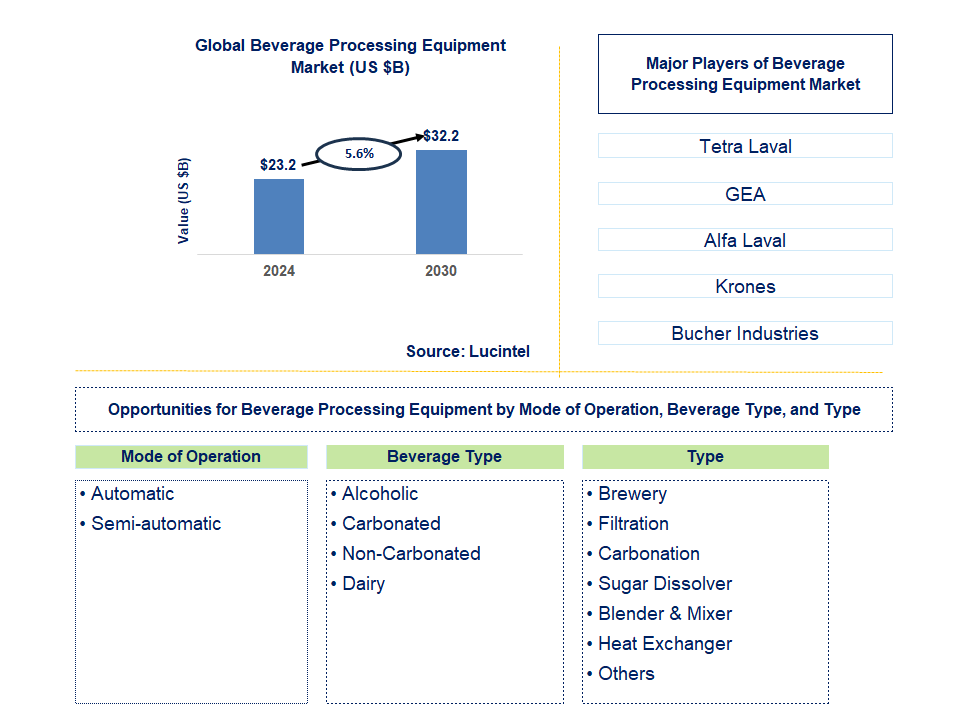
Key data points: The market size in 2030 = $32.2 billion, growth forecast = 5.6% annually for the next 6 years. Scroll below to get more insights. This market report covers trends, opportunities, and forecasts in the global beverage processing equipment market to 2030 by mode of operation (automatic and semi-automatic), beverage type (alcoholic, carbonated, non-carbonated, and dairy), type (brewery, filtration, carbonation, sugar dissolver, blender & mixer, heat exchanger, and others), and region (North America, Europe, Asia Pacific, and the Rest of the World)
We'll send your sample report shortly.
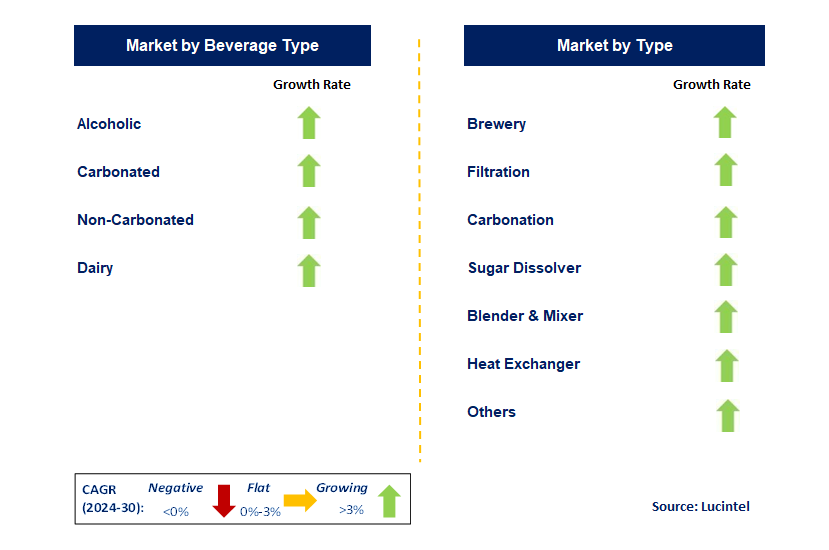
• Lucintel forecasts that, within the beverage type category, carbonated is expected to witness the highest growth over the forecast period.
• In terms of regions, APAC is expected to witness the highest growth over the forecast period due to expanding population, rising income, and rapid urbanization in the region. A more than 150-page report is developed to help in your business decisions.
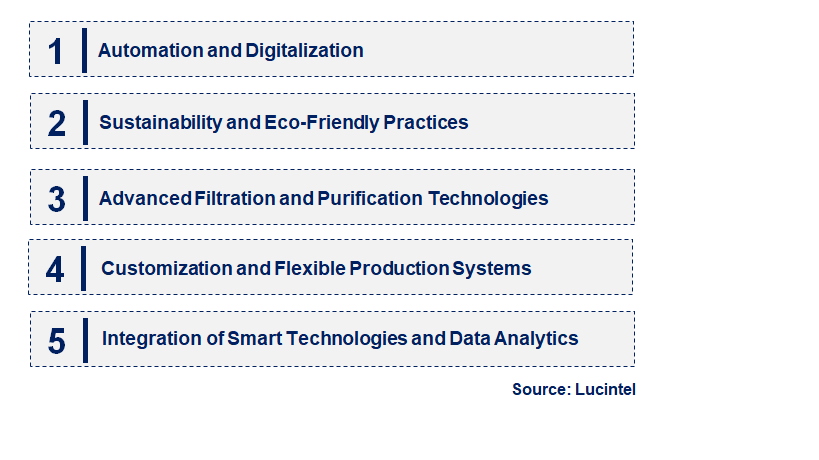
• Automation and Digitalization: Automation and digitalization are revolutionizing beverage processing by enhancing efficiency and precision. Advanced technologies, such as Internet of Things (IoT) devices, artificial intelligence (AI), and robotics, are being integrated into processing equipment to streamline operations, reduce human error, and increase production speeds. Smart sensors and data analytics enable real-time monitoring and adjustments, leading to better quality control and operational efficiency. This trend is particularly valuable in managing complex processes and scaling production to meet varying market demands while optimizing resource use.
• Sustainability and Eco-Friendly Practices: Sustainability is becoming a central focus in beverage processing, driven by increasing environmental regulations and consumer demand for eco-friendly products. Equipment manufacturers are developing technologies that reduce water and energy consumption, minimize waste, and use recyclable or biodegradable materials. Innovations such as energy-efficient motors, advanced filtration systems, and zero-waste processes are being adopted to lower the environmental impact of production. Companies are also investing in carbon footprint reduction and sustainable sourcing practices to align with global sustainability goals and enhance their brand image.
• Advanced Filtration and Purification Technologies: The demand for high-quality and safe beverages is driving advancements in filtration and purification technologies. Modern equipment is incorporating advanced filtration methods, such as membrane filtration, UV treatment, and activated carbon, to ensure the purity and safety of beverages. These technologies effectively remove contaminants, improve taste, and meet stringent regulatory standards. Enhanced purification systems are particularly important in the production of bottled water, juices, and dairy products, where high-quality standards are critical for consumer health and satisfaction.
• Customization and Flexible Production Systems: The trend towards customization and flexibility in beverage processing equipment reflects the growing demand for diverse product offerings and smaller batch sizes. Manufacturers are investing in modular and adaptable systems that can easily be reconfigured to produce different types of beverages or respond to changing market trends. Flexible production lines and multi-functional equipment allow for efficient switching between product formats, flavors, and packaging types. This capability is crucial for meeting the needs of craft beverage producers and responding to consumer preferences for variety and personalization.
• Integration of Smart Technologies and Data Analytics: The integration of smart technologies and data analytics is transforming beverage processing by providing deeper insights into production processes. Equipment equipped with sensors and data collection tools enables manufacturers to track performance metrics, analyze production trends, and predict maintenance needs. Advanced analytics tools help optimize processes, reduce downtime, and improve decision-making. This trend enhances operational efficiency, supports predictive maintenance, and allows for more informed strategic planning. As the industry embraces Industry 4.0, the use of smart technologies is becoming increasingly vital for staying competitive and meeting evolving consumer demands. The beverage processing equipment market is experiencing significant shifts towards automation, sustainability, advanced filtration, customization, and smart technologies. These trends are driving innovation and efficiency, enabling manufacturers to meet the growing demand for high-quality, diverse, and environmentally friendly beverages. As these developments continue to evolve, they will shape the future of the industry, offering new opportunities for growth and transformation in beverage processing.
• Enhanced Automation and Industry 4.0 Integration: Automation and Industry 4.0 technologies are transforming beverage processing equipment by incorporating advanced robotics, sensors, and IoT connectivity. These innovations streamline production lines, reduce manual labor, and improve precision. Automated systems enable real-time monitoring and control of processes, enhancing efficiency and consistency. Predictive maintenance and data analytics help prevent equipment failures and optimize performance. This shift towards smart manufacturing not only increases operational efficiency but also supports the production of customized and high-quality beverages in response to evolving market demands.
• Advancements in Sustainable Technologies: Sustainability is a major focus in recent developments within beverage processing equipment. Manufacturers are adopting technologies that reduce water and energy consumption, minimize waste, and utilize eco-friendly materials. Innovations such as energy-efficient motors, water recycling systems, and biodegradable packaging materials are being integrated into equipment designs. These advancements help companies meet environmental regulations and consumer demands for greener practices. By implementing sustainable technologies, beverage producers can lower their carbon footprint and enhance their brand's commitment to environmental responsibility.
• Improved Filtration and Purification Systems: The demand for high-quality and safe beverages is driving advancements in filtration and purification technologies. Recent developments include enhanced filtration methods such as membrane filtration, UV light treatment, and advanced carbon filters. These systems are designed to effectively remove contaminants, improve taste, and ensure compliance with safety standards. Improvements in filtration technology also address the growing consumer preference for purified and health-conscious beverages, such as bottled water and natural juices. These advancements help maintain product quality and meet stringent regulatory requirements.
• Modular and Flexible Processing Equipment: Modular and flexible processing equipment is gaining traction as manufacturers seek to adapt to changing consumer preferences and production requirements. Modular systems allow for easy reconfiguration and scaling, enabling producers to switch between different beverage types, flavors, and packaging formats with minimal downtime. This flexibility supports the growing trend towards craft and specialty beverages, which often require small batch sizes and varied production processes. By investing in adaptable equipment, companies can respond quickly to market trends and optimize production efficiency.
• Adoption of Advanced Data Analytics and Smart Technologies: The integration of advanced data analytics and smart technologies is enhancing beverage processing operations. Equipment equipped with sensors and real-time data collection tools provides valuable insights into production performance and quality control. Data analytics helps identify trends, optimize processes, and predict maintenance needs, leading to improved operational efficiency and reduced downtime. Smart technologies enable better decision-making and more precise control over production variables. As the industry moves towards digital transformation, these advancements are becoming essential for maintaining competitiveness and meeting consumer expectations. Recent developments in the beverage processing equipment market reflect a trend towards greater efficiency, sustainability, and adaptability. Innovations in automation, sustainable technologies, filtration systems, modular equipment, and smart technologies are driving the industry forward. These advancements are helping companies meet evolving consumer demands, regulatory requirements, and market challenges, positioning them for success in a dynamic and competitive landscape.
• Soft Drinks and Carbonated Beverages: The soft drinks and carbonated beverages segment offers substantial growth opportunities due to increasing consumer demand for new flavors, low-calorie options, and healthier alternatives. Innovations in processing equipment, such as advanced carbonation systems and high-efficiency filling technologies, can enhance product quality and operational efficiency. Additionally, there is a growing market for natural and organic soft drinks, which drives the need for equipment that supports the production of these products. Companies can capitalize on these trends by investing in flexible and high-performance equipment tailored to evolving consumer preferences.
• Craft and Specialty Alcoholic Beverages: The rising popularity of craft and specialty alcoholic beverages, such as craft beers, artisanal spirits, and premium wines, creates significant growth opportunities. Equipment manufacturers can focus on providing solutions that support small-batch production, unique fermentation processes, and customized flavors. Advanced brewing and distillation technologies, along with modular and scalable systems, enable producers to experiment with new recipes and maintain high-quality standards. As the craft beverage market expands, there is an increasing demand for equipment that enhances product differentiation and operational flexibility.
• Dairy and Plant-Based Beverages: The dairy and plant-based beverage segment is experiencing growth due to increasing consumer interest in health and wellness products. Innovations in processing equipment for dairy alternatives, such as almond, soy, and oat milk, are crucial for meeting this demand. Key opportunities include developing advanced homogenization and pasteurization technologies that ensure product consistency and nutritional quality. Additionally, equipment that supports the production of functional dairy products, such as probiotics and fortified beverages, can capitalize on the growing trend towards health-conscious consumption.
• Functional and Health-Enhancing Beverages: The demand for functional and health-enhancing beverages, including energy drinks, enhanced waters, and nutraceuticals, is rising as consumers seek products that offer health benefits. Equipment manufacturers have opportunities to develop technologies that facilitate the incorporation of functional ingredients, such as vitamins, minerals, and botanicals, into beverages. Innovations in mixing, blending, and encapsulation technologies can help achieve desired health benefits and maintain product stability. By focusing on this segment, companies can cater to the growing market for wellness-oriented beverages and enhance their product offerings.
• Sustainable and Eco-Friendly Beverage Production: There is a growing emphasis on sustainability and eco-friendly practices in beverage production. Companies have opportunities to invest in equipment that supports sustainable manufacturing processes, such as energy-efficient systems, water recycling technologies, and biodegradable packaging solutions. By adopting green technologies and reducing environmental impact, beverage producers can meet regulatory requirements and appeal to environmentally conscious consumers. The development of equipment that minimizes waste, conserves resources, and enhances the sustainability of the production process aligns with the industry shift towards more responsible and eco-friendly practices. The beverage processing equipment market presents significant strategic growth opportunities across various applications. By focusing on key segments such as soft drinks, craft beverages, dairy alternatives, functional drinks, and sustainable production, companies can tap into emerging consumer trends and technological advancements. Investing in innovative equipment solutions tailored to these applications will enable producers to enhance product quality, operational efficiency, and market competitiveness in a rapidly evolving industry landscape.
• Technological Advancements: Technological advancements are a significant driver in the beverage processing equipment market. Innovations such as automation, IoT integration, and smart sensors enhance production efficiency, precision, and flexibility. Automation reduces labor costs and minimizes human error, while IoT enables real-time monitoring and predictive maintenance. Advanced technologies also support the production of diverse and high-quality beverages by improving consistency and scalability. As technology evolves, it provides opportunities for equipment manufacturers to offer cutting-edge solutions that meet modern production needs and improve operational effectiveness.
• Rising Consumer Demand for Healthier Products: Growing consumer demand for healthier and functional beverages is driving the development of specialized processing equipment. Consumers increasingly seek beverages with added health benefits, such as low-calorie, organic, and fortified products. This shift is prompting manufacturers to invest in equipment that can handle diverse formulations and incorporate functional ingredients while maintaining product quality. Innovations in filtration, blending, and encapsulation technologies enable the production of health-oriented beverages, catering to evolving consumer preferences and expanding market opportunities in the wellness segment.
• Sustainability and Environmental Regulations: Sustainability is becoming a central focus in the beverage industry, driven by environmental regulations and consumer demand for eco-friendly practices. The need to reduce water and energy consumption, minimize waste, and adopt recyclable or biodegradable materials is influencing equipment development. Manufacturers are investing in technologies that support sustainable production processes, such as energy-efficient systems and water recycling solutions. Adhering to environmental regulations not only helps companies comply with legal standards but also enhances their brand reputation and appeals to environmentally conscious consumers.
• Growth of Emerging Markets: Emerging markets, particularly in Asia-Pacific and Latin America, are experiencing rapid growth in beverage consumption due to rising disposable incomes and changing lifestyles. This growth creates significant opportunities for beverage processing equipment manufacturers to expand their market presence. Companies are focusing on providing affordable and scalable solutions that cater to the needs of these developing regions. By entering emerging markets, manufacturers can tap into new customer bases, adapt to local preferences, and capitalize on the increasing demand for packaged and processed beverages.
• Innovation in Beverage Types and Formats: Continuous innovation in beverage types and formats drives the need for versatile and adaptable processing equipment. New product categories, such as plant-based beverages, functional drinks, and craft beverages, require specialized equipment to handle unique processing needs. Innovations in equipment design allow manufacturers to produce a wide range of beverages, from traditional soft drinks to novel formulations. This trend toward diversification and product innovation presents opportunities for equipment suppliers to develop advanced technologies that accommodate evolving market demands and enhance production capabilities. Challenges in the beverage processing equipment market include:
• High Capital Investment: The high capital investment required for advanced beverage processing equipment poses a significant challenge. The cost of acquiring, installing, and maintaining state-of-the-art technology can be substantial, particularly for small and medium-sized enterprises. This financial burden may limit the ability of smaller players to invest in the latest equipment and technologies, affecting their competitiveness. To overcome this challenge, companies may need to explore financing options, optimize cost structures, or focus on incremental upgrades that balance investment with operational needs.
• Stringent Regulatory Compliance: Compliance with stringent regulatory standards for food safety, quality, and environmental impact is a key challenge in the beverage processing equipment market. Regulations vary by region and can involve complex requirements related to hygiene, labeling, and emissions. Navigating these regulations requires significant resources and expertise, and failure to comply can result in fines, recalls, or reputational damage. Equipment manufacturers must stay informed about regulatory changes, invest in compliance measures, and ensure their products meet local and international standards to mitigate this challenge.
• Supply Chain Disruptions: Supply chain disruptions, including raw material shortages and logistical challenges, impact the beverage processing equipment market. Global events, such as pandemics, geopolitical tensions, and natural disasters, can disrupt the supply of critical components and delay production timelines. These disruptions can lead to increased costs, extended lead times, and difficulties in meeting customer demands. Companies need to develop robust supply chain strategies, build resilient networks, and diversify suppliers to manage risks and ensure the continuity of their operations. The beverage processing equipment market is driven by technological advancements, consumer demand for healthier products, sustainability, growth in emerging markets, and innovation in beverage types. However, it also faces challenges such as high capital investment, stringent regulatory compliance, and supply chain disruptions. Addressing these drivers and challenges will be crucial for industry players to navigate the competitive landscape and capitalize on growth opportunities.
• Tetra Laval
• GEA
• Alfa Laval
• Krones
• Bucher Industries
• Spx Flow
• JBT
• Pentair
• Automatic
• Semi-automatic
• Alcoholic
• Carbonated
• Non-Carbonated
• Dairy
• Brewery
• Filtration
• Carbonation
• Sugar Dissolver
• Blender & Mixer
• Heat Exchanger
• North America
• Europe
• Asia Pacific
• The Rest of the World
• United States: In the United States, the beverage processing equipment market is seeing a surge in automation and digitalization. Advanced technologies like IoT and AI are being integrated into processing systems to enhance efficiency, accuracy, and traceability. There is also a growing focus on sustainability, with equipment manufacturers adopting energy-efficient technologies and eco-friendly materials. The rise of craft beverages and health-conscious products is driving innovation in equipment to handle diverse production needs and maintain high quality. Companies are also investing in flexible and scalable solutions to adapt to changing market demands.
• China: China’s beverage processing equipment market is expanding rapidly due to the increasing consumption of packaged beverages and rising urbanization. Key developments include the adoption of advanced filtration and purification technologies to meet stringent quality standards and consumer preferences for purity and taste. Automation is also on the rise, with more manufacturers investing in robotic systems for efficient production and packaging. The focus on energy efficiency and reducing operational costs is driving innovations in equipment design. Additionally, the market is experiencing growth in demand for equipment suited to the production of traditional and functional beverages.
• Germany: Germany, known for its robust industrial sector, is leading in the adoption of Industry 4.0 technologies within the beverage processing equipment market. This includes the integration of smart sensors, data analytics, and machine learning to optimize production processes and ensure product consistency. Sustainability is a major focus, with advancements in equipment designed to reduce water and energy consumption. German manufacturers are also emphasizing modular and flexible equipment solutions to accommodate diverse beverage types and production scales. The market is driven by the demand for high-quality and innovative processing solutions in both domestic and international markets.
• India: In India, the beverage processing equipment market is evolving with a focus on affordability and efficiency to cater to a rapidly growing consumer base. There is increased investment in technologies that enhance process automation and reduce manual labor, addressing both cost and efficiency challenges. Additionally, the market is seeing growth in equipment for producing traditional and functional beverages, including health drinks and flavored waters. Companies are also investing in equipment that meets local regulatory standards and supports the burgeoning demand for packaged and ready-to-drink beverages.
• Japan: Japan’s beverage processing equipment market is marked by advancements in precision and automation to meet the high standards of Japanese consumers. Innovations include the development of advanced brewing and fermentation technologies, as well as precision filling and packaging systems that ensure product quality and safety. There is also a strong emphasis on sustainability, with equipment designed to minimize waste and energy consumption. The market is influenced by trends in premium and specialty beverages, driving demand for sophisticated processing technologies that can accommodate niche products and high-quality standards.


• Tetra Laval
• GEA
• Alfa Laval
• Krones
• Bucher Industries
• SPX Flow
• JBT
• Pentair Q6. Which beverage processing equipment market segment will be the largest in future? Answer: Lucintel forecasts that carbonated is expected to witness highest growth over the forecast period. Q7. In beverage processing equipment market, which region is expected to be the largest in next 5 years? Answer: APAC is expected to witness highest growth over the forecast period due to expanding population, rising income, and rapid urbanization in the region. Q.8 Do we receive customization in this report? Answer: Yes, Lucintel provides 10% customization without any additional cost.


Choose a license that fits your team. Instant PDF delivery.
Prices exclude taxes. Instant delivery. Custom licensing available on request.
Market Report · July 22, 2026
Market Report · July 22, 2026
Market Report · July 22, 2026
Trusted partner for strategic intelligence and business growth


Receive a complimentary market analysis tailored to your industry. Our analysts will identify key growth opportunities and competitive dynamics specific to your business.

Market size, growth rate, and key trend analysis for your specific sector.

Top competitor positioning and market share analysis.

Strategic recommendations backed by data-driven insights.
Get curated market intelligence and competitive moves straight to your inbox.
By subscribing, you agree to receive our monthly insights. Unsubscribe anytime.
Receive a complimentary market analysis tailored to your industry. Our analysts will identify key growth opportunities and competitive dynamics specific to your business.
Market size, growth rate, and key trend analysis for your specific sector.
Top competitor positioning and market share analysis.
Strategic recommendations backed by data-driven insights.
Get curated market intelligence, emerging trends, and competitive moves straight to your inbox each month.
By subscribing, you agree to receive our monthly insights. Unsubscribe anytime.
We'll send your sample report shortly.