
Market Report · July 22, 2026

Key data points: The growth forecast = 3.4% annually for the next 7 years. Scroll below to get more insights. This market report covers trends, opportunities and forecasts in benzoate based plasticizer market to 2032 by type (PVC and others), end use (flooring & wall covering, films & sheets, wires & cables, coated fabric, consumer goods, medicinal, food, toys, and others), and region (North America, Europe, Asia Pacific, and the Rest of the World)
We'll send your sample report shortly.
• Lucintel forecasts that, within the type category, PVC will remain the largest segment over the forecast period.
• Within the end use category, medicinal is expected to witness the highest growth.
• In terms of region, APAC is expected to witness the highest growth over the forecast period.
Gain valuable insights for your business decisions with our comprehensive 150+ page report. Sample figures with some insights are shown below.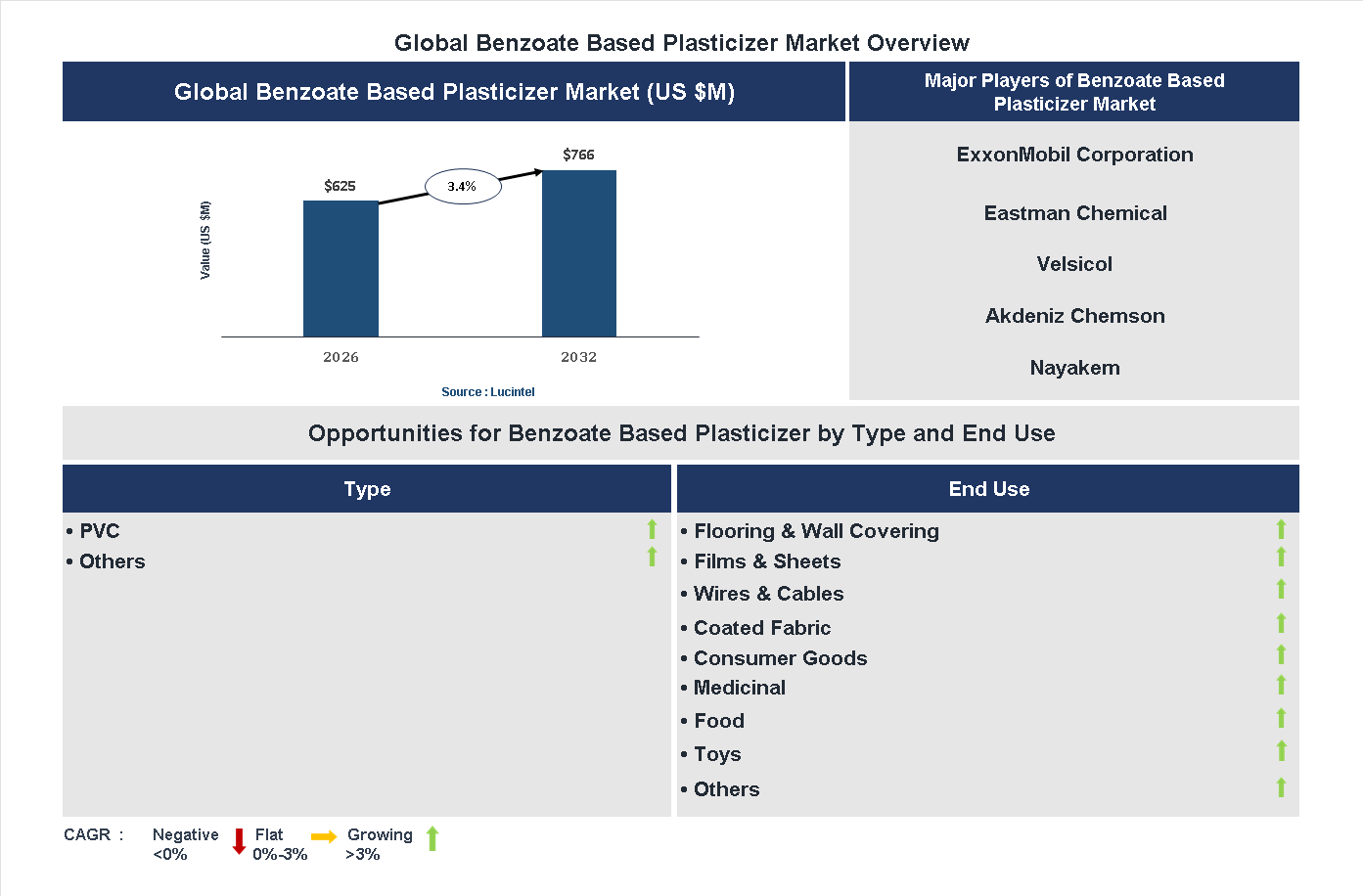
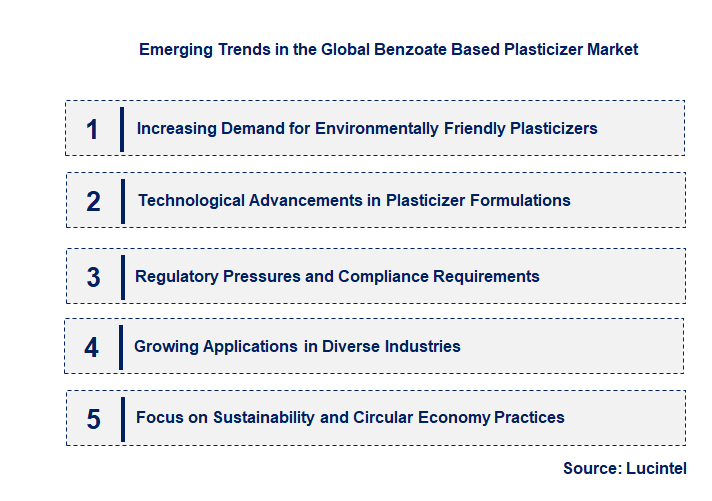
• Increasing demand for environmentally friendly plasticizers: Growing environmental awareness and stricter regulations are pushing manufacturers to develop bio-based and non-toxic benzoate plasticizers. These eco-friendly alternatives reduce harmful emissions and improve safety, appealing to consumers and industries committed to sustainability. This trend is driving innovation and expanding market opportunities for greener products, ultimately leading to a shift away from traditional, petrochemical-based plasticizers.
• Technological advancements in plasticizer formulations: Innovations in chemical engineering are enabling the development of high-performance benzoate plasticizers with enhanced compatibility, stability, and efficiency. These advancements improve the physical properties of plastics, such as flexibility and durability, while reducing dosage requirements. As a result, manufacturers can produce more cost-effective and versatile products, boosting market competitiveness and expanding application scopes across various industries.
• Regulatory pressures and compliance requirements: Governments and regulatory bodies are implementing stricter standards to limit the use of hazardous substances in plastics. This has led to increased scrutiny of benzoate plasticizers, encouraging the industry to adopt safer, compliant formulations. Companies investing in research to meet these standards are gaining a competitive edge, while non-compliant products face market restrictions, influencing overall market growth and product development strategies.
• Growing applications in diverse industries: The versatility of benzoate-based plasticizers is fueling their adoption across multiple sectors, including packaging, automotive, construction, and consumer goods. Their ability to enhance flexibility, transparency, and durability makes them suitable for a wide range of products. This diversification is expanding market reach and creating new revenue streams, while also encouraging tailored solutions to meet specific industry needs.
• Focus on sustainability and circular economy practices: The market is increasingly emphasizing sustainable sourcing, recyclability, and lifecycle management of plasticizers. Companies are exploring bio-based raw materials and designing products that facilitate recycling and reduce environmental impact. This focus aligns with global sustainability goals, influencing product development, supply chain practices, and consumer preferences, and ultimately reshaping the market toward more responsible and eco-conscious solutions.
• Technological Innovations: Development of high-performance, eco-friendly benzoate plasticizers has enhanced product efficiency and safety, attracting more industrial applications and expanding market reach.
• Regulatory Changes: Stricter regulations on hazardous chemicals have prompted manufacturers to adopt safer, compliant benzoate formulations, influencing product development and market dynamics.
• Sustainability Initiatives: Increasing emphasis on sustainable practices has led to the adoption of bio-based and biodegradable benzoate plasticizers, aligning with environmental standards and consumer preferences.
• Regional Market Growth: Rapid industrialization in Asia-Pacific and Latin America has driven demand for benzoate plasticizers, boosting regional market shares and investment opportunities.
• Market Consolidation and Partnerships: Mergers, acquisitions, and strategic alliances among key players have strengthened market positioning, expanded product portfolios, and facilitated innovation.
• Construction Industry: Enhanced Flexibility and Durability : Benzoate-based plasticizers improve the flexibility and durability of construction materials such as PVC pipes, flooring, and sealants, leading to longer-lasting infrastructure and reduced maintenance costs. Their eco-friendly profile aligns with green building standards, boosting adoption in sustainable construction projects.
• Automotive Sector: Lightweight and Eco-Friendly Components : The automotive industry benefits from benzoate plasticizers by producing lightweight, flexible, and environmentally compliant interior and exterior parts. This reduces vehicle weight, improves fuel efficiency, and meets stringent emission regulations, driving market growth.
• Packaging Industry: Food-Grade and Safe Packaging Solutions : Benzoate-based plasticizers are increasingly used in flexible packaging materials due to their non-toxic, food-safe properties. They enhance the flexibility and longevity of packaging films, supporting the demand for safer, sustainable packaging options.
• Consumer Goods: Enhanced Product Performance : In consumer products such as toys, footwear, and household items, benzoate plasticizers provide improved softness, flexibility, and safety. Their non-toxic nature appeals to health-conscious consumers and regulatory bodies, expanding market opportunities.
• Medical Devices: Biocompatible and Safe Materials : The medical sector leverages benzoate-based plasticizers for manufacturing flexible, biocompatible medical devices and tubing. Their safety profile and compliance with health standards facilitate innovation in healthcare applications.
• Increasing Demand for Eco-Friendly Plasticizers: The shift towards sustainable and environmentally safe materials is a major driver. Benzoate-based plasticizers are favored due to their lower toxicity and better biodegradability compared to traditional options. This trend is driven by stricter environmental regulations and consumer awareness. Industries such as packaging, automotive, and construction are adopting these plasticizers to meet sustainability goals. The growing demand for greener products is expected to continue fueling market growth, encouraging manufacturers to innovate and expand their product portfolios.
• Expansion of the Construction Industry: The construction sector is a significant consumer of plasticizers for applications like flooring, wiring, and sealants. Rapid urbanization and infrastructure development in emerging economies are boosting demand. Benzoate-based plasticizers improve the flexibility, durability, and processability of construction materials, making them highly desirable. Governments investing in infrastructure projects further stimulate market growth. As the construction industry evolves, the need for high-performance, environmentally friendly plasticizers like benzoate derivatives will remain a key growth factor.
• Growth in the Automotive Sector: The automotive industry relies heavily on plasticizers for manufacturing flexible, lightweight, and durable interior and exterior components. The shift towards electric vehicles and lightweight materials enhances the demand for specialized plasticizers. Benzoate-based options are preferred due to their compatibility with various polymers and environmental benefits. As automakers focus on sustainability and regulatory compliance, the market for benzoate plasticizers is expected to expand, driven by innovations in automotive plastics and increasing production volumes globally.
• Technological Advancements in Plasticizer Formulations: Continuous research and development efforts are leading to improved benzoate-based plasticizers with enhanced performance characteristics such as higher thermal stability, better compatibility, and lower volatility. These innovations enable broader application scopes and meet stringent industry standards. Advanced formulations also address health and safety concerns, making them more attractive to end-users. The ongoing technological progress is crucial for maintaining competitive advantage and expanding market share in a rapidly evolving industry landscape.
• Stringent Regulatory Environment: Increasing regulations aimed at reducing the environmental and health impacts of plasticizers pose a significant challenge. Governments worldwide are imposing restrictions on certain chemicals, including phthalates and other hazardous substances, which can limit the use of traditional plasticizers. Compliance costs and the need for safer alternatives can hinder market growth. Manufacturers must invest in research to develop compliant products, which can be time-consuming and costly, potentially impacting profitability and market expansion.
• Volatility in Raw Material Prices: The cost of raw materials used in benzoate plasticizer production, such as benzoic acid and other chemicals, is subject to fluctuations due to geopolitical tensions, supply chain disruptions, and market demand. Price volatility can affect profit margins and pricing strategies, making it challenging for manufacturers to maintain stable operations. This unpredictability can also impact the overall market growth, as higher costs may be passed on to consumers, reducing competitiveness.
• Competition from Alternative Plasticizers: The market faces intense competition from other types of plasticizers, including phthalates, adipates, and bio-based options. These alternatives often offer comparable or superior performance at lower costs or with better regulatory compliance. The presence of multiple options forces manufacturers to innovate continuously and differentiate their products, increasing R&D expenses. This competitive pressure can slow market growth and necessitate strategic adjustments to maintain market share.
• ExxonMobil Corporation
• Eastman Chemical
• Velsicol
• Akdeniz Chemson
• Nayakem
• Ecod Specialties
• Wuhan Biet Co. Ltd.
• Lanxess
• PVC
• Others
• Flooring & Wall Covering
• Films & Sheets
• Wires & Cables
• Coated Fabric
• Consumer Goods
• Medicinal
• Food
• Toys
• Others
• North America
• Europe
• Asia Pacific
• The Rest of the World
• United States: The US market is focusing on eco-friendly formulations and regulatory compliance, with increased R&D investments in biodegradable plasticizers. Major companies are developing non-toxic, sustainable options to meet stricter environmental standards, boosting market growth. The adoption of advanced manufacturing techniques and collaborations with research institutions are also driving innovation.
• China: China remains the largest producer and consumer of benzoate-based plasticizers, emphasizing cost-effective production and expanding domestic applications. Recent government policies promote greener manufacturing practices, encouraging the development of bio-based plasticizers. The market is also witnessing increased exports and technological upgrades to enhance product quality and environmental safety.
• Germany: Germany leads in technological innovation and sustainable practices within the European market. Companies are investing in research to develop high-performance, low-emission plasticizers that comply with EU regulations. The focus on circular economy principles and environmentally friendly products is shaping market strategies, with a strong emphasis on quality and safety standards.
• India: The Indian market is experiencing rapid growth due to expanding infrastructure and automotive sectors. There is a rising demand for cost-effective, versatile plasticizers, with manufacturers exploring bio-based alternatives to meet environmental concerns. Government initiatives promoting sustainable manufacturing are encouraging innovation and market expansion.
• Japan: Japan emphasizes high-quality, technologically advanced plasticizers with a focus on environmental safety. The market is driven by stringent regulations and consumer preferences for eco-friendly products. Companies are investing in research to develop innovative benzoate-based plasticizers that offer enhanced performance while minimizing ecological impact.


• ExxonMobil Corporation
• Eastman Chemical
• Velsicol
• Akdeniz Chemson
• Nayakem
• Ecod Specialties
• Wuhan Biet Co. Ltd.
• Lanxess
Q5. Which benzoate based plasticizer market segment will be the largest in future?

Choose a license that fits your team. Instant PDF delivery.
Prices exclude taxes. Instant delivery. Custom licensing available on request.
Market Report · July 22, 2026
Market Report · July 22, 2026
Market Report · July 22, 2026
Trusted partner for strategic intelligence and business growth


Receive a complimentary market analysis tailored to your industry. Our analysts will identify key growth opportunities and competitive dynamics specific to your business.

Market size, growth rate, and key trend analysis for your specific sector.

Top competitor positioning and market share analysis.

Strategic recommendations backed by data-driven insights.
Get curated market intelligence and competitive moves straight to your inbox.
By subscribing, you agree to receive our monthly insights. Unsubscribe anytime.
Receive a complimentary market analysis tailored to your industry. Our analysts will identify key growth opportunities and competitive dynamics specific to your business.
Market size, growth rate, and key trend analysis for your specific sector.
Top competitor positioning and market share analysis.
Strategic recommendations backed by data-driven insights.
Get curated market intelligence, emerging trends, and competitive moves straight to your inbox each month.
By subscribing, you agree to receive our monthly insights. Unsubscribe anytime.
We'll send your sample report shortly.