
Market Report · July 22, 2026

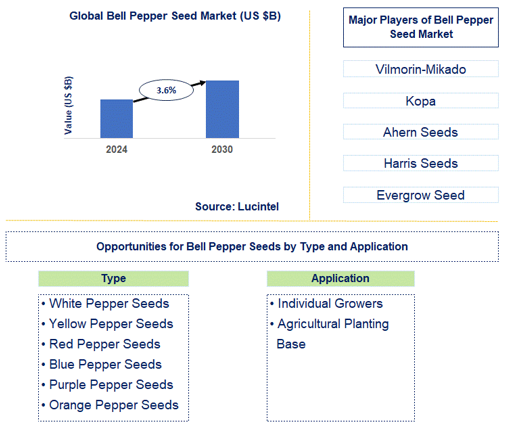
Key data points: The growth forecast = 3.6% annually for the next 6 years. Scroll below to get more insights. This market report covers trends, opportunities, and forecasts in the global bell pepper seed market to 2030 by type (white pepper seeds, yellow pepper seeds, red pepper seeds, blue pepper seeds, purple pepper seeds, and orange pepper seeds), application (individual growers and agricultural planting base), and region (North America, Europe, Asia Pacific, and the Rest of the World)
We'll send your sample report shortly.
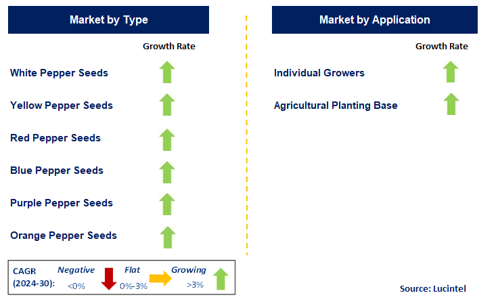
• Lucintel forecasts that, within the type category, white is expected to witness the highest growth over the forecast period.
• Within application category, individual grower is expected to witness higher growth.
• In terms of regions, APAC is expected to witness the highest growth over the forecast period. Gain valuable insight for your business decisions withe our comprehensive 150+ page report. The bell pepper seed market is experiencing dynamic shifts due to increasing consumer demand for diverse pepper varieties and advancements in agricultural technology. As countries across the globe focus on enhancing crop yields, improving disease resistance, and meeting nutritional needs, significant changes are occurring in the bell pepper seed industry. Innovations in seed genetics, sustainable farming practices, and market expansions are driving these developments. This overview examines recent advancements in the bell pepper seed market for the United States, China, Germany, India, and Japan, shedding light on key trends and their implications.
• United States: The US bell pepper seed market is witnessing substantial growth due to advancements in hybrid seed technology. Companies are investing in research to develop pepper varieties with enhanced disease resistance and improved shelf life. The rise of organic farming is also influencing the market, with a growing demand for non-GMO and organic seeds. Additionally, there is an increasing focus on precision agriculture, where data-driven techniques are used to optimize seed planting and crop management.
• China: In China, the bell pepper seed market is expanding rapidly due to the country’s focus on modernizing its agricultural sector. Innovations in seed breeding are producing peppers with better yields and adaptability to diverse climates. There is also significant government support for agricultural technology, which is facilitating the introduction of advanced seed varieties. Urban farming is gaining traction, increasing the demand for high-quality seeds that can thrive in controlled environments.
• Germany: Germany is seeing a rise in the demand for bell pepper seeds that cater to the organic and sustainable farming segments. The country is at the forefront of integrating ecological practices into agriculture, leading to a preference for non-GMO and environmentally friendly seed options. Advances in seed technology, such as improved germination rates and disease resistance, are also shaping the market. Furthermore, Germany’s strong focus on high-quality produce is driving innovation in seed development.
• India: In India, the bell pepper seed market is growing due to increased awareness of the nutritional benefits of peppers and advancements in farming techniques. There is a rising trend towards hybrid seeds that offer higher yields and better resistance to pests and diseases. Government initiatives to boost agricultural productivity and support for local seed producers are contributing to this growth. Additionally, urban and peri-urban agriculture is expanding, creating new opportunities for seed suppliers.
• Japan: The Japan bell pepper seed market is influenced by the country’s emphasis on high-quality, specialty crops. There is a growing trend towards developing seeds that produce peppers with unique colors and flavors. Advances in technology are leading to more efficient seed production and improved disease resistance. Additionally, Japan’s focus on precision agriculture and vertical farming is driving demand for seeds that perform well in controlled environments, contributing to market expansion. A more than 150-page report is developed to help in your business decisions.
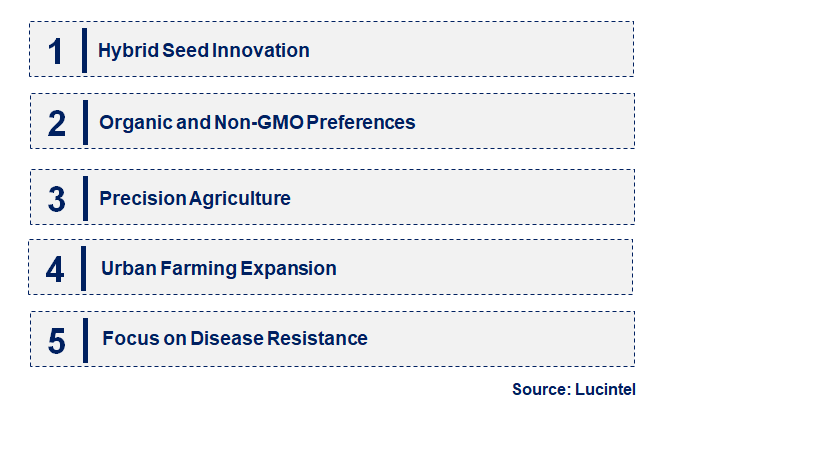
• Hybrid Seed Innovation: Hybrid seeds are becoming increasingly popular due to their superior qualities such as higher yield, better disease resistance, and improved shelf life. Advances in genetic engineering and cross-breeding techniques are enabling the development of hybrid varieties that cater to specific market needs. This trend is driving growth in the bell pepper seed market by offering farmers more reliable and productive options.
• Organic and Non-GMO Preferences: There is a growing consumer preference for organic and non-GMO bell peppers, leading to increased demand for seeds that align with these values. Organic farming practices are being adopted more widely, and seed companies are responding by developing seeds that are compatible with organic agriculture. This trend is reshaping the market by pushing for greater transparency and sustainability in seed production.
• Precision Agriculture: The use of precision agriculture technologies, such as GPS and data analytics, is transforming how bell peppers are cultivated. These technologies allow for more accurate planting, watering, and fertilization, which can enhance seed performance and crop yield. Precision agriculture is contributing to more efficient and sustainable farming practices, influencing the demand for advanced seed varieties.
• Urban Farming Expansion: Urban and vertical farming are on the rise, creating new opportunities for bell pepper cultivation in controlled environments. This trend is driving the need for seeds that perform well in limited spaces and under specific conditions. Urban farming is also contributing to a growing market for high-quality, specialty bell pepper seeds.
• Focus on Disease Resistance: With the increasing prevalence of plant diseases and pests, there is a heightened focus on developing bell pepper seeds with enhanced disease resistance. Seed companies are investing in research to create varieties that can withstand various environmental stressors and disease pressures. This trend is crucial for ensuring consistent crop yields and reducing reliance on chemical treatments. These trends are collectively reshaping the bell pepper seed market by driving innovation, enhancing sustainability, and responding to evolving consumer preferences. Hybrid seed technology, organic farming, precision agriculture, urban farming, and disease resistance are key factors influencing market dynamics and shaping the future of bell pepper cultivation.
• Advanced Hybrid Seed Varieties: The development of advanced hybrid seed varieties is a major trend in the bell pepper seed market. These hybrids offer improved yield, better resistance to pests and diseases, and enhanced quality. Companies are investing in genetic research to produce seeds that meet specific market demands, such as unique color or flavor profiles. This development is enhancing productivity and providing farmers with more reliable options.
• Growth of Organic Seed Market: The organic seed market for bell peppers is expanding as consumers increasingly seek non-GMO and organically grown produce. This shift is prompting seed producers to offer organic seed varieties that meet certification standards. The growth of the organic market is influencing how seeds are developed and marketed, with a focus on natural and sustainable practices.
• Precision Agriculture Technologies: The integration of precision agriculture technologies is transforming bell pepper cultivation. Tools such as GPS mapping, drones, and data analytics are enabling more precise planting and crop management. This development allows for optimized use of resources and improved seed performance, leading to higher yields and more efficient farming practices.
• Expansion into Urban Farming: Urban farming is gaining traction, leading to increased demand for bell pepper seeds suitable for vertical and indoor farming systems. Seed companies are developing varieties that perform well in controlled environments and limited spaces. This development is broadening market opportunities and supporting the growth of urban agriculture.
• Enhanced Disease Resistance: Addressing plant diseases and pests is a critical focus in seed development. Advances in breeding techniques are producing bell pepper seeds with greater disease resistance, reducing the need for chemical treatments. This development is crucial for maintaining crop health and ensuring consistent yields. These developments are significantly impacting the bell pepper seed market by improving seed quality, meeting consumer preferences for organic and specialty produce, and advancing agricultural practices. As the industry evolves, these changes are expected to drive further innovation and growth in the market.
• Urban Farming: Urban farming is becoming increasingly popular as cities seek sustainable food solutions. The growth of vertical and rooftop gardens creates a niche market for bell pepper seeds that are well-suited for confined spaces and controlled environments. This opportunity allows seed companies to develop varieties that thrive in hydroponic or aeroponic systems, catering to urban growers. This shift supports local food production and reduces supply chain dependencies, driving demand for specialized seeds.
• Organic Farming: The rise of organic farming is a significant growth opportunity in the bell pepper seed market. Consumers are increasingly seeking organically grown produce, leading to higher demand for organic and non-GMO seeds. Companies can capitalize on this trend by developing and marketing seeds that meet organic certification standards. This opportunity not only caters to a growing consumer base but also aligns with global sustainability goals, enhancing market appeal and brand reputation.
• High-Performance Hybrids: There is a growing demand for high-performance hybrid bell pepper seeds that offer superior yield, disease resistance, and quality. Advancements in genetic research enable the development of hybrids with specific traits, such as enhanced flavor or longer shelf life. By focusing on these high-performance hybrids, seed companies can address the needs of commercial growers and large-scale farms, providing solutions that improve productivity and profitability.
• Specialty and Exotic Varieties: The demand for specialty and exotic bell pepper varieties is increasing as consumers seek unique and diverse produce options. This trend presents an opportunity for seed companies to develop and market peppers with distinctive colors, shapes, and flavors. Catering to niche markets and high-end culinary applications can differentiate brands and tap into premium segments of the market, driving growth and innovation.
• Precision Agriculture: Precision agriculture technologies, such as drones and data analytics, are transforming how bell peppers are cultivated. These technologies enable more accurate planting, watering, and fertilization, which can enhance seed performance and crop yields. Seed companies can leverage this trend by offering seeds that are optimized for precision farming practices, providing growers with tools to maximize efficiency and sustainability. These growth opportunities are shaping the bell pepper seed market by driving innovation, expanding market segments, and responding to evolving consumer and agricultural trends. By focusing on urban farming, organic production, hybrid performance, specialty varieties, and precision agriculture, companies can position themselves for success in a rapidly changing market.
• Technological Advancements: Innovations in seed technology, such as genetic modification and hybrid breeding, are major drivers in the bell pepper seed market. Advances in genetics allow for the development of seeds with improved traits such as higher yield, better disease resistance, and enhanced flavor. These technological improvements enhance productivity and attract growers seeking high-performance seeds, driving market growth.
• Rising Consumer Demand for Organic Produce: Increasing consumer awareness of health and sustainability is fueling demand for organic bell peppers. This trend is driving the growth of the organic seed market as consumers seek non-GMO and environmentally friendly options. Seed companies that offer organic varieties can capture a significant share of the market, aligning with consumer preferences and regulatory standards.
• Urban Agriculture Growth: The expansion of urban and vertical farming is creating new opportunities for bell pepper seed producers. Urban agriculture requires seeds that are suitable for controlled environments and smaller spaces. This growing trend supports the development of specialized seed varieties, increasing market potential and offering new revenue streams for seed companies.
• Increasing Focus on Precision Agriculture: Precision agriculture technologies, such as GPS and data analytics, are enhancing farming efficiency and productivity. These technologies require seeds that can perform optimally under precise conditions. The adoption of precision farming is driving demand for high-quality, adaptable seeds, presenting growth opportunities for companies that integrate their products with these technologies.
• Expanding Global Markets: As global demand for bell peppers grows, there are increased opportunities for seed companies to enter new markets. Emerging economies and expanding agricultural sectors present potential growth areas. Companies can leverage global market trends to diversify their product offerings and increase their geographic reach, contributing to overall market expansion. Challenges in the bell pepper seed market are:
• Regulatory Compliance: Navigating regulatory requirements for seed production, particularly for genetically modified and organic seeds, can be complex and costly. Compliance with varying regulations across different regions requires significant resources and can impact market entry and product development. Companies must stay informed about regulatory changes and ensure adherence to maintain market access and avoid legal issues.
• Pest and Disease Management: The prevalence of plant diseases and pests poses a significant challenge to bell pepper cultivation. Seeds that are not resistant to these threats can lead to reduced yields and increased costs for pest control. Developing seeds with enhanced disease resistance and managing pest outbreaks are critical for maintaining crop health and ensuring consistent supply.
• Market Saturation and Competition: The bell pepper seed market is becoming increasingly competitive, with numerous players offering similar products. Market saturation can lead to price pressures and reduced profit margins. Companies must differentiate themselves through innovation, quality, and effective marketing strategies to remain competitive and capture market share. The above drivers of the market create ample opportunities for growth, while challenges must be navigated through strategic planning and innovation to maintain competitive advantages. Understanding both aspects will be key for stakeholders in successfully positioning themselves within the bell pepper seed market.
• Vilmorin-Mikado
• Kopa
• Ahern Seeds
• Harris Seeds
• Evergrow Seed
• Suntech Seed
• Saga
• Hazera
• GREEN SEEDS
• Westland Seeds
• White Pepper Seeds
• Yellow Pepper Seeds
• Red Pepper Seeds
• Blue Pepper Seeds
• Purple Pepper Seeds
• Orange Pepper Seeds
• Individual Growers
• Agricultural Planting Base
• North America
• Europe
• Asia Pacific
• The Rest of the World


• Vilmorin-Mikado
• Kopa
• Ahern Seeds
• Harris Seeds
• Evergrow Seed
• Suntech Seed
• Saga
• Hazera
• GREEN SEEDS
• Westland Seeds Q5. Which bell pepper seed market segment will be the largest in future? Answer: Lucintel forecasts that white is expected to witness the highest growth over the forecast period. Q6. In bell pepper seed market, which region is expected to be the largest in next 5 years? Answer: APAC is expected to witness the highest growth over the forecast period. Q.7 Do we receive customization in this report? Answer: Yes, Lucintel provides 10% customization without any additional cost.


Choose a license that fits your team. Instant PDF delivery.
Prices exclude taxes. Instant delivery. Custom licensing available on request.
Market Report · July 22, 2026
Market Report · July 20, 2026
Market Report · July 20, 2026
Trusted partner for strategic intelligence and business growth


Receive a complimentary market analysis tailored to your industry. Our analysts will identify key growth opportunities and competitive dynamics specific to your business.

Market size, growth rate, and key trend analysis for your specific sector.

Top competitor positioning and market share analysis.

Strategic recommendations backed by data-driven insights.
Get curated market intelligence and competitive moves straight to your inbox.
By subscribing, you agree to receive our monthly insights. Unsubscribe anytime.
Receive a complimentary market analysis tailored to your industry. Our analysts will identify key growth opportunities and competitive dynamics specific to your business.
Market size, growth rate, and key trend analysis for your specific sector.
Top competitor positioning and market share analysis.
Strategic recommendations backed by data-driven insights.
Get curated market intelligence, emerging trends, and competitive moves straight to your inbox each month.
By subscribing, you agree to receive our monthly insights. Unsubscribe anytime.
We'll send your sample report shortly.