
Market Report · July 22, 2026

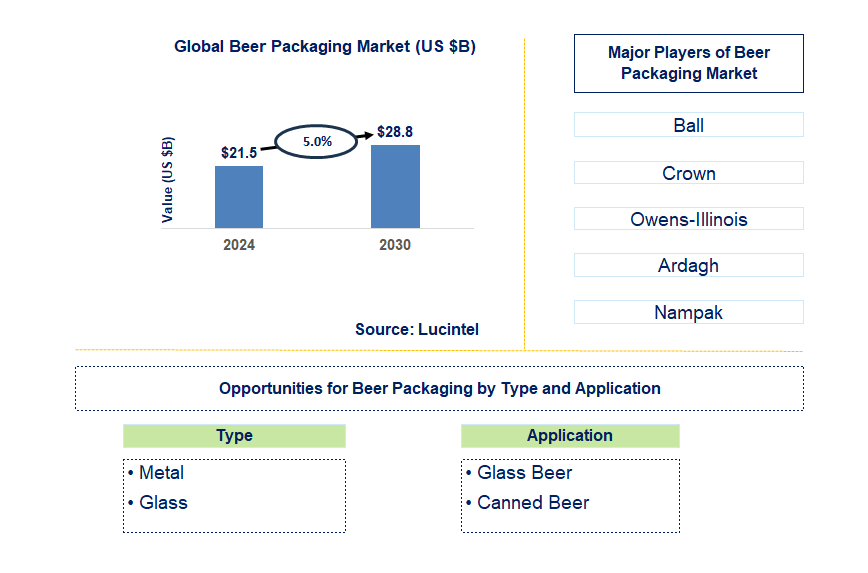
Key data points: The market size in 2030 = $28.8 billion, growth forecast = 5.0% annually next 6 years. Scroll below to get more insights. This market report covers trends, opportunities, and forecast in the global beer packaging market to 2030 by type (metal and glass), application (glass beer and canned beer), and region (North America, Europe, Asia Pacific, and the Rest of the World)
We'll send your sample report shortly.
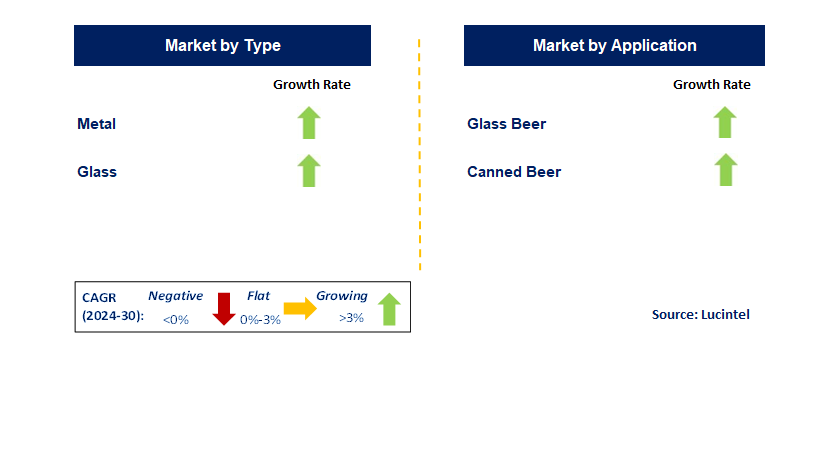
• Lucintel forecasts that, within the type category, metal is expected to witness a higher growth over the forecast period.
• Within this application category, glass beer is expected to witness a higher growth.
• In terms of regions, APAC is expected to witness the highest growth over the forecast period. A more than 150-page report is developed to help in your business decisions.
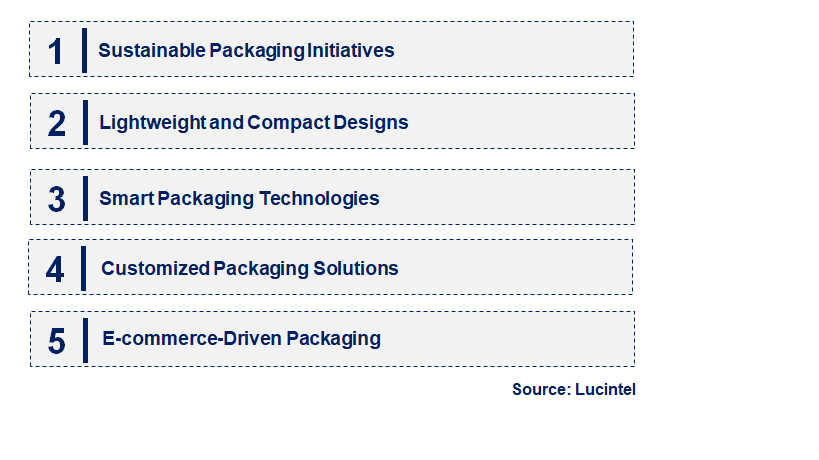
• Sustainable Packaging Initiatives: There is a significant transition taking place in the beer industry, encouraging the use of recyclable materials and limiting the use of plastics in beer packaging. This trend is a direct result of the increasing consumer preference for eco-friendly alternatives, as well as the need for legal frameworks that are less harmful to the environment.
• Lightweight and Compact Designs: Packaging options are becoming lighter, particularly for aluminum cans, which decrease transportation costs and reduce the carbon footprint. Portable designs meet consumer needs, especially where convenience is required.
• Smart Packaging Technologies: A novel method of engaging consumers involves products that feature QR codes or NFC technology, providing product information and integrated experiences that enhance brand engagement.
• Customized Packaging Solutions: Brands are creating appealing and memorable designs to stand out in today’s competitive market. Packaging options that allow for alterations in brand imagery promote unique experiences for consumers.
• E-commerce-Driven Packaging: Beer in cans sold over the internet is prompting the emergence of new packaging methods that ensure products reach customers without damage. This trend emphasizes economic adaptability and robustness geared towards e-commerce. Such trends will transform the beer packaging market by promoting sustainability, improving consumer experience, and responding to the rise of e-commerce packaging.
• Increased use of aluminum cans: The primary reason for the shift to aluminum cans lies in their recyclability and lightweight nature, thus bringing down transportation costs and environmental burden. Cans are now the preferred option for several breweries.
• Adoption of biodegradable materials: Most breweries are beginning to use biodegradable materials for their packaging as the market increasingly calls for greener options. This development will help address the issue of plastic pollution within the industry.
• Implementation of smart packaging: Technological advancements, such as the use of interactive labels, are making smart packaging more prevalent, which helps attract consumers. These technologies provide information on the beer’s source and brewing methods to offer a more knowledgeable experience to consumers.
• Growth of customized packaging designs: To remain competitive, breweries are investing in impressive packaging to enhance their product presence in the market. This trend builds brand loyalty and encourages consumers to prefer buying more unique products.
• Focus on e-commerce packaging solutions: The growing demand for the sale of beer over the internet has prompted breweries to develop packaging that protects products from damage during shipping. This incorporates strong structures that meet e-commerce delivery requirements. Such advancements have changed the trends in the beer packaging market, encouraging innovation and altering consumer behavior.
• Sustainable packaging innovations: Green packaging has been shown to appeal to eco-friendly consumers, enabling firms to perform well in the market and grow amid competition.
• Leveraging e-commerce trends: There are opportunities for growth in developing packaging solutions for online sales. Sales in the growing area of e-commerce are expected to be boosted by creating strong and lightweight packaging to protect products during shipment.
• Exploring craft beer packaging: Craft beer manufacturing provides great possibilities for creative and consumer-responsive packaging that caters to the market for quality and originality in beverages.
• Enhancing consumer engagement through smart packaging: Smart packaging enhances brand interaction and provides useful information, thereby increasing customer experience and loyalty.
• Investing in custom packaging designs: Since most brands tend to use highly rated packaging techniques and formats, there are opportunities to capture consumer purchase decisions toward their preferred products. These growth opportunities are changing the landscape of the beer packaging market by enhancing and adapting to market requirements.
• Sustainability Trends: As more consumers look for environmentally responsible packaging, there is an impetus for breweries to implement packaging alternatives that are environmentally friendly, thereby fostering customer retention and a competitive edge.
• Technological Advancements: Modern packaging technologies enable the creation of lightweight, strong, and stylish packaging that aligns with current consumer trends.
• E-commerce Growth: The growing volume of beer sales over the internet calls for modifications in packaging and protective packaging during delivery; this creates a market need for protective and novel designs.
• Changing Consumer Preferences: As more consumers shift towards changing tastes, craft beers and unique packaging become more appealing, leading to an increasing number of brands adopting varied packaging approaches to satisfy consumer appetites.
• Regulatory Pressures: Stricter requirements on packaging waste and recycling force breweries to look for more environmentally friendly alternatives. Challenges in the beer packaging market include:
• Cost of Sustainable Materials: Some producers may be discouraged by the higher costs associated with the use of sustainable materials while trying to satisfy consumer needs, which may actually reduce profits.
• Consumer Education: For new packaging, especially if it is not the typical design, to be accepted in the market, it is crucial that consumers are informed and educated on its significance.
• Supply Chain Disruptions: Challenges in the global supply chain will affect the supply of materials and raise manufacturing costs, leading to packaging solutions that are not cost-effective, timely, or efficient. All these drivers and challenges come together to influence the structure of the beer packaging market, the strategies adopted in the industry, and the overall growth of the market.
• Ball
• Crown
• Owens-Illinois
• Ardagh
• Nampak
• Orora
• Amcor
• Metal
• Glass
• Glass Beer
• Canned Beer
• North America
• Europe
• Asia Pacific
• The Rest of the World
• United States: In the U.S. beer packaging market, the adoption of environmentally friendly packaging is increasing as many American craft beer producers are using aluminum cans and other lightweight bottles. Features such as smart packaging that includes QR codes or uses AR technologies facilitate better interactivity with users and provision of product information, all aiming to attract consumer attention. Craft beer-producing companies are adopting creative packaging technologies to stand out in the market. Additionally, the growth of online shopping has increased the need for packaging that provides safety during delivery, hence changing the way products are packaged.
• China: Government policies and increased consumption of beer in the domestic market have led to rapid growth in the beer packaging market in China. More industries are considering the introduction of eco-friendly packaging methods, such as recyclable packaging materials and reduced use of plastic. Consumers, especially the younger generation, are attracted to unique packaging forms such as decorated cans and designer bottles. A basic advancement has been the introduction of labeling devices that enable the product to be tracked over the years. The continuous growth of the e-commerce market segment has revolutionized packaging towards online sales and emphasizes the strength and convenience of the package.
• Germany: Recently, Germany has been a strong advocate for sustainable beer packaging, with several breweries considering the use of refillable bottles and limited packaging. There are policies regarding waste and packaging that the country employs, which causally affect the way packaging is done. The introduction of thin-walled containers and organic or new biodegradable packing materials is developing. Additionally, craft beers are becoming popular with German consumers, prompting breweries to change their packages to accurately brand them. Packaging structures in the German beer market are shifting towards local sourcing and environmentalism.
• India: The beer industry in India is undergoing transformational changes due to the increasing craft beer market and more informed consumer behavior. Younger consumers are driving producers to develop new, portable packaging options such as pouches and cans. There is increased interest in more environmentally friendly packaging, with some breweries using biodegradable materials. New approaches to packaging design are also expected to attract greater consumer interest. With the expansion of the beer market, there is a growing need for packaging that protects the products during delivery, particularly when ordered online, resulting in a demand for more robust solutions.
• Japan: The beer packaging market in Japan blends warmth and modernity, where craft beer makers are breaking norms in terms of packaging to appeal to the sophisticated market. The practice of using convenient materials, including lightweight bottles and recyclable materials, is also on the rise in the country. Many times, packaging is derived from and incorporated into culture, creating richer tastes for consumers. Additionally, technologies related to labeling continue to evolve with the intention of increasing transparency and traceability of products. Packaging in transition is responding to the advent of e-commerce by focusing on ease of use and protection of goods throughout shipping.


• Ball
• Crown
• Owens-Illinois
• Ardagh
• Nampak
• Orora
• Amcor Q6. Which beer packaging market segment will be the largest in future? Answer: Lucintel forecasts that metal is expected to witness the higher growth over the forecast period. Q7. In beer packaging market, which region is expected to be the largest in next 5 years? Answer: APAC is expected to witness highest growth over the forecast period. Q.8 Do we receive customization in this report? Answer: Yes, Lucintel provides 10% customization without any additional cost.


Choose a license that fits your team. Instant PDF delivery.
Prices exclude taxes. Instant delivery. Custom licensing available on request.
Market Report · July 22, 2026
Market Report · July 16, 2026
Market Report · May 18, 2026
Trusted partner for strategic intelligence and business growth


Receive a complimentary market analysis tailored to your industry. Our analysts will identify key growth opportunities and competitive dynamics specific to your business.

Market size, growth rate, and key trend analysis for your specific sector.

Top competitor positioning and market share analysis.

Strategic recommendations backed by data-driven insights.
Get curated market intelligence and competitive moves straight to your inbox.
By subscribing, you agree to receive our monthly insights. Unsubscribe anytime.
Receive a complimentary market analysis tailored to your industry. Our analysts will identify key growth opportunities and competitive dynamics specific to your business.
Market size, growth rate, and key trend analysis for your specific sector.
Top competitor positioning and market share analysis.
Strategic recommendations backed by data-driven insights.
Get curated market intelligence, emerging trends, and competitive moves straight to your inbox each month.
By subscribing, you agree to receive our monthly insights. Unsubscribe anytime.
We'll send your sample report shortly.