
Market Report · July 31, 2026

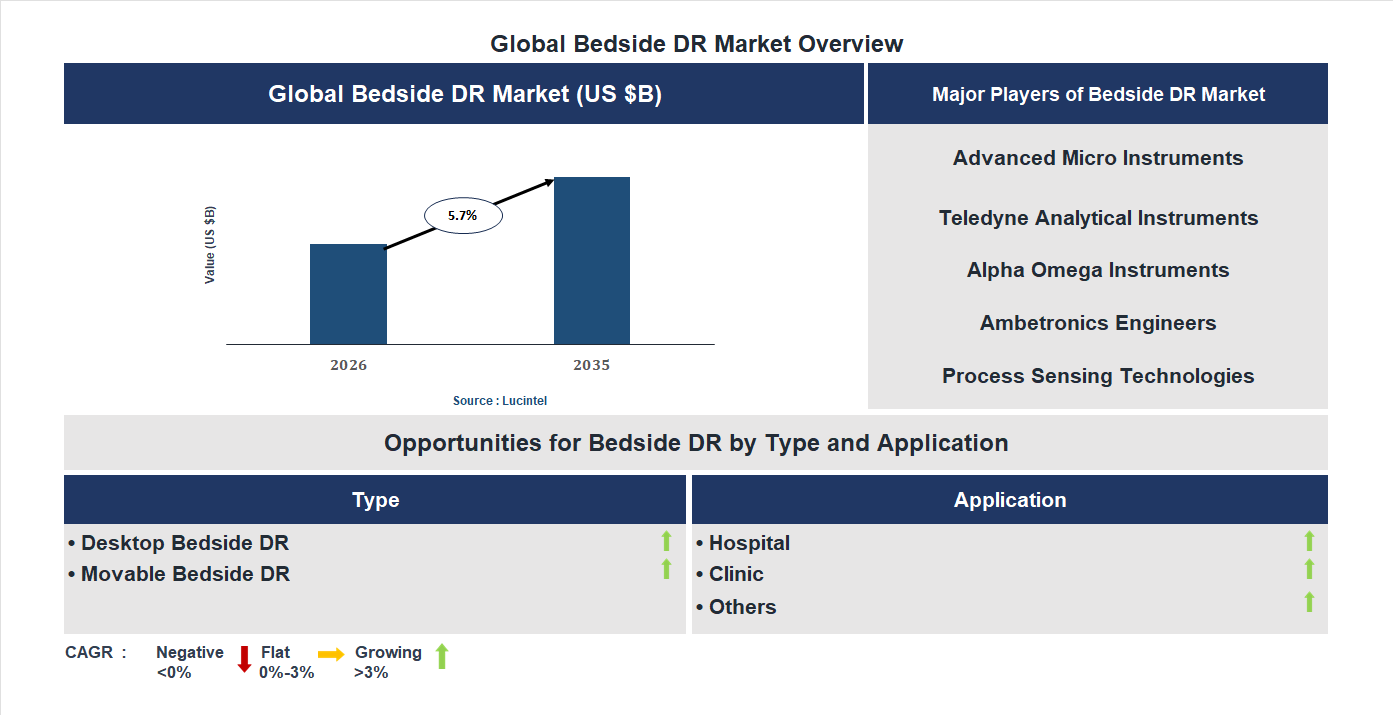
Key data points: The market size in 2035 = $9 billion, growth forecast = 6.2% annually for the next 8 years. Scroll below to get more insights. This market report covers trends, opportunities and forecasts in bedside DR market to 2035 by type (desktop bedside DR and movable bedside DR), application (hospital, clinic, and others), and region (North America, Europe, Asia Pacific, and the Rest of the World)
We'll send your sample report shortly.
• Lucintel forecasts that, within the type category, movable bedside DR is expected to witness higher growth over the forecast period.
• Within the application category, hospital is expected to witness higher growth.
• In terms of region, APAC is expected to witness the highest growth over the forecast period. Gain valuable insights for your business decisions with our comprehensive 150+ page report. Sample figures with some insights are shown below.
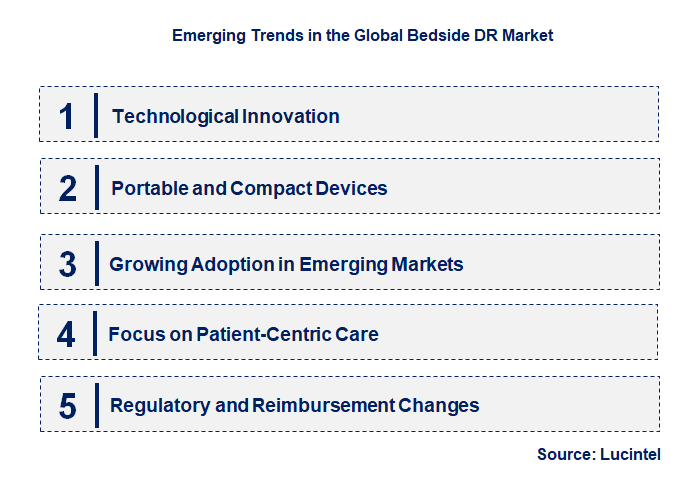
• Technological Innovation: The integration of AI and IoT in Bedside DR systems is enhancing image quality and diagnostic accuracy. AI algorithms assist in real-time image analysis, reducing interpretation time and improving the detection of abnormalities. IoT connectivity enables remote monitoring and data sharing, facilitating faster decision-making and better patient management. These innovations are making bedside imaging more precise, efficient, and integrated with hospital information systems, ultimately improving patient outcomes and operational workflows.
• Portable and Compact Devices: The demand for portable, lightweight, and easy-to-use bedside DR units is increasing. These devices allow for quick deployment in various clinical settings, including emergency rooms, intensive care units, and remote locations. Their compact design enhances mobility, enabling healthcare providers to perform imaging at the patients bedside without moving them to radiology departments. This trend improves patient comfort, reduces procedure time, and minimizes the risk of cross-contamination, especially important during infectious outbreaks like COVID-19.
• Growing Adoption in Emerging Markets: Emerging economies are witnessing increased adoption of bedside DR systems due to expanding healthcare infrastructure and rising healthcare expenditure. Governments and the private sector are investing in portable imaging solutions to improve access to diagnostic services in rural and underserved areas. This trend is expanding the market reach, creating new growth opportunities, and addressing healthcare disparities by providing timely and accurate diagnostics outside traditional hospital settings.
• Focus on Patient-Centric Care: The shift towards patient-centric healthcare is driving the adoption of bedside DR systems that prioritize comfort, safety, and convenience. These systems reduce the need for patient transportation, lowering the risk of complications and infection transmission. Additionally, user-friendly interfaces and faster imaging processes enhance patient experience. This trend aligns with the broader healthcare goal of delivering personalized, efficient, and minimally invasive diagnostic services, ultimately improving patient satisfaction and clinical outcomes.
• Regulatory and Reimbursement Changes: Evolving regulatory standards and reimbursement policies are influencing market dynamics. Increased approval of advanced bedside DR devices and favorable reimbursement schemes are encouraging healthcare providers to adopt these technologies. Clearer regulatory pathways ensure safety and efficacy, boosting market confidence. Reimbursement incentives for portable and innovative imaging solutions are also driving adoption, making bedside DR more accessible and financially viable for healthcare facilities, thereby accelerating market growth. These emerging trends are collectively reshaping the Bedside DR market by fostering innovation, expanding access, enhancing patient care, and improving operational efficiency. As technology continues to evolve and healthcare needs grow, the market is poised for significant transformation, offering new opportunities for providers, manufacturers, and patients alike.
• Growing Adoption of Portable Imaging Devices: The demand for portable bedside DR systems is increasing as hospitals seek flexible, space-saving solutions. These devices enable real-time imaging at the patients bedside, reducing patient movement and improving workflow efficiency. The portability also supports emergency and critical care settings, expanding market reach. This trend enhances diagnostic speed, patient comfort, and operational flexibility, making bedside DR systems indispensable in modern healthcare facilities.
• Technological Innovations in Imaging Quality: Advances in detector sensitivity, image processing algorithms, and digital integration are significantly improving image clarity and diagnostic accuracy. These innovations reduce radiation doses and enhance image resolution, leading to better clinical outcomes. As technology evolves, manufacturers are offering smarter, more user-friendly systems that streamline workflows. Improved imaging quality directly impacts patient care, reduces repeat scans, and increases confidence in diagnoses, thus driving market growth.
• Increasing Healthcare Infrastructure and Investment: Rising healthcare infrastructure development, especially in emerging economies, is boosting demand for bedside DR systems. Governments and the private sector are investing heavily in modernizing medical facilities, which includes upgrading diagnostic imaging capabilities. This investment facilitates wider adoption of advanced imaging solutions, improves access to quality healthcare, and supports the integration of digital radiography into routine diagnostics, thereby expanding the market globally.
• Rising Prevalence of Chronic Diseases and Emergency Cases: The increasing incidence of chronic illnesses such as cardiovascular diseases, cancer, and respiratory conditions necessitates frequent imaging diagnostics. Bedside DR systems provide quick, accurate imaging in critical care and emergency scenarios, improving patient management. The growing patient load and need for rapid diagnostics are propelling demand for portable, efficient imaging solutions, which directly impacts market expansion and technological development.
• Focus on Reducing Radiation Exposure and Enhancing Patient Safety: There is a strong emphasis on minimizing radiation doses while maintaining image quality, driven by safety regulations and patient awareness. Innovations in detector technology and imaging protocols are enabling safer diagnostics. This focus enhances patient safety, reduces long-term health risks, and encourages adoption in sensitive populations. The market benefits from increased trust and compliance, fostering further technological advancements and wider implementation. The overall impact of these developments is a dynamic, expanding Bedside DR market characterized by technological innovation, increased adoption, and improved healthcare outcomes. These opportunities are driving market growth, fostering competition, and encouraging continuous improvement in diagnostic imaging solutions worldwide.
• Increasing Adoption of Portable Bedside DR Systems: The rising demand for portable and compact DR systems allows for bedside imaging in critical care, emergency, and outpatient settings. These systems improve workflow efficiency, reduce patient movement, and enable immediate diagnosis, especially in intensive care units. Technological innovations in portability, image quality, and ease of use are further driving adoption, making bedside DR indispensable in modern healthcare facilities.
• Integration of Artificial Intelligence for Enhanced Diagnostics: Incorporating AI algorithms into bedside DR systems enhances image analysis, automates the detection of abnormalities, and reduces diagnostic errors. AI-driven tools facilitate faster decision-making, improve accuracy, and support radiologists in busy clinical environments. This integration is expected to revolutionize bedside imaging by providing real-time insights, optimizing workflow, and enabling personalized patient care.
• Growing Focus on Infection Control and Safety Measures: The COVID-19 pandemic has heightened awareness of infection control, prompting the adoption of contactless and easily disinfected bedside DR systems. Manufacturers are developing systems with antimicrobial surfaces, touchless interfaces, and streamlined cleaning protocols. These innovations help prevent cross-contamination, ensure patient and staff safety, and comply with stringent healthcare regulations, thereby boosting market growth.
• Expansion in Emerging Markets with Increasing Healthcare Infrastructure: Rapid economic growth in emerging markets is leading to increased healthcare investments and infrastructure development. Governments and the private sector are prioritizing modern diagnostic tools, including bedside DR systems, to improve healthcare access. This expansion offers significant growth opportunities for market players to establish a presence and cater to underserved populations with advanced imaging solutions.
• Development of Hybrid Imaging Systems for Versatile Applications: The integration of bedside DR with other imaging modalities, such as ultrasound or portable CT, creates hybrid systems capable of comprehensive diagnostics at the bedside. These versatile systems support a wide range of clinical applications, reduce the need for patient transfers, and improve diagnostic accuracy. Continuous innovation in hybrid imaging is expected to open new avenues for market expansion and clinical utility. These growth opportunities are poised to significantly influence the Bedside DR market by enhancing technological capabilities, expanding geographical reach, and improving patient outcomes. Embracing innovation and strategic collaborations will be crucial for market players to capitalize on these trends and sustain competitive advantage in a rapidly evolving healthcare landscape.
• Technological Innovation: The rapid development of portable and compact digital radiography systems enhances bedside imaging capabilities. These innovations enable real-time diagnostics at the patients bedside, improving clinical outcomes and reducing the need for patient transportation. As technology advances, image quality and ease of use continue to improve, fostering increased adoption across hospitals, emergency settings, and home care. This ongoing innovation drives market growth by meeting the demand for efficient, accessible imaging solutions.
• Growing Healthcare Expenditure: Increasing healthcare spending worldwide, especially in emerging economies, boosts demand for advanced diagnostic tools like bedside DR systems. Governments and the private sectors are investing heavily in healthcare infrastructure, aiming to improve patient care and reduce hospital stays. This economic trend supports the procurement of modern imaging equipment, fueling market expansion. Additionally, the rising prevalence of chronic diseases necessitates frequent imaging, further propelling market growth driven by economic capacity.
• Aging Population and Chronic Diseases: The global aging demographic results in a higher incidence of chronic and age-related diseases requiring frequent imaging diagnostics. Bedside DR systems facilitate quick, accurate assessments in geriatric and critical care settings, improving patient management. The increasing burden of conditions such as cardiovascular diseases, respiratory illnesses, and cancer directly correlates with higher demand for bedside imaging, thus acting as a major growth driver for the market.
• Rising Adoption of Point-of-Care Diagnostics: The shift towards point-of-care testing and diagnostics emphasizes the need for portable, easy-to-use imaging solutions. Bedside DR systems align with this trend by providing immediate imaging results, which are crucial in emergency and intensive care units. The convenience and speed offered by these systems improve clinical workflows and patient outcomes, encouraging healthcare providers to adopt them widely, thereby expanding the market. The challenges facing the bedside DR market include:-
• High Equipment Costs: The initial investment required for bedside DR systems remains substantial, limiting adoption among smaller healthcare facilities and in developing regions. The high costs of advanced imaging technology, maintenance, and training can hinder widespread deployment. This financial barrier restricts market growth, especially where budget constraints are significant, and slows the integration of new systems into routine clinical practice.
• Regulatory and Reimbursement Challenges: Stringent regulatory approvals and complex reimbursement policies pose hurdles for market players. Navigating diverse regulatory landscapes across countries can delay product launches and increase compliance costs. Additionally, inadequate reimbursement policies for bedside imaging procedures discourage healthcare providers from investing in these systems, impacting market expansion and innovation.
• Data Security and Privacy Concerns: The increasing use of digital imaging systems raises concerns over patient data security and privacy. Cybersecurity threats and data breaches can compromise sensitive health information, leading to legal and ethical issues. These concerns necessitate robust security measures, which can add to operational costs and complicate system implementation, thereby impeding market growth. In summary, the bedside DR market is shaped by significant technological advancements, economic growth, and demographic shifts that promote adoption. However, high costs, regulatory complexities, and data security issues present notable challenges. These factors collectively influence market trajectory, requiring stakeholders to innovate while addressing barriers to ensure sustainable growth and improved patient care.
• Advanced Micro Instruments
• Teledyne Analytical Instruments
• Alpha Omega Instruments
• Ambetronics Engineers
• Process Sensing Technologies
• Southland Sensing
• Maxtec
• Industrial Physics
• Yokogawa Electric
• Nucon Engineers
• Desktop Bedside DR
• Movable Bedside DR
• Hospital
• Clinic
• Others
• North America
• Europe
• Asia Pacific
• The Rest of the World
• United States: The US market has seen rapid adoption of portable bedside DR systems, driven by a focus on patient safety and infection control. Major players are launching AI-enabled imaging devices that improve diagnostic speed and accuracy. Hospitals are increasingly integrating bedside DR with electronic health records, enhancing workflow efficiency. The government’s emphasis on value-based care is encouraging investments in advanced imaging technologies. Additionally, the COVID-19 pandemic accelerated the adoption of portable solutions to reduce patient movement and infection risk, further boosting market growth.
• China: China’s bedside DR market is expanding rapidly due to rising healthcare infrastructure and government initiatives to improve rural healthcare access. Local manufacturers are developing cost-effective, portable DR systems tailored for diverse clinical settings. The government’s focus on digital health and smart hospital projects is fostering innovation in bedside imaging. Increasing urbanization and a growing aging population are driving demand for efficient diagnostic tools. Investments in research and development are also leading to the integration of AI and telemedicine with bedside DR systems, enhancing remote diagnostics and patient monitoring.
• Germany: Germany’s market is characterized by high-quality, technologically advanced bedside DR systems emphasizing precision and patient comfort. The country’s strong healthcare infrastructure and strict regulatory standards promote the adoption of innovative, reliable imaging solutions. There is a growing trend toward integrating bedside DR with hospital information systems (HIS) and picture archiving and communication systems (PACS). Germany is also focusing on sustainability and energy-efficient devices. The aging population and increasing prevalence of chronic diseases are further fueling demand for portable, easy-to-use bedside imaging solutions in hospitals and clinics.
• India: India’s bedside DR market is witnessing rapid growth due to increasing healthcare expenditure, expanding hospital networks, and rising awareness of diagnostic imaging. Local manufacturers are offering affordable, portable DR systems suitable for rural and semi-urban areas. Government initiatives like Ayushman Bharat are promoting access to advanced healthcare services, including bedside imaging. The COVID-19 pandemic highlighted the need for portable, contactless diagnostic tools, accelerating market adoption. Additionally, technological innovations such as wireless and AI-enabled systems are becoming more prevalent, improving diagnostic capabilities in resource-constrained settings.
• Japan: Japan’s market is driven by an aging population and a focus on minimally invasive, patient-friendly diagnostic solutions. The country emphasizes high-precision, compact bedside DR systems that integrate seamlessly with existing hospital infrastructure. Japan is investing in AI and robotics to enhance imaging accuracy and workflow efficiency. The government’s initiatives to promote digital health and smart hospitals are fostering innovation in bedside imaging. The market also benefits from strong regulatory standards and a focus on sustainability. As chronic disease prevalence increases, demand for portable, reliable bedside DR systems continues to grow in Japanese healthcare facilities.


• Advanced Micro Instruments
• Teledyne Analytical Instruments
• Alpha Omega Instruments
• Ambetronics Engineers
• Process Sensing Technologies
• Southland Sensing
• Maxtec
• Industrial Physics
• Yokogawa Electric
• Nucon Engineers Q5. Which bedside DR market segment will be the largest in future? Answer: Lucintel forecasts that, within the type category, movable bedside DR is expected to witness higher growth over the forecast period. Q6. In bedside DR market, which region is expected to be the largest in next 5 years? Answer: In terms of region, APAC is expected to witness the highest growth over the forecast period. Q7. Do we receive customization in this report? Answer: Yes, Lucintel provides 10% customization without any additional cost.


Choose a license that fits your team. Instant PDF delivery.
Prices exclude taxes. Instant delivery. Custom licensing available on request.
Market Report · July 31, 2026
Market Report · July 31, 2026
Market Report · July 31, 2026
Trusted partner for strategic intelligence and business growth


Receive a complimentary market analysis tailored to your industry. Our analysts will identify key growth opportunities and competitive dynamics specific to your business.

Market size, growth rate, and key trend analysis for your specific sector.

Top competitor positioning and market share analysis.

Strategic recommendations backed by data-driven insights.
Get curated market intelligence and competitive moves straight to your inbox.
By subscribing, you agree to receive our monthly insights. Unsubscribe anytime.
Receive a complimentary market analysis tailored to your industry. Our analysts will identify key growth opportunities and competitive dynamics specific to your business.
Market size, growth rate, and key trend analysis for your specific sector.
Top competitor positioning and market share analysis.
Strategic recommendations backed by data-driven insights.
Get curated market intelligence, emerging trends, and competitive moves straight to your inbox each month.
By subscribing, you agree to receive our monthly insights. Unsubscribe anytime.
We'll send your sample report shortly.