
Market Report · May 18, 2026

This market report covers trends, opportunities, and forecasts in the global baw filters market to 2031 by technology (solid mounted bulk acoustic resonators and thin-film bulk acoustic resonator), application (smartphone, wi-fi hotspots, tablets, usb sticks, and others), and region (North America, Europe, Asia Pacific, and the Rest of the World)
We'll send your sample report shortly.
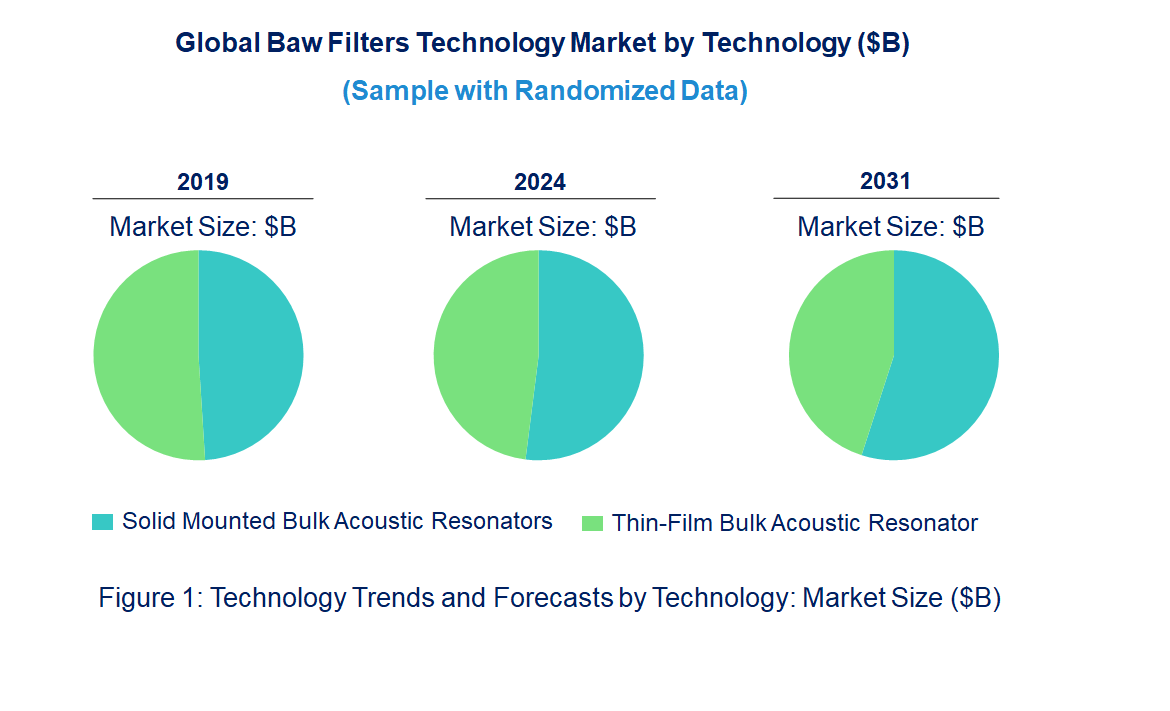
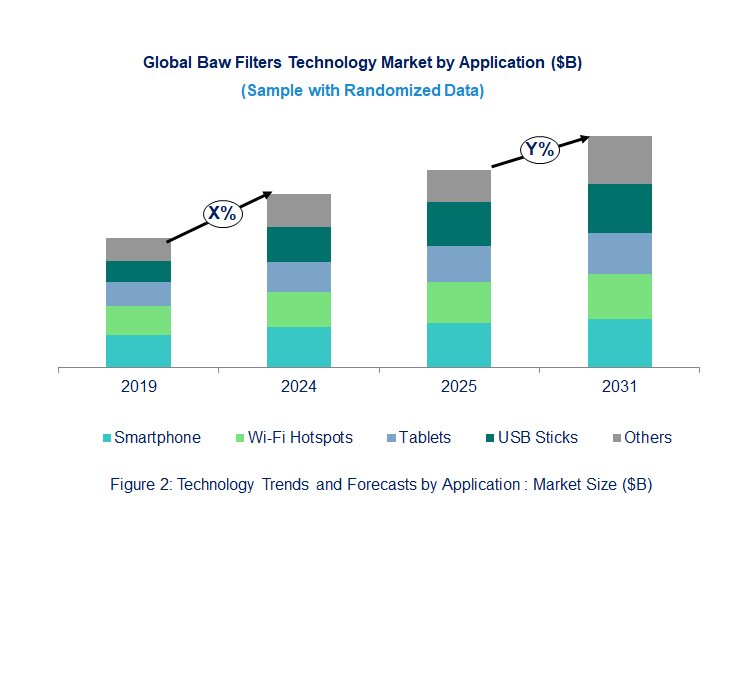
• Advancements in 5G and Beyond: The transition to 5G networks is a major driver of BAW filter innovation. As 5G requires more frequency bands, BAW filters are essential for ensuring the efficient use of the spectrum. These filters are designed to handle higher frequencies (up to 100 GHz) and dense signal environments associated with 5G. The increasing adoption of 5G infrastructure is pushing BAW filter manufacturers to develop filters that can support multi-band, high-frequency, and low-latency requirements.
• Miniaturization of BAW Filters: As consumer devices, particularly smartphones, become thinner and more compact, there is an increasing need for smaller, high-performance BAW filters. The miniaturization of BAW filters allows them to be integrated into smaller form factors without compromising performance. This trend is driven by advances in micro-fabrication technologies, enabling the development of more compact filters with superior signal integrity.
• Integration of BAW Filters into Multi-Band Systems: The growing complexity of modern communication systems requires multi-band filters capable of supporting multiple frequency bands within a single device. BAW filters are being optimized for multi-band applications, enabling better performance across various frequency ranges, such as those needed for 4G, 5G, Wi-Fi, and Bluetooth. This trend is particularly significant for mobile operators and device manufacturers, as it reduces the overall size and cost of components while enhancing signal performance.
• Increased Demand for Automotive Applications: The automotive industry is witnessing a surge in the use of wireless connectivity for applications like autonomous driving, infotainment, and vehicle-to-everything (V2X) communication. BAW filters play a critical role in these applications, as they help mitigate interference and improve the reliability of signals in the harsh automotive environment. As vehicles increasingly rely on complex communication systems, the demand for robust BAW filters with high performance is expected to grow.
• Development of Advanced Materials and Manufacturing Techniques: To improve the performance and cost-effectiveness of BAW filters, manufacturers are exploring new materials and advanced manufacturing processes. The use of materials with better piezoelectric properties, such as lithium tantalate and aluminum nitride, is becoming more common. Additionally, advancements in 3D printing, micro-machining, and other precision manufacturing methods are enabling the production of more efficient and customizable BAW filters. The BAW filters market is undergoing significant transformations, driven by technological innovations and evolving consumer demands. Trends such as the adoption of 5G, miniaturization, multi-band integration, automotive applications, and advancements in materials and manufacturing are reshaping the industry. As these technologies continue to advance, they are enhancing the performance, efficiency, and versatility of BAW filters, positioning them as a key component in the next generation of wireless communication and electronic systems. These trends not only promise to expand the market but also optimize the way we connect and communicate across industries.
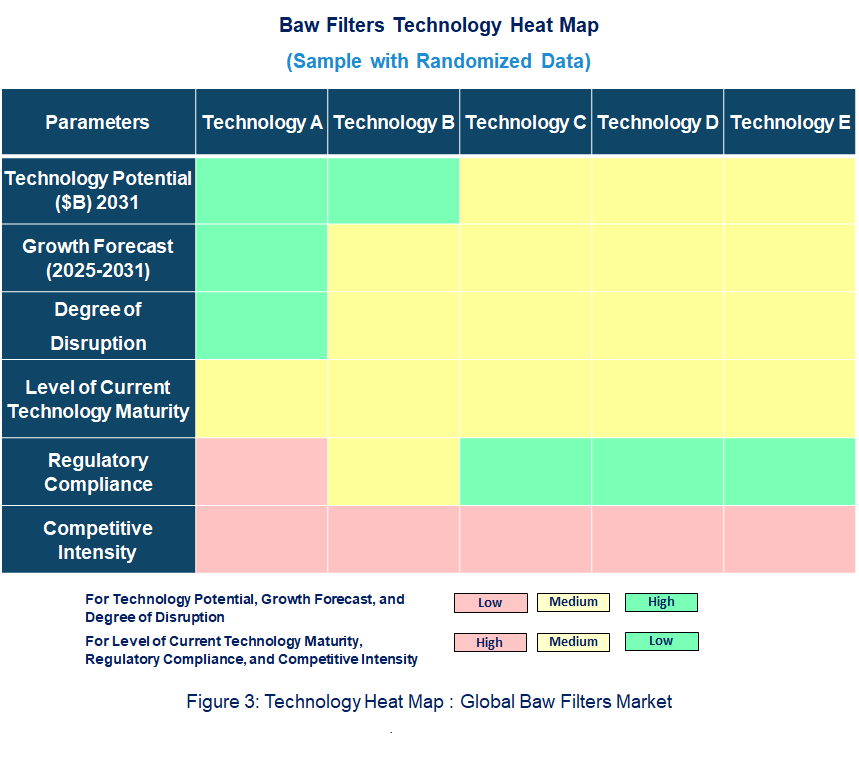
• Technology Potential: BAW filters present significant technological potential to disrupt industries focused on environmental management. These filters can enhance air and water quality, mitigate pollution, and provide sustainable solutions in regions facing high levels of contamination. The market for BAW filters is growing due to the demand for cleaner environments, stricter pollution control regulations, and the need for smarter filtration technologies. Advancements in materials, such as nanomaterials, and smart, self-regulating filters could further transform the market, offering highly efficient, long-lasting solutions to meet global environmental challenges.
• Degree of Disruption: The degree of disruption that BAW filters can bring to industries is considerable. As industries continue to prioritize sustainability and regulatory compliance, these filters can significantly alter the ways air and water quality are managed. The introduction of advanced filtration technologies, including smart and automated filters, could disrupt traditional practices, offering more effective and efficient solutions.
• Level of Current Technology Maturity: The current maturity of BAW filter technology is moderate. Several filtration systems are already in use across various sectors, particularly in air and water treatment. However, ongoing research and development continue to improve the efficiency, durability, and performance of these filters. Innovations, such as nanotechnology and smart materials, are expected to accelerate further advancements in this field.
• Regulatory Compliance: In terms of regulatory compliance, manufacturers of BAW filters must adhere to strict environmental standards to ensure their products meet air and water quality requirements. Compliance with local and global regulations is essential for market entry, and these filters must be able to handle pollutants effectively while ensuring safety and sustainability. Regulatory frameworks are evolving to become more stringent, pushing for continuous innovation in filtration technology.
• Avago Technologies: Now part of Broadcom, Avago has made strides in developing high-performance BAW filters, focusing on miniaturization and efficiency. These filters are tailored for multi-band, low-latency applications in 5G, providing better signal integrity and data throughput, essential for advanced wireless systems.
• Qorvo: Qorvo has strengthened its position in the BAW filters market by developing advanced filters for 5G and high-frequency applications. Their new BAW solutions optimize performance in multi-band, high-density environments, making them ideal for smartphones and wireless infrastructure.
• TDK: TDK has introduced thin-film technology that allows for compact and efficient BAW filters, designed for portable devices needing high-performance filtering in small spaces. This innovation plays a crucial role in advancing IoT, automotive, and 5G applications by enhancing signal quality and reducing interference.
• Skyworks Solutions: By focusing on miniaturization and integration, Skyworks Solutions has introduced BAW filters optimized for 5G and Wi-Fi applications. These filters not only meet performance standards but also help reduce the size and cost of mobile devices, contributing to the growing competitive market in consumer electronics.
• Crystek: Crystek specializes in providing high-precision BAW filters for aerospace, defense, and industrial systems. These filters operate reliably in challenging environments, offering superior frequency stability, making them ideal for high-end markets requiring durability and high-frequency performance.
• Bird Technologies: Bird Technologies has developed BAW filters tailored for industrial, military, and telecommunications sectors. Their filters incorporate smart filtering capabilities and enhanced power handling, improving the reliability and efficiency of communication systems in harsh, interference-prone environments.
• Abracon: Abracon has expanded its BAW filter offerings for high-frequency applications in consumer electronics, automotive, and communication systems. Known for their precision and ability to function in extreme conditions, Abracon’s filters are essential in smartphones and autonomous vehicles, meeting the demand for multi-band wireless connectivity.
• Avnet: Avnet has partnered with top manufacturers to offer integrated BAW filter solutions for 5G and IoT devices. The company’s efforts in streamlining supply chains and supporting the commercialization of BAW filter technologies have accelerated their adoption across telecommunications and consumer electronics sectors.
• Broadcom: Broadcom has led the way in advancing BAW filters for mobile and networking applications, particularly for 5G networks. Their focus on reducing power consumption while maintaining high performance has positioned Broadcom’s BAW filters as crucial for next-generation communication infrastructure.
• Skyworks Solutions (Again): Skyworks continues to innovate by offering low-loss, high-frequency solutions for the 5G era. Their BAW filters are optimized for multi-band systems, enabling efficient spectrum use in high-density environments, which is essential for the global adoption of 5G technology. These developments in BAW filter technology by leading companies are propelling the growth of wireless communication systems. As 5G, IoT, and other high-frequency applications continue to expand, innovations in BAW filters will further drive the market, improving performance, reducing size, and enhancing the efficient use of spectrum. The progress made by these companies is crucial in shaping the future of wireless communication and ensuring the success of next-generation technologies.
• 5G and Next-Generation Networks: The rollout of 5G networks is a major driver of demand for BAW filters, as these systems require high-performance, multi-band filters to efficiently handle a broader spectrum of frequencies. BAW filters are crucial for ensuring high-speed data transmission and low-latency communication, which significantly boosts market growth.
• Miniaturization of Consumer Devices: With the trend towards smaller consumer electronics, especially smartphones, there is a growing demand for compact BAW filters that provide high-performance signal processing in smaller devices. This need supports the expansion of the BAW filter market across diverse applications.
• Internet of Things (IoT) Growth: As IoT devices proliferate, there is an increasing need for compact, cost-effective filters to ensure high-quality signal transmission in densely populated network environments. BAW filters are vital in maintaining signal integrity and are indispensable for the expanding IoT sector, thus driving demand for advanced filter technologies.
• Automotive Industry Advancements: The automotive industry increasingly relies on wireless communication technologies for applications such as autonomous driving, vehicle-to-everything (V2X), and infotainment. BAW filters play a crucial role in ensuring reliable, interference-free communication, opening new adoption opportunities in the automotive sector. Challenges in the bulk acoustic wave (BAW) filters market are:
• Technological Complexity: Developing high-performance BAW filters, particularly for advanced applications like 5G and IoT, presents significant technological challenges. Creating filters that handle a wide range of frequencies while maintaining reliability and efficiency at smaller sizes requires continuous innovation and specialized expertise.
• High Manufacturing Costs: The production of advanced BAW filters, particularly those utilizing cutting-edge technologies such as TFBARs and SMBARs, is costly. These high manufacturing expenses may slow down the adoption of BAW filters in price-sensitive industries, potentially limiting the overall growth of the market.
• Regulatory Compliance and Standards: As wireless communication systems evolve, meeting stringent global regulatory requirements for performance and safety becomes increasingly complex. Manufacturers must ensure that their BAW filters comply with environmental and industry standards, adding further complexity to the design and production processes. The BAW filters market is driven by key growth opportunities such as the adoption of 5G networks, the demand for multi-band systems, advancements in material science, and the development of smart filters. However, challenges like technological complexity, high manufacturing costs, regulatory compliance, and supply chain disruptions continue to pose obstacles. Despite these challenges, the ongoing innovations and increasing demand across sectors like telecommunications, IoT, and automotive are fueling the market’s expansion, positioning BAW filters as a critical technology in next-generation communication and electronic systems.
• Avago Technologies
• Qorvo
• Tdk
• Skyworks Solutions
• Crystek
• Bird Technologies
• Technology Readiness by Technology Type: The technology readiness of SMBAR and TFBAR varies, reflecting different levels of maturity. SMBARs have a more established technology base, particularly for high-power, high-frequency applications, and are already in widespread use. However, their application in compact devices is limited compared to TFBARs. TFBARs, which are designed for miniaturized, multi-band applications, are emerging as a strong contender due to advancements in manufacturing techniques like Micro-Electro-Mechanical Systems (MEMS). TFBARs are well-suited for scalability and integration, making them ideal for use in mobile and IoT devices. Both technologies are undergoing rapid development to meet the demands of 5G and future generations, with significant improvements focused on performance, cost reduction, and meeting stringent regulatory standards for both environmental impact and signal quality. The competitive landscape for both technologies is intense, with many players working to provide the most efficient and cost-effective solutions for high-demand markets.
• Competitive Intensity and Regulatory Compliance: The competitive intensity in the BAW filters market is strong, spurred by demand for advanced technologies like SMBAR and TFBAR. Companies are heavily investing in research and development to improve the efficiency, miniaturization, and cost-effectiveness of these filters. While SMBARs excel in robust performance for high-power applications, they are challenged by TFBARs, which are better suited for compact, multi-band systems. In this highly competitive landscape, regulatory compliance is critical. Both technologies must adhere to stringent environmental standards for air and water quality, especially in sectors like telecommunications and automotive. With stricter government regulations on pollution control and emissions, manufacturers must innovate continually to stay ahead of the competition while meeting evolving environmental standards. Regulatory adherence is essential for market entry and long-term success in this rapidly evolving market.
• Disruption Potential by Technology Type: Solid Mounted Bulk Acoustic Resonators (SMBAR) and Thin-Film Bulk Acoustic Resonators (TFBAR) are revolutionizing the Bulk Acoustic Wave (BAW) filters market by enabling smaller, more efficient, and higher-performance solutions. SMBARs, with their solid mount structure, deliver higher power handling and greater durability, making them ideal for demanding applications such as 5G networks and automotive systems. TFBARs, known for their thin and lightweight design, are particularly beneficial for miniaturized applications, especially in mobile devices and IoT. As these technologies evolve, TFBARs are becoming especially relevant for multi-band applications, offering better integration and performance. With their advanced capabilities, both SMBARs and TFBARs are poised to replace traditional BAW filters in high-frequency, high-performance applications, leading to cost reductions, better energy efficiency, and improved performance. As these technologies are integrated into mass production, they are expected to transform the market by enhancing signal quality, data throughput, and device performance.
• Solid Mounted Bulk Acoustic Resonators
• Thin-Film Bulk Acoustic Resonator
• Smartphone
• Wi-Fi Hotspots
• Tablets
• USB Sticks
• Others
• North America
• Europe
• Asia Pacific
• The Rest of the World
• Latest Developments and Innovations in the Baw Filters Technologies
• Companies / Ecosystems
• Strategic Opportunities by Technology Type


Choose a license that fits your team. Instant PDF delivery.
Prices exclude taxes. Instant delivery. Custom licensing available on request.
Market Report · May 18, 2026
Market Report · May 18, 2026
Market Report · May 18, 2026
Trusted partner for strategic intelligence and business growth


Receive a complimentary market analysis tailored to your industry. Our analysts will identify key growth opportunities and competitive dynamics specific to your business.

Market size, growth rate, and key trend analysis for your specific sector.

Top competitor positioning and market share analysis.

Strategic recommendations backed by data-driven insights.
Get curated market intelligence and competitive moves straight to your inbox.
By subscribing, you agree to receive our monthly insights. Unsubscribe anytime.
Receive a complimentary market analysis tailored to your industry. Our analysts will identify key growth opportunities and competitive dynamics specific to your business.
Market size, growth rate, and key trend analysis for your specific sector.
Top competitor positioning and market share analysis.
Strategic recommendations backed by data-driven insights.
Get curated market intelligence, emerging trends, and competitive moves straight to your inbox each month.
By subscribing, you agree to receive our monthly insights. Unsubscribe anytime.
We'll send your sample report shortly.