
Market Report · July 31, 2026

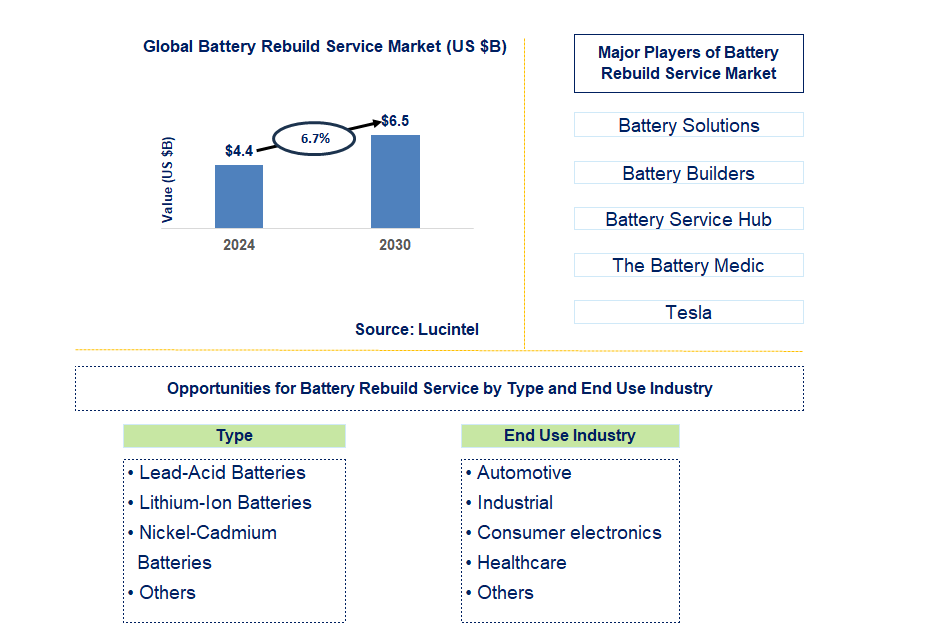
Key data points: The market size in 2030 = $6.5 billion, growth forecast = 6.7% annually for the next 6 years. Scroll below to get more insights. This market report covers trends, opportunities, and forecasts in the global battery rebuild service market to 2030 by type (lead-acid batteries, lithium-ion batteries, nickel-cadmium batteries, and others), end use industry (automotive, industrial, consumer electronics, healthcare, and others), and region (North America, Europe, Asia Pacific, and the Rest of the World)
We'll send your sample report shortly.
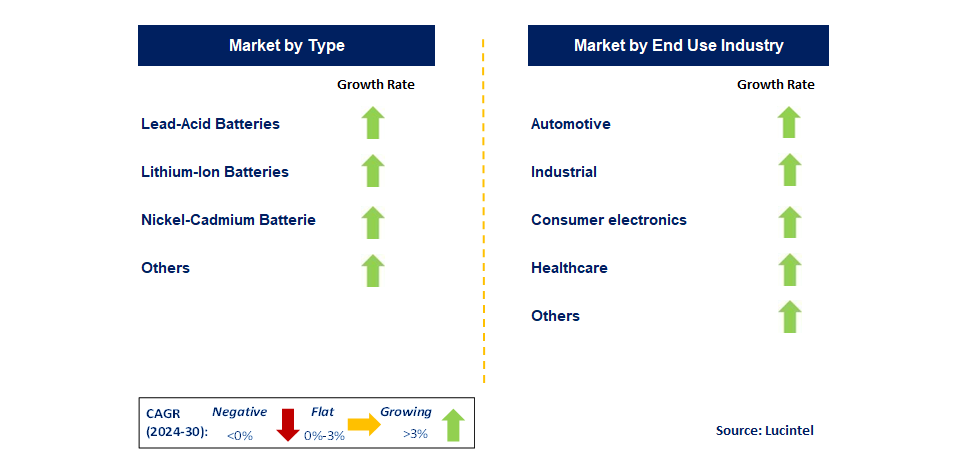
• Lucintel forecasts that, within the type category, lead-acid battery is expected to witness highest growth over the forecast period.
• Within the end use category, automotive segment will remain the largest segment.
• In terms of regions, North America is expected to witness highest growth over the forecast period. Gain valuable insights for your business decisions with our comprehensive 150+ page report.
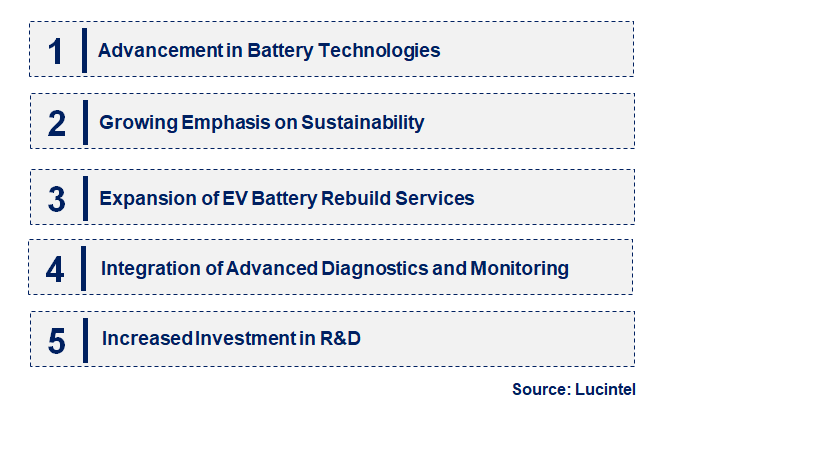
• Advancement in Battery Technologies: The development of new battery chemistries and improvements in existing technologies are driving innovation in the battery rebuild service market. Emerging technologies such as solid-state batteries and lithium-sulfur batteries offer higher energy densities and longer lifespans, prompting service providers to adapt their methods. This advancement not only enhances the performance and longevity of rebuilt batteries but also requires specialized knowledge and equipment, increasing the value and complexity of rebuild services.
• Growing Emphasis on Sustainability: There is a rising focus on sustainability within the battery rebuild market, driven by increasing environmental concerns and regulations. Companies are prioritizing eco-friendly practices, such as recycling old battery components and reducing waste. This trend aligns with global efforts to minimize environmental impact and promotes the circular economy. By refurbishing and extending the life of batteries, rebuild services contribute to reducing the need for new raw materials and decreasing the overall carbon footprint of battery production.
• Expansion of EV Battery Rebuild Services: As electric vehicles (EVs) become more prevalent, there is a growing demand for specialized EV battery rebuild services. EV batteries are expensive to replace, leading to an increased interest in cost-effective refurbishment options. Rebuild services are adapting to handle the specific requirements of EV batteries, such as high-capacity cells and advanced thermal management systems. This trend not only helps EV owners save on costs but also supports the broader adoption of electric vehicles by making battery maintenance more accessible.
• Integration of Advanced Diagnostics and Monitoring: The integration of sophisticated diagnostic tools and monitoring technologies is revolutionizing battery rebuild services. Advanced analytics and real-time monitoring allow service providers to assess battery health more accurately and predict potential failures before they occur. This trend enhances the reliability and efficiency of rebuilt batteries, reducing the risk of unexpected issues and extending battery life. The use of artificial intelligence and machine learning in diagnostics is further advancing the precision of these services.
• Increased Investment in R&D: There is a notable increase in investment in research and development (R&D) within the battery rebuild service market. Companies are focusing on developing innovative techniques and improving existing processes to enhance battery performance and rebuild efficiency. This trend is driven by the competitive nature of the industry and the need to stay ahead of technological advancements. Increased R&D investment contributes to better service offerings, more durable batteries, and a more dynamic market environment. These emerging trends are reshaping the battery rebuild service market by driving technological innovation, promoting sustainability, and expanding service capabilities. The advancement in battery technologies, the emphasis on eco-friendly practices, the growing focus on EV batteries, the integration of advanced diagnostics, and increased R&D investment collectively contribute to a more efficient, cost-effective, and environmentally responsible industry. As these trends continue to evolve, they will further define the future landscape of battery rebuild services, making them a crucial component of the broader energy and automotive sectors.
• Advancements in Battery Recycling Technology: Recent technological advancements have significantly improved the efficiency of battery recycling processes. New methods enable the extraction and reuse of valuable materials like lithium, cobalt, and nickel with greater precision and lower environmental impact. These innovations not only enhance the sustainability of battery rebuild services but also reduce costs associated with raw material procurement. As a result, companies can offer more competitive pricing and attract environmentally conscious consumers, driving growth in the market.
• Enhanced Battery Management Systems (BMS): The integration of advanced battery management systems (BMS) has revolutionized the battery rebuild sector. Modern battery management systems technology provides better monitoring, control, and optimization of battery performance, leading to increased lifespan and safety. These systems also help in diagnosing issues more accurately, thereby improving the efficiency of rebuild services. Enhanced battery management systems contributes to a higher quality of rebuilt batteries, which appeals to both commercial and residential users seeking reliable and long-lasting energy storage solutions.
• Expansion of Market Players and Services: The battery rebuild service market has seen a surge in new entrants and expanded service offerings. Startups and established companies alike are diversifying their portfolios to include not only battery refurbishment but also upgrades and customization. This increase in competition fosters innovation and drives down costs, benefiting consumers with more options and better services. Additionally, the broader range of services helps meet varied customer needs, from automotive to industrial applications, enhancing market growth.
• Government Regulations and Incentives: Government policies and incentives have played a crucial role in shaping the battery rebuild market. Regulations aimed at reducing electronic waste and promoting recycling have encouraged companies to invest in rebuild technologies. Incentives such as tax breaks and grants for adopting sustainable practices also support market expansion. These regulatory frameworks not only drive industry growth but also ensure that companies adhere to environmental standards, fostering a more sustainable and responsible market.
• Consumer Awareness and Demand for Sustainability: Growing consumer awareness about environmental issues and sustainability has significantly impacted the battery rebuild service market. As individuals and businesses become more conscious of their ecological footprint, there is an increasing demand for services that reduce waste and promote the reuse of resources. This shift in consumer behavior drives market growth as companies align their offerings with sustainability goals, enhancing their appeal to eco-conscious customers and contributing to a more sustainable energy ecosystem. These developments highlight a transformative period for the battery rebuild service market, characterized by technological innovation, increased competition, regulatory support, and heightened consumer awareness. Advancements in recycling technology and BMS have improved efficiency and safety, while the expansion of market players and government incentives have driven growth and innovation. The increasing focus on sustainability aligns with rising consumer demand, ensuring that the battery rebuild sector continues to evolve and adapt to contemporary challenges and opportunities. Overall, these trends are shaping a more sustainable and competitive market, benefiting both providers and consumers.
• Electric Vehicles (EVs): The electric vehicle sector is a major growth area for battery rebuild services due to the high cost and environmental impact of battery replacement. As EV adoption increases, so does the need for cost-effective battery management solutions. Rebuilding batteries can extend their life and improve performance, making it a viable option for both consumers and fleet operators. This opportunity is amplified by advancements in battery technology and diagnostics, which allow for more efficient rebuild processes and better outcomes.
• Renewable Energy Storage: With the expansion of renewable energy sources like solar and wind, there is a growing demand for reliable energy storage systems. Battery rebuild services play a crucial role in maintaining and extending the life of these storage solutions. By refurbishing batteries used in large-scale energy storage systems, companies can offer more sustainable and cost-effective alternatives to new battery purchases. This is particularly important as the scale and complexity of renewable energy installations continue to grow.
• Industrial Equipment: Industrial applications often rely on large-scale battery systems for backup power and operation. The high cost of replacement batteries makes rebuild services an attractive option for businesses looking to minimize downtime and operational costs. Rebuilding batteries in industrial equipment not only provides significant cost savings but also helps reduce waste and promote sustainability. As industries increasingly focus on efficient resource management, this segment represents a key opportunity for growth.
• Consumer Electronics: The consumer electronics market, including smartphones, laptops, and tablets, presents a significant opportunity for battery rebuild services. Consumers are becoming more aware of the environmental impact of electronic waste and are seeking ways to extend the lifespan of their devices. Rebuilding batteries in consumer electronics offers a cost-effective and environmentally friendly alternative to replacement. With advancements in battery technology and recycling processes, this sector is poised for growth as demand for sustainable solutions increases.
• Military and Aerospace: The military and aerospace sectors utilize high-performance battery systems that are crucial for mission success and operational reliability. Given the critical nature of these applications, the ability to rebuild and maintain batteries can provide strategic advantages. The emphasis on durability and reliability in these industries creates a niche market for specialized battery rebuild services. As technology evolves, these sectors will increasingly seek advanced solutions to ensure the performance and longevity of their battery systems. These strategic growth opportunities reflect a broad and dynamic landscape for the battery rebuild service market. By focusing on sectors such as electric vehicles, renewable energy storage, industrial equipment, consumer electronics, and military/aerospace applications, businesses can leverage emerging trends and technological advancements to drive growth. The emphasis on sustainability, cost-effectiveness, and performance enhancement is reshaping the market, presenting significant opportunities for companies to innovate and expand their services in response to evolving demands.
• Technological Advancements: Innovations in battery technology, such as improved materials and manufacturing techniques, drive the battery rebuild service market. Enhanced battery performance, longer lifespans, and better recycling processes make battery rebuilding more viable and efficient. Advances in diagnostics and refurbishment technologies also contribute, enabling more precise repairs and extended battery life. These technological improvements help reduce overall costs and promote the adoption of battery rebuild services across various industries.
• Economic Incentives: Economic factors, including government subsidies and incentives for energy storage solutions, significantly impact the market. Many governments offer financial support for battery recycling and rebuild programs to promote sustainability and reduce waste. These incentives lower the cost of battery rebuild services, making them more attractive to consumers and businesses. Additionally, cost savings associated with refurbishing batteries compared to purchasing new ones further stimulate market growth.
• Regulatory Support: Regulatory frameworks that mandate recycling and proper disposal of batteries encourage the development of battery rebuild services. Policies aimed at reducing electronic waste and promoting circular economy practices drive the demand for battery refurbishment. Compliance with regulations not only supports environmental goals but also opens up new opportunities for service providers to offer certified rebuild solutions, enhancing market credibility and growth.
• Environmental Concerns: Growing environmental awareness and concerns about resource depletion push the market toward sustainable solutions like battery rebuilding. Consumers and businesses are increasingly focused on reducing their carbon footprint and minimizing waste. Battery rebuild services offer a more eco-friendly alternative to discarding old batteries, aligning with broader sustainability goals. This shift toward environmental responsibility enhances the appeal of rebuild services and drives market demand.
• Market Demand for Energy Storage: The increasing demand for energy storage solutions in renewable energy sectors, such as solar and wind power, drives the battery rebuild service market. As renewable energy adoption grows, so does the need for efficient and cost-effective energy storage systems. Battery rebuild services can extend the life of storage systems and make them more economically viable, thus supporting the expansion of renewable energy projects and driving market growth. Challenges in the battery rebuild service market are:
• Technological Limitations: Despite advancements, battery rebuilding technology faces limitations in terms of efficiency and effectiveness. Not all battery types are suitable for rebuilding, and the process may not always restore batteries to their original performance levels. These limitations can affect the overall reliability of rebuild services and may deter some consumers from opting for refurbishment over new batteries. Continuous R&D is needed to overcome these technological constraints and improve service quality.
• Cost Constraints: The cost of advanced rebuilding technologies and skilled labor can be high, impacting the affordability of battery rebuild services. While economic incentives help mitigate costs, significant initial investments in technology and infrastructure are required. Smaller service providers may struggle with these financial barriers, leading to market consolidation or limited service availability in certain regions. Balancing cost-effectiveness with high-quality service remains a critical challenge.
• Regulatory Hurdles: Navigating complex regulatory requirements and standards for battery rebuilding can be challenging. Compliance with varying regulations across different regions or countries adds to operational complexities and costs. Regulatory uncertainty or changes can also impact market stability and investment. Service providers must stay updated on regulations and ensure adherence to maintain market access and avoid potential legal issues. The battery rebuild service market is shaped by a blend of drivers and challenges that impact its growth and viability. Technological advancements, economic incentives, regulatory support, environmental concerns, and market demand for energy storage contribute positively to the market. However, technological limitations, cost constraints, and regulatory hurdles present significant challenges. Balancing these factors is crucial for stakeholders to leverage opportunities while addressing obstacles. Overall, the market's trajectory will depend on how effectively these drivers and challenges are managed, influencing the development and adoption of battery rebuild services in the coming years.
• Battery Solutions
• Battery Builders
• Battery Service Hub
• The Battery Medic
• Tesla
• Lead-Acid Batteries
• Lithium-Ion Batteries
• Nickel-Cadmium Batteries
• Others
• Automotive
• Industrial
• Consumer electronics
• Healthcare
• Others
• North America
• Europe
• Asia Pacific
• The Rest of the World
• United States: In the U.S., battery rebuild services are thriving due to rising electric vehicle adoption and the push for renewable energy. Companies are focusing on improving the efficiency and cost-effectiveness of battery refurbishment processes. Recent developments include advancements in diagnostic technologies and recycling methods, which enhance battery performance and sustainability. There is also increasing support from government incentives and regulations aimed at promoting battery recycling and reducing electronic waste.
• China: China has seen a rapid expansion in battery rebuild services, largely driven by its booming electric vehicle market and strict environmental regulations. The government’s commitment to green energy and circular economy principles has accelerated innovations in battery refurbishment and recycling technologies. Major investments in research and development are leading to more efficient battery management systems and enhanced second-life applications for used batteries. China dominance in global battery production further fuels the growth of this sector.
• Germany: Germany battery rebuild service market is influenced by its strong automotive industry and ambitious climate goals. The country is advancing in battery refurbishing technologies, focusing on extending battery life and improving sustainability. German companies are exploring new materials and processes to enhance battery performance. Additionally, Germany regulatory framework supports recycling and reuse, encouraging innovation and investment in battery technology. The integration of circular economy principles is a key driver in the sector's growth.
• India: In India, the battery rebuild service market is emerging, supported by the country’s growing electric vehicle sector and renewable energy initiatives. The focus is on developing affordable and scalable battery refurbishment solutions to meet local demands. Advances in technology and increased investment in battery recycling infrastructure are driving the market. The Indian government’s policies and incentives for electric vehicles and energy storage are also contributing to the expansion and modernization of battery rebuild services.
• Japan: Japan remains at the forefront of battery rebuild services, thanks to its advanced technological landscape and focus on sustainability. Japanese companies are pioneering innovations in battery recycling and refurbishment technologies, aiming to enhance efficiency and reduce environmental impact. The market benefits from strong governmental support and collaboration between industry leaders and research institutions. Japan emphasis on high-performance batteries and circular economy practices continues to drive advancements in the battery rebuild sector.


• Battery Solutions
• Battery Builders
• Battery Service Hub
• The Battery Medic
• Tesla Q6. Which battery rebuild service market segment will be the largest in future? Answer: Lucintel forecasts that lead-acid battery is expected to witness highest growth over the forecast period. Q7. In battery rebuild service market, which region is expected to be the largest in next 5 years? Answer: North America is expected to witness highest growth over the forecast period. Q.8 Do we receive customization in this report? Answer: Yes, Lucintel provides 10% customization without any additional cost.


Choose a license that fits your team. Instant PDF delivery.
Prices exclude taxes. Instant delivery. Custom licensing available on request.
Market Report · July 31, 2026
Market Report · July 31, 2026
Market Report · July 31, 2026
Trusted partner for strategic intelligence and business growth


Receive a complimentary market analysis tailored to your industry. Our analysts will identify key growth opportunities and competitive dynamics specific to your business.

Market size, growth rate, and key trend analysis for your specific sector.

Top competitor positioning and market share analysis.

Strategic recommendations backed by data-driven insights.
Get curated market intelligence and competitive moves straight to your inbox.
By subscribing, you agree to receive our monthly insights. Unsubscribe anytime.
Receive a complimentary market analysis tailored to your industry. Our analysts will identify key growth opportunities and competitive dynamics specific to your business.
Market size, growth rate, and key trend analysis for your specific sector.
Top competitor positioning and market share analysis.
Strategic recommendations backed by data-driven insights.
Get curated market intelligence, emerging trends, and competitive moves straight to your inbox each month.
By subscribing, you agree to receive our monthly insights. Unsubscribe anytime.
We'll send your sample report shortly.