
Market Report · July 29, 2026

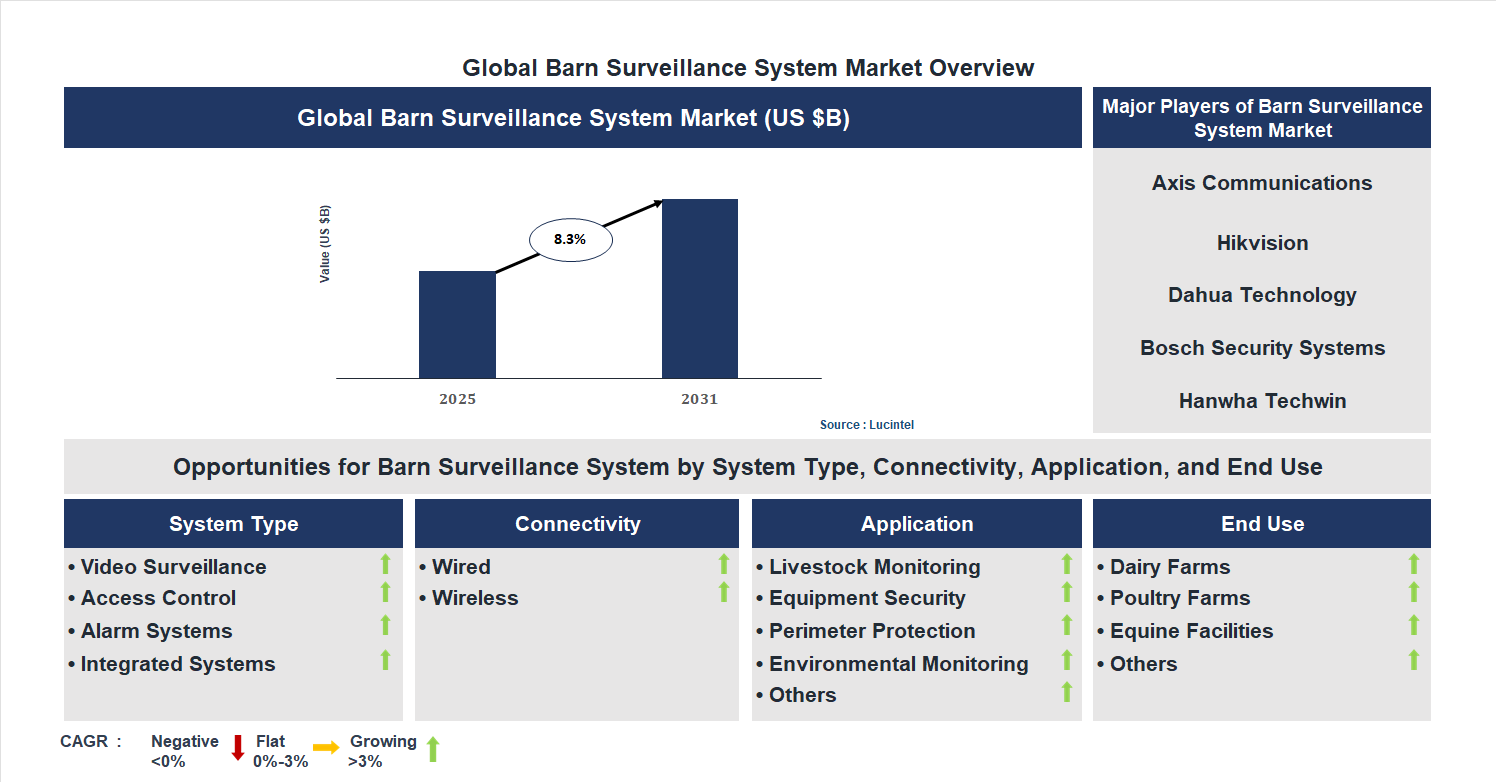
Key data points: The growth forecast = 8.3% annually for the next 7 years. Scroll below to get more insights. This market report covers trends, opportunities and forecasts in barn surveillance system market to 2031 by system type (video surveillance, access control, alarm systems, and integrated systems), connectivity (wired and wireless), application (livestock monitoring, equipment security, perimeter protection, environmental monitoring, and others), end use (dairy farms, poultry farms, equine facilities, and others), and region (North America, Europe, Asia Pacific, and the Rest of the World)
We'll send your sample report shortly.
• Lucintel forecasts that, within the system type category, video surveillance is expected to witness the highest growth over the forecast period.
• Within the end use category, dairy farm is expected to witness the highest growth.
• In terms of region, North America is expected to witness the highest growth over the forecast period. Gain valuable insights for your business decisions with our comprehensive 150+ page report. Sample figures with some insights are shown below.
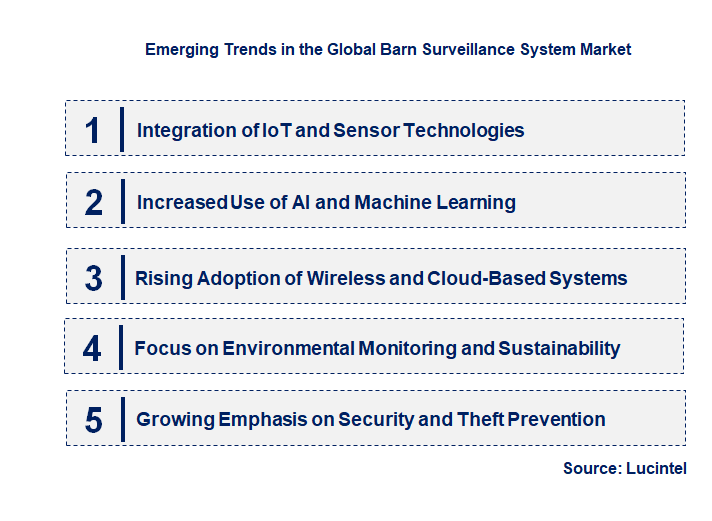
• Integration of IoT and Sensor Technologies: The adoption of Internet of Things (IoT) devices and sensors is transforming barn surveillance by enabling real-time monitoring of livestock health, environmental conditions, and security breaches. These connected devices provide farmers with continuous data streams, allowing for prompt responses to issues such as disease outbreaks or equipment failures. The integration enhances operational efficiency, reduces labor costs, and improves animal welfare. As IoT technology becomes more affordable and sophisticated, its adoption is expected to accelerate, making barn surveillance more intelligent and responsive.
• Increased use of AI and Machine Learning: Artificial intelligence (AI) and machine learning algorithms are increasingly being incorporated into surveillance systems to analyze vast amounts of data collected from sensors and cameras. These technologies facilitate automated detection of anomalies, behavioral patterns, and potential threats, reducing the need for manual oversight. AI-driven analytics improve decision-making accuracy, optimize resource allocation, and enable predictive maintenance. As AI capabilities advance, barn surveillance systems will become more autonomous, providing farmers with actionable insights and early warnings, ultimately enhancing productivity and animal health.
• Rising Adoption of Wireless and Cloud-based Systems: Wireless connectivity and cloud computing are revolutionizing barn surveillance by offering flexible, scalable, and remote access to surveillance data. Wireless systems eliminate the need for extensive cabling, simplifying installation and maintenance. Cloud platforms enable centralized data storage, easy sharing, and remote monitoring from any location. This trend supports real-time alerts and seamless integration with other farm management tools. As internet infrastructure improves and cloud services become more secure and cost-effective, farmers are increasingly adopting wireless, cloud-based surveillance solutions to enhance operational agility and data accessibility.
• Focus on Environmental Monitoring and Sustainability: Modern barn surveillance systems are increasingly designed to monitor environmental parameters such as temperature, humidity, air quality, and ventilation. These features help optimize conditions for livestock, reduce energy consumption, and minimize environmental impact. Enhanced environmental monitoring supports sustainable farming practices by ensuring resource efficiency and compliance with regulations. Additionally, data collected can inform strategies to reduce waste and improve overall farm sustainability. As environmental concerns grow, surveillance systems that promote eco-friendly practices are gaining prominence in the market.
• Growing Emphasis on Security and Theft Prevention: Security remains a critical concern for barn operators, prompting increased investment in surveillance systems that deter theft, vandalism, and unauthorized access. Advanced security features include high-definition cameras, motion detection, night vision, and remote monitoring capabilities. These systems provide real-time alerts and evidence collection, helping to protect valuable livestock and equipment. The rising incidence of farm thefts and vandalism has driven demand for robust security solutions. As security threats evolve, surveillance systems are becoming more sophisticated, integrating with broader farm security networks to safeguard assets effectively. In summary, these emerging trends are fundamentally reshaping the barn surveillance system market by making systems smarter, more integrated, and environmentally conscious. The adoption of IoT, AI, wireless connectivity, environmental monitoring, and enhanced security features is driving efficiency, sustainability, and security in modern farming operations. These developments are enabling farmers to manage their barns more proactively, reduce costs, and improve overall productivity, thereby transforming traditional agricultural practices into more innovative, data-driven systems.
• Integration of IoT Technology: The adoption of Internet of Things (IoT) devices has revolutionized barn surveillance by enabling real-time data collection and remote monitoring. Sensors track temperature, humidity, and animal activity, providing farmers with actionable insights. This integration enhances decision-making, reduces manual labor, and improves animal welfare. The increased connectivity also facilitates predictive maintenance and early detection of health issues, ultimately boosting productivity and reducing costs.
• Use of AI and Machine Learning: Artificial Intelligence (AI) and machine learning algorithms are now being incorporated into surveillance systems to analyze vast amounts of data. These technologies enable automated alerts for abnormal behaviors or environmental conditions, improving response times. AI-driven analytics help optimize barn conditions, prevent disease outbreaks, and enhance overall farm management. This development significantly increases operational efficiency and reduces losses, making farms more competitive.
• Deployment of Wireless and Cloud-Based Systems: Wireless surveillance solutions and cloud storage have gained popularity due to their ease of installation and scalability. Farmers can access live feeds and historical data from any location via smartphones or computers. Cloud-based systems reduce infrastructure costs and facilitate data sharing among farm managers and veterinarians. This flexibility supports larger operations and promotes collaborative decision-making, leading to more efficient farm management.
• Enhanced Video Surveillance Technologies: Advances in high-definition cameras, night vision, and motion detection have improved visual monitoring capabilities. These systems provide clear, continuous footage, enabling detailed observation of barn activities. Enhanced video surveillance helps in identifying security breaches, animal distress, or equipment malfunctions promptly. The improved image quality and intelligent features contribute to better security and operational oversight, reducing theft and ensuring animal safety.
• Focus on Data Security and Privacy: As surveillance systems become more connected, concerns over data security and privacy have increased. Market players are investing in robust cybersecurity measures, including encryption and secure data storage solutions. Regulatory compliance and data protection are now prioritized to prevent breaches and unauthorized access. This focus on security builds trust among users and ensures the integrity of sensitive farm data, fostering wider adoption of advanced surveillance systems. In summary, these recent developments are significantly transforming the barn surveillance system market by enhancing system capabilities, improving farm management efficiency, and ensuring data security. The integration of IoT, AI, wireless technologies, advanced video systems, and security measures collectively contributes to smarter, safer, and more sustainable farming practices. As a result, the market is poised for continued growth, driven by the increasing demand for innovative agricultural solutions.
• Livestock Monitoring: The adoption of surveillance systems for livestock monitoring allows real-time tracking of animal health, behavior, and location. This reduces disease spread, improves welfare, and optimizes feeding and breeding practices, leading to increased productivity and profitability for farmers.
• Crop Protection and Monitoring: Surveillance systems help monitor crop conditions, detect pest infestations, and identify environmental threats early. This proactive approach minimizes crop damage, reduces pesticide use, and ensures higher yields and better-quality produce.
• Farm Security and Asset Protection: Implementing surveillance in barns and farm premises deters theft, vandalism, and unauthorized access. Enhanced security measures protect valuable assets, reduce losses, and promote a safer working environment.
• Automation and Integration: Integrating surveillance with automated systems such as drones, sensors, and IoT devices enables seamless farm management. This automation improves operational efficiency, reduces labor costs, and facilitates data-driven decision-making.
• Data Analytics and Predictive Insights: Advanced analytics derived from surveillance data provide insights into animal health trends, environmental conditions, and operational performance. This supports proactive management, reduces risks, and boosts overall farm productivity. In summary, these growth opportunities are significantly impacting the barn surveillance system market by promoting smarter, safer, and more efficient farming practices. They enable farmers to optimize resource use, improve animal welfare, and protect assets, ultimately driving market expansion and technological innovation in the agricultural sector.
• Technological Innovation: The rapid development of IoT devices, high-resolution cameras, and AI-powered analytics enhances monitoring capabilities, enabling farmers to detect issues early, improve animal health, and optimize farm operations. These technological advancements reduce manual labor and increase efficiency, making surveillance systems more attractive and accessible. As technology becomes more affordable and user-friendly, adoption rates are expected to rise, fueling market growth significantly.
• Increasing Focus on Animal Welfare: Growing awareness and regulatory emphasis on animal welfare standards compel farmers to adopt surveillance systems. These systems help monitor animal behavior, health, and environmental conditions, ensuring compliance with welfare regulations. Enhanced monitoring not only improves animal well-being but also boosts consumer confidence in ethically produced products, thereby expanding market demand and encouraging further investments in surveillance solutions.
• Economic Benefits and Cost Savings: Barn surveillance systems contribute to reducing operational costs by enabling early detection of health issues, preventing disease outbreaks, and minimizing losses. They facilitate better resource management, such as feed and water usage, and reduce labor costs through automation. The potential for increased productivity and profitability incentivizes farmers and agribusinesses to invest in these systems, driving market expansion.
• Growing Adoption of Smart Farming Practices: The shift towards precision agriculture and smart farming techniques emphasizes data-driven decision-making. Barn surveillance systems are integral to this trend, providing real-time insights and automation capabilities. As farmers seek to modernize operations and improve sustainability, the integration of surveillance technology becomes a strategic priority, fostering market growth and technological convergence.
• Regulatory and Policy Support: Governments and industry bodies are implementing policies and standards that promote the adoption of surveillance systems for farm management and animal welfare. Incentives, subsidies, and compliance requirements encourage farmers to invest in advanced monitoring solutions. Such regulatory support accelerates market penetration and encourages innovation within the sector. The challenges in the barn surveillance system market are:
• High Initial Investment Costs: Implementing advanced surveillance systems requires significant capital expenditure on equipment, installation, and maintenance. Small-scale farmers may find these costs prohibitive, limiting market accessibility. Additionally, the return on investment can be uncertain in the short term, deterring some potential adopters and slowing overall market growth.
• Data Security and Privacy Concerns: The deployment of IoT and cloud-based surveillance solutions raises concerns about data breaches, unauthorized access, and privacy violations. Farmers and stakeholders worry about sensitive farm data being compromised or misused, which can hinder adoption. Ensuring robust cybersecurity measures and clear data governance policies is essential to building trust and facilitating market expansion.
• Technological Integration and Compatibility Issues: Integrating new surveillance systems with existing farm infrastructure and management software can be complex. Compatibility issues, lack of standardized protocols, and technical expertise gaps pose barriers to seamless adoption. These challenges can lead to increased costs and delays, impacting the overall growth trajectory of the market. In summary, the barn surveillance system market is shaped by rapid technological advancements, regulatory support, and economic incentives that promote adoption. However, high costs, data security concerns, and integration challenges present significant hurdles. Addressing these issues through innovation, policy frameworks, and stakeholder collaboration will be crucial for sustainable growth. The markets future depends on balancing technological progress with practical implementation and risk mitigation, ultimately enhancing farm productivity, animal welfare, and industry standards.
• Axis Communications
• Hikvision
• Dahua Technology
• Bosch Security Systems
• Hanwha Techwin
• FLIR Systems
• Avigilon (Motorola Solutions)
• Honeywell Security
• Pelco
• CP Plus
• Video Surveillance
• Access Control
• Alarm Systems
• Integrated Systems
• Wired
• Wireless
• Livestock Monitoring
• Equipment Security
• Perimeter Protection
• Environmental Monitoring
• Others
• Dairy Farms
• Poultry Farms
• Equine Facilities
• Others
• North America
• Europe
• Asia Pacific
• The Rest of the World
• United States: The US market has seen rapid adoption of AI-powered surveillance systems, integrating IoT devices for real-time monitoring and data analytics. Farm automation initiatives and government grants support technological upgrades, leading to increased market penetration. Major players are focusing on developing scalable, user-friendly solutions tailored for large-scale farms, with a growing emphasis on data security and compliance.
• China: China is experiencing robust growth driven by government policies promoting smart agriculture. The market benefits from extensive investments in IoT infrastructure and the integration of big data analytics. Local manufacturers are innovating with cost-effective surveillance systems, expanding their reach in rural areas. The focus is on enhancing farm productivity and livestock health through advanced monitoring technologies.
• Germany: The German market emphasizes high-quality, reliable surveillance systems with a focus on sustainability and animal welfare. Innovations include energy-efficient devices and integration with farm management software. The country’s strict regulations on farm hygiene and animal health are driving demand for sophisticated surveillance solutions that ensure compliance and improve operational efficiency.
• India: Rapid rural development and government initiatives like Digital India are fueling market growth. The focus is on affordable, easy-to-install surveillance systems suitable for small to medium-sized farms. Local startups are developing innovative, cost-effective solutions to address the challenges of farm security and livestock management in diverse agricultural settings.
• Japan: Japan’s market is characterized by advanced technological integration, including robotics and AI for barn surveillance. The emphasis is on precision monitoring to improve livestock health and farm productivity. The country’s aging farming population and focus on sustainable practices are driving demand for automated, reliable surveillance systems that reduce manual labor and enhance farm management.


• Axis Communications
• Hikvision
• Dahua Technology
• Bosch Security Systems
• Hanwha Techwin
• FLIR Systems
• Avigilon (Motorola Solutions)
• Honeywell Security
• Pelco
• CP Plus Q5. Which barn surveillance system market segment will be the largest in future? Answer: Lucintel forecasts that, within the system type category, video surveillance is expected to witness the highest growth over the forecast period. Q6. In barn surveillance system market, which region is expected to be the largest in next 5 years? Answer: In terms of region, North America is expected to witness the highest growth over the forecast period. Q7. Do we receive customization in this report? Answer: Yes, Lucintel provides 10% customization without any additional cost.


Choose a license that fits your team. Instant PDF delivery.
Prices exclude taxes. Instant delivery. Custom licensing available on request.
Market Report · July 29, 2026
Market Report · July 20, 2026
Market Report · July 20, 2026
Trusted partner for strategic intelligence and business growth


Receive a complimentary market analysis tailored to your industry. Our analysts will identify key growth opportunities and competitive dynamics specific to your business.

Market size, growth rate, and key trend analysis for your specific sector.

Top competitor positioning and market share analysis.

Strategic recommendations backed by data-driven insights.
Get curated market intelligence and competitive moves straight to your inbox.
By subscribing, you agree to receive our monthly insights. Unsubscribe anytime.
Receive a complimentary market analysis tailored to your industry. Our analysts will identify key growth opportunities and competitive dynamics specific to your business.
Market size, growth rate, and key trend analysis for your specific sector.
Top competitor positioning and market share analysis.
Strategic recommendations backed by data-driven insights.
Get curated market intelligence, emerging trends, and competitive moves straight to your inbox each month.
By subscribing, you agree to receive our monthly insights. Unsubscribe anytime.
We'll send your sample report shortly.