
Market Report · July 22, 2026

Key data points: The market size in 2035 = $2562 million, growth forecast = 4.6% annually for the next 8 years. Scroll below to get more insights. This market report covers trends, opportunities and forecasts in barium sulfate market to 2035 by product type (natural and precipitated), deposit type (bedded, vein, and residual), end use (gas, oil well drilling, paint, chemical, and others), and region (North America, Europe, Asia Pacific, and the Rest of the World)
We'll send your sample report shortly.
• Lucintel forecasts that, within the product type category, precipitated is expected to witness higher growth over the forecast period.
• Within the end use category, oil well drilling is expected to witness the highest growth.
• In terms of region, APAC is expected to witness the highest growth over the forecast period.
Gain valuable insights for your business decisions with our comprehensive 150+ page report. Sample figures with some insights are shown below.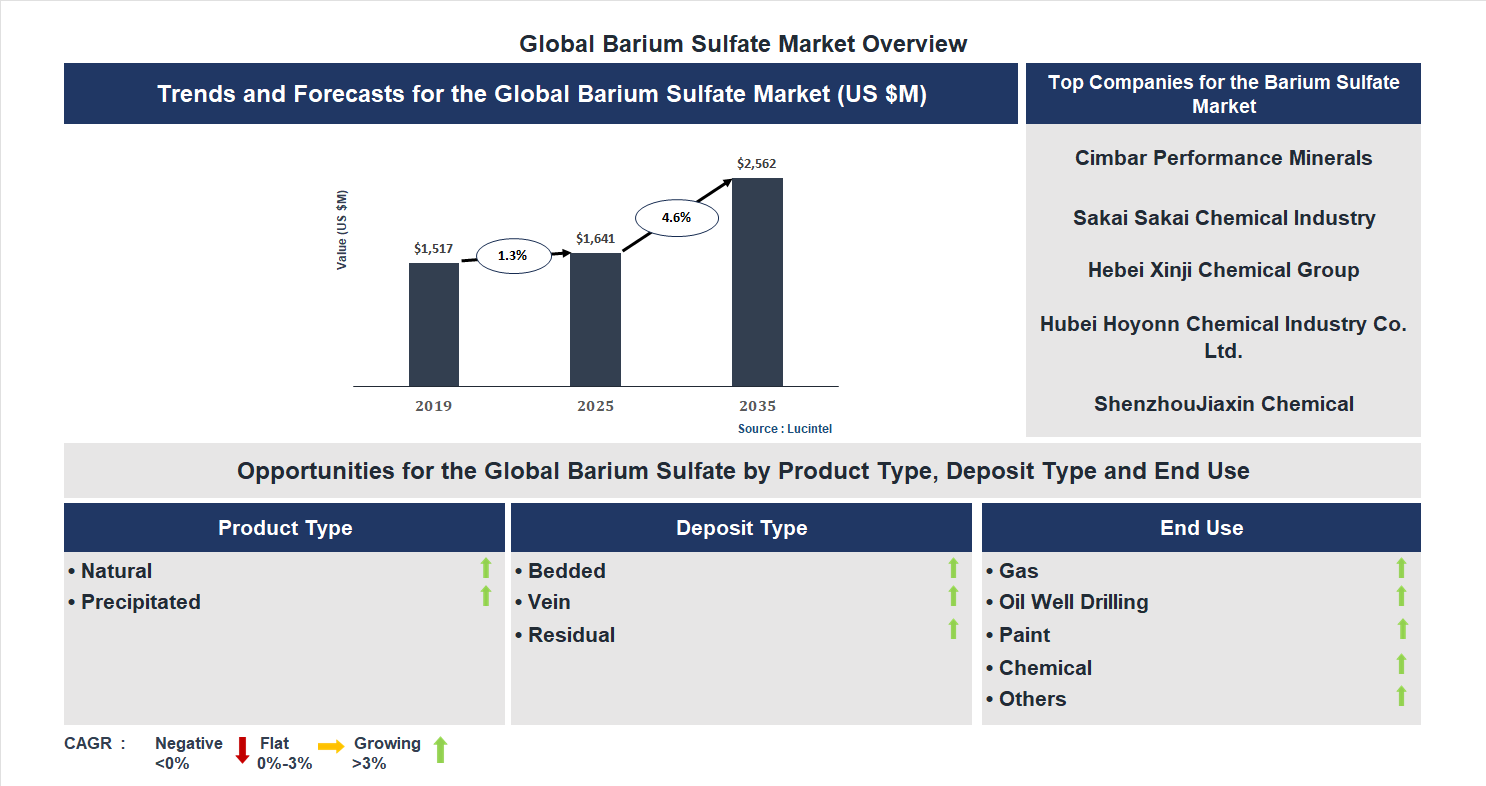
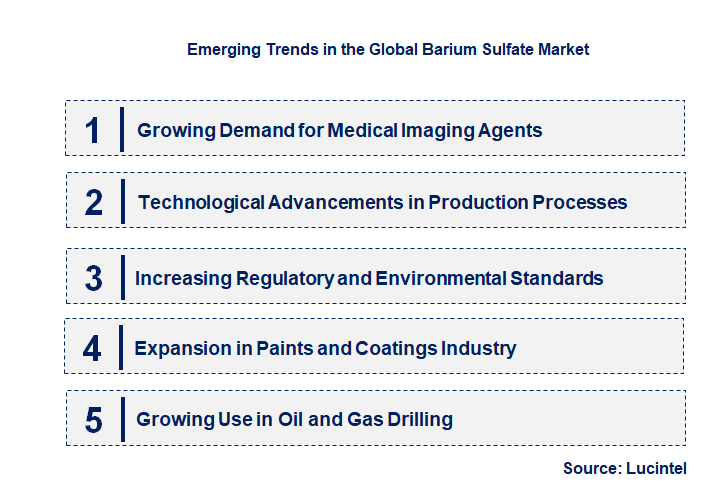
• Growing Demand for Medical Imaging Agents: The increasing prevalence of diagnostic imaging procedures such as X-rays and CT scans is driving demand for high-quality barium sulfate as a contrast agent. Its excellent radiopacity and safety profile make it essential in medical diagnostics, leading to sustained market growth. Innovations in formulation and delivery methods are enhancing patient outcomes and expanding applications, thus boosting market revenue.
• Technological Advancements in Production Processes: New manufacturing techniques, including improved grinding and coating technologies, are enhancing the purity, particle size, and dispersibility of barium sulfate. These innovations result in better performance in end-use applications like paints, plastics, and pharmaceuticals. Enhanced production efficiency and product quality are enabling manufacturers to meet stringent industry standards and reduce costs, fostering competitive advantages.
• Increasing Regulatory and Environmental Standards: Stricter regulations concerning environmental safety and product purity are influencing market practices. Companies are investing in eco-friendly production methods and sustainable sourcing to comply with global standards. This shift not only ensures legal compliance but also appeals to environmentally conscious consumers, thereby shaping product development and marketing strategies.
• Expansion in Paints and Coatings Industry: The rising demand for durable, high-quality paints and coatings in construction and automotive sectors is propelling the use of barium sulfate as a pigment extender and filler. Its properties improve paint brightness, durability, and resistance to corrosion. Market players are innovating with specialty grades to cater to specific industry needs, expanding market share and application scope.
• Growing Use in Oil and Gas Drilling: Barium sulfate’s role as a weighting agent in drilling fluids is expanding due to the increasing exploration activities worldwide. Its high density and stability under extreme conditions make it ideal for deep drilling operations. This trend is expected to continue, driven by energy sector growth, thereby significantly impacting demand and market size.
• Growing Demand in Medical Imaging: The increasing use of barium sulfate as a contrast agent in diagnostic imaging, such as X-rays and CT scans, is boosting market growth. Its non-toxic, radiopaque properties make it essential for gastrointestinal examinations. Rising healthcare awareness and technological advancements are expanding its application scope, leading to higher consumption globally. This trend is expected to continue, driven by aging populations and improved diagnostic techniques, significantly impacting the market‘s expansion.
• Advancements in Production Technology: Innovations in manufacturing processes, including environmentally friendly synthesis methods, are enhancing product quality and reducing costs. These technological improvements enable higher purity levels and better particle control, meeting stringent regulatory standards. As a result, manufacturers can produce more competitive products, expanding market reach. The adoption of sustainable practices also aligns with global environmental policies, fostering industry growth and opening new market segments.
• Increasing Demand from the Oil and Gas Industry: Barium sulfate‘s use as a drilling fluid additive in oil and gas exploration is rising due to its high density and stability. It helps control well pressure and improve drilling efficiency. The ongoing exploration activities, especially in deepwater and unconventional reservoirs, are driving demand. This sector‘s growth directly influences the market, encouraging innovation in product formulations to meet industry-specific requirements and ensuring a steady revenue stream for producers.
• Expansion in the Construction Sector: The construction industry’s need for high-quality, durable materials is fueling demand for barium sulfate as a filler and pigment. Its properties improve the strength and brightness of paints, coatings, and cement. Urbanization and infrastructure development in emerging economies further accelerate this trend. The market benefits from increased construction activities, with manufacturers focusing on developing specialized grades to cater to diverse construction applications, thereby broadening market scope.
• Regulatory and Environmental Developments: Stricter regulations on hazardous substances and environmental impact are prompting the industry to adopt safer, eco-friendly production methods. Compliance with these standards is essential for market sustainability. Innovations in waste management and emission controls are reducing environmental footprints. These developments are encouraging companies to invest in cleaner technologies, which, while initially costly, ultimately lead to a more sustainable and resilient market landscape, fostering long-term growth.
• Growing Demand for Barium Sulfate in Medical Imaging: The increasing need for high-quality contrast agents in X-ray and CT scans is boosting demand for pharmaceutical-grade barium sulfate. Its non-toxic, radiopaque properties make it ideal for diagnostic procedures, leading to expanded applications in healthcare. Rising healthcare awareness and technological advancements in imaging equipment further drive this growth, encouraging manufacturers to develop specialized formulations to meet stringent quality standards and regulatory requirements.
• Expansion of Barium Sulfate use in Paints and Coatings Industry: The paints and coatings sector is increasingly adopting barium sulfate as a white pigment and filler due to its excellent brightness, chemical stability, and weather resistance. The demand is driven by construction, automotive, and industrial applications requiring durable, high-quality finishes. Innovations in eco-friendly and low-VOC formulations are also encouraging manufacturers to incorporate barium sulfate, creating new growth avenues in environmentally conscious markets.
• Rising Application in Plastics and Rubber Manufacturing: Barium sulfate is widely used as a filler and reinforcement agent in plastics and rubber products, enhancing properties like durability, thermal stability, and electrical insulation. The surge in demand for lightweight, high-performance plastics in automotive and packaging industries is fueling this trend. Additionally, the development of specialty compounds with improved processing and performance characteristics is expanding the scope of barium sulfate in these sectors.
• Increasing Adoption in Construction Materials: The construction industry’s need for high-quality, cost-effective materials is driving the use of barium sulfate in cement, concrete, and other building materials. Its ability to improve opacity, reflectivity, and durability makes it a preferred additive. Growing infrastructure projects and urbanization in emerging economies are expected to further propel demand, with manufacturers focusing on developing customized, environmentally friendly formulations to meet regional standards.
• Technological Advancements in Production Processes: Innovations such as surface modification and coating techniques are enhancing the performance of barium sulfate particles, expanding their application scope. These advancements improve dispersibility, brightness, and chemical stability, making the product suitable for high-end applications. Investment in research and development is enabling the creation of specialty grades tailored for specific industries, thus opening new markets and increasing overall market competitiveness.
• Technological Advancements: The development of improved formulations and delivery systems for barium sulfate enhances image clarity and patient safety. Innovations such as low-volume, high-density formulations reduce discomfort and improve diagnostic accuracy. These technological improvements enable broader application in medical imaging, including fluoroscopy and CT scans, thereby expanding market potential. Continuous R&D efforts are also leading to more environmentally friendly manufacturing processes, which align with regulatory expectations and sustainability goals.
• Growing Healthcare Infrastructure: Increasing investments in healthcare infrastructure, especially in emerging economies, are fueling demand for diagnostic imaging agents like barium sulfate. As healthcare facilities expand and modernize, the need for effective contrast agents rises. This growth is supported by rising prevalence of gastrointestinal disorders and the aging population, which require advanced diagnostic procedures. The expansion of outpatient clinics and diagnostic centers further contributes to the increased utilization of barium sulfate, boosting market growth.
• Rising Prevalence of Gastrointestinal Diseases: The global increase in gastrointestinal disorders such as ulcers, cancers, and inflammatory diseases directly impacts the demand for diagnostic imaging. Barium sulfate is a primary contrast agent used in barium swallow and enema procedures to visualize the GI tract. As the incidence of these conditions rises, especially in developing countries, the demand for effective imaging solutions like barium sulfate correspondingly increases, supporting market expansion.
• Regulatory Approvals and Standards: Stringent regulatory frameworks ensure the safety and efficacy of barium sulfate products. Approval from agencies such as the FDA and EMA facilitates market entry and builds trust among healthcare providers. Compliance with quality standards also encourages manufacturers to innovate and improve product formulations. Regulatory support can accelerate adoption in new markets, while non-compliance or delays can hinder growth, making regulatory navigation a critical factor.
• Increasing Adoption of Minimally Invasive Procedures: The shift towards minimally invasive diagnostic techniques favors the use of contrast agents like barium sulfate. These procedures offer reduced recovery times and lower complication risks, making them preferable in many clinical settings. The demand for high-quality contrast media that can provide detailed imaging in such procedures is rising, thereby driving market growth. This trend is supported by technological innovations that improve the safety and effectiveness of contrast agents.
• Environmental and Safety Concerns: The manufacturing and disposal of barium sulfate pose environmental risks due to the potential release of toxic substances. Regulatory agencies are increasingly imposing strict environmental standards, which can increase production costs and complicate waste management. Additionally, concerns about patient safety, especially in cases of accidental ingestion or allergic reactions, necessitate rigorous testing and monitoring, potentially delaying product approval and market entry.
• Regulatory Hurdles and Compliance: Navigating complex regulatory landscapes across different regions can be challenging for manufacturers. Lengthy approval processes, changing standards, and the need for extensive clinical data can delay product launches and increase costs. Non-compliance risks include product recalls and legal penalties, which can adversely affect market stability and growth prospects.
• Competition from Alternative Imaging Agents: The emergence of alternative contrast agents, such as water-soluble iodinated compounds and MRI-based contrast media, presents significant competition. These alternatives may offer advantages like fewer side effects or better imaging capabilities, challenging the dominance of barium sulfate. Market players must innovate continuously to maintain their share, and the competition can lead to price pressures and reduced profit margins.
• Cimbar Performance Minerals
• Sakai Sakai Chemical Industry
• Hebei Xinji Chemical Group
• Hubei Hoyonn Chemical Industry Co. Ltd.
• ShenzhouJiaxin Chemical
• Hubei Talents Minerals
• Nippon Chemical Industrial
• Excalibar Minerals
• Solvay`
• Onmillion Nano Material
• Natural
• Precipitated
• Bedded
• Vein
• Residual
• Gas
• Oil Well Drilling
• Paint
• Chemical
• Others
• North America
• Europe
• Asia Pacific
• The Rest of the World
• United States: The US market has seen increased adoption of Barium Sulfate in medical imaging, particularly in contrast agents for X-ray and CT scans. Regulatory agencies have tightened safety standards, prompting manufacturers to develop higher purity grades. Innovations in environmentally friendly production processes are gaining traction, and there is a growing focus on sustainable sourcing. The construction industry continues to utilize Barium Sulfate for specialized applications, supporting infrastructure development. Additionally, collaborations between research institutions and industry players are fostering new applications and improving product quality.
• China: China remains the largest producer and consumer of Barium Sulfate, with rapid industrial growth fueling demand. Recent developments include advancements in high-quality, nano-sized Barium Sulfate for use in electronics and coatings. The government has implemented stricter environmental regulations, encouraging cleaner production methods and waste management practices. Domestic companies are investing in R&D to diversify applications, especially in the automotive and electronics sectors. Export activities are expanding, supported by improved quality standards and competitive pricing. The market is also witnessing increased adoption of Barium Sulfate in new industrial segments.
• Germany: Germany‘s market is characterized by a focus on high-performance Barium Sulfate for industrial and healthcare applications. Recent innovations include the development of eco-friendly production techniques that reduce emissions and waste. The country emphasizes quality control and compliance with European safety standards, which has enhanced export opportunities. Germany is also investing in research to improve the dispersibility and stability of Barium Sulfate in various formulations. The pharmaceutical sector is utilizing Barium Sulfate for advanced imaging solutions, while the construction industry explores new uses in specialized materials. Sustainability initiatives are a key driver of recent developments.
• India: India is witnessing rapid growth in the Barium Sulfate market driven by expanding infrastructure, healthcare, and manufacturing sectors. Recent developments include increased local production capacity and the adoption of quality standards aligned with international norms. The government’s focus on industrial growth and ease of doing business has attracted investments in Barium Sulfate manufacturing. Innovations in application areas such as paints, plastics, and rubber are emerging. Efforts are also underway to improve environmental management practices in production processes. The market is poised for further expansion as demand for high-quality Barium Sulfate continues to rise across multiple industries.
• Japan: Japan‘s Barium Sulfate market is characterized by technological innovation and stringent safety standards. Recent developments include the creation of advanced, high-purity Barium Sulfate for medical imaging and electronic applications. The country emphasizes sustainable manufacturing practices, reducing environmental impact through improved waste management and energy efficiency. Japan‘s pharmaceutical and electronics industries are key consumers, utilizing Barium Sulfate for high-precision applications. Collaborative research initiatives are exploring new formulations and uses, including in nanotechnology. The market benefits from Japan’s focus on quality, safety, and environmental sustainability, positioning it as a leader in specialized Barium Sulfate applications.


• Cimbar Performance Minerals
• Sakai Sakai Chemical Industry
• Hebei Xinji Chemical Group
• Hubei Hoyonn Chemical Industry Co. Ltd.
• ShenzhouJiaxin Chemical
• Hubei Talents Minerals
• Nippon Chemical Industrial
• Excalibar Minerals
• Solvay`
• Onmillion Nano Material
Q6. Which barium sulfate market segment will be the largest in future?

Choose a license that fits your team. Instant PDF delivery.
Prices exclude taxes. Instant delivery. Custom licensing available on request.
Market Report · July 22, 2026
Market Report · July 22, 2026
Market Report · July 22, 2026
Trusted partner for strategic intelligence and business growth


Receive a complimentary market analysis tailored to your industry. Our analysts will identify key growth opportunities and competitive dynamics specific to your business.

Market size, growth rate, and key trend analysis for your specific sector.

Top competitor positioning and market share analysis.

Strategic recommendations backed by data-driven insights.
Get curated market intelligence and competitive moves straight to your inbox.
By subscribing, you agree to receive our monthly insights. Unsubscribe anytime.
Receive a complimentary market analysis tailored to your industry. Our analysts will identify key growth opportunities and competitive dynamics specific to your business.
Market size, growth rate, and key trend analysis for your specific sector.
Top competitor positioning and market share analysis.
Strategic recommendations backed by data-driven insights.
Get curated market intelligence, emerging trends, and competitive moves straight to your inbox each month.
By subscribing, you agree to receive our monthly insights. Unsubscribe anytime.
We'll send your sample report shortly.