
Country Research · February 1, 2024

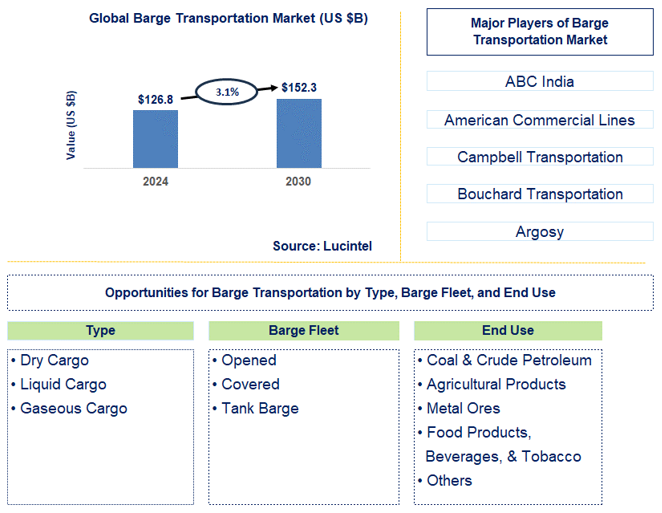
Key data points: The market size in 2030 = $152.3 billion, growth forecast = 3.1% annually next 6 years. Scroll below to get more insights. This market report covers trends, opportunities, and forecast in the global barge transportation market to 2030 by type (dry cargo, liquid cargo, and gaseous cargo), barge fleet (opened, covered, and tank barge), end use (coal & crude petroleum, agricultural products, metal ores, food products, beverages, & tobacco, and others), and region (North America, Europe, Asia Pacific, and the Rest of the World)
We'll send your sample report shortly.
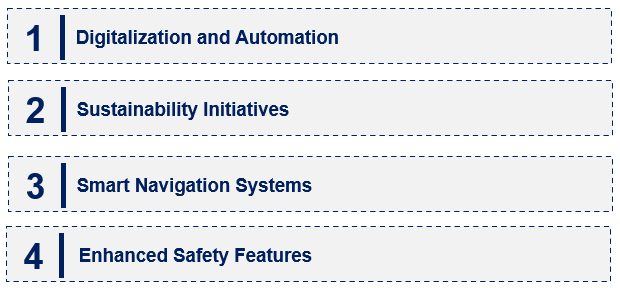
• Digitalization and Automation: Fleet management, navigation and cargo handling are now being carried out using digital tools and automated systems more than ever before. This leads to a more efficient operation with fewer mistakes by humans.
• Sustainability Initiatives: Ecologically friendly technologies including fuel-efficient engines and lower emissions are receiving increased attention. It is aligned with global environmental regulations as well as consumer preferences.
• Smart Navigation Systems: There is an increasingly adoption of sophisticated navigation software that optimizes routes and offers real-time tracking. These systems improve barge safety and save time.
• Enhanced Safety Features: New safety measures such as collision avoidance and real-time monitoring are being incorporated on barges for better safety and regulatory compliance. Technological innovation, sustainability improvements, operational efficiency advancements—these changing trends in Barge Transportation influence future industry development at large.
• Innovation in Digital Technology: The operational process for transportation has been made easier through integration of advanced fleet management systems with navigation to make operations better by optimizing routes. It increases overall efficiency and reduces operational expenses.
• Sustainability on Focus: The use of green technologies such as engines that consume less fuel and emission control devices is steadily gaining ground. This trend represents a compliance with environmental goals set by regulators.
• Infrastructure Improvements: Port infrastructure and logistics facilities are being improved due to significant investments therein. Modernized ports can accommodate higher cargo volumes while improving efficiency.
• Enhancements in Regulatory Compliance: Tougher rules have led to investment into safety as well as compliance technology. For instance, sophisticated safety mechanisms and automated compliance monitoring tools. these recent changes are key drivers for development in the barge transport segment through technological advancements, sustainability projects, and development of infrastructure thereby leading to increasing efficiencies among others in this industry.
• Investment in Digital Technologies: Opportunities to improve operational efficiency and reduce costs exist in implementing advanced fleet management and navigation systems. Digital tools are able to simplify operation procedures while at the same time improving real-time tracking capabilities.
• Adoption of Green Technologies: Maintaining a competitive edge and conforming to environmental regulations can be achieved through embracing green technologies that are friendly to the environment. This entails expenditure on fuel-efficient engines as well as emission reduction systems.
• Infrastructure Development: There is a chance for improvement in logistical efficiency and handling increased freight volumes through expanding or modernizing port infrastructure. This investment supports industry growth and operational capacity.
• Expansion into Emerging Markets: These regions represent new avenues for revenue generation while developing services and infrastructure within can earn more money for you. Developing services and infrastructure in these regions can capture new revenue streams. Technological advancements, sustainability initiatives, and infrastructural development are driving forces behind the strategic growth opportunities outlined herein which signal areas of growth as well as innovation in the barge transportation marketplace
• ABC India
• American Commercial Lines
• Campbell Transportation Company
• Bouchard Transportation
• Argosy
• American Commercial Barge Liner
• Blessey Marine Services
• Dry Cargo
• Liquid Cargo
• Gaseous Cargo
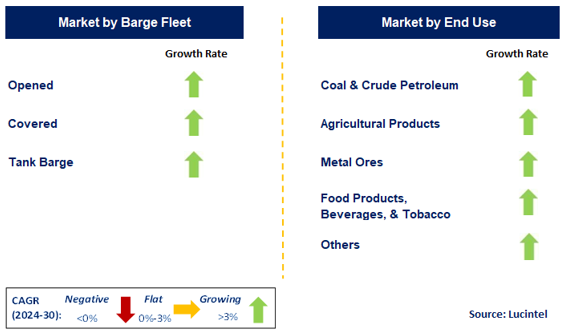
• Opened
• Covered
• Tank Barge
• Coal & Crude Petroleum
• Agricultural Products
• Metal Ores
• Food Products, Beverages, & Tobacco
• Others
• North America
• Europe
• Asia Pacific
• The Rest of the World
• United States: The US market is moving towards digitalization with sophisticated fleet management and navigation systems. In addition, there are increased infrastructure investments as well as regulatory compliance for environmental standards.
• China: China has developed its barge fleet and port infrastructure to cater for the increasing trade volumes. This entails focusing on smart integration of technologies including better logistical efficiency to face increased national and international demands.
• Germany: Germany’s concern is sustainability and efficiency hence shifting to green technologies investment and automation. Likewise, industry stakeholders are adopting modernized navigation systems as well as digital platforms aimed at improving operational control.
• India: Investment in port infrastructure and logistics has facilitated growth in India’s barge transportation sector. The focus here is on fleet modernization and regulatory compliance improvements for enhanced efficiency.
• Japan: Japan moves ahead through technology integration that looks into automated systems plus safety enhancements. In addition, the industry is investing in infrastructure upgrades that can handle more volumes leading to general improvement of the entire system’s efficiency.


• ABC India
• American Commercial Lines
• Campbell Transportation Company
• Bouchard Transportation
• Argosy
• American Commercial Barge Liner
• Blessey Marine Services Q6. Which barge transportation market segment will be the largest in future? Answer: Lucintel forecasts that dry cargo will remain the largest segment over the forecast period due to the innovations in dry cargo inland waterway vessels. Q7. In barge transportation market, which region is expected to be the largest in next 5 years? Answer: North America is expected to witness highest growth over the forecast period due to presence of well-established inland waterway system in the region. Q.8 Do we receive customization in this report? Answer: Yes, Lucintel provides 10% customization without any additional cost.


Choose a license that fits your team. Instant PDF delivery.
Prices exclude taxes. Instant delivery. Custom licensing available on request.
Country Research · February 1, 2024
Trusted partner for strategic intelligence and business growth


Receive a complimentary market analysis tailored to your industry. Our analysts will identify key growth opportunities and competitive dynamics specific to your business.

Market size, growth rate, and key trend analysis for your specific sector.

Top competitor positioning and market share analysis.

Strategic recommendations backed by data-driven insights.
Get curated market intelligence and competitive moves straight to your inbox.
By subscribing, you agree to receive our monthly insights. Unsubscribe anytime.
Receive a complimentary market analysis tailored to your industry. Our analysts will identify key growth opportunities and competitive dynamics specific to your business.
Market size, growth rate, and key trend analysis for your specific sector.
Top competitor positioning and market share analysis.
Strategic recommendations backed by data-driven insights.
Get curated market intelligence, emerging trends, and competitive moves straight to your inbox each month.
By subscribing, you agree to receive our monthly insights. Unsubscribe anytime.
We'll send your sample report shortly.