
Close Lucintel Chat
Didn't Find What You're Looking for?
Call us at +1972 636 5056 or write at helpdesk@Lucintel.com
Ask an Expert Provide Custom Requirements Download Sample Report Search Available Reports
  • helpdesk@Lucintel.com
  • |
  • Call Lucintel +1 972 636 5056
  • |
  • Login
  • |
  • Register
  • |
  • Search
  • |
'
...

The Impact of COVID-19 is included in Ballistic Targeting Software Market Report. Buy it today to get an advantage.

Request the impact of COVID-19 on your product or industry


Ballistic Targeting Software Market Trends and Forecast

The future of the global ballistic targeting software market looks promising with opportunities in the personal, and commercial markets. The global ballistic targeting software market is expected to grow with a CAGR of 8.1% from 2025 to 2031. The major drivers for this market are increasing adoption of precision targeting technologies in defense and security. and rising demand for advanced training tools in military and law enforcement..

Lucintel forecasts that, within the type category, cloud-based is expected to witness higher growth over the forecast period.
Within the application category, commercial is expected to witness the higher growth.
In terms of region, APAC is expected to witness the highest growth over the forecast period.
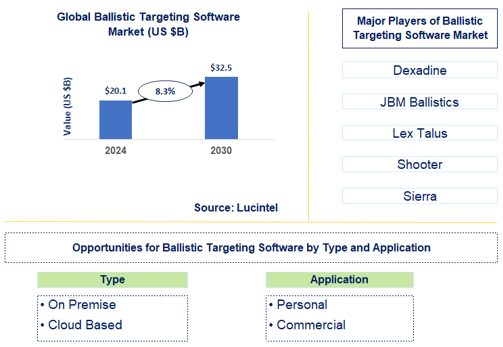
Gain valuable insights for your business decisions with our comprehensive 150+ page report. Sample figures with some insights are shown below.
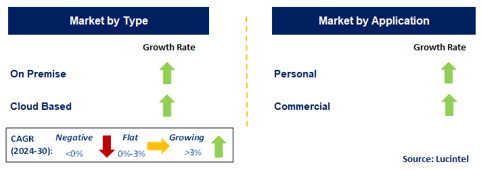
Ballistic Targeting Software Market Trends and Forecast

Ballistic Targeting Software Market by Segment

Emerging Trends in the Ballistic Targeting Software Market

The global ballistic targeting software market is evolving rapidly due to advancements in technology, changing geopolitical dynamics, and rising demand for more accurate and efficient military solutions. These emerging trends are reshaping how targeting systems are developed and deployed globally, impacting defense strategies and enhancing military capabilities.
• Integration of Artificial Intelligence (AI): AI is increasingly being integrated into ballistic targeting software to improve decision-making speed and targeting accuracy. By leveraging machine learning algorithms, military forces can assess and predict targets with greater precision, reducing human error and enhancing mission success.
• Automation and Real-time Data Processing: Automation in targeting systems is driving increased efficiency by processing real-time data to make quicker, more accurate decisions. This trend allows for faster and more reliable targeting during combat operations, improving the overall effectiveness of defense systems.
• Increased Investment in Cybersecurity: As ballistic targeting systems become more connected and reliant on digital infrastructures, the risk of cyberattacks increases. To counter this, the industry is seeing a surge in investment in cybersecurity to protect sensitive targeting data and prevent tampering of systems during critical operations.
• Adoption of Multidomain Integration: There is a growing trend toward integrating ballistic targeting systems across various domains (land, air, sea, and space). This multidomain approach ensures a coordinated response to threats, improving targeting efficiency and response time in complex combat situations.
• Development of Mobile and Portable Systems: With the growing need for rapid deployment in various combat environments, there is an increased focus on developing mobile and portable ballistic targeting systems. These systems provide flexibility for military units to maintain precise targeting capabilities even in remote or challenging environments.
These emerging trends are transforming the ballistic targeting software market by enhancing accuracy, reducing response times, and improving overall military effectiveness. The integration of AI, real-time data processing, and cybersecurity advancements is reshaping the future of defense strategies worldwide.
Emerging Trends in the Ballistic Targeting Software Market

Recent Development in the Ballistic Targeting Software Market

Significant advancements in the ballistic targeting software market are taking place across several countries, with innovations aimed at improving accuracy, speed, and integration. These developments are driven by the need to enhance defense capabilities and maintain technological superiority.
• Advancement of AI-driven Systems: Many countries, including the U.S. and China, are integrating AI-driven algorithms into their targeting systems. These advancements allow for real-time decision-making and enhanced precision in targeting, contributing to more effective missile defense and military operations.
• Collaborative Defense Initiatives: In Europe, countries like Germany are collaborating with NATO and other European partners to develop shared ballistic targeting solutions. These joint efforts are improving interoperability between defense systems and ensuring that all participating nations can leverage advanced software for more precise targeting.
• Increased Adoption of Cloud-Based Solutions: The integration of cloud computing into ballistic targeting software is allowing military forces to store and analyze large amounts of data quickly. Cloud-based solutions enhance real-time decision-making and allow for the deployment of targeting systems in a more flexible and scalable manner.
• Enhanced Missile Defense Systems: Countries like India and Japan are significantly improving their ballistic targeting systems as part of broader missile defense upgrades. These advancements include the integration of advanced sensors and tracking software to improve the interception of incoming threats.
• Focus on Training and Simulation Tools: To ensure the optimal use of ballistic targeting software, nations are investing in training programs and simulation tools. These tools help military personnel practice and perfect targeting techniques, improving the overall effectiveness of defense systems during real-world operations.
The recent developments in the ballistic targeting software market are enhancing the precision, integration, and scalability of defense systems. Advances in AI, cloud computing, and collaborative defense initiatives are driving significant improvements in global military capabilities.

Strategic Growth Opportunities in the Ballistic Targeting Software Market

The global ballistic targeting software market is witnessing significant growth opportunities across various applications. These opportunities are being driven by technological innovations, changing defense needs, and rising investment in defense infrastructure.
• Missile Defense Systems: The growing need for advanced missile defense systems provides a key growth opportunity for ballistic targeting software. Innovations in targeting accuracy and real-time data processing are critical for intercepting ballistic missiles and other airborne threats.
• Naval Defense: With increasing maritime security concerns, there is a growing demand for ballistic targeting software in naval defense systems. These systems enable more accurate targeting of threats in oceanic environments, enhancing the effectiveness of naval defense strategies.
• Air Defense Systems: As air threats continue to evolve, the demand for advanced targeting systems in air defense is increasing. Ballistic targeting software enhances the precision of intercepting hostile aircraft and missiles, contributing to more robust air defense capabilities.
• Ground-based Defense Systems: Ground forces require accurate ballistic targeting systems to improve artillery and missile strike precision. The growth in the demand for these systems in land-based defense applications presents a significant opportunity for software developers.
• Integration with Autonomous Systems: The integration of ballistic targeting software with autonomous vehicles, such as drones and unmanned ground systems, is opening up new growth opportunities. These systems can perform real-time targeting autonomously, improving response times and minimizing human error.
The expansion of ballistic targeting software across missile defense, air and naval defense, and ground systems presents significant growth opportunities. The integration with autonomous systems further enhances these applications, positioning the market for continued growth and development.

Global Ballistic Targeting Software Market Driver and Challenges

The ballistic targeting software market is shaped by various drivers and challenges, driven by advancements in technology, defense needs, and regulatory factors.
The factors responsible for driving the Global Ballistic Targeting Software market include:
1. Technological Advancements: Innovations in artificial intelligence, machine learning, and real-time data processing are enhancing the precision and speed of ballistic targeting systems, making them more effective in dynamic combat scenarios.
2. Rising Defense Budgets: Increased global defense spending is driving investments in advanced targeting software systems, enabling military forces to modernize their capabilities and maintain technological superiority.
3. Integration of Multidomain Systems: The growing trend toward multidomain integration in military operations is driving demand for ballistic targeting software that can seamlessly operate across land, air, sea, and space, improving overall mission effectiveness.
4. Enhanced Threats from Ballistic Missiles: As the threat from ballistic missiles continues to rise, nations are prioritizing investments in missile defense and targeting systems to protect critical infrastructure and military assets.
5. Geopolitical Instability: Ongoing geopolitical tensions and security concerns are increasing the need for advanced ballistic targeting solutions to ensure national security and improve defense readiness.
Challenges in the Global Ballistic Targeting Software market are:
1. High Development Costs: The development of advanced ballistic targeting software systems involves substantial costs related to research, technology integration, and testing. These costs may limit the ability of smaller defense contractors to compete.
2. Cybersecurity Risks: As targeting software becomes more connected and reliant on digital infrastructure, the risk of cyberattacks and data breaches increases. Ensuring robust cybersecurity measures is critical to maintaining the integrity of targeting systems.
3. Regulatory Hurdles: Navigating international regulations related to defense technology and military exports can be complex. Compliance with these regulations may slow down the development and deployment of advanced ballistic targeting systems.
The major drivers in the ballistic targeting software market, such as technological advancements, rising defense budgets, and geopolitical instability, are fostering growth. However, challenges such as high development costs, cybersecurity risks, and regulatory hurdles must be addressed for continued market progress and success.

List of Ballistic Targeting Software Companies

Companies in the market compete on the basis of product quality offered. Major players in this market focus on expanding their manufacturing facilities, R&D investments, infrastructural development, and leverage integration opportunities across the value chain. With these strategies ballistic targeting software companies cater increasing demand, ensure competitive effectiveness, develop innovative products & technologies, reduce production costs, and expand their customer base. Some of the ballistic targeting software companies profiled in this report include-
• Dexadine
• JBM Ballistics
• Lex Talus
• Shooter
• Sierra

Ballistic Targeting Software Market by Segment

The study includes a forecast for the global ballistic targeting software market by type, application, and region.

Ballistic Targeting Software Market by Type [Value from 2019 to 2031]:


• On Premise
• Cloud Based

Ballistic Targeting Software Market by Application [Value from 2019 to 2031]:


• Personal
• Commercial

Ballistic Targeting Software Market by Region [Value from 2019 to 2031]:


• North America
• Europe
• Asia Pacific
• The Rest of the World

Country Wise Outlook for the Ballistic Targeting Software Market

The global ballistic targeting software market is experiencing significant growth due to advancements in military technology, rising defense budgets, and increasing demand for precision targeting systems. Key nations, including the United States, China, Germany, India, and Japan, are heavily investing in enhancing their defense capabilities with more advanced ballistic targeting software solutions. These developments aim to improve the accuracy and efficiency of targeting systems, offering better strategic advantages in modern warfare.
• United States: The U.S. remains a dominant player in the global ballistic targeting software market, with a focus on innovation and integration of artificial intelligence (AI) and machine learning (ML) technologies. The U.S. Department of Defense (DoD) has been investing heavily in next-generation targeting systems that enhance precision and reduce response time. These advancements are also focused on improving interoperability across multiple platforms, enabling faster decision-making and more accurate ballistic assessments in complex combat scenarios.
• China: China is significantly increasing its investments in ballistic targeting software, with a focus on modernization and integration into its military infrastructure. The Chinese government is developing advanced systems to improve the effectiveness of its missile and air defense platforms. The country is leveraging AI and data analytics to boost the performance of its targeting software, enabling faster, more accurate targeting for both defense and offensive military operations. These developments align with China’s ambition to strengthen its defense capabilities.
• Germany: Germany has been enhancing its ballistic targeting software capabilities through collaborations between defense contractors and research institutions. The country’s focus is on developing integrated solutions for both land and air defense systems, with a growing emphasis on AI-driven systems. Germany is also exploring partnerships within the EU to develop shared defense technologies, ensuring that ballistic targeting software solutions can be efficiently implemented in multinational defense scenarios.
• India: India’s ballistic targeting software market is expanding as part of its ongoing defense modernization efforts. The Indian Armed Forces are integrating advanced software solutions to improve the accuracy of missile defense systems and enhance the targeting capabilities of their artillery. India’s defense budget has been steadily increasing, supporting investments in technology upgrades, including precision-guided munitions and targeting software for both air and ground defense systems.
• Japan: Japan is making significant strides in the development of ballistic targeting software, focusing on enhancing its missile defense and naval defense systems. Japan’s ballistic targeting software integrates cutting-edge technologies such as machine learning and AI to improve the accuracy and speed of targeting in real-time operations. Given Japan’s growing security concerns in the Asia-Pacific region, its advancements in ballistic targeting software are critical to enhancing national defense capabilities.
Lucintel Analytics Dashboard

Features of the Global Ballistic Targeting Software Market

Market Size Estimates: Ballistic targeting software market size estimation in terms of value ($B).
Trend and Forecast Analysis: Market trends (2019 to 2024) and forecast (2025 to 2031) by various segments and regions.
Segmentation Analysis: Ballistic targeting software market size by type, application, and region in terms of value ($B).
Regional Analysis: Ballistic targeting software market breakdown by North America, Europe, Asia Pacific, and Rest of the World.
Growth Opportunities: Analysis of growth opportunities in different type, application, and regions for the ballistic targeting software market.
Strategic Analysis: This includes M&A, new product development, and competitive landscape of the ballistic targeting software market.
Analysis of competitive intensity of the industry based on Porter’s Five Forces model.

Lucintel Consulting Services

FAQ

Q1. What is the growth forecast for ballistic targeting software market?
Answer: The global ballistic targeting software market is expected to grow with a CAGR of 8.1% from 2025 to 2031.
Q2. What are the major drivers influencing the growth of the ballistic targeting software market?
Answer: The major drivers for this market are increasing adoption of precision targeting technologies in defense and security. and rising demand for advanced training tools in military and law enforcement..
Q3. What are the major segments for ballistic targeting software market?
Answer: The future of the ballistic targeting software market looks promising with opportunities in the personal, and commercial markets.
Q4. Who are the key ballistic targeting software market companies?
Answer: Some of the key ballistic targeting software companies are as follows:
• Dexadine
• JBM Ballistics
• Lex Talus
• Shooter
• Sierra
Q5. Which ballistic targeting software market segment will be the largest in future?
Answer: Lucintel forecasts that cloud-based is expected to witness higher growth over the forecast period.
Q6. In ballistic targeting software market, which region is expected to be the largest in next 5 years?
Answer: APAC is expected to witness the highest growth over the forecast period.
Q7. Do we receive customization in this report?
Answer: Yes, Lucintel provides 10% customization without any additional cost.

This report answers following 11 key questions:

Q.1. What are some of the most promising, high-growth opportunities for the ballistic targeting software market by type (on premise and cloud based), application (personal and commercial), and region (North America, Europe, Asia Pacific, and the Rest of the World)?
Q.2. Which segments will grow at a faster pace and why?
Q.3. Which region will grow at a faster pace and why?
Q.4. What are the key factors affecting market dynamics? What are the key challenges and business risks in this market?
Q.5. What are the business risks and competitive threats in this market?
Q.6. What are the emerging trends in this market and the reasons behind them?
Q.7. What are some of the changing demands of customers in the market?
Q.8. What are the new developments in the market? Which companies are leading these developments?
Q.9. Who are the major players in this market? What strategic initiatives are key players pursuing for business growth?
Q.10. What are some of the competing products in this market and how big of a threat do they pose for loss of market share by material or product substitution?
Q.11. What M&A activity has occurred in the last 5 years and what has its impact been on the industry?

For any questions related to Ballistic Targeting Software Market, Ballistic Targeting Software Market Size, Ballistic Targeting Software Market Growth, Ballistic Targeting Software Market Analysis, Ballistic Targeting Software Market Report, Ballistic Targeting Software Market Share, Ballistic Targeting Software Market Trends, Ballistic Targeting Software Market Forecast, Ballistic Targeting Software Companies, write Lucintel analyst at email: helpdesk@lucintel.com. We will be glad to get back to you soon.
                                                            Table of Contents

            1. Executive Summary

            2. Global Ballistic Targeting Software Market : Market Dynamics
                        2.1: Introduction, Background, and Classifications
                        2.2: Supply Chain
                        2.3: Industry Drivers and Challenges

            3. Market Trends and Forecast Analysis from 2019 to 2031
                        3.1. Macroeconomic Trends (2019-2024) and Forecast (2025-2031)
                        3.2. Global Ballistic Targeting Software Market Trends (2019-2024) and Forecast (2025-2031)
                        3.3: Global Ballistic Targeting Software Market by Type
                                    3.3.1: On Premise
                                    3.3.2: Cloud Based
                        3.4: Global Ballistic Targeting Software Market by Application
                                    3.4.1: Personal
                                    3.4.2: Commercial

            4. Market Trends and Forecast Analysis by Region from 2019 to 2031
                        4.1: Global Ballistic Targeting Software Market by Region
                        4.2: North American Ballistic Targeting Software Market
                                    4.2.1: North American by type: on premise and cloud based
                                    4.2.2: North American by application: personal and commercial
                        4.3: European Ballistic Targeting Software Market
                                    4.3.1: European by type: on premise and cloud based
                                    4.3.2: European by application: personal and commercial
                        4.4: APAC Ballistic Targeting Software
                                    4.4.1: APAC by type: on premise and cloud based
                                    4.4.2: APAC by application: personal and commercial
                        4.5: ROW Ballistic Targeting Software
                                    4.5.1: ROW by type: on premise and cloud based
                                    4.5.2: ROW by application: personal and commercial

            5. Competitor Analysis
                        5.1: Product Portfolio Analysis
                        5.2: Operational Integration
                        5.3: Porter’s Five Forces Analysis

            6. Growth Opportunities and Strategic Analysis
                        6.1: Growth Opportunity Analysis
                                    6.1.1: Growth Opportunities for the Global Ballistic Targeting Software Market by Type
                                    6.1.2: Growth Opportunities for the Global Ballistic Targeting Software Market by Application
                                    6.1.3: Growth Opportunities for the Global Ballistic Targeting Software Market by Region
                        6.2: Emerging Trends in the Global Ballistic Targeting Software Market
                        6.3: Strategic Analysis
                                    6.3.1: New Product Development
                                    6.3.2: Capacity Expansion of the Global Ballistic Targeting Software Market
                                    6.3.3: Mergers, Acquisitions, and Joint Ventures in the Global Ballistic Targeting Software Market
                                    6.3.4: Certification and Licensing

            7. Company Profiles of Leading Players
                        7.1: Dexadine
                        7.2: JBM Ballistics
                        7.3: Lex Talus
                        7.4: Shooter
                        7.5: Sierra
.

Buy full report or by chapter as follows

Limited Time Offer

Price by License Type:
[-] Hide Chapter Details
[Chapter Number] [Chapter Name] [Chapter Number Of Pages] [Chapter Price]
Title/Chapter Name Pages Price
Full Report: Ballistic Targeting Software Market Report: Trends, Forecast and Competitive Analysis to 2031 Full Report $ 2,990
A 150 Page Report
Lucintel has been in the business of market research and management consulting since 2000 and has published over 1000 market intelligence reports in various markets / applications and served over 1,000 clients worldwide. This study is a culmination of four months of full-time effort performed by Lucintel's analyst team. The analysts used the following sources for the creation and completion of this valuable report:
  • In-depth interviews of the major players in this market
  • Detailed secondary research from competitors’ financial statements and published data 
  • Extensive searches of published works, market, and database information pertaining to industry news, company press releases, and customer intentions
  • A compilation of the experiences, judgments, and insights of Lucintel’s professionals, who have analyzed and tracked this market over the years.
Extensive research and interviews are conducted across the supply chain of this market to estimate market share, market size, trends, drivers, challenges, and forecasts. Below is a brief summary of the primary interviews that were conducted by job function for this report.
 
Thus, Lucintel compiles vast amounts of data from numerous sources, validates the integrity of that data, and performs a comprehensive analysis. Lucintel then organizes the data, its findings, and insights into a concise report designed to support the strategic decision-making process. The figure below is a graphical representation of Lucintel’s research process. 
 

Please sign in below to get report brochure - Ballistic Targeting Software Market Report.

At Lucintel, we respect your privacy and maintain the confidentiality of information / data provided by you
(Please enter your corporate email. * These fields are mandatory )

Follow us on