
Market Report · July 22, 2026

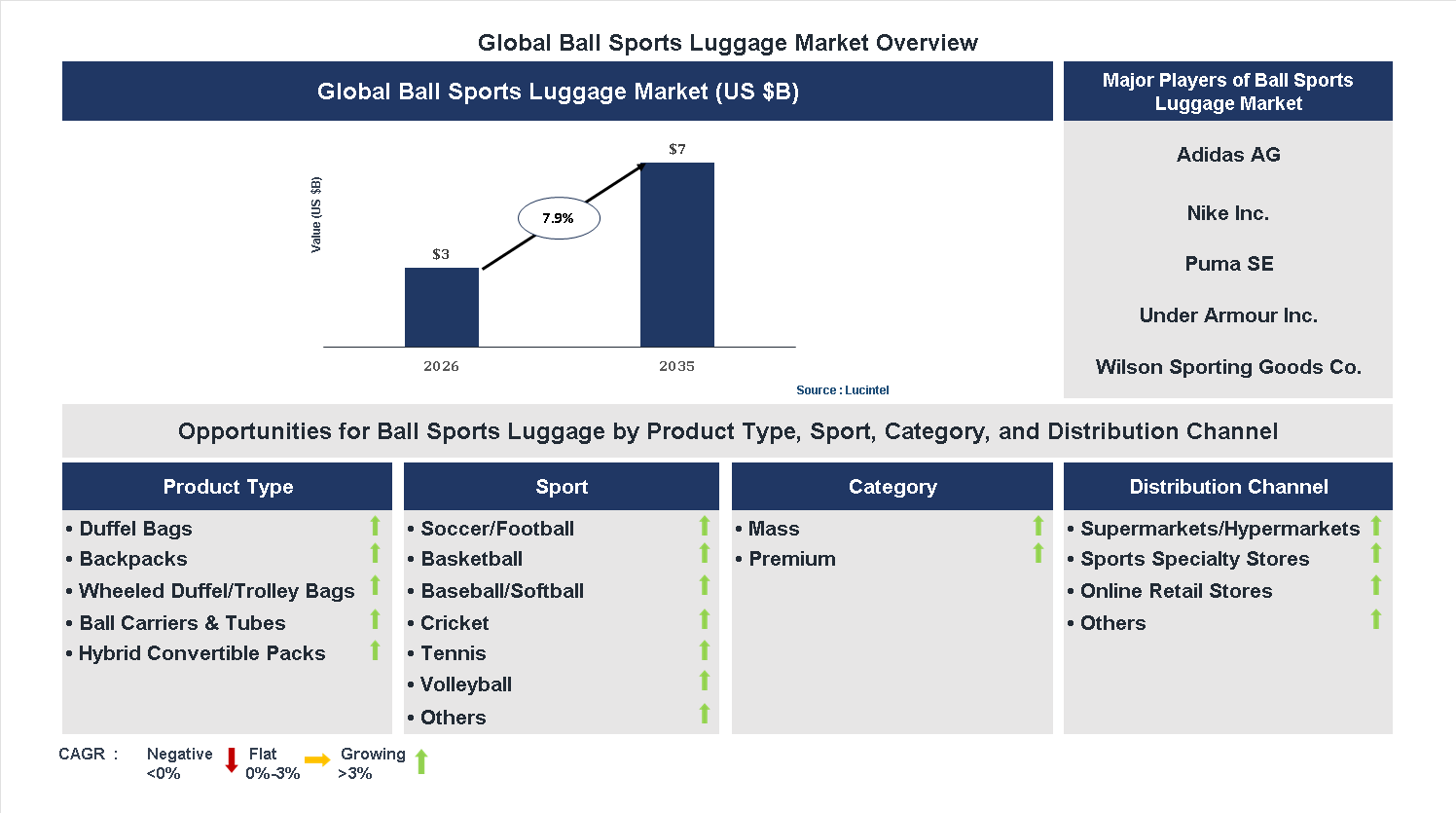
Key data points: The market size in 2035 = $7 billion, growth forecast = 7.9% annually for the next 8 years. Scroll below to get more insights. This market report covers trends, opportunities and forecasts in ball sports luggage market to 2035 by product type (duffel bags, backpacks, wheeled duffel/trolley bags, ball carriers & tubes, and hybrid convertible packs), sport (soccer/football, basketball, baseball/softball, cricket, tennis, volleyball, and others), category (mass and premium), distribution channel (supermarkets/hypermarkets, sports specialty stores, online retail stores, and others), and region (North America, Europe, Asia Pacific, and the Rest of the World)
We'll send your sample report shortly.
• Lucintel forecasts that, within the product type category, backpack is expected to witness the highest growth over the forecast period.
• Within the sport category, cricket is expected to witness the highest growth.
• In terms of region, APAC is expected to witness the highest growth over the forecast period. Gain valuable insights for your business decisions with our comprehensive 150+ page report. Sample figures with some insights are shown below.
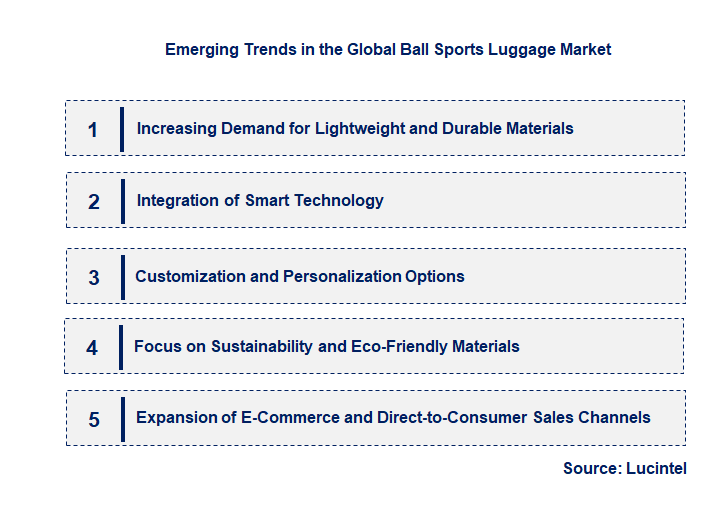
• Increasing Demand for Lightweight and Durable Materials: The market is shifting towards lightweight yet sturdy materials such as polycarbonate and high-grade plastics. This trend is driven by consumers desire for easy-to-carry luggage that does not compromise on durability. Manufacturers are investing in advanced materials that offer strength without adding weight, improving portability and user convenience. This development enhances customer satisfaction and broadens the appeal of sports luggage for frequent travelers and athletes alike.
• Integration of Smart Technology: Smart features like GPS tracking, biometric locks, and digital weight scales are becoming standard in sports luggage. These innovations provide enhanced security, convenience, and real-time tracking, appealing to tech-savvy consumers. The integration of IoT (Internet of Things) technology allows users to monitor their luggage remotely, reducing the risk of loss or theft. This trend is revolutionizing the user experience, making sports luggage more functional and aligned with modern digital lifestyles.
• Customization and Personalization Options: Consumers increasingly seek personalized products that reflect their individual style and preferences. Manufacturers are offering customizable options such as monogramming, color choices, and modular compartments. This trend allows athletes and sports enthusiasts to express their identity while ensuring their luggage meets specific needs. Customization enhances customer engagement and loyalty, creating a competitive edge in a crowded market.
• Focus on Sustainability and Eco-Friendly Materials: Environmental concerns are prompting brands to adopt sustainable practices by using recycled plastics, biodegradable fabrics, and eco-friendly dyes. This shift aligns with the growing consumer demand for environmentally responsible products. Sustainable sports luggage not only reduces ecological impact but also appeals to a broader customer base that values corporate responsibility. This trend is fostering innovation in material sourcing and manufacturing processes within the industry.
• Expansion of E-commerce and Direct-to-Consumer Sales Channels: The rise of online shopping platforms is transforming how consumers purchase sports luggage. Brands are increasingly adopting direct-to-consumer models, offering personalized shopping experiences and exclusive products. E-commerce facilitates wider market reach, easier access to new products, and real-time customer feedback. This trend is reshaping distribution strategies, enabling brands to build stronger relationships with customers and respond swiftly to market demands. These emerging trends are significantly reshaping the ball sports luggage market by emphasizing innovation, sustainability, and customer-centric approaches. They are driving product development, enhancing consumer engagement, and expanding market opportunities, ultimately leading to a more dynamic and competitive industry landscape.
• Growing Demand for Specialized Sports Luggage: The market is expanding as athletes and enthusiasts require tailored luggage for specific sports equipment, such as soccer balls, basketballs, and tennis gear. This trend is driven by increased sports participation and travel. Companies are designing innovative, compartmentalized luggage with reinforced sections to protect valuable gear, boosting sales and customer loyalty. The demand for durable, lightweight, and functional products is fueling market growth and encouraging product innovation.
• Technological Innovations in Material and Design: Advancements in lightweight, durable materials like polycarbonate and high-strength fabrics are transforming sports luggage. Smart features such as GPS tracking, built-in locks, and ergonomic handles are enhancing user experience. These innovations improve product longevity, security, and convenience, attracting tech-savvy consumers. As a result, brands investing in R&D are gaining competitive advantages, expanding their market share, and setting new industry standards for quality and functionality.
• Sustainability and Eco-Friendly Products: Increasing environmental awareness is prompting brands to develop eco-friendly luggage using recycled materials and sustainable manufacturing processes. Consumers are prioritizing environmentally responsible products, which influences purchasing decisions. Companies adopting green practices are not only reducing their carbon footprint but also appealing to a broader customer base. This shift is fostering innovation in sustainable materials and creating a niche market segment, ultimately driving growth and enhancing brand reputation.
• Expansion in Emerging Markets: Rapid urbanization, rising disposable incomes, and growing sports culture in emerging economies are opening new market opportunities. Local brands are entering these regions, offering affordable, high-quality sports luggage. International companies are establishing distribution channels and partnerships to tap into these markets. This expansion is increasing market penetration, diversifying product offerings, and boosting overall industry revenue, while also fostering local employment and economic development.
• E-Commerce and Digital Marketing Growth: The rise of online retail platforms and targeted digital marketing strategies are significantly impacting the market. Consumers now prefer convenient online shopping with detailed product information and reviews. Brands are leveraging social media, influencer collaborations, and personalized advertising to reach wider audiences. This shift enhances brand visibility, accelerates sales cycles, and provides valuable consumer insights, ultimately driving market expansion and enabling companies to adapt swiftly to changing consumer preferences. The recent developments in specialized products, technological advancements, sustainability, emerging markets, and digital marketing are collectively transforming the ball sports luggage market. These trends are fostering innovation, expanding consumer choices, and increasing market competitiveness. As a result, the industry is poised for sustained growth, with companies better equipped to meet evolving customer demands and capitalize on new opportunities.
• Expansion Into Niche Sports Equipment Luggage: The market is growing as manufacturers develop specialized luggage for niche sports such as volleyball, rugby, and cricket. These products feature tailored compartments, reinforced structures, and lightweight materials to meet specific needs. The increasing popularity of these sports globally creates opportunities for brands to target new customer segments. Customization options and eco-friendly materials further enhance appeal, driving sales in both retail and online channels.
• Rising Demand for Lightweight and Durable Materials: Consumers prioritize lightweight yet sturdy luggage to ease transportation and protect valuable equipment. Innovations in materials like carbon fiber, high-strength plastics, and advanced fabrics are enabling manufacturers to produce more durable products without adding weight. This trend is particularly prominent among professional athletes and sports teams who require reliable gear for travel. The focus on sustainability also encourages the adoption of eco-friendly materials, expanding market potential.
• Growth of E-commerce and Direct-to-Consumer Sales Channels: The proliferation of online shopping platforms has expanded access to a broader customer base. Brands are leveraging e-commerce to offer customized products, exclusive designs, and direct engagement with consumers. Digital marketing strategies, including social media and influencer collaborations, boost brand visibility. The convenience of online purchasing, coupled with fast shipping options, is driving sales growth and enabling companies to reach remote or underserved markets more effectively.
• Strategic Partnerships with Sports Organizations and Events: Collaborations with sports leagues, clubs, and tournaments provide brands with high visibility and credibility. Sponsorships and official merchandise partnerships help promote specialized luggage to targeted audiences. Participating in major sporting events also offers opportunities for product launches and brand positioning. These alliances facilitate market penetration, enhance brand recognition, and foster consumer trust, ultimately boosting sales and expanding market share.
• Innovation in Smart and Tech-Integrated Luggage: The integration of smart features such as GPS tracking, biometric locks, and weight sensors is transforming the market. Athletes and travelers seek luggage that offers enhanced security, convenience, and real-time monitoring. The adoption of IoT technology enables brands to differentiate their products and command premium pricing. As technology advances, the development of connected luggage tailored for sports equipment management is expected to open new revenue streams and improve user experience. These growth opportunities are poised to significantly influence the ball sports luggage market by fostering innovation, expanding consumer reach, and enhancing product offerings. Companies that capitalize on niche markets, technological advancements, and strategic collaborations will be better positioned to sustain growth and meet evolving customer demands in this competitive landscape.
• Technological Advancements: The integration of lightweight, durable materials like polycarbonate and high-strength fabrics has revolutionized sports luggage. Innovations such as smart luggage with GPS tracking and enhanced security features improve user experience. These technological improvements meet consumer demands for convenience, durability, and security, thereby expanding market reach. Manufacturers investing in R&D to develop innovative products are gaining competitive advantages, which further propels market growth.
• Rising Sports Participation: Increasing participation in sports such as soccer, basketball, and tennis globally boosts demand for specialized sports luggage. As more individuals engage in recreational and professional sports, the need for durable, functional, and stylish luggage grows. This trend is supported by the rising popularity of sports events and leagues, which encourage fans and athletes to invest in quality gear, including specialized luggage designed for specific sports needs.
• Growing Travel and Tourism Industry: The expansion of international travel and tourism, especially among sports enthusiasts, significantly impacts the market. Travelers require reliable, lightweight, and spacious luggage to carry sports equipment. The rise in sports tourism, coupled with the increasing number of sports tournaments and events worldwide, fuels demand for high-quality sports luggage that can withstand rigorous travel conditions.
• Regulatory and Environmental Standards: Stringent safety regulations and environmental policies influence product design and manufacturing processes. Manufacturers are compelled to adopt eco-friendly materials and sustainable practices, which can increase production costs but also open avenues for eco-conscious consumers. Compliance with safety standards ensures product reliability and enhances brand reputation, thereby positively impacting market growth. The challenges facing the ball sports luggage market include:
• High Manufacturing Costs: Developing innovative, durable, and lightweight sports luggage involves significant investment in R&D and high-quality materials. These costs translate into higher retail prices, potentially limiting affordability for some consumers. Additionally, maintaining compliance with safety and environmental standards adds to production expenses, which can hinder market penetration, especially in price-sensitive regions.
• Intense Competition: The market is highly competitive, with numerous established brands and new entrants vying for market share. Differentiating products through innovation, branding, and pricing strategies becomes challenging. Price wars and marketing battles can erode profit margins, making it difficult for smaller players to sustain operations and for brands to maintain a unique market position.
• Fluctuating Raw Material Prices: The cost of raw materials such as plastics, fabrics, and metals is subject to volatility due to global supply chain disruptions and fluctuating commodity prices. These fluctuations impact manufacturing costs and profit margins. Manufacturers may face difficulties in maintaining consistent pricing strategies, which can affect overall market stability and growth prospects. The ball sports luggage market is driven by technological innovations, increasing sports participation, expanding travel trends, and regulatory compliance. However, high manufacturing costs, intense competition, and raw material price fluctuations pose significant challenges. These factors collectively influence market dynamics, requiring stakeholders to innovate continuously and adapt strategies to sustain growth. The interplay of these drivers and challenges will shape the future landscape, determining opportunities for expansion and areas needing strategic focus.
• Adidas AG
• Nike Inc.
• Puma SE
• Under Armour Inc.
• Wilson Sporting Goods Co.
• Decathlon S.A. (Kipsta)
• Rawlings Sporting Goods Co.
• Spalding (Russell Brands)
• Mizuno Corporation
• Franklin Sports Inc.
• Duffel Bags
• Backpacks
• Wheeled Duffel/Trolley Bags
• Ball Carriers & Tubes
• Hybrid Convertible Packs
• Soccer/Football
• Basketball
• Baseball/Softball
• Cricket
• Tennis
• Volleyball
• Others
• Mass
• Premium
• Supermarkets/Hypermarkets
• Sports Specialty Stores
• Online Retail Stores
• Others
• North America
• Europe
• Asia Pacific
• The Rest of the World
• United States, the market has seen a surge in demand for lightweight, durable luggage with smart features such as GPS tracking and biometric locks, driven by active sports communities and travel trends. Major brands are investing in sustainable materials and innovative designs to meet eco-conscious consumer preferences. The rise of e-commerce has also facilitated easier access to a wide range of products, boosting sales.
• China’s market is rapidly expanding, with a focus on affordability and technological integration. Local manufacturers are adopting advanced manufacturing techniques to produce high-quality, innovative luggage. The government’s support for sports infrastructure and increasing sports participation are further fueling demand for specialized ball sports luggage, including customized options for different sports.
• Germany’s market emphasizes quality, durability, and eco-friendliness, aligning with the country’s strong environmental policies. There is a growing trend towards premium, multifunctional luggage that caters to professional athletes and sports enthusiasts. Innovations include sustainable materials and smart luggage features, with a focus on reducing environmental impact.
• India’s market is witnessing rapid growth due to rising sports participation and increasing travel for sports events and leisure. Consumers prefer affordable, lightweight, and stylish luggage options. Local brands are expanding their product lines to include customized and innovative features, while e-commerce platforms are playing a crucial role in market penetration.
• Japan’s market is characterized by high technological adoption and a preference for compact, efficient luggage solutions. The focus is on integrating smart technology, such as app-controlled locks and GPS tracking, to cater to tech-savvy consumers. Sustainability and ergonomic design are also key trends, with brands emphasizing eco-friendly materials and user comfort.


• Adidas AG
• Nike Inc.
• Puma SE
• Under Armour Inc.
• Wilson Sporting Goods Co.
• Decathlon S.A. (Kipsta)
• Rawlings Sporting Goods Co.
• Spalding (Russell Brands)
• Mizuno Corporation
• Franklin Sports Inc. Q6. Which ball sports luggage market segment will be the largest in future? Answer: Lucintel forecasts that, within the product type category, backpack is expected to witness the highest growth over the forecast period. Q7. In ball sports luggage market, which region is expected to be the largest in next 5 years? Answer: In terms of region, APAC is expected to witness the highest growth over the forecast period. Q8. Do we receive customization in this report? Answer: Yes, Lucintel provides 10% customization without any additional cost.


Choose a license that fits your team. Instant PDF delivery.
Prices exclude taxes. Instant delivery. Custom licensing available on request.
Market Report · July 22, 2026
Market Report · July 16, 2026
Market Report · May 18, 2026
Trusted partner for strategic intelligence and business growth


Receive a complimentary market analysis tailored to your industry. Our analysts will identify key growth opportunities and competitive dynamics specific to your business.

Market size, growth rate, and key trend analysis for your specific sector.

Top competitor positioning and market share analysis.

Strategic recommendations backed by data-driven insights.
Get curated market intelligence and competitive moves straight to your inbox.
By subscribing, you agree to receive our monthly insights. Unsubscribe anytime.
Receive a complimentary market analysis tailored to your industry. Our analysts will identify key growth opportunities and competitive dynamics specific to your business.
Market size, growth rate, and key trend analysis for your specific sector.
Top competitor positioning and market share analysis.
Strategic recommendations backed by data-driven insights.
Get curated market intelligence, emerging trends, and competitive moves straight to your inbox each month.
By subscribing, you agree to receive our monthly insights. Unsubscribe anytime.
We'll send your sample report shortly.