
Market Report · July 22, 2026

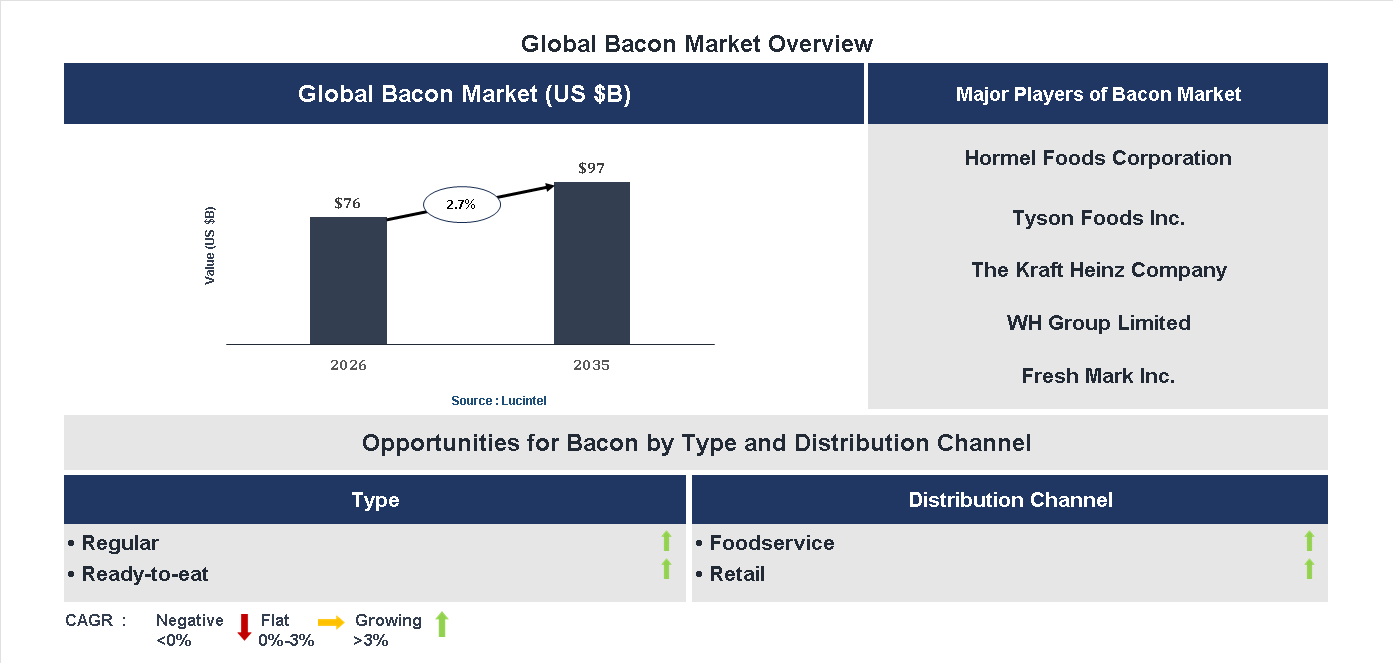
Key data points: The market size in 2035 = $97 billion, growth forecast = 2.7% annually for the next 8 years. Scroll below to get more insights. This market report covers trends, opportunities and forecasts in bacon market to 2035 by type (regular and ready-to-eat), distribution channel (foodservice and retail), and region (North America, Europe, Asia Pacific, and the Rest of the World)
We'll send your sample report shortly.
• Lucintel forecasts that, within the type category, regular is expected to witness higher growth over the forecast period.
• Within the distribution channel category, foodservice is expected to witness the highest growth.
• In terms of region, APAC is expected to witness the highest growth over the forecast period. Gain valuable insights for your business decisions with our comprehensive 150+ page report. Sample figures with some insights are shown below.
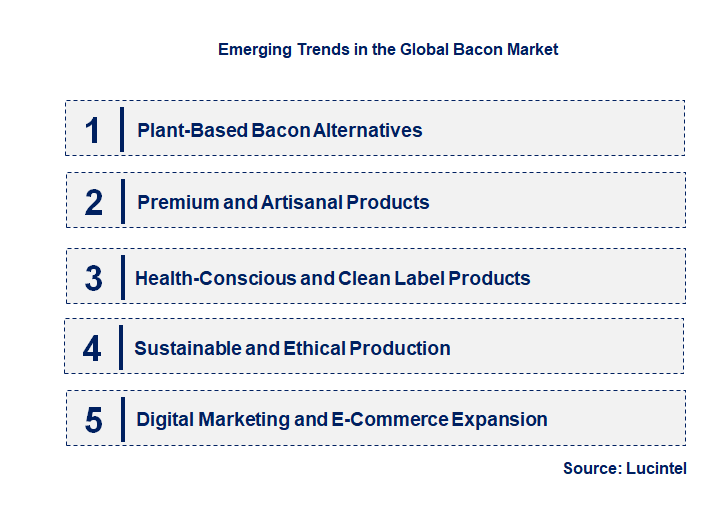
• Plant-Based Bacon Alternatives : Growing demand for vegetarian and vegan products has led to the development of plant-based bacon options. These products use ingredients like soy, tempeh, or coconut to mimic traditional bacons flavor and texture. They appeal to health-conscious consumers and those seeking ethical or sustainable choices. This trend expands the market by attracting a broader customer base and encouraging innovation in meat substitutes, ultimately challenging traditional bacon sales and creating new revenue streams.
• Premium and Artisanal Products : Consumers are increasingly seeking high-quality, artisanal bacon products with unique flavors and traditional curing methods. Small-scale producers and specialty brands are capitalizing on this trend by offering organic, heritage, or locally sourced bacon. This shift enhances product differentiation and allows brands to command higher prices. The focus on craftsmanship and authenticity resonates with consumers willing to pay a premium, thereby elevating the overall market segment and encouraging innovation in flavor profiles and packaging.
• Health-Conscious and Clean Label Products : The rising awareness of health issues associated with processed meats has prompted a demand for cleaner, healthier bacon options. Manufacturers are reducing sodium, preservatives, and artificial additives while offering nitrate-free and organic varieties. This trend caters to consumers seeking transparency and wellness, influencing product formulations and marketing strategies. It also opens opportunities for new product lines that emphasize health benefits, thus expanding the market to include more health-conscious demographics.
• Sustainable and Ethical Production : Environmental concerns and animal welfare issues are driving consumers toward ethically produced bacon. Brands are adopting sustainable practices such as regenerative farming, eco-friendly packaging, and transparent supply chains. Certifications like organic or cruelty-free are becoming important purchase drivers. This trend enhances brand loyalty and appeals to socially responsible consumers, pushing the market toward more sustainable practices and encouraging innovation in sourcing and production methods.
• Digital Marketing and E-Commerce Expansion : The rise of online shopping and digital marketing has transformed how bacon products are marketed and sold. Brands leverage social media, influencer partnerships, and targeted advertising to reach niche audiences. E-commerce platforms facilitate direct-to-consumer sales, expanding market reach beyond traditional retail channels. This trend enables brands to gather consumer data for personalized marketing and rapid product launches, fostering market growth and innovation. It also allows smaller producers to compete with established players by establishing a strong online presence. These trends are reshaping the bacon market by fostering innovation, emphasizing health and sustainability, and leveraging digital channels. They are broadening consumer choices, encouraging ethical practices, and creating new opportunities for growth. As these developments continue, the market is poised for a more diverse, responsible, and digitally connected future.
• Growing Demand for Premium and Artisanal Bacon: The market is witnessing increased consumer interest in high-quality, artisanal bacon products. This trend is driven by consumers seeking unique flavors, organic options, and locally sourced ingredients. Premium bacon offers higher margins for producers and encourages innovation in flavor profiles and packaging. As a result, artisanal and specialty bacon segments are expanding rapidly, attracting food enthusiasts and health-conscious buyers alike, thereby boosting overall market growth.
• Innovation in Product Offerings and Flavors: Manufacturers are introducing diverse bacon variants, including flavored, smoked, and gluten-free options, to cater to evolving tastes. These innovations enhance consumer engagement and open new market segments. For example, bacon infused with spices, maple, or black pepper appeals to a broader audience. Such product diversification increases sales channels, encourages repeat purchases, and strengthens brand loyalty, ultimately driving market expansion and competitive differentiation.
• Expansion of Global Markets and Export Opportunities: The bacon market is experiencing rapid growth in emerging economies, driven by urbanization and Western dietary influences. Countries in Asia, Africa, and Latin America are increasingly adopting bacon as part of their culinary repertoire. Export opportunities are expanding for producers seeking to tap into these markets. This global expansion enhances revenue streams, diversifies market risks, and accelerates industry growth, with local adaptations and marketing strategies playing crucial roles.
• Adoption of Sustainable and Ethical Production Practices: Consumers are increasingly concerned about environmental impact and animal welfare, prompting producers to adopt sustainable practices. This includes sourcing from humane farms, reducing carbon footprints, and using eco-friendly packaging. Such initiatives improve brand reputation and meet regulatory standards, attracting ethically conscious consumers. The shift towards sustainability is also fostering innovation in alternative ingredients and production methods, shaping a more responsible and resilient bacon industry.
• Impact of Digital Marketing and E-commerce Growth: The rise of online retail platforms and social media marketing is transforming how bacon products are promoted and sold. Digital channels enable brands to reach niche markets, engage directly with consumers, and showcase product quality and origin stories. E-commerce facilitates convenient purchasing and access to a wider customer base. This digital shift enhances market visibility, accelerates product launches, and drives sales growth, making it a vital component of the industry’s future expansion. The overall impact of these developments is a dynamic, competitive, and expanding bacon market. Innovation, sustainability, and global outreach are creating diverse opportunities for growth, attracting new consumer segments, and strengthening industry resilience. These trends are fostering a more sophisticated market landscape, encouraging brands to differentiate and adapt, ultimately fueling sustained industry growth and profitability.
• Premium and Organic Bacon Demand: The rising consumer preference for high-quality, organic, and ethically sourced bacon is creating a lucrative growth opportunity. Consumers are willing to pay a premium for products free from antibiotics, hormones, and artificial additives. This trend is encouraging producers to develop organic, nitrate-free, and gluten-free bacon options, catering to health-conscious and environmentally aware customers. The expansion of organic product lines and certifications is expected to drive sales across retail and foodservice sectors.
• Innovation in Bacon Flavored Products: The development of bacon-flavored snacks, sauces, and seasonings is opening new revenue streams. Food manufacturers are leveraging bacon’s popularity by creating innovative products such as bacon-flavored potato chips, dips, and condiments. These products appeal to a broader audience, including those who may not consume traditional bacon. The integration of bacon flavor into diverse food categories enhances product portfolios and attracts consumers seeking savory, indulgent options.
• Expansion of Global Markets: Increasing demand for bacon in emerging markets such as Asia-Pacific, Latin America, and the Middle East presents substantial growth opportunities. Rising disposable incomes, Western dietary influences, and urbanization are fueling bacon consumption. Market players are expanding their distribution channels and establishing local manufacturing facilities to cater to regional preferences. This global expansion is expected to significantly boost overall market size and diversify revenue sources.
• Technological Advancements in Processing and Packaging: Innovations in processing techniques, such as improved curing methods and preservative-free options, are enhancing product quality and shelf life. Advanced packaging solutions like vacuum-sealed and modified atmosphere packaging help maintain freshness and flavor, reducing waste. These technological improvements enable longer distribution chains and better consumer convenience, thereby increasing market reach and consumer satisfaction, ultimately driving sales growth across retail and foodservice channels.
• Strategic Collaborations and Product Diversification: Partnerships between bacon producers and foodservice providers, retailers, and ingredient suppliers are fostering product diversification. Co-branding, private label products, and collaborations with chefs and influencers are expanding bacon’s culinary applications. Diversification into ready-to-eat, pre-cooked, and meal kit segments caters to busy consumers seeking convenience. These strategic moves enhance market penetration, brand visibility, and consumer engagement, supporting sustained growth in a competitive landscape. The overall impact of these opportunities is a dynamic, expanding bacon market characterized by innovation, diversification, and global reach. Companies that leverage these growth avenues can strengthen their market position, meet evolving consumer demands, and capitalize on emerging trends. This evolution promises sustained industry growth, increased profitability, and a broader consumer base, shaping the future trajectory of the bacon market.
• Technological Innovations: The adoption of advanced processing and packaging technologies enhances product quality, shelf life, and safety. Innovations such as vacuum packaging and preservative techniques help meet consumer demands for fresh and safe products. These technological advancements reduce waste, improve efficiency, and enable manufacturers to expand their product offerings, thereby fueling market growth. As technology continues to evolve, companies can innovate further, creating new opportunities for market expansion and differentiation.
• Changing Consumer Preferences: Increasing demand for premium, organic, and clean-label bacon products reflects shifting consumer preferences towards healthier and ethically produced foods. Consumers are seeking products with natural ingredients, minimal additives, and sustainable sourcing. This trend encourages producers to innovate and diversify their offerings, catering to health-conscious and ethically motivated buyers. The rise of gourmet and artisanal bacon products also contributes to market expansion, attracting a broader customer base.
• Economic Growth and Disposable Income: Rising disposable incomes in emerging economies boost consumer spending on premium and specialty bacon products. Economic stability and growth lead to increased purchasing power, enabling consumers to indulge in higher-quality and specialty foods. This economic trend supports market expansion, especially in developing regions where bacon consumption is increasing as a result of changing lifestyles and urbanization.
• Expansion of Retail and Foodservice Channels: The proliferation of supermarkets, hypermarkets, and online retail platforms facilitates wider distribution and accessibility of bacon products. The growth of foodservice outlets, including restaurants and cafes, also drives demand. These channels provide opportunities for product innovation, branding, and reaching diverse consumer segments, thereby expanding the market footprint and increasing sales volumes.
• Regulatory and Food Safety Standards: Stringent regulations related to food safety, labeling, and quality control influence production practices and market entry. Compliance with these standards ensures consumer trust and product credibility, which are vital for market growth. While regulations can pose challenges for small producers, they also create opportunities for companies that can innovate within regulatory frameworks, ensuring safety and quality. The challenges facing the bacon market include:
• Health Concerns and Regulatory Restrictions: Growing awareness of health issues associated with processed meats, such as high saturated fat and sodium content, leads to consumer skepticism and regulatory restrictions. Governments are imposing limits on additives and preservatives, which can increase production costs and complicate manufacturing processes. These health concerns may reduce demand for traditional bacon products, prompting manufacturers to reformulate or innovate healthier options, which can be resource-intensive.
• Fluctuating Raw Material Prices: The cost of pork, the primary raw material for bacon, is subject to volatility due to factors like disease outbreaks, feed prices, and supply chain disruptions. Price fluctuations can impact profit margins and pricing strategies, making it challenging for producers to maintain consistent supply and profitability. Managing these costs requires strategic sourcing and inventory management, adding complexity to market operations.
• Stringent Food Safety Regulations: Compliance with evolving food safety standards requires significant investment in quality control, testing, and certification processes. Non-compliance can lead to product recalls, legal penalties, and damage to brand reputation. Smaller producers may find it difficult to meet these standards, potentially limiting market entry or expansion. Ensuring safety while maintaining cost-effectiveness remains a critical challenge for industry players. The bacon market is shaped by technological advancements, changing consumer preferences, economic factors, and regulatory standards that drive growth. However, health concerns, raw material price volatility, and strict safety regulations pose significant challenges. These drivers and challenges collectively influence market dynamics, requiring stakeholders to innovate, adapt, and strategize effectively. Successful navigation of these factors will determine the markets future trajectory, with opportunities for growth balanced by the need for compliance and health-conscious innovation.
• Hormel Foods Corporation
• Tyson Foods Inc.
• The Kraft Heinz Company
• WH Group Limited
• Fresh Mark Inc.
• Karro Food Group Limited
• The Oscar Mayer Company
• Niman Ranch
• Tonnies Lebensmittel GmbH & Co. KG
• Farmland Foods, Inc.
• Regular
• Ready-to-eat
• Foodservice
• Retail
• North America
• Europe
• Asia Pacific
• The Rest of the World
• United States: The US bacon market has seen increased demand for organic and nitrate-free products, driven by health-conscious consumers. Innovative packaging and marketing campaigns emphasize sustainability and quality. The rise of plant-based bacon alternatives also influences traditional markets, while premium and artisanal bacon products gain popularity among food enthusiasts. Supply chain disruptions during the pandemic prompted investments in local sourcing and processing facilities, ensuring steady supply. Additionally, convenience-focused products like bacon bits and ready-to-eat bacon strips have expanded market options. Overall, the US market continues to grow with a focus on health, quality, and innovation.
• China: Chinas bacon market is expanding rapidly, fueled by rising disposable incomes and Western dietary influences. Local producers are adopting advanced processing technologies to improve product quality and safety standards. There is a growing preference for flavored and seasoned bacon varieties, catering to diverse consumer tastes. The market also benefits from increasing fast-food consumption and Western-style breakfast habits. E-commerce platforms play a crucial role in distribution, making bacon more accessible nationwide. Sustainability initiatives are gradually gaining attention, with some companies exploring eco-friendly packaging. Overall, Chinas bacon market is characterized by rapid growth, product innovation, and expanding consumer base.
• Germany: The German bacon market emphasizes quality, tradition, and sustainability. Consumers prefer regional and organic products, prompting producers to adopt eco-friendly practices and transparent sourcing. There is a notable shift towards leaner bacon options and reduced salt content to meet health trends. Artisanal and specialty bacon products are gaining popularity among gourmet consumers. The market also sees increased interest in smoked and cured varieties, with a focus on traditional methods. Regulatory standards for food safety and labeling are strictly adhered to, ensuring consumer trust. Overall, Germanys bacon market balances heritage with modern health and sustainability concerns.
• India: The bacon market in India is emerging, with growth driven by urbanization and increasing exposure to Western cuisine. Consumers are showing interest in processed meat products, including bacon, as part of convenience foods. Local producers are introducing flavored and spiced bacon variants to suit regional tastes. The market is still developing, with limited penetration in rural areas but expanding rapidly in urban centers. Import restrictions and regulatory standards influence product availability and quality. Health concerns and vegetarian preferences pose challenges, but innovative marketing and product diversification are helping to expand the market. Overall, India presents a promising but nascent bacon industry with significant growth potential.
• Japan: Japans bacon market is characterized by high-quality standards and a focus on health-conscious products. Consumers prefer leaner, low-sodium bacon options, often with added functional ingredients like antioxidants. Premium and artisanal bacon products are popular among gourmet and health-focused segments. The market benefits from a strong tradition of food craftsmanship and innovation, including unique curing and smoking techniques. Sustainability and animal welfare are increasingly important, influencing sourcing and production practices. E-commerce and specialty stores are key distribution channels. Overall, Japans bacon market is mature, emphasizing quality, health, and sustainability, with steady growth driven by consumer demand for premium products.


• Hormel Foods Corporation
• Tyson Foods Inc.
• The Kraft Heinz Company
• WH Group Limited
• Fresh Mark Inc.
• Karro Food Group Limited
• The Oscar Mayer Company
• Niman Ranch
• Tonnies Lebensmittel GmbH & Co. KG
• Farmland Foods, Inc. Q6. Which bacon market segment will be the largest in future? Answer: Lucintel forecasts that, within the type category, regular is expected to witness higher growth over the forecast period. Q7. In bacon market, which region is expected to be the largest in next 8 years? Answer: In terms of region, APAC is expected to witness the highest growth over the forecast period. Q8. Do we receive customization in this report? Answer: Yes, Lucintel provides 10% customization without any additional cost.


Choose a license that fits your team. Instant PDF delivery.
Prices exclude taxes. Instant delivery. Custom licensing available on request.
Market Report · July 22, 2026
Market Report · July 22, 2026
Market Report · July 22, 2026
Trusted partner for strategic intelligence and business growth


Receive a complimentary market analysis tailored to your industry. Our analysts will identify key growth opportunities and competitive dynamics specific to your business.

Market size, growth rate, and key trend analysis for your specific sector.

Top competitor positioning and market share analysis.

Strategic recommendations backed by data-driven insights.
Get curated market intelligence and competitive moves straight to your inbox.
By subscribing, you agree to receive our monthly insights. Unsubscribe anytime.
Receive a complimentary market analysis tailored to your industry. Our analysts will identify key growth opportunities and competitive dynamics specific to your business.
Market size, growth rate, and key trend analysis for your specific sector.
Top competitor positioning and market share analysis.
Strategic recommendations backed by data-driven insights.
Get curated market intelligence, emerging trends, and competitive moves straight to your inbox each month.
By subscribing, you agree to receive our monthly insights. Unsubscribe anytime.
We'll send your sample report shortly.