
Market Report · July 31, 2026

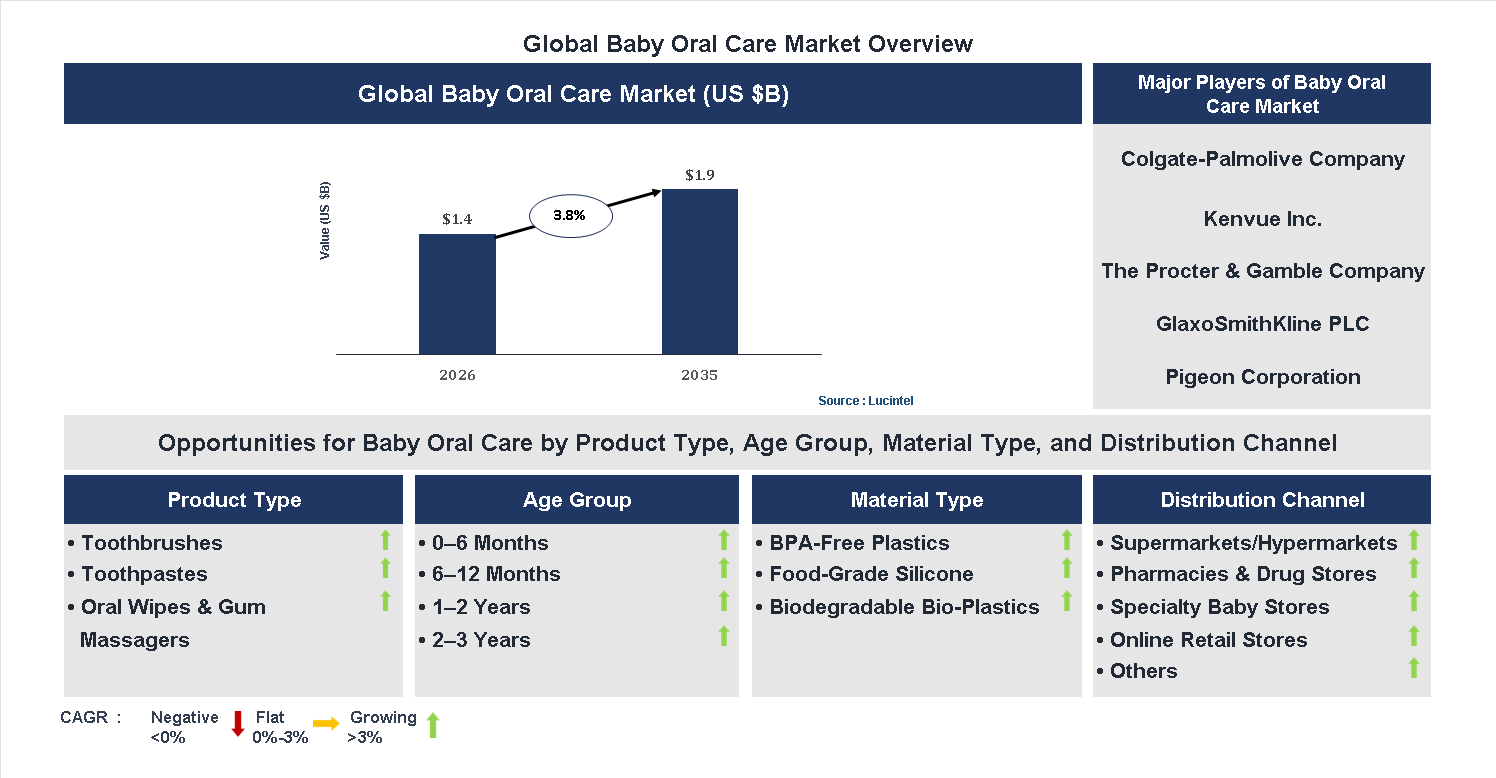
Key data points: The market size in 2035 = $1.9 billion, growth forecast = 3.8% annually for the next 8 years. Scroll below to get more insights. This market report covers trends, opportunities and forecasts in baby oral care market to 2035 by product type (toothbrushes, toothpastes, and oral wipes & gum massagers), age group (0–6 months, 6–12 months, 1–2 years, and 2–3 years), material type (BPA-free plastics, food-grade silicone, and biodegradable bio-plastics), distribution channel (supermarkets/hypermarkets, pharmacies & drug stores, specialty baby stores, online retail stores, and others), and region (North America, Europe, Asia Pacific, and the Rest of the World)
We'll send your sample report shortly.
• Lucintel forecasts that, within the product type category, toothpaste is expected to witness the highest growth over the forecast period.
• Within the material type category, biodegradable bio-plastic is expected to witness the highest growth.
• In terms of region, APAC is expected to witness the highest growth over the forecast period. Gain valuable insights for your business decisions with our comprehensive 150+ page report. Sample figures with some insights are shown below.
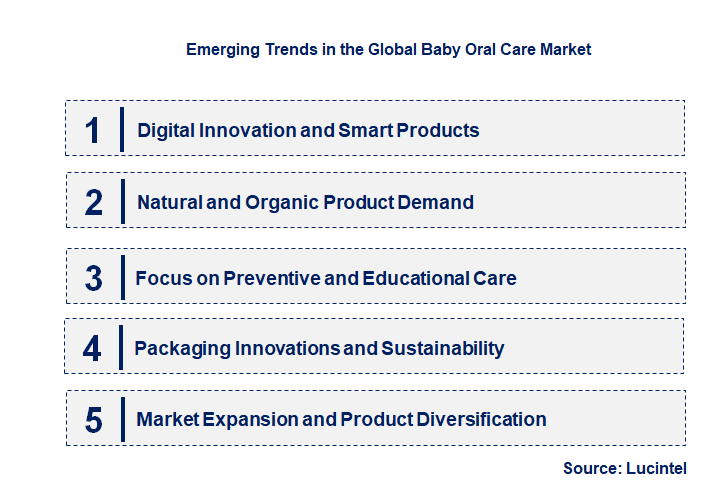
• Digital Innovation and Smart Products: The integration of technology into baby oral care products is gaining momentum. Smart toothbrushes and apps that monitor brushing habits are becoming popular among parents seeking to ensure proper dental hygiene for their infants. These products offer real-time feedback, personalized guidance, and data tracking, making oral care more engaging and effective. This trend enhances consumer confidence and encourages consistent oral hygiene practices from an early age, ultimately fostering healthier dental habits and reducing future dental issues.
• Natural and Organic Product Demand: There is a significant shift towards natural, organic, and chemical-free baby oral care products. Parents are increasingly concerned about the safety and long-term health effects of synthetic ingredients, leading to a preference for plant-based, fluoride-free, and hypoallergenic options. This trend is driving innovation in formulations and packaging, with brands emphasizing transparency and ingredient sourcing. The demand for natural products is expanding market share and encouraging companies to develop eco-friendly, sustainable solutions that align with health-conscious consumer values.
• Focus on Preventive and Educational Care: The market is witnessing a rise in preventive oral health products and educational initiatives aimed at parents and caregivers. Companies are offering comprehensive kits, informational resources, and professional guidance to promote early dental hygiene habits. This proactive approach helps in reducing the incidence of cavities and other dental issues later in life. Educational campaigns and digital content are empowering parents to adopt best practices, thereby fostering a culture of preventive care and increasing brand loyalty through trust and engagement.
• Packaging Innovations and Sustainability: Eco-friendly packaging solutions are becoming a key differentiator in the baby oral care market. Brands are adopting biodegradable, recyclable, and minimalistic packaging to appeal to environmentally conscious consumers. Innovations such as refillable containers and biodegradable wipes are reducing plastic waste and carbon footprint. These efforts not only meet regulatory standards but also enhance brand reputation and consumer loyalty. Sustainable packaging aligns with the broader trend of environmental responsibility, influencing purchasing decisions and encouraging industry-wide adoption of greener practices.
• Market Expansion and Product Diversification: The baby oral care market is expanding geographically, with emerging markets showing increased demand. Companies are diversifying their product lines to include a wider range of items such as gums cleansers, teething gels, and multi-purpose oral care kits. This diversification caters to different age groups and specific needs, broadening market reach. Additionally, strategic collaborations and acquisitions are facilitating market penetration and innovation. As a result, the market is becoming more competitive, dynamic, and responsive to consumer needs, fostering growth and creating new opportunities for brands. These trends are fundamentally transforming the baby oral care market by emphasizing technological integration, natural ingredients, preventive education, sustainability, and market expansion. These developments are leading to safer, more effective, and environmentally responsible products, ultimately improving oral health outcomes for infants and shaping the future landscape of the industry.
• Growing Awareness of Early Dental Care: The increasing emphasis on early childhood dental health is prompting parents to prioritize baby oral care, leading to higher demand for specialized products. Educational campaigns and pediatric recommendations are influencing consumer behavior, encouraging the adoption of gentle, safe, and effective oral hygiene solutions. This trend is expected to sustain market growth as awareness continues to rise globally.
• Innovation in Baby Oral Care Products: Companies are developing advanced, safer, and more effective oral care products, including natural toothpaste, silicone toothbrushes, and fluoride-free options. These innovations cater to sensitive infant gums and teeth, addressing parental concerns about safety and efficacy. The introduction of smart toothbrushes and ergonomic designs enhances user experience, boosting product adoption and expanding market opportunities.
• Expansion of Distribution Channels: The rise of e-commerce platforms and specialty baby stores is broadening product accessibility. Online retail offers convenience, detailed product information, and competitive pricing, attracting a wider consumer base. Additionally, collaborations with pediatric clinics and hospitals are increasing product visibility and trust, facilitating market penetration in emerging regions and strengthening overall market presence.
• Increasing Focus on Natural and Organic Products: Consumers are increasingly seeking natural, organic, and chemical-free oral care options for their babies. This demand is driven by health consciousness and concerns over chemical exposure. Brands offering plant-based, eco-friendly formulations are gaining popularity, encouraging product innovation and diversification. This trend is expected to significantly influence market dynamics and consumer preferences in the coming years.
• Regulatory Developments and Standardization: Governments and health authorities are implementing stricter regulations and standards for baby oral care products to ensure safety and efficacy. Compliance with these standards enhances consumer confidence and brand credibility. Companies investing in research and adhering to regulatory guidelines are better positioned to expand their market share, fostering innovation and ensuring product safety in a competitive landscape. The recent developments in the baby oral care market are fostering innovation, expanding accessibility, and emphasizing safety, which collectively are driving substantial growth. These opportunities are reshaping the market landscape, attracting new entrants, and encouraging brands to focus on product quality and consumer trust. As a result, the market is poised for sustained expansion, benefiting both consumers and industry stakeholders.
• Growing Demand for Natural and Organic Baby Oral Care Products: Increasing parental preference for natural, chemical-free products is driving the development of organic baby toothpaste, brushes, and rinses. Consumers seek safe, eco-friendly options that minimize exposure to harmful substances. Companies are investing in plant-based ingredients and sustainable packaging to meet this demand, which is expanding market share and encouraging product innovation. This trend also aligns with broader health and environmental concerns, boosting overall market growth.
• Expansion of E-commerce Channels for Baby Oral Care Products: The rise of online shopping platforms offers significant growth opportunities for brands to reach a wider audience. E-commerce provides convenience, detailed product information, and access to niche markets. Companies are leveraging digital marketing, subscription models, and direct-to-consumer sales to enhance brand visibility and customer engagement. This channel expansion is especially crucial in emerging markets, where online retail is rapidly gaining popularity, thus accelerating market penetration and sales growth.
• Increasing Focus on Pediatric Dental Education and Awareness: Educational initiatives aimed at parents and caregivers are raising awareness about the importance of early oral health care. Dental associations, healthcare providers, and brands are collaborating to promote preventive practices and proper oral hygiene routines. This increased awareness encourages early adoption of oral care products, fostering brand loyalty and expanding the customer base. As education efforts grow, demand for specialized baby oral care products is expected to rise significantly.
• Innovation in Baby Oral Care Product Formulations and Packaging: Continuous R&D efforts are leading to safer, more effective, and user-friendly products. Innovations include fluoride-free options, ergonomic toothbrush designs, and gentle formulations suitable for sensitive gums. Packaging improvements, such as travel-friendly sizes and eco-conscious materials, enhance consumer appeal. These advancements meet evolving safety standards and consumer preferences, driving product differentiation and market competitiveness, ultimately contributing to sustained growth in the baby oral care segment.
• Rising Adoption of Preventive Oral Healthcare Practices in Emerging Markets: As awareness of dental health increases globally, emerging markets are witnessing a shift towards preventive care. Governments, NGOs, and healthcare providers are promoting early dental check-ups and oral hygiene routines. This trend creates a substantial market for baby oral care products tailored to local needs and affordability. Increased adoption of preventive practices is expected to boost demand, expand distribution channels, and foster local manufacturing, thereby fueling overall market expansion. These growth opportunities collectively enhance the market's potential by fostering innovation, expanding distribution channels, and increasing consumer awareness. As brands capitalize on natural products, digital channels, educational initiatives, and product innovations, the baby oral care market is poised for sustained growth. This dynamic environment offers significant prospects for industry players to strengthen their market position and meet evolving consumer needs effectively.
• Technological Innovations: The development of advanced, gentle, and effective oral care products tailored for infants and toddlers has significantly propelled market growth. Innovations such as fluoride-free toothpaste, ergonomic toothbrushes, and natural ingredients meet parental demand for safe and effective solutions. These technological advancements improve product efficacy, safety, and user experience, encouraging more parents to adopt specialized oral care routines for their children. As research continues, new formulations and tools are expected to further enhance market offerings, making baby oral care more accessible and appealing.
• Increasing Awareness and Education: Growing awareness among parents about the importance of early oral hygiene has been a major driver. Campaigns by healthcare providers, government initiatives, and digital media have educated parents on the benefits of establishing oral care routines from a young age. This increased awareness leads to higher demand for baby-specific oral care products, fostering market expansion. Educational efforts also influence purchasing decisions, encouraging parents to choose safer, more effective products, thereby boosting sales and product innovation within the market.
• Rising Disposable Income and Urbanization: Economic growth and urbanization have resulted in higher disposable incomes among families, enabling them to invest more in premium and specialized baby oral care products. Urban populations tend to have better access to healthcare information and retail outlets, facilitating product availability and adoption. This economic shift supports the demand for high-quality, branded, and innovative oral care solutions, contributing to market growth. As more families prioritize health and hygiene, the market is expected to continue expanding, especially in emerging economies.
• Regulatory Frameworks and Safety Standards: Stringent regulations and safety standards imposed by government agencies and international bodies influence product development and marketing strategies. Compliance ensures product safety, builds consumer trust, and encourages innovation in natural and organic formulations. Regulatory oversight also helps eliminate substandard products from the market, ensuring only safe options are available. While these standards may increase compliance costs for manufacturers, they ultimately promote consumer confidence and market stability, fostering long-term growth. The challenges facing the baby oral care market include:-
• Stringent Regulatory Compliance: Navigating complex regulatory requirements can be challenging for manufacturers. Ensuring products meet safety, efficacy, and labeling standards involves significant research, testing, and certification costs. Non-compliance can lead to product recalls, legal penalties, and damage to brand reputation. As regulations evolve, companies must continuously adapt, which can slow innovation and increase time-to-market for new products. Smaller players may find compliance particularly burdensome, potentially limiting market competition and innovation.
• Market Saturation and Intense Competition: The baby oral care market is highly competitive, with numerous established brands and new entrants vying for consumer attention. Differentiating products in a crowded marketplace is difficult, often leading to price wars and reduced profit margins. Additionally, consumer loyalty can be fragile, influenced by brand reputation, product efficacy, and safety perceptions. Market saturation in developed regions may limit growth opportunities, compelling companies to seek expansion into emerging markets, which involves overcoming cultural, regulatory, and distribution challenges.
• Consumer Concerns and Misinformation: Despite increased awareness, misinformation about baby oral care products persists, leading to consumer hesitation and skepticism. Concerns about chemical ingredients, safety, and efficacy influence purchasing decisions. Negative publicity or reports of adverse effects can significantly impact sales. Manufacturers must invest in transparent communication, education, and evidence-based marketing to build trust. Addressing these concerns is crucial for market stability and growth, especially as consumers become more cautious and demand higher safety standards. The baby oral care market is driven by technological advancements, increased awareness, economic growth, and regulatory support, which collectively foster expansion and innovation. However, challenges such as regulatory compliance, market saturation, and consumer misinformation pose significant hurdles. Overcoming these obstacles requires strategic innovation, transparent communication, and adaptation to evolving standards. Overall, the market's future depends on balancing these drivers and challenges to sustain growth, meet consumer needs, and ensure product safety and efficacy.
• Colgate-Palmolive Company
• Kenvue Inc.
• The Procter & Gamble Company
• GlaxoSmithKline PLC
• Pigeon Corporation
• Sunstar Suisse SA
• Unilever PLC
• Amway Corporation
• Lion Corporation
• Brush-Baby Ltd.
• Toothbrushes
• Toothpastes
• Oral Wipes & Gum Massagers
• 0–6 Months
• 6–12 Months
• 1–2 Years
• 2–3 Years
• BPA-Free Plastics
• Food-Grade Silicone
• Biodegradable Bio-Plastics
• Supermarkets/Hypermarkets
• Pharmacies & Drug Stores
• Specialty Baby Stores
• Online Retail Stores
• Others
• North America
• Europe
• Asia Pacific
• The Rest of the World
• United States: The US market has seen a surge in organic and natural baby oral care products, driven by consumer demand for chemical-free options. Major brands are launching innovative toothbrushes and fluoride-free toothpaste tailored for infants. E-commerce sales are expanding rapidly, and regulatory standards are becoming more stringent to ensure product safety. There is also increased awareness campaigns promoting early dental hygiene practices among parents.
• China: China’s baby oral care market is rapidly growing due to rising disposable incomes and urbanization. Local brands are gaining popularity by offering affordable, innovative products. The government is promoting oral health awareness, leading to increased demand for pediatric dental care products. E-commerce platforms like Alibaba and JD.com are key distribution channels, facilitating wider access to a variety of products.
• Germany: The German market emphasizes natural and eco-friendly products, with a focus on sustainability. Consumers prefer products with organic ingredients and minimal environmental impact. Regulatory standards are strict, ensuring high safety and quality. The market also sees a rise in specialized toothbrushes and fluoride-free options, with a growing trend toward educational campaigns on early oral health.
• India: India’s baby oral care market is expanding due to increasing awareness and rising birth rates. Local and international brands are introducing affordable, safe products tailored for Indian consumers. There is a growing preference for herbal and natural ingredients. E-commerce and modern retail outlets are driving product accessibility, while government initiatives promote oral health awareness among parents and caregivers.
• Japan: Japan’s market is characterized by high consumer awareness and preference for innovative, high-quality products. There is a focus on gentle, hypoallergenic formulations suitable for sensitive skin. Technological advancements include smart toothbrushes and ergonomic designs. The market also benefits from strong pediatric dental care programs and educational initiatives promoting early oral hygiene habits.


• Colgate-Palmolive Company
• Kenvue Inc.
• The Procter & Gamble Company
• GlaxoSmithKline PLC
• Pigeon Corporation
• Sunstar Suisse SA
• Unilever PLC
• Amway Corporation
• Lion Corporation
• Brush-Baby Ltd. Q6. Which baby oral care market segment will be the largest in future? Answer: Lucintel forecasts that, within the product type category, toothpaste is expected to witness the highest growth over the forecast period. Q7. In baby oral care market, which region is expected to be the largest in next 5 years? Answer: In terms of region, APAC is expected to witness the highest growth over the forecast period. Q8. Do we receive customization in this report? Answer: Yes, Lucintel provides 10% customization without any additional cost.


Choose a license that fits your team. Instant PDF delivery.
Prices exclude taxes. Instant delivery. Custom licensing available on request.
Market Report · July 31, 2026
Market Report · July 31, 2026
Market Report · July 31, 2026
Trusted partner for strategic intelligence and business growth


Receive a complimentary market analysis tailored to your industry. Our analysts will identify key growth opportunities and competitive dynamics specific to your business.

Market size, growth rate, and key trend analysis for your specific sector.

Top competitor positioning and market share analysis.

Strategic recommendations backed by data-driven insights.
Get curated market intelligence and competitive moves straight to your inbox.
By subscribing, you agree to receive our monthly insights. Unsubscribe anytime.
Receive a complimentary market analysis tailored to your industry. Our analysts will identify key growth opportunities and competitive dynamics specific to your business.
Market size, growth rate, and key trend analysis for your specific sector.
Top competitor positioning and market share analysis.
Strategic recommendations backed by data-driven insights.
Get curated market intelligence, emerging trends, and competitive moves straight to your inbox each month.
By subscribing, you agree to receive our monthly insights. Unsubscribe anytime.
We'll send your sample report shortly.