
Market Report · July 31, 2026

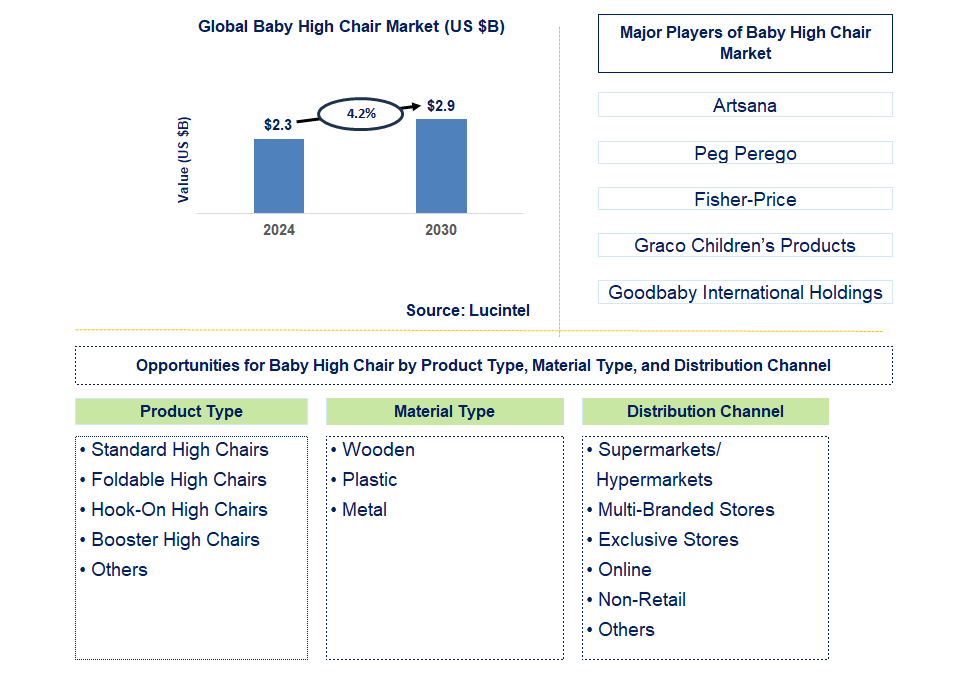
Key data points: The market size in 2030 = $2.9 billion, growth forecast = 4.2% annually for the next 6 years. Scroll below to get more insights. This market report covers trends, opportunities, and forecasts in the global baby high chair market to 2030 by high chair market by product type (standard high chairs, foldable high chairs, hook-on high chairs, booster high chairs, and others), material type (wooden, plastic, and metal), distribution channel (supermarkets/hypermarkets, multi-branded stores, exclusive stores, online, non-retail, and others), and region (North America, Europe, Asia Pacific, and the Rest of the World)
We'll send your sample report shortly.
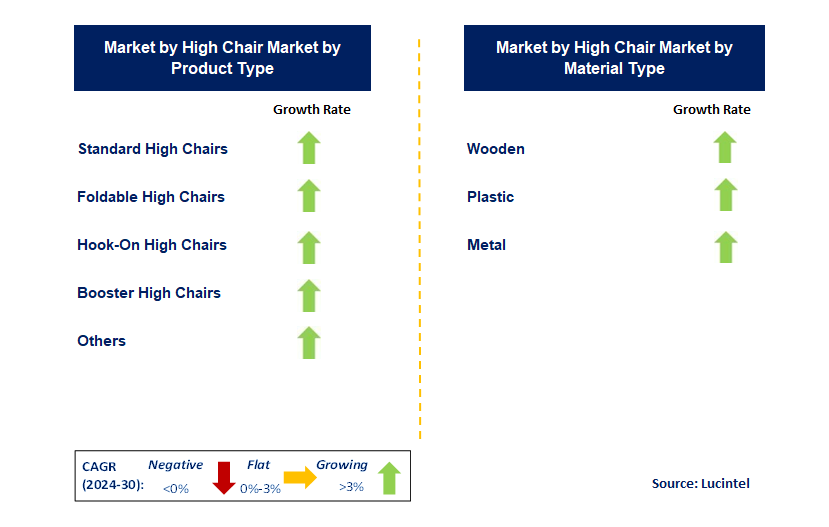
• Lucintel forecasts that, Within the type category, standard is expected to witness the highest growth over the forecast period.
• Within the distribution channel category, supermarket/hypermarket is expected to witness the highest growth.
• In terms of regions, APAC is expected to witness the highest growth over the forecast period. Gain valuable insights for your business decisions with our comprehensive 150+ page report.
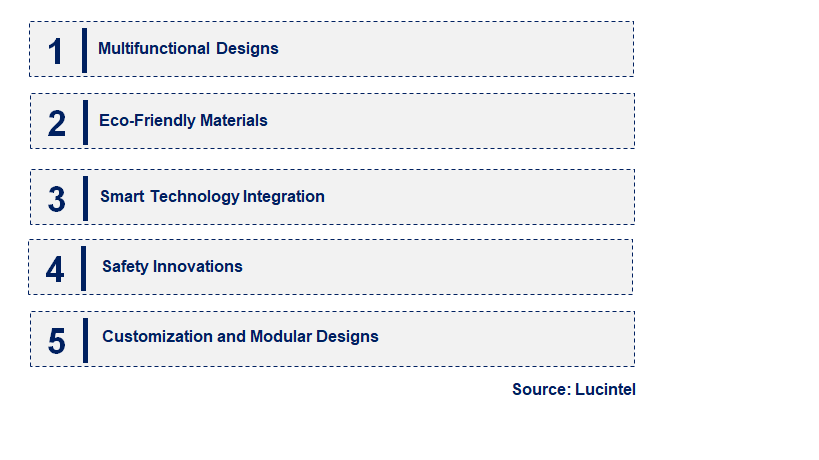
• Multifunctional Designs: Modern high chairs are increasingly designed to serve multiple purposes, such as converting into booster seats or toddler chairs. This trend addresses the need for products that grow with the child and offer extended usability. Multifunctional high chairs provide value for money by adapting to various stages of a child’s development, thus reducing the need for multiple products. This trend is particularly popular among cost-conscious and space-saving parents, as it combines practicality with long-term investment benefits.
• Eco-Friendly Materials: There is a growing demand for high chairs made from sustainable and environmentally friendly materials. Consumers are becoming more environmentally conscious and prefer products that minimize their ecological footprint. Manufacturers are responding by using materials like bamboo, recycled plastics, and organic fabrics. This trend not only appeals to eco-conscious buyers but also aligns with broader sustainability goals. Eco-friendly high chairs contribute to reducing environmental impact and promoting responsible consumption practices.
• Smart Technology Integration: The integration of smart technology into high chairs is a notable trend, with features such as sensors, connectivity, and interactive elements becoming more common. Smart high chairs can monitor a child’s posture, track feeding habits, and even provide parents with data through mobile apps. This trend caters to tech-savvy parents who seek enhanced functionality and convenience. Smart technology enhances safety and provides valuable insights, making it a significant development in the high chair market.
• Safety Innovations: Enhanced safety features are a critical trend in the high chair market. Innovations include advanced harness systems, improved stability mechanisms, and better crash protection. Manufacturers are investing in safety research to meet and exceed regulatory standards, addressing parental concerns about child safety. This trend is driven by increasing awareness of child safety and a desire for products that offer peace of mind. Enhanced safety features are becoming a standard expectation in high chair design.
• Customization and Modular Designs: Customizable and modular high chairs are gaining popularity, allowing parents to adapt the chair according to their child's needs. Features such as adjustable height, reclining seats, and removable trays offer flexibility. Modular designs enable consumers to modify the high chair as the child grows, making it a versatile option. This trend caters to families seeking personalized solutions and helps extend the product's lifecycle, offering greater value and functionality. The emerging trends in the baby high chair market reflect a shift towards greater functionality, safety, and environmental consciousness. Multifunctional designs and smart technology integration are addressing modern parenting needs, while eco-friendly materials and safety innovations enhance product appeal. Customization and modular designs offer flexibility and longevity, meeting diverse consumer preferences. These trends are reshaping the market by setting new standards for high chair design and functionality, driving innovation, and aligning with broader consumer values.
• Enhanced Safety Features: Recent advancements in safety features include more secure harness systems, improved chair stability, and enhanced crash protection. Manufacturers are integrating five-point harnesses, anti-tip designs, and non-slip bases to address safety concerns. These innovations are crucial in ensuring the well-being of infants and meeting stringent safety standards. Enhanced safety features not only reassure parents but also differentiate products in a competitive market, making them a significant development in high chair design.
• Multifunctional and Convertible Designs: The introduction of multifunctional and convertible high chairs represents a major development in the market. These designs allow high chairs to transform into booster seats, toddler chairs, or even tables, offering extended usability. This trend caters to the desire for versatile products that adapt to different stages of a child's development. Multifunctional designs provide cost-effectiveness and space-saving solutions, appealing to families seeking practical and long-lasting baby gear.
• Sustainable Materials and Eco-Friendly Production: The use of sustainable materials and eco-friendly production methods is becoming a key focus in high chair development. Manufacturers are opting for materials like bamboo, recycled plastics, and organic fabrics to reduce environmental impact. This shift reflects growing consumer demand for environmentally responsible products. Sustainable practices not only appeal to eco-conscious buyers but also align with global efforts to promote environmental stewardship. This development is driving the industry towards greener and more ethical manufacturing processes.
• Smart Technology Integration: The incorporation of smart technology into high chairs is a notable development, featuring sensors, connectivity, and interactive functions. These smart high chairs can monitor various aspects of a child’s feeding and posture, providing valuable data to parents. This development caters to tech-savvy consumers seeking advanced functionality and convenience. Smart technology enhances the user experience by offering real-time insights and integration with mobile apps, setting a new standard for high chair features.
• Design Innovations and Customization: Recent design innovations include customizable and modular high chairs that offer adjustable heights, reclining options, and removable trays. This development allows parents to tailor the high chair to their child's needs and preferences. Modular designs extend the product's lifecycle and provide flexibility, making them a popular choice among consumers. Design innovations also focus on aesthetics and ergonomics, aligning with modern trends in home decor and child development. The recent developments in the baby high chair market reflect significant advancements in safety, functionality, and sustainability. Enhanced safety features and multifunctional designs address practical needs, while sustainable materials and smart technology integration cater to modern consumer values. Design innovations and customization options provide added flexibility and appeal. These developments are reshaping the market by setting new standards and meeting the evolving expectations of parents, driving growth and innovation in the industry.
• Multifunctional High Chairs: Multifunctional high chairs that convert into booster seats or toddler chairs present a major growth opportunity. These versatile designs cater to parents seeking long-term value and adaptability. By offering products that grow with the child, manufacturers can appeal to cost-conscious and space-saving consumers. Multifunctional high chairs also enhance the product’s utility, making them more attractive to families who want to invest in items that serve multiple purposes, thus driving higher sales and fostering customer loyalty.
• Eco-Friendly Materials: The use of sustainable and eco-friendly materials in high chair production is an emerging growth opportunity. As environmental concerns rise, consumers are increasingly seeking products made from recyclable or biodegradable materials. Incorporating materials like bamboo, recycled plastics, and organic fabrics can attract eco-conscious buyers and differentiate products in the market. This trend not only aligns with global sustainability goals but also addresses regulatory pressures for greener manufacturing practices, opening up new market segments and boosting brand reputation.
• Smart Technology Integration: Integrating smart technology into high chairs is another promising opportunity. Features such as sensors, connectivity, and app integration offer enhanced functionality and real-time monitoring of a child’s feeding and posture. This innovation appeals to tech-savvy parents looking for advanced solutions that simplify parenting tasks. By incorporating smart features, manufacturers can cater to a growing market for connected devices and differentiate their products in a competitive landscape, potentially increasing market share and driving technological leadership.
• Customizable and Modular Designs: Customizable and modular high chairs offer significant growth potential by allowing consumers to adjust the chair’s features according to their child’s developmental stages. Options such as adjustable heights, reclining seats, and removable trays provide flexibility and extend the product’s lifespan. This adaptability can attract consumers who value personalized solutions and want to maximize the utility of their purchase. Modular designs also align with trends in consumer demand for versatile and long-lasting products, enhancing market appeal and driving sales.
• Enhanced Safety Features: Advancements in safety features represent a critical growth opportunity. Innovations such as advanced harness systems, anti-tip designs, and improved crash protection address parental concerns about child safety. By prioritizing safety, manufacturers can meet regulatory standards and exceed consumer expectations, building trust and credibility. Enhanced safety features not only ensure compliance with stringent safety regulations but also position products as top choices for safety-conscious buyers, driving market growth and fostering brand loyalty. The strategic growth opportunities in the baby high chair market are driven by innovations in multifunctional designs, eco-friendly materials, smart technology, customization, and safety enhancements. By focusing on these areas, manufacturers can address evolving consumer preferences, capture new market segments, and differentiate themselves in a competitive landscape. These opportunities are shaping the market’s future, driving growth, and creating new avenues for success in the industry.
• Increasing Parental Awareness: Growing awareness among parents about child safety and developmental needs is a significant driver. Parents are more informed about the importance of ergonomics, safety features, and multi-functionality in high chairs. This heightened awareness leads to increased demand for high-quality, well-designed products that prioritize child safety and comfort. Manufacturers responding to these demands can gain a competitive advantage and capture a larger share of the market by offering products that align with these evolving consumer expectations.
• Technological Advancements: Technological innovations, such as smart technology integration, are driving market growth. Features like sensors, connectivity, and app integration enhance functionality and appeal to tech-savvy parents. These advancements offer convenience and real-time monitoring, addressing modern parenting needs. As technology continues to evolve, it creates opportunities for manufacturers to differentiate their products and attract consumers seeking cutting-edge solutions, thereby expanding market reach and driving growth.
• Rising Disposable Income: Increasing disposable income, particularly in emerging markets, is driving demand for premium and feature-rich high chairs. As families experience improved economic conditions, they are more willing to invest in higher-quality products that offer greater functionality and durability. This trend provides opportunities for manufacturers to introduce high-end models with advanced features and premium materials, capturing a segment of the market that values luxury and enhanced product performance.
• Growing Urbanization: Urbanization is contributing to the demand for space-saving and multifunctional high chairs. In densely populated urban areas, families often have limited living space, making compact and adaptable designs highly desirable. Multifunctional high chairs that can convert into other types of furniture are particularly appealing to urban dwellers. This trend encourages manufacturers to develop products that cater to space constraints and offer versatile solutions, enhancing their appeal in urban markets.
• Regulatory Standards and Safety Regulations: Stringent regulatory standards and safety regulations drive manufacturers to innovate and enhance safety features in high chairs. Compliance with safety standards is essential for market entry and consumer trust. Manufacturers investing in safety research and development can ensure their products meet or exceed regulations, differentiating themselves in the market. This focus on safety not only aligns with regulatory requirements but also builds consumer confidence, driving demand for compliant and well-designed high chairs. Challenges in the baby high chair market are:
• High Production Costs: The rising cost of raw materials and manufacturing processes poses a challenge for high chair producers. Increased production costs can lead to higher retail prices, potentially limiting market accessibility for price-sensitive consumers. Manufacturers must find ways to manage costs while maintaining product quality and affordability. Innovations in materials and production efficiency can help mitigate this challenge and ensure competitive pricing in the market.
• Stringent Regulatory Compliance: Adhering to diverse and stringent regulatory requirements across different markets can be challenging. Compliance with safety standards and testing procedures varies by region, requiring manufacturers to navigate complex regulations. This challenge can increase operational costs and complicate market entry. Staying informed about regulatory changes and investing in comprehensive compliance strategies are essential for manufacturers to avoid legal issues and ensure market access.
• Market Saturation: The baby high chair market is becoming increasingly saturated, with numerous brands offering a wide range of products. This saturation creates intense competition and makes it challenging for new entrants to differentiate themselves. Manufacturers must focus on innovation, unique features, and effective marketing strategies to stand out in a crowded market. Developing niche products or targeting specific consumer segments can help overcome the challenge of market saturation and capture market share. The baby high chair market is influenced by several key drivers, including increasing parental awareness, technological advancements, rising disposable income, growing urbanization, and regulatory standards. These drivers create opportunities for growth and innovation. However, challenges such as high production costs, stringent regulatory compliance, and market saturation must be addressed to succeed. By leveraging drivers and mitigating challenges, manufacturers can navigate the market effectively, adapt to changing consumer needs, and capitalize on growth opportunities.
• Artsana
• Peg Perego
• Fisher-Price
• Graco Children’s Products
• Goodbaby International Holdings
• Reliance Brands
• Inter IKEA Systems
• Joovy Holding
• Target Brands
• Stokke
• Standard High Chairs
• Foldable High Chairs
• Hook-On High Chairs
• Booster High Chairs
• Others
• Wooden
• Plastic
• Metal
• Supermarkets/Hypermarkets
• Multi-Branded Stores
• Exclusive Stores
• Online
• Non-Retail
• Others
• North America
• Europe
• Asia Pacific
• The Rest of the World
• United States: In the U.S., the baby high chair market has seen a rise in demand for multifunctional designs. Parents are increasingly seeking high chairs that can convert into booster seats or toddler chairs, offering longer usability. Innovations include enhanced safety features such as five-point harness systems and improved stability designs. Additionally, there is a growing focus on eco-friendly materials, reflecting broader consumer trends toward sustainability. The introduction of smart high chairs with built-in sensors and connectivity features represents another advancement, catering to tech-savvy parents looking for integrated solutions.
• India: The Indian baby high chair market is witnessing growth due to increased urbanization and rising awareness about child safety and comfort. Affordable yet functional high chairs are in demand, with features such as adjustable trays and harness systems gaining popularity. There is also a trend towards compact and space-saving designs suitable for smaller living spaces. Local manufacturers are enhancing product quality and introducing more design options to cater to diverse consumer preferences. The growth of online retail platforms is making it easier for parents to access a wide range of high chairs, contributing to market expansion.
• Germany: In Germany, the focus is on ergonomic designs and sustainable materials. German parents are prioritizing high chairs that support proper posture and long-term use. There's a strong emphasis on products that meet stringent European safety standards and are made from eco-friendly materials. Many new high chairs in the German market feature adjustable height and reclining functions to accommodate growing children. Innovations in design also include modular systems that allow customization according to the child’s developmental stages. The trend towards minimalist and functional aesthetics aligns with broader European preferences for simplicity and efficiency in baby products.
• Japan: The Japanese market is characterized by an emphasis on compact, space-efficient designs and multifunctionality. High chairs that can be easily folded and stored are particularly popular due to the limited living space in many Japanese homes. There is a growing preference for high chairs that integrate seamlessly with existing home decor and feature high-quality, durable materials. Safety remains a top priority, with innovations focusing on advanced harness systems and stability features. Japanese consumers are also showing interest in products that promote early developmental milestones, such as high chairs with sensory stimulation features.
• China: China's baby high chair market is expanding rapidly due to a growing middle class and rising disposable incomes. There is a noticeable trend towards premium, feature-rich high chairs that emphasize both safety and comfort. Local manufacturers are increasingly adopting international design standards and incorporating high-quality materials. Chinese consumers are also showing increased interest in high chairs that offer ease of cleaning and maintenance. The market is witnessing a surge in online sales channels, driven by the widespread use of e-commerce platforms, which has made it easier for parents to access a variety of high chair options.


• Artsana
• Peg Perego
• Fisher-Price
• Graco Children’s Products
• Goodbaby International Holdings
• Reliance Brands
• Inter IKEA Systems
• Joovy Holding
• Target Brands
• Stokke Q6. Which baby high chair market segment will be the largest in future? Answer: Lucintel forecasts that, Within the type category, standard is expected to witness the highest growth over the forecast period. Q7. In baby high chair market, which region is expected to be the largest in next 5 years? Answer: In terms of regions, APAC is expected to witness the highest growth over the forecast period. Q.8 Do we receive customization in this report? Answer: Yes, Lucintel provides 10% customization without any additional cost.


Choose a license that fits your team. Instant PDF delivery.
Prices exclude taxes. Instant delivery. Custom licensing available on request.
Market Report · July 31, 2026
Market Report · July 31, 2026
Market Report · July 31, 2026
Trusted partner for strategic intelligence and business growth


Receive a complimentary market analysis tailored to your industry. Our analysts will identify key growth opportunities and competitive dynamics specific to your business.

Market size, growth rate, and key trend analysis for your specific sector.

Top competitor positioning and market share analysis.

Strategic recommendations backed by data-driven insights.
Get curated market intelligence and competitive moves straight to your inbox.
By subscribing, you agree to receive our monthly insights. Unsubscribe anytime.
Receive a complimentary market analysis tailored to your industry. Our analysts will identify key growth opportunities and competitive dynamics specific to your business.
Market size, growth rate, and key trend analysis for your specific sector.
Top competitor positioning and market share analysis.
Strategic recommendations backed by data-driven insights.
Get curated market intelligence, emerging trends, and competitive moves straight to your inbox each month.
By subscribing, you agree to receive our monthly insights. Unsubscribe anytime.
We'll send your sample report shortly.