
Azelaic Acid Cosmetic Market Report: Trends, Forecast and Competitive Analysis to 2035

Key data points: The market size in 2035 = $1,008 million, growth forecast = 12.3% annually for the next 8 years. Scroll below to get more insights. This market report covers trends, opportunities and forecasts in azelaic acid cosmetic market to 2035 by skin type (oily / acne-prone skin, dry skin, combination skin, sensitive skin, and normal skin), product (creams & lotions, gels & foams, serums, ampoules & essences, masks & peels, spot & targeted treatments, and others), distribution channel (supermarkets & hypermarkets, pharmacies & drugstores, specialty beauty stores, online / e-commerce, and others), end use (men and women), and region (North America, Europe, Asia Pacific, and the Rest of the World)

Publisher: Lucintel Last Updated: July 2026
See Pricing

Download Sample Report

| ✨ New Download Sample report — Get instant insights! | ✨ New Download Sample report — Get instant insights!

Azelaic Acid Cosmetic Market Report: Trends, Forecast and Competitive Analysis to 2035

Azelaic Acid Cosmetic Market

The future of the global azelaic acid cosmetic market looks promising with opportunities in the cream & lotion, gel & foam, serum, ampoule & essence, mask & peel, and spot & targeted treatment markets. The global azelaic acid cosmetic market is expected to reach an estimated $1,008 million by 2035 with a CAGR of 12.3% from 2026 to 2035. The major drivers for this market are the growing use in anti-aging cosmetics, the increasing demand for multifunctional skincare products, and the rising disposable income for premium skincare.

  • Lucintel forecasts that, within the skin type category, oily / acne-prone skin is expected to witness the highest growth over the forecast period due to the increasing prevalence of acne and oily skin concerns.
  • Within the product category, cream & lotion is expected to witness the highest growth due to the easy application and high consumer preference for creams.
  • In terms of regions, North America will remain the largest region over the forecast period due to the strong skincare product demand and widespread consumer awareness.

Gain valuable insights for your business decisions with our comprehensive 150+ page report. Sample figures with some insights are shown below.
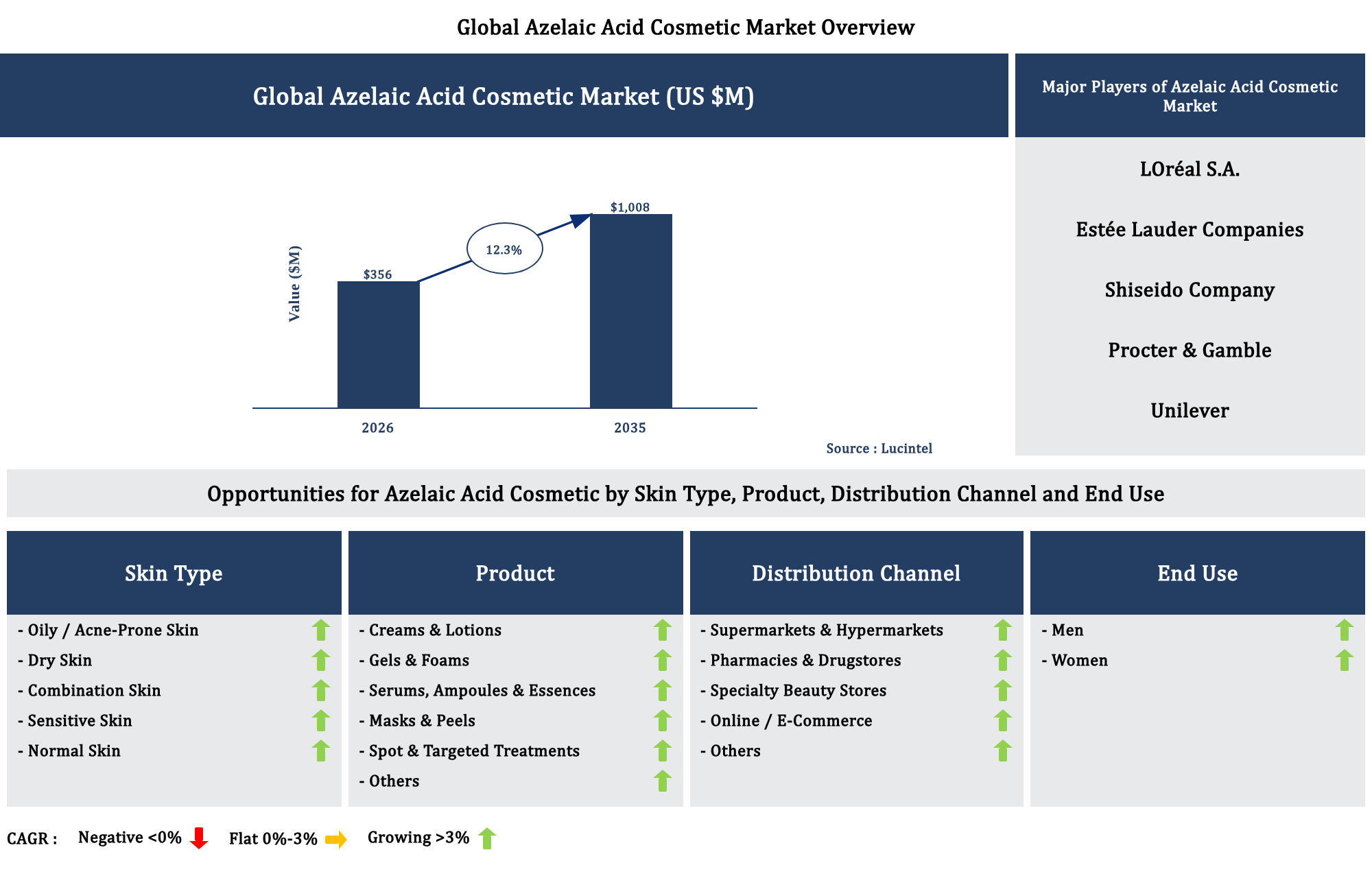
Azelaic Acid Cosmetic Market

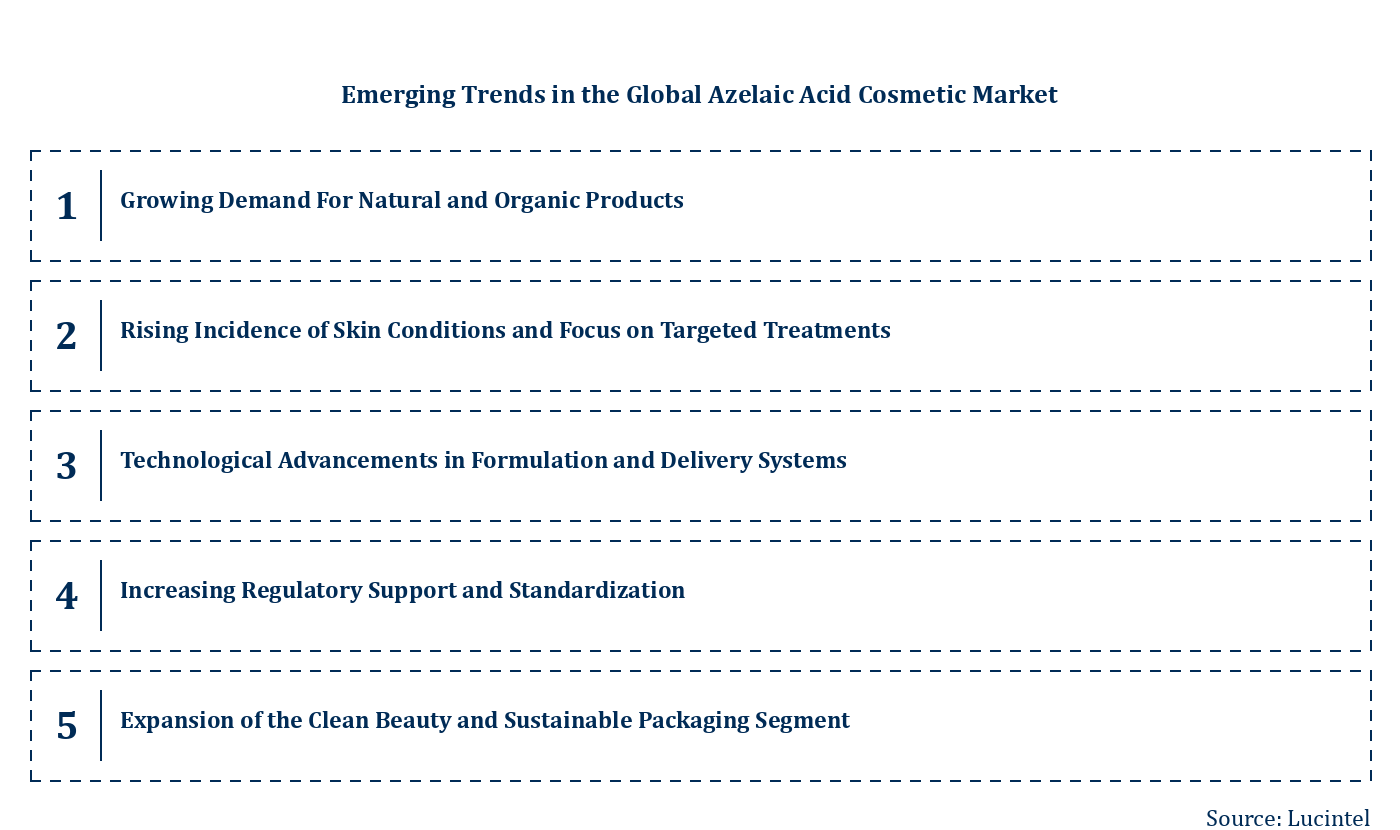
Emerging Trends in the Azelaic Acid Cosmetic Market

The azelaic acid cosmetic market is experiencing rapid growth driven by increasing consumer awareness of skincare benefits, technological advancements, and a shift towards natural and effective ingredients. As consumers seek targeted solutions for skin conditions like acne and hyperpigmentation, manufacturers are innovating to meet these demands. The market is also influenced by regulatory changes and the rising popularity of clean beauty products. These developments are transforming the landscape, making products more accessible, effective, and aligned with consumer preferences. The following key trends highlight the major shifts shaping the future of the azelaic acid cosmetic market.

  • Growing Demand for Natural and Organic Products: Consumers are increasingly prioritizing natural ingredients in their skincare routines. Azelaic acid, derived from grains like wheat and barley, is perceived as a safer, more natural alternative to synthetic chemicals. This trend encourages brands to formulate products with organic azelaic acid, boosting market growth. The demand is driven by health consciousness, environmental concerns, and a desire for gentle yet effective skincare solutions. As a result, companies are investing in sustainable sourcing and transparent labeling to attract eco-conscious consumers, thereby expanding the market scope.
  • Rising Incidence of Skin Conditions and Focus on Targeted Treatments: The increasing prevalence of skin issues such as acne, rosacea, and hyperpigmentation is fueling demand for specialized skincare ingredients like azelaic acid. Its proven efficacy in reducing inflammation, controlling bacterial growth, and lightening dark spots makes it a preferred choice among dermatologists and consumers. This trend is prompting brands to develop targeted formulations that address specific skin concerns, leading to product innovation and diversification. Consequently, the market is witnessing a surge in products tailored for different skin types and conditions, enhancing consumer satisfaction and loyalty.
  • Technological Advancements in Formulation and Delivery Systems: Innovations in formulation technology are enhancing the stability, bioavailability, and efficacy of azelaic acid in cosmetic products. Encapsulation techniques, nanotechnology, and novel delivery systems improve ingredient penetration and reduce irritation risks. These advancements enable the development of more effective, user-friendly products with longer shelf lives. As a result, manufacturers can offer higher-quality formulations that meet consumer expectations for performance and safety. This trend is also facilitating the creation of innovative product formats such as serums, creams, and patches, broadening market offerings and consumer appeal.
  • Increasing Regulatory Support and Standardization: Regulatory bodies are establishing clearer guidelines for the use of azelaic acid in cosmetics, ensuring safety and efficacy standards. This regulatory support boosts consumer confidence and encourages market expansion. Companies are aligning their formulations with these standards to ensure compliance, which also facilitates international trade. Additionally, standardized testing and labeling practices improve transparency, helping consumers make informed choices. The evolving regulatory landscape is fostering innovation while maintaining safety, ultimately contributing to a more trustworthy and competitive market environment.
  • Expansion of The Clean Beauty and Sustainable Packaging Segment: The rising consumer preference for clean beauty products emphasizes transparency, ingredient safety, and eco-friendly packaging. Azelaic acid formulations are increasingly incorporated into products marketed as free from parabens, sulfates, and artificial fragrances. Sustainable packaging solutions, such as biodegradable containers and refillable options, are gaining popularity. This trend aligns with broader environmental concerns and ethical consumerism, prompting brands to adopt greener practices. The focus on sustainability not only enhances brand reputation but also attracts a broader customer base, driving growth in the azelaic acid cosmetic market.

These trends are collectively reshaping the azelaic acid cosmetic market by emphasizing natural ingredients, targeted skincare solutions, technological innovation, regulatory clarity, and sustainability. This evolution is leading to more effective, safe, and environmentally conscious products, ultimately expanding market reach and consumer trust.
Azelaic Acid Cosmetic Market by country

Recent Developments in the Azelaic Acid Cosmetic Market

The azelaic acid cosmetic market has experienced significant growth driven by increasing consumer demand for effective skincare solutions. Innovations in formulation, rising awareness of skin health, and expanding product ranges are fueling market expansion. Regulatory approvals and sustainable sourcing are also contributing to industry confidence. As consumers seek targeted treatments for skin conditions, the market is poised for continued development, attracting investments and new entrants. These developments are shaping a dynamic landscape with promising opportunities for brands and stakeholders alike.

  • Growing Demand for Targeted Skincare Solutions: The rising prevalence of skin conditions like acne and rosacea has increased consumer interest in azelaic acid-based products, boosting market growth. Consumers prefer products that offer visible results with minimal side effects, leading to innovation in formulations. This trend encourages brands to develop specialized products, expanding market share and driving revenue. The focus on natural and effective ingredients further enhances consumer trust and loyalty, fostering long-term market stability.
  • Innovation in Formulation and Product Offerings: Companies are investing in advanced formulations, combining azelaic acid with other active ingredients to enhance efficacy. These innovations include creams, gels, and serums tailored for different skin types and concerns. Such developments improve product performance, attract a broader consumer base, and enable premium pricing. The focus on clean, sustainable, and dermatologically tested products aligns with consumer preferences, strengthening brand reputation and market competitiveness.
  • Increasing Awareness of Skin Health Benefits: Educational campaigns and influencer marketing are raising awareness about azelaic acid’s benefits, such as reducing pigmentation and controlling acne. This increased knowledge encourages consumers to incorporate azelaic acid into their skincare routines, expanding demand. Dermatologists and skincare professionals also recommend these products, boosting credibility. As awareness grows, market penetration deepens across various demographics, leading to sustained growth and new market opportunities.
  • Expansion Into Emerging Markets: Developing regions are witnessing rising disposable incomes and urbanization, creating new opportunities for azelaic acid products. Companies are entering these markets through localized marketing and affordable product lines. The increasing prevalence of skin issues and growing beauty consciousness drive demand. Market expansion in these regions offers significant revenue potential, diversifies consumer bases, and reduces dependency on mature markets, fostering long-term industry growth.
  • Regulatory Advancements and Sustainability Initiatives: Clearer regulations and standards for cosmetic ingredients are building consumer confidence. Companies are adopting sustainable sourcing and eco-friendly packaging, aligning with environmental concerns. These initiatives improve brand image and meet consumer expectations for responsible products. Regulatory compliance also facilitates market access and reduces legal risks. Overall, these developments promote transparency, trust, and innovation, positively impacting market stability and growth prospects.

The overall impact of these developments is a robust, innovative, and expanding azelaic acid cosmetic market. Increased consumer awareness, product innovation, and market diversification are driving growth, while regulatory and sustainability efforts enhance credibility. These factors collectively create a favorable environment for industry stakeholders, fostering competitive advantages and long-term sustainability in the evolving skincare landscape.

Strategic Growth Opportunities in the Azelaic Acid Cosmetic Market

The azelaic acid cosmetic market is experiencing rapid expansion driven by increasing consumer demand for effective skincare solutions. Innovations in formulation, rising awareness of skin health, and the growing popularity of natural and organic products are fueling growth. Market players are focusing on product diversification and expanding distribution channels to capture new customer segments. Strategic collaborations and technological advancements are also enhancing product efficacy and safety, further boosting market potential. This dynamic environment presents numerous opportunities for brands to strengthen their market presence and meet evolving consumer needs.

  • Growing Demand for Natural and Organic Skincare Products: The increasing consumer preference for natural ingredients is propelling the use of azelaic acid in cosmetics. Consumers seek products that are safe, effective, and environmentally friendly, prompting brands to develop formulations with organic azelaic acid. This trend is supported by rising awareness of skin health and the desire for chemical-free solutions, creating significant opportunities for market expansion and product innovation.
  • Expansion of Product Applications Beyond Traditional Skincare: Azelaic acid is increasingly being incorporated into a broader range of cosmetic products, including serums, creams, and masks. Its benefits for acne, hyperpigmentation, and rosacea make it versatile for various skin concerns. Companies are leveraging this versatility to develop targeted solutions, thereby expanding their product portfolios and attracting diverse consumer segments, which enhances overall market growth.
  • Technological Advancements in Formulation and Delivery Systems: Innovations in delivery mechanisms, such as encapsulation and nano emulsions, improve azelaic acid stability and skin penetration. These advancements enhance product efficacy and reduce potential irritation, increasing consumer confidence. Companies investing in R&D to optimize formulations are gaining competitive advantages, opening avenues for premium products and higher profit margins in the cosmetic market.
  • Rising Awareness of Skin Health and Aesthetic Appeal: Consumers are increasingly prioritizing skin health and appearance, driving demand for effective treatments like azelaic acid. Educational campaigns and influencer marketing are raising awareness about its benefits, encouraging more consumers to incorporate azelaic acid-based products into their routines. This heightened awareness supports market growth by expanding the customer base and fostering brand loyalty.
  • Strategic Collaborations and Regional Market Expansion: Partnerships between cosmetic companies and ingredient suppliers facilitate innovation and product development. Additionally, expanding into emerging markets with rising disposable incomes offers new growth avenues. Companies are establishing local manufacturing and distribution channels to cater to regional preferences, thereby increasing market penetration and capturing untapped customer segments globally.

These growth opportunities are poised to significantly influence the azelaic acid cosmetic market by fostering innovation, expanding applications, and reaching new consumer bases. Embracing natural ingredients, technological progress, and strategic collaborations will enable market players to capitalize on emerging trends. Overall, these opportunities will drive sustained growth, enhance product offerings, and strengthen competitive positioning in the evolving cosmetic landscape.

Azelaic Acid Cosmetic Market Drivers and Challenges

The azelaic acid cosmetic market is influenced by a variety of technological, economic, and regulatory factors that shape its growth trajectory. Advances in formulation technologies enable the development of more effective and stable products, while economic factors such as rising disposable incomes and increasing consumer awareness about skincare drive demand. Regulatory frameworks governing ingredient safety and product standards also play a crucial role in market development. Additionally, evolving consumer preferences towards natural and organic products, along with innovations in delivery systems, further impact market dynamics. Navigating these drivers and challenges is essential for stakeholders aiming to capitalize on emerging opportunities within this competitive landscape.

The factors responsible for driving the azelaic acid cosmetic market include:

  • Technological Innovations: The development of advanced formulation techniques enhances the stability, efficacy, and delivery of azelaic acid in cosmetic products. Innovations such as microencapsulation and nanotechnology improve skin penetration and reduce irritation, making products more appealing to consumers. These technological advancements enable brands to create targeted solutions for skin conditions like acne and hyperpigmentation, thereby expanding market reach. As R&D investments increase, the pace of innovation accelerates, fostering product differentiation and competitive advantage in the market.
  • Rising Consumer Awareness and Demand for Natural Products: Consumers are increasingly seeking natural, organic, and clean-label skincare options. Azelaic acid, derived from natural sources, aligns with this trend, boosting its popularity. Growing awareness about skin health and the benefits of active ingredients encourages consumers to prefer products containing azelaic acid for their efficacy and safety profile. This shift in consumer preferences drives manufacturers to incorporate azelaic acid into their formulations, expanding the market and encouraging product innovation tailored to natural skincare.
  • Increasing Prevalence of Skin Conditions: The rising incidence of acne, rosacea, and hyperpigmentation globally fuels demand for effective treatments. Azelaic acid is recognized for its anti-inflammatory, antimicrobial, and skin-brightening properties, making it a preferred ingredient in addressing these conditions. As awareness about these skin issues grows, consumers seek targeted solutions, prompting cosmetic companies to develop specialized products containing azelaic acid. This trend significantly contributes to market expansion, especially in emerging economies with increasing skincare consciousness.
  • Regulatory Support and Approvals: Regulatory agencies worldwide are establishing guidelines for the safe use of azelaic acid in cosmetics. Clear regulations and approvals facilitate market entry and product development, assuring consumers of safety and efficacy. Compliance with these standards encourages manufacturers to innovate and expand their product portfolios. Moreover, regulatory support can lead to increased acceptance and trust among consumers, further propelling market growth as brands leverage approved formulations to differentiate themselves.
  • Expansion of E-commerce and Digital Marketing: The proliferation of online retail channels and digital marketing strategies has broadened access to azelaic acid-based products. E-commerce platforms enable consumers to easily compare, review, and purchase products, increasing market reach. Digital marketing campaigns, influencer collaborations, and targeted advertising enhance brand visibility and consumer engagement. This digital shift reduces barriers to entry for new players and accelerates product adoption, significantly impacting market growth by making azelaic acid products more accessible and appealing to a global audience.

The challenges facing this Market include:

  • Stringent Regulatory Frameworks: While regulations support safety, they can also pose barriers to market entry and product innovation. Variations in regulatory standards across regions create compliance complexities and increase costs for manufacturers. Navigating these diverse requirements can delay product launches and limit market expansion, especially for smaller companies lacking resources. Additionally, evolving regulations may necessitate reformulation or additional testing, impacting profitability and innovation timelines.
  • Market Saturation and Intense Competition: The increasing number of brands offering azelaic acid products leads to a saturated market. Differentiating products becomes challenging, and price wars may erode profit margins. New entrants face difficulties establishing brand recognition amid established players with loyal customer bases. This intense competition pressures companies to invest heavily in marketing and innovation, which can strain resources and hinder sustainable growth, especially for smaller or emerging brands.
  • Limited Consumer Awareness in Emerging Markets: Despite growth in developed regions, awareness about azelaic acid’s benefits remains limited in some emerging markets. Lack of consumer knowledge hampers product adoption and market penetration. Overcoming this challenge requires significant educational marketing efforts, which can be costly and time-consuming. Without adequate awareness, market growth potential remains constrained, limiting opportunities for expansion and revenue generation in these regions.

The azelaic acid cosmetic market is driven by technological advancements, increasing consumer preference for natural products, rising skin condition prevalence, regulatory support, and digital marketing expansion. However, challenges such as regulatory complexities, market saturation, and limited awareness in certain regions pose significant hurdles. These factors collectively influence the market’s growth trajectory, requiring strategic adaptation by industry players. Overall, the market’s future depends on balancing innovation and compliance while effectively addressing regional consumer needs and competitive pressures.

List of Azelaic Acid Cosmetic Market Companies

Companies in the market compete on the basis of product quality offered. Major players in this market focus on expanding their manufacturing facilities, R&D investments, infrastructural development, and leverage integration opportunities across the value chain. Through these strategies azelaic acid cosmetic market companies cater increasing demand, ensure competitive effectiveness, develop innovative products & technologies, reduce production costs, and expand their customer base. Some of the azelaic acid cosmetic market companies profiled in this report include-

  • LOréal S.A.
  • Estée Lauder Companies
  • Shiseido Company
  • Procter & Gamble
  • Unilever
  • Beiersdorf AG
  • Johnson & Johnson
  • The Ordinary
  • Paulas Choice Skincare
  • Naturium

Azelaic Acid Cosmetic Market by Segment

The study includes a forecast for the global azelaic acid cosmetic market by skin type, product, distribution channel, end use, and region.

  • Azelaic Acid Cosmetic Market by Skin Type [Value from 2019 to 2035]:
    • Oily / Acne-Prone Skin
    • Dry Skin
    • Combination Skin
    • Sensitive Skin
    • Normal Skin
  • Azelaic Acid Cosmetic Market by Product [Value from 2019 to 2035]:
    • Creams & Lotions
    • Gels & Foams
    • Serums, Ampoules & Essences
    • Masks & Peels
    • Spot & Targeted Treatments
    • Others
  • Azelaic Acid Cosmetic Market by Distribution Channel [Value from 2019 to 2035]:
    • Supermarkets & Hypermarkets
    • Pharmacies & Drugstores
    • Specialty Beauty Stores
    • Online / E-Commerce
    • Others
  • Azelaic Acid Cosmetic Market by End Use [Value from 2019 to 2035]:
    • Men
    • Women
  • Azelaic Acid Cosmetic Market by Region [Value from 2019 to 2035]:
    • North America
    • Europe
    • Asia Pacific
    • The Rest of the World

Country Wise Outlook for the Azelaic Acid Cosmetic Market

The azelaic acid cosmetic market has experienced significant growth driven by increasing consumer demand for effective skincare solutions, rising awareness of skin health, and advancements in cosmetic formulations. As consumers seek products that address issues like acne, hyperpigmentation, and skin aging, manufacturers are innovating with new formulations and expanding their market reach. Regulatory developments and sustainability initiatives are also shaping the industry landscape. The following summaries highlight recent developments in this market across key countries, reflecting regional trends, technological advancements, and market dynamics.

  • United States: The US market has seen a surge in demand for azelaic acid-based products, driven by rising awareness of skin conditions like acne and rosacea. Major cosmetic brands are launching new formulations with higher concentrations of azelaic acid, emphasizing clean and sustainable ingredients. E-commerce sales are growing rapidly, facilitating wider access. Regulatory agencies are providing clearer guidelines, encouraging innovation. Additionally, there is a trend toward combining azelaic acid with other active ingredients for enhanced efficacy, boosting product diversity and consumer options.
  • China: In China, the market is expanding due to increasing urbanization and rising disposable incomes. Consumers are becoming more knowledgeable about skincare, leading to higher demand for effective ingredients like azelaic acid. Local brands are investing in research and development to create innovative products tailored to Asian skin types. E-commerce platforms and social media marketing are playing crucial roles in market penetration. Regulatory reforms are easing the approval process for new cosmetic ingredients, fostering innovation. Sustainability and natural formulations are also gaining importance among Chinese consumers.
  • Germany: The German market is characterized by a focus on high-quality, dermatologist-recommended products containing azelaic acid. There is a growing trend toward organic and eco-friendly formulations, aligning with European Union regulations on sustainability. Consumers are increasingly seeking products that combine azelaic acid with other natural ingredients for multifunctional benefits. The market benefits from strong R&D investments and collaborations between cosmetic companies and dermatologists. Regulatory standards are strict, ensuring product safety and efficacy, which boosts consumer confidence and market growth.
  • India: The Indian market is witnessing rapid growth due to increasing awareness of skin health and a rising middle class seeking affordable skincare solutions. Azelaic acid products are gaining popularity for their effectiveness against acne and hyperpigmentation. Local and international brands are expanding their product portfolios to include azelaic acid-based formulations. The rise of e-commerce and social media influencers is driving consumer education and product adoption. Regulatory frameworks are evolving to support innovation, and there is a growing preference for natural and herbal formulations, influencing product development.
  • Japan: Japan's market is characterized by a focus on advanced skincare technologies and high-quality formulations. Consumers prefer products with proven efficacy and safety, leading to increased demand for azelaic acid-based cosmetics. The market is seeing innovations in delivery systems to enhance absorption and effectiveness. There is a trend toward combining azelaic acid with other cutting-edge ingredients like hyaluronic acid and peptides. Regulatory standards are stringent, ensuring product safety and fostering consumer trust. Sustainability and minimalistic packaging are also gaining importance, aligning with Japanese consumers' environmental consciousness.

Features of the Azelaic Acid Cosmetic Market

  • Market Size Estimates: Azelaic acid cosmetic market size estimation in terms of value ($M).
  • Trend and Forecast Analysis: Market trends (2019 to 2025) and forecast (2026 to 2035) by various segments and regions.
  • Segmentation Analysis: Azelaic acid cosmetic market size by various segments, such as by skin type, product, distribution channel, end use, and region in terms of value ($M).
  • Regional Analysis: Azelaic acid cosmetic market breakdown by North America, Europe, Asia Pacific, and Rest of the World.
  • Growth Opportunities: Analysis of growth opportunities in different skin types, products, distribution channels, end uses, and regions for the azelaic acid cosmetic market.
  • Strategic Analysis: This includes M&A, new product development, and competitive landscape of the azelaic acid cosmetic market.
  • Analysis of competitive intensity of the industry based on Porter’s Five Forces model.

Top 5 Companies

  • LOréal S.A.
  • Estée Lauder Companies
  • Shiseido Company
  • Procter & Gamble
  • Unilever

Table of Contents

1. Executive Summary
15.1 Competitive Analysis Overview

List of Figures

List of Tables

Methodology

Lucintel has been in the business of market research and management consulting since 2000 and has published over 1000 market intelligence reports in various markets / applications and served over 1,000 clients worldwide. This study is a culmination of four months of full-time effort performed by Lucintel's analyst team. The analysts used the following sources for the creation and completion of this valuable report:

  • In-depth interviews of the major players in this market
  • Detailed secondary research from competitors' financial statements and published data
  • Extensive searches of published works, market, and database information pertaining to industry news, company press releases, and customer intentions
  • A compilation of the experiences, judgments, and insights of Lucintel's professionals, who have analyzed and tracked this market over the years.

Extensive research and interviews are conducted across the supply chain of this market to estimate market share, market size, trends, drivers, challenges, and forecasts. Below is a brief summary of the primary interviews that were conducted by job function for this report.

Lucintel's methodology for market research

Thus, Lucintel compiles vast amounts of data from numerous sources, validates the integrity of that data, and performs a comprehensive analysis. Lucintel then organizes the data, its findings, and insights into a concise report designed to support the strategic decision-making process. The figure below is a graphical representation of Lucintel's research process.

Primary interviews by job function

Buy Now

Choose a license that fits your team. Instant PDF delivery.

Market Report

1 User PDF

$4,850
Buy Now

Market Report

2-5 Users PDF

$6,700
Buy Now

Market Report

Corporate PDF

$8,850
Buy Now

Market Report

Global PDF

$10,000
Buy Now

Prices exclude taxes. Instant delivery. Custom licensing available on request.

Frequently Asked Questions

What is the azelaic acid cosmetic market size?
The global azelaic acid cosmetic market is expected to reach an estimated $1,008 million by 2035.
What is the growth forecast for azelaic acid cosmetic market?
The global azelaic acid cosmetic market is expected to grow with a CAGR of 12.3% from 2026 to 2035.
What are the major drivers influencing the growth of the azelaic acid cosmetic market?
The major drivers for this market are the growing use in anti-aging cosmetics, the increasing demand for multifunctional skincare products, and the rising disposable income for premium skincare.
What are the major segments for azelaic acid cosmetic market?
The future of the azelaic acid cosmetic market looks promising with opportunities in the cream & lotion, gel & foam, serum, ampoule & essence, mask & peel, and spot & targeted treatment markets.
Who are the key azelaic acid cosmetic market companies?

Some of the key azelaic acid cosmetic companies are as follows:

  • LOréal S.A.
  • Estée Lauder Companies
  • Shiseido Company
  • Procter & Gamble
  • Unilever
  • Beiersdorf AG
  • Johnson & Johnson
  • The Ordinary
  • Paulas Choice Skincare
  • Naturium
Which azelaic acid cosmetic market segment will be the largest in future?
Lucintel forecasts that, within the skin type category, oily / acne-prone skin is expected to witness the highest growth over the forecast period.
In azelaic acid cosmetic market, which region is expected to be the largest in next 8 years?
In terms of region, North America will remain the largest region over the forecast period.
Do we receive customization in this report?
Yes, Lucintel provides 10% customization without any additional cost.

Key Questions

  • What are some of the most promising, high-growth opportunities for the azelaic acid cosmetic market by skin type (oily / acne-prone skin, dry skin, combination skin, sensitive skin, and normal skin), product (creams & lotions, gels & foams, serums, ampoules & essences, masks & peels, spot & targeted treatments, and others), distribution channel (supermarkets & hypermarkets, pharmacies & drugstores, specialty beauty stores, online / e-commerce, and others), end use (men and women), and region (North America, Europe, Asia Pacific, and the Rest of the World)?
  • Which segments will grow at a faster pace and why?
  • Which region will grow at a faster pace and why?
  • What are the key factors affecting market dynamics? What are the key challenges and business risks in this market?
  • What are the business risks and competitive threats in this market?
  • What are the emerging trends in this market and the reasons behind them?
  • What are some of the changing demands of customers in the market?
  • What are the new developments in the market? Which companies are leading these developments?
  • Who are the major players in this market? What strategic initiatives are key players pursuing for business growth?
  • What are some of the competing products in this market and how big of a threat do they pose for loss of market share by material or product substitution?
  • What M&A activity has occurred in the last 5 years and what has its impact been on the industry?
Why Choose Us

The Lucintel Advantage

Trusted partner for strategic intelligence and business growth

25+ Years Excellence

25+ Years Excellence

Quarter century of proven expertise in management consulting and market research across global markets.
Game-Changer Ideas

Game-Changer Ideas

Innovative strategies and actionable insights that help clients become the smartest in their industry.
Global Reach

Global Reach

Extensive coverage across 50+ industries and markets worldwide with localized expertise.
Start Your Growth Journey

Get Your Free
Market Intelligence
Briefing

Receive a complimentary market analysis tailored to your industry. Our analysts will identify key growth opportunities and competitive dynamics specific to your business.

Custom Market Snapshot

Market size, growth rate, and key trend analysis for your specific sector.

Competitive Landscape Overview

Top competitor positioning and market share analysis.

Growth Opportunity Identification

Strategic recommendations backed by data-driven insights.

Subscribe

Subscribe to our Newsletter

Get curated market intelligence and competitive moves straight to your inbox.

By subscribing, you agree to receive our monthly insights. Unsubscribe anytime.

Industry Trends Market Signals Opportunities Competitor Moves
