
Market Report · July 31, 2026

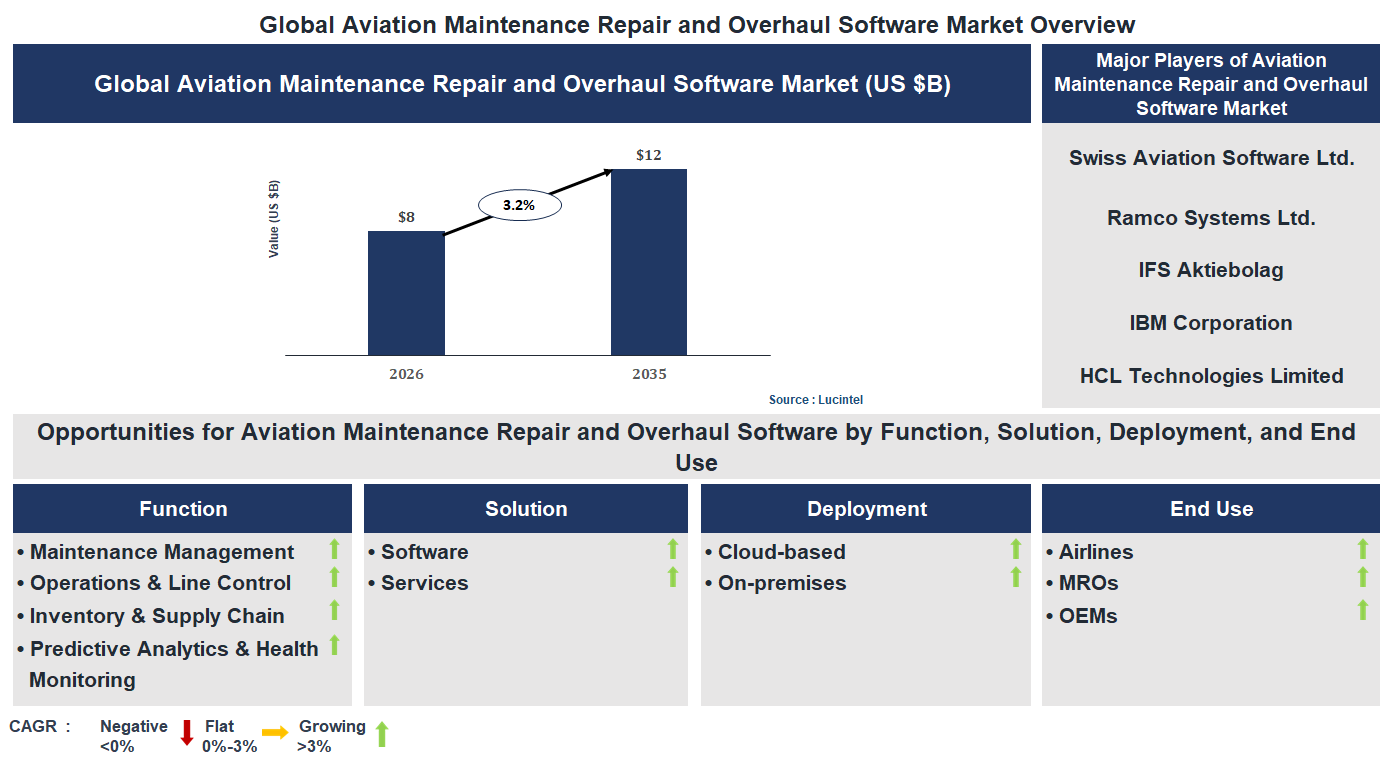
Key data points: The market size in 2035 = $12 billion, growth forecast = 3.2% annually for the next 8 years. Scroll below to get more insights. This market report covers trends, opportunities and forecasts in aviation maintenance repair and overhaul software market to 2035 by function (maintenance management, operations & line control, inventory & supply chain, and predictive analytics & health monitoring), solution (software and services), deployment (cloud-based and on-premises), end use (airlines, MROs, and OEMs), and region (North America, Europe, Asia Pacific, and the Rest of the World)
We'll send your sample report shortly.
• Lucintel forecasts that, within the solution category, software is expected to witness higher growth over the forecast period.
• Within the function category, maintenance management is expected to witness the highest growth.
• In terms of region, North America is expected to witness the highest growth over the forecast period. Gain valuable insights for your business decisions with our comprehensive 150+ page report. Sample figures with some insights are shown below.
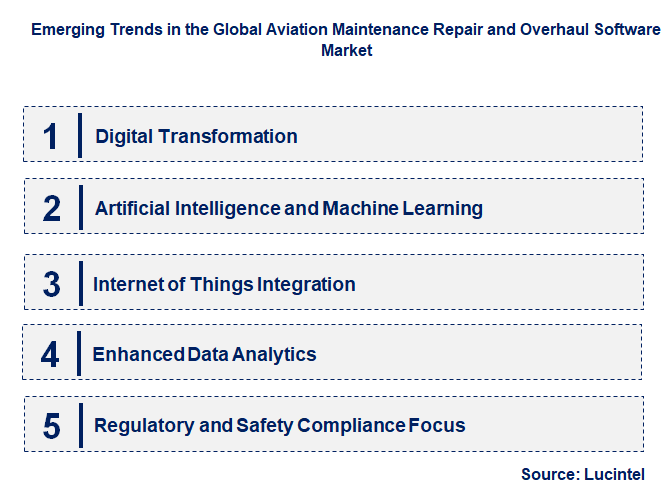
• Digital Transformation: The shift to digital platforms is revolutionizing MRO operations. Cloud-based software solutions enable real-time data access, streamlined workflows, and enhanced collaboration across maintenance teams. Digital tools facilitate predictive analytics, inventory management, and compliance tracking, leading to increased efficiency and reduced operational costs. This transformation allows airlines and MRO providers to move from reactive to proactive maintenance strategies, minimizing downtime and improving aircraft availability. As digital adoption accelerates, the market is witnessing a surge in integrated, user-friendly software solutions tailored to specific operational needs.
• Artificial Intelligence and Machine Learning: AI and ML are increasingly integrated into MRO software to enable predictive maintenance. These technologies analyze vast amounts of operational data to forecast potential failures before they occur, reducing unplanned downtime. AI-driven diagnostics improve accuracy and speed up troubleshooting processes, leading to cost savings and enhanced safety. The adoption of AI also supports optimized scheduling and resource allocation, ensuring maintenance activities are performed efficiently. As AI capabilities expand, the market is moving toward more autonomous decision-making tools that enhance overall maintenance effectiveness.
• Internet of Things Integration: IoT devices are being embedded into aircraft components to provide continuous, real-time monitoring of equipment health. This connectivity allows for the collection of detailed operational data, which feeds into MRO software for analysis. IoT integration facilitates condition-based maintenance, reducing unnecessary inspections and parts replacements. It also improves safety by providing early warnings of potential issues. The proliferation of IoT in aviation is transforming traditional maintenance practices into more data-driven, predictive processes, significantly enhancing operational reliability and cost efficiency.
• Enhanced Data Analytics: Advanced data analytics tools are enabling deeper insights into maintenance operations. By analyzing historical and real-time data, airlines and MRO providers can identify patterns, optimize maintenance schedules, and improve inventory management. Data analytics supports decision-making processes, leading to better resource utilization and reduced costs. It also helps in compliance reporting and safety audits. As analytics capabilities grow, the market is witnessing a shift toward more strategic, data-informed maintenance planning, which enhances overall operational performance and safety standards.
• Regulatory and Safety Compliance Focus: Increasing regulatory requirements are driving the adoption of sophisticated MRO software solutions. These tools help ensure compliance with international safety standards and streamline documentation processes. Automated reporting and audit trails improve transparency and accountability. Enhanced safety features within software systems also support risk management and incident prevention. As regulatory landscapes evolve, the market is seeing a demand for compliant, secure, and reliable software solutions that facilitate adherence to safety protocols while maintaining operational efficiency. These emerging trends are collectively reshaping the aviation maintenance repair and overhaul software market by fostering greater efficiency, safety, and predictive capabilities. The integration of digital technologies, AI, IoT, and advanced analytics is enabling more proactive, data-driven maintenance strategies. This evolution is not only reducing costs and downtime but also enhancing safety standards and regulatory compliance. As these trends continue to develop, the market is poised for significant growth, driven by the increasing demand for innovative, integrated maintenance solutions that meet the complex needs of modern aviation operations.
• Growing Adoption of Cloud-Based Solutions: The shift to cloud technology offers scalability, cost savings, and real-time data access, enabling MRO providers to streamline operations and improve collaboration across locations, thus enhancing overall efficiency and reducing downtime.
• Integration of Artificial Intelligence and Machine Learning: AI and ML are revolutionizing predictive maintenance, fault detection, and inventory management, leading to reduced aircraft downtime, optimized resource allocation, and significant cost savings for airlines and MRO providers.
• Increased Focus on Data Security and Compliance: As digital solutions proliferate, ensuring data security and regulatory compliance has become critical, prompting investments in cybersecurity measures and adherence to industry standards, which bolster trust and operational integrity.
• Expansion of Mobile and IoT Technologies: Mobile applications and IoT devices facilitate real-time monitoring, remote diagnostics, and maintenance scheduling, improving responsiveness, reducing turnaround times, and enabling proactive maintenance strategies.
• Enhanced Use of Data Analytics and Business Intelligence: Advanced analytics enable better decision-making, predictive insights, and performance optimization, helping companies reduce costs, improve safety, and gain competitive advantages in a rapidly evolving market. The overall impact of these developments is a more efficient, secure, and data-driven MRO software market, leading to improved operational performance, cost reductions, and enhanced safety standards across the aviation industry.
• Integration of AI and Machine Learning for Predictive Maintenance: Incorporating AI and machine learning into MRO software enables predictive analytics, which anticipates component failures before they occur. This proactive approach minimizes unscheduled repairs, reduces downtime, and extends asset lifespan. As airlines seek cost-effective solutions, AI-driven predictive maintenance becomes a key differentiator, offering real-time insights and optimizing maintenance schedules for improved operational efficiency and safety.
• Adoption of Cloud-Based MRO Solutions for Scalability and Flexibility: Cloud technology offers scalable, flexible, and cost-efficient platforms for MRO operations. Cloud-based software facilitates real-time data sharing across multiple locations, enhances collaboration, and reduces infrastructure costs. This shift allows airlines and MRO providers to access critical information remotely, streamline workflows, and adapt quickly to changing operational demands, thereby improving overall maintenance management and reducing time-to-service.
• Expansion of Digital Twin Technology for Enhanced Asset Management: Digital twin technology creates virtual replicas of aircraft and components, enabling detailed simulation and analysis. This innovation allows for precise monitoring of asset health, predictive maintenance planning, and lifecycle management. By providing a comprehensive view of aircraft conditions, digital twins improve decision-making, reduce maintenance costs, and enhance safety standards, making them a vital growth area in aviation MRO software.
• Increasing Focus on Regulatory Compliance and Data Security: As aviation regulations become more stringent, MRO software must ensure compliance with safety standards and data security protocols. Advanced software solutions incorporate automated compliance checks, audit trails, and secure data management features. This focus helps airlines avoid penalties, maintain safety certifications, and protect sensitive information, positioning compliance as a critical driver for software adoption and market growth.
• Growing Demand for Customizable and Industry-Specific Software Solutions: The diverse needs of airlines and MRO providers require tailored software solutions that address specific operational challenges. Customizable platforms enable organizations to integrate unique workflows, reporting, and analytics. Industry-specific features improve usability and efficiency, fostering higher adoption rates. This demand for personalized solutions drives innovation, expands market reach, and supports the development of more sophisticated, user-centric MRO software offerings. These growth opportunities are transforming the aviation maintenance repair and overhaul software market by fostering innovation, enhancing operational efficiency, and ensuring regulatory compliance. Adoption of advanced technologies like AI, digital twins, and cloud solutions will enable industry stakeholders to optimize maintenance processes, reduce costs, and improve safety standards. As the market evolves, these opportunities will drive competitive advantages, support sustainable growth, and shape the future landscape of aviation maintenance management.
• Technological Advancements: The integration of AI, IoT, and cloud computing enhances predictive maintenance, reduces downtime, and improves accuracy. These innovations enable airlines and MRO providers to optimize operations, reduce costs, and ensure safety compliance. As technology evolves, the adoption of more sophisticated software solutions accelerates, creating a competitive edge for early adopters. The ability to analyze large data sets in real-time supports proactive decision-making, which is crucial in the high-stakes aviation industry. Consequently, technological progress is a primary driver fueling market expansion and innovation.
• Increasing Fleet Size and Age: The global expansion of airline fleets and the aging of existing aircraft increase the demand for efficient maintenance solutions. Older aircraft require more frequent repairs and overhauls, necessitating advanced software to manage complex maintenance schedules. As airlines seek to minimize downtime and extend aircraft lifespan, they invest heavily in MRO software to streamline operations. The growing number of aircraft in service worldwide directly correlates with increased maintenance needs, making this a significant market driver. This trend ensures sustained demand for innovative MRO software solutions.
• Regulatory Compliance and Safety Standards: Stringent aviation safety regulations and compliance requirements compel airlines and MRO providers to adopt reliable software solutions. These tools facilitate adherence to safety protocols, documentation, and reporting standards mandated by authorities such as FAA and EASA. Ensuring regulatory compliance minimizes legal risks and enhances safety reputation. As regulations become more complex, the need for comprehensive, real-time compliance management systems grows. This regulatory landscape acts as a catalyst for the adoption of advanced MRO software, driving market growth and technological development.
• Cost Optimization and Efficiency: Rising operational costs push airlines and maintenance providers to seek cost-effective solutions. MRO software enables better inventory management, workforce scheduling, and predictive maintenance, reducing unnecessary expenditures. By optimizing resource allocation and minimizing aircraft downtime, these solutions improve overall efficiency. The economic pressure to maintain profitability amid fluctuating fuel prices and market competition makes investment in advanced MRO software a strategic priority. This focus on cost reduction and efficiency gains significantly propels market growth, encouraging vendors to innovate and expand their offerings.
• Digital Transformation Initiatives: The aviation industry’s shift towards digitalization fosters the adoption of integrated MRO software platforms. Airlines and MRO providers are investing in digital ecosystems to enhance data sharing, collaboration, and decision-making. Cloud-based solutions and mobile applications facilitate real-time monitoring and remote management, increasing operational agility. Digital transformation initiatives also support predictive analytics and automation, further improving maintenance processes. As industry stakeholders recognize the benefits of digitalization, the market experiences accelerated growth driven by increased software deployment and technological integration. The challenges facing the aviation maintenance repair and overhaul software market include:
• High Implementation and Maintenance Costs: Deploying advanced MRO software involves significant initial investment in hardware, software licenses, and training. Ongoing maintenance, updates, and support add to operational expenses, which can be prohibitive for smaller airlines and maintenance providers. These costs may delay adoption or limit upgrades, hindering market growth. Additionally, the complexity of customizing software to specific operational needs can increase implementation time and expenses. The financial burden associated with deploying and maintaining sophisticated solutions remains a critical barrier, especially in a cost-sensitive industry.
• Data Security and Privacy Concerns: The reliance on cloud-based and digital platforms raises risks related to data breaches, cyberattacks, and unauthorized access. Sensitive information such as aircraft maintenance records, operational data, and proprietary algorithms must be protected to prevent misuse or theft. Ensuring robust cybersecurity measures is essential but can be costly and technically challenging. Data security concerns may slow down adoption rates, especially among airlines and MRO providers wary of potential vulnerabilities. Addressing these issues is vital for building trust and ensuring the secure deployment of MRO software solutions.
• Integration with Legacy Systems: Many airlines and maintenance organizations operate with legacy systems that are incompatible with modern MRO software. Integrating new solutions with existing infrastructure can be complex, time-consuming, and costly. Compatibility issues may lead to operational disruptions and data inconsistencies, reducing the effectiveness of the new software. Resistance to change from staff and management further complicates integration efforts. Overcoming these technical and organizational challenges is essential for seamless digital transformation, but the complexity involved poses a significant hurdle to market expansion. The aviation maintenance repair and overhaul software market is driven by technological innovation, fleet growth, regulatory demands, cost efficiency, and digital transformation initiatives. However, high costs, data security issues, and integration challenges present notable obstacles. These factors collectively influence the pace and direction of market development. While opportunities for growth are substantial, addressing these challenges is crucial for sustained expansion and technological advancement. The market’s future will depend on how effectively stakeholders navigate these drivers and challenges to optimize maintenance operations and enhance safety standards.
• Swiss Aviation Software Ltd.
• Ramco Systems Ltd.
• IFS Aktiebolag
• IBM Corporation
• HCL Technologies Limited
• Oracle Corporation
• SAP SE
• Flatirons Solutions, Inc.
• Vera Safe, LLC
• IBS Software Private Limited
• Maintenance Management
• Operations & Line Control
• Inventory & Supply Chain
• Predictive Analytics & Health Monitoring
• Software
• Services
• Cloud-based
• On-premises
• Airlines
• MROs
• OEMs
• North America
• Europe
• Asia Pacific
• The Rest of the World
• United States: The US market has seen rapid adoption of AI-powered MRO software, improving predictive maintenance capabilities. Major airlines and MRO providers are investing in cloud-based platforms to streamline operations and reduce downtime. The integration of IoT sensors for real-time data collection has enhanced maintenance accuracy. Additionally, government initiatives support innovation in aviation technology, fostering a competitive environment for software providers. The US remains a leader in developing advanced analytics tools to optimize maintenance schedules and inventory management.
• China: China is experiencing accelerated growth in MRO software adoption driven by expanding airline fleets and government support for aviation infrastructure. The focus is on integrating big data analytics and automation to improve maintenance efficiency. Local companies are developing customized solutions tailored to domestic airline needs, emphasizing cost reduction and operational reliability. The Chinese government’s strategic investments aim to modernize the aviation sector, encouraging the adoption of digital MRO solutions to enhance safety and compliance standards.
• Germany: Germanys aviation sector emphasizes high-quality, reliable MRO software solutions, with a focus on sustainability and digital transformation. Leading aerospace companies are adopting advanced ERP systems integrated with AI and IoT for predictive maintenance. The country’s strong engineering tradition supports innovation in software development, with a focus on reducing environmental impact through optimized maintenance procedures. Collaboration between industry and research institutions is fostering the development of next-generation MRO technologies, positioning Germany as a hub for high-end aviation software solutions.
• India: India’s MRO software market is rapidly expanding, driven by increasing airline traffic and government initiatives to boost the civil aviation sector. The adoption of cloud-based and mobile maintenance solutions is on the rise, enabling real-time data access and improved operational efficiency. Local startups and global players are collaborating to develop affordable, scalable software tailored to regional needs. The government’s focus on infrastructure development and ease of doing business is facilitating the growth of digital MRO solutions, aiming to modernize the country’s aviation maintenance capabilities.
• Japan: Japan is advancing its MRO software market through the integration of AI, robotics, and IoT technologies to enhance maintenance precision and safety. The country’s aerospace industry emphasizes quality and reliability, adopting sophisticated software systems for predictive analytics and inventory management. Japanese firms are investing in automation to reduce manual labor and improve turnaround times. Collaboration with international technology providers is fostering innovation, positioning Japan as a leader in high-tech aviation maintenance solutions focused on safety, efficiency, and sustainability.


• Swiss Aviation Software Ltd.
• Ramco Systems Ltd.
• IFS Aktiebolag
• IBM Corporation
• HCL Technologies Limited
• Oracle Corporation
• SAP SE
• Flatirons Solutions, Inc.
• Vera Safe, LLC
• IBS Software Private Limited Q6. Which aviation maintenance repair and overhaul software market segment will be the largest in future? Answer: Lucintel forecasts that, within the solution category, software is expected to witness higher growth over the forecast period. Q7. In aviation maintenance repair and overhaul software market, which region is expected to be the largest in next 8 years? Answer: In terms of region, North America is expected to witness the highest growth over the forecast period. Q8. Do we receive customization in this report? Answer: Yes, Lucintel provides 10% customization without any additional cost.


Choose a license that fits your team. Instant PDF delivery.
Prices exclude taxes. Instant delivery. Custom licensing available on request.
Market Report · July 31, 2026
Market Report · July 31, 2026
Market Report · July 31, 2026
Trusted partner for strategic intelligence and business growth


Receive a complimentary market analysis tailored to your industry. Our analysts will identify key growth opportunities and competitive dynamics specific to your business.

Market size, growth rate, and key trend analysis for your specific sector.

Top competitor positioning and market share analysis.

Strategic recommendations backed by data-driven insights.
Get curated market intelligence and competitive moves straight to your inbox.
By subscribing, you agree to receive our monthly insights. Unsubscribe anytime.
Receive a complimentary market analysis tailored to your industry. Our analysts will identify key growth opportunities and competitive dynamics specific to your business.
Market size, growth rate, and key trend analysis for your specific sector.
Top competitor positioning and market share analysis.
Strategic recommendations backed by data-driven insights.
Get curated market intelligence, emerging trends, and competitive moves straight to your inbox each month.
By subscribing, you agree to receive our monthly insights. Unsubscribe anytime.
We'll send your sample report shortly.